


Remake but same vibes, diff colors iykyk
This def brings back the warm i felt during my first time watching the cdrama/original version.The FL captured Momo's personality and the ML has the charm of Gu Weiyi (tho it still has diff approach might be because of diff culture). Overall still the same vibes.
I also like the romantic scenes between the main leads. It's just that the second leads, for me, didn't capture my attention enough. They didn't have enough chemistry, or it is just me idk. Hehe
Overall, Love it. Must watch! Rawr ʕ ˵·ᴥ·ʔ
Was this review helpful to you?

Drama wuxia
Um dos melhores dramas do gênero. As lutas também são as mais incríveis, nada de cenas em câmera lenta, muito pelo contrário, às vezes até queria que passassem mais lentamente para observar todos os detalhes. Amei a química entre os personagens Su Muyu e Su Changhe com sua confiança inabalável. Confesso que gosto deles porque os atores são lindos e é aquela velha história "os opostos se atraem", com uma dinâmica tão perfeita!Was this review helpful to you?
This review may contain spoilers
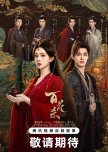
Don't let the flowers fool you.
Historical revenge dramas are nothing new, so I wasn't expecting Blossoms of Power to surprise me as much.At first glance, it follows a familiar formula: betrayal, a second chance at life, palace politics, and a heroine determined to take control of her own destiny. But what makes this drama stand out isn't its premise—it's the way it executes it.
Shen Xihe is easily one of the strongest female leads I've watched this year. She's calm, calculating, and always seems to be three steps ahead of everyone else. What I appreciated most is that her intelligence never feels forced. The drama doesn't constantly tell us she's brilliant—it lets her actions prove it. Whether she's navigating court politics, manipulating her enemies, or protecting the people she cares about, she always remains composed, making every victory feel earned rather than convenient.
Then there's Xiao Huayong. I absolutely loved his character.
Underneath his frail appearance hides someone every bit as intelligent as Shen Xihe, and that's exactly why their relationship works so well. Neither of them exists simply to admire the other. Instead, they challenge each other, trust each other, and slowly build a partnership based on mutual respect. heir conversations often felt more like a game of chess than a romance, and honestly, that's what made their chemistry so enjoyable.
The palace intrigue remains engaging from beginning to end because the balance of power is constantly changing. Alliances shift, loyalties are questioned, and every victory comes with new consequences. Just when I thought I understood where the story was going, another piece of the puzzle would fall into place and completely change the situation. It's the kind of political drama that actually rewards paying attention.
And then there's Bu Shulin and Cui Jinbai.
I genuinely adored them. It's been a while since a second couple managed to steal so much of my attention, but these two completely won me over. Bu Shulin is fearless, straightforward, and refreshingly unconventional. She never tries to fit into the role society expects of her, and that confidence makes her one of the most entertaining characters in the drama. Cui Jinbai, on the other hand, is calm, dependable, and endlessly patient. Together, they create the perfect balance. heir romance doesn't rely on unnecessary misunderstandings or dramatic twists. Instead, it grows through mutual respect, unwavering trust, and countless small moments that gradually bring them closer together. Their playful banter adds a welcome sense of warmth to an otherwise politically heavy story, and every scene they share is simply a joy to watch.
Was this review helpful to you?

Comfort Jdrama (ㅅ˙³˙)♡
At first, I was hesitant esp with the jp acting being too animated but watching it made me appreciate jdrama. It was fun to watch, plus the story is cute.However, the only flaws of this is the lack of love scenes between the two young leads. I wish they had more screentime.
Plus, the young ML's past relationship got me confused or it's just the subtitle that got me questioning about the plot lol.
Overall, def recommended jdrama. Rawr (・ิω・ิ)ノ
Was this review helpful to you?

This review may contain spoilers
That's the way to handle it!
A good movie about how to take revenge on bully's. Don't go down to their level, but get a confession.Well produced, good visuals and good music.
The actors did a good job.
-----------------------------------------------------------------------------------------------------------------------------------
Was this review helpful to you?

This review may contain spoilers
Great drama to binge watch in 2026.
I had so much fun watching this drama. It's one of those dramas that made me look forward to every new episode. The combination of comedy, mystery, action, and superheroes works surprisingly well, and the late 90s setting gives it a nostalgic charm that makes it stand out from other superhero/mutant dramas. The story stays entertaining from beginning to end.Park Eun-bin never disappoints. Every time I watch her in a new project, she proves why she's one of the best actresses of her generation. She can play literally any character and make it feel completely natural. Whether it's comedy, emotional scenes, or action, she delivers everything perfectly. She is such a versatile actress, and once again, she completely stole the show.
The comedy is genuinely funny without feeling forced, and every member of the cast has great chemistry with one another. Even though they're people with extraordinary abilities, they still feel like ordinary people trying to deal with unexpected situations. That's what makes the characters so lovable. The mystery behind their powers also kept me invested throughout the entire drama.
One thing that deserves more appreciation is the music. The soundtrack and background score fit every scene perfectly. Whether it's a hilarious moment, an emotional conversation, or an intense action sequence, the BGM always elevates the scene instead of distracting from it. It's one of those dramas where the music quietly makes every moment even better.
I can absolutely understand why this drama reached No. 1 on Netflix South Korea shortly after its mid-May release. It's simply a fun and entertaining watch with memorable characters, great performances, and a unique concept that feels refreshing.
And then there's the post-credit scene. As soon as I saw it, my first thought was, there has to be a Season 2. It feels like the story is only getting started, and there are still so many possibilities left to explore. Hopefully Netflix gives us another season because this cast and this world deserve it.
This drama exceeded my expectations. It's funny, exciting, heartwarming, and surprisingly emotional at times. If you're looking for a drama that doesn't take itself too seriously but still delivers an engaging story with fantastic acting, this is definitely worth watching. And if you're already a fan of Park Eun-bin, this is yet another performance that reminds you why she's one of the most versatile actresses working today.
Was this review helpful to you?
This review may contain spoilers
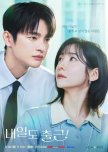
Still clocking in!
I just finished the drama" See You at Work Tomorrow" and, I have to admit, it was the first K-drama of 2026 that I managed to finish "properly" (without skipping episodes or watching at 2x speed).I really liked it because it's different from typical office romances: no linked pasts, no weird subplots like kidnappings, etc. The only unique "hook," which I found really charming, is that Ji Woo offered to repair items at her father's shop, even before getting to know her!
It’s simply the story of two people who meet at work and realize they are the most important person to each other—their soulmate. From the very moment Ji Yoon discovers on Ji Woo's glass board that she makes him smile, my heart fluttered so much! I loved how, through efficient and mature communication, they overcame their difficulties—between scandals and ex-relationships—and got their happily ever after. I adored how Ji Yoon achieved success at work , making all her"clocking in" count despite everything!
I also really liked the second lead couple. They were a bit more "traditional" compared to most secondary couples, which usually involve cheating or a toxic ex, such as fake-dating I absolutely loved them, especially in the final episode when No-ah is calling Jae In: she doesn't answer at first, but on the second call she picks up, only to find him sitting right next to her on the plane!
Was this review helpful to you?

Road to Success: The Warmest Place I'll Always Call Home ❤️
«"Not far beyond the narrow road, you will finally see the light." 🌙⚽️»There are dramas you enjoy, dramas you admire, and then there are dramas that quietly become a part of your life.
Road to Success became my home.
It's so hard to say goodbye. I wasn't ready to let this drama go, which is why I waited until the very last day of its broadcast before writing this review.
As a novel reader, I already knew this story had the potential to be something special. A female-centered story about psychology, healing, youth, friendship, sports, self-discovery, and a mature slow-burn romance? It sounded like everything I could ever ask for.
But even then, the drama still managed to exceed every expectation I had.
Watching Yu Shuxin again after such a long time genuinely felt like finally coming home after being away for years. It felt comforting, peaceful, warm, and complete. Somehow, this drama gave me exactly what I didn't realize I needed.
And by the time the finale arrived, I realized something.
This wasn't just my favorite modern Yu Shuxin drama anymore.
It had become my favorite drama of hers, period.
*A Story That Is So Much More Than Football*
Before watching, I understood why many people were hesitant. A football-themed drama doesn't immediately sound appealing to everyone.
But that's the biggest misconception about Road to Success.
Football is never the destination.
It's simply the path that brings broken people together.
This drama beautifully blends sports, psychology, healing, friendship, coming-of-age, school life, mystery, family, and romance into one incredibly cohesive story.
The pacing is excellent from beginning to end. Every episode keeps moving naturally without feeling rushed. The comedy lands perfectly, the emotional moments hit incredibly hard, and the suspense quietly keeps you wanting more.
It constantly balances laughter and tears.
One moment you're laughing because Lin Wanxing somehow ends up taking care of eleven chaotic football boys (plus their equally stubborn coach).
The next moment you're crying because you finally understand why she smiles so much.
*Lin Wanxing — One of the Best Female Characters I've Ever Seen*
Lin Wanxing instantly became my favorite female character.
She isn't written to be perfect.
She isn't written to save the world.
She's simply someone who keeps choosing to live despite having every reason to give up.
She was a top student.
A brilliant researcher.
Someone who published multiple SCI papers.
Someone whose future seemed limitless.
Then everything was taken away.
False accusations.
Rumors.
Depression.
Dropping out of university.
Parents who couldn't believe her.
Grandparents who loved her more than anything, yet passed away before she could properly say goodbye.
And still...
She kept moving forward.
One of my favorite scenes will always be when she quietly says,
"Because I cheated."
She smiles as though it's nothing.
Yet her eyes carry years of pain.
That single line tells you everything about who Lin Wanxing really is.
She chose to save herself.
She chose to stay alive.
And little by little, she learned how to live again.
That's what makes her beautiful.
She became the adult every child in this story desperately needed because she herself once needed someone like that.
To me, Lin Wanxing represents every student carrying invisible pain.
She saw them because she had once been them.
*Yu Shuxin's Best Performance*
I've always loved Yu Shuxin as an actress.
But Road to Success made me admire her on an entirely different level.
This is easily the most mature performance of her career.
Her narration feels incredibly soothing.
Her voice control has improved tremendously.
Her micro-expressions say more than dialogue ever could.
Every subtle movement, every smile hiding sadness, every pause before speaking—it all feels incredibly natural.
Nothing is overdone.
Everything feels lived in.
I later learned the cast spent time taking acting classes together before filming, and honestly, it shows.
Not just Yu Shuxin, but the entire cast feels wonderfully connected.
The chemistry between everyone feels effortless.
*An Ensemble Done Right*
One concern many people had was whether such a large ensemble would overshadow the female lead.
It doesn't.
Not even once.
Lin Wanxing remains the emotional center of the entire story.
She is the thread connecting every character.
Every student's growth somehow leads back to her.
Every relationship develops naturally because of her presence.
Even the football boys, who all have very distinct personalities, become incredibly memorable.
By the end, I realized I somehow remembered every single one of them.
That's surprisingly rare.
*A Mature Romance That Respects Its Characters*
One of my biggest worries before watching was whether the drama would simplify the beautiful relationship between Lin Wanxing and Wang Fa from the novel.
Thankfully...
It didn't.
Their relationship develops slowly.
Naturally.
Without relying on unnecessary misunderstandings or overused tropes like childhood connections or love at first sight.
Instead, it gives us two emotionally mature adults learning to trust each other.
They communicate.
They support one another.
They grow together.
They're never portrayed as magically healing each other.
Instead, they simply stay beside each other while each continues healing themselves.
That feels infinitely more realistic.
Yu Shuxin proves once again why people always praise her chemistry with her co-stars.
She somehow makes every relationship feel genuine.
*Direction, Cinematography & Production*
One of this drama's biggest strengths is its direction.
The director previously worked with Yu Shuxin on Ski Into Love, but I think Road to Success showcases her strengths even more.
The cinematography is beautiful without feeling excessive.
The camera work during football matches makes every game exciting, even for viewers who know absolutely nothing about football.
The editing keeps the story flowing smoothly, balancing emotional scenes, comedy, sports, and suspense effortlessly.
Nothing ever feels boring.
The production also deserves praise for hiring a professional psychological consultant to ensure the psychological themes, theories, and sensitive topics were portrayed responsibly.
That level of care is something I deeply respect.
*A Soundtrack That Stays With You*
The soundtrack deserves special recognition.
I've been replaying it for weeks.
Every song fits the emotions of the story perfectly and somehow manages to make every important scene even more unforgettable.
The only thing I missed was hearing a Yu Shuxin OST, something many of her dramas usually have.
Even so, the music as a whole became one of my favorite drama soundtracks this year.
*More Than Just A Drama*
Maybe I love this drama so much because it arrived during one of the hardest periods of my life.
Lin Wanxing accompanied me.
She cried with me.
She comforted me.
She reminded me that moving forward doesn't always mean running.
Sometimes surviving one more day is already enough.
When she says,
"Only we can define ourselves."
I immediately thought about Yu Shuxin herself.
Ironically, only a few months after filming this drama, she experienced many of the same misunderstandings, accusations, and judgments that Lin Wanxing faced.
That makes this role feel even more meaningful.
I truly hope this drama healed not only its audience, but also Yu Shuxin herself.
*Final Thoughts*
Road to Success deserves so much more recognition than simply being called "the football drama."
It is a healing drama.
A coming-of-age drama.
A psychological drama.
A sports drama.
A mystery drama.
A romance.
A story about choosing to keep living.
Most importantly, it's a story about hope.
The story begins with Lin Wanxing losing her dream.
It ends with her walking confidently toward it again.
Not as someone's wife.
Not as someone's savior.
Simply as herself.
And I couldn't have asked for a more beautiful ending.
No matter what the ratings, popularity, or numbers say, I genuinely believe quality will always outlast temporary hype.
Road to Success may have started as a small IP that many people underestimated, but it proved that sincerity, strong storytelling, and unforgettable characters will always find their audience.
Yu Shuxin didn't choose the safest project.
She chose the bravest one.
And because of that, she gave us one of the strongest performances of her career.
Thank you, Yu Shuxin.
Thank you, Lin Wanxing.
Thank you, Road to Success.
I'll never forget the summer of 2026.
Whenever life becomes too difficult, I know exactly where to return.
My home will always be waiting.
⭐ 10/10 — A masterpiece that quietly heals your heart while reminding you that there is always light waiting beyond the narrow road.
Was this review helpful to you?

This review may contain spoilers
A Heartfelt Journey That Needed Just One More Chapter
I really enjoyed this show, not only because of the heartfelt love story, but also because of the insight I gained regarding their medical professionals, their fire department, and how they address crises. I was surprised by how many times I got choked up in this series. It also had a lot of funny moments throughout the show. I definitely would have preferred a better ending. After all they went through to be together, seeing a little bit of their married life would have been a nice icing on the cake.Was this review helpful to you?
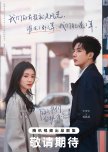
Good Male Lead, Unconvincing Romance
Initially, I thought it was going to get better. I've learned that with certain Cdrama's, they really emphasize the slow burn love story, but this was painful. I kept pushing my way through the episodes, but once I hit 14, I couldn't do it anymore. The only reason why I gave it the few stars I did was because of the ML. I thought he did a decent job, and I appreciated him being straightforward, for the most part, about his feelings toward the FL. The FL, on the other hand, it frustratingly annoying. Her back and forth attitude with the ML gave me whiplash. The actress they chose for the FL was also unconvincing with her acting. I didn't think it could get any worse than Bella in Twilight, but I was wrong.Was this review helpful to you?

 1
1This review may contain spoilers
Actually worth the hype!
A demon hunter, two cunning nine-tailed fox sisters and an innocent-looking priest accompanied by a disciple of the Shilin Sect find themselves thrown together as they all try to find the fox demon Xiao Wei who is causing havoc. All with their own purposes in mind, everyone wants to catch the demon first.What they uncover tho, is far beyond just catching a demon. From here on, the drama evolves into a tale of loneliness, battle against destiny and love that’ll break your heart.
The story is fully packed. There is no time to breathe and no time to get bored. There is always something happening. Each episode ends on a small cliffhanger, making you unable to stop watching and making you want to hit the next-episode-button one after another. First you want to know how they’ll catch the fox demon, then you also wanna see the butterfly demon. Then you wonder who the MLs actually are, and finally start asking yourself what the hell is even going on here. And this continues on. There is less talk and more action or discovery. It was complex. You were always fooled, making you question if the intentions of the characters were good or bad throughout more than half of the series. A lot of back and forth and confusion through time travel and unchronological reveals. All of that was so much input, I already forgot about some parts. I SO love stories like that, haha. They had many stories to tell - and in my opinion there was still room for a lot more.
Given the premise, when I started the drama I thought Shiguang would be the main character. Looking at the poster and the first few episodes, I believed both couples' stories would be treated equally. And I also thought the drama would be mostly about them all forming a friendship and hunting evil demons together. But nope. None of that.
But these are things I actually missed in this drama. Ji Ling and Wuyis story was awesome - a masterpiece - a 10 outta 10. I loved Ji Lings tragic and lonely story so damn much. Those two were the real MCs of this drama. And I can’t complain. What I complain about is, that Shiguang and WanYangs story wasn’t given the same attention and lovingly execution. They put all their heart into Ji Ling and WuYi - their story got all the emotions: be it sadness, heartbreak, longing, falling in love - you name it. You could always feel it and follow their development. But Shiguangs and Wangyans story totally fell short. I know their story isn’t as dramatic - but there was a lot of potential for a better execution. Their story began so good. I loved them together during the Xiao Wei case. Then there was a pause and their romance only started inside the stone illusion - which is ok. But I could not feel their love at all. Why did they fall in love? Because they were trapped in the roles of a married couple? That’s also okay, but then show it please. I found the scenes of them way too few and the timeskips way too big to actually feel their developing feelings. It felt like from one episode to the next they suddenly became a loving couple.
While I’m at it: the characters were amazing. Ji Ling anyways - his character had a long very sad story and was super complex. Wuyi totally owned up to her title as the female lead. She was sweet but not innocent. She was strong enough to stand on her own and was not dependent. She could be cunning but was overall just kind and broken. Not child-like, not annoying, not weak. She too is a 10/10.
WangYans character started out good too. She was quieter and a bit plainer tho. Like I already said, I found it sad that they didn’t have as much screentime as WuYi and that they didn’t make more out of her story. I loved her strong bond with her sister. I just wonder, why in the last few episodes, she behaved weirdly differently. When Wuyi was shattered because Ji Ling seemed to have died for good, I would have expected Wanyan to immediately go to her, hug her and cry with her. Instead they were separated for long because her and Shiguang went to the dragon valley alone. And when she was back she was just like “come back to moon sect, we are there for you” and then left again without looking back. Hm. This didn't fit her character from the first half.
And lastly Shiguang, who I am the most disappointed in. As I stated, I thought he would be the main character, as he was the one becoming the new (and only!) Dragon Deity. But he had the least screentime. I loved him during the Xiao Wei case.. but then his character suddenly got weaker. I hated him in the stone illusion. He knew very well that it was just an illusion of the past and it would bring them absolutely nothing being there. The real world needed them. But instead of searching for the star stone, he played house in there for over 10 years. I mean, I understand he was emotional because the illusion was part of his own story. But it made him look incredibly weak and useless. Outside in the real world Bai Ze was risking his life to prolong their time in the illusion so they would have time to get out. And Shiguang? Happily played house? I’m sorry but I hoped he would be more of a fighter.
I also absolutely loved the side characters btw. Everyone was interesting and literally deserves their own 30 episode drama. Weasel demon You Chi, Li Jie and Wu Huo especially, but also the 4 demons connected to the dragon deity's ring. And of course not to forget Tian Di and the star stone origin.
The production crew put a lot of effort in cinematography and costumes. They all looked amazing, the make-up stunning, the special effects incredible. Especially the foxes. The scene of Shiguang destroying the last piece of oracle stone was a feast to the eyes. The only flaws in this drama were the fox-heads and Ji Lings fox tail. In the state of semi-transformation, for a few seconds in one of the earlier episodes, the nine tailed foxes had human-bodies and fox-heads. The fox heads were not animated and looked like they were bought straight from temu. Ji Lings fox tail and ears were also not animated and looked exactly like what they were: a plastic tail stuffed into his trousers lmao. Those two things - as small as they were and as short as they were on screen - stood out SO much because everything else was high quality. The animated foxes, Jiu Yings demon power, the fire swords, Ji Lings wings at the end - everything a sight to behold. And then there was the fox tail from temu lol. And it's a pity. I don’t know why they didn't animate them. The budget wasn’t enough for this little detail?
Let me move on to the supposed highlight of the series. When Shiguang actually became the dragon. And here I got the impression the production team actually hated Shiguang lol. All the talk about dragon claws, dragon eyes and dragon horns…. he got the horns. And that was it. No colorful eyes like the demons. No claws. No special attire. Just the horns. He didn’t even transform into a dragon, he just had a fire dragon as special attack (why does this sound like pokemon lol). He didn't even manage to kill the villain alone, at the end it was still Ji Ling saving the day. Everyone taught Ji Ling how to be the fake dragon deity, but no one taught the real one how to be the dragon deity xD.
But! One thing which was 100% flawless was the OST and BGM. They were so POWERFUL. Usually I don’t even notice the BGM much. But here everything slayed. The OST was incredibly beautiful. Always fitting the scene and creating the right mood. My favorites are “Jade Sleep”, “Not Suffering” and “Innocent as a fox”, but the others were also great. This is also the first drama in which I was amazed by the BGM. And by “the BGM was powerful” I mean: it made battle scenes appear epic. It made mysterious scenes eerie even. It made emotional scenes hurt 10 times more.
Other stuff I enjoyed:
-I liked how the antagonist wasn't defeated easily
-I liked the bromance between Ji Ling and Li Jie, Shiguang and You Chi and the sismance between Wangyan and Wuyi
-The acting of the whole cast was awesome
Other stuff I would have wished for:
I would have loved more demon hunting like in the first few episodes. In general I would have loved seeing more demons or people. For a demon/deity world, that was really sparse. The story was tightly knitted around the main characters and their little circle. They didn't come across many other (less to no important) people or demons. And I wished for more bonding within the group. They concentrated mostly on the couples, but I wish we would have seen everyone becoming family. Like… wouldn't you naturally want to be on good terms with the sister of your gf? Did Shiguang and Wuyi even had ONE conversation at all? Or: Li Jie and Wuyi were the closest people to Ji Ling, but they both mourned on their own, Li Jie did not even tell Wuyi about the dragon heart. Hm.
At the very end, the loneliest soul must be Li Jie after all. The couples would be together somehow in one world or another. But Li Jie is about to search for someone who might not even exist in this world. Now that is real tragedy lol. No really, I’m glad the couples can meet again in some life… but I’m sad about all the people that won’t meet again.
I know this sounds like I nitpick a lot. But I’m complaining on a high level here. Most of my criticism aren't things that made the drama bad, but things that would have made it even better. All in all there would have been only one solution: more episodes. I wouldn't have minded 20 more episodes if they would have taken more time for a better execution of the 2nd couple etc.
Overall, I really loved this drama a lot. You have to know, I dropped SO MANY popular and hyped dramas, some fan-favorites etc. But this is the first full-length C-drama after quite a while that kept me interested from start to finish. Very intriguing and captivating.
I enjoyed it! Thanks! ;3
Was this review helpful to you?
This review may contain spoilers
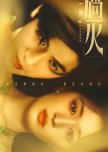
Overdo
Overdo is one of my favourite Republican-era dramas. The cast delivered outstanding performances, and Director Yu Jin did an incredible job of keeping the story engaging from beginning to end. Whenever summer comes around, I'll definitely rewatch Overdo. It's truly an unforgettable drama that will always have a special place in my heart.❤️❤️❤️Was this review helpful to you?
Not worth it despite the huge rating. Disappointed.
I don't know why this has so much high rating. I started watching this because it had such high rating. And I am disappointed. The story basically feels like I am watching the life story of only one character (Sun). And I feel like his acting is not so good.Also I don't feel any chemistry between the couple , didn't like the casting. I wanted to see equally of both the main character not just one. The way the top (jay) falls in love with bottom (Sun) is also weird. I am talking about their first meeting(you will understand what I am talking about if you have watched the series).Overall not worth it. Not much depth in the acting or story either. You can give the manhwa a try but the live action ain't worth it.
Was this review helpful to you?

Fourever Forever
Overall, this is a much better series than the dribble of Part One. However, it is a task to watch this marathon because it is close to a million episodes to get through. A bit of an exaggeration, but sometimes, it honestly felt that way. In essence, it is three separate love stories more-or-less connected to one another because they are all friends. Not all three are of equal interest; at least to me. It becomes a continuation of the friendships from Part One but now moving on with love stories of several of the peripheral characters from that original premise and how their romances transformed. Of course, this series is entertaining. And with so many episodes, after a while, it becomes your companion. A part of your routine. And when it ended, in a way you miss them. So, like many, I was sad to see the series end. I did become invested in these characters. So, in that sense, it certainly is worth watching more so if you watched the first season.Was this review helpful to you?

This review may contain spoilers
This was an alright show. Kinda weak on the writing department, but not the worst to be honest. The characthers were really great, especially Touma, Kento, Rintaro and Ren, they had such amazing arcs and growth, I have to say that I loved them. Alsot the fights were very cool, abandoning the martial arts of classic KR for sword based dueling was a breath of fresh air and pretty fun. The forms were amazing and the whole vibe was good. It really felt like an epic fantasy Kamen Rider, more than any other show. It was about frienship and the importance of stories, also about the power of human will that decides to live despite what appears to be an inevitable destiny, we decide to write even if we don't have free will, which is a touching message. That said, it had a lot of boring segments, so I can't really give it an high score. One last thing: the final battles against the divine sages were some of the best KR battles ever. Was this review helpful to you?


