

Was this review helpful to you?
Lacked something
I was looking forward to this only to end up forcing myself to finish 5 episodes of this. I love both lead actors, imagine my disappointment when they gave me zero romantic chemistry and unseasoned tension. Forget about the supporting characters (which were not memorable enough), not even the leads could spark any curiosity. ML is supposed to be this introverted, hard to read type but warmhearted and usually those characters should give, mysterious vibes and provoke interest to continue watching. But instead, Seo Inguk's character, gave us this boring, unflattering guy, (even made him look mid if not ugly). Wild, but he did it better on boyfriend in demand. Perhaps this role was too repetitive for him? Park jihyun’s character was no any better, boring with zero backbone and personality. I gave up on episode 5.Was this review helpful to you?

Best Variety Show
Its like free therapy. Everything is so natural, the bonds between the members, the teasings, the love, care, its very beautiful.Beautiful places, adrenaline filled adventures, funny games, hilarious conversations, cooking together, eating different kinds of delicious food, dancing, singing, even the role plays, all were excellent. Its stays into your mind for a long time. I always looked forward to my weekends for this show.
Naiwen ge and Honglei ge were always the cutest, hilarious together. But new member Jingfei ge joining them was excellent. He was funny, crazy and suited the group so much, it feels he blended from the first episode. The best thing about the show was the senior members' mental ages were even lower than the younger members, they all could have fun together.
Liu Yuning is the best, such an all rounder, great at everything. His leadership skills always come forward, and its so fun watching him. Gong jun could not be a part of the whole season, but whenever he was, he always was full of positivity.
Xingxu, Yuwen, Linyi my favourite trio forever. I love them the most. They are the bravest, in frontline in all adventures. Also Yuwen and Linyi being the abstract people, gave so many funny moments throughout the show. Xingxu in episode 1 of season 1, and in season 2, were like 2 different people. Haha going from that shy kid to this full of fun guy, he really let his guard down with WTW fam.
I am glad Chen He could be back for the last episodes. Zhouye my babygirl being a guest was lovely, I always thought her chemistry would be great with the younger lot, considering she was part of that famous viral video Gossip Trio, and she worked with Linyi, but she had such a good chemistry even with the elder lot. Victoria Song was great, she was mature, and fun. I never knew Deng Kai had such a fun personality, but that's what varshows are for to show your hidden personalities. Chaoyue is such a cutie. Loved every guest and their chemistries with the cast.
Well, there are countless moments I loved, but if I had to point out few that would stay with me are-
1. The adventure sports in New Zealand.
2. Mud game in New Zealand.
3. Fake dating prank of Xingxu and Yuwen.
4. Fashion Show in Paris.
5. Cooking together whenever they did.
6. Shirt game in Marseille.
7. Jungle invisible hand game in New Zealand.
8. Them buying gifts for each other and having such thoughtful reasons behind them
Also loved the way the cast sang both the theme songs of season 1 and 2 while wrapping up. Thank you Wow the World 2, you have given me so much happiness, literally made me obsessed. Hopefully I will get to see you all again soon.
Was this review helpful to you?

This review may contain spoilers
Best J-Drama 2026!
Stop scrolling now! My heartfelt recommendation from drama lover to fellow drama lover: don't read any spoilers. I swear, this drama can be so exciting if you throw yourself into the cold water. 🐥💦So the premise starts with our main lead, who wakes up in hospital after an accident and is confronted with the fact that no one remembers him anymore - even his wife. To make things worse, someone else seems to have impersonated him and is living his life.
But obviously, there is more to it. There are reasons why this is happening. And you're about to find out through watching, together with the ML.
The cool thing is, in this drama, nearly everything is possible. You will come up with multiple theories, but the drama won't hint which one is true. At least not until when they want it to be revealed. Remember, the drama is short so sadly you won't be left clueless for long. And then the one or the other twist might throw you off again.
The pace feels rather comfy, especially at the beginning. The vibes also seem rather cozy. But don't be fooled.
The acting is good of the whole cast. But I especially had my eyes on ML and Tastamura. Wow. What a performance. 👏🏻
I was intrigued from start to finish. Tho, with all the big twists in the middle, I found the final episode a bit underwhelming.
-----------///------------
🚨 And now, if you haven't watched it yet, don't read anymore and go watch it yourself. Because below will be heavy spoilers. ⚠️
I loved how the watchers (or me) were mislead. Based on the title I expected everything to turn out to be MLs delusion or coma dream or something . But after episode 2 it was clear everything must be an experiment. I felt smart coming up with theories why and how ML was used for their research. But I got slapped in the face at the end. At first ML looked like the victim. Only to epically turn into the villain. But in the end, he was just a lonely genius. A lonely god, so to say. And suddenly the title fit again. All characters were angry at him at some point, but at the end they came begging for a favor. And ML reluctantly granted them - but was still the only one being alone. That's what I'm a bit disappointed about tbh. I really liked him and Yuki together… oh well… I really wished for him to be happy too. As for the experiments continuing - I'm super happy about that hahaha. Leaves room for season 2? Probably not, huh? But I still think that ending was dope 👌🏻.
This drama was a rare hidden gem. I enjoyed the guessing and slaps in the face all the way. hahaha 😆❤️
Was this review helpful to you?
I love Mu Deok!
Why do these kdramas always make me fall in love with the female leads? I love Mu Deok and Jung So Min. I'm sorry I started ep 1 like what may very well be 2 years ago and just never came back for whatever reason. This was a wonderful series with twists, ups and downs and emotional roller coasters.If I had to be critical I would say, that the show could have done a much better job explaining how the magic system works.
Was this review helpful to you?
Alchemy of Souls Season 2: Light and Shadow
0 people found this review helpful
This review may contain spoilers
I miss Mudeok
When i started part 2 I couldn't wait for Jung So Min to reprise her role as Mu Deok. I was confused when I saw that she only had a suport role in part 2 and even more shocked when she wasn't on the show at all. I don't watch too many kdramas but I can't ever remembering a show axeing the female lead like this, ever, even though I understand they baked this into the story from the very beginning. Maybe it wouldn't have been so awkward seeing Go Yoo Jung again if she appeared a lot more in part 1.As for the actual story itself, I really feel like they completely dropped the ball here. Where was the big dramatic and emotional payoff once both Mu Deok regained her memories and Jang Uk realized who he was married to? Way to cheat the audience on top of recasting the female lead. Jang Uk never even called her by her previous name once, smh. Just terrible execution by the writers.
I still enjoyed part 2 enough, because of the performances and seeing a continuation of the story, but it really pales in comparison to part 1. smh.
Was this review helpful to you?
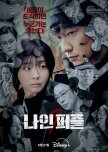
Forget your usual crime shows.
The whole premise is just so hooking. Basically, ten years ago this girl, Yoon Ena (Kim Da Mi), was the prime suspect in her uncle's murder because she was found at the scene with total amnesia and holding a single puzzle piece. The cop on the case back then, Kim Hansaem (Son Suk Ku), was obsessed with proving she did it. Cut to ten years later: she’s now a genius criminal profiler, he’s still a chaotic detective who secretly doesn't trust her, and suddenly a new serial killer starts dropping those exact same puzzle pieces. It is the most awkward, tense reunion ever.The absolute best part of the show is the dynamic between Kim Da Mi and Son Suk Ku. Their chemistry is insane, but not in a romantic way. It's pure psychological warfare. Kim Da Mi is so good at playing characters who are slightly unhinged and quirky, so you're constantly staring at the screen trying to figure out if she's a genius or a psychopath. And Son Suk Ku? He just nails that gritty, tired, cynical cop vibe. They bicker constantly and you can just feel the tension every time they share a room.
Visually, the show looks gorgeous. It’s dark, moody, and has this eerie atmosphere that makes you feel super unsettled but unable to look away. Is it perfect? No, the pacing gets a bit messy toward the end and there are definitely a couple of "wait, what?" plot holes. But honestly, it doesn’t even matter because the ride is so fun. It actually treats the audience like they have a brain, which is so refreshing for a detective drama. Seriously, grab some snacks and go watch it. It’s a solid 8.0/10 for me.
Was this review helpful to you?
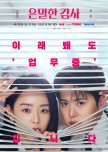
Probably the best romance kdrama this year
I highly doubt I’ll be able to see a kdrama this much fun, very soon.Leads that actually deliver the chemistry fitted for these types of plots(hot and sexual tension), no dull, meaningless dialogues, side characters that don’t look like they’re forced and just there to fill the scenes but are charismatic. A romance office drama that’s both fun and has character depth, delivered with flawless acting. And in my humble opinion, it has one of the best kissing scenes in kdrama history. Yeah it has it's small flaws (not very significant) towards the ending. Sfl’s writing was a bit jarring, the writer suddenly turns her into this nonsensical character. BUT it’s overall the best office romance drama released this year.
My only issue is, how the writer baited me into believing that, we could anticipate 2 couples being formed in PM audit team 3.
Highly going to rewatch it in 3-4 yrs.
Was this review helpful to you?
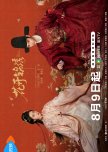
This review may contain spoilers
What Love Can Demand From Us.
"When hearts are one, even strangers can walk the same path." — Xie Ting Yun⚠️ SPOILER WARNING ⚠️
This is a LONG review, and yes, I am going to talk about the actual story.
Major spoilers ahead for The Road to Splendor, including character development, political schemes, relationships, important reveals, and the ending.
If you haven't finished the drama yet, STOP HERE. Go watch it first. Then come back and let me overanalyze everything with you.
━━━━━━━━━━━━━━━━━━
👥 CHARACTERS
━━━━━━━━━━━━━━━━━━
Female Lead: Xie Ting Yun
Male Lead: Zhao Ling
Xie Ting Yun's Brother: Fu Ting Zhou
Xie Ting Yun's Childhood Friend: Fan Yake
Fan Yake's Husband: Yu Jingxiu
One of the court ministers: Grand Secretary Tian
Zhao Ling's Political Rival: Grand Secretary Yu
━━━━━━━━━━━━━━━━━━
☕ BEFORE THE SPOILERS
━━━━━━━━━━━━━━━━━━
I told myself I would try this drama with no expectations. Little did I know this show would destroy my sleeping schedule. Hurray! 🎉
There are a lot of things I want to unpack about this drama, so let's start.
The Road to Splendor follows two people from completely different worlds: Zhao Ling, a loyal and brave salt dealer from a humble background, and Xie Ting Yun, a noble lady falsely accused of having an illicit affair. Circumstances force them to flee together, and as they become entangled in conflicts involving their families, the salt trade, and the imperial court, their relationship gradually changes. What begins as necessity and mutual dependence slowly develops into trust, partnership, and eventually a love that feels earned.
One thing I really want to praise is the cinematography. There are scenes where the camera is noticeably tilted off its horizontal axis, making the frame feel slightly unstable, while other moments use wide or full shots to place the characters within their surroundings, often paired with atmospheric lighting. It creates some visually striking and emotionally charged scenes, such as when Xie Ting Yun confronts a tied-up Zhao Ling to propose an alliance so they can solve the salt-trade crisis, or when Zhao Ling's colleagues are shown watching him while Grand Secretary Yu stands between them. The framing often makes me pay attention not only to what the characters are doing, but also to how the camera wants me to feel about the moment.
Some viewers may consider this a slow-burn story, but I actually found it quite fast-paced. Almost every episode tackles a different subplot or conflict. Some take two or three episodes, especially in the first half, but there is usually a resolution before the drama introduces another problem. That structure made the show very bingeable for me. There was always another thread waiting to be unraveled, which made me click the next episode button more times than I should probably admit.
Now, let's dive into the themes and characters.
━━━━━━━━━━━━━━━━━━
🚨 SPOILERS START HERE 🚨
━━━━━━━━━━━━━━━━━━
One of the most noticeable themes throughout the drama is the filial duty of children toward their parents. It becomes a major conflict for Xie Ting Yun early on and returns later when she tries to settle down with Zhao Ling. What intrigued me wasn't simply the question of whether children should obey their parents, but something deeper: can filial piety still be considered virtuous when the values your circumstances demand of you contradict your own perception of right and wrong?
The drama explores this through several characters. The Emperor faces the dilemma of choosing between his love and duty toward his grandmother and the welfare of his people. Fu Tingzhou faces another version of it when protecting his mother and sister comes at the cost of obeying his father's selfish demands. The circumstances are different, but the conflict is similar: when family duty and personal morality point in opposite directions, which one should you follow? That is what made this theme feel surprisingly relatable. The circumstances may belong to an ancient setting, but the conflict between family expectations and personal values still exists today.
The drama also gave considerable weight to friendship through Xie Ting Yun and Fan Yake. They grew up together and were almost like sisters born from different wombs, but their friendship fell apart because of a man. He essentially forced Fan Yake to choose between him and her friendship with Xie Ting Yun, and the moment she chose him, the friendship was broken. Like, zip. Nada. Tapos.
What made this more interesting was the irony that came later. After losing that friendship, Fan Yake entered the high noble circle and tried to build new relationships, only to eventually question whether those people even considered her a friend when conflict arose. It made me think about the difference between genuine friendship and simply being surrounded by people who call themselves your friends when everything is going well.
Marriage is another theme that quietly runs through the drama. We see it through Fan Yake and Yu Jingxiu, Yu Jingxiu's parents, Xie Ting Yun's parents, and eventually Xie Ting Yun and Zhao Ling. Their marriages are very different, but they all raise questions about commitment: what does it actually mean to remain loyal to someone when circumstances become difficult?
There is even a moment when Xie Ting Yun describes Fan Yake to her widowed aunt and sees similarities between them, and another when she tells Zhao Ling that their circumstances could eventually make them like Madam Yu and her husband. These comparisons add another layer to the romance between the leads because their relationship isn't simply about falling in love. The drama keeps asking whether they can remain committed to each other without allowing family, duty, or political circumstances to turn their marriage into something transactional.
Yu Jingxiu is one of the most fascinating contradictions in the drama. He once told his mother, "You and Dad are truly made for each other. One uses me and the other threatens me." Yet ironically, he eventually became both. He uses and manipulates people to get what he wants and constantly threatens his own wife. He really is the Yu family's heir, not just in status, but in the way he understands power and relationships.
What makes him even more frustrating is his self-pity. He hates being treated as a tool, yet he has no problem treating other people the same way. He complains about the system while perpetuating it.
At first, I thought he was similar to Liu Chang from Flourished Peony, but I eventually realized that their trajectories are almost the opposite. Liu Chang is a coward first, and his circumstances gradually push him toward becoming worse. Yu Jingxiu is already willing to do terrible things; his circumstances simply expose the coward underneath. Liu Chang's cowardice leads him toward evil. Yu Jingxiu's evil exposes his cowardice. And that, to me, makes Yu Jingxiu far more ironic and frustrating.
That also makes Zhao Ling's description of him in Ganlin almost perfect: "You're a beast in fine clothes." Beneath the status, refinement, and respectable appearance is someone who uses, manipulates, and threatens others just as his parents do. He isn't merely the victim of the Yu family's way of doing things; he has become its perfect heir.
And then we have the two leads. Zhao Ling and Xie Ting Yun have insane chemistry on-screen. At first, Zhao Ling has this playful, easygoing personality while Xie Ting Yun is reserved. What I especially appreciated in the earlier episodes was how much Zhao Ling's feelings were communicated through subtle acting rather than dialogue. When Xie Ting Yun gives him a toast after they solve the salt-trade issue, just before he leaves for the army, he looks at her intently and then sighs. Whenever she proposes marriage and he waits for her to admit that her reason isn't simply convenience or an alliance, you can see him grabbing whatever is nearby just to maintain his composure. Those tiny gestures made their romance feel like a genuine slow burn because his feelings were already there long before he was willing to say them. And as the story becomes increasingly serious in the second half, both of them have to change with it. Zhao Ling became serious and Xie Ting Yun became more reserved.
Grand Secretary Tian, however, became my favorite character. Zhao Ling may be the character I find most fascinating to analyze, but Tian is the one who gives me the most fun watching him.
What initially looks like comic relief—his habit of "sleeping" in court—is actually a clever political tactic. Whenever the court becomes divided and the Emperor is caught between opposing sides, Tian gives him an easy way out. He will claim, "I have disgraced the court. Age has weakened me, and I can no longer stand for long. For me to grow so feeble-minded... I truly have no face to remain at court." The Emperor takes pity on him, someone is asked to help him, and then: "Court dismissed."
If you pay attention, the repetition reveals that this isn't simply a running joke. Tian is breaking the tension and giving the Emperor a way to end a political deadlock without openly taking either side. He is smart enough to keep his real opinions private, sharing them only with his daughter and son-in-law. In court, he remains deliberately unreadable. That is what makes him such a fascinating political character: he can be a powerful ally and a dangerous enemy precisely because you never quite know what he is thinking. Zhao Ling and Xie Ting Yun managed to crack his mask a little, but that mask is also what keeps him politically safe.
Then there is the Million-Tael Mausoleum renovation project, which to me was basically Zhao Ling and Xie Ting Yun playing one giant game of chess while everyone else was looking at individual pieces. What initially looked like separate political moves gradually revealed itself as part of a much larger scheme. I really enjoyed watching the pieces fall into place because it showed that the real battle wasn't always happening where the court thought it was happening.
What I found even more interesting was what happened to Zhao Ling afterward. He was stripped of his official position and reduced to a commoner after taking responsibility for the mausoleum project, but the Emperor later reinstated him, gave him the lapis lazuli bracelet, and immediately entrusted him with the disaster-relief program. Then the Tian family discussed what Zhao Ling and Xie Ting Yun had accomplished, with Grand Secretary Tian observing that they had more than ambition, they had the nerve and ability to wield power. The scene then cuts to the Xie residence, where merchants are already lining up with gifts for Zhao Ling. It felt like the drama was showing us, rather than simply telling us, that Zhao Ling and Xie Ting Yun had emerged from the scheme with a completely different level of political influence.
Zhao Ling also became willing to fight fire with fire, particularly in the way he dealt with Grand Secretary Yu. This became especially clear after he had a nightmare about Yu targeting his wife. Instead of simply trying to defend himself against Yu, Zhao Ling realized that he needed his own political power to protect her. He formed a faction and showed his lapis lazuli bracelet to the ministers, who then pledged their support to him.
Another thing I noticed was Zhao Ling was beginning to do exactly what Grand Secretary Yu had been doing all those years in court—building a faction, gathering influence, and using political power as protection. His political growth wasn't simply about becoming stronger. He was learning to survive by adopting the very methods of the people he was fighting against. But that growth comes with a psychological cost, and I think this is where Zhao Ling becomes the most interesting character in the drama.
Zhao Ling is probably the most complex and best-written character arc in the show for me. His journey from a playful, easygoing salt-dealer to one of the powerful figures in court reminded me of Walter White's transformation in Breaking Bad, not because their stories are the same, but because both characters gradually move further away from the person they initially appeared to be.
You can see Zhao Ling struggling with himself, especially when he becomes trapped in the General Mo donation-murder and Northwest corruption case. The exhaustion and fallen resolve visible on his face say more than his dialogue does. He knows what he is becoming. He knows what he has had to sacrifice. And yet he keeps moving forward because stopping would mean leaving himself and the woman he loves vulnerable. His rise becomes even more painful after he executes his former colleague in the Northwest and is subsequently promoted. On paper, he is succeeding. In reality, you can see the cost of every step upward.
What makes Zhao Ling's character arc so painful is the contradiction between the man he believed he was and the man he gradually had to become. He once believed, "There are lines we can never cross." Yet he eventually crosses that very same line, not simply because he wants power, but because he promised to protect the woman he loves. And the cruel part is that he was right about one thing: to protect her, he needed to be at the top. The higher his position, the more power he had to shield her. But getting there also meant becoming the kind of person he once believed he could never be. That is why his rise feels both like a victory and a consequence. He didn't lose his way by accident. He chose this road because he loved her.
And that is the real tragedy of Zhao Ling. He is not simply a good man who became powerful. He is a man who understood exactly what power could turn him into and still chose to climb because, in his mind, protecting her was worth the cost.
Overall, The Road to Splendor is a bingeable romantic story about two people who choose each other, but underneath the romance, family conflicts, and court politics, I think the drama is ultimately telling us about what love can demand from us.
Sometimes protecting the person you love means becoming stronger. Sometimes it means entering a world you never wanted to belong to. And sometimes, it means becoming the person you once believed you could never be.
Rating: ⭐⭐⭐⭐⭐ (5/5)
Was this review helpful to you?
This review may contain spoilers
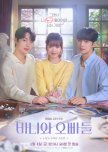
Crushology 101 reminds you of the preciousness of love, even through its complications
It's a cute college rom-com, but it's also a genuinely strong story, something the drama keeps proving right up until the final episode. It's beautifully directed too, with a fresh soundtrack (that French song at the start — awesome) and really creative visual choices: shifting from simple shots to dynamic collages, full cinematic frames, warmer color palettes, and even black-and-white flashbacks in reduced framing. All of these choices are used deliberately to serve each scene.The original webtoon, Bunny and Her Oppas, is a reverse harem. However, there is no endgame. Here, you have a love story with a clear ML, but each of them had a purpose and intervened at some point.
Bunny's struggle with self-esteem, Yeol's vulnerability and trauma from his family, his heightened abandonment issues from his ex (contrasting Bunny's ex and her other experience), and the physical distance between him and Bunny compared to Won, who worked in the same department as Bunny and started his relationship with her more naturally — these are the kinds of things that draw me in.
The cast was a great ensemble where everyone felt necessary to the plot: Bunny's parents (it's so rare to see a loving couple like this and get to see their own story), Yeol's friends and especially his best friend Dong Ha (a reunion with his brother from Hierarchy), Bunny's friends with the funny names, Ji Won and Yeol's growing and funny friendship, Won's sister, Yeol's mother and his ex, the male leads, and Bunny's ex.
Honestly, I was a little scared when I saw which webtoon they were adapting, because I thought it would be a waste of potential for their romance to become some reverse-harem rom-com, and I'm not into that. Turns out, their romance more than satisfied me, and I loved how the concept was handled.
(Spoilers up to Episode 7)
However, I've read comments about Yeol that make me wonder if they really watched the drama. In Episode 4, he confesses his feelings. In Episodes 5 and 6, he goes after her several times and makes it very clear that he likes her, reinforcing the confession from Episode 4. In Episode 7, he is trying to deal not only with his own feelings, but also with his ex, who won't let him go even though he makes it clear that he doesn't want her.
Bunny, even though she is hurt by the whole situation, doesn't choose to give up. And she has Ji Won, but she doesn't see him romantically and makes that clear. After knowing the truth, Yeol felt bad about his ex because all this time he had hated her without knowing the truth.
(End of spoilers)
The drama felt nostalgic, and it made me appreciate old-school tropes again. The fantasy scenes were great too, like in True Beauty.
The ending was also beautiful, on top of the great cliffhangers the drama had. I wish it had gotten a better release; it should have been on Netflix and not a region-restricted platform like Viu. Even I couldn't watch it on Viki in France. It's a "small" drama, but it deserves way more. I can only say that the impact the drama had on me was incredible.
For details that you might notice, there were parallels to Hierarchy (the end of Episode 1, the bike, the shirt), and I felt like it was inspired by Nevertheless — the art setting, the beginning of Episode 4, the opening, one particular scene especially.
P.S. I'll post one of my favorite shots and edit under the review.
Was this review helpful to you?
This review may contain spoilers
If the sky and the ground got in my way, I will destroy them all.
InnOngsa. I was honestly surprised by this tandem. Starting with their chemistry, should I even question it? Of course not. 😭Acting-wise, from the main roles to the supporting cast, everyone ate. Ongsa is such a good and pretty crier, but Inn? That man can ACT. You can see the yearning in their eyes, but in completely different ways. One shows it through sadness, while the other shows it through anger and eagerness. And somehow, both hit just as hard.
Story-wise, it was such a great ride. This series gave me the kind of love and yearning I was looking for. The NC scenes were shot beautifully, with so much passion, but what impressed me more was how they managed to show all of that without compromising the historical revolution storyline. Everyone was fighting for what they believed was right until the very end.
Angst, you said? Here you go. 😭 Is there even an episode where they were simply happy without having to fight to hold on to the love between them? And the script? Breathtaking. My favorite line has to be: "If the sky and the ground got in my way, I will destroy them all."
You can never make me hate Phob. Love doesn't just revolve around romance. How can I hate someone for trying to change what he believes is wrong with his country? And when he betrayed Thin, it wasn't just Thin who suffered. Phob suffered too, probably the most, because he had to hurt the person he loved most. 😭😭😭
But what I loved most was that they didn't simply run back into each other's arms. We knew they still loved each other despite everything that happened, but it took so many episodes before they finally found their way back to each other. And that made their reunion feel so much more deserved.
One of my favorite parts was after the system changed, when Phob started questioning whether he had supported the right thing because all he could see were the consequences of those changes. Meanwhile, Thin, despite being one of the people most affected by them, was able to see the good that came from it. I loved that contrast because it showed that neither of them had a completely simple answer.
Overall, this was such a great ride. Definitely one I’m going to recommend to everyone.
Isn't it obvious from how LONG this review is? LOL. 😭
Was this review helpful to you?
This review may contain spoilers
A melancholic rom-com
To begin with, Lee Soo is one of the best male leads ever written. Fairy-tale metaphors, landscapes, discovering Seoul through teamwork and different jobs (photography and calligraphy), stages of life and love, quotes, missed opportunities, family relationships — there are lots of things to appreciate. In the end, Soo stayed patient and worked on himself, but that never means he has to change his whole personality, and I hate when people think that way. He's not bad, and people also tend to ignore the lonely cocoon he created for himself. What he lacked was self-love, and his vision of relationships was shaped by his divorced parents. His biggest mistake and regret was to not understand his own heart. So yes, his behavior could be a little childish, immature. I like such characters, because this is not what real toxicity is, this is simply being human. And I liked the romance, because they are both difficult yet adorable. I remember being on the ML's side even when he was in the wrong and feeling frustrated, which made the drama even better.There is also a complex SFL, a great contrast with the SML (a simple, kind CEO character whose job has to do with literature), his own backstory, and his relationship with the FL being a sort of contract. The drama is also about creating new opportunities despite being too late, with both halves divided by a turn of tables. It offers a fresh take on familiar tropes, while also giving us a third couple and an overall "group of friends" story.
The best part was the ML’s story because of how real it is. I got attached to him sonner than I thought, and I liked the way he cared about Woo Yeon (her name literally means "destiny") and supported her dreams. I also loved how The Little Mermaid was referenced through him. Ong Seong Wu has been one of my favorites ever since this drama, and I love the OST titles here. He even did a song for his character, and it is so emotional. The OSTs were always perfectly placed throughout the drama.
"I don't take photos of people."
This was the beginning of his story. He actually inspired me to take photos on my trip at the time I started watching the drama. Overall, this is a slow-burn character study, so it is important to be patient with it.
The moment I fell in love with this drama was at the end of Episode 6, when my disappointment turned into fascination, and I silently cried because of Soo. Afterwards, he really became the star of the drama. What I initially thought was a ridiculous cliché was actually just so beautifully done.
P.S. Ong Seong Wu actually likes photography, so of course he took the role.
One interesting thing to note is how the audience sided with the SML, who was the one to convince Woo Yeon to pursue the relationship. And, of course, a simple, green-flag, stereotypical character like this is much easier to digest than the leads.
Quotes :
"But life is a series of exchanges. No one can control them. The only thing that should have been different is not what happened. It's this feeling that I became aware of far too late."
"A missed opportunity turns into regret. If there are no more opportunities to miss, I will make sure to create them myself."
"In a world of misunderstandings, it's dangerous to make assumptions about others. So you should ask the question yourself. You should hear the answer directly."
"Love must touch someone's inner confidence. Then, love will not be dragged away by the other person, but will draw the other person towards you."
— From a book's quote at the end
And then there is Lee Soo's father telling him:
"(When couples break up) A man becomes friends when feelings remain, but a woman becomes friends when they have no feelings left."
And when Lee Soo asked his divorced mother to consider getting back together with his father:
"Son, do you know what is the most important thing in a long-term relationship? The memories. Your dad and I had good memories, but we have more painful ones. I have no confidence in overcoming those bad memories."
Was this review helpful to you?
Some dreams are worth holding onto
This was one of those dramas that quietly pulled me in and never let go. What I loved most was how it balanced the romance with the characters' individual dreams and personal growth, making every achievement and setback feel meaningful. The relationship never felt rushed because both leads had their own journeys, and watching them support each other instead of holding each other back made their connection even more satisfying.The chemistry between the leads was effortless, but the supporting characters also played a big part in making the story feel complete. They each brought something different to the table, adding warmth, humor, and emotional depth without taking the spotlight away from the main couple. I found myself genuinely caring about more than just the romance, which always makes a drama much more memorable for me.
If I had one small complaint, it's that I wanted a little more time with the characters once everything came together. Even so, this was an emotional, comforting, and beautifully paced drama that left me with a smile by the end. It's definitely one of my favorite surprises of the year.
Was this review helpful to you?
This review may contain spoilers
If I could, I would give this series a 100/10.
If I could, I would give this series a 100/10.This series is absolutely incredible and truly one of a kind. What makes it so special is the way it conveys such powerful messages about love, acceptance, and faith. Its exploration of belief, love for God, self-acceptance, and learning to truly embrace who you are is handled with so much sensitivity, warmth, and tenderness.
The performances are outstanding across the entire cast. Every actor brings so much depth to their character, with even the smallest nuances feeling incredibly intentional and authentic. The direction and cinematography are equally exceptional, with beautiful choices that add so much to the emotional impact of the story.
And then there’s the soundtrack, which is simply perfect. Beautiful, emotional, and perfectly suited to the atmosphere of the series.
This is the kind of series that stays with you long after you’ve finished watching it. It settles somewhere in your heart and continues to echo in your thoughts. A truly beautiful and unforgettable experience.
Was this review helpful to you?

This review may contain spoilers
The Chemistry of 10 Years Friendship
Still new to Thai Stuff, So I dont know much about BNK48 era of NNN, they say even in BNK48 era they already a couple, so no wonder the chemistry is really good.Watching from the beginning till the end, im gonna say i really love this drama 1- 7 has a really good Pace, the drama, the intensity, the Comedy is good too, they way they turn from hate to love, the way they want us to think that they are a real enemy even till the end is really good for me, back when i watch the first 2 episode i really HATE Fai with all my heart, that Chiller Car scene from early episode really got me angry plus that Weird Looking Lady DAMN even a demon is way more nicer than her ngl, but after hearing the truth from Fai its actually different kinda Sad feeling from me. still kinda hate why Fai keep Teasing Khaprao till the end, that scene where N'Rose and N'Lada Scold Fai is actually really good, she really need a reality check .
I already say i live 1-7 but i kinda sad with ep. 8, the pace is really good, but i feel ep.8 is really rushed, like there is still alot of things to explain, some people Say its really different from the Novel (i dint read the novel btw), even without reading the novel i already know that the last episode was rushed, in my opinion the way A'Panee accept N'Khaprao is way too fast, it need more time, need a lil bit more drama to it, even the Propose scene is a bit bland for me, its has a Rom-Com touch, but still way too fast and Bland, i just think the last episode can add like 15 min more or maybe 1 or 2 episode more.
after watch 4 of them, my rating would be: 1. The Fire, 2. The Water, 3. The Earth, 4. The Air
Was this review helpful to you?


