

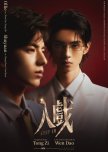
This non-con is getting ridiculous
Holy shit what an absolute egregious waste of a show. I had been hearing people SCREAMING for this so I said I’d give it a go… Why did I do that. This was just a fantastical combination of the worst things you would want in a romance drama BL aside. What is it with China and the fucking non-consensual bullshit? What the fuck? I watched it in Revenge Love. I watched it in several other fucking Chinese dramas that I can't think of the name of. Why are they so big on the non-consensual bullshit? Stop it.The premise of this show is beyond ridiculous. Why are they trying to make two actors live together, practicing in their own time, and then shaming Zhang Zhun for not wanting to? Absolutely not. And then saying “Oh, well, if it feels good, then it feels good.” Um no??? If you're practicing, you should be practicing with an intimacy coordinator, not by yourselves in your fucking shared hotel room. It just seems so insane and unprofessional to pull from? I feel like intimacy coordinators probably aren’t as known about as they should be, ESPECIALLY when i see some twerps in the comments saying ‘oh this is definitely not acting’ or ‘this feels like self service not fan service’ brother that is the POINT YOU FUCKING IDIOTS. that’s the WHOLE SELLING POINT. So this kinda feels like some adaptation of some writer going ooooh let’s make these actors live together for 2 weeks to build chemistry and practice scenesss togetherrrr. oh BROTHER THIS GUY STINKS.
Another thing.. what is with this focus on breathing in intimate scenes? The only thing I’m hearing is LOUD ASS BREATHING and I’m gonna need everyone to BACK UP from the mic. I know the issue is with the dubbing but could we not have fixed this bullshit by now? China has been doing this forever and we still haven’t found a way of making the dubbing seem somewhat convincing? Instead I’m getting them breathing in my ear as ‘sounding sexy’ when if just sounds like bad asmr with actors who use vocal fry for a living.
Like why are they have sex when Zhen Xin’s aware that Zhang Zhun’s drunk? Why are you TAKING PHOTOS??? WHY IS EVERYONE SO OKAY WITH THIS??? All this bullshit just to get completely ignored when the main lead gets together. And the cheating? I’m fucking doneeeee.
I love this concept in dramas but if I see another rape-y, non consensual scene, I’m going to start hunting people down. It’s so unfortunate like why can’t we make this concept but not… morally wrong?
I’m sorry, I tried but this was scene after scene of non-con and it just ain’t working for me.
Was this review helpful to you?
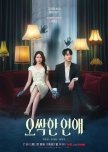
Spooked but where’s the love.
When the movies The Sixth Sense and Ghost have a baby, you get Spooky in Love. So let’s be clear: this was never really about investigating death and murder, nor was it truly a rom-com.The references to Greek mythology and the boat that carries souls to the afterlife were a creative touch (sarcasm intended), and an elaborate way to end a soul, if you will. But apparently, nothing demonstrates true love better than sacrificing oneself by getting run over by a truck. Because, naturally.
This show is so riddled with tropes that it could fill a Swiss cheese. So let’s just call it what it is: a cheesy show.
Unfortunately, it is also symptomatic of what I find increasingly frustrating about some newer K-dramas: recycled ideas, lazy writing, and stories seemingly designed around what will generate Netflix hits rather than what makes for a satisfying narrative. The audience is apparently expected to consume whatever is served, specially cheese.
Just as I said in my episode reviews, the ending completely fell off a cliff. What started with an intriguing premise ultimately became unremarkable, predictable, and forgettable.
Maybe it works for dreamers. It certainly didn’t work for me.
And that’s the real shame. With two such talented actors carrying the story, they deserved a much better script.
Was this review helpful to you?
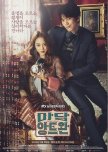
This review may contain spoilers
Great Acting-Terrible Script
I really loved the idea of putting a highly decorated and tail first psychologist together with an absolutely intuitive fortune teller and see what will happen. That idea hooked me from the very start and keep me interested until episode 11 when it got very difficult to sympathize with the ML and the story gave the viewer no reason to like him what so ever. Despite that, the push and pull between the leads was really good and you thought for sure that when they got together it was going to be a chemistry explosion. Unfortunately, that is not what happened, at least for this drama viewer.After finishing the series, I have a clear understanding of where the ML was coming, the trauma and the aftermath of it, but I think it would have been best to clarify this issue way earlier in the narrative, so that the viewer understands why the ML acts the way he does. Instead, we are led to believe that ML is a renowned yet obsessed psychologist carrying unethical experiments because his professional opinion is that women are incapable of love all the way to the last episode. Which just made this viewer not connect to the ML at all....well, until the last episode.
main cast - wonderful, lovely acting skills
push and pull between the leads - excellent
romance= most of the time, I was not sure what was real and what were lies
story line - started off well and ended in a happy fiasco
scrip writer - go back to school
soundtrack - nothing extraordinary
ending- happy but rushed
spice - average-nothing special
This drama had so going for it BUT with so much lying, plots and schemes the relationships became extraordinarily toxic and no longer entertaining. Writers seemed stuck in an exercise wheel that turned endlessly exhausting the story long before the drama concluded. Some viewers may really like this story, but it was just okay and forgettable for me. No a rewatch or recommended
Was this review helpful to you?
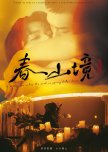
A Winter Sun Wakes the Wind in Spring Hills' Dream
5 people found this review helpful
No plot, just beautiful cinematography and confusion
omg.....if this isn't the most boring, plotless show i have ever seen. WHERE IS THE PLOT, WHERE IS THE STORY i swear it's just a bunch of shots of random things mostly and then a few scenes with the leads that don't make sense or barely have dialogue. like okay the cinematography is beautiful but thats the only good thing about this show. if u like art and nice visuals i guess its for u but other than that its just bland. Then also somehow the leads go from barely talking to being in a full on relationship without us seeing any type of relationship progress. It just feels like nothing about the characters lives and personalities was shown and the relationship seemed so abrubt.I just found out its the same director that made Secrets Happened on the Litchi Island and which makes sense considering i also didn't enjoy that show cuz it was just a bunch of scenes of nothing and no plot. Maybe reading the novel would give more context and make the story and relationship progress less confusing but the show should've done that as well. The way I was so excited to watch this because of all the hype and good reviews too 💔.
Was this review helpful to you?
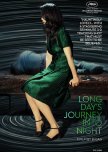
You don't know exactly what you are watching and trying to force a coherent narrative is futile, so if you are a person who needs these elements to enjoy a film, perhaps it's not the best option to choose from. But once the movie ends, it lingers with you and eventually it all makes perfect sense. I mean, perfect sense...and you'll be even more in awe.
It's about memory and dreams, and cinema. I don't want to give more details, because it will ruin the experience.
Was this review helpful to you?
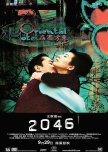
Love is a matter of timing.
Only for those who have lived long enough. I prefer *In the Mood for Love*, but this one closes the story, and in that way, it has its own charm.Poetic, more fragmented than his previous works. The fact that each character speaks in their own language (Japanese, Cantonese and Mandarin) and you get used to it as something normal is fantastic. As well as the acting.
You can see many things here that you find again in *Blossoms Shanghai*, even clearer than in *In the Mood for Love.* No surprise I loved the series, WKW did an amazing job evolving to that format and to the present day while keeping his signature and classic themes.
And on a final note, Wong Kar-wai's influence on Bi Gan, particularly in *Long Day's Journey into Night (2018),* is evident yet the latter brings his own personality. Of course I was going to like his portfolio too - perhaps even a bit more.
Was this review helpful to you?
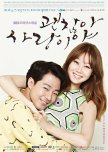
Just my type, or whatever they said...
This was such a unique story, whoa. I'm not sure about the scientific/medical accuracy of it all, but as someone unrelated to that domain, I definitely enjoyed all the psychology/psychiatry stuff.Something about this felt so laid back and natural, even though the story isn't what you would call "laid back," which, btw, was a huge surprise to me! I went into this expecting a romcom, and in a way, it was, but there was so much more to it. I think romcoms today got oversaturated and filled with trope after trope that I kind of subconsciously went into this expecting that same thing and was proven wrong...
I gave it a 9/10 but some scenes with her mother ragebaited me so bad that I genuinely considered dropping my rating lol. But it's very realistic if you think about it xD. There were actually several scenes that triggered me because I do not have the same compassion, patience, and/or tolerance that some of these characters have, and I do think that media that leaves you with very intense and polarized feelings can be good for you. To me, any story that makes me feel intense emotions (other than negative emotions towards the writers rather than the characters) is a good story.
Bring back romcoms with strange stories and polarizing characters :p
Was this review helpful to you?
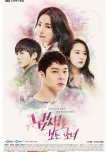
Light but engaging.
The actual title, The Girl Who Sees Smells, didn’t appeal to me so I bypassed it for a long time. But then I started enjoying Namkoong Min’s dramas and decided to watch this one for him. I stayed for all the main leads.Having recently finished some much more complicated, heavy dramas, TGWSS was an inviting, imaginative, enjoyable watch for me. A good drama to balance out my watch history lately, if you know what I mean. I found myself interested the entire time even binging a few too many episodes at a time.
Park Yoo Chun (Detective Choi) Shin Sae Kyeong (Oh Cho Rim) Nam-koong Min (Chef Kwon) and Yoon Jin-Seo (Lt. Yeom) all delivered very good performances. I was most impressed by PYC (my first drama with him) whom I believe stood out above the rest and I also felt he carried the whole drama. PYC and SSK had great chemistry - they had several truly funny and serious/tender moments together. SSK has a great acting range, delivering a fun and engaging Oh Cho Rim. It’s not my favorite role of his but NKM was a great sinister villain. He acts with his eyes so well. YJS was a no-nonsense but endearing Lt. Yeom, the kind of boss you want to do your best for.
I was somewhat disappointed in the supporting cast, their acting was not terribly convincing - I don’t think their humor always fit the story - comedy/drama detectives can and should be funny where the story needs it but also need to be on their (detective) game where it counts and I didn’t feel they ever truly delivered on the latter. That part gave me a dissatisfied feeling many times. Some of this criticism is on the writing and directing, too.
The OST fit the scenes and was not loud or overpowering.
I definitely recommend TGWSS for someone who is looking for a light but still intriguing Rom-Com/Mystery. However it’s not a drama would feel the need to rewatch.
8/10
Was this review helpful to you?
Kingdom 4: Return of the Great General
0 people found this review helpful
The Greatest Japanese Series Continues ...
Just by saying this is one of the greatest series I ever watched ... it doesn't explain how great it is. It's really difficult to put into words unless you watch it!!! This being the forth installment, you'd think it would start to lose its appeal. That couldn't be further from the truth. I think this may be the best one so far, and that's saying a lot, because the previous three were absolutely fantastic. If you didn't see the prequels, you may not totally appreciate this fourth part, but you'd still enjoy it as an extremely entertaining movie. It gives you great protagonists, wicked evil antagonists and lots of wonderful side stories in between.I've always been an enormous fan of Kento Yamazaki, not just from this series, but from so many other great projects he's been involved with ... but this one by far, being his best work. He gives such a commanding performance as Shin, it's really incredible to watch. He makes it look easy, but you know it wasn't. Kento truly steals every scene he's in with his brilliant acting. Behind him is also an unbelievable supporting cast. Takao Osawa playing the mighty General Ohki and Ryo Yoshizawa as King Eisei lead the rest of the brilliant characters in this series.
It's an exhausting two and a half hours, because the excitement never slows from the very first minute right through to the end as the credits roll.
I think if I have to find one negative ..... it would be that we have to wait to see the continuation in Kingdom 5. Just the way part 4 ends, it leaves you with such anticipation for part 5 to begin.
Way to go Yamaken !!! Can't wait to see you bring back Shin again.
Was this review helpful to you?
Love Wins
This is a story of trama , healing and love. Children growing up in an unstable home searching for love and care from parents who do not have an ounce of love for their children. Both parents are driven by financial needs and are only concerned with their own needs. However the children form a bond that sustain them for a lifetime. You will see how love evolves and the care they have for each other. This turns out to be a wonderful love story and I would highly recommend it. Drama Grandma.Was this review helpful to you?
This review may contain spoilers
I was expecting more
I wanted to give it a 7.8 but couldn't so I gave it 7.5I feel they dropped the ball on the spooky part after they became a couple.
I think that should have been a consistent part.
Min Hwan was doing too much and I wasn't sold on his reasoning.
it's sad they killed the most handsome character in the beginning
and maybe I missed it but I wasn't quite clear on the necklace.
Why did he need it?
we couldn't tell if it would have stopped her from seeing ghosts because she stopped after becoming a couple.
but I loved the ending. for me it was the most notable.
taking Min Hwan down with the heart of his brother was everything for me. and him thinking he got away then everything being revealed to the hole network.
if he ever gets out he will have to emigrate for peace.
the Aunt.
BAY BAY she wins the role for best faint EVER.
😂 WHOEVER WROTE THAT FAINT SCENE - KUDOS.
if anyone has ever fainted that's how it happens a little nauseous or blurry vision because your faculties are gone and to the floor it is.
Was this review helpful to you?
Very Rewatchable
This may be the first drama where I’ve felt l could watch it over and over before I even got half way through it. it hit all the right notes and the leads are just fantastic as actors and characters. The ghost stories are fun and believable and it has just the right amount of humor, thriller, mystery, spookiness, and pure adoring love. The soundtrack is also 10/10. Overall, this had everything I enjoy in a story.I will say the product placement got a bit out of hand toward the end. No other notes.
Was this review helpful to you?
with all that potential? wasted
Some dramas disappoint you because they were never that good to begin with. Spooky in Love disappoints me because it had absolutely no business being this messy with THAT cast. Park Eun Bin and Yang Se Jong??? A Baeksang-winning actress with an insane filmography + an actor whose microexpressions deserve their own supporting award, and THIS is what we got??? Be serious. The beginning was actually promising. Cheon Yeo Ri can see ghosts, Ma Gang Uk is a prosecutor, and they’re supposed to solve cold cases together. Ghosts + murder cases + romance? Say less, I was seated. But then the second half happened and apparently the drama decided it had other plans. Suddenly we’re dealing with business rivalry, family drama, superstition clashes with grandma, and approximately 749 filler plots nobody asked for. The ghost cases that made this drama interesting were basically sent to the basement while the business plot took over the entire house. The drama lost its own plot somewhere along the way, and unfortunately I lost the will to follow it.And the romance… I genuinely don’t know what happened there. Sometimes their chemistry was cute enough to make me smile, and other times I was sitting there like, “okay… do you guys actually know each other?” The jump from “I have a little crush on you” to “you are the love of my life” happened so fast I almost needed a loading screen. Maybe the short episodes are partly to blame, maybe the pacing just wasn't pacing. Either way, the emotional progression never really landed for me. After seeing spoilers for the final two episodes and realizing we were still serving this level of cliché in 2026, I decided to clock out before the drama could disappoint me any further. Dropped. And honestly, that rumor about the actors only receiving the script for the first few episodes before filming suddenly makes way too much sense. I don't know if it's actually true, but if it is… oh, I finally understand how everyone ended up trapped in this mess. Because why does the drama feel like it was written with a perfectly normal beginning and then someone remembered there were only a few episodes left and decided to throw every possible conflict into the pit before the finale?
Such a waste of potential, honestly.
Was this review helpful to you?
I was still really enjoying it for the most part even without it, but that episode 10-11 patch was rough. Not only was everything a semi-boring hotel power struggle plot, but it had the terrible fake breakup trope, and like 5 very blatant ad reads. I was loving this show toward the middle of the season, then it just kind of fizzled out really hard for me. I think it came back with a decent finale, but it went from a show that I thought could be something special to something that was just pretty good, I guess.
Park Eun-bin still rules, though, and she was the reason I watched this, and the best part about this.
Favorite Episodes: 4, 6, 8
Was this review helpful to you?
Unfortunately disappointing
I loved some of the actors, but this isn't my favorite work from any of them. It's comedy-forward, so it's easy to watch in that sense--not to mention, short. I think the overall plot/story is getting old. I appreciated the message that everyone has their own value. Also, the romance was quite unnecessary, felt like a plot device.Takeaway: I need Moving Season 2 right now.
Was this review helpful to you?


