

The Loyal Pin
The story is beautifully crafted, blending drama and romance against the backdrop of Thailand's rich culture and breathtaking landscapes. It's a moving journey of self-discovery and falling in love, where the characters must overcome obstacles and challenge social conventions. Delicate yet emotionally intense, it's a story that stays with you long after it ends.Was this review helpful to you?
it's iconic, i know
I know the Khun Thee gimmick was so iconic, but for me, I don't think this is PondPhuwin's best work. There are so many plot holes and the character development is weak. This isn't PondPhuwin's first project together, but why do they look so stiff in a lot of their scenes? They don't seem comfortable with each other. Even when they're just leaning against each other, it feels so tense and forced. The same goes for their make-out scenes. The pacing also feels really slow—I had to watch it at 1.25x speed so the scenes wouldn't feel so empty.I love them, I am Narawins myself. This is my non-biased opinion about the series.
Was this review helpful to you?
This review may contain spoilers
Toxic relationships
When I first tried to watch this show I just couldn’t get into it for some reason. But I’m so glad I watched it!3 guys “in love” with one guy. 2 of those guys make a dumb agreement to not pursue the guy they are in love with & to pretend to day in front of him. The other guy is his new coworker.
I honestly didn’t think Jae-min was gonna end up being the psycho. I for sure thought it was gonna be Soo-hyeon. I wish they had at least 2 more episodes or I wish they would have made the 8 episodes an hour long. It was rushed & I wanted to know more of the background & what happened to Jae-min once he went to prison & what happen with Soo-hyeon since he decided to give up Da-on.
I’m glad Da-on picked Seong-hyeon. I wish we would have seen more of Seong-hyeon back story since we found out at the very end he actually met Da-on first!
Was this review helpful to you?
gave me a good laugh
This series is easy to watch, chaotic in a good way. You don't have to think about the plot, just watch and enjoy it (just like other muteluv series). But personally this one is the funniest, especially the song of the cult ritual😂 Sometimes it's just popped on my mind and I need to look for it on youtube😭😭Was this review helpful to you?
This review may contain spoilers
I love a good caper story with lots of machinations and doublecrosses and triplecrosses, especially when the main lead is pretending to be someone s/he is not. This drama also had a number of deliciously deranged antagonists. I thought that Lee Jun Young did a great job distinguishing his different characters from each other but it was Jeon Hye Jin who stole the show. There were some things that didn't quite hold together. The entire "Lividia" sequence, for example, was sort of cringey and not very believable. I also found the end to be silly. But I had so much fun watching this drama that I didn't mind. Was this review helpful to you?
 1
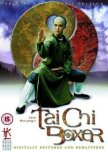
1Hok Man and his cousin have been stuck in a room studying the classics, regimented by his overbearing father. Luckily, his mother has mercy on him, allowing him to escape occasionally. After 10 years he and his cousin break out to do a lion dance in a celebration and Hok meets Rose who has recently returned from studying overseas. She is engaged to Lin Rong/Wing, though doesn’t take it seriously as it was a birth betrothal. She does take a shine to Hok. Hok’s mother studied abroad, too, and teaches her son some English and gives him the English name Jacky. The way of true love is not smooth, because Jacky and Rose don’t only have to deal with Lin, there are foreign opium dealers they run afoul of.
This film felt like a patchwork of other films, primarily, Once Upon a Time in China. The story was rather weak, but the fights were strong. Billy Chow, who was nearly allows cast as a villain showed up first to challenge Jacky’s father. Billy showed off his kicking skills even though his character got his butt kicked. The father was played by Mantis expert IRL, Yu Hai. I always love watching Yu fight, especially when he drops down into Mantis pose. Wu Jing as grownup Hok Man was quick, strong, and athletic. He’s always a delight to watch, even in this early film. Mark Cheng may not have been the most skilled fighter but he honed his acting skills in numerous kung fu and action films. The foreign villain, Mr. Smith, was played by Darren Shahlavin who trained in various styles. He also was accommodating enough to rip his shirt off and pose with his well-muscled body.
Yuen Woo Ping’s fight choreography was fun and destructive. Boards were splintered, vases were smashed, not much was left standing when the fights were done. In true 90s style, not so subtle wire work and trampoline work were used. Fortunately, when Yuen wasn’t undercranking the shots, seriously, these guys were fast enough, the pros took over. That’s not to say there weren’t a lot of missed kicks and hits but the guys and stuntmen knew how to sell every supposed connection.
This lite version of OUATIC was diverting enough, the fights were the reason to watch. Each one used the environment and different skill sets to perfection, in a 1990s way. You can't go into this film expecting modern polished overly crafted fights. Wu Jing hadn’t hit his stride as an actor, yet he was still charming as the impish and thoughtful kung fu hero. And it might also be the first time, or only time, you’ll see Pigtail Fu. Past the time I usually grant a grading curve, but for Wu Jing’s introduction, I’m feeling generous.
7 July 2026
Tai Chi Note: This film was billed as Tai Chi 2, but had nothing to do with the original, Tai Chi Master, which starred Jet Li and Michelle Yeoh. Much of the cast from this film did return for a 1998 Taiwanese television drama called The Tai Chi Master. I’d watch it for sure if I came across it.
Was this review helpful to you?
PERFECTION
When someone is new to BL or Thai series, this is the first thing I recommend. The story is perfectly written, and the actors' performances are truly worthy of praise. THE CHEMISTRY WAS ON POINT!!!There aren't any explicit scenes like in today's BLs, but omg, even the smallest touches are enough to give you butterflies in your stomach🫠🫠
DON'T FORGET ABOUT THE OST! THEY ARE MASTERPIECE💝💝
Was this review helpful to you?
Smart, Swoony, and Utterly Unforgettable
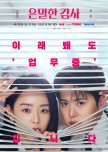
When the promotional teasers for Filing for Love dropped roughly ten months ago, I felt that familiar tingle of anticipation. The casting list alone was enough to set my heart racing: Shin Hae-sun, my SSS-tier actor, opposite Gong Myung, with Kim Jae-wook in support, produced by Studio Dragon. Everything about it screamed quality.The only thing that gave me pause was the writer. Yeo Eun-ho had co-written Crash Course in Romance, a drama I adored for its grounded love story but was slightly repelled by the jarring serial killer arc in its later half. I worried her solo outing might suffer from similar tonal whiplash. I am glad I pressed play anyway, because what followed across twelve episodes was nothing short of spectacular.
The setup is gloriously simple. Noh Ki-jun, played by the ever-charismatic Gong Myung, is the ace of Haemu Group's internal audit team, handling a big corruption case and waiting for a promotion. Then Joo In-ah, played by Shin Hye-sun in full ice-queen mode, arrives as the new Director of the Audit Office, the youngest female executive in the company's history. Her first decision? Demote Ki-jun to the team that handles infidelity and misconduct. Furious and humiliated, Ki-jun receives an anonymous tip alleging that his cold-hearted new boss is secretly involved in a workplace affair.
He launches an investigation to expose her and reclaim his elite status. Naturally, as he digs deeper, he uncovers her hidden vulnerabilities instead, transforming bitter rivalry into an unexpected alliance, and eventually, a passionate office romance. What follows is a masterclass in romantic comedy writing with perfect pacing, a remarkably tight narrative, and iron-clad character logic.
The casting is absolutely flawless. Shin Hae-sun plays Joo In-ah as someone whose imperviousness isn't coldness but armour. She is a perfectionist who never allows compromise when it comes to work. In a lesser actor's hands, this character could easily come across as arrogant and high-strung. But She delivers an absolute masterclass, anchoring absurd comedic timing, devastating emotional vulnerability, and razor-sharp authority all within the same episode without ever breaking character integrity. Her mastery of microexpressions, a slight twitch in her brow, a faint tension in her cheek, makes every emotion land with precision.
Opposite her, Gong Myung proves he belongs in the pantheon of male leads who can hold their own opposite Shin Hae-sun. His golden retriever charm makes every tender scene absolutely believable, never once feeling like he is simply reciting lines. Their chemistry is electric, even before they enter a relationship.
Kim Jae-wook delivers as Jeon Jae-yeol, a third-generation chaebol heir who hides a sense of emptiness behind his perfect exterior. And Hong Hwa-yeon as Park Ah-jeong, Jae-yeol's secretary, absolutely stands her ground amongst these veterans. The supporting cast, particularly Audit Team 3, brings the corporate environment to life with wonderful group chemistry.
This is the first romcom I have encountered since Business Proposal that manages to give equal spotlight to each of its four leads. What Yeo Eun-ho attempts here is something far more ambitious than the typical primary and secondary couple structure. She creates what I call the 4x4 Narrative Framework: four fully interconnected leads whose relationships have to stay consistent not just internally, but against five other relationships simultaneously. Every character's choices ripple outward and constrain what every other character can plausibly do next. One weak link would have destabilised the whole structure, yet nothing ever buckled.
The reverse power dynamic is executed perfectly, with In-ah remaining firmly in control while Ki-jun grows more willing to accept her for exactly who she is. The dialogue is rich with metaphor and analogy, the confession of wanting to be "a constant from someone else's variable" captures the entire thesis of the drama in a single, perfectly constructed sentence. The love triangle is written without sacrificing any edge; no one is reduced to a disposable obstacle.
Against my romcom rubric stress test, this drama flies with flying colours: no murder plot, no pointless side trauma, tight and clean love triangle, extremely believable carecore, and all leads are likeable both together and while solo.
Lee Soo-hyun's directing is masterful, using wide lens shots to display separation, close-up zooms to show intimacy, and well-timed slow-motion to elevate narrative impact. The OST is perfectly curated, with standout tracks including Alexander Stewart's "Home" and Sondia's "The Moments Live On." The opening credits use animated shorts illustrating the leads' emotional state for each episode, a clever touch I absolutely love. I spent all twelve episodes actively trying to break this drama, scrutinising every twist, every revelation, every character decision. I found nothing.
Filing for Love is a reminder that sometimes the most extraordinary love stories are the ones that unfold not in grand gestures but in quiet compromises, shared silences, and the courage to let someone see you at your most vulnerable. It understands that love is not about losing yourself in someone else, but about finding someone who makes you want to become more of who you already are.
The greatest strength of Filing for Love isn’t originality. It’s execution so disciplined that familiar tropes feel fresh again. In a genre built upon stories we’ve all seen before, Yeo Eun-ho somehow reminded me why I fell in love with romantic comedies in the first place.
And I can’t think of a higher compliment than that.
For the full extended review with deep dives into the 4x4 Narrative Framework, character analysis, and much more, visit Byrei.ink.
Was this review helpful to you?

This review may contain spoilers
ignore the the odd ones rating this low.
People need to remember Wu Suo planted the seed in Chi chengs brain. Cheng falls for him but he recipricates playing the mind game as well. but now Wu suo's game is turning into reality.. cheng did fall for wu suo.Going into more nc/mature content from 10 - 12 I see nothing wrong one bit. again who planted the seed? Wu Suo.. mind you they already kissed a few times prior. even thought about each other alone in those alone time intimate sessions with themselves. They apparently want and or wanted each other. when 10 happens I see nothing wrong.. there is a mometn showing wu suo face hes into it. that part when its distance and not showing and dialogue ( that wont say on here) is speaking which is wu suos voice. its would be his first time and also they never went all the way. Also during this scene... as wu suos wishes with the dialogue they didnt continue or aka they didnt go all the way and chi cheng accepted it.
ep 12 they are more intimiate.. hey if your my boyfriend and were a couple and we moved in together. hey im a need you to lighten up/loosen up.. hence the blindfold and the candy. both are into it. the only thing in dialogue in that moment is when chi cheng says, call me hubby, call me hubby and wu suo says no.. and it goes on into the next morning...
I jsut want to say if you are not mature enough or dont like mature or nc content then you shouldnt be watching dirty things. and you should get off here.
Was this review helpful to you?

meh
I gave this series a try because people were hyping it everywhere. I started watching it right after finishing another DMD series that was also really hyped, and I loved that one. But this one? Meh.The storyline is basic, and so are the characters. The acting isn't great either. There are a lot of awkward pauses and empty moments, and the performances just feel unnatural. It also seems like they were trying way too hard to be funny, but the humor didn't land for me. Dropped it after episode 1
Was this review helpful to you?
IT WAS MEANT TO BE CRINGE
I don't know why this series has a lower rating than other "cringe" Thai series. This show is meant to give you secondhand embarrassment—it’s supposed to be funny in a cringey way. It's not cringe because it's badly written; it's cringe because that's exactly what it was meant to be, and I love it. I think it deserves a much higher rating:(Was this review helpful to you?

I LOVE THIS SERIES SO BAD
I watched this series when I was new into Thai's thingy. I usually watched cheap storyline low-budget Thai's series so when I found this it's like a masterpiece😭😭.I like how the actors portrayed the characters. Also, how each episodes unfolded the problem step by step so you won't get bored. This is one of my comfort series, TaeTee are so cute🩷
Was this review helpful to you?

This review may contain spoilers
dang
It started off a bit slow for me, especially with the storyline about the terminally ill girl and her dream of traveling. At first, I wasn't sure if it was going to be my kind of drama, and I even considered dropping it.I'm really glad I stuck with it because it turned out to be such an entertaining and heartwarming watch. The cast delivered incredible performances, and the chemistry between the characters made every episode enjoyable. What surprised me the most was the comedy. Even in the middle of serious or emotional situations, the drama somehow managed to turn them into hilarious, over-the-top, and incredibly badass moments without ruining the emotional impact.
One of the biggest highlights for me was Choi Dae-hoon. He never disappoints with his acting skills. No matter what role he takes on, he always brings so much personality and depth to his character, and this drama was no exception. His performance added so much charm and made many of the funniest scenes even more memorable.
The balance between humor, heartfelt moments, and exciting scenes was done so well that I found myself laughing out loud more times than I expected. It never felt forced, and the characters made every situation memorable.
Overall, this drama completely exceeded my expectations. If you're hesitant because of the slow beginning, I'd definitely encourage you to keep watching, it gets so much better. I will 100% recommend The Wonderfools to anyone looking for a drama that perfectly blends comedy, emotion, and unforgettable performances.
Was this review helpful to you?

good story however
. The story unfolds in a fantastical realm where political intrigue and personal dilemmas collide. At the center of this tale is a young woman named Elara, whose life is intricately bound to a man named Kael. From the onset, we learn that Elara's family is entangled in a significant debt to Kael’s family, a situation that casts a shadow over her budding feelings for him. The stakes are high; not only is Elara’s heart on the line, but her family’s honor and wellbeing are also at risk.Elara is portrayed as a strong yet vulnerable character, navigating her emotions amidst her family’s obligations. Her love for Kael grows quietly, woven into the fabric of her daily life, filled with stolen glances and moments of shared laughter. However, the weight of her family's debt looms large, creating a tension that permeates their interactions. The narrative does an excellent job of illustrating Elara’s internal struggle, torn between her feelings for Kael and her loyalty to her family.
As the story progresses, we are introduced to a young king and a ruthless queen, adding layers of complexity to the plot. The king, though young, is depicted as wise beyond his years, skilled in the art of governance and warfare. His relationship with the queen is fraught with tension; she is ambitious and often brutal in her pursuit of power. This dynamic introduces an additional layer of conflict, as Elara becomes unwittingly entangled in the broader political machinations of the kingdom.
The pacing of the story is generally well-executed, maintaining a balance between character development and plot progression. However, there are moments where the narrative feels sluggish, particularly in the middle sections. While the early stages effectively build tension and intrigue, the middle acts occasionally meander, causing the story to lose some momentum.
The climax reveals the true nature of the family’s debt and its implications for Elara and Kael’s relationship. It’s a pivotal moment that ties together the various threads of the narrative, shedding light on the sacrifices that Elara must make. However, it is in this moment of revelation that the story falters for me. The resolution feels somewhat rushed, and the ending lacks the emotional punch that the build-up promises. While I appreciate the complexity of the themes explored—loyalty, love, and sacrifice—the conclusion leaves much to be desired.
Despite my reservations about the ending, the story is rich in detail and character development. Elara’s journey is both relatable and poignant, and the world-building is immersive. The interactions between characters are often sharp and engaging, showcasing the author’s skill in crafting dialogue that feels authentic.
In terms of re-watchability, I would classify this story as a "double watch." It’s an enjoyable experience with enough compelling elements to warrant a second viewing, particularly for those who appreciate character-driven narratives. However, it may not be a top choice for everyone, especially if one seeks a more satisfying resolution.
In conclusion, while this tale offers a captivating exploration of love and duty set against a backdrop of political strife, it ultimately falls short in delivering a fulfilling ending. While it may not be my first choice for repeated viewings, it certainly has its merits, especially for viewers drawn to stories of complicated relationships and moral dilemmas. If you enjoy intricate plots and character studies, this story may still resonate with you, even if the ending leaves something to be desired.
Was this review helpful to you?

One of the best GLs ever!
I watched Pluto in 2025. I am rewatching it again and I am remembering how great it was.This is my favourite GL ever and Namtan/Film are just too good. Their acting, chemistry is soo on point in every scene. They make you feel and when it actually makes you feel, you know it's a great GL.
To GMMTV -please make another GL with NamtanFilm,. please don't let go of their potential. They did such great things with Pluto, they can do even better which is wild because Pluto is one of the best GLs out there.
Was this review helpful to you?


