

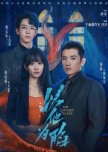
## A Game Within a Game—And I Loved Every Move!
OVERALL IMPRESSION🌟Wow, this was psychological revenge done brilliantly! A dark, gripping thriller that stood well above the usual C-short. The twists kept twisting, and the suspense constantly had me wondering who was really in control. What impressed me most was that beneath all the plotting were complex characters whose grief, guilt, and longing gave the story genuine emotional depth.
WHAT I LIKED💖
• The FL was intelligent, calculating, and incredibly capable. I loved how she used her understanding of people to turn apparent vulnerability into a weapon.
• This was a fascinating game of cat and mouse, where tenderness could be just as dangerous as an open threat!
• Her strength didn’t erase her trauma. The contrast between her ability to help others and her struggle to show herself compassion was heartbreaking.
• I loved the understanding between the FL and the assistant. Their connection had emotional substance alongside that intense chemistry.
• His intelligence, steadfast support, and protectiveness were wonderful—and he certainly wasn’t difficult to look at!
• The villain’s arrogance made the psychological battle particularly compelling. Imagine being so impressed with yourself that you stop listening to anyone else!
WHAT I DISLIKED⚠️
• The antagonists’ cruelty, entitlement, and disregard for human life were genuinely disturbing.
• Watching the FL turn her pain against herself was particularly difficult. This is emotionally heavy material, not a lighthearted revenge romp.
PRODUCTION AND PERFORMANCES🎭
• Gou Yuxi was superb. Her expressions could shift from tender to chilling in an instant, making the FL fascinating to watch.
• Huang Bo went far beyond the usual scumbag role with a frighteningly dark, unhinged performance.
• Hu Wenle also delivered an outstanding performance, bringing warmth and conviction to the assistant.
• The writing, direction, filming, and handling of suspense made me forget I was watching a vertical drama. This deserves more praise than the average short!
FINAL THOUGHTS💭
I loved that the emotional relationships mattered just as much as the revenge. The conclusion felt satisfying and consistent with the weight of the story. Highly recommended for psychological revenge-thriller fans. Keep your eyes on the apparently innocent ones—this drama knows how to make you question everything!
Was this review helpful to you?

Love Hurts — When the Chemistry Is Bigger Than the Format
I rarely write reviews for Korean BLs with ten-minute episodes. There are simply too many of them now, and unless something really distinguishes itself, eight episodes of six to ten minutes can feel less like a drama than a collection of scenes surrounding one romantic idea. Love Hurts surprised me. The story itself certainly did not. Kim Dojin and Lee Jaewon were classmates who became close, developed feelings, separated without properly resolving what happened between them, and eventually have to confront a first love that neither has completely left behind. We have seen variations of first love, missed timing, ghosting, misunderstandings and reunion countless times across BL, films and heterosexual romance.The Korean title, 첫사랑니, is actually more interesting than the English one because it plays with first love and wisdom tooth: something buried underneath, painful when it begins to emerge and difficult to ignore once it starts hurting. That metaphor fits the story rather well. But even then, nothing about the premise made me think I was about to discover something revolutionary. (dramabl.com) What made me keep watching was the actors. And more specifically, their chemistry. There are BL couples where the script continuously tells us that two characters want each other while I sit there waiting for the actors to convince me. Love Hurts had almost the opposite problem. The screenplay had barely enough time to develop anything, yet every time Kim Changyu and Kang Seon-ho were together, my brain was basically shouting: get a room. The sexual tension is ridiculous. It isn't created through explicit scenes either. It is in proximity, eye contact, hesitation and the slightly uncomfortable awareness of another person's body. They often look like two people who remember exactly what being close to each other felt like and are trying to behave as if they don't. That is much harder to manufacture than a technically competent kiss. At some point I genuinely wondered whether they were a couple outside the drama, not because I have any interest in deciding actors' private relationships for them, but because their physical ease together was that convincing. Chemistry is not evidence of a real relationship; excellent acting can create exactly the same impression. In fact, making the audience briefly wonder where acting ends is probably one of the greatest compliments I can give two romantic actors. And that is especially noticeable because Love Hurts gives them almost nothing to hide behind.
There is no expensive fantasy world, no elaborate crime plot, no enormous supporting cast and no spectacular cinematography distracting us from whether the couple works. Eight episodes run roughly six to eleven minutes each, so the entire series is only around the length of a feature film. It was released through Lovememory's YouTube channel, with episodes initially available early to channel members before public release. (dramabl.com) When a production is this small, chemistry becomes incredibly important. Thankfully, Kim Changyu has plenty of it. I have had a crush on him since His Man in 2022, so I admit I wasn't approaching this with complete neutrality. He was adorable there, and four years later I still find him ridiculously cute. For anyone discovering him through Love Hurts, his Instagram is @gyu_11.12. But liking him personally isn't why I think he works here. His Man also makes Changyu interesting within Korean BL because he did not become visible by playing a fictional gay character. He first became widely known through Korea's first major gay male dating reality show, where eight men openly participated in a program about finding another man. He has since moved further into scripted queer productions, including Fan Service earlier in 2026. That transition matters. Changyu does not perform Dojin as a collection of mannerisms designed to signal "gay character." There is nothing exaggerated about the performance. He could easily fit into a heterosexual romance, thriller, workplace drama or comedy without needing to change some supposedly essential part of himself. And to be clear, that is not because masculine gay actors are somehow more versatile than effeminate gay actors. Effeminate men can play an enormous range of characters too. The point is that sexuality is not an acting type. A gay actor is an actor. That sounds absurdly obvious, yet Korean entertainment still has very few openly gay performers working visibly in mainstream scripted roles. Hong Seok-cheon famously lost television work after publicly coming out in 2000 and spent years rebuilding his career. More recently, Squid Game creator Hwang Dong-hyuk explained that when he considered authentic casting for a transgender character, the industry had so few openly trans or gay actors available that finding one was extremely difficult. That makes people such as Changyu important even when the BL itself is tiny.
There is also an interesting double standard around queer roles. Straight actors can play gay characters, gain a BL fandom and then return to heterosexual romances, thrillers or mainstream television without anybody deciding that their fictional sexuality defines their career. For an openly gay actor, however, there is always a risk that audiences and casting directors start thinking, "gay actor = BL." That would be an enormous waste. I don't want Kim Changyu to receive more BL roles simply because he is gay. I want him to receive more acting roles because he can act. If the character happens to be gay, wonderful. If his next character falls in love with a woman, murders somebody in a thriller, investigates crimes, becomes somebody's annoying brother or spends sixteen episodes doing absolutely nothing romantic, that should be equally normal. Representation becomes much more meaningful when LGBTQ actors are allowed to exist across an industry rather than being confined to stories about their sexuality.
Kang Seon-ho also deserves credit because this chemistry obviously requires two people. He already had experience in several short queer productions before Love Hurts, including projects such as Kiss Kiss Sxx, Love Reset, Connect and Sweet Blood. His professional profile also lists extensive short-film work and formal acting studies, which helps explain why the incredibly compressed format doesn't seem to overwhelm him. (starlet-studio.co.kr) Jaewon could easily have become frustrating because so much of the relationship depends on what he does not explain. In a longer drama, silence can slowly reveal itself. In a ten-minute episode, withholding information can simply make a character look irritating. Seon-ho manages to communicate enough underneath that distance that Jaewon doesn't become completely inaccessible. Together, they do something that many much more expensive BLs fail to accomplish: they make me anticipate physical contact before it happens. That is why I eventually started wanting something I normally don't even ask for. A sex scene. Not because Love Hurts needed explicit content to qualify as BL, and certainly not because every romantic story should end in bed. I frequently complain when productions use sex as a substitute for emotional development. Here it was almost the opposite. The tension had accumulated so consistently that by the finale I wanted some kind of physical release simply for narrative satisfaction. It could have remained tasteful and mostly implied. I just wanted the drama to finally say, "Yes, these two have spent eight episodes looking at each other like that, and now they are finally going to do something about it." At that point the imaginary voice in my head could finally say: AT LAST. That reaction tells me much more about their chemistry than any explicit scene actually could. What frustrates me is how clearly Love Hurts demonstrates the limitations of its format. This could have been a proper Korean BL. Not necessarily sixteen one-hour episodes—that would be ridiculous for this story—but perhaps eight episodes of thirty minutes, with a few additional characters and enough time to develop the original relationship, the separation, the reason behind Jaewon's behaviour and the difficulty of rebuilding trust after somebody disappears from your life. Instead, we receive approximately eighty minutes in total. That forces everything to become shorthand. The characters look at each other and we understand history. A few lines imply emotional damage. Flashbacks have to replace whole stages of a relationship. Conflict appears and disappears quickly because there literally isn't time for it to breathe. The actors compensate for an enormous amount of missing writing. And that is where I think Lovememory deserves both praise and criticism. The company has developed a very specific niche in Korean BL: extremely short YouTube productions such as Two Some Boys, With Me, Boysmate, Never Ending Story, Opposites Attract, Sweet Blood and now Love Hurts. It has also repeatedly provided opportunities to performers connected to queer reality television; With Me, for example, featured Kim Hanmin from His Man 3, while Fan Service brought together Changyu and fellow His Man participant Kim Changmin. I appreciate that enormously. But the company's catalogue also illustrates the problem with Korean micro-BLs. Audience samples for several of its productions are so small that ratings are not particularly meaningful—Two Some Boys, for example, has only a handful of IMDb ratings—so it would be unfair to declare a clear quality trend from scores. What is much easier to see is the production model itself: six-to-ten-minute episodes, small casts, limited locations and stories designed around what can realistically be achieved with those resources. Love Hurts is one of the cases where I think that model undersells the talent involved.
Technically, I was impressed. The cinematography, framing and especially editing feel considerably more professional than I expect from this level of Korean web BL. Nothing screamed "amateur production" at me. The camera understands faces, cuts generally arrive when they should, and scenes have visual continuity. The limited budget is visible through scale, not through incompetence. That distinction is important. A small budget doesn't bother me. Poor filmmaking does. If you can only afford two actors, three locations and ten minutes, then make those two actors and three locations look intentional. Love Hurts largely succeeds at that. Which is why I wanted more. This is exactly the opposite reaction I have to some Korean micro-BLs where I reach episode three and already feel they have stretched fifteen minutes of material into an hour. Here, I reached the ending thinking the production had found two actors capable of carrying substantially more drama and then gave them barely enough time to prove it.
Final Thought
There is nothing exceptional about the story of Love Hurts. First love. Separation. Misunderstanding. Feelings that never completely disappear. Reunion. We have seen all of it before, and we will see it again. But chemistry can make an old story feel surprisingly new. Kim Changyu and Kang Seon-ho made me believe these characters wanted each other before the screenplay had enough time to fully explain why. Every look seemed slightly too long, every bit of physical proximity felt loaded, and by the end even I—the person constantly saying BL does not need sex scenes—was sitting there thinking: please, just get a room already. That alone made this little drama memorable to me.
It also reminded me why I wish Korean BL would stop treating ten-minute web episodes as the natural home for so many queer stories. Love Hurts did not need a larger budget to become louder or more explicit. It needed a larger canvas for two actors who had already created something the production could not buy: believable attraction. And I especially hope this opens more doors for Kim Changyu. Being openly gay should not sentence an actor to playing gay characters forever, just as being straight has never prevented countless actors from building careers through BL. He has the screen presence and acting ability to do much more than one genre. For once, my complaint about a tiny Korean BL isn't that ten minutes per episode was already too much. It's that these two made ten minutes feel nowhere near enough.
Was this review helpful to you?
This review may contain spoilers
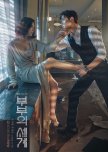
I went into this drama with the best faith possible, thinking Hee-ae could do no wrong, and I'm correct that she can do no wrong. She and Han So-hee are the glue that hold the entire thing together, because without them, this would be a terrible terrible mess. And not in a good way.I know the tradition of makjang is to simply take the most dramatic path possible, but I think this also proves how hard it really is as a genre to get right writing-wise. If there's just one element to rub you the wrong way, it can all go horribly horribly wrong. This would've been an amazing series had it only been six or so episodes long, even at twelve I could see some of the fat being trimmed, but my goodness they really undo some of the good will I came in with at the end.
I don't think this is a controversial opinion, I fucking hate Joon-young. I don't even know if I need to explain why. We get the fun makjang bullshit over with, time skip, and then boom straight into teenage boy family issues. This sounds cruel, because it is, but I straight up to not care about this little shit's issues a few episodes into having to constantly fucking deal with them. We get it, your parents divorced, your mom is a little bit insane, your dad is a lot more insane, feelings or whatever. Do we really have to constantly focus on him like he's the main character now? Wouldn't this have all been more effective if we weren't constantly beaten over the head with it? Could he have possibly, at any point, seen where his mother might be coming from?
I know Sun-woo is a manipulative person, but at the end of the day, she's dealing with an ex who's constantly stalking her and demanding she leave her own community and pitting her entire social circle against her, if anything she's restrained in how she deals with things. Far too restrained, I'd say. I'm aware that teenage boys are stupid, but those two must have really raised him wrong if he thinks his parents at all share equal responsibility for this situation.
Don't even get me started on the last 15 minutes of the series. I'm glad every character got their sweet little wrapup. Don't mind the woman who's son decided to punish her for daring to tend to someone who just attempted suicide. Would he have chosen differently if she just ignored him ? With how he acted throughout the show, probably fucking not! Nothing good can ever come out of a drama that involves a box truck running someone over or almost running someone over. Ever.
Sky Castle veers into bullshit territory at times too, I think all makjang is destined to at some point or another, but at least it knew how and when to wrap things up and let the characters all take natural paths into their closing stages. I don't think it's entirely fair to say K-dramas always have really good beginnings and really bad endings... but this is definitely an argument in that trope's favour.
Frankly, we have a lot of characters, and not a lot of point to many of them. Nothing ever really coalesces like you think it would. You can't just show me Seo Yi-sook and Kim Hee-ae in the same room five years before Queenmaker and not have that relationship be more of a factor. Like many she just fucks off from the plot after scene after scene of teasing something bigger that never happens (remember that politician that gets thrown into the plot like five episodes before the end?) I'm at least more of a fan of that Queenmaker pre-reunion than the other one. I'm beginning to think Lee Kyung-young might have exactly one character in his tank and it's only taken like five movies and two dramas for me to notice. He's been around for a while, you'd think he'd change it up a little.
Not a totally worthless watch, despite the terrible plot decisions in the second half, Hee-ae's performance never falters once. She even made me feel a little bit of emotion at the end that wasn't white hot rage. And I'm even beginning to understand why Korean lesbians rated So-hee higher than Kim Tae-ri in their actress crush ranking they all got together and decided on a couple weeks ago or whatever. Park Hae-joon also makes a real good villain, I really fucking hate his guts, and I'm going to have a difficult time watching Love, Take Two when I get around to that one because of it. I definitely don't want this to come across as too negative, there are moments where this is a really fun show to watch and follow along with, but it is infuriating at times in ways that really make me wonder if it's actually worth recommending to anyone. This show is like cigarettes, it feels real damn good at times, but it will also shorten your lifespan by a third, and the enjoyment fades away quick into something more like having to see things out to the end.
I think I just need to watch Moonlit Winter again or something soon to calm the fuck down. This is what happens when you're heterosexual. Just say no.
Was this review helpful to you?
This review may contain spoilers
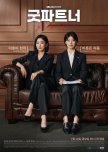
Overall, I enjoyed Good Partner quite a bit, though I found most of the courtroom cases pretty tedious. The show was at its best when focusing on the relationship between Cha Eun-Kyung and Han Yu-Ri, along with Cha Eun-Kyung's divorce storyline, but that arc wrapped up by episode 10. I'm not sure what a second season would even accomplish. Was this review helpful to you?
A masterful display of political warfare and hidden agendas
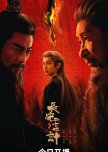
(FYI - it has no comedy, no romance)The Vendetta of An is an incredibly thrilling historical drama that takes viewers on a dark, intense ride through political schemes and personal revenge.It is a show that does not rely on cheap tricks, forced tropes, or silly comedy. Instead, it delivers a gripping, fast-paced story about strategy, survival, and the heavy price of vengeance. If you are looking for a smart drama where every character has an agenda and the stakes are always high, this is definitely one to watch.
The story follows Xie Huai'an, a brilliant and calculating strategist who returns to the capital city of Chang'an after fifteen years. His only goal is to uncover the truth and seek revenge for the brutal massacre of his family. What makes this drama so special is that it feels like a giant, high-stakes game of chess. Xie Huai'an is not a traditional, purely good hero. He is willing to get his hands dirty, manipulate others, and use complex stratagems based on the art of war to corner his enemies. The drama is unpredictable. You never quite know who will betray whom, or which hidden plan will suddenly come to light. It is highly suspenseful, and the writers do an excellent job of keeping the audience guessing until the very end.
The acting is one of the strongest pillars of this drama. Cheng Yi gives an outstanding performance as Xie Huai'an. He perfectly captures the heavy emotional burden of a man who has lived with hatred for over a decade. His subtle facial expressions and cold stares are enough to send chills down your spine. The supporting cast, especially the veteran actors who play the villains and corrupt officials, are equally amazing. There are no foolish enemies here. Everyone is intelligent, cunning, and dangerous. This makes Xie Huai'an's journey much more exciting because he is constantly challenged by people who are just as smart as he is. When characters make mistakes in this show, there are real, deadly consequences, which makes the danger feel very authentic.
Another thing I really appreciated about the drama is its serious and dark atmosphere. The show stays focused on its core themes of power, betrayal, and justice. It does not waste time on unnecessary forced romance or random comedic relief that ruins the tension. Every scene feels important to the plot. The production quality is also top-notch, from the beautiful but gloomy set designs to the detailed costumes and well-choreographed action scenes. The physical fights are fast and brutal, perfectly matching the ruthless nature of the story's world.
While I highly enjoyed the drama, it is not entirely flawless, the story is only 28 episodes long, it sometimes packs in too many ideas, twists, and betrayals in a short amount of time. This breakneck pace can occasionally make the plot feel a little overwhelming or hard to follow if you are not paying very close attention. There are also a few minor logic holes and moments where the story relies a bit too much on sudden twists just for shock value, sacrificing a bit of realism for high entertainment.
Overall it is a fantastic and tightly written drama that respects the intelligence of its audience. It is an engaging story of long-planned revenge filled with unforgettable characters and brilliant tactics. If you enjoy historical thrillers that make you think and keep you on the edge of your seat, you should definitely add this to your watchlist. It is a highly satisfying watch from start to finish.
Was this review helpful to you?
 1
1 1
1This review may contain spoilers
" No tree it is said, can grow to heaven unless its roots reach down to hell " - Carl Jung..
The Road to Splendor for me is arguably one of the best historical dramas of this year.. This is certainly not the butterfly romance type of story.. If you watch it expecting cliche romance and lots of sweet moments, you might be a little disappointed.. The romance is there, the sweet moments are there too but it’s more mature and restrained which I kind of liked because that was perfect for the script.. The screenplay, cinematography and the performances of the leads were what carried the story effortlessly..Ding Yu Xi and Deng En Xi served us with undeniable chemistry.. They were so good in their respective roles.. DYX's journey from a smuggler to being in the same space as the emperor, standing in the same room as some of the most powerful people in the empire, and eventually becoming someone they actually fear while earning the peoples respect.. That entire transformation was carried by one of the best emotional performances I have seen.. Deng En Xi was a standout too.. It felt like she didn't let her character down even when the script let her down with some forced angst.. Their romance, chemistry and journey together was beautiful.. They fell for each other early in the story, but it took them an awfully long time to actually get married.. Well, we could thank the emperor for that.. Always getting the ML into shit he definitely didn't sign up for but had to do it anyway for the people he loved and cared..
The supporting cast in the drama is very well written too.. Several of the antagonists are genuinely well written enough that you understand and resent their logic.. They literally were ready to do anything just for money and power.. They were absolutely vile and then there was Yu Jingxiu, who was absolutely pathetic.. The rest of the antagonists had an objective or something they fought for, even if their reasons were selfish.. But this guy was just a pathetic whiner and a loser.. Till the end..
Fan Yake, I am glad that she survived and got another chance at life, on her own terms.. She finally realised that she is more important than catering to the emotional needs of a selfish husband and a vile family and took control of her own life.. I am not saying she made up for her mistakes, but she did atleast try to make things right by saving the FL, whatever her reasons for doing so..
The cinematography in this drama was so good.. There are some scenes you just can't forget.. Quite a lot of the dynamics are shown through framing, like the visuals are doing the narration for you.. For example, the way they show the power difference between the noble families and everyone else with that simple scene where the nobles are standing at the top of the building while the others are standing at the bottom of the stairs.. My favourite was the last episode, where the Emperor also goes down on his knees just to reach the ML's eyes.. It's like he too finally understood what it had cost him all this time.. Anyway, there are quite a lot of scenes in this drama where the visuals tell the story better than words ever could.. I want to say this again, the drama had beautiful visuals, colors.. Truly a feast for the eyes..
Episode 20, the story sort of shifts.. Their reunion after 5+ years.. How the power balance has completely flipped since we last saw them.. He has become the man the FL once wanted him to be.. A person who understands the language of power.. But that spark that made him Zhao Ling in the earlier episodes is now gone.. He knows what he has to do to keep everyone safe and give the FL the life he thought she wanted and he also knows the price he might eventually have to pay for it.. He knows all of that and you can clearly see how it's slowly draining his soul.. And DYX as Zhao Ling portrayed that transition so well that you could actually feel it..
Another thing about this drama was that it sort of reminded me of Flourished Peony.. Ahem, the first season, only the first season.. The way the women were portrayed as if they were trapped in dependence, but infact they were the ones pulling the strings when you look at it.. Mo Yi and his downfall and eventually his death, is one of the examples of that..
Overall this was a really good drama.. I would say this drama is a feast for people who are ready to watch it for the script, screenplay, cinematography and all the other aspects of a drama, for the absolute craft instead of expecting just romance and angst in every other scene.. People blame this drama for being a slow burn, but come on.. These two loved each other so much that they would have died for each other without a second thought.. That's not a lack of romance, that's romance built on something sturdier than butterflies.. Trust, sacrifice, choosing each other again and again when it would have been easier not to.. Physical intimacy is one language a drama can use to show their love, but it's not the only one and this show proves that patiently, scene by scene, right up to the end..
So I will end this review the same way I started it.. This is one of the best historical dramas of the year..
Was this review helpful to you?

Lost to Light — When the Intimate Scenes Outshine the Drama
Lost to Light sounded considerably better on paper than what eventually appeared on screen. A struggling T-pop group is approaching disbandment, young performers are trying desperately to become idols, management is fighting to keep a failing company alive, and two romances develop inside an industry built around image, popularity and commercial success. There is enough material there for comedy, romance and even a rather interesting look at how brutal the Thai idol industry can be. Instead, I spent much of the series wondering how something with this much potential could feel so amateur. The premise immediately attracted me because idol culture provides almost unlimited material for a BL. These characters are not simply young men trying to fall in love. Their appearance, friendships, behaviour and public image are potentially products. Success can depend on views, fan engagement, management decisions and whether the public finds them marketable. The opening idea of an idol group doing so badly that its members end up wearing mascot costumes and singing for kindergarten children is actually funny and painfully believable as industry satire.There was a good series hidden inside this. Unfortunately, the writing and direction frequently turn it into something closer to pantomime. The comedy is extremely broad. Expressions are exaggerated, reactions are pushed far beyond what the situation requires, arguments feel staged rather than spontaneous, and emotional scenes frequently announce what we are supposed to feel instead of making us feel it. At times I honestly felt as if I were watching a RuPaul's Drag Race acting challenge: everyone has been told that comedy means bigger faces, bigger voices and bigger reactions, while the direction keeps encouraging them to go one level further. That comparison has nothing to do with the actors' sexuality. Some of the characters and performances are deliberately camp or effeminate, and that never bothered me. BL certainly does not need every gay man to behave like a masculine action hero. My problem is that camp requires control just as much as serious drama does. The funniest drag performers know exactly when to exaggerate and when to stop. If everyone is performing at volume ten all the time, there is nowhere left for a scene to go. It becomes especially damaging when the drama suddenly wants emotion. A fight that should hurt feels choreographed. Tears look summoned because the script says this is now the crying scene. Intimate conversations have the same artificial rhythm as the comedy. Even when two characters are supposedly deeply connected, I rarely felt that connection happening naturally between the actors. That is why I don't really want to blame the cast.
Dome Phemadech appears to have had very little significant screen experience before taking the central role of Jeng, while LaFolk Ratchanon and Ford Posan also have relatively small visible acting portfolios. Aomstin Thakrit has more BL experience, including Dinosaur Love and an appearance in Petrichor. Around them are much more experienced performers such as Gunsmile Chanagun, Mean Phiravich and Tonnam himself. The difference in experience is sometimes painfully visible. But that is precisely what directors are supposed to manage. A young actor does not arrive on set automatically knowing how large an expression should be for a close-up, how long to hold silence, how to make anger feel spontaneous or how to cry without looking as though he is waiting for the cue. Training, rehearsal, blocking, editing and direction exist partly to create consistency between performers with very different levels of experience. Here, I often felt as though everyone had simply been allowed to perform in whatever register came naturally to them. The unevenness became more surprising when I discovered that Lost to Light was directed by Tonnam Piamchon and Zaanook Jukkroww, because they also directed Dinosaur Love. Ultimate Troop produced both series. That earlier BL was not particularly well received either, and some of the weaknesses I remember from it—awkward performances, tonal problems and scenes that do not quite know how seriously they want to be taken—are still visible here. Ultimate Troop itself has actually done better work. The Yearbook and especially Remember Me showed that the company is capable of producing quieter emotional storytelling, and Remember Me received considerably stronger audience feedback than Dinosaur Love. So I cannot simply say this is a studio with no ability. What worries me more is that the particular creative combination behind Dinosaur Love returned three years later without enough visible evolution.
And then something happened that I genuinely never expected to write in one of my BL reviews: The sex scenes were probably the most professionally made scenes in the entire series. Normally I am the person arguing that an explicit scene cannot save a bad BL. Sex is not chemistry, nudity is not romance and two attractive actors moving convincingly in bed cannot compensate for ten episodes of weak storytelling. But here I found myself thinking, "Where was THIS level of control during the rest of the drama?" The intimate scenes are explicit without becoming vulgar. The camera knows where to be. The actors appear more focused. Movements are less theatrical. The rhythm suddenly becomes calmer and more convincing. For once, the production seems confident about exactly what it wants the audience to feel. That creates a very strange problem. If the most believable connection between two characters happens when they are having sex, but their arguments, conversations, affection and emotional intimacy all feel forced, then I still don't believe the relationship. A good NC scene can confirm attraction that already exists. It cannot manufacture a romance retrospectively. And I absolutely cannot judge a BL as good simply because its best-directed scenes happen in bed.
The irony becomes even stronger because Lost to Light is supposedly about performers. This is a story about idols trying to become professional entertainers, yet the series itself often looks insufficiently rehearsed. When characters perform, fight, cry or react dramatically, I should be seeing the difference between deliberately exaggerated idol personas and the private people underneath. Instead, almost everyone appears to exist within the same theatrical register. That wastes one of the most interesting aspects of the premise. Imagine what could have been done with public versus private performance. An idol who is charming in front of fans but exhausted backstage. Someone who is terrible at manufactured fanservice but naturally affectionate with the person he actually loves. A failing group watching another label manufacture viral success. Young men discovering that talent is not enough because popularity depends on algorithms, visuals, management and luck. Pieces of those ideas are there. They rarely become anything substantial.
The romances have the same problem. Jeng and Mai begin with enough friction for a fun enemies-to-lovers dynamic, while Sithian and Bailiu already have history as former high-school lovers now positioned on opposite sides of the business. One relationship could have explored attraction developing inside professional competition; the other could have shown how two adults revisit something unfinished after careers and pride have changed them. Instead, both relationships are continually pushed toward emotions that the series has not earned. Characters become angry because the scene needs conflict. They become tender because romance is now required. They cry because the episode has reached an emotional climax. They become sexually intimate because this is an uncut BL. What I rarely felt was one emotion naturally producing the next. That is the difference between a script containing romance and a viewer experiencing romance. Even the show's release structure somehow manages to make the production feel less organised. Officially, iQIYI presents Lost to Light as five episodes followed by two special episodes. DramaBL therefore understandably lists the original run as five episodes ending on July 18. But those two later "specials" continue the characters, relationships and career storyline, including developments viewers would reasonably consider part of the ending. Why? A special episode usually gives us something additional after a complete story: a holiday, a wedding, domestic life, fanservice, an alternative perspective or simply one more evening with characters we already said goodbye to. When the material is necessary to complete the characters' trajectories, that is not really a bonus. That is episode six and episode seven wearing novelty name tags. The confusion was real enough that viewers online specifically thanked people for telling them the specials existed, while another viewer commented that the first one should simply have been called a regular episode. The second special finally brings the group to the stage and continues relationship developments. That sounds remarkably like an ending to me. Someone finishing episode five because every database and streaming interface tells them they have reached the finale could therefore reasonably believe they have watched the complete series. That is unnecessarily messy.
I also cannot hide behind the argument that this is simply a tiny BL nobody was meant to take seriously. It aired on GMM25 and its uncut version was distributed internationally through iQIYI. This exists in a Thai BL market where viewers now have an enormous number of alternatives every week. Small productions do not need GMMTV budgets, but they do need to understand that viewers are comparing them against everything else available. Budget cannot explain every weakness anyway. A more expensive camera does not make an actor cry convincingly. A luxury location does not create chemistry. Better CGI does not fix comic timing. Rehearsal, performance direction, blocking and intelligent editing can improve a scene without requiring a huge production budget. That is why I find Lost to Light more frustrating than simply cheap. There was talent available. There was an appealing premise. There was an established BL production company. There were two directors who had already made a series together and therefore had three years to learn from what did and did not work in Dinosaur Love. And somehow the result still frequently feels like a first attempt.
I know some viewers enjoyed it considerably more than I did. The audience discussing the special episodes described it as cute, fluffy and entertaining, and some specifically praised the leads and their kissing. iQIYI's own user score is also extremely high, although platform scores should never be treated as directly comparable with broader ratings; IMDb currently has only a tiny sample of ratings and sits much lower. Reception therefore varies substantially depending on where you look. And that is fine. Someone looking for camp comedy, attractive actors, T-pop chaos and explicit romance may genuinely have fun with this. Not every BL needs psychological complexity or award-winning acting. But "fun" and "good" are not automatically the same judgment.
Final Thought
Lost to Light is one of those BLs where the synopsis makes me wish I had watched the version that existed in my imagination instead. A failing idol group, a desperate entertainment company, secret motivations, former lovers, new attraction and the absurdity of trying to become famous in an industry where a few thousand views can mean failure could have produced a genuinely funny and clever BL about Thai idol culture. Instead, much of it feels under-rehearsed, overacted and strangely disconnected. The cast is not hopeless. In fact, the surprising competence of the intimate scenes proves that several of these actors can become convincing when the direction, staging and atmosphere are controlled properly. That almost makes the rest more frustrating. If you can direct an explicit sex scene with restraint, rhythm and confidence, why do arguments look fake? Why do tears feel forced? Why does ordinary affection sometimes look less intimate than sex? Those are directing problems as much as acting problems. And perhaps that is my biggest disappointment. After Dinosaur Love, I hoped the same creative team would have evolved. Instead, Lost to Light feels like many of the same weaknesses transferred into a more interesting premise. The two "special episodes" being necessary to properly finish the story only adds to the sense of a production that was never completely sure how to package what it had made. So yes, there are attractive actors. There are funny moments. There are surprisingly tasteful and professionally filmed sex scenes. There is even a decent story somewhere underneath everything. But with the amount of BL available in 2026, "somewhere underneath" is no longer enough for me.
Watch it if the premise really interests you or if you simply want something camp and undemanding. Otherwise, skipping Lost to Light will not leave a hole in your BL education. And unfortunately, I suspect that in a few months, most viewers will struggle to remember much about it beyond those unexpectedly good NC scenes.
Was this review helpful to you?
This review may contain spoilers
Wasted Potential
This is like “Love The Way You Are” but darker, no Eva getting fat, but with deaths involved. More heavy on crime and politics.Both has:
1. FL named EVA.
2. EVA is an actress.
3. ML is a handsome chef.
4. Handsome chef helps her out with her diet.
What I hated:
1. I swear they had every potential to lengthen this series cause like you can fill in traditional ‘makjang’ (idk how you call it in thai series). ML didn’t have a full fleshed background. Everybody does. Like why did ML’s family die? They could’ve made it so he was actually a rich person and his family died cause of the ex-bf’s grandma. Why is the family so controlled by the grandma? What happened to the 1st and 2nd wife?
2. I swear at some point I was expecting ML was the third son or something cause 9 episodes in and we still don’t have proper romance from the main leads. It made me feel like there was more and that after the reveal will help them with defeating the villain. So I was surprised to see it only had 14 episodes.
3. Aside from that, they’re too one dimensional. ML just wants to be a chef and FL wants to be a successful actress. Idk, I wish we could’ve explored more to the story cause they could’ve easily made this a 24-episode one.
4. Also Domino died but we don’t see her family’s reaction.
5. They liked to put unnecessary arguments just to move the plot. Eva and Pun literally argued for no reason at all just so Pun can feel bad later on when he realized she was being threatened. So out of his character when he was introduced as a calm and gentleman guy.
What I liked:
1. Everyone was smart.
>The villains, I genuinely got scared for them because this problem with the politicians are an ongoing problem. Even here in my country. So seeing this fleshed out gave me a new perspective for the some actors and actresses that get dragged into politics.
> I swear I thought Jimmy’s wife was gonna snitch. But she’s smart and she didn’t share Eva and Pun’s location. She just did after their consent. Such a good girl.
> Book was also smart. She knew she may be targeted after Jinny’s death so she sent evidence first before meeting up. Thanks to her, Eva got out of Wee’s grasp. Super smart to meet up at the parking lot too.
> Pun didn’t meddle with other’s business. Serious survival instincts there.
> They didn’t need money and power to defeat the villains. Just relied on their brains and that was satisfying.
2. Pun is such a green flag. Total contrast to Wee’s controlling side, Pun is very gentle with Eva. I swear it made my heart flutter. He was very respectful, always listened to Eva, encouraged her, and made her safe. I feel like he’s such a husband material. It’s just so sad that his background isn’t really tackled so we don’t really understand him as a person.
3. Pun and Eva CAN KISS😭 I was so happy to finally see thai actors that can kiss. I only watched a handful of lakorn and I always felt like their kissing scenes are lacking, Like you made me wait for many episodes only to see them awkwardly kiss after that?😭
4. The SHALL WE was the cherry on top, lol. It was a great foreshadowing to when they actually sleep together. I was honestly so surprised cause I thought he meant to eat. Well, they certainly ‘ate’😭
Overall, I feel like Pun and Eva’s visuals are such a match. Their chemistry was good. I hope to see them again soon and with a better plot than this one.
Was this review helpful to you?
A Comedy of Remarriage That Mistakes Trauma for Depth
I returned to Okay, Let’s Get a Divorce because several comments claimed that episode 5 finally balances the responsibility within the marriage. Technically, it does. The problem is how it gets there.We suddenly learn that on the day she lost their baby, her husband did not abandon her. He was actually trying to get back to her when he had a car accident. Then the drama adds an even more extreme revelation: days later, during her suicide attempt, he tried to stop her and ended up with a knife in his abdomen.
Somehow, she apparently remained unaware of this for years until a conveniently introduced character finally tells her. She sees the scar, realizes that her husband never abandoned her, falls to her knees, cries, and apologizes.
The scene wants to be devastating, and the performances give it some emotional weight, but narratively it is cashing an emotional check the writing never earned. We are not discovering the hidden meaning of information carefully established over five episodes. The drama is retroactively introducing extraordinary events to completely change our perception of the marriage and facilitate the eventual reconciliation.
By episodes 5 and 6, I also finally understood what kind of drama this really wants to be: a comedy of remarriage, a genre Hollywood was already doing almost a century ago. The Awful Truth (1937) used separation, romantic rivals, jealousy, and marital competition to bring a couple back together.
This drama follows essentially the same structure. She asks for a divorce, he moves back into their house, they are forced to live together, and each gets a potential romantic alternative. At one point, when both need someone to take care of them, they even call their respective romantic rivals into the marital home.
The problem isn't that I've seen this story before. The problem is that I've seen it done much better.
The drama takes a perfectly functional remarriage-comedy structure and overloads it with pregnancy loss, grief, a suicide attempt, a stabbing, guilt, and emotional abandonment. Then, whenever it wants to become a rom-com again, it simply switches all that emotional weight off and returns to jealousy, caricatured characters, an exhausting mother-in-law, and playful music.
It doesn't integrate genres. It switches them on and off.
And I could forgive it for not being a particularly good drama if it were at least a good comedy. But after six episodes, I haven't laughed once.
I will correct one thing from my earlier impression: the drama eventually does hold the female lead accountable and acknowledges that her husband was not the monster she had constructed in her mind. That is no longer my main problem with the series.
My problem is worse: this is an old story told mediocrely, artificially inflated with tragedies that it mistakes for depth, while constant tonal shifts destroy any sense of emotional continuity.
The Awful Truth understood this formula in 1937 and needed less than 90 minutes.
This drama has had six episodes and is still trying to convince me why I should care.
Dropped for good.
Was this review helpful to you?

This review may contain spoilers
A Thoughtful, Highly Educational, and Warm Take on Taboo Topics
I went into S&X expecting a unique premise, but I ended up thoroughly impressed by how grounded, respectful, and genuinely insightful it turned out to be. Rather than relying on cheap shock value or sensationalism, the series approaches sex therapy and human intimacy with tremendous empathy. It highlights how open communication, mental health, and emotional connection form the true foundation of physical intimacy. Seeing the client cases handled with professional care made the drama deeply educational and eye-opening. Kento Nakajima brought incredible sincerity and warmth to his role, balancing the professional sensitivity of a therapist with his own vulnerabilities. The rest of the ensemble cast did an excellent job bringing real-world struggles to life without making them feel forced or exaggerated. S&X is a rare gem that demystifies topics society often avoids, turning them into a healing and deeply human narrative. I enjoyed every episode and highly recommend giving it a watch!Was this review helpful to you?
Connecting to you and they really did! i love them <3
It's funny!It has great acting AND good chemistry!
It is fantasy mixed into reality!
Very interesting take on relationship threads linking people together!
Slice of life/found family trope!
Investigations, crimes, funises at the police station and university? Sign me in.
It is SO good, easy to watch, interesting, aesthetically pleasing and FUNNY.
Taiwan BL is finally back and you should definitely check Connecting to you.
Was this review helpful to you?
Awesome! This is on my rewatch list.
This drama was awesome and is the best BL I've watched so far. The best things about Payback were the actors (especially Min and Toptap), directors and editors. The acting was smooth without the awkwardness you see in a lot of BLs. The pacing of the story was pretty fast and a lot was packed into each episode. I'm comparing this to some BLs I've seen recently where it takes them 50 minutes to tell a 10 minute story. Nothing dragged in this drama. The intimate scenes were pretty vivid and realistic rather than fantasy.What I did not like about the series were
1) the caricature villains because they felt so fake and didn't mesh well with the rest of the drama,
2) the bunny scenes because I just didn't get it, and
3) the weak ending.
Was this review helpful to you?

BEAUTIFUL AMAZING
i had a blast watching this. im not entirely picky when it comes to movies and tv, so my review might not hold any value. regardless, i cant put into words just how enjoyable it was. the fight scenes were a give and take type of fight where no one had the upperhand, the representation of bullying and "the hunted becomes the hunter" trope were both astounding. to me, its so good of a story and theres so much depth to each character that you cant possibly hate anyone, that is unless you interpreted it the wrong way. i would say its a gorgeous found family/bromance trope but... that just feels wrong since its been confirmed by the director and choi hyunwook himself that it was a highschool romance trope instead. that honestly makes the story all the more depressing and meaningful, especially in an unaccepting place like korea.Was this review helpful to you?
This review may contain spoilers
Two Faces of Bo Na
The premise of the story is about a female sniper who kills criminals.Each episode reveals her target, execute it without leaving a trace with the help of her colleagues. As her assignment is called a "Client Meeting" The story behind Bo Na's personality, her past and present are revealed little by little in each episode.
What I know so far about Bo Na:
1. She is a wife of a reporter Tae Seong who had been interested on Kingfisher till he was threatened
2. She has a 4-year-old daughter Yul
3. She has a mother-in-law who doesn't really like her
4. She is an orphan; therefore, she has no family of her own prior to meeting Tae Seong.
5. She works in a company which is a front for all their "Client Meetings"
6. She is Kingfisher, wherein some people think of him as a hero, to take down hard core criminals.
I have lots of wondering about this drama:
1. Who hires them to do the Client Meetings? Who pays them?
2. Who is Sergei? How is Bo Na connected to him? This man is a wild card, and we do not know if he will cause harm to Bo Na and her family.
3. How long can Bo Na hide her identity to her family? How will Tae Seong react if he learns she is Kingfisher?
4. How did Bo Na get started in this kind of a job? What was the reason for her to be an assassin?
I finished Episode 10, and there are 4 more episodes. Still there are many questions in mind. Until now I really cannot figure how this series will end. Will Kingfisher be caught or die some way? Will she resign and not come back to do Client Meetings? Will she reveal herself to her husband?
Was this review helpful to you?
A DRAMA TO BE WATCHED DURING WINTER, IF YOU MAY
Sang Yan. Sang Yan. Sang Yan. And I’m going to say it again: Sang Yan!!I went into The First Frost expecting to like it, but I did not expect to feel THIS much. I absolutely loved the story, loved the writing, and honestly, I love the writer for giving us a story filled with so much yearning, emotional complexity, and characters that actually feel like people.
And of course, Bai Jingting and Zhang Ruonan were phenomenal. I already love Bai Jingting, but Sang Yan?? The man that you are!! The way he carried that character—the longing, the restraint, the tenderness, the things left unsaid—was just incredible. His acting made Sang Yan's yearning feel almost tangible.
And Ruonan was equally amazing. She was phenomenal in her role. You could feel Wen Yifan's pain through her acting, even in moments where she didn't say much. Her expressions and little changes in emotion did so much of the storytelling. Bai Jingting and Zhang Ruonan had such a strong emotional connection that their scenes could absolutely destroy me.
Miaoyi and Edward were great in their roles too, but honestly, so was everyone else. The supporting cast really added to the story rather than just existing around the leads. Each character felt like they had their own personality and purpose.
And I HAVE to talk about Yifan.
I actually really liked how her character was written. I know some people dislike her, but honestly, I think anyone who hates her simply because she isn't an effortlessly cute, cheerful, perfectly agreeable female lead is missing the point of her character. Female characters don't always have to be cute or easy to like. Yifan is complicated. She's flawed, emotionally guarded, sometimes frustrating, and carrying a lot of pain—and that's exactly what makes her interesting.
I appreciate that the writer allowed her to be a complex female character instead of forcing her into a stereotypical lovable heroine mold. Her characterization made sense to me, and Ruonan's performance made it even better.
But let's be serious.
SANG YAN.
The yearning.
THE YEARNING.
This man spent so much time carrying feelings that he couldn't simply put into words, and Bai Jingting somehow managed to communicate all of that through his acting. There were moments where I genuinely wanted to reach through the screen and comfor him.
Sang Yan, the man that you are.
And somehow this drama decided that making me emotionally devastated wasn't enough—it had to make me cry repeatedly while I was in the middle of my exams. I was supposed to be studying. Instead, I was sitting there emotionally destroyed over fictional people. (I still got 95%, so it was very worth it!!)
So yes, I loved the story. I loved the writing. I loved the characters. I loved the acting. I loved the emotional depth.
And most importantly:
SANG YAN.
10/10 for the yearning.
10/10 for Bai Jingting.
10/10 for Zhang Ruonan.
10/10 for making me cry during exams.
Sang Yan, you will never not be the norm.
Was this review helpful to you?


