

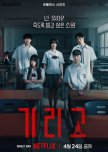
My Wish? For this show to be longer, more detailed, and less gorey
I’m here to give my first ever review of a supernatural, occult horror k-drama that was recommended to me on Netflix! Keep in mind I am writing this review several weeks after I’ve finished it, it's not completely fresh in my head, so hope you will understand if there are mixups or errors of any kind. As someone who typically goes for the familiar silly lighthearted rom-com or melodramatic tearjerker, I am actually proud to say that I conquered my fears of this genre and gave this one a shot.At first, I was thinking how glad I was this was a mini series with only 8 episodes because I didn't think my nervous system could’ve handled anything longer. I told myself I needed to power through only 8 and it’ll be over, but by the end, I somehow ended up wishing it was longer and less bingable LOL If you’re anything like me and feel hesitant to explore this genre, I will say give it a try as it's not a bad introductory show. The reason I chose to watch this was because there was something about this drama’s Netflix poster that immediately drew me in when I saw it. Perhaps it was the combo of high school and horror, or the ominous way they're standing in a dark, eerie classroom facing us, the audience. Put a bunch of high school students in a life-threatening situation caused by demonic technology and watch how they fight for their lives (flashbacks to “All of Us Are Dead”). Or perhaps, being a long-term I.O.I fan, it could've been my curiosity about Kang Mina and her new acting career that made me want to check this out (she absolutely killed it in her role as Nari though!).
To summarize, this drama primarily follows a high school friend group in Seorin High School. It all started when Hyeongwook, one of the boys in the group, discovers a mysterious app called Girigo that supposedly grants any wish you make through the app. He excitedly shows it to the rest of his friend group: Seah, Geonwoo, Nari and Hajoon, claiming that all you have to do is a film a video of yourself stating your wish with your “Saju”, essentially your name and birthdate/birthtime, written and it'll come true. The rest of his crew calls it bluff, until the unbelievable happens. The wish he made, to get a perfect score on his upcoming math test, really did come true just as he had wished for it through the app. Suddenly, a 24-hour countdown starts on his app screen. When the timer ends, he dies by a suicide.
His friends are petrified by his shocking fate and set out on a quest to uncover the truth behind the app. A few of them even tries using the app themselves, wondering if there was a way to bypass or stop the timer. Where did this app come from? What is happening to the bodies of those who uses it? Why did Hyeongwook die? This is when the mood of the drama shifts from a chill high school slice of life with light romance to thriller/horror as it starts diving into themes of curses, demonic possession, revenge, alternative spiritual dimension and exorcism. Once you get to episode 6, almost everything becomes clear - why this app exists, how it came to curse people, and how to break the curse. That was my favorite episode among them all because the storytelling was so well done and gripping. The actresses for Siwon and Hyerung did a phenomenal job in the origin story acting. Watching the tension in their friendship driven by Siwon’s broken relationship with her shaman mom get worse and worse and what it ultimately led to was extremely interesting. My other favorite scenes were those with the character Haetsal (Hajoon's sister) interacting with Seah. Seeing how committed she was to saving the lives of the kids touched my heart.
This is not a big issue, but there were some tiny concepts that felt a bit hard to grasp for me personally, like shamanism and exorcism, given my lack of experience with this genre. The ambiguous cliffhanger ending leaves you wondering if a second season will be coming anytime soon. I should also give a trigger warning that there were quite a bit gore and jump scares throughout the show. Unsurprising for a horror drama, but if anyone is sensitive to those visuals, it might be good to avoid or skip past those scenes. Overall, it was a really enjoyable watch. I wish the writers developed certain plot lines more, but I think they did what they can within 8 episodes. I will definitely remember this drama for years to come.
*This review was written without the assistance of AI

meh - okayish...
Just finished watching this BL and it's okay for me. There were moments that I really enjoyed but there were also times where I felt unsatisfied. Here is my honest review about it.Editing:
One thing I noticed throughout the series was the editing. There were scenes where I wished they handled the transitions and music better. For example there was a scene where Moo and his friends were talking, then suddenly the scene shifted back to Fu. The sudden transition felt rushed. I think it would've flowed better if they added a few seconds showing Moo and his friends laughing/smiling before slowly fading the music and moving to the next scene. Small moments like that really matter and can make scenes feel more natural & smooth instead of just rushing it because to be honest it looked so awkward, distracting and confusing. 🥲 I also wished they added more variety whenever they put extra scenes in between. I've noticed that some of the building shots, road scenes, and filler clips were all the same. If they're going to add scenes like those, I hope they would've shot in on a different angle and such so that it'll be less repetitive.
Story:
For the storyline, I think it was okay overall. But I feel like there weren't really that many big plots twists throughout the series. Most of the focus was mainly on the main couple especially when Fu and Moo found out that they were the ones they had been texting each other. Another major plot point was the situation involving the undercover of the drugs thingy in the hotel and that's mostly it. but aside from those, there weren't many other events that felt like major turning points in the story. The series relied more on the characters, relationships and romantic moments rather than having a strong storyline. While I don't think that is necessarily a bad thing since this is a RomCom BL, though I personally wished there were more interesting conflicts or deeper storylines that could have made the series feel more entertaining ! ^^
Now for the main couple, Fu & Moo.
I really enjoyed their story and their dynamic as a couple. I love how Fu was willing to put alot of effort into winning Moo's heart even if it took him days, months and even years. His determination and patience showed how much he genuinely loved and cared for him. Though there were also moments where Fu's actions felt like they went a little too far especially at the start of the series. For example when he publicly showed his feelings for Moo through posters, stickers, and other grand gestures in public places (Moo's university) and it sometimes felt like it crossed the line between romantic and overwhelming. For me I really do understand how Moo reacted and felt during those cuz who wants to be publicly humiliated like that? 🥲 I know Fu's intentions were good, it's just that I wish he had considered how Moo would feel about those actions too. For Moo I actually liked his character and his development. At first he was more of a closed off person and was unsure about his feelings, but as time passes by, he became more open and accepting of Fu's love. I liked seeing him learn how to trust and allow himself to be cared for. His character wasn't instantly changed overnight and his growth felt gradual which one of the things I appreciate of him.
Side Couples:
For the side couples, I honestly wish they had more screen time. Each of them had interesting stories and personalities and I wanted to see them interact with one another more. Even giving them just a few more scenes would have helped the future watchers understand their relationships and backgrounds better 🥹
Tian & Mark
This couple was probably the most complicated to like for me... I understand why Tian is a fuckboy and acts the way he does because his past with Kluayhom and being hurt by someone he trusted, isn't a joke and it clearly affected how he views relationships. But when this specific scene in the last episode where Tian pulled Mark into the storage room and continued touching him even after Mark said that he didn't want to, ICKED ME SO BAD BRO. That scene made me kinda uncomfy & disappointed honestly . I can still handle whenever Tian is flirting with Mark and stuff but that scene is a big no for me. That's lowkey SA if i'm gonna be honest 😭 For Tian as a character I was honestly hoping to see more development from him. As what I said, I understand why he became the way he was... but I was really hoping that he would eventually learn from his mistakes and heal slowly. I felt like his growth was not as satisfying as I hoped it would be even until the end.
Tee & Jeab
I actually really liked this couple. I think their relationship had a lot of potential because they showed a different type of dynamic compared to the main couple and to the side couples. The main issue with this couple is Tee's struggle with communication. Though he's aware of his wrong doings and such and that's what I like about him. I think his way of apologizing is through his actions such as continuing to visit Jeab and buying him things that he likes. I like his character development and how he got more softer eversince he starts to have feelings for Jeab. For Jeab I understand why he became frustrated toward Tee. After all the teasing Tee gave him, it makes sense why Jeab would have a hard time trusting him. I honestly wished they had a proper conversation and wish there was a scene where they could've been vulnerable with each other and finally talk about their feelings.
Tai & Yu
I LOVE this couple. Sooo cutesy ! Their dynamic was simple and that's what made them enjoyable. I really really REALLY wished they had more scenes together and get to see more of his perspective and his relationship with Yu. ☹️ BUT I find it so funny how Yu is literally everywhere. (i am NOT joking.) Like he's a barista, a waiter, a janitor, a driver, a bartender, and now he got accepted to be one of the employees at Fu's Hotel. HE'S EVERYWHERE & EVERYTHING 😭😭😭 And somehow he manages to do everything, holy time management final boss. It honestly made me curious about his character and why he has so many jobs. For Tai, I really like his personality. He's calm, chill, and has a very comforting presence. Compared to some of the characters, Tai is someone who brought balance and balance throughout this series.
Overall this is an enjoyable show. But for me it had some areas where I wished it was improved. The main couple was definitely the highlight of course ! though I think the side couples deserved a little bit more attention because they also had interesting stories too. If they ever make a season 2 or a new series in the future focusing on the after college life and marriage of Moo, I hope the side characters would have more screen time too !!!
If you're looking for a romcom BL with cute moments, romance, and a wholesome feeling, I think you might enjoy this. But if you're looking for a deeper plot with more complex character development, you might want to try other shows :))) !

It could be a red flag but baby I'm colorblind
Let’s start with the good parts, because there is a lot to love here. First and foremost, Boss's yearning is unmatched; a man never looks better than when you can see exactly how much power his partner has over him (Also, the rain was a paid actor for how many times his shirt got wet and transparent). Alongside him, Noeul is somehow utterly flawless each and every time he appears on screen. Their chemistry is out of this world; the looks, the touches, the passion, and some of my favorite on-screen kisses (I bit my pillow so many times it should be illegal).For the main characters I want to pay attention to the contrast between Cir's sweetness when engaging with Phu and him giving nothing when talking to anyone else. His interactions with Win were highly amusing and I really enjoyed their friendship. Meanwhile, Phu is the softest pretty boy out there, but the second he found out about Cir's past, he was ready to throw hands, and I lived for it. Going into this, I wanted to say that Noeul kept his undefeated record for the "pure of heart, dumb of ass, home-of-sexual" character archetype that he mastered with Rain (LITA). Surprisingly, though, Phu actually possesses a survival instinct.
The supporting cast held their own beautifully, too. Jin is metaphorically my brother; practically he's so chill and emotionally mature I could cry. On the other hand, Win perfectly embodies the exact exasperation you feel when you've been besties with someone for years and are fed up with their dumbassery. Together, JinWin are a top-tier second couple; they had very little screentime, but they are big in my heart.
Then there's "Dark!Cir," my beloved. He managed to act both concerned and mocking while looking devastatingly otherworldly. He is a total ragebaiter and I stan it.
Even the wider friend group had great moments. While some secondary characters were a bit plain, their banter was excellent. Rome was a funny little side character with his fish obsession (I'm partial to them), and the mixing of the two groups yielded great dynamics (especially Jin paired with Cir, and Win with Phu).
I also genuinely enjoyed the familial subplots. I loved Phu’s family and appreciated how the show made both Phu and his mother's perspectives understandable. As for Cir’s family... well, his brother Zone was ready to jump into the action, and I’m glad they didn't cheapen the brothers' past. Their mother is completely nuts and should be held for a psych evaluation. Which should have happened instead of leaving Zone to deal with her while Cir and Phu run towards the sunset with a wedding soundtrack.
As for cinematography, the production choices immediately sucked me in. The lighting and scene subdivisions beautifully created the illusion of two worlds connecting, which underlined the main theme and expertly masked the stalking elements in the first few episodes.
To be honest, the plotline of Cir keeping up the "multiverse lie" was mysterious and compelling at the beginning. Although the multiverse elements were eventually confirmed, we all know that Boss’s ability to look devastatingly handsome (coupled with Cir’s tragic past) was the major thing saving him from being served with a restraining order.
(When the show first hinted that my baby Cir might be a stalker, I was standing there like *surprised pikachu*)
Personally, the stalking twist intellectually cheapened the lore established early on, even if it did successfully give Phu space to stand up for himself and highlighted the psychological consequences of Cir's abusive upbringing.
If we go with the idea that Cir and Phu are red-string soulmates, which is heavily implied by the parallel universes and the paper telephone plotline (that is quite literally a string tying them together, argue with the wall), the writers could have handled it much better. They could have let Cir know secret details about Phu simply as a byproduct of his dreams from the alternate universe. The narrative wouldn't have taken a hit if their past encounters were driven purely by fate and destiny instead of Cir crafting them behind the scenes. While still allowing Cir to be secretly in love with Phu for years, it would have created a much healthier foundation for their relationship.
(I'm aware it's based on a MAME's novel, and from what I heard they tend to incorporate and romanticize this Red Flag behaviour, so I'm not giving any grief to the directors and such)
I particularly enjoyed the push and pull of "Is this real life? Is this just fantasy?", especially since Cir genuinely seemed to believe he was from a parallel universe at first, only realizing the reality of his dreams later. By that point, he was already in deep and naturally terrified of losing his soulmate by telling the truth.
(Though, honestly, seeing his mother, I too would prefer faking a multiversal soul displacement if it meant a roundabout way of getting to kiss a gorgeous creature like Noeul instead of having to deal with her)
Ultimately, the big climax of finding out your boyfriend has been illegally following you for years wound up being highly entertaining, mostly because both things wound up being true: he did stalk Phu, but he also really saw the alternate universes.
My only real grievance is the non-existent logic behind why Jin can literally read minds. Like, what the hell was that?! Explanation? None. Just random bulls**t, go! I have to concede it was funny, but actual fantasy world-building would have made it feel like a cohesive element rather than a Deus ex Machina. It felt designed purely to reassure the audience that Cir wasn't a depraved creep and to inject some comic relief. That said, Jin reading everyone's mind only to find Phu's brain completely empty of thoughts except for food is such a canon event that I can't even be mad.
Furthermore, the archetype of an alternate-universe Cir actively helping other versions of Cir get together with their respective Phus gave me massive ORV vibes (yk, the cosmic setup of a version of yourself pulling the strings), which will always be goated in my book.
To wrap this up, I’m not even going to logic-check Phu getting sick after 30 seconds in the rain, or Cir’s psycho mother trying to pay Phu to stop seeing her son.
We know the tropes, we accept the tropes, we die in our hearts at the tropes, long live the tropes.
The opening OST theme was giving everything it needed to give and it's going on my playlist for the foreseeable future.
i actually enjoyed it?
It’s honestly not as bad as people made it out to be. I went in expecting the worst because of all the criticism, but I was pleasantly surprised.Sure, there are a few cringey scenes, but I genuinely think that’s part of its charm rather than a dealbreaker.
Not every series has to be flawless to be enjoyable.
Boss and Noeul absolutely nailed their roles, as they always do, and their chemistry carried so many moments. It might not be their best series, but it’s definitely far from being a bad one. People judged it way too harshly before giving it a real chance.
P.S. It honestly feels like a soap opera to me and that’s not even a bad thing.

Newsroom chaos, unresolved feelings, professional disasters, & 2 ex-bfs being forced to work 2gether
How do you review The Ex-Morning when your main memories are television studios, passive-aggressive professionalism, and KristSingto looking at each other like they were personally funding therapy industries worldwide?This series really looked at the second-chance romance genre and said, "What if we added career implosions, workplace tension, unresolved heartbreak, and enough longing to power Bangkok?"
Pathaphi was once one of the biggest names in broadcast journalism.
Then life happened.
Career setbacks happened.
Bad decisions happened.
And suddenly the man who used to be the story was becoming one himself.
Then came Tamtawan.
His ex-boyfriend.
His producer.
His problem.
His solution.
The universe truly looked at these two and said, "Communication failed the first time, so let's try mandatory proximity."
Honestly?
Cinema.
Krist brought so much pride, vulnerability, frustration, and quiet loneliness to Phi that watching him slowly unravel felt painfully human.
And Singto as Tamtawan?
The king of restraint.
The emperor of unresolved feelings.
The CEO of saying "I'm over it" while very clearly not being over it.
Watching these two navigate old wounds, unfinished conversations, and feelings that never actually left gave us some of the best emotional tension in recent Thai BL.
Because this wasn't first love.
This was harder.
This was the person who already knows your worst habits, your biggest fears, and exactly how you take your coffee.
This was history.
And history is messy.
The newsroom setting deserves its flowers too.
The deadlines.
The broadcasts.
The production meetings.
The absolute panic of live television.
Everything felt fast, stressful, and alive in exactly the way newsrooms should.
And can we talk about the people behind the camera?
Director Lit Phadung Samajarn understood exactly what this story needed: restraint. The series never rushed the reconciliation, never forced forgiveness, and trusted the audience enough to sit in the discomfort of two people who still mattered enormously to each other despite everything that happened between them.
The production teams at GMMTV and Dream Dimension built a world that felt authentic, busy, and lived in, where careers mattered just as much as relationships and where love didn't magically solve every problem overnight.
The cinematography leaned into studio lights, city nights, and quiet moments between broadcasts, while the soundtrack arrived precisely when viewers had almost regained emotional stability.
Almost.
The Ex-Morning wasn't trying to be flashy.
It wasn't trying to reinvent second-chance romances.
It simply understood one very important thing:
There is something uniquely devastating about loving someone twice.
This wasn't enemies-to-lovers.
This wasn't rivals-to-lovers.
This was ex-boyfriends-to-"oh no, the feelings survived the breakup."
10/10.
Would absolutely survive newsroom chaos, make terrible decisions in the name of love, and watch these two idiots fall in love with each other for the second time all over again.
Could have been an easy 10
From the very first ep i devided this is a 10/10 series for me, it's one of those beautiful Japanese dramas that focus on characters and their interconnected relationship with people and their lives.Sadly it moves in a linear motion, after a few episodes it just shows random stuff happening with no messages or anything, I'm not saying everything should jave a moral value but the things happening oit of no where, then we move on to the next random thing as of nothing happend is just odd.
I know this is "adults' relationships" so yeah, we cry it out and move on, but i think they should have added any sort of meaning behind what happens.
Not saying it's a bad show, I'm just explaining why ot dropped from 10 to 8 for me.
I love that they showed normal-looking adults, unlike other shows that just show pretty boys with too much makeup, and too many fan services scenes.
The two talents that lead the show are amazing they carried the whole show gracefully and delivered an amazing performances.
Highly recommended show ~~
What do we do with the time we're given?
Some BLs are about falling in love.Dear Doctor, I'm Coming for Soul was about what happens when love arrives exactly where life ends.
Because beneath the romance, beneath the supernatural elements, beneath the hospital setting, this was a story about mortality.
About grief.
About acceptance.
About the impossible weight of knowing that no matter how hard we fight, some people cannot be saved.
Dr. Prakan dedicated his life to keeping people alive.
Then he met Tua Phee.
The soul reaper responsible for guiding them away.
One spent his days fighting death.
The other had learned to live beside it.
And somewhere between hospital corridors, impossible choices, and conversations about life that only make sense when you're confronted with death, they found each other.
Watching Prakan slowly understand that medicine cannot win every battle while Tua Phee learned that some connections are powerful enough to transcend even death itself gave us one of the most unique relationships in Thai BL.
Nut and Karn brought a quiet kind of chemistry to these roles.
Not explosive.
Not dramatic.
Comforting.
The kind of chemistry that feels less like watching two people fall in love and more like watching two souls recognize each other.
And honestly?
That somehow made it hurt even more.
But what truly made this series special was its humanity.
The patients weren't plot devices.
The families weren't background characters.
Every life that passed through the hospital mattered.
Every goodbye mattered.
Every loss mattered.
The series understood something many medical dramas forget:
Every patient is someone's entire world.
And can we talk about the people behind the camera?
Director Phadej Onlahung understood exactly what this story needed: restraint.
The series never rushed its emotional moments.
It trusted silence.
It trusted grief.
It trusted viewers to sit with uncomfortable emotions rather than immediately moving on from them.
The hospital became more than a setting.
It became a place where hope and heartbreak existed side by side every single day.
The cinematography reflected that beautifully.
The bright hospital rooms.
The quiet hallways at night.
The moments where life and death seemed separated by nothing more than a doorway.
And the soundtrack?
Gentle.
Melancholic.
Beautiful.
The kind of music that stays with you long after the episode ends.
Dear Doctor, I'm Coming for Soul wasn't simply a BL.
It wasn't simply a supernatural drama.
It was a meditation on life itself.
On how precious time is.
On the people we leave behind.
And on the idea that perhaps love doesn't end simply because life does.
This wasn't doctor × grim reaper.
This was someone who saves lives learning to make peace with death, and someone who walks beside death learning how beautiful life can be.
10/10.
Would absolutely walk those hospital halls again, cry over strangers I'll never meet, and let this story remind me to appreciate the people I still have all over again.
Religion, grief, identity, first love, & an emotional sniper hiding behind beautiful cinematography.
Somewhere along the way, Ticket to Heaven stopped being a BL for me.It became one of the best dramas I've ever watched.
Not one of the best BLs.
Not one of the best queer stories.
One of the best dramas.
Period.
Because what this series understood so beautifully is that some stories are bigger than romance.
This was a story about faith.
About grief.
About identity.
About guilt.
About family.
About the terrifying loneliness of feeling like the person you are and the person the world expects you to be cannot exist in the same room.
And somehow, it managed to tell that story with so much compassion that it never felt interested in choosing sides.
It simply asked questions.
Difficult questions.
Painful questions.
Questions that don't have easy answers.
And then it trusted us enough to sit with them.
The performances never felt like performances.
They felt lived in.
The silences spoke louder than the dialogue.
The quiet moments somehow carried more weight than the dramatic ones.
Every look felt important.
Every conversation felt necessary.
Every scene felt like it had something to say.
And then there was P'Aof.
At this point, I genuinely believe that man wakes up every morning and chooses emotional devastation as an art form.
Because once again he proved that some of the most powerful stories aren't built on spectacle.
They're built on people.
On emotions.
On the spaces between words.
The direction never tells you what to feel.
It simply opens the door and invites you in.
The cinematography was beautiful without ever feeling showy.
The music knew exactly when to step forward and exactly when to disappear.
The writing respected its characters enough to let them be complicated, messy, and human.
That's rare.
And that's why this story lingers.
Years from now, I probably won't remember every scene.
But I'll remember how it made me feel.
I'll remember the ache.
The hope.
The fear.
The quiet moments that somehow felt enormous.
There are good BLs.
There are great BLs.
And then there are stories that outgrow the genre conversation entirely.
For me, Ticket to Heaven belongs in that last category.
10/10.
Not because it was perfect.
But because it felt honest.
And sometimes honesty leaves a bigger mark than perfection ever could.
And yes.
I am still very much in love with P'Aof for giving us stories like this.
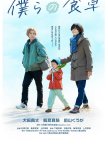
Shared meals, quiet healing, & proof that food might actually be a love language.
How do you review Our Dining Table when your main memories are homemade lunches, warm kitchens, and Yutaka getting emotionally adopted by an entire family?This series really looked at the slice-of-life genre and said, "What if we replaced drama with cooking, added emotional healing, and let food do most of the talking?"
Yutaka could eat alone just fine.
At least that's what he kept telling himself.
Then one lunch break, one rice ball, and one overly friendly little brother later, his life changed completely.
Honestly?
Cinema.
Hozumi Yutaka was carrying loneliness so quietly that even he had gotten used to it.
Then the Ueda brothers appeared and collectively decided that solitude was no longer an option.
Minoru offered him companionship.
Tane offered him unconditional love and approximately eighty percent of the show's emotional damage.
The child weaponized cuteness and none of us stood a chance.
Inukai Atsuhiro brought so much gentleness and vulnerability to Yutaka that watching him slowly relearn what family and belonging could feel like was incredibly moving.
And Iijima Hiroki as Minoru?
The king of quiet affection.
The emperor of acts of service.
The CEO of saying "I care about you" entirely through food and worried glances.
Watching Minoru and Yutaka grow closer through shared meals and ordinary moments gave us one of the softest romances in recent Japanese BL.
Because this wasn't a story about grand gestures.
It was a story about asking:
"Have you eaten yet?"
And somehow meaning:
"I care about you."
The meals became conversations.
The kitchen became a safe space.
The dining table became home.
And honestly?
That's the kind of romance that stays with you.
Then there was Tane.
The tiny sunshine child.
The world's greatest wingman.
The unofficial captain of this ship.
Half of the relationship progression happened because Tane looked at these two emotionally repressed adults and decided he would simply do it himself.
Legendary behavior.
And can we talk about the people behind the camera?
The directors understood exactly what this story needed: quiet.
The series never rushed.
It let moments linger.
It trusted silence.
It trusted glances.
It trusted viewers to understand that sometimes the most important things happen between words.
The cinematography deserves special praise.
The sunlight through windows.
The steam rising from food.
The small apartment kitchens.
The family dinners.
Every frame felt warm enough to live inside.
And the soundtrack?
The audio equivalent of coming home after a long day.
Our Dining Table wasn't trying to shock you.
It wasn't trying to emotionally destroy you.
It wasn't giving you mafia shootouts, corporate conspiracies, or time loops.
This was comfort.
Premium-grade comfort.
This was lonely office worker × single dad energy without the actual dad × emotional support child.
This was a story about family.
The family you're born into.
The family you lose.
And the family that quietly finds you when you're not looking for it.
10/10.
Would absolutely learn to cook with them, get emotionally attached to every meal, and let Tane adopt me into the family all over again.
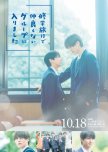
Tbh, every introvert watching this series had at least 1 moment of thinking: Oh no. That's me.
How do you review School Trip: Joined a Group I'm Not Close To when your main memories are secondhand embarrassment, unexpected friendships, and Asahi looking like he wanted the ground to swallow him whole for approximately half the series?This show really looked at every introvert's worst nightmare and said, "What if we made it gay?"
Asahi Hioki arrived at the school trip fully prepared to spend the entire time quietly existing in the background.
The universe looked at those plans and laughed.
Suddenly he finds himself grouped with the school's social elite.
The popular kids.
The influencers.
The "how do you have this much confidence at seventeen?" crowd.
Otherwise known as:
The Four Heavenly Kings.
And among them?
Watarai.
Charming.
Popular.
Dangerously good at making Asahi nervous.
The kind of person who walks into a room and somehow convinces everyone else to relax immediately.
Unfortunately for Asahi, this included him.
Watching Asahi slowly go from "please don't perceive me" to actually enjoying himself became one of the most satisfying parts of the series.
Because beneath all the awkwardness, this wasn't just a romance.
It was a story about belonging.
About realizing that maybe people like you more than you think they do.
About discovering that stepping outside your comfort zone doesn't always end in disaster.
Sometimes it ends in friendship.
Sometimes it ends in love.
And sometimes it ends with you accidentally getting adopted by an extrovert.
A tale as old as time.
The chemistry between Asahi and Watarai felt incredibly natural.
The teasing.
The awkward silences.
The tiny moments of courage.
The way Watarai seemed to understand Asahi long before Asahi understood himself.
It all felt wonderfully human.
And can we talk about the people behind the camera?
The production team understood exactly what this story needed: sincerity.
The school trip setting wasn't just a backdrop.
It became a character in itself.
The bus rides.
The shared hotel rooms.
The sightseeing stops.
The late-night conversations that only happen when you're away from home with people who suddenly feel a little less like strangers than they did that morning.
The cinematography leaned into warmth and nostalgia, making the entire series feel like a memory you haven't made yet but somehow miss already.
And the soundtrack?
The audio equivalent of your favorite high school memory.
School Trip: Joined a Group I'm Not Close To wasn't trying to reinvent the coming-of-age genre.
It didn't need to.
This wasn't mafia politics.
This wasn't corporate conspiracies.
This wasn't emotional warfare.
This was social anxiety × popular boy with excellent adoption instincts.
This was awkward smiles, shared experiences, and discovering that maybe you're not as alone as you thought you were.
10/10.
Would absolutely join the wrong group, panic for three business days, become emotionally attached to everyone involved, and watch Asahi get adopted by extroverts all over again.

JoongDunk chemistry somehow gets stronger.
How do you review Dare You to Death when your main memories are red string conspiracy boards, sleepless detectives, and JoongDunk staring at each other like they were trying to solve the case through eye contact alone?This series really looked at the mystery thriller genre and said, "What if we added serial murders, psychological games, rivals-to-lovers detectives, and enough tension to power the national grid?"
A college student dies after a party.
Then another body appears.
Then another.
And suddenly everyone is lying, everyone is hiding something, and trusting literally anybody feels like a terrible life decision.
Enter Captain Jade and Inspector Kamin.
Two detectives.
Two completely different approaches to solving crimes.
One shared inability to stop arguing for more than five consecutive minutes.
Naturally, they were perfect for each other.
Joong as Jade delivered confidence, sarcasm, and just enough emotional repression to keep therapists employed for years.
And Dunk as Kamin?
The king of stubborn determination.
The emperor of doing things by the book.
The CEO of pretending professional boundaries still existed.
Watching them slowly move from rivals to partners to something much more complicated became one of the best parts of the series.
Because apparently solving murders together is an excellent team-building exercise.
Who knew?
And then there was the supporting cast.
The suspects.
The victims.
The friends hiding secrets.
The classmates with questionable alibis.
Every episode made you trust someone and immediately regret it five minutes later.
The plot twists?
Illegal.
Absolutely illegal.
Every time you thought you knew who the killer was, the series politely laughed in your face and handed you three new suspects.
And can we talk about the people behind the camera?
Director Jade Bunyoprakarn understood exactly what this story needed: tension. The kind that sits in your chest and refuses to leave. The series balanced mystery, horror, romance, and psychological thriller elements without losing momentum for a second.
The cinematography deserves special praise.
The dark hallways.
The flashing police lights.
The interrogation rooms.
The crime scenes that somehow felt claustrophobic even when they weren't.
Every frame felt like it was hiding a secret.
And the soundtrack?
An accomplice.
Absolutely guilty of aiding and abetting emotional distress.
Every song arrived exactly when your blood pressure had finally returned to normal.
The writers somehow managed to turn a deadly truth-or-dare game into one of the most addictive mysteries in recent Thai BL while never losing sight of the emotional core of Jade and Kamin's relationship.
Dare You to Death wasn't a BL.
It wasn't a crime drama.
It wasn't a thriller.
It was anxiety.
Premium-grade anxiety.
This was detective × detective, trust issues × unresolved feelings, and "we're trying to catch a killer but unfortunately we're also catching feelings."
10/10.
Would absolutely pin evidence to the murder board, accuse the wrong suspect seventeen times, and watch Jade and Kamin argue their way into love all over again.
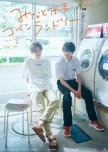
This feels like remembering a summer you never actually had.
How do you review Minato's Laundromat when your main memories are spinning washing machines, awkward flirting, and Minato spending an entire season losing arguments against a teenager with unlimited determination?This series really looked at the slice-of-life romance genre and said, "What if we replaced drama with vibes, added a laundromat, and weaponized yearning?"
Akira Minato inherited a small neighborhood laundromat and was fully prepared to spend the rest of his life quietly folding clothes and avoiding emotional vulnerability.
Then Shintaro Katsuki walked through the door and immediately made that everyone else's problem.
The man saw an attractive laundromat owner and apparently decided persistence was a lifestyle choice.
And honestly?
Respect.
Nishigaki Sho brought so much warmth, awkwardness, and quiet loneliness to Minato that watching him slowly open himself up to love felt incredibly rewarding.
And Kusakawa Takuya as Shin?
The king of confidence.
The emperor of flirting.
The CEO of looking at someone like they hung the moon and then acting surprised when they noticed.
Watching Shin patiently chip away at Minato's walls while Minato continuously attempted—and failed—to remain unaffected became one of the most entertaining parts of the series.
Their relationship wasn't built on grand declarations or dramatic twists.
It was built on small moments.
Sharing meals.
Walking home together.
Conversations in front of washing machines.
The kind of ordinary moments that somehow become extraordinary when you're with the right person.
And can we please talk about the side characters?
Asuka understood the assignment.
Sakuma understood the assignment.
Honestly, everyone in this town seemed personally invested in making sure Minato stopped running away from his feelings.
Community effort.
We love to see it.
And can we talk about the people behind the camera?
The directors understood exactly what this story needed: patience.
The pacing was slow, intentional, and wonderfully unhurried.
The series trusted silence.
It trusted small gestures.
It trusted the audience to sit with the characters instead of rushing them toward the next plot point.
The cinematography deserves special praise.
The summer sunsets.
The quiet streets.
The laundromat lights.
The feeling of warm evenings that you somehow know you'll miss before they've even ended.
Every frame felt nostalgic.
And the soundtrack?
The audio equivalent of sitting outside at sunset with nowhere you need to be.
Minato's Laundromat wasn't trying to shock you.
It wasn't trying to emotionally destroy you.
It wasn't trying to save the world.
This was comfort.
Pure, gentle comfort.
This was a story about timing.
About courage.
About allowing yourself to want something even when you're scared of what happens next.
This wasn't enemies-to-lovers.
This wasn't rivals-to-lovers.
This was laundromat owner × human embodiment of persistence and sunshine.
10/10.
Would absolutely spend an entire summer at that laundromat, become emotionally attached to the entire neighborhood, and watch Minato lose the battle against his own feelings all over again.
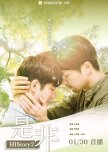
Domestic fluff
How do you review HIStory2: Right or Wrong when your main memories are school lunches, homework help, and Shi Yi Jie looking at Fei Sheng Zhe like he had personally solved world peace?This series really looked at the BL genre and said, "What if we skipped the misunderstandings, skipped the unnecessary drama, and went straight to marriage energy?"
Shi Yi Jie was a university professor, a single father, and a man whose life revolved around schedules, responsibilities, and taking care of everyone around him.
Then came Fei Sheng Zhe.
His student.
His teaching assistant.
His accidental co-parent.
And somehow, his peace.
Naturally, chaos followed.
But not the dramatic kind.
The domestic kind.
The "who's picking up the kid from school?" kind.
The "did you eat yet?" kind.
The "I bought your favorite food on the way home" kind.
The dangerous kind that makes viewers start looking at apartment listings together.
Watching Sheng Zhe slowly become part of Yi Jie's little family wasn't just adorable.
It was healing.
Fandy Fan brought so much warmth, patience, and quiet affection to Sheng Zhe that it was impossible not to root for him.
And Chris Wu as Yi Jie?
The king of exhausted single dads.
The emperor of acts of service.
The CEO of realizing he's in love approximately six business months after everyone else figured it out.
Their relationship wasn't built on grand confessions or dramatic gestures.
It was built on ordinary moments.
Cooking dinner.
Helping with homework.
Sharing responsibilities.
Choosing each other in small ways every single day.
And somehow, those moments felt bigger than any dramatic kiss scene ever could.
Then there was You You.
The emotional support child.
The tiny matchmaking genius.
The true captain of this ship.
Honestly, half the relationship progression happened because that child understood the assignment better than the adults did.
And can we talk about the people behind the camera?
Director Adiamond Lee understood exactly what this story needed: softness.
The pacing was gentle.
The conflicts felt realistic.
The emotional moments were allowed to breathe.
The production team understood that not every love story needs to be loud to be memorable.
Sometimes all you need is a kitchen table, a family dinner, and people slowly realizing they belong in each other's lives.
The cinematography leaned into warm lighting and cozy spaces, making every scene feel intimate and lived in.
And the soundtrack?
Comfort food in audio form.
HIStory2: Right or Wrong wasn't trying to reinvent romance.
It wasn't trying to emotionally destroy you.
It wasn't giving you mafia shootouts or corporate conspiracies.
This was domestic bliss.
Premium-grade domestic bliss.
This was professor × teaching assistant × tiny child who was clearly running the household.
10/10.
Would absolutely babysit You You, help with homework, and watch these two accidentally build a family all over again.
It was 1 of the smartest, most ambitious, & most underrated BLs of its generation.
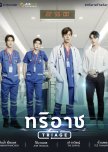
How do you review Triage when your main memories are hospital corridors, impossible choices, sleep deprivation, and Dr. Tin repeatedly attempting to fight fate itself?This series really looked at medical dramas and said, "What if we added time loops, moral dilemmas, emotional trauma, and enough stress to lower the average viewer's life expectancy?"
Tin was an exhausted emergency room resident trying his best to save people in a system that didn't always make saving them possible.
Tol was the patient he couldn't save.
At least not the first time.
Or the second.
Or the tenth.
And suddenly, one failed resuscitation turned into an endless cycle of trying to answer a single impossible question:
How many times would you rewrite your own life to save someone else?
Tee Thanapon brought so much desperation, exhaustion, and determination to Tin that by the halfway point it genuinely felt like we were trapped inside the time loop with him.
Every failed attempt hurt.
Every small victory mattered.
Every reset felt heavier than the last.
And Tae Darvid as Tol?
The man somehow managed to be frustrating, charming, vulnerable, and heartbreaking all at the same time.
Watching Tol slowly become more than just "the patient who dies" and turn into a fully realized person worth fighting for made the emotional payoff hit even harder.
But what truly makes Triage special is that the romance never overshadows the story.
And the story never overshadows the romance.
They grow together.
Tin isn't trying to save Tol because he loves him.
He falls in love because he keeps choosing to save him.
Again.
And again.
And again.
The supporting cast deserves just as much praise.
The doctors.
The nurses.
The friends.
The patients.
Everyone felt important because in a hospital, everyone is somebody's entire world.
And can we talk about the people behind the camera?
Director A Natthaphong Wongkaweepairod understood exactly how to balance medicine, mystery, romance, and science fiction without allowing any one element to overpower the others.
The pacing felt relentless in the best possible way.
Every answer created three new questions.
Every revelation forced you to rethink everything you thought you understood.
The writers somehow turned complicated timelines and paradoxes into a story that remained emotional and deeply human at its core.
The hospital itself became a character.
The fluorescent lights.
The empty hallways.
The late-night shifts.
The constant feeling that life and death were separated by seconds.
The cinematography captured all of it beautifully.
And the soundtrack?
Absolutely guilty of malpractice.
Every song arrived precisely when your heart was becoming stable enough to suffer again.
Triage wasn't simply a medical drama.
It wasn't simply a romance.
It wasn't simply science fiction.
It was a story about choice.
About regret.
About the unbearable weight of responsibility that comes with caring about someone.
And about the terrifying realization that sometimes loving someone means accepting that you cannot save everyone.
This wasn't doctor × patient.
This wasn't strangers-to-lovers.
This was "I have watched you die more times than I can count and I will still choose to try again."
10/10.
Would absolutely get trapped in the time loop, fail every medical exam imaginable, and watch Tin challenge fate itself all over again.
This drama is really good. I would love to see a sequel.
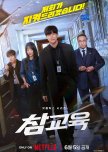
This drama is really good. I heard that the cases shown were actually based on true story, which made it more interesting to watch. It felt very satisfying to see how they resolve each cases. And I really like the cast specially Kim-Mu-Yeol who played Inspector Na-Hwa-Jin. His character looks so serious and scary but he still managed to make it very charismatic and funny. I would love to see a sequel to this drama.


