

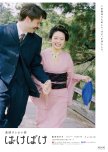
A Slow-burn Love Story Between A Western Writer And A Samurai Daughter
ばけばけ or The Ghost Writer's Wife is the fictionized biography of Lafcadio Hearn (called Lefcada Heavin here) and Koizumi Setsuko (called Matsuno Toki or Otoki here). Hearn was born in Greece and raised in boarding schools in Ireland. He moved to America at 19 and became a successful journalist and reporter in Cincinnati and New Orleans before further roving the world to write travelogues at 37. Setsuko was the daughter of a samurai family who were at bit of a loss at what to do after the feudal structure in Japan was eliminated by the Meiji Restoration. This series begins shortly after Hearn landed in Japan at age 40 and took a job as an English teacher at a middle school in Matsue.Hearn was clearly a bit of an eccentric even by the standards of his time and place. He had damaged his left eye when playing ball at age 16 and completely lost the sight in that eye, and had always been myopic to begin with. Hearn was pretty distant from his immediate family and so was a bit rootless. Heavin is presented as a kind of an ur weeb: he is utterly taken with Japanese culture and fascinated by its traditions, customs and folklore. Heavin is played by Tommy Bastow who had previously appeared in 2024's Shogun.
We get quite a bit more of Otoki's backstory in this series. Her grandfather had been a retainer of the local Daimyo in Matsue, and he is committed to the old ways of the samurai. But the family's income was eliminated after the Meiji restoration, and an important part of the plot of the series is how inept her father is after the transition to the new constitution and economic structure under the Meiji emperor. Otoki is played by Takaishi Akari, and about 5 weeks into the series I was like, "Who is this actor, and what else has she done?" I do recommend her strikingly different but equally great performance as a teenaged assassin in the Baby Assassin franchise (3 movies and a television series to date). Takaishi has a very readable face, IMO, and much of the charm of this series is that it is very easy to guess (or project onto) what Otoki is thinking in her silent reaction shots.
Takaishi won best actress and Bastow won best supporting actor for their performances in ばけばけ at the Television Drama Academy awards in March.
The focus of this series is more on Otoki but we do get a bit of Heavin/Hearn's backstory along the way. I was very happy when the series spent two episodes on Heavin's prior marriage to a previously enslaved woman, Martha (Mattie Foley IRL) from when he had been a reporter in Cincinnati. I had expected the series to completely hide that part of Hearn's past, and I must give the production huge kudos for casting the black American actress Misha Brooks - I am no expert in what Ohio accents would have been in mid-1870s Ohio, but Brooks' modern midwestern accent is perfect for the part, and her performance is notably good in this brief tangent for the series. Notably less good is how the writer chose to end those episodes which I shall rant about as an as a slightly spoilery option at the end of this review.
The writing and the direction in this series are well above the average for asadoras as well. One of the key directorial choices throughout the series is to get a bit closer to natural lighting throughout. Thus, the relatively frequent night scenes are often lit by candle light, and the production sometimes leans a bit hard into the darkness. Everything is pretty much discernable, but you might wish to watch this on a larger screen at night to get the full experience and enjoyment of this series.
By any standards this series is not a quick romance, but it is a delightful and beautiful one. The two do not meet and instantly fall in love, and the process of their getting from here to there is quite lovely. Otoki has an unusual (for her time and place) interest in ghost stories from well before she ever met Heavin, and Heavin discovers a mutual interest in them through her recounting of them to him. As writer Heavin is initially just looking for a source for stories he can incorporate in to his books being printed and sold overseas, but ultimately has his life is changed and unexpectedly fulfilled by this interesting and unique woman from a distant culture. ばけばけ nails that process of bonding, and the series is heartwarming and moving throughout. It is well worth the time investment for the watch.
Beyond here lieth spoilers for two episodes (out of 125) in the middle of the series:
Look. I understand the writer's challenge of trying to present and wrap up Hearn's relationship to his first wife in 30 minutes of television. Hearn did indeed get fired from his newspaper when his editors learned that he was married to a previously enslaved woman. But what the series did not have time to explain was that Hearn then just started working for the competing paper in town and the circulation went up at that other paper because of his writing to the point that the previous paper tried to hire him back. In real life, Hearn and Mattie were married for a few years, and tried to reconcile several times but ultimately drifted apart permanently, and then Hearn moved to New Orleans. Part of what came between them was undoubtedly the racism of the time - mixed-race marriages were not legally acknowledged in Ohio until a few years after Hearn and Mattie parted ways, and one can only imagine the pressures the two experienced while they were together. It is indeed difficult to tell that story in a brief aside in this series.
Nevertheless, choosing to present the reason that Heavin and Martha broke up is because Martha attacked her boss with a razor is shockingly racist. The whole scene is maybe 3 minutes in a 9,375 minute drama, and so I cannot condemn the whole series for that one scene, but there has to have been a way to write a permanent ending for Heavin and Martha's relationship without making Martha a violent, razor wielding criminal.
Cet avis était-il utile?

Because This is My First Life
0 personnes ont trouvé cette critique utile
Cette critique peut contenir des spoilers
O MELHOR DORAMA QUE ASSISTI NA MINHA VIDA!
Simplesmente o melhor dorama que eu já assisti na minha vida! Vou ter que dar um pouquinho de spoiler. Porque eu percebi que muitas pessoas que assistiram que deram uma nota baixa, não compreenderam o drama!A nossa protagonista vem de uma família patriarcal —Onde o centro das decisões vem do pai e a mãe não tem voz!— do interior da Coreia. Ela é a filha mais velha, que sonha em ser escritora, dentro de uma família que não liga para essas coisas. O pai é um homem rude e ignorante que só quer que ela ganhe dinheiro e sustente a família! Ela não tinha voz, mas tinha coragem, então ela "foge" e faz a faculdade de seus sonhos.
Anos mais tarde, já quase com 30 anos, ela tem um emprego como assistente de roteirista, não era bem o que ela queria, mas ela não desiste desse sonho. Apesar de ter quase 30 anos, nunca namorou, o que soa um pouco engraçado porque ela escreve sobre romances.
E temos o nosso protagonista com um histórico amoroso um pouco trágico, um personagem que quem assiste de primeira acha que ele não tem sentimentos, que parece um robô, mas não se deixe enganar, porque pra ele ter ficado desse jeito algo aconteceu! A sua única motivação é simplesmente só pagar o financiamento da casa e sustentar sua pet. Contudo, a sua renda não fecha e trabalha o dia inteiro, precisa de alguém que cuide da casa e de sua gata, um colega de quarto. Contudo, todos que aparecem falham em cumprir suas simples regras.
A nossa protagonista mora em um apê com o irmão mais novo, em seul. Bastou ela passar uma temporada no trabalho e quando voltou, pegou seu irmão aparentemente, um vagabundo, fazendo coito, e ela viu tudo. A cena retrata com humor algo preocupante! Ela de repente, não pode ficar na casa da qual ela mesma alugou e comprou móveis, pra deixar para um irmão que não tem sequer um emprego, mas foi parabenizado pelo pai por ter engravidado a namorada, tudo isso porque a criança que ela esperava era um menino!
Tudo isso no dia do seu aniversário! Ela é alguém muito forte e carrega um peso enorme nas costas. A coitada se vê obrigada a procurar outro apartamento pra morar.
E por um acidente movido a um desentendimento muito grande, eles terminam morando juntos e aprendem muito um com o outro. Ela acaba se apaixonando secretamente por ele e ele por ela. Mas por conta do trauma que o nosso protagonista viveu, ele não se abre para um novo relacionamento, ele não consegue se entregar! Ele é caloroso com ela, um amor, mas não deixa transparecer, ele tem medo. Foi por isso que no fim ela precisou tomar medidas drásticas, como sair de casa. Ela não pediu para ele vender o apartamento. Mas ele, de tamanha dor, o vendeu porque via ela por todo o lugar e a dor era demais para suportar!
Quando ela voltou, encontrou um novo amor, livre, e agora simplesmente eles poderão viver um amor extraordinário! Não achei desnecessário, achei genuíno. Só quem tava verdadeiramente assistindo, percebeu!
E a história das amigas da protagonista também são incríveis!
A 1° com um relacionamento muito longo com seu namorado e que não vai para frente.
E a 2° que tem medo de amar.
Em meio a tantos traumas, tristezas e problemas, todo o dorama é regado com humor para aliviar as tensões. A harmonia e a história é magnífica! Até as músicas são lindas! É definitivamente completo, sem defeitos!
Tudo que falei aqui não chega aos pés da OBRA PRIMA que eu assisti. Por favor, quem tiver lendo, não se deixem levar por comentários pessimistas. Só confiem!😭✨
Cet avis était-il utile?
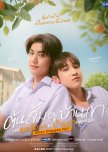
When Oranges Fall — A First Love That Feels Safe
I really loved this BL.When Oranges Fall is a gentle coming-of-age story set in the late 90s, when LGBTQ+ identities were far less openly discussed. However, instead of using constant homophobia or cruelty to create drama, the series gives its characters a reassuring world in which they can slowly understand their feelings. That choice makes it incredibly easy to watch. The fears surrounding their relationship still feel real, especially because neither boy is comfortable talking openly about what he wants. However, the series never becomes emotionally exhausting. It allows them to be confused, hesitant and afraid without punishing them for falling in love.
The whole cast is also extremely cute. The friendships make the school setting feel alive, and the supporting characters create a warm environment around the central romance. They aren't simply there to fill the episodes. They make this feel like a genuine group of teenagers approaching the end of one part of their lives without fully understanding what adulthood will bring.
Progress and Almond, however, were something else. After already playing Noh and Phun together in Love Sick 2024, they return here with a very different kind of relationship. Their familiarity as acting partners helps the emotional scenes feel natural, but there is still a visible awkwardness between their characters that suits this story perfectly. Neither boy is completely comfortable with what is happening between them. Normally, that hesitation could weaken the chemistry. Here, it strengthens it. This is a first love developing during a period when two boys couldn't easily name their feelings, much less discuss them openly. Their uncertain looks, restrained movements and difficulty approaching each other feel appropriate rather than frustrating. Progress and Almond don't need exaggerated romantic scenes to make the relationship believable. The affection appears through small gestures, the time they spend together and everything they struggle to say directly. Their chemistry feels soft and slightly uncomfortable in exactly the way this romance needs. The acting is excellent because they make that uncertainty feel like part of the characters rather than a limitation in their performances.
The only part that stopped the series from being perfect for me was the transition into adulthood. The story spends so much time showing two boys who are afraid to communicate that I expected growing up to challenge them more. Instead, several problems are resolved very quickly and without the arguments or emotional confrontation I expected. Love cannot always be that easy, especially between two people who have so much difficulty speaking honestly. I didn't need unnecessary toxicity or a dramatic separation created only to extend the story. However, I wanted a little more resistance. Even one meaningful disagreement could have shown how their relationship changed once the innocence of school ended and adult choices became real. Perhaps this also comes from my own perspective. As an adult, I naturally compare coming-of-age stories with reality and with my own experiences. That sometimes makes me notice emotional steps that younger viewers may not feel are missing. The simplicity of the resolution may be exactly what makes the series comforting for other people. It didn't prevent me from loving it.
Final Thought
When Oranges Fall succeeds because it understands that a story about LGBTQ+ youth doesn't always need suffering to feel meaningful. It offers a warm and reassuring first love carried by an adorable cast and two leads who understand how to make hesitation feel romantic. I still wish the growing-up part had been explored more deeply. The relationship needed one final challenge to show that Ko One and Ko Two could communicate as adults, not only love each other as teenagers. Even without that, this remains a perfectly watchable and lovable BL that I will happily return to.
Cet avis était-il utile?

Properly crazy and funny
This drama has insane plot, and it’s sorta unpredictable. All the treachery in the palace is standard, but funny as hell. The insanity is off the charts.Actors gave their best performances. Leads chemistry is outstanding. Empress Dowager was my favorite. I wished they added more of backstory and follow up to leads in the modern world, but oh well…
Cet avis était-il utile?

Agent Kim Reactivated
1 personnes ont trouvé cette critique utile
A Thriller That Forgot to Be Thrilling
I genuinely don't understand how this has such a high rating. This felt less like an action thriller and more like an unintentional comedy.The biggest issue is how unbelievably unrealistic everything is. I can suspend my disbelief, but this drama asks way too much. Characters infiltrate heavily secured locations, including a North Korean summit setting, with almost no believable resistance. Fights are everywhere, yet guns are mysteriously absent despite the situations clearly calling for armed security. The amount of plot armor is so extreme that I never once felt anyone important was actually in danger.
The pacing is also a mess. The kidnapping of the daughter is supposed to be the central conflict, yet that storyline is resolved surprisingly early. After that, the drama shifts its focus to political and military subplots that I found far less interesting, including protecting a North Korean military figure and drawn-out conflicts with government agencies. It felt like the show abandoned its strongest premise and replaced it with filler. Anything that wasn't directly related to rescuing the daughter felt like unnecessary padding. There wasn't enough tension, character development, or compelling storytelling to justify the detours.
Overall: 4/10. It's occasionally entertaining if you switch your brain off, because some of the characters are actually likeable.
Cet avis était-il utile?
The lead characters are intelligent, resilient, and have incredible chemistry. Their relationship develops naturally, making both the romantic and emotional scenes feel genuine. The supporting cast also delivers strong performances, with each character adding depth to the story.
One of the drama's greatest strengths is its stunning cinematography. The costumes, palace settings, and traditional Chinese aesthetics are breathtaking, creating a visually rich experience. The background music perfectly complements the emotional scenes, making key moments even more memorable.
Cet avis était-il utile?

Bom, porém…
That Summer é bom, porém apresenta, ao meu ver, algumas problemáticas referentes à sua produção. Desse modo, vou dividir esta resenha em três partes: abordarei, inicialmente, as minhas considerações em relação à escolha do elenco e à atuação e, posteriormente, explanarei as minhas observações a respeito da história e da produção em si.PERSONAGENS:
Gostei bastante da escolha dos atores responsáveis por interpretar os personagens principais, Lava e Wave. A atuação de ambos é satisfatória e eles não pecam nesse sentido. Contudo, senti que a direção pesa a mão em algumas cenas. A respeito dessas cenas, destaco, sobretudo, aquelas em que o Wave tenta "irritar" o Lava. Ao jogar um balde de água no Lava, o Wave perde o apreço de grande parcela do público, justamente porque o personagem, além de "mimado", mostra-se, a partir dessa cena, assustadoramente chato.
O Lava é extremamente encantador; ele é a melhor parte do BL. O personagem é seguro de si, sabe o que quer e vai atrás disso. O Lava vê no seu tio um refúgio e não fica se martirizando em relação aos problemas da vida. Isso é mágico. Em resumo: "Ele tem o molho" (o molho todo).
Os personagens secundários salvam o romance do BL. Sim, eles carregam nas costas mesmo! O Mond é perfeito; ele tem uma energia magnífica e um instinto de liderança único. O Ryu é fofo, bem-sucedido e complementa o Mond.
HISTÓRIA E PRODUÇÃO:
A história tem muitos furos. O Wave só é príncipe para a direção, tendo em vista que essa questão foi totalmente deixada de lado ao longo do BL. Além disso, o Wave perde a memória de forma equivocada, o que faz com que o episódio 09 seja totalmente forçado e "tirão".
De modo geral, acredito que esse BL poderia ter sido bem melhor. Eles tinham tudo para produzir algo LINDO E BEM-FEITO, mas optaram por preencher lacunas com cenas e mais cenas de um romance mal produzido. A ideia de que o Wave é um príncipe poderia ter sido deixada de lado; ele poderia unicamente ser um rico comum.
Não se espantem com a minha resenha pessoal. Eu recomendo essa série, sim. Contudo, sou fã do Win Ynny e acredito que ele merecia mais.
(Alguém dê uma boa história para ele, por favor. Ele vai entregar; agora, milagre, infelizmente, o CAT ainda não sabe fazer.)
Cet avis était-il utile?
Cette critique peut contenir des spoilers
What makes Double Helix so compelling is that it understands people don't enter relationships as blank pages. They arrive carrying years of experiences, fears, expectations, and emotional habits that were formed long before they met each other. In many ways, this drama isn't just about love. It's about everything people bring into love.The series does an exceptional job of showing how the past quietly shapes the present. The characters aren't simply reacting to what is happening around them. They're reacting to old wounds, learned behaviors, and deeply rooted beliefs about trust, loyalty, sacrifice, and self-worth. What makes the writing so impressive is that these influences are rarely stated outright. Instead, they're revealed gradually through patterns of behavior, allowing the audience to understand the characters on a deeper level with every episode.
I was particularly fascinated by how the drama portrays emotional inheritance. Many of the characters are trapped not by circumstances, but by ideas they've carried for years. Ideas about what love should look like, what they owe other people, and what they must endure in order to be worthy of happiness. Watching them struggle against those beliefs was often more compelling than any external conflict.
The character writing is where Double Helix truly excels. No one is reduced to a single defining trait. People make admirable decisions and terrible decisions, sometimes for the exact same reason. Love inspires both courage and fear. Loyalty becomes both a strength and a weakness. The drama understands that human behavior is rarely consistent, and that inconsistency is precisely what makes its characters feel authentic.
Another aspect I appreciated was the series' remarkable patience. It never rushes emotional development. Trust is built slowly, damaged gradually, and repaired with effort. Likewise, personal growth doesn't arrive through sudden revelations. It emerges through repeated failures, painful realizations, and the difficult process of confronting uncomfortable truths about oneself. That commitment to emotional realism makes every breakthrough feel genuinely earned.
What stayed with me most was the story's refusal to offer easy answers. It never suggests that love automatically heals old wounds, nor does it pretend that understanding someone erases the consequences of their actions. Instead, it presents growth as a continuous process. People learn, stumble, repeat mistakes, and try again. That honesty gives the drama a maturity that is increasingly rare.
By the end, I felt that Double Helix had evolved into something much larger than a romance. It became an exploration of how people inherit emotional patterns, how those patterns shape relationships, and how difficult it is to break cycles that have defined us for years. The romance is beautiful, but it's the emotional insight beneath it that makes the story unforgettable.
For me, this is the kind of drama that lingers long after the final episode. Not because of a shocking twist or a dramatic ending, but because it captures something profoundly true about human relationships. We spend so much of our lives learning how to love, and Double Helix understands that sometimes the hardest part is unlearning everything that taught us how not to.
Cet avis était-il utile?

First impression
So far so good. I'm not too crazy about this series, but it is definitely not bad. The first 10-15 min felt like too much, but after that I think it became better.It's nice with some funny moments. I definitely want to see more.
Episode 1-2:
* Indy is funny and a bit cringy; I love him.
* The variety with so many different characters is kind of nice, but also feels like much for a series that has only 8 episodes.
* This series gives me vibes of Bad Buddy and My School President.
Episode 3-4:
* I dislike Tungtae a lot. He is cheating on his girlfriend(s), going into Lee's room and breaking his stuff (yes, on accident, but he should've never been there in the first place), and then running his mouth about everything regarding Lee and Putter's personal lives without asking them first. I genuinely can't stand this guy, he is not a good person and a terrible friend.
* I love Indy and Jia; they are so cute together, their characters are like a perfect fit.
Cet avis était-il utile?
Cette critique peut contenir des spoilers
What impressed me most about Double Helix is that it understands a truth many dramas avoid: every choice has a cost.Not because the universe is cruel, and not because the characters are being punished, but because every decision inevitably shapes the people around us. That idea forms the emotional backbone of the entire series. No action exists in isolation. Every attempt to protect someone, every moment of silence, every act of sacrifice, and every expression of love creates consequences that continue to ripple through the story long after the moment itself has passed.
What makes the writing so effective is that those consequences never feel artificial. The drama doesn't rely on coincidence or forced misunderstandings to generate tension. Instead, conflict emerges naturally from the characters' personalities, fears, and emotional limitations. Looking back, I was struck by how inevitable many of the story's most heartbreaking moments felt. Not because they were predictable, but because they grew so organically from everything that came before them.
I also admired the series' refusal to simplify human behaviour. People are rarely driven by a single emotion, and Double Helix understands that. Love is intertwined with guilt. Loyalty is complicated by fear. Kindness sometimes masks insecurity. Even the most painful decisions often come from a place of genuine care. The characters are constantly navigating competing emotions, which makes them feel less like fictional creations and more like real people struggling through impossible situations.
Another strength of the drama is its emotional memory. Nothing is forgotten. Characters carry previous experiences into every future interaction, and those experiences quietly influence the way they communicate, trust, and interpret each other's actions. The past isn't treated as a completed chapter. It remains an active force within the present. That continuity gives the relationships a depth that becomes increasingly rewarding as the story progresses.
What I found particularly fascinating was how often the drama challenged my initial judgments. There were moments when I felt frustrated by a character's choices, only to later realize that the story had been showing me the reasons for those choices all along. It never demanded sympathy. It earned understanding. That distinction is what elevates the character writing from good to exceptional.
Perhaps the most mature aspect of Double Helix is that it never treats love as an escape from responsibility. Love matters, but so do accountability, communication, and self-awareness. The series repeatedly demonstrates that good intentions alone are not enough. People must also confront the impact of their actions, even when those actions were motivated by affection. That emotional honesty gives the romance a depth that many dramas never achieve.
By the end, I realized that Double Helix wasn't telling a story about whether two people loved each other. That was never in doubt. It was telling a story about whether love could survive the consequences of who they had become, and whether they were willing to grow beyond the emotional patterns that had shaped their lives for so long.
For me, that's what makes this drama extraordinary. It understands that the most compelling stories aren't about perfect people making perfect choices. They're about flawed people learning that every decision carries weight, and that genuine growth begins when we're finally willing to accept that weight instead of running from it. Thoughtful, emotionally rich, and beautifully constructed, Double Helix is a drama I won't soon forget.
Cet avis était-il utile?

Cette critique peut contenir des spoilers
Authentic queer story with flaws - but a must watch nonetheless
Beautiful story and cinematography - the opening was really touching and a great start to the show.The show was set to explore religious guilt and teenage love, and I did think that was greatly portrayed. However, it is around episode 5 and 6 that they kind of drop the show on the floor. Tanrak spends all of his relationship with Barth being scared of being found out, and Father and Kongdech are kind of hostile towards him when they do find out. But then we get a long time skip to the future, where they are both suddenly okay with it and they're all hugging?? It wasn't at all satisfying and it felt rushed and fake.
Of course I want happy endings to queer shows - but with an authentic, realistic story like this I would have liked to see more how they got to the happy ending. It seemed as soon as their relationship properly started, the story ended. I would've liked to see more of what made Kongdech change his mind, along with Father. Maybe the show would've worked out if the timeline was longer, instead of huge jumps in episode 1 and 6 between past and future, or if it was switching between past and future every episode.
Because to me it seemed like what the show said was "gay marriage is legal, which means everyone is accepting and okay with it now," which I don't think was their intention, but it made it feel less authentic nonetheless. And also some of the scripting was badly done, and they were often overexplaining what they were doing, though many shows have unfortunately started doing that now.
Despite its flaws, though, I do think this show is worth watching. Gemini and Fourth are such good actors and carry the roles so well. The building of their relationship is well done and Tanrak saying "I am not Gods favourite son either," before their first kiss was one of the best scenes in TV that I've seen lately. Happy christian queer stories are needed, and I am happy that this show has been made and released!
Cet avis était-il utile?
Sweet as Oranges: A Heartwarming Review of When Oranges Fall
When Oranges Fall is a sweet, heartwarming high school romance that captures the gentle warmth of youth, even if the late-stage plot loses a bit of its momentum. From the very beginning, the cozy scenery and bright visual tones set a comforting backdrop, while the central orange tree motif—representing the playful neighbor connection between Ko Song and Ko Neung—gives the show such a fitting and endearing identity. Progress and Almond deliver fantastic chemistry, hitting that sweet spot for a teenage BL with romance that feels genuinely heart-fluttering without ever overstepping into something too mature for a high school setting. Their contrasting personalities complement each other effortlessly, making their dynamic feel natural and endearing. The show is further elevated by a wonderful friend group whose tight-knit comfort is a joy to watch, alongside an adorable side romance in Ken and Paul’s characters (Augar and Achi). Beyond the romance, the series grounds itself in relatable high school struggles about finding the right path and adapting to change. While the narrative starts to fizzle out slightly toward the final stretch with a lack of major direction—and drops the ball on resolving the secret letter subplot between Tle and August—these minor pacing stumbles don't ruin the overall vibe. It remains a delightful, feel-good drama that is well worth the watch for anyone seeking a wholesome comfort show.Cet avis était-il utile?
Série superestimada
Essa foi uma série que esperei muito e recebi nada. Os 3 primeiros episódios são bem confusos, mas dei uma chance para a série, pois como é bem avaliada achei que com o passar dos episódios ela fosse ficar mais dinâmica e começaria a fazer sentido. Entretanto cá estou eu no episódio 10 e nada faz sentido, as piadas não tem graça, a história é chata. Impossível continuar com mais um episódio, quanto mais terminar essa chatice 😴😴😴Cet avis était-il utile?
Cette critique peut contenir des spoilers
WTH
That was clearly not for me. Wth was that?!I tried even after seeing the bad reviews and that was the worst decision of my week. I literally lost a day and that’s a lot during vacation. First that was so easy and then BOOM. I was not ready for this shit.
I mean the storyline is good and honestly I would love to watch this but dying on the 7th episode????? I’m already in love with him why would you do that??? I liked the other one at first but then I loved the brunette guy. 😔😔
Not for me at all but honestly not for anyone who easily cry because I’m still crying and probably will during a few days. If you like plot twist and a character who doesn’t cry when his partner die before his eyes then it’s for you. 💗🎀
that was all love you guys mwah
Cet avis était-il utile?

Cette critique peut contenir des spoilers
Pit Babe: 6/17/2026 - 6/22/2026
This show was surprisingly and my first omegverse show so I was kinda going in blind. Despite that I feel like the romance between the leads was really good and you could really feel the chemistry. I also love how the plot developed and there were so many plot twist that it was lowkey crazy. I also love the side couples and watching them develop was really cool. There was also a lot of steamy scenes which I didn’t mind but I feel like sometimes they were random. Lastly there were a lot of heartbreaking scenes especially a certain one so there were a lot of tears shed during this show, especially the last few episodes.Cet avis était-il utile?


