


Best xianxia since ten miles of peach blossom
the sound design in this drama is GORGEOUS, like god tier. really you can always tell a drama is going to be explosive when the crew excels with the sound and i am big on sound design. especially being an avid fan of western works like Dune, Game of thrones, Westworld, Instellar (and literally every single Christopher Nolan work).Haven't been this engrossed in a xianxia drama like this since Ten miles of peach blossoms so that's telling enough. the cinematography, visuals and acting is just *chefs kiss*.
Esta resenha foi útil para você?
Honey as Lube, GO WATCH IT
THIS IS SO GOOD. Like actually GOOD good, not “I watch for the pretty faces” good (although yes, the faces are stunning). But I mean well-written, emotionally intelligent, gorgeously acted good. The chemistry between the leads is off the charts and Im pretty sure they are not acting, they are in a whole relationship and forgot to tell us. (I am in fact delulu)Anyway the chemistry between jin and akin is ridiculous. These two accidentally invented a new form of communication via eye contact because GOD DAMN, the way they orbit each other?? the tension?? the softness?? it’s so natural it makes other shows look like staged table reads. (Ya I am shading some bl's so what) THE POINT IS...it’s warm. it’s intense. it’s addictive.
The writing is tight, thoughtful and they actually use the characters' personalities and histories to drive the story, not just to sprinkle in backstory when it's convenient. everything connects.
Ok now let’s get into why boom and smart are actual sorcerers.
Boom’s physical acting is a whole experience. like, the man acts from his spine, from his kneecaps, you can tell what his character is feeling from the way he slumps his shoulders or tightens his hands. He uses his body language so so well.
And Smart’s vocal acting is unreal. the way he shifts tone depending on who he’s talking to, what he wants, what he’s scared of...ugh it’s so precise and layered. Sometimes he says something soft and i’m like “oh no... oh NO he means that.” his voice will crack just a little and suddenly I am spiraling.
And their scenes together?? good god, all of it is magnetic. I was locked in. The range is INSANE. like one minute I was laughing because akin is being a lovable menace and the next I am pausing the show to just BREATHE.
And YES. yes. there is a certain infamous scene involving HONEY (I know ya'll came in here for that trending honey scene) which sounds unhinged (because it is) but it’s also deeply emotional and a whole metaphor for love and indulgence and knowing someone so well you can give them exactly what they crave. It’s symbolic and it’s sweet and yes jin knows what akin likes and wants to give him everything and that is beautiful. I was deeply moved and deeply stressed. Peak television. okay, I want to frame it and then power wash it.
I hope boom and smart get everything after this. I hope they win awards. I hope they get roles that challenge them and let them show all the layers they have clearly got stored up. And I hope everyone watches this show so they can scream about it with me.
WATCH IT, fall in love. and text your friends “YOU NEED TO WATCH THIS” every 5 minutes. (Because mine screamed at me after saying I will drop it at episode 1, I picked it up and I love it so give it more than one chance please)
You’re welcome.
Esta resenha foi útil para você?
Down to earth romance, providing troubling insight on what South Korean women are facing these days
"Something in the Rain" is a love story about an older woman (35) with a younger man (about 27/28). Yet, above all, the KDrama is a critical social study about relationship taboos and parental respect in South Korea as well as sexism in the workplace. Authentic. Bitter. Sweet.The original title of the KDrama "Pretty Nuna, who invites me to dinner" contains the taboo relationship with all its dynamics on which the story is based - the woman is older (´nuna´) than her boy friend (a no-go!)..., and still being a sucessful employee she earns good money instead of being married (another no-go). Actually in South Korea this is a serious problem of a recent generation gap and gender conflict.
Just consider the significance of "Something in the Rain" (as the romance that it is) in such a broader sense. If you are missing a special icing throughout the story, than this is simply what it is. It is supposed to. Overall, I consider "Something in the Rain" a rather up to date, down to earth, authentic romance, providing troubling insight what kind of circumstances South Korean women (and men) are facing these days.
--------------------- SIDE NOTE --- South Korean women and romance in everyday day life
In relation to everyday life in South Korea the focus on romance and true love in KDrama takes on a whole new meaning. Very few people really have time for a relationship during their professional life. The working days are long. In addition, women are discriminated against at work, sexualized and reduced to their gender role. They work harder (and often more efficiently) than their male counterparts, but are paid less and are less likely to be promoted, as they are bound to get pregnant soon. If they really do get pregnant, then that's it for professional life. Child care for 70-80 workhour weeks (with commuting and company dinners) is hardly affordable. Women do not have to hope for flexible working hours from their employer. So women with children inevitably end up at the stove. Women can forget about returning to work.
As a daughter, women already have a difficult time in the family. If they are married, then first of all they have to relieve the elders - in both families. (If they are not married, they are blamed or rushed oder pushed to quickly do so). Men, on the other hand, are celebrated by families as sons from the start. Accordingly, they present themselves in public with self-confidence and appear more macho. It's not uncommon for them to loudly and rudely gossip about the looks of women in the coffee shop or restaurant or shop or at work or in public. (Actually with the job market being extremely competitive, the appearance of women can not only decide about the partner, but also about the employment).
There are numbers from surveys showing that on average, seven out of ten South Koreans don't have time to date and only about four out of ten are in a committed relationship. The work is more important. Not necessarily because they identify with it so much, but because they don't want to lose it. The pressure to perform is enormous for everyone. As a result, 3/4 of South Korean women between the ages of 25 and 29 are not yet married. Among women between the ages of 30 and 34, more than half are still unmarried. South Korean women also have increasingly modern demands for a self-determined life. They are less and less interested in macho men and suffocating family structures that reduce them to rasing children, representation and the home. This is also due to the fact that normal households can hardly cover their expenses. Family costs money. Divorce rates are rising (South Korea is having one of the highest in the world), yet women are finding it difficult to return to work. There is also a stigma to living as a single parent. (Accordingly, these days not only unmarried couples, but also married couples are less likely to have children.)
Society is in a dilemma. In fact, it can't help but modernize its patriarchal, women-discriminating value systems if it wants to survive. The South Korean population will otherwise shrink under the given circumstances from 2027 onwards. (Update 30.7.22: Statistics Korea reports on 28. July 2022 first time shrinking in 2021 already...)
Esta resenha foi útil para você?
 1
1Well played Reply 1988 writers, you psyche-ninjas. Well played.
I'm in a state of emotional mess right now. A pair of eyes are haunting me. So bear with me if this review turns out to be nothing but series of ramblings. The last 12 weeks (or 13, if we count that one week when it didn't air. but heyyy who is counting. Not me, ever me). Anyway, the last 12 weeks have been one hell of a ride.The thing about Reply 1988 writers is , they're like the Agatha Christies of their art. We think we know exactly what they are up to but no matter how hard we try, they are always always one step ahead of us. They already know what we THINK we know. Let me give a light example. I spent the first 3 episodes taking their previews seriously. But they always turned out misleading. Then I spent the next 7 episodes dismissing the previews. By 10th I almost didn't watch them. And then dropped the preview of 12th episode and I was like, "huh. One more misleading preview. I guess we're set for the ending then"
BOY WAS I WRONG.
I'm not sure whether to appreciate the genius of the Reply 1988 writers or be scared of their grasp of the psychology of the human mind. Since I fail to come to a conclusion, I have another meltdown. Whether they are tears of joy or tears of heartbreak, you'll have to watch the drama to know. We all know the writers are capable of both.
For now, Here are 10 things I absolutely loved about this drama (it was hard narrowing them down. I have about 70,000 on my mind right now):
1. Yoo Yeon Seok. Somebody has new permanent crush and that somebody is me
2. Song Hwa. Somebody has a new girl crush and that somebody is me.
3. Woo Joo. Somebody has a new role model and that somebody is me (seriously, this baby was GOALS. "If she doesn't love me, I won't love her either". He's more sorted than any of us would ever be).
4. Jung Kung Ho dating his best friend's sister. AGAIN. And potentially everyone knowing about it except for the know-it-all Ik Jun (or wait...)
5. The final 15 minutes of the final episode
6. The OST
7. The anti-climatic climatic ending that turned our world upside down
8. The supporting cast wearing the cape and stealing the show
9. Ik Jun <3
10. The band practice. Yoo Yeon Seok singing.
11. (SPOILER ON THIS ONE) Ik Jun and Song Hwa ending on a cliffhanger because I knew one episode was not enough to bring them together. They have 20 years between them and we want a lot of explanations and flashbacks.
12. The simplicity and the positive tone of the drama.
13. No hospital politics (thank god). Not too much blood.
14. Rich weren't assholes. No stereotyping and no cliches. Just beautiful human stories and emotions.
15. HILARIOUS SCENES
16. Aloha Karaoke scene
17. Jo Jung Seok singing aloha and releasing it
18. Winter garden couple (I mean, people were hyped over them exchanging two words. When has that ever happened in the history of Korean drama LMAO)
19. Yoo Yeon Seok's emotional range and his versatility as an actor (I'm watching Mr Sunshine these days LOL)
20. Seok Hyung restarting the band (no, you did not use them. Now go live your life)
21. Seok Hyung in general.
22. Reply 1988 writers being Psyche-Ninjas
23. Make-up-less Mi Na :)
I know I said 10 points but I never promised. Now time to go cry in a corner and patiently wait for the second season. Also, if season 2 ends up becoming one of the things Corona screws up, I'll turn all Gu Dong Mae). Over and out. Thank you for bearing with me. I held it in well too :')
PS - I might end up adding more points as I remember so bear with me.
Esta resenha foi útil para você?

Maeng Se-na (Choi Soo-young) is a brilliant character. Watching her shift from an implacable "villain's lawyer" in the courtroom to hiding her Gold Boys photocards and stickers whenever her client walks in is hilarious, yet deeply human.
Kim Jae-young delivers an outstanding performance as Do Ra-ik, a broken idol dealing with panic attacks and sasaeng harassment before getting entangled in the murder of his own groupmate. Personally, I believe this is one of the best-acted roles of his career, though, in my eyes, he’s always perfect.
Unlike other idol dramas, the whodunit here keeps you constantly on edge. It makes you question whether we truly know our idols or if we simply love the mask they project.
It’s meta, intense, and features explosive chemistry (at times made awkward by the legal context) between the leads. If you enjoyed The Judge from Hell or legal dramas with a modern twist, this is a 2025/2026 gem you cannot miss.
Esta resenha foi útil para você?
Esta resenha pode conter spoilers
[Edited: 07/01/2020][Watch this if you like series that are adult and women-centric and highlight their struggles without demeaning them.]
This could very well have been a soap opera with only entertainment value and nothing to take from. It is all in the characters, the situations and the commentary on relationships: how incredibly human all these women (something you don't commonly witness happening on television) and men were, how real their struggles were within their workplace (especially for women), and how incredibly vulnerable relationships are.
When it comes to the plot, you could boil it down to a marriage that starts to fall apart when it is discovered that the husband had been unfaithful at one point, with workplace politics thrown in the mix. However, the execution is what matters, and that was done wonderfully. The process of the trust and marriage breaking down was very authentic to life. Na Sung Jun went through different phases as she tried to come to terms with her new reality, and those were painful to watch. She acted unlike her past convictions once she was thrust into a conflicting, heart-wrenching situation where she is left questioning everything, from people she knew to herself. The writer fleshed out her emotional struggle so realistically it was frightening - one day, she is thinking she wants out; the next day, she wants to stay married because she cannot allow her marriage to crumble; then the next, she wants out; then the next, she wants to inflict misery upon everyone, including herself. Park Sung Joon is a man who is desperate, insisting on continuing the marriage, until he accepts that the trust is broken beyond repair, and acts in more hurtful ways in his confusion (which cannot be justified). We are also shown how lack of communication and presumptions in a relationship can be damaging. All sides of the story are told: the hurt woman, the remorseful husband, and the mistress (who is more than that).
I want to point out that Park Sung Joon was written amazingly in that his story is powerful and dreadful in its truth. He reminds the viewer that the act of unfaithfulness is not a symptom that reinforces how much of a jerk the cheater is, but a path (albeit highly immoral) that a good person can also choose, in an effort to counter the torment of self-inadequacy and threat of never being accepted if their rough edges come to light; it is a part of a series of decisions they make that end up leading them to a point they can never redeem themself from. His upbringing provides insight into how an adult with personal reservations so strong can be created that even their healthy relationship makes a dark, hidden part of them feel unsafe. The writer maintains a balance in that they make you feel sorry for yet angry at him, because his insecurities and presumptions were, after all, only in his head, if only amplified (and that is what we all fall prey to, so this is why it is so scary). Not only him, but the other party were also written in a human way: an everyday person, in their search for validation and understanding, making equally unjustifiable decisions.
However, the drama is not only about them. It is about womanhood, and so we are introduced to the stories of other women. The most notable were Lee Hyun Ah and Song Mi Na. Lee Hyun Ah breaks all stereotypes surrounding self-made, confident, proud women. Yes, she walks with a straight back, and has intimidating class, but she is also a woman with principles, a good heart, and her own pains, even when they are not apparent. Then there is Song Mi Na, a woman torn between her duties towards her family and her ambitions as an individual. I personally found Mi Na’s story really moving and something many family-oriented and ambitious women can relate to.
Aside from that, the writer did not label every thing as black and white. For example, emotions such as envy and jealousy were depicted in a very normal light, something anyone, even a good person, experiences. The main characters make irrational and imperfect decisions at many points, but they redeem themselves from that point and develop themselves. Of course, those who failed to fulfill the latter were criticized (Ohn Yoo Ri and Park Sung Joon).
I do have a criticism: the writer creates some situations but never follows through with them. It is a character-driven drama, so it was expected. However, I think there were occasions the writer could have built upon.
The drama could have fallen apart had the scene sequencing not been so good. The narration was spot on precisely because of the decision to withhold exploring a scene completely, piecing some events together in a way they looked true but, as the scenes are properly delved into, show how the viewers were misled deliberately. When it comes to the cinematography and the like, my favourite thing was the little nuances that the camera work caught and the director included. They were not always made obvious, but you caught them if you were present throughout the episode. It could be one or another woman’s doubts about herself, maybe her envy for the other, or some character's lingering emotion, or something more simple. It prevented things from being dramatized and maintained the natural element and its significance. Moreover, the music complemented the scenes well - one of the reasons I looked forward to this drama; the instrumental was well done!
Now the acting: amazing. Jang Na-Ra delivered, like she always does; she was cold, miserable, strong, warm, graceful, all at once. Lee Sang Yoon did not have a lot of freedom to share his emotional range, because Park Sung Joon was a stoic man, but he was very convincing for a man who was consistently battling internally yet his internalized beliefs about himself prevented him from expressing his feelings; him and Jang Na-Ra convinced me they were a couple of ten years that was falling apart. Lee Chung-Ah was amazing in her role - I cannot imagine someone else pulling off Hyun Ah. Shin Jae Ha has great timing with his expressions, and very natural with them - you could see his growth from one half to the next of the drama as well. Kwak Sun Young made Song Mi Na’s ambitions and conflicts come to life. Pyo Ye Jin was great in her delivery of a confused, insecure, and self-victimized person. For the side characters, I want to mention Lee Jae Won (Byung Hun) - he had great chemistry with Kwak Sun Young and was great at forming an intimacy with her of a married couple.
This was a very thought-provoking show about relationships, with yourself and others. A must-watch.
Esta resenha foi útil para você?
Best KBS drama ever!
Once Again. That's the drama name. Once Again consists of 100 episodes. Once Again deals with real-life problems in the society/family. Everything single episode is worth watching. No lies. Each episode keeps you so hooked up and curious, the story is so good. I love how the story is not so draggy, considering it's a makjang with 100 episodes. It's just too perfect.In this drama, we can see the Song Family. A frugal dad and a nagging mother with 4 adult kids. The Song family goes through one hell of rollercoaster problems, not just within the family but with neighbors in Yongju Market. A lot of heart-warming romances, so it's not just family drama. The Song family has three daughters, Song Na hee (Lee Min Jung), Song Ga Hee (Oh Yoon Ah), Song Da Hee (Lee Cho Hee), and a son, Song Joon Sun (Oh Dae Hwan). Each one of them has their own problems, The romance between Gyujin (Lee Sang Yeob) and Song Na hee (Lee Min Jung) is so heartwarming and then there are other sisters. Just so cute.
The drama goes and the hype starts building up as characters begin to break and re-join and it gets even better when mysterious kimbap restaurant owner Kang Cho Yeon joins the fray and opens up shop in the Yongju Market. Her appearance and other new characters add a new flavor to drama. The mysterious woman is none other than the great Lee Jung Eun. Her character is flawless.
I am not joking, every single episode is beautiful and worth the worth. It's not just entertainment but life lessons are being taught.
Thank you, KBS for this amazing drama
Esta resenha foi útil para você?
Esta resenha pode conter spoilers
As A Webtoon Reader
My review for the most part is going to be coming from someone who read the webtoon and LOVED it.STORY: I know they finished this before the webtoon ended, I know they couldn't add everything because it would make the budget too high. That being said, some of the changes felt pointless. They missed the timing for some characters' deaths and then gave them pointless deaths that did not live up to their deaths in the webtoon. They added the female character and basically stripped Wook of everything that made him a good character. For Eun, they made her mean and it really ruined the sibling dynamic between her and Hyuk. For Hyuk, they rid of his "funniness." My main problem with the story is the damages they caused to the character's relationships with each other. Hyuk and Hyun's friendship was nonexistent, instead, Hyuk just used Hyun as a dog. Hyun and Jisu's relationship was switched out for Hyun and Eun. Eun and Wook did not have their friendship. Wook and Yuri's relationship was barely there. I am just disappointed with how they handled the webtoon relationships.
The monsters were watered down. In the webtoon, they were hard to kill are were always a threat. In the drama, they were easier to kill and kinda just disappeared in the last two episodes... I kinda wished the "Do I Look Good?" monster was here, they teased us with lines relating to him, but he never came :( The CGI was pretty good, the best has to be the "I Can't See" monster, he looked VERY real. Protein, the running monster, and the spider monster were goofy-looking sometimes XD
If I were to not have read the webtoon, it would not have been bad. BUT, I would have been confused on some parts because you need webtoon knowledge to understand somethings.
ACTING/CAST: they all did their parts perfectly. They all acted so well. Kudos to everyone because wow.
MUSIC: I am not gonna lie, some times the music just did not fit. I wish they would've had more intense songs instead of always using Imagine Dragon's "Warriors."
REWATCH VALUE: I could rewatch it, but I probably won't. I do not rewatch things often
OVERALL: As a webtoon reader, I am disappointed and would give it a 7.5/10. As a drama watcher, I am satisfied and would give it a 9/10. UPDATE: after rethinking it, I changed by overall to an 8/10
Esta resenha foi útil para você?
Like Rita, I found this drama lovely to watch and well worth my time every single episode. Unlike Rita I am actually a fan of Hockey. I grew up in a Hockey family. My father coached and my brothers both played hockey and in turn now coach their sons. Never once did I feel the action on the ice was fake or poorly executed. The team spirit and pride of the players was also something the writer and actors captured quite nicely.
The story and plot played out in time with the 11 episodes and I never felt bored or as if the plot was dragging. The writer really captured the feeling of the players, their motivations, dreams and fears. I have to wonder if he/she was either a player or came from a hockey family. If not...I'd be surprised.
Kimura Takuya and Takeuchi Yoko had amazing chemistry together and more importantly, with the rest of the cast. Kimura Takuya as Haru was particularly good. He was so natural as Haru...so confident in his role that I might have trouble seeing him as anyone else. The love story between Haru and Aki is wonderful! They were what most people aspire to in a love match; comfortable with each other with a friendship that comes easy and a necessary undercurrent of passion. Lovely!!
The soundtrack is by Queen. One of my favorite bands when I was a kid. The tried and true anthem We Are The Champions was only one obvious fit for a sports driven drama. A lot of their other songs "I Was Born To Love You" spoke perfectly to, not only Haru's love for the game of Hockey but also his love for Aki.
My re-watch value is a 10 because I would enthusiastically watch this drama again. It is fun and such an easy, entertaining story. 11 episodes long and does not drag. If you don't like watching sports dramas I promise you this one is a perfect blend of the right elements. This is about the characters and the love story set within the world of Hockey.
I recommend this drama very highly. So much fun to watch!
Esta resenha foi útil para você?
Padam Padam... Os Sons das Batidas dos Corações
43 pessoas acharam esta resenha útil
Esta resenha foi útil para você?
Thrilling. Unsettling to some extent. Additionally to an enthralling story you get great acting.
"The Cursed" puts Korean shamanism at the center of events. Shamans play their role again and again in KDramas - even if they are only indirectly present in the form of yellow adhesive talismans in red Hanja writing for fertility, luck, prosperity, etc. But in "The Cursed" they actively determine what happens. The shamans are distinguished by their spirit conection and/or have inherited their practice. To this day, Muism or Sindo - the shaman religion - is firmly rooted in everyday life as the oldest popular belief system.So you inevitably have to deal with magical rituals, shamanistic practices and (in this case) evil spirits who quickly possess people or e.g.. rather curse them. It is quite somber and frightening considering that mere human ability has little to counter these forces and practices.
Viewer ratings have more than doubled over the course of the TVseries. For South Korean audiences, the KDrama obviously struck a chord. For me it was an intense drama. Thrilling. Unsettling to some extent. Generally, I would recommend it, if you are open to face another realm besides our rational reality. Additionally to an enthralling story you get great acting. (No romance, though...)
Esta resenha foi útil para você?
Acting/Cast: Acting is good enough, including the kid actor who acted as the teenage son. Park Hae Jin's acting is okay though I can tell he needs more experience working on his facial expressions while working with foreign actors & actresses...or it could be his portrayal of the hero who is 'numb' to feelings- a character who was hurt by love and views marriage as a practical arrangement for his career. He's also a brilliant businessman, often able to overcome whatever tricks his mother (the CEO) and her cohorts planned to keep him in line. In the end, the entire board was supporting him and his ideas, which made his mom admire his ingenuity but also frustrated that she could no longer control him. There are parts where you can see the glint of playfulness and genius behind the hero when he plotted to trick our heroine into accepting him. The heroine is well selected - she's cute (not beautiful per se) and has an air of 'common-ness' in her. She is assertive but kind and often would rather avoid conflict than to explain herself to others. To her, the hero is the biggest conflict she wanted to avoid as she knew he would complicate her simple life. Hence, she did all her best to avoid him - switching jobs and place of residence and even went into hiding!...but our hero's tenacity and persistence finally won him the woman! :)
Music: Nothing that stands out.
Rewatch value: Not too bad, considering there are some scenes I would like re-watch. Those are the ones where the hero pulls out every trick in his book to get the heroine. Pure fun.
Overall: To those of you who are used to the 'polished' look of Korean dramas and the brevity of Japanese dramas, you might find this drama (and any melo Chinese dramas) hard to swallow. The Chinese excel in making 'real' dramas, depicting as close to possible, the reality of life and relationships. There will be no fashion show, ridiculously good looking (and heavily make up) actors and actresses here. Even the so-called HD quality is no HD quality. Extremely 'rustic'. Equal weight is given to addressing family relationships and friendships and work life besides the romance story. For a Chinese melodrama, this is not a bad one to be watching. Overall rating: 7.5/10.
Esta resenha foi útil para você?
Flowers centers around the business of our girl's (Kang Hye Jung - Oldboy, Love Phobia, Welcome to Dongmakgol) parents which is nothing but setting up funerals for the deceased. Well, what do you think? Depressing, Sad, Sappy? If you think that way, then I'll try to make you think other way.
Flowers is not a melodrama. It doesn't put the characters of the story in extreme difficult situations so as to appeal to the emotions. It isn't a family drama, it may not even feel like a drama ! It will be hard to believe that its a show which deals with death and is actually hilarious and funny without being jokey and gag based. It touches you emotionally without making you sappy. You will feel the characters in your heart and yet you wont cry. It will provide you lots of hilarious and humorous moments. You won't feel dull at any point in the series.
The cast is good with our leads fully absorbing into their roles. You will probably remember Cha Tae Hyun (My Sassy Girl). He is the main character in this story and I think he was perfectly cast for this role. His exaggerated facial expressions are always funny but you won't find them ridiculous here. They will rather feel as honest feelings. The lead actress Kang Hye Jung is very natural in her acting. She just steps up her acting skills in each episode. You will feel like living in the drama. The second leads are OK. The parents are awesome. There are 2 more elders who would sometimes feel annoying but their screen time is small.
Doesn't your all time favorite drama has the most beautiful music? Remember 'Coffee Prince' and 'Shut Up: Flower Boy Band' ! Well, Flowers doesn't reach to that level but there are just enough scenes where the background music matches perfectly with what is going on in the screen. In fact, it is the OST that keeps your tears away. Its the exact opposite of OST of '1 Litre of Tears' where you cry because your heart, Aya and the background music all resonate to the frequency of 'tears'. In Flowers, it resonates to happiness and smiles. To your surprise, you will come across a 90's english song.
I have never rewatched any drama till now. Not even my top favorite one. But I feel like I can always return to watching this show as this is JUST NOT sad, even when talking about death. All other good shows leave me in a state of helplessness when I finish them and I don't know what to do ending up in an existential crisis for few days. But Flowers left me satisfied and happy in the end.
Overall, I will give this one a '9'. I would have given this a 10 if not just for that 1 single episode where I think it paced up a little giving away its charm a bit. But the show made up for it in the last 5 episodes.
Additional thoughts - There are few episodes which tell a smaller story and work well in moving the characters in that small story as well as the larger story of the series in itself. You can compare it with the episodes of 'Reply 1997'. Now wasn't that amazing !
And if you see this show, then do watch out for the flowers (I mean literally; there will be just a single scene for 2-3 seconds where a character is shown with some type of flower).
This show is indeed well executed. I just didn't wanted it to be so underrated.
Thank you for your patience.
Esta resenha foi útil para você?
Esta resenha pode conter spoilers
Ok so this review is dark and full of spoilers. aand I'm going to vent a lot my frustration so you may hate me if you liked this drama. Then just don't blow your bubble and stop reading now. xDI found this drama on netflix and at first it was our typical, full of cliché (and occasionally cringeness) love story: marriage contract between a poor thing who has a desease and the only donor compatible: the youngest and richest CEO of CEOs history that every woman would like to approach - but for some reasons he doesn't seem to be attracted by anyone, and rumors have him being in a triangle with his secretary male assistant and his male actor friend.
Asians are rather conservative about lgbt so none of them is actually gay, or at least bi. Bi would be a nice plot twist.
But instead we had a really shitty plot twist that will make your jaw drop underground.
Well the signals were there and some bells happened to ring for me, but I know that dramas are often a bit extra, so I wouldn't imagine what was going to happen.
First of all: she had to beg him several times because even tho he was on the donor's list (it means he signed himself in) he didn't want to agree to save her life. That's quite nasty for a premise even for the tsundere archetype to be honest.
Then as they start to "fake" their marriage (he asked her to marry him in exchange of her life, basically. She tought he was gay and needed a cover up - but that's her assumption, not a deception.) he starts to be a bit too controlling: he stated she - a grown woman - was forbidden to drink alcohol (not getting drunk, just to drink a beer for instance), was forbidden to wear skirts over her knee and things like that.
Actually the very alarm for me went on the moment she was walking at the mall with her friend and some guy stole her wallet, only to come back minutes later scared with that same wallet intact, begging forgiveness. How did her hubby knew? Wasn't he supposed to be at work, doing all that office stuff? (seriously I am always amused to see how much free time heads of conglomerates have to roam around instead of directing thousand people in dramaland. And they just sign stuff or scold people when they're rarely seen at their workplace LOL)
Some time passes and they spend lovely time together, they say cheesy stuff and flirt all the way.
And then the ugly thruth: we get to know that the marriage in fact was the masterpiece of the dick moves to approach a girl you like: he stalked, photographed her, got reports about her FOR TWO FREAKING YEARS and planned ahead the whole marriage thing by bribing doctors and forging documents about her having leukemia, when she was just anemic!! That would be GENIAL if only this drama was tagged under "thriller". But it's a rom com instead. How romantic! Let me spread some rotten flower petals here.
Because asking her for a coffee was too mainstream? We get to see in flashbacks she wasn't a cold, difficult to approach person, the exact opposite!! In fact he fell for her because they met by coincidence and she helped a stranger (him) without asking anything in return.
Even with his turbolent past with a severe father and a uncaring mother (she was a real bitch, let me say it moreover because she seemed a poor victim of the father too when she tried to steal his son's company at first occasion. wtf.) I think that's not logic at all. And also why his loyal assistant didn't warn him about the consequences, about how frong this was?? He planned to deceive her and confess the truth only when she had already fallen for him so she would forgive his actions: yeah sure, feed that to the dogs.
If only that she did exactly as he planned.
She discovered the truth, she got angry, she told him how suffocating is his behavior, HE LOCKED HER UP IN THE HOUSE WITH TWO GUARDS "FOR HER SAKE" when she wanted to leave and after couple of episodes they're back together. No consequences, no therapy.
Not to mention he begged her, telling her he wanted to change and after all that, she discovers he bought her apartment in secret. Psycho much? Hello? You didn't learn anything from all that mess?
But let's being serious for a second here because yes it's a fiction, it's a drama so "over the top or die trying" is our national anthem but I felt rather disturbed to see how lightly all the matter was treated. The friends, from both sides, just said: "oh, that's not cool" and that was it. Leaving aside the fact he didn't yell or hit at her, he, in fact, abused her. This was plain domestic abuse. He said what every perpetrator say in this circumstance "it's for your own good, I did it for you".
For the rest of the drama I kept being disturbed by it, I kept thinking the target of this stories are teens and they are easily influenced by everything around them. (It's not an asian only thing, I can use "after" by Anna Todd as another bad example.)
I just don't think it's a good idea showing manipulative characters justified and forgiven like that, without at least some therapy. Yes, he's a victim of his father too and I am prone to be more comprehensive, but it's not enough for me to excuse him or giving him a second chance right away.
I think it's also disrespectful towards all the people out there who are abused by their partner, trapped in this nightmare.
You may think "yeah but it's just fiction!" and I may agree with you except that seeing often those things as normal and romanticized even is very harmful for young minds. If he wasn't rich and handsome would you be on the same page as now?
Here's a really fitting example of what I'm trying to say: we're all educated that pink is a feminine color. A boy would be ashamed to wear pink (Jia Fei was more convinced that Wen Li was gay because he liked that very color) but isn't it just a pale hue of red? That's how our brain works: we get used to things and finally think they're normality. Ling Yi Zhou himself is a perfect example: he's so used to be manipulated by his father he thinks he's normal to treat his partner as some pet.
I was sad to see people willing to cheer for them at the end, while they were so severe to the second fem lead girl who basically did the same thing to Ling (she ipnotized and drugged him to forget his wife so she could stand a chance. This reminded me of Tom Riddle's mother. She tricked a guy to love her with a potion and when he woke up he left her pregnant with the dark lord. That would be a great lesson for both An Ran and Ling Yi Zhou).
I liked how Xia Lin and Chu Yan's friendship developed and that left me with the infamous second lead syndrome. He started as a bitchy rival, then he learned to respect her as a person and they become friends, they talked about stuff and helped each other: sometimes she rescued him, sometimes he rescued her. The true example of an equal and sane relationship.
For me the perfect ending would have been her escaping with him and the controlling dude being on therapy and then after few time trying again to have a relationship with another woman in the right way (or die, while trying to kill the girl and his friend who "stole" her), I think I will pretend that happened and forget about this whole stuff right away.
if it wasn't clear enough I won't recommend this at all xD I would rather keep watching the same old stuff full of clichés without abuse :/
Esta resenha foi útil para você?
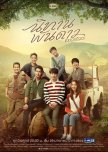
an incredibly great series at the beginning of this lackadaisical year.
04. 03. 21.A Tale of Thousand Stars is not just about the romance between two boys, it also represents the voices of those people who are forced to be silent; the people who chose to be quiet because of their trepidation, toxic positivity, and/or poor mindset. The issues they presented in this series are still happening today, or to be bamboozled by those who are more privileged than you. It's just sad how some people seem to forget about these kinds of circumstances, reminding us once again that we are living in this unfair world.
After watching the whole series, it made me think about my entire existence and wondered why didn't I realize the things I know now sooner? They were there, giving all their best to fight for what was right and to know that life wasn't just about staying in the shades of yellow. Honestly, there are a lot of things I learned, while also enjoying the gratifying chemistry of the two main characters of the show. It is just incredibly great to watch a series like this at the beginning of this lackadaisical year—not just about a typical sugary boys' love story, but also the untold stories of the people who are unheard.
Esta resenha foi útil para você?


