

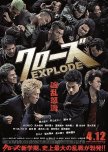
Being a fan of Miike’s filmmaking, it was unavoidable to miss the highlighted foolish characterization, extreme violence and hilarious black humour inserted everywhere. That being said, I never expected Toyoda to do the same. After all, two different directors have entirely dissimilar way of making their pictures. Crows Explode leaned to the realistic side way too much which was a bit wrong in my opinion; don’t get the wrong idea, immersing the characters and fighting scenes in realism didn’t sound like a bad treat but when it’s over-done with this type of film then things are bound to become bothersome.
To make things clear, this film had too many similarities with its famed prequels. The fight to become Suzuran’s top leader was still used as the main thread to drive the plot. However, the fighting sequences to reach that objective were surprisingly demure and repetitive in a worrisome way. Although Toyoda tried to focus on the human emotions between his characters, he didn’t exploit his main leads’ potential to the fullest. Thus, many feelings couldn’t get pass the screen barrier to reach the watcher’s heart.
Crows Explode narrative pattern was composed of several side stories that didn’t serve any meaning at times. At the matter of fact, few of them were just used to fill the running time instead of building characters’ back stories. To some extent, most of them were heavy to watch especially with the obvious lack of fighting scenes; they became utterly irrelevant to the film’s development. Let’s not forget the near-disappearance of black humour – which I clearly don’t blame Toyoda for it. The last fighting sequence wasn’t blowing but it delivered a nice punch after all.
The entirely different cast is worrisome, isn’t it? I know that many people can’t imagine the “Crows” without Oguri Shun and Yamada Takayuki on top of them. I am a big fan of those two actors myself but shockingly, their disappearance didn’t make me feel bad. I did want them to be in here but the new faces weren’t bad at all. Led by raising stars like Higashide and Yagira, the acting department did the trick for the lack of better words. Some actors didn’t convince me much but I can’t put all the blame on them, the way their characters’ were written didn’t allow them to show a wide range of emotions or action.
The cinematography was trying to be the same as the two Crows Zero but it didn’t come out that way, I believe the yellowish atmosphere is the film’s way of distinguishing itself from the others. The musical note was the same so there's nothing to complain about in that department. The directing style and the setting of fighting sequences are debatable but Toyoda made sure to leave his mark which is more than enough to respect a director.
Watch if:
-You like both Crows Zero but make sure to watch this with an open mind.
-You like school fighting.
Do not watch if:
-You’re looking for a “copy-paste” version of Takashi Miike’s prequels.
Crows Explode had its own touch of filmmaking but the serious realistic depiction that Toyoda decided to use didn’t come out entirely right, just like it wasn’t entirely wrong. Due to its entirely different pattern, this sequel should be viewed for its own merits, comparing it to Miike’s Crows will only make it harder to watch and judge.
Was this review helpful to you?
The plot starts off very slow and realistic but has plot twists within the middle of the movie. After that happens, the plot picks up and that's what makes you more interested in what will happen next.
As for the soundtrack/OST, not the most memorable. It just was okay. The acting on another note was beautiful. I love Choi Woo Shik, Kim Dami, and Go Min Si in this movie. I really think the cast was well picked and the actors did an amazing job with the acting and portraying each of their characters.
I would rewatch this movie if I wanted to, and I am really hoping and excited if there is a PART 2 to this movie.
Was this review helpful to you?
This review may contain spoilers
Everything stands or falls with the choice of an auspicious place. Insights into Korean geomanticsm
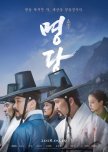
"FengShui" is a historical KMovie that addresses the political takeover by Heungseon Daewongun and his son, King Gojong. Even more, it deals with the Korean version of geomancy - Pungsu-jiri-seol = theory about the relation between wind, water and earth - which has accompanied the country across all dynasties since at least the late 9th century. The traditional theoretical concepts, studies and observations are about which constellations in the landscape bring luck or misfortune to people. In South (and North) Korea there is hardly any building, tomb, temple, or city that was not built from the point of view of Pungsu. To this day, Pungsu is still quite popular.Against this background, one could understand the movie "FengShui" as a nice, sometimes exciting story that comes up with a pointedly, rather apolitical, and for some even esoteric explanation about the ending of the Joseon Dynasty: At last, it was the (wrongly?) chosen location of the tomb that decided the end of the empire...
In any case, the story dramatically illustrates the importance of Pungsu to the people of (Silla, Goryeo, and) Joseon. And by the way, it gives an insight into the political situation during the last decades of Joseon. Without reference to this, however, one may be a bit surprised about the scramble for graveyards and also the struggle for power at the palace would be an interchangeable one among the many stories available on screen... No matter which glasses you choose, the cast in any case guarantees top-class performance.
Eventually, if you are interested in Korean society and history, the KMovie "FengShui" opens up an understanding of the great importance regarding the harmony (or disharmony) of human life with natural events (such as weather and seasons) as well as in relation to geographic features of the landscape (such as mountains and lakes and landscape) - as they are having a direct impact on human health as well as the fortune or misfortune of personal, family or even national fate. Everything stands or falls with the choice of an auspicious place (Myeong-dang) for one's own house, grave, market square, administrative headquarter, temple, fortification, palace, etc.
The teaching goes back to the Buddhist monk Doseon (826-898). He was a Daoist master and Zen Buddhist student who adapted the Chinese principles of feng shui to the Korean landscape and cultural environment. What is special about it is the concept "grow with nature", which in this respect focuses on an analysis of the spiritual and matter-related energies of mountains and landscapes as well as their effects on human life. (Interior furniture etc. plays a minor role in Korean pungsu.)
The KMovie "FengShui" puts a Pungsu master at the center of the story. Due to the more or less favorable choice of location, he can predict and influence how the fortunes of the people affected will develop. In this case, by using this knowledge to choose the most favorable burial site, he becomes a veritable kingmaker.
By the way:
All 42 royal tombs of the Joseon Dynasty over a period of more than 500 years are largely undamaged to this day. This is worldwide unique. All are arranged in the landscape according to the teachings of Pungsu - at most close enough to the capital for the royal family to visit the tomb within one day. (The concrete design of the complex was based on Confucian specifications.)
By the way:
The historical starting point of the story is the fact that Heungseon Daewongun, a central political figure of the last Joseon decades, moved his father's tomb on the advice of a Pungsu master. The new setting somehow promised that 2 kings would come out of his family. That was actually the case. But after that, the Joseon Dynasty came to an end.
------------------------- SIDE NOTE: --- Myeong-dang and Korean Pungsu ---
Pungsu officially goes back to the monk Doseon. But there are also sources that indicate that there was already a spiritual tradition with human-nature harmony on the peninsula, the aim of which was to efficiently balance landscape and topography, natural forces and sanshin (mountain spirits) in order to determine the fate of the purposefully influencing people.
Doseon's works have not survived. But his yin-yang geomancy was handed down in the works of later Confucian scholars. In the 12th century book "Haedong-Pirok" about the secret history of the country Doseon's theories were mentioned and even expanded. 5 centuries later, Yi Jung-hwan (1690-1752) in "Tangni-chi" analyzed the topography and landscape of the entire peninsula according to these geomantic points of view.
Central to this is the concept of Gi (forces of matter) as opposed to Li (forces of Heaven and Spirit). Mountains, and in particular the central mountain range that stretches like a spine across the peninsula, are the source of Gi. The energy flows, so to speak, from the mountains into everything that the landscape produces, into the water and into the air - all that nourishes the humman being. Gi thus becomes concrete and figuratively the source for a strong, happy people.
Another central concept is "Hyeol": a place of perfectly balanced forces of heaven (cheon-gi) and earth (ji-gi) from which people benefit the most. Such Hyeol with high, positive energy potential include, for example, Jiri-san's Cheonghak-dong valley in the south of Samshin-bong peak or the location of Buseok-sa temple on Sobaek-san. "Hyeol" actually means an ´opening´. Like the 9 openings of the human body, there are also openings in the landscape through which energies can enter and escape. If you like, Hyeol could be considered acupuncture points in the mountain landscape. Knowledge and control of Hyeol thus is highly related to power. A more ancient term for Hyeol comes from the shamanistic tradition: 'Myeong-dang', the (spiritually) lightful or auspicious place. The idea behind it: Bedding the ancestors at the auspicious place can bring prosperity, power and good fortune to future generations. Bedding the kings at auspicious places accordingly brings prosperity, power and good fortune to the nation.
...The KMovie is originally named "Myeong-dang"...
---------------------------------------------------------------------
Was this review helpful to you?
Was this review helpful to you?
This review may contain spoilers
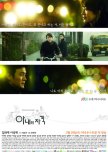
I don't even know if I can say this is a review... but anyways.Story:
It is a slow and sad drama but very powerful and haves a great story if you are willing to watch it.
We all know from other dramas and stories we read on the net about how hard is the education system in Korea and the contest between students to take higher places but this is not from the kids view here the point of view is from the parents perspective.
As the drama moves on you will notice that they main subjects are:
- The high expectation a family haves on their kids and their education and how it affects the family itself and even the neighborhood. Not your regular school drama this is just about the parents way of seen education and what they are capable to do to get what they want from it. (risks & consequences)
- The behavior, sacrifices and attitude society expect from you as a mother, wife, housewife and a woman in a family or neighborhood.
Many other themes are discussed on the drama too: infidelity runs along the WHOLE drama, money, greed, addiction to gambling, humiliation, depression, suicide, bullying, sexual harassment, power, in-laws, values, moral and secrets (LOTS OF THEM).
Acting/Cast:
The acting is spot on. The housewife is played by Kim Hee Ae and I couldn't believe she is the same person that play the extremely powerful Machiavellic leading lady on Midas.Here she is the opposite. She doubts and fears everything. She is an amazing actress got me believing her story it was the real thing the whole drama. Gyeol (housewife son ) was played by Im Je No and he was brilliant. A kid becoming forcefully an adult while keeping his innocence that is what I saw. The rest of the cast... all great actors... I ended having strong feelings for them. (don't want to give you spoilers)
Music:
The music it was mellow kind of indie music. I didn't pay too much attention cause I just wanted the drama to keep on and get resolved. I was really into the story and outcome. Got carried away.
Rewatch:
No. I don't think so. I ended all upset on some episodes... but it gets better. The bad. then good. Still once is enough. Just watch it at least once.
Overall:
I liked it and glad that I watched it. It helped me see/understand more the education issue in Korea and how it affects the values and believes of society. I saw infidelity different layers, acceptance and point of views or aspects in Korea. At some point the issues left me feeling confused to the point of been kind of disturbing. It help me appreciate the freedom I had when I was a student and the freedom I've as a woman.
The last episodes where so good that I didn't even noticed when I got to the last one. And was like OMG this is the end so fast? If you watch it you will understand. It might sound all sad but it haves it's really "funny" good parts. It is NOT a cheesy, action, kisses or tears drama. There is a love story but is not your typical romance. This drama is FULL of real life issues. It is a drama to think and study our humanity and meditate on how we value the people around us and life.
Hope this helps.
Was this review helpful to you?
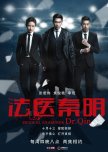
All in all, if you are a fan of CSI type crime shows, this one is likely to engage your interest. The various crimes solved actually occurred, which makes them more interesting than so many of the fictional, contrived murders littering the drama landscape.
Was this review helpful to you?
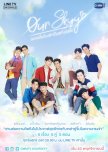
FORGET THEM NOT!
Just when you thought you finally moved on from the heartache of not seeing these love teams, GMMTV gave us this series to make us crazy over these guys, all over again.The whole series is essentially a look at what our favorite couples have been doing years after their original series ended, banking on nostalgia for viewers' pleasure. Each episodes are all well made and is more like a movie rather than a series.
What I love is some of the episodes actually gave us closure to some of the couples' stories. In fact, we can argue that some of the episodes are maybe better than their parent series. It is very evident that these pairings are comfortable with each other, and they all look like they are enjoying themselves - they set the gold standard for their dedication and fan service.
Just a reminder, no, you cant watch this without watching their respective series. I didnt exactly love all of the original series, but I did love all these 5 couples in them, so watch them first, then top it all up with this.
What i hate about the series is it made me long for these couples once again, I thought i was over missing them and then here they are being cute and all, and after an hour i have to face the withrawal syndrome of not seeing them in these characters once again. I just hope they made each episodes longer maybe 2 hours each. Yes, I know I want more, and I know Im selfish.
Was this review helpful to you?
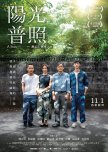
I spent my afternoon sitting at a quiet, dimly lit corner to watch this movie, and by the end of it I was truly touched by the deep, profound story that this movie portrays.
Having received 11 nominations in the 56th Golden Horse Awards and winning 5 of them, with one being 'Best Film', I know I already have high expectations the moment I clicked into the movie, and boy did the movie not disappoint me. It totally threw me into a whirlwind of emotions. :")
Story and acting wise, I have almost nothing to pick on. The actors were brilliant in their portrayal and well, my ratings are clear enough, and you can watch and judge it for yourself.
Rather, I would like to bring up some themes that lingered in my mind after I've watched the movie.
[We've all been hurt before, and that's how we can become each other's sun.]
[A Sun, A Son]
The title of this movie holds two meanings, 'A Sun' and 'A Son'. What happens when a family is thrown into darkness when the 'sun' of the family is no longer there? What happens to the family when A-Ho has to move out of the darkness, what hope can he, or rather, they, cling onto?
This is a movie that speaks about relationships within a family: mother and son, father and son, elder and younger sibling, and many many more. But ultimately, this movie explores what it means to be a family, and to be yourself.
Also, note the use of the article 'a' for the title of the movie. Why is it 'a' and not 'the'? How does the difference in definiteness of these two articles change the meaning of this movie?
[Light, Darkness, or Both]
In this movie we have characters who stand out and thrive in the world brightly lit up by the sun. However, some recede into the darkness where they seek comfort and find out their own meaning and interpretation of what they're worth. But how about both? How does having both light and darkness in a character's life influence him in any way?
[Expectations and Hope]
For someone who has been in the light all along, how does he feel about it? How do societal and familial expectations weigh down on such a person? How does he find shade to rest and take a breather?
Whereas, for someone who was always in the darkness, will he be able to find his own ray of sunlight and move into a world where the sun shines brightly upon him and his future? Over here, how does societal and familial expectations differ from that in the aforementioned case?
[The Sun (literally)]
The weather changes throughout the movie helps portray the different settings and atmosphere for each character's feelings, emotions and state of mind. And I must say, the appearance of the sun (or the lack of it), as well as the amount of sunlight shining upon a character, plays a huge part in helping viewers understand what state of mind the characters are in. The visual significance of these scenes are enough in showing us the characters' emotions even without them having to portray them. That's how powerful and well-thought-out the cinematography is in this movie.
[Seize the day. Decide your path.]
This is a recurring slogan in the movie, and we can begin to wonder why it's mentioned in the first place (and many times after) and also how much it weighs on the different people receiving this piece of advice.
Well, that's all I can offer for some thinking after the movie ends. Do watch the movie, you'll not regret it ;)
Was this review helpful to you?
The extra episode
A short episode after the drama concluded.They show the most important deleted scenes( if you have watched the drama thoroughly you know very well lol) ; The proposal scene, the new year's dinner, interviews with the main lead, some intimate scenes, etc.
The whole episode gives off a good feeling in regard to how the drama ended. The scenes shown are complete scenes without edits and give us insight into the missing pieces we were eagerly waiting to see!
overall, watch it as soon as you finish the whole drama. it's a pleasant watch :)
Was this review helpful to you?
Amazing Female & Male Leads | Precious Romance
I almost missed this wonderful drama because Ren Jialun (aka. Allen Ren) was not on my favorite actor list. I watched him in "The Destiny of White Snake" but couldn't grow to like him. However, in this drama, he is simply fabulous! The Embroidered Uniform really makes him shine above all; he is so perfect in this amazing drama, as if the character Lu Yi is written for him.Ren Jialun has a face that fits exactly the face of the Lu Yi character to which Yuan Jin Xia has said, "the face of the Lord of the Netherworld" because his face is sour in its resting state. I normally don't like sour faces, but I find the sour face of Ren Jialun so cool and adorable that I don't even believe myself! I love him so much in this drama that he is definitely enlisted on my favorite actor list from now on.
The character Lu Yi has a no nonsense demeanor: ruthless, few words, authoritative (he's the head of the Embroidered Uniform Guard), calm, strategic and smart. Ren Jialun simply looks so fabulous in this uniform that, together with his natural acting as an authoritative figure, he merges with Lu Yi as one.
I have always loved Tan Songyun (aka. Seven Tan) who plays the character Yuan Jin Xia. Tan Songyun is so cute and tom boyish with her cleft chin, making her a perfect gutsy police officer in this drama. She has a face that can look like a pre-teen, or a 20 something professional woman, affording her all the flexibility of a fantastic actor and fitting into any roles easily. Her acting is simply top notched.
It is rare for me to like an antagonist, and this drama provides one. The character Yan Shi Fan played by Han Dong is amazing. He's ruthless, deceitful, corrupt, scheming, and a mastermind behind all the evils. The actor Han Dong is tall and good looking. As Yan Shi Fan with a glass eye, devious and a double-faced demeanor, Han Dong's acting is simply immaculate.
The story itself is light and easy to understand and follow. The pace is perfect. There's no one moment that is boring or extra. The romance is adorable and precious. I don't have enough of the male and female leads together, going through all the adventures, solving crimes and mysteries. Every moment of them together is so beautiful, precious and sweet. Their chemistry is incredible! Their relationship has always been complementing and supplementing each other. Lu Yi is strategic and calm whereas Yuan Jin Xia is versatile and meticulous. When Jin Xia gets into trouble, Lu Yi is always there to help her escape unscathed. When Lu Yi faces danger, Jin Xia is always there to face danger with him and protect him. Both are willing to sacrifice their own lives to protect the other. Their love for each other is truthful and undying, and is of the highest level that nothing else can replace. It is this relationship that draws viewers to love the couple and shed tears for them.
This drama has all the adventures, mysteries and romance; a makes-you-feel-good kind of drama, and a great ending providing proper closure - perfect ingredients for a great drama.
This is a sweet and wonderful drama not to be missed. TWO THUMBS UP!
Was this review helpful to you?
Sandglass
43 people found this review helpful
 1
1This review may contain spoilers
Haunting. Powerful. Taciturn. Unforgettable.
"Sandglass" is a KDrama that relentlessly, sophisticatedly and yet sensitively processes the pain of the South Korean people, that paves the path towards actual democracy. Here you can get a glimpse of a cultural phenomenon: 'Han', a collectively shared sense of painfully experienced injustice (see side note below). "Sandglass" is one of the first KDramas daring to use the medium of television for more than just entertainment. It is also one of the first who could even dare to do so. Here, recent contemporary history is critically targeted from all sides. And at the same time, it becomes a collective vigil for freedom of speech and opinion, for freedom of travel and for the rule of law that have only recently been painfully achieved."Sandglass" tells the story of three young people who were friends during the 1970s and 1980s - Park Tae-soo (Choi Min-soo), who actually would have liked to study but made a career as a thug in gangster milieu, Kang Woo-suk (Park Sang-won ), who hopes for the power of the law and thus studies law, and Yoon Hye-rin (Go Hyun-jung), sort of imprisoned within the golden, solid cage being the daughter of the most influential, officially tolerated casino king in the country, who systematically suplies the government with his money from gambling via anonymous bank accounts. Jumping back and forth in time, the fatal emotional bond between the three is unraveled against the background of social events. It is a dramaturgically conscientious reckoning with the military dictatorship, its abuse of power and its crimes against the people. Original film documents were seamlessly played in, i.e. during the staging of the Gwangju massacre. The presentation of the Samchung re-education camp was also staged as realistically as possible on the basis of original photos and documents. The second half of the story then goes through the destinies of the three protagonists in mafioso style: the gangster, the prosecutor, and the heiress to the casino king. The finale is on the one hand the moment of free election for the people (running in the background), and on the other hand the result of the personal (more or less free) choices of the three protagonists, who still share a world in which despite all recent tumult and uprising basically not much has changed...
More than half of the South Korean population watched the 1995 KDrama "Sandglass". It was praised and praised again. Hard to believe, that it is these days hardly available for streaming with subtitles, never mind as DVD. Apparently, those who have a DVD are reluctant to give it away. I can understand, after I actually saw the KDrama myself - first only in the original version without subtitles (wasn't that bad, because mostly there isn't much talk :-) ), then with a time delay also with subtitles (it was definitely helpful :-) ), and by now also knowing a little more about that historic background. "Sandglass" is truly a masterpiece. Yes, it is taciturn, thrives on the acting, on long shots and on purposefully used, deliberately reduced light. It doesn't sugarcoat anything. It wants to let it sink, each and every moment. The camera accompanies the events almost like a documentary. Without comment, sequences, events, moments in time stand side by side. The story unfolds like a suction and draws you in. The soundtrack supports this pull effect. The story takes its course, the course of which is known, i.e. is predictable: Park dictatorship / suppression of democratic aspirations under the pretext of North Korean infiltration / Chun Doo-hwan supreme military leader, commander of the security and finally new president by coup d´état / martial law, Gwangju Uprising and massacre / cleansing camps / June 1987 fight, abolition of censorship, end of military dictatorship / free elections in 1992. Amazing and grandiose that via TV series a critical review of those bloody 1980s was already possible in 1995. It's brilliant, too, how the protagonists with their very different backgrounds, values and goals are fatally interwoven and mercilessly swallowed up by historical events and social circumstances.
A fantastic K-Drama. Completely consistent. first class.
A sad story. Not funny. Not at all. You have to be able to get involved with the dramaturgically idiosyncratic, taciturn handwriting. (The mood should be right, so to speak.)
(And yes, it's an old ham when it comes to production quality. Screen format, picture and sound quality can hardly keep up with the Netflix era - a digital remastering would definitely be desirable...)
Anyone who is interested in the topic but can't get to the KDrama can grab an impression of the Gwangju massacre in "Youth of May" (2021), or a feeling for the time under military dictatorship and for the concentration camps in "Giant" (2010).
However, if you have the opportunity to see "Sandglass", I recommend that you go for it. Even without historical or socio-cultural interest, KDrama has a lot to offer in terms of impressiveness and melodrama.
------------------ HISTORICAL BACKGROUND INFORMATION -----------------------
Admittedly, being able to classify the historic events, helped for me. E.g. at the beginning there are scenes in which thugs and police bus-wise arrive at a building and disperse the opponent party´s event. This was actually the key historical point, marking the beginning of the massive social unrest, which resulted in actual free elections 13 years later. In fact, it was originally a comparatively small strike in 1979, which took place on the 4th floor of the New Democratic Party's headquarters. Around 200 women, workers at the textile company YH Trading Corporation, protested against the closure of their factory. Unions had no place during Yushin dictatorship, however his sit-in-demonstration was actually almost too minor, to interfere. Nevertheless, the government used the particular context at the opposition party building as a cover for a major anti-opposition operation - 'Operation 101'. Around 1,000 police officers in uniform and civilian gangs of thugs assaulted leading party members and 174 of the demonstrating women workers. Union leader Kim Gyeong-sook died while jumping out of the window.
The civilian thugs (fictional Tae-soo in "Sandglass" being one of them), were subordinate to the main money-provider of the regime (here the casino king and Hye-rin's father, who clean-washed his income for political means.)
That factory workers´ trade union action by no means was the reason for the following uprising. However the occasion served as the momentum for what was to come. Against this background, the later (fictive) encounter between Hye-rin and one of those women from 1979 becomes understandable. Hye-rin adores the by now torture-broken woman for her brave fight for democracy back then. That woman, however, never wanted a political revolt, she just didn't want to lose her job. In fact she feels betrayed and instrumentalized in a political fight that she really didn't want to fight and in which she lost everything, even herself, her dignity and self-respect.
Responsible for the politicization of events that had taken on a dynamic of its own, was actually the Park regime itself: it´s attempt to split and suppress the opposition. By demanding the party leader Kim Young-sam and his deputies to resign from their mandate provoked and politicized the public. Since this coincided with the beginning of the winter semester, the student movement, too, took the incidence for a red-hot political profile: demanding the end of the Park government. A corresponding demonstration in Busan was violently suppressed in this context. A few days later, president Park was assassinated by the head of the Korean Central Intelligence Agency (KCIA). This assassination had nothing to do with the students and their demands. Neither does North Korean Communism. It just coincided timewise with the Busan demonstration. The military, in turn, took advantage of the political power vacuum situation, imposed martial law on the mainland, installed a far-reaching investigative body and thus paved the way for the meteoric rise of Chun Doo-hwan, who was appointed chief investigator. He used his chance consistently and purposefully. After 8 months of military coup, the country had a new dictator in uniform who presented himself as the savior of the nation.
He repreatedly and systematically declared the pro-democracy drive the enemy by spreading conspiracy and infiltration theories about North Korea's ambitions. Press and public were massively manipulated with so-called K-operations (king´s operations) in order to convince the people by the good of military rule. The credo was: the military and Chun Doo-hwan were the only chance to counter the spreading, communist-manipulated unrest, in creating something like order and security. At the same time, the military units were drilled with the so-called Choongjung (True Heart) training for a particularly aggressive and efficient suppression of demonstrations. New paratrooper units were created as special forces. In addition to physical fitness, the training included the development of a strong corps-spirit and the use of massive violence and targeted abuse.
Against this background, the situation among the military units deployed in Gwangju in May 1980 can also become somewhat more understandable. On the one hand, they were brainwashed. On the other hand, to date it has still not really been clarified who gave the orders for the escalating violence in May 1980 - e.g. orders to shoot and the use of paratroopers. Internal ambivalence and irritation was common at all levels of command. But that didn't help. In the end the corps-spirit was more binding and prevailed. In this respect, the executing soldiers, as perpetrators, somehow became victims in those sad May days, too. The proclaimed enemy - North Korean Communism, which is behind the pro-democracy movement - and the unshakable pillar of power - the military dictatorship with all its arrogance - posed such a strong, effective, powerful threat, so that it was so frightening people in uniform (and without) and made them hitting their brothers and sisters indiscriminately (again, after barely three decades). Because someone had chosen Gwangju as the place of the example. And because the sides there had just turned out that way - those who lived in, studied in or visited Gwangju on the one hand, and those who were doing their military service at nearby barracks at the time. On the other hand, the political vision or just a simple wish, that everybody might finally live freely under fair conditions, seemed hopeless. Suddenly the fight was (rather apolitical) about pure survival and desperate rebellion against arbitrary violence.
Eventually, with "Sandglass" the South Korean population became seriously aware of what had really happened in Gwangju in 1980: a people´s uprising against military oppression, being brutally suppressed. Because of the propagandistic K-operations and the censorship (which was repealed only in 1987), knowledge of these events was never really able to spread. Numerous witnesses had deliberately been put into camps or imprisoned. For the television audience in 1995, these street-fighting scenes must have come as a complete shock, not only because they are terrifying in themselves (regardless of where and when), but because they actually had taken place in such brutal manner and in such close proximity completely without their knowledge. In this way, "Sandglass" also became the trigger for nationwide latest history processing. The TV production paved the way for more critical historical scrutiny in the media and also apparently accelerated the course of the trial and sentencing of ex-President Chun Doo-hwan in 1996. He was sentenced to death. (However, on appeal it was turned into a life sentence. His assets, of course, were safely parked, too. He died of cancer in 2021.)
---------------- Side note: --- NATIONAL SECURITY ACT ----
The National Security Law has been in force in South Korea since 1948 - until today. Its primary purpose was to push through anti-communist propaganda and to control or shut down opposing intellectuals, artists, journalists, students etc.. This National Security Act de facto restricts freedom up to this day and ultimately violates the 1948 Universal Declaration of Human Rights and the 1976 International Covenant on Civil and Political Rights, which South Korea had actually ratified. Fatally, it seamlessly continues a relic from the days unter Japanese rule. Several 100,000 people have fallen victim to this law over the past few decades. The verdicts resulted in prison sentences of thirty to forty years, which is among the longest in the world. It has served military dictatorships well, opening the door to arrest and torture countless times. Even after the end of the dictatorship, as late as 1989, obviously an average of 3.3 people each day were arrested, tortured and sentenced to prison under this national security law. To this day, the law is still officially considered constitutional...
--------------- Side note: --- RE-EDUCATION, CLEANSING AND CONCENTRATION CAMPS ---
A unique dubious institution during the Chun Doo-hwan dictatorship were the concentration camps for re-educating unwanted citizens. 25 such camps were set up in the aftermath of the Gwangju massacres. They served to systematically clear the streets of South Korea of unwanted people (and yet mostly arbitrarily as a military demonstration of power). The camps were primarily used for brutal abuse - any dignity was broken, body and soul pushed to the limit.
The detainees were divided into 4 categories: A implied prison; B and C an agonizing time in one of the re-education camps; D a warning. Category B and C inmates often ended up in prison as well, provided they survived the re-education camps. E.g. a former military prison in Yeoncheon, Gyeonggi was thus modified according to 'Samchung Plan No. 5'. This location officially was established to fight North Korean Communism: up to 100,000 innocent people may have gone through hell without a warrant - and rarely enough survived.
--------------- Side note: --- HAN ---
Han can be considered a collectively shared, identity-forming cultural pain in the sense of sad and angry grief. This cultural characteristic developed in the course of Japanese colonization of Joseon. There has been, and still is, debate about the extent to which Han can or cannot be considered a collective trait that creates identity. In any case, as a shared painful experience of that time, a specific form of expression of grief developed, while behind melancholy suppressed anger also resonates. Han has found its very unique solemn, deeply and sadly swinging aesthetic in Korean culture, which we can observe/feel in music, film, television, literature, poetry etc. It can be considered a collectively shared state of mind, that feeds on the traumatic experience of humiliation and abuse as a people that Joseon endured so massively at the hands of the Japanese oppressors. Han addresses helplessness in the face of overwhelming injustice. But despite all the pain and sadness, there is also something tough in Han: an inner resilience, a rebellion, that still provides something like strength in the darkest depths.
Han was further nurtured in the post-Joseon era by the separation of families into two antagonized nations. Finally those brutal 1980s, which are revived in "Sandglass" in the sense of a solidary vigil, tie directly to this collective Han - as a basic feeling that continuously and silently runs through (especially) the first half of the KDrama. A collective emotional state from which one cannot escape: the experience of suffering; the ability of suffering; the national destiny of suffering.
In the course of South Korean turbo-capitalism over the past two decades, Han as an issue has receded somewhat into the background among the younger generation. Nevertheless, there is already a new, modified, less beautiful form of expression: ´Hwabyeong´, the culture-specific Korean manifestation of a depressive psychosomatic disorder with characteristic symptoms, that already affects wide circles - as a result of suppressed anger in the face of overwhelming social circumstances experienced as unfair. (e.g. victims of any sort of bullying in school or at work etc.)
(I wonder, whether it would not be better to continue to give Han an explicit, contemporary, aesthetic expression - in contrast to the embellished, perfected facades e.g. in KPop + KDrama culture... but that would be another topic.. .)
Was this review helpful to you?
Story- Yes there are an abundance of episodes but each one is not even a half hour long and they feel so short because the writers did a great job of giving each main character a story line of their own, which fills the time nicely. What I liked about the writing is not only are most eps truly funny but some eps deal with serious stuff so you also get to feel for the characters. Really though the writing was phenomenal cause it kept me watching all the eps without getting bored. In fact they could have continued after ep 123 and I would have kept watching cause I felt like they had so much more story to tell. As for the ending, while not bad like High Kick S2, I would of liked different outcomes for some of the characters.
Acting/Characters- Whats funny is that I came into this not knowing most of the actors, and even if I did know them, there’s no way I would want to watch a 123 ep sitcom just for them. However, after watching a couple eps I realized that the casting was perfect. Every actor whether main or supporting, made his or her characters stand out. I was rooting for everyone to find their success. The main featured family really did feel like they were a family as they had good chemistry. The only loveline that managed to turn into something (Ji Suk & Ha Sun) had really good chemistry and their relationship was just so cute/funny. My favorite character though happened to be Sung Yoon (Joon Sook’s best friend) because he was just so odd but really cute/sweet/innocent. And surprisingly a character that I was completely annoyed by in the beginning (Krystal) became one of my favorites by the end (really good character development for her). There were a couple of characters I just did not ever manage to like (Dr. Yoon Gye Sang, Bak Jin Hee, and Ji Won) their personalities were awful and i even had to start fast-forwarding through their scenes).
Music- Each episode had its own OST, that being said there were too many songs to remember but I remember liking a lot of the songs within various eps.
Rewatch- While the drama is entertaining enough to watch the entire series again, my favorite part of the drama is the second half so I’ll probably stick to watching those eps over and over whenever I feel like a good laugh.
Overall if your like me and had never seen a Korean sitcom, do try this one out because it’s a lot of fun and you get attached to the characters.
Was this review helpful to you?
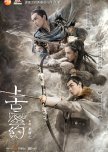
I waited and waited and waited for it to get better. It never did.
As a fan of Nirvana in Fire, I perked up when I saw that Leo Wu and Zhang Lingxin were both in Guardians of the Ancient Oath, and gave it a go.First Impressions (1-4):
The first few episodes were actually very promising. The machinations of the Yo Imperial Court contrasted well with the serenity of the Baili household, and Ming Ye Feng promised to raise big waves in the Wolf Tribe.
The cinematography is great in general, and the dim and gritty colour palette is also to my taste, as it speaks to a sort of realism and a lack of anachronism on the director's part.
Mid Season (5-33) Impressions:
This is where it starts to fall apart. The quality of the screenplay falls off a cliff (esp. the dialogue) and the generic/cliche storyline can no longer support the agonising pacing.
It just feels like people talk a lot without getting to the main point, and repeat themselves in general. Lareina Song parrots this line like a broken record across an entire arc of the drama: "If you touch him, I'll kill you!".
Leo Wu, Lareina Song, Karry Wang, and a full 80% of the other characters just aren't interesting to watch - the viewer can already predict what they will do and its incredibly boring to watch this occur, without any tension.
Props to Ming Yefeng, Baili Hongxuan, An Tingfeng, and Ling Jun, the only multifaceted characters, for painfully dragging the comatose body of the storyline forward towards the final arc.
There is zero humour in this drama, just none. Yuen Wah's Ji Qiu tries his very best but there's no straight man to match his absurdity - what a waste of this talented actor.
The active CG (the magic) is good in general, blends well into the scene and isn't poorly made. The passive CG is quite poor - the backgrounds of many Wolf Tribe wilderness scenes have been green-screened very obviously.
And could they stop blasting the main theme at full volume at every available opportunity, multiple times an episode? Did they commission ANY OTHER music at all?! Why is there no instrumental-only version of the main theme?
Final Impressions (34-45):
Episodes 34 to 36 were quite good, as the main characters finally start coming into their powers. This change of events wasn't to last though, as somehow the drama became even more boring after these three episodes than the episodes that came before them.
There is a confusing and haphazard introduction of the "ancient" characters, and because of the insistence of masking their faces and using three different names to refer to the same characters, viewers have no idea who is talking to whom.
Each of the very strong, very important-ish "Wu" disciples barely have 10 minutes to recite their entire lifestory: it is not odd then that all these new characters actually make the drama more boring - they just become repetitive obstacles for the protagonists to overcome.
It's not all terrible though; throughout the drama, you could say that Lareina Song had portrayed three different characters: the present, the past, and the "ancient". With each iteration her character became more interesting, and her acting talent more clear (I thought it was extremely poor in her first iteration, but I guess that was how it was written).
Ling Jun is also very consistent as the prime mover of the plot, but somehow Ming Yefeng became a stereotype of his own role, and Baili Hongxuan deteriorated to become a ranting and raving lunatic of a racist.
There is also an uncomfortable undertone of genocide/racism and sexism in the ending arc.
If a character is not a human, they should die [for the plot].
If a character is a woman who doesn't adhere to the Three Obediences and Four Virtues, they should die [for the plot].
If a character is a woman who is not a human, it's impossible that they could adhere to Confucian values and so they should die [for the plot].
Conclusion:
The very best dramas have likable heroes with depth, likable villains with depth, and likable side characters with depth. I find almost every character in this drama unlikable and one dimensional as written.
The protagonists on paper, Baili Hongshuo, Baili Hongyi, and Baili Haohe do not have sufficient agency in the storyline to be proper protagonists (Baili Haohe was a puppet both figuratively and literally: I dare say Karry Wang's role is not a real main character and only has top billing because he's famous/popular). None of the three have any motivation beyond what's been narrowly defined, are not complex, nor deep.
The final villain, on the other hand, has no real reason to be evil except for "it's the character's nature to be evil". What drives them? Evil. What is their hobby? Evil. Why are they fighting the protagonists? Because of evil muahahaha! Somehow this made perfect sense to the writers of this drama.
The actual protagonist of the entire narrative is An Tingfeng, and his tragic epilogue is ordained by karma. His character, and Ling Jun's character, have the only well-thought arcs from start to finish of this drama.
TLDR: Watch something else unless you are an idol superfan.
Was this review helpful to you?
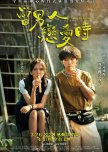
Tearjerker
As usual, Roy Chiu delivers! This movie is about a softhearted debt collector that has fallen in love with his debtor.The storyline revolves around his life as a collector and his life with the woman he fell for. The movie has a very authentic feel to it. Very good cinematography of the poor, urban life-- very realistic to say the least.
Roy Chiu, a vibrant actor brought it and will make you cry in the last 10 minutes of the movie. Apparently, Roy won the Best Actor awards for his role in this film including the female lead Ann Hsu.
I may not want to rewatch this movie as it was painful to do so. But hey, Man In Love is definitely worth your time.
Was this review helpful to you?
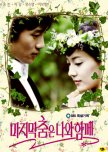
I stumbled across this drama never thinking I would really like it that much I had read the synopsis in MDL & was intrigued, anyway I was hooked from the first episode (which is rare). The main actors played their roles really well sweet without being saccharine.
What I liked best about it was the story yes its a a makjang & if you don't like that then steer clear, I personally love makjangs :D
The story had twists & turns & always kept you glued to your seat breathless with anticipation as to what would happen next. I found myself shouting at the screen at the near misses/missed opportunities for the protagonists & I am sure you will as well.
The whole look of the drama looks a little dated (fashion wise) as it is from 2004 but that didn't really phase me.
I have given a low score to the music simply because it wasn't particularly memorable to me.
Also a low re-watch score as I rarely re-watch dramas as I have too many to watch on my Plan To Watch List.
If you like dramatic, fast-paced storylines with lots of cliff hangers & good acting then this is the drama for you.
Was this review helpful to you?


