

This review may contain spoilers
Time to consider
Sometimes as we go through life we wonder, is this the right path? What if we had time to consider our choices? Would we ultimately be happy?I think this is what the film is trying to explore.In this quiet little area we have many stories playing out with people stuck in decisions that they aren't too happy about, while a panicked staff try to quell their needs. While the chaos is going on, we get little glimpses of intrusive thoughts in each character. The most astounding one is; if you had the chance to experience death, would you take it? This movie brings up a couple of morale qualms in the midst of the comedy. Questions of morality and what we say can have negative effects that carry on and stick with someone. I thought that was the most interesting thing about this film. Being in a time loop is somewhat like how peopled dwell on the same moment over and over in their mind and that can lead to violence sometimes. But overtime we tend to let those moments pass. They will always be a memory there to us, but time heals.
Another impressive thing was the camera and staging! When they moved through so many narrow hallways and created immaculate mirroring it was very impressive. Many times I wondered how they were gonna deviate or try to one up the last sequence. I thoroughly enjoyed that.
Despite these things, there are a couple of negatives. Some characters don't really get any sort of closure. Like the owner and main host. A bit into the movie, I randomly started to hate Mikoto because of her shelfisness.But then I realized that was because of her inability to want to change and move forward. The climax of the movie is really silly. But I suppose that's just Japan for you. The ending is a little unsatisfying but I think that's just a fact of life lol
Either then that though movie is a fun time waster.
Was this review helpful to you?
This review may contain spoilers
WHO KILLED THE GHOST? -Haha! REMEMBER ME, HEAR MY VOICE -Sad; GHOST HAUNTING ANOTHER GHOST -Scary
Finally a Good Horror in this Franchise! Uff!!Watched first 4 movies in this franchise, This is the BEST till now !
No moment of boredom throughout the movie, unlike the first 3 movies in which Only the last 30 mins are interesting.
I vaguely remember watching few of these movies in my younger years n all these years, had an impression on 1st movie n this movie, as Good Scary Horrors n were my favs back then :)
**** STORY:
A Story of Teen Girls in All Girls High School.
(All the movies in this franchise are about high school girls in school setting )
Even here, like in the other movies in this franchise, the Ghost never leaves the school.
There are two couples here:
Main Leads (Sun Min n Young Eon) n in the end, it is IMPLIED that they are in love!
Female music teacher n her student girlfriend.
This Story in a Nutshell:
"U REMEMBER ME / PLEASE DON'T FORGET ME;
HEAR MY VOICE
n SO MY GHOST EXISTS !"
A Mix of Serious Horror + Mystery Thriller.
Ghost with her close friend, solving her own death mystery! 🤭
n this entire MYSTERY solving part is INTERESTING to watch.
****
For the first 1 hour of the movie, it's about "WHO KILLED YOUNG EON / who made her, turn into a ghost?" 🤭
That suspense is well maintained till the end.
Well written story.
The last 30 mins show the actual events that happened n also show a different evil angle of the ghost, which is shown as humble n sweet in the first 1 hour of the movie.
****
What I liked the most in this movie is:
As an admirer of horror n mystery genres, mainly mystery thrillers,
I really liked the idea of including a death mystery in a horror.
Liked the idea of showing the ghost's story from the perspective of the ghost as a horror experience for itself, trying to solve its own death mystery and the mystery suspense continued till the end.
Later on, shown as the ghost learning the true events that had happened, New unexpected facts came to the surface and revealed that the ghost is not ready to accept those.
And this Narration of the Ghost's story makes this movie to stand out in this Franchise!
All this is well written, well executed and the screenplay n editing for a mystery included in a horror genre, are Good.
****
At times, u find it funny :
What! Our Ghost gal is getting scared of n haunted by another ghost !? :o
(Maybe she forgot that she is a ghost that is capable to scare anyone! 😂)
All these scenes - Haunting the ghost Young Eon by another ghost, are scary enough n give a good horror experience for horror lovers
****
Cinematography is Good.
Direction is Different.
Usually, the Ghost creates Chaos but here ghost is heard only by close ones n the chaos is created in the Ghost world (Ghost haunts another Ghost)
Chaos in school happens only when a dead body is found.
Funny and strange that all bodies are found only by Seon min
Climax scene is different and funny - possessing your lover, seeing her in the mirror and then confessing (saying I love you) is different, a new type of confession 😂
End credits scene - gal Cho Ah's ghost is stuck with no voice, since she is not remembered by anyone.
OST is Good
****
My Rating is 8 / 10
I really liked everything about this movie, the best in this franchise.
****
Check out my Reviews for other movies in this Franchise :)
Till now, in this franchise, Liked movies in the order:
4 > 1 > 3 > 2
Was this review helpful to you?
Planned to watch a horror movie ended up crying like a baby for an hour
This is a masterpiece. This movie is incredible.The director did so well with even the little things.
Cinematography was done so beautifully.
Writing was so good! They managed to tell so many stories and make you completely connected and hooked with the characters without a miss. There's nothing that feels missing or that needs an explanation.
The actors really did an incredible job with telling the story. A good script can go to waste with bad actors but the casting director made the best choices with these actors. They're so good! You can tell their emotions from their eyes in seconds. You can completely see what they're thinking at every minute. It's so incredible! Even the little girl was so well casted. It's hard to find kids that are good at acting let alone incredible at it. She was amazing.
Overall the thriller part was thrilling and the emotional part was making me cry without being able to stop. Incredible freaking movie! I don't know how many times I have to say it but this is a masterpiece!
Was this review helpful to you?
What is the role of the abnormal? While lacking, certainly thought-provoking
Most of the movie I was in a state of -- Ok, ok, interesting, boring, typical, oh ok, obsession, ok. what is with this pacing. Ah. come again. boring, typical, hm. Then?As you follow the movie you notice an interesting pattern. All the characters had a specific pattern in their thinking. Tragedy - Unbearable pain - Justification - New behaviour. How do they turn a neutral stimulus into an explanation? Then into conviction, into justification.
The last quarter of the movie, one of the characters said quite a profound thing:
"You think it's all your fault.
He blamed his tragedy on the monster.
The third on, God's revelation.
You blame yourself.
These sound different but they're actually the same.
You all fixated on one thing as the cause of a situation.
Most tragedies are caused by a combination of circumstances we can't control.
Devil, monsters and the like, they are created by people seeking justification."
It kind of shook me because indeed seems plausible.
What if our anxieties are justifications for something?
Overall, a worthwhile psychological breakdown. Last 15 minutes saved this movie. Even though production was lacking, the story was intriguing and thought-provoking.
A recommend.
Was this review helpful to you?
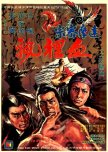
"Seems we're in for a fight" It's a kung fu movie, of course you are!
Shaolin Kung Fu Mystagogue at least lived up to its name, there was a Shaolin temple and the teacher played an important role. There were also the oft used Ming rebels, Ming prince/king and Qing bad guys with frightening weapons. No secret list this time but there was a secret scroll of Buddha’s Final Form, the ultimate technique.The rebels are trying to covertly maneuver the Ming prince/king out of Qing territory and safely into the south. They are thwarted by the diabolical Lu Ping (few character names in this dubbed version) and Chang Yi with his “Bloody Birds.” Carter Wong and his sister Hsu Feng work to save the king and take him to safety. Much of the action takes place in the Shaolin temple where a blind teacher helps to protect both the king and the secret scroll. Deadly traps are used in the Qing prison and the Shaolin temple.
This was Chang Peng I’s first directorial effort. Time has not been kind to his movie. The film was faded with salt and pepper pocking as well as the occasional yellow and blue streaks. Unfortunately, I could only find it with English dubbing. The cast was strong which helped gloss over the weak storyline. Chang Yi with his wild gray sideburns and swirling boomerang blades that could cut down trees and cause explosions made for a sinister bad guy. How he didn’t crack up with those wild weapons is beyond me. Hsu Feng had a spear with a retractable chain and blade. Carter relied on his Shaolin kung fu techniques only lacking the 18th form. Lu Ping as "His Highness" had an impenetrable body save for his Achilles heel. Phillip Ko Fei, a competent martial artist in real life, played the traitorous monk who aided the Qings.
The action came fast and furious from beginning to end with flaming traps, daggers, poisonous gas, and spiked walls all of which challenged the fighters both angels and devils. Oh, and Lung Fei had a golden manicure to die for. If you enjoy old kung fu movies with ridiculously funny and deadly weapons, this might be one to try. As always, its graded on a curve.
25 March 2025
Was this review helpful to you?
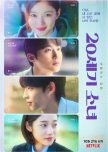
simple masterclass
il est des films comme ça que l’on commence un jour en se disant « je sais pas trop » et puis c’est juste une masterclass du début à la fin … histoire, cast, developpement, rebondissement, émotion, c’est un film qui parle de la vie, de l’amour, des emitions, de la perte, de la personne qui reste … passez un bon moment, passer du rire aux larmes, mais regardez le si vous êtes quand même émotionnellement solide , parce que vous garantie que vous n’allez sûrement pas rester de marbre à cette histoireWas this review helpful to you?
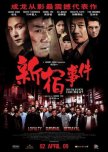
Not a bad movie, but could have been better.
The story was about hope, dreams, love, friendship. How people can fight for it, but when they get to much power or setback it also can corrupt them.It was lucky that Jackie Chan plays in it, because his acting made the movie a bit better. The overall acting was ok, but nog great.
The movie was a bit messy.
I would not watch it again.
Was this review helpful to you?

Bokura wa Jinsei de Ikkai dake Maho ga Tsukaeru
1 people found this review helpful
This review may contain spoilers
So I cried 6 times watching this
Not sure if it was because I'd already seen the Gekidan EXILE BOOK ACT rendition of this and knew how the story was going to go and how it'd end, or because I'm simply easily touched, but I just kept reaching for tissues when I was watching this in the cinema. But perhaps uniquely, the two aspects that stood out to me the most about this movie were the cinematography and soundtrack, but I'll talk about the story and cast first.To elaborate on the synopsis (with slight spoilers) - 4 boys find out that all men in the small homely village they grew up in gain the ability to make a wish and have full freedom on what they use it on other than anything concerning life. There, you're introduced to the characters. Akito wishes to become a professional pianist and enter a music college. Natsuki wishes to become a professional soccer player but has to give up his dream after an incident. Yukio is passionate about handicrafts and has a crush on a fellow schoolmate in the Handicraft Club. Haruhi, born with a weak heart, became friends with the gang after Akito approached him on his first day of elementary school.
The story first goes through the boys' conflict on what they should use the magic for - their own wants and wishes, or the sake of their loved one's happiness. Then, that is pushed slightly aside when all the characters go on their separate paths after graduation, until they all reunite towards the end for a single goal. While the story is centred around the 4 boys, there's also a pretty significant emphasis specifically on Haruhi and Akito's bond (which I find really cute and sweet <3)
The story had some potential, especially seeing how well it was carried out in BOOK ACT, but I found that it fell off in some parts in the sense that it became somewhat cliche, to the point it became not as interesting as it could have been. There are certain parts where it's obvious they're trying to do some foreshadowing, but it's too obvious till you know exactly what happened before the "grand reveal", which doesn't make the climax as impactful.
Inoue Yuki and Sakurai Kaito definitely showed themselves as actors. They were responsible for a lot of highly emotional scenes and I feel like those scenes never really felt awkward even if they were practically wailing in an otherwise completely silent scene. And objectively, while I may be a fan of Yusei, I do feel like he had a couple of awkward bits (such as the one where Akito was screaming at Natsuki) but also scenes where he impressed me (such as his eyes as he was listening to his father during the scene in the bar).
Now, cinematography-wise, it honestly felt like the movie was made in partnership with the tourism association of the location to encourage tourism to the village, the way they filmed the countryside, the natural scenery... it was genuinely breathtaking, which can make sense plot-wise, BUT can also feel a little in your face at times because you can definitely tell they were trying to highlight the beauty of the greenery at various (slightly random) parts of the movie.
In terms of music, I learned after the movie that Yokoyama Masaru, the composer for this movie, was likely a very expensive individual to hire to work on this movie, considering the shows he's worked on, and honestly, I can tell why. His soundtrack is so dramatic and beautiful, and so fitting of each scene, that it truly elevated the emotions of each scene. Not sure if it's my imagination, but I feel like there's a bit more emphasis on the use of piano in the soundtrack than normal, which if there really is that emphasis, it would seem like they took Akito in mind when creating the base and I just think that's so wonderful. Also, my favourite soundtrack is Lush Balloons :)
Overall, I would say this movie stood out to me while I was watching it as it's rather uniquely carried out, but didn't leave much of an impression on me after. Though, as of now, having watched the movie about a week or so ago, I do want to rewatch it, so the rewatch value may be high for me... think I'll cry a lot again rewatching it one day though ><
Was this review helpful to you?
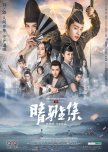
The Yin-Yang Master: Dream of Eternity
0 people found this review helpful
This review may contain spoilers
Visually stunning. Emotionally...not so much.
heard the ending song on youtube and absolutely loved it. I have to believe that such an incredible soundtrack must go with at least a passable movie...watched 3-24-25
A fun watch with cool visuals and a good soundtrack but unfortunately the characters/relationships were really underdeveloped. I will keep listening to that ending song, but would be unlikely to watch the movie again. I need a lot more romance in my bromance, if you know what I mean. I know some have complained that some aspects were ripped off from Doctor Strange, and I think it's at the very least a strong homage. I was literally thinking, hey, just like Doctor Strange! And: this is really just a Marvel movie! But honestly that did not put me off. Give me glowing teleportation rings and two hot guys fistfighting on a CGI monster any time. Just maybe make it seem like the two leads want to make out? Pretty please?
Was this review helpful to you?
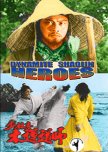
"I'm wearing a mask because I may have to kill you"
Dynamite Shaolin Heroes was a strange title for this Korean kung fu flick. There was no dynamite (darn!) and nothing related to Shaolin. I tend to steer clear of Korean martial arts movies from this era as much as I can because the quality was commonly low and that’s saying something for this genre. Usually, only Lo Lieh or Hwang Jang Lee can lure me in. To my surprise, DSH was watchable.The Ming rebels are hiding the two surviving princes hoping their government can be re-established. There is a list of Ming rebels, not just any list, but a list written in blood. The evil strawberry blonde Viceroy is determined to get his hands on that list. Kang is helping the rebels and arranging a marriage for his daughter to an “idiot,” who is not only incapable of protecting her, but also annoying. Another man desires to marry the daughter but she turns him down flat because he used to be a killer. Fortunately, whenever a lone rebel or the fiancée is attacked a basket-headed fighter comes to the rescue! He never kills anyone meaning the bad guys keep attacking and killing the supporting good guys. But suddenly, he begins to kill the attacking bad guys led by the Viceroy. Holy doppelgänger Batman! Now there are two heroic basketheads. One who kills and one who doesn’t. Who could they possibly be?
Lo Lieh played the Killer and a man hopelessly in love with the female lead. Kwon Yeong Moon was the incapable fiancé and Not Killer. In real life, Kwon would go on to train Sylvester Stallone and Muhammed Ali in taekwondo. The moves were fast with lots of flipping and rolling around on the ground, often with characters doing the gymnastics in synch. While the moves may have been faster than other kung fu flicks from this time period the kicks and hits often missed by a mile (km).
Godfrey Ho directed this film, he of the cut and splice movies with ninjas added to random existing films. Here he had two heroes who were both in love with the girl. Oh, and there was a prince and the rebel list to protect. I was generous with my score because the basic concept of the competing basketheaded heroes was at least a stab at originality. The acting was acceptable even though Kwon did not strike me as leading man material. The version I saw was badly cropped, faded and dubbed with British accents. With films in this shape, it’s usually better for them to be dubbed because the white subs often run off the screen and are rarely legible on the light background.
While Dynamite Shaolin Heroes wasn’t a great film, for a 1978 Korean kung fu film it was above average. As always, I grade these on a curve, and for this Lo Lieh film I was extra generous.
24 March 2025
Was this review helpful to you?
More of the same
I don't remember all of the original Hitman but this sequel gives me the exact vibe and satisfaction at the end. This is the kind of movie that you know isn’t great, but you still want to see it. The highlight is the cinematography. The webtoon animated parts of the movie are the best and there is also one very short flashback that was filmed masterfully and it is hard to believe that it is from the same movie. The action was also pretty fun, but so unrealistic so i liked the animated action more than the one acted live. Most of the movie is comedy which is purposefully put in contrast to the serious theme of the movie so the actors try their best to be funny and, unfortunately forget to be credible. I can't believe they used "where is the bathroom" gag 3 times.The premise of the movie is the connection between the webtoon and the real life, and I must admit that the producer managed to put a new twist to it and make it engaging. So in short, if you liked the original Hitman (2020) you will like this one.
PS. Is there a real webtoon based on this movie? If yes i would like to read it. I am currently reading gangster webtoon "무진".
Was this review helpful to you?
This review may contain spoilers
Feel good movie with an unexpected plot twist
So I basically watched the movie because of kyungsoo and I haven't watched the original as I watched this movie it started out slow but then it pick up pace the plot twist that I was not sure about but I felt like something was wrong with fl like nobody was noticing her she felt like air and the ml was talking to her the plot twist explained it really well she was from the past the secret she was hiding from him from the start the movie was good but ending felt like a tragedy for me especially for the ml like he went to the past in the end leaving behind everything even his dad the piano got destroyed so he can't go back only the fl can see him idk this just feels like bittersweet ending to me on one hand they ended with each other which is happy while on the other hand the ml lost a lot of his things in this process which is really sadWas this review helpful to you?
not really worth it
I thought that the main focus will be to find aeyong (?), the kidnapped girl, but that wasn't the focus at all actually - like expected for the few small clips in the beginning of the girl (before she got kidnapped) and then in the very end, also only a few clips. Also they didn't show at all how or where or when exactly he kidnapped her noir anything else related to the kidnapping. I won't spoiler whether she was alive or not since I didn't put a spoiler tag here on purpose, in case someone wants to watch it exactly because my review is so low rated as in "it can't be that bad, right?" then those people should have the chance to do so without any spoilers. talking about no spoilers, this movie has no spoilers at all, you know from the beginning who the kidnapper is.I personally had the hopes that they would show us in the first half the "kidnapper" but then in the second half reveal that it's actually someone else but nope.. you just know from the beginning who it is. it's not an evil mastermind either.
I read a few comments before making this review, that many people knew that the pastor will be .. involved into some crimes, so I assume this won't be a spoiler, but just in case;
POSSIBLE SPOILER AHEAD:
the ML has at first a small misunderstanding with the villain, thinking he kidnapped his son, he finds out that's not the case after the villain almost dies. anyway the ML gets the chance to confess to his crime due to meeting with the detectives who ask him about the interaction with the guy. he doesn't admit anything. then he becomes completely delusional because he is offered a better career opportunity (idk how to word it honestly, but still) like he is ready to not only keep quite about what he did but also willing to continue his crime in the name of God, completely loosing his touch to reality. he also finds out that his wife is actively cheating on him, having a whole affair, he forcibly makes her confess it to him and for God to forgive her - but only so he can keep his job opportunity, not out of love lmao.
of course the ML also gers lucky multiple times to not get caught by for example the dashcam, cctv, or literally by a witness - and that multiple times and it's literally just pure luck, not even because he is smart or anything, this is so underwhelming in my opinion.
also notice how, 99% of the time, Koreans use Christian religion for those kind of thriller kdrama? I have watched many already, some better than others, but so far I never came across a kdrama that uses for example Buddhism, Muslims or any other religion, I just wonder why? I'm personally not that much into religion, not an atheist either, but what's the hyper fixing on Christian religion?
SPOILER END
Last thing that I have to say is .. some movies are basically "boring" for a specific amount of time on purpose, so the viewers get the hope that the end will be good, like they are doing it for the grande final, a climatic end - THIS IS NOT THE CASE WITH THIS MOVIE. the end is quite underwhelming as well, just like the overall movie, so if you have hopes that the end will make it worth it - it really doesn't.
I can recommend for example "mouse" with Lee seungi, in case some people who read this haven't watched it yet, it's a dark thriller as well that includes religion basically (but not kidnapping if I remember right, other crimes are happening there tho) and that one has many plot twists.
in the end this is just my personal opinion, as mentioned before anyone can watch it regardless of my review, I doubt this movie will be popular in any means, I just wish I had read such a review before giving it a chance.
Was this review helpful to you?

Bizzare, chaotic comedy at it's finest.. most of the time
I have never laughed as hard in public as I did watching this, I'm pretty sure at one point some people next to me thought I needed help because I was bent over holding in the loud laughter and snorting, on account of not wanting to scare anyone.The story is about two brothers (best friends actually but referring to them as anything but brothers seems to get one of them very angry. That or the subtitles confused me) who buy a cabin in the mountains and a group of university students (this could be on me thought, the subtitles never called them students but I swear I could hear one of the brothers address them all as 'haksaeng') who are vacationing in the same region. The chaos that follows from the first meeting of both groups with each other and their individual meetings with the.. other lead.. forms a majority of the plot.
As established before, this was extremely funny, genuinely heartfelt at points and kind of gruesome. If gruesome comedy is not your cup of tea (not my favorite), you'll have a hard time with some of the scenes, but it's only few in the plenty comedy scenes this movie had. My stomach hurt from laughing too much and my face was streaked with tears by the time I had finished the movie. Because of the laughing.
If you've got an hour and a half, give it a try, especially if nonsense and chaotic comedy is something you like because the entire movie was just that and not much more, but they made it work! Oof, I already feel like a rewatch.
Was this review helpful to you?
This review may contain spoilers
Good Psychological Thriller ! Sad to see low ratings.
Like Actors have fans, some filmmakers also have fans. One of the few Korean filmmakers who have fans, Yeon Sang Ho is one of them. The audience watches his movies and dramas irrespective of actors. He created a benchmark for his works.Revelations movie 2025 one of his recent works, collaborated with Screen Writer Choi Gyu Seok, both worked for Hellbound drama.
This movie runs on a thin line between the faithfulness of a religion and things, events which happen bound to happen or caused by coincidence. The movie raises thought proving questions about whether events are divinely ordained or simply the result of chances. The psychological story resolves between 3 main characters and embodying justice, fate, morality.
Characters Study.
1) Pastor Min Chan - He believes he is acting on divine revelations and executing divine justice. But his true nature unravels when trying to kill Detective Yeon Hee and doesn't care about the victim girl's life. While he claims to act on divine revelations and his earlier actions might have been marked as righteous punishments ( forgiving his wife's adultery, making lord confession with her, trying to confess his crime with the another pastor, trying to execute the criminal) but when he faced with exposure he resorts to murder for survival. This moment raises a key question - was he truly guided by faith or was he just using religion to justify his own sense of power and control.
This moment also deepens the movie's core theme - how easily faith can be manipulated to serve the personal motives of humans.
2) Detective Yeon Hee, - She stands at the moral crossroads and in two minds between professional duty & personal vengeance making her internal struggle one of the most compelling aspects of the movie. Her journey is not just about chasing the criminal- it's about confronting her moriarty. She has every reason to seek avenge but doing so would mean crossing the same line as those she hunts. At the same time she is faced with the chance to save a life, which contradicts the urge for vengeance burning inside her.
3) Criminal, The Fate --
he carries his traumatic past and eventually starts crimes with his traumatic past. This character embodies both victimhood & villain. His traumatic past shaped his actions and while he carries immense guilt the law takes his side. However, regardless of his traumatic past or anything once he commits a crime, his past can no longer excuse and becomes irrelevant in the eye of society & law. His fate Death - symbolizes the inescapable consequences of crime regardless of past suffering.
The Cinematography & the background music are awesome. Great acting from Shin Hyun Been & Ryu Jun Yeol. I personally like writing that exploring the psychological themes of humans. There's a word in the movie " You see, most tragedies in life are created by humans to justify themselves. Things like the devil and monsters are created by humans to justify themselves." This movie needs more recognition. Forget MDL ratings, just watch the movie and decide for yourself. I say " Sometimes the best way to know if a movie is good is to experience it yourself ".
I'm sure this movie gives you time-worthy entertainment.
Was this review helpful to you?


