


Minority Misrepresentation
After viewing the picture, I wanted to read the original source. Surprisingly, the film conveyed a very complete picture in 2 hours. Yes, this is a movie, even though the script contains a plausible life of a schoolboy who is mired in a feeling of emptiness, despite the slight fabulousness, in life there are miracles when in a year you can become someone.The picture is of high quality in technical design: paints, light, color, angle, special effects, sound design.
Psychological side: the theme of emptiness in the human personality, hiding oneself in the box of a socially useful/pleasing personality. Lack of confidence in your abilities due to various circumstances.
Accepting yourself and your personality in the environment....
All this, to some extent, the hero is restoring a picture called “I”, but I don’t think that the process has a final version.
I really liked this whole part and I’m ready to re-watch it for this BUT!
I don't know if this is a feature of Japanese cinema or what, but the representation of minorities here is grossly flawed.
First, the main character deadname a transgender person. The heroine clearly identifies herself as a woman, so the “otomen” version is excluded by itself, secondly, in the original source she also positions herself as a woman. But then the manga and the film begin to have problems.
I started looking for an interview, although she did not go into detail, but the mangaka seemed to have outdated wording of descriptions and understanding of the “phases” of transgender people, rather, at what age does awareness begin in connection with modern access to information. The heroine is not a child and clearly distinguishes herself based on this.
I could not understand why throughout the entire film she did not directly express to the hero that she did not like it when he deadnamed her. Moreover, they already had a dispute about psychological constraint. The characters had quite a few opportunities to discuss this issue, but it was neither made nor corrected in the film.
What is even more highlighted in the film is that the hero and she, like twins, almost seem to go through the question of establishing themselves as individuals in a social environment, with the struggle to do what makes them alive. Her drama was even very intensified by the moment when she could no longer follow the path that her beloved grandmother had chosen for her, but not she. And in a strong scene where the hero and she reveal their soulmate to each other, the hero deadname her.
Reading the reviews, I realized that such mistakes in films, when it is clearly visible that the creators did not even bother to clearly find out from the representatives of the minority themselves whether they are representing them correctly, misinform the audience. And without understanding anything on the topic, they mix their personal views or rumors with labels and partial lies about minorities, confusing the viewer.
Which is why some argue that this is an otomen, while others explain that this is a transperson. After all, the author herself and the filmmakers mixed all these concepts in one. When she communicates with the hero, otomen. When she introduces herself as a woman, she is already a transperson.
In my opinion, if cinema today has decided to use the most vulnerable part of the planet’s population for the sake of highlighting drama, then this cinema should, at least for the sake of respect, consult on the correctness of representation. And not to imagine how they heard from third parties, analyzing such a sensitive issue through their heteroconsciousness.
Was this review helpful to you?
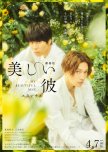
Kiyoi is beginning to feel better and better where his love is failing, he is still moving intuitively, without the necessary education, but with a pure desire to keep Hira as he is. In his case, in fact, it is exhausting; in principle, this breakdown was shown. It is clear that the young man understands, perhaps not literally, that this is the nature of Hira and it cannot be fixed, like some kind of disease, but can only be somehow adapted.
The theme of toxicity towards them disappeared for me after episode 4 of the first season. Yes, such couples need a psychiatrist, they need education on the topic. But only so that one does not change uncomfortably for his nervous system “for the sake of love,” and the second does not drown in exhaustion from the fact that he has to be a constantly show flexibility of mind. But their love, their thirst for each other, it is not sick or toxic, it is honest and passionate. This can be "terrifying" and envious.
I just believe in them because I see that both want to be understandable to each other, without demanding excessive and urgent changes for the sake of love.
I believe that there is no right love, relationships are needed not healthy as in books, but harmonious and not killing the personality.
Was this review helpful to you?
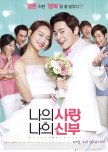
Bad story tried with good lead actors
It's seems like a trend back in the days with kmovies You either get a good story or you get your fav actors here you get the actors .. ah you want me to comment on story ?? Two people fall in love get married then they figure out "oh! His habits are annoying" or " she keeps nagging, my god!!" Plus some misunderstanding with the ex boss ..and viola you have your share of self implicated problems which will be resolved obviously cause viewers like a happy ending. There is nothing much to comment here.Do I recommend watching it .... Naaa if you're fan of after marriage couple fighting ..I suggest watching emergency couple atleast they got divorced before they patch up ..plus you get some medical drama in that. As for this particular one ...PASS
Was this review helpful to you?
This review may contain spoilers
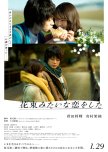
Relationships are a a continous battle and that's ok.
I've been on a minor binge of dramas lately. I was smitten by Kasumi in Flying Colors so I went to find her other works.This movie was highly recommended, so I gave it a shot.
I enjoy movies with nuanced character moments, it can help lift even the weakest stories. Fortunately for this movie, we had so much to digest. In each of the beginning half of the movie's scenes have a beautiful tenderness. The two MC interact with so much chemistry and it's really hard not to cheer for these two. We made a Beautiful Bouquet has probably some of my favorite couples interactions I've seen in any movie. There's subtle little things like how they look at each other during every possible moment and how as the movie goes on we see that slowly move on with time. The vibes are very wholesome and I appreciated all the small moments. The MCs also aren't scared to be seen in public together haha.
The director has a keen eye for working with lighting to incite feelings without having to say a word. Through gentle warm lighting we are enveloped in the same love that these two feel, only for it to become inevitably darker as they work through their struggles. One thing about Japanese cinema I've noticed is directors from Japan have a strong sense of beauty in the mundane. We are drawn into the feelings of these two in all their little interactions and as a result the ending is considerably impactful. Whether it be just standing together in a moment, or reading quietly in the same room, the director weaves you into their narrative. Many movies tend to build relationships with big sweeping romantic scenes but leave out small moments like these, which tend to weaken character development and our attachments to care.
There was a specific scene on the train involving a text message response and I was impressed on how utterly realistic the speed of the text was for people in their predicament. It was incredibly nuanced and said a lot about their relationship status whether it was intentionally shot like that or not. It's in these smaller moments that you learn to appreciate dramas.
I do not claim to be a J-drama expert, but I do enjoy how this movie was not afraid to go a different direction then most movies in this genre. The depiction of relationships in their sweetest, at their worst and at their most harrowing..it was a realistic depiction of the value of continued communication. There needs to be conversations like this in modern romance movies.I haven't consumed as much Jdramas, so I can only speak to my experiences watching what I have so far.
As for the musical composition in this movie, It was serviceable. I think it's one of the only weaknesses in this movie. Nothing stood out too much. But what we did hear in the movie was good for the overall feeling. As with most movies acoustic guitars set up a lot of groundwork for the tender moments in the movie. Pianos and synths follow for major moments and the passage of time sequences. It's your general drama music but it's definitely on the cuter side for most of the movie.
One thing I would like to point out personally is just the framing of the scenes in this movie. As the movie progresses the drifting of the camera and blocking are excellent. As the movie becomes more sad, the shots become more constricted and the camera becomes more static opposed to the moving camera in the early sequences. Placement of the actors play a part in this story as well. The two MCs move in and out of each other to relay their relationship at any given moment.
Finally the messaging in this movie is admirable. Many things in this movie are relatable to people who have been in any sort of relationship be it romantic or not. I loved that they didn't shy away from some of the tougher conversations. I would of liked them to delve deeper, but I know it's just not really a thing in Japanese society to do so. The depiction of strength, love and conviction in the movie really moved me.
A beautiful bouquet is made up of many beautiful but fragile flowers. Those flowers can last long if you nurture them, but in the end they will wilt no matter how much care you put into them. Relationships are the same, but that doesn't mean the effort you put into them was worthless.
The ending might leave some people very sad, but fear not! But sometimes you need to hear both sides of a story for something to be fully appreciated.
Was this review helpful to you?
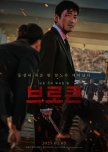
Great depth with insane perfection
Thick storyline and insanely well built character linkage, attention to details are extremely precise along with the flow of plot tuned to exact perfection, the depth in its storytelling is just unbelievably stacked in great suspense and class. Acting performance from every one of the cast is no slouch at all, the tension presented on screen is literally jaw droppingly intensified. This is the perfect example of how a blend of arthouse film and cold blooded action styled retribution theme noir done right and clean.Was this review helpful to you?
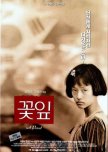
This review may contain spoilers
Relentless, almost radical in its puristic, rigorous realism. Not pleasant, yet haunting.
“A Petal” is heavy fare. Momentous. Crass. Intense. Disturbing. Yet deeply symbolic, too.Haunting.
It grabs the audience by the hand with a beautiful, harmless (South Korean) earworm from the 1970s and mercilessly drags us into the mentally disturbed reality of a 15-year-old girl who is emotionally trapped in the events of a historically bloody day in Gwangju in May 1980. She has been reliving the painful, unbearable, incomprehensible, unfathomable events over and over again since then. Desperately searching for her older brother to tell him everything she has experienced and suffered, and still cannot understand. But he has long since passed away.
“A Petal” is, for all those who know nothing about the Gwangju Massacre, a strikingly vivid, touching cinematic document of post-traumatic stress disorder. As mentioned, the KMovie with its particular combination of color, repeated flashbacks in black and white and animated dream sequences emotionally pulls us into this merciless inner world and makes us feel it.
But “A Petal” is also a historical milestone in South Korean cinema. Here, in a shockingly realistic manner the Gwangju Massacre was for the first time portrayed in film as a symbol of the suppression of the democracy movement in the country. (End of May 1980 in Gwangju the military was sent against demonstrating civilians, brutally tortured innocent people and killed probably up to 2.300 of them. Nobody could get in or out of the city, with telephones lines being shut down, too.)
The 15-year-old girl, innocent and clueless as she was, and now battered, kicked, helplessly trapped in her trauma, misunderstood, and sexually abused, personifies the nation that is still (even 16 years later) at the mercy of the trauma of Gwangju. A nation that does not quite know what to do with it. That has not yet processed it. That had no chance to do so.
The encounters of the girl on her erratic journey through the province of Jeollanam-do, especially the lone man she finally imposes herself on, represents all those who did not experience May 1980 in Gwangju and have never really learned what happened there, or even that anything happened at all. The dictatorial regime ensured widespread silence.
The girl is the personified, living testimony to the great sacrifices of the South Korean democracy movement. The man, rough and abusive, in the daily mire of his dreary life, embodies the still inexperienced, sluggish mass of the people, who in terms of the new opportunities and freedoms of democracy is however still trapped in the old, violence-dominated, dictatorial structures. These two, the girl and the man, are concrete, however nameless symbols of society at the beginning of the still very young democracy in the country, in the early 1990s. The brother's friends, persistently but laboriously searching for the 15-year-old, stand for the necessary reckoning and conscious processing, for perception, witnessing, revealing and communication of ´us´, so that the still open wounds are no longer ignored and suppressed, but given attention, cared for, and thus may perhaps eventually heal over time. In order to create space for new experiences.
Actually, at the time of the massacre in Gwangju, Director Jang Sun-woo himself was imprisoned for his activities in the student democracy movement. It was then that he decided to make politically critical movies in the future. However, this future took another 15 years to materialize. It was not until the 1990s that the democracy movement in the country began to bear its first fruits. It was not until 1996 that it was possible to bring the incredible events of May 1980 to the public's attention.
The film “A Petal” is relentless, almost radical in its puristic, rigorous realism. Especially Lee Jung-hyun, who made her acting debut here, had to go from 0 to 100 to connect internally with this mentally disturbed protagonist and thus convincingly portray her character. Impressive, too: Moon Sung-keun. The intensity of “A Petal” is breathtaking. Not pleasant, tough. Haunting.
Mission succeeded...
There were several well-deserved (and international) awards. However, some cinema-goers may have left the cinema early. It is a quite demanding KMovie. We are supposed to engage with the disturbing psychological situation of the girl. With what led to her becoming like this. And with how her mostly ignorant environment initially reacting helplessly and violently, to her apparent weirdness. Yet it is at last also a relieve to see, how a caring relationship eventually may develop even from the initially dismissive and unrestrainedly abusive one.
The title is the title of a song that the girl likes and sings, back then, before it all happened.
The song “A Petal” tells of how the petals fall, the memory of it is hard to bear, because there was a farewell. However, they didn´t talk back then... and again and again, when the petals fall, there is this memory of this abrupt farewell, which is hard to bear...
The theme of this song becomes the theme of this girl... who is desperately searching for her brother to tell him what happened, what she had to experience, what she still cannot grasp and does not understand.
Was this review helpful to you?
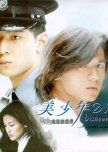
This review may contain spoilers
Love is the story of a moment.
"Bishonen" is an old film, like many other old films, slow-paced, told largely through the narrator's voice, with a gloomy, suffocating atmosphere, not rich in details but very poetic, very romantic.Honestly, if this were a modern film, it probably wouldn't be classified as "classic" and wouldn't be mentioned much, but considering the era when the film was released, I understand why nearly 30 years later, people still talk about it so much. The film is slow, but not lacking in "drama"; after all, it's still an old-fashioned love story, still the typical way of portraying homosexual people, especially those in the service industry. Love in the film is truly the love of moments.
We can't blame the film for not developing characters or emotional progression deeply enough, because it seems they fell in love from the first moment they saw each other, just like how other love stories come and go—all in an instant when their eyes meet. Besides the love story, the story of those who are cruel, moments of reckless passion that quickly fade, this also seems to be a story about loneliness, the dark knots inside people. Psychological issues, family and social expectations, prejudices... exist just in one look from the father. And Sam's death. One person's death perhaps can't change much, like ripples disappearing, submerged in water, except that love is something that doesn't die with the person. Actually, the film talks about love, but doesn't talk (enough) about the love between the two main characters; in the end, it's just Sam, Jet, A Ching, each having loved and been loved.
The ending for homosexual love films in this era is still shrouded in tragedy. People are pessimistic, putting a full stop to almost every love story, everything is always chaotic, messy, and ends with one or two deaths, either physical or spiritual. What that pessimistic view wants to reflect, or what common truth it tries to prove, I don't know and don't want to discuss too much; well, knowing that Sam is liberated, and Jet knows he was once loved is enough.
Overall, this is not a pinnacle classic film, nor truly artistic, not characteristic of traditional Hong Kong cinema culture... but it's still a film with sufficient emotional range, creating an atmosphere poetic enough, beautiful enough, cinematic enough for me on a late evening, enough for me to ponder the story of men rejected by society. What I like is the feeling, not necessarily the film itself.
And honestly, this film's popularity and frequent mentions are partly due to the extremely handsome cast of movie stars who give off a very artistic vibe :)
Was this review helpful to you?
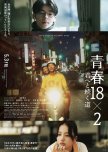
This review may contain spoilers
A Journey Through Time, Without a Destination, Only a Direction - Towards You
I watched "Our 18x2 Youth: Journey Towards You" during the early afternoon hours of summer, in the sweltering heat, fighting against drowsy sleepiness, but miraculously, the 120-minute film still made me feel warm, right in the middle of a hot summer day. A Taiwanese film in collaboration with Japan, featuring names that guarantee youth cinema, should have set very high expectations for me, but strangely, before and while entering the theater, I still didn't expect too much excitement or surprise from this film. Perhaps thanks to that, I could let myself drift into Jimmy's journey without a destination to Japan, immerse in the love story of two people who loved each other but never expressed it in words, in an atmosphere full of poetry and beautiful, shimmering scenes set in misty Japan and Taiwan lit up with lights."Our 18x2 Youth" first and foremost is still a love story. It's not a different, unique story that has never appeared on screen, because essentially, any love story, whether in films or real life, is similar, all originating from the same wonderful feelings. Jia Ming's first love came unexpectedly amid such heartfelt stirrings; one could say he was struck by love at first sight on a clear day, when a basketball, which was also his childhood dream, slowly rolled to the feet of a Japanese girl. Then, the story is told through Jimmy's dreams, revisiting his memories, continuing like that, with summer seeming to stretch endlessly. Jimmy recalls the story of his first love, remembers Jia Ming, the young man full of passion but easily shy and embarrassed when standing before his first crush, remembers the trips on his motorbike around small Tainan, much smaller compared to places Jimmy visited later, but also more special, much more. At that time, Jia Ming was 18 years old, not knowing what he dreamed of, not knowing what the future would hold, what the destination of his life would be. Now, Jimmy is 36, pausing his career pursuit to embark on a new journey, to find himself, to find the woman he loves. The section with the shifting perspective and narrator, with the separate story from Ami's narrative, wasn't really surprising, but it was like the way something expected finally arrives, filling my soul and longing. It turns out both were oriented towards each other; it turns out there are loves in this world where no one confesses because they both understand, no need for words, no need for kisses, words of love, no need for affirmation or confirmation. They just loved each other, peacefully like that, sadly like that, soaked in tears. That was first love, those were the feelings, also the warmth, the light, the cherry blossom rain falling forever, the snowflakes covering their lives, until much later.
"Our 18x2 Youth" is also a story about trips, about journeys. The truth about itinerary in the film is a very poetic association, but extremely simple. Each trip is actually a stroll in a new land, to interact with new people, new cultures, to fall in love with a strange place, to look back at ourselves, to love ourselves, to love where we were born. Traveling is wandering, steps without a destination, feeling throughout the journey we take, preserving scenes only we can see, moments that exist only for an instant. Both Jimmy and Ami wished their journey would never stop; they wrote their wish on a lantern released into the sky. I believe their dream will come true and has already come true, because each life is a journey, we travel without knowing where we'll go, that journey is also like a visit, an expedition, observing humanity, feeling love, loving lands, people, life. More profound than a trip to Taiwan, Japan, or around the world, the film also conveys the human ideal of living, we keep moving forward, resting is to start a new journey, perhaps that's what the filmmaker wanted to convey?
And, finally, "Our 18x2 Youth" is a collaboration between Taiwan and Japan. Therefore, I could clearly feel the culture of both countries skillfully interwoven throughout the love story, about youth and growth, about messages in journeys. Taiwan, Tainan simple, vibrant, bright with lights from night markets, bearing the features of a rural area; Taipei hurried on electric trains, modern under neon lights, bustling, busy. Japan in a noodle shop at night, hidden in pure white snow, passing on trains crossing rivers, dreamy with cherry blossom rain, sparkling with lanterns released into the high sky. Not just cultural interchange in landmarks, geographical areas, the feeling and atmosphere have very slight changes, but harmonious throughout the film. The art of filming is distinct, soothing and gentle from beginning to end, the flexible tone shifting between cold and warm for scenes alternating between present-past, adulthood-youth, 18-18x2, frames creating a feeling of confinement in a box with settings stretching far away, the subtlety in mixing light, film rhythm fast and slow, colors... All contributed to creating a film as beautiful as a Japanese animation, covered with the nostalgic breath commonly seen in Japanese and Taiwanese films, a unique quality no one can copy.
Final words must praise the actors in the film. All were very natural; Greg Hsu perhaps has received enough praise to build several cities, truly a box office guarantee. I often joke that just having him participate in a role means the filmmaker has already succeeded halfway. The difference between Jimmy and Jia Ming sometimes made me think they were two different people (just exaggerating haha). The actress playing Ami was also very beautiful; she played her role perfectly, cute and full of first love vibes always. In general, the good chemistry comes from the accomplished acting of both actors :D
Despite all this praise, I don't think I really empathized much with the film, so it was hard for me to have as many emotions as I expected. I couldn't feel too much pleasure in traveling, although the film did make me want to travel a bit more, nor could I deeply absorb the profound love between the two (it had only been a month, sigh). I yawned quite a bit during the beginning, the storytelling wasn't very smooth, many shots made me wonder why they transitioned scenes like that, the tears near the end of the film were a bit forced... Anyway, the film deserves its current success, but perhaps it's not underrated at all.
Was this review helpful to you?

DESPERATELY NEEDED MORE RUNTIME
Introduction:Demon City is an action-packed revenge storyline based on a manga series, "Oni-goroshi" by Kawabe Masamichi. The original manga is still being published with 15 volumes already out in Japan. Due to it having no English translation, I'm unaware of how much of the manga they adapted, neither on how much they skipped. So, this review will be purely based on my opinion regarding this movie and not on it being an adaptation.
Story:
The story desperately needed more character development. Due to the restriction of the runtime, we hardly got to know any of the characters (even the protagonist Sakata Shuhei), their morals, emotions, feelings, goals, or even what drives them to do what they do. So, when these characters die, we as watchers feel nothing but emptiness, as we can neither relate to the pain of the ones they left behind, neither feel sad for the one that left. The story also had a lot of pacing issues, since the story spans decades (the main story spans less of a time period) and trying to cover a whole lot of developments in the story within a given time, leaves less time to give importance to a few minor yet important details that actually let the viewer take somewhat of a fresh breath.
Acting:
The acting in this movie was fairly decent. All of the actors did an amazing job at portraying their characters, especially Ikuta Toma (portrayed the protagonist). Ikuta Toma shined in the action sequences, the choreography, and every little movement he did just made looked so good on the screen. Also, the chosen weapon of the protagonist is really so good and the scene with the elevator where is sitting on the body (the one on the cover) looked dope as hell.
Direction:
The director did an amazing job with the action sequences and made it look so good on the screen. The action sequences are the only good thing that this movie has. The cinematography was also somewhat decent. Other than that, the director fumbled in everything else including the pacing and the character development.
Music:
The music was good, just nothing special that would stand out on its own to me.
Enjoyment:
This movie is somewhat enjoyable due to its excellent action sequences. It was the case for me at least.
Verdict:
It's not something extremely good or something that you have to watch but if you wanna watch it, just know that the only good things are the action sequences and if you were to only look at the action sequences, it's a decent watch.
Was this review helpful to you?

⚠ If you lose a person they're lost for good °Good°
Pucker Up.A chubadub… pardon… a sweet young man is ready for his career as an engineer to take off, but he lands in the hospital, with jaundice and hepatitis-A, before he can start his job. He's not contagious - that's hepatitis-B - as the nurse keeps telling people, but e'erbody is terrified to go near him, regardless. The cute little nurse ends up taking breaks at his quiet bedside because she's worked to death. Everything she does is cute to him. Lee Woo-Je (True Beauty) is patient Jang Hyeok and Chae Soo-Bin (Love in the Moonlight) is nurse Jung Da-Eun.
He's discharged against his will. Finally, he plucks up the courage to call nurse Da-Eun. To his surprise she tells him to come over. He's overjoyed! He can't wait to help her out. He cooks for her. He sees things that need to be done, like the light bulb that is out, and he takes care of it immediately. She's quite touched by his attentiveness.
He swears he'll lose weight. He will reinvent himself. Next we see a svelte Jang Ki-Yong (from My Mister-9.5 & The Atypical Family) as Jang Hyeok exercising. Hyeok has to work. An opportunity comes up for work that will better his career - in Seoul. The commute is sour - it's murder. He has a lot less time with his cutie. They start to fall apart under the heavy stress of work. At his new job, he is forced to put up with coworker, Han Bo-Yeong (Krystal from The Heirs-7.3 & Crazy Love-7.8). She's hotting up the place, but she's messy and eccentric, and he's been teamed up with her. His work will be as good as hers is. Their results are linked.
The light bulb’s out. The light bulb’s on. The light bulb’s blinking. It's sort of a status indicator of Da-Eun in the relationship. S&S is a tasty little study in irony that teaches us to treasure the people in our lives. There's nice camera work and cutting. The directing and acting are solid. Kim Mi-kyung, the ubiquitous mother, makes an appearance. I don't know how she does it. She's in everything.
Hyeok's life twists like taffy until things start to pull apart. When things happen, sometimes they happen fast. Sometimes they happen gradually but it seems fast to the person that has only been tasting the sweeter things of life, unawares. The film's decisive end has been building the whole time, but it zings the viewer and Hyeok. Gravel in his mouth, he won't hit the ground running again for awhile.
For the record, I got luv for the chubadubs. Gimme a teddy bear with a good heart over a perfect, but empty, body every day of the week.
QUOTE📢
If you miss a cab you can wait for the next one. If you lose a person they're lost for good.
〰🖍 IMHO
🎬7 📝7 🎭7.4 💓5 🦋3 🌞4 🎨6 🎵/🔊5 😅3 😭4 🤔6 💤3 🔚8
Age 14+f💣 and other colorful linguistics + adult situations
Re-📺? It's worth 1 watch, not sure about a 2nd.
Originally 〰️🖊 May 2024
Was this review helpful to you?
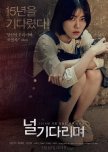
This review may contain spoilers
Slasher to watch with your brains off
Just what the synopsis says. Nothing more complicated about the plot. A story of vengeance.Kibeom is a suspected serial killer under investigation for multiple killings, including the murder of an investigating officer who ends up dead in front of his young daughter. He is hastily prosecuted when arrested for the murder of his girlfriend - but with nothing solid to incriminate him for his other alleged crimes, he is only punished for this one murder.
Cut to 15years later, story parallelly follows the activities of this suspected serial killer after his release, the life (double life?) of Huijoo who is almost unofficially adopted by her fathers ex-colleagues, and another shady character that comes into picture.
The gradual peep into the psyche of the main characters is an interesting watch. While we get only a superficial look at what the killer thinks like (enough to diagnose), we also see the confusing thought process of the main character. For me, this character had more to them, than I initially judged. In contrast to my initial judgement, even when the end products are superficially similar, the motivations were different, making their psychological building blocks different.
What to watch for: Slasher with some twisted character, nothing much to think about. A slightly confusing, serene way one of the ending scenes was shot.
Was this review helpful to you?
When actors decide to live the character
The movie starter was a a little slow though it worth waiting for the rest of it. It was a two hour witch valued spending. The acting was 10 out of 10. It seemed like actors were themselves, and not acting. The atmosphere in the movie was conveyed well. And the pain was understanding. Have nothing more to say but the perfectness of this masterpiece.Was this review helpful to you?

i have to speak my truth
im fully aware that im the only person in the entire world that watched this movie and was really disappointed by it. i dont expect anyone to agree with me, but i need to say it out loud anyway.ive been looking forward to watching this movie for a Very Long Time b.c i love matsuyama kenichi as an actor and as a man; ditto goes for ashida mana... but for some reason, i decided to read the manga first before watching the movie. this was a mistake, as it always is. never consume the original media before watching an adaptation. why haven't i learned that lesson yet 😫
so yeah that's what i did, and it actually made me /more/ excited to watch the movie b.c i knew the leads were perfectly cast. they would do a great job of portraying the personalities depicted in the manga, and this movie would ruin my life... but the movie did not give those characters the personalities depicted in the manga, and my life is worse for it ☠️
it's obvious that the producers tried its best to distance itself from this source material in order to tell a more wholesome story, and no one disagrees with that approach. however, i don't think that drastically altering the personalities of our leads was necessary. the fantasies daikichi has in the beginning are prime examples of how egregiously different movie!daikichi is from manga!daikichi, and it really diminished my interest in the film as an adaptation. by this point, i couldn't even enjoy it as its own media either, which was unfortunate.
this is the bulk of my dissatisfaction, but i also strongly disagree with how the disparate, slice-of-life plot points from the manga were spliced together for the adaptation. it was great for Vibes but not for plot.
to end this review on an overwhelmingly positive note, i love how every movie from this era of jpn film evokes so much nostalgia. the grainy-ness and desaturation do a lot to abstract the plot, which helps the viewer focus on the emotion. that was clearly the movie's goal, and the comment section proves the extent to which it succeeded
Was this review helpful to you?
Interesting plot
It is a horror masterpiece. The atmosphere of the film is incredibly dense, filled with meticulously built tension that envelops the viewer in a world of mystery and darkness. The performances of all the actors are outstanding each one delivers powerfully, especially Sister Yunia, Sister Michaela, and the boy possessed by evil spirits.The plot is complex and full of unexpected twists that keep the viewer on the edge of their seat. It’s a film that leaves a lasting impression and deserves to be watched more than once to catch all its nuances.
I really, really love Kyo as Sister Yunia. She made me so emotional her character was brave and strong, and her fight with the devil was intense. Yeobeen gave her best, as always. Her emotional scenes were incredibly touching, and her character’s addiction to sweets was adorable and funny!
I also loved the banter between Sister Junia and Michaela. It was so chaotic! They share such a great bond, and there's no doubt that both are outstanding actresses.
Overall, I would highly recommend this film. The story is excellently paced, and the cinematography will awe you. It doesn’t rely on cheap jump scares, but instead builds an atmosphere that lets you explore human nature and the horror that might be hidden within.
In one word: Masterpiece.
Was this review helpful to you?
From now on my comfort movie
I was looking forward to watch this movie and I had high expectations for it. And surprisingly, it met and even exceeded all of them.It was a comfortable, peaceful and cute film, I have only positive things to say about it. The cast did a good job portraying their characters. And the cinematography could create the vibes and atmosphere that the movie was going for.
Watching this movie felt like watching Ghibli movies. That's how I would describe it.
Highly recommend it if you like watching peaceful, wholesome and Ghibli-like movies
Was this review helpful to you?


