

"Don't you have an opinion of your own?"
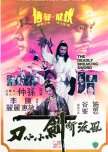
The Deadly Breaking Sword was a Shaw Brothers production starring Ti Lung and Alexander Fu Sheng. It lacked a classic hero, in fact, there were only characters with layers of gray and darker gray. Fu Sheng’s “comedic” character felt completely out of place in this dark story of human pride and greed.Tuan Chang Qing aka The Deadly Breaking Sword prided himself on the flare with which he killed his opponents. He always dressed in nice clothes, prepared a coffin for the soon to be departed, and then broke off an inch of his sword into the bone of the defeated. Classy. He battles halberd wielding Lian San and beats him, but doesn’t kill him. Lian goes to Dr. Guo (secretly the Killer Doctor, given that Ku Feng plays the character and is surrounded by thugs played by Yuen Wah and Eddy Ko, it’s a given that he is the Big Bad). Xiao Dao is gullible and a hapless gambler who ends up as a servant in the casino until he pays off his enormous debt. He falls for Liu Yin Xu, the fancy prostitute next door, even while Luo Jin Hua, the owner of the casino has her eyes set on him. Liu has a secret grudge against the good doctor and tries to rope Tuan and Dao into killing him for her.
This film had a dark theme running through it often derailed by the comedy schtick plopped randomly into it. Fu felt like he belonged in a completely different movie. Not that Xiao Dao wasn’t capable of murder. Without his character, I might have rated this film higher. The long running time would have been cut down and the clumsy fights he was involved in would have been eliminated. The fight choreography overall wasn’t great. Tang Chia implemented a lot of kung fu posing. The first and last fights between Ti Lung and Michael Chan were actually entertaining and much more fluid. The rest of the fights were awkward and the fists, kicks, and weapons often missed their marks by a mile/km.
The Deadly Breaking Sword was filled with anti-heroes and outright villains with the potential for an interesting take on the traveling swordsman. Instead, it was a mish-mash of characters badly stitched together into one story. It wasn’t a comedy, or at least it wasn’t for me. The most comedic thing in the whole movie was Ti’s dreadful fake mustache. The story of revenge and twisted honor codes kept getting tripped up by people slipping on banana peels or in this case, dominoes.
3 March 2025
Trigger warnings: Dismemberments and bloody injuries
Fun fact: Fu Sheng's wife, Jenny Tseng, sang the theme song.
Was this review helpful to you?
This review may contain spoilers
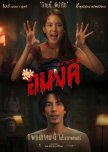
Horror Comedy with a touch of unexpected "FOREVER"!!
***SPOILER***I love Horror genre.
Comedy in a Haunted House is routine (Here, it's FUNNY enough, not hilarious)
But Falling in Love with a Ghost, is something Different!
And I, who avoid Sad Endings usually, even after reaching that "Different" point in the story knowing that it will End Bad, still continued watching, all because that there was little hope for a Happy Ending since this is fiction and anything n everything is possible in fiction.
But anyways, the ENDING here is REALISTIC!
***
I watched this with an expectation of Only Horror + Comedy.
But this is more of Rom-com than Horror Comedy.
Also, I expected a Sad Ending for the couple since Human - Ghost Love stories are impossible -- Forbidden Love
But OmG, I didn't expect the "Actual Ending", that little Twist -- His "True Efforts" to see her face daily for the rest of his life are Sweet.
I'm truly SURPRISED!
Such a beautiful moment in the forbidden love story -- That effort of his, truly mean "FOREVER"!!
(U need to watch the movie to know what those efforts are -- am not going to spill that lil thrill that I felt :) )
***
I liked how the Story is written -- How n Why, they are Fated to Meet because of their previous births and the back story of the ghost.
I didn't expect the reason for her death, why she is haunting that house and why only he can see her -- Well Written.
I liked the love story part more than the horror or comedy.
Pleasant, Easy-going n Light-hearted Horror with more emotional towards the end.
***
Came here for Actor Gee, after watching his "Terror Tuesday: Extreme".
FL is such a pretty baby doll.
Try how much ever but can't imagine her to be Scary! :)
***
My Rating is 7.5/10
One Time Watch!
Was this review helpful to you?
This review may contain spoilers
A easy story but needed more characterization
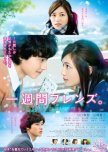
The one really immediately striking thing about this movie is the frantic energy in this movie. It's very anime feeling in it's pacing, character dialogue and movement. Although some of the pacing does feel a little episodic because of this. There seems to be definite chapters rather then natural flow in this movie.There's a lot of background music in this movie, which is why it somewhat feels really more episodic. Each of the background tracks make each section feel unique and segmented. Not necessarily a bad thing but I found it noticeable.
I'm not sure how I feel about the acting in this one. On one hand the characters are likeable, but on the other hand it seems very surface level. Sometimes it feels really sentimental but then I think someone's line delivery sort of ruins the moment. Kaori's actor is a little wooden in her line deliveries. While Yuuki's acting is sometimes a little too over the top. This lends to that anime like feel of the movie I mentioned earlier. I also wished they would of expanded even just a little about the side friends. One of the characters got emotionally crushed but I didn't really feel bad about it lol.
The ending was nice and then really get your emotions going by the end. I think the payoff would of elicited more reaction from me with a little more work on why we should love these characters.
Was this review helpful to you?

This review may contain spoilers
An outlet to the future
Solanin is based on a popular manga with the same name. It refers to the poison which can affect certain types of vegetables in the nightshade family. It is a natural defense to protect the plant. This is important to the story, trust me.Solanin is a deeply interesting look at honoring someone by living out their wish. Much of Japan's cinema talks about death and it's consequences on others. The brilliance of this movie is how they tackle loss in a unique way. Many people who come out of school don't know what to do with their adult lives. Sometimes dreams can die and then world comes crushing down on you. The movie's first half covers much of this mentality with a sense of whimsical love. We can continue living so long as we are blissfully unaware of anyone but ourselves. This dramatically changes after the loss of one of the main characters. A strong change of melancholy takes over the film in the middle of the movie. When we don't have a proper goodbye to someone. can we really move on? That is the central question the movie answers.
The thing I mentioned earlier about poison is a metaphor for the type of pain someone's unexpected death can cause on someone. We see the main character Meiko slowly go into a downward spiral of depression after the loss of her loved one. She finds solace in his music that he left behind and continues his dream in order to understand him better. The film walks with the idea that societal pressures can have lasting effects on someone's self worth and even though we may seem fine it's not always the case. There's scenes in the movie which touch on self worth and the transactional nature of adulthood. We sometimes must do things that we do not agree with but sometimes it's better to go with the flow of he river then against it. Younger to millennial generations will probably understand this movie much better then older generation.
The acting is very well done for the most part, the strongest being Meiko and Jirou. These two show the most growth I feel in the entire movie's arcs. Naruo I felt was a little weaker in characterization but it evened out with the chemistry he had with the rest of the cast. Jirou's actor had an amazing scene that made me crack the tears. Meiko's Aoi Miyazaki has a really emotional depth especially when it comes to her facial expressions and body language. The final musical scene is a real catharsis. I felt like this was one of her better performances as it went through a huge gamut of emotions.
Lighting plays a small roll in the movie as the bright and warm cheerful days are alongside the dark and muddy days of loss. You can see a stark difference in the movie's feeling in both halves, which is something I enjoyed. The movie is very easy on the eyes and has a really nice lived in feeling. I really enjoyed this little bubble.
I think the ending will resonate well with anyone who is facing their whole lives ahead of them and would recommend this movie to anyone looking for a little pick me up.
Was this review helpful to you?
Legends of the Condor Heroes: The Gallants
6 people found this review helpful
A war-focused movie which might be more enjoyable for fans who have background knowledge
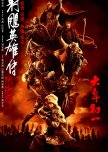
Subjective Gut Rating: 8.25“Legends of the Condor Heroes: The Gallants” is my first movie of 2025 and I even watched this in the theater! This movie is an adaptation of the first book of the Condor Trilogy but focuses on a more mature Guo Jing and Huang Rong, and the war between Mongolia and the Jin and Song Dynasties. If you have not read the books or the many TV drama adaptations, this movie is just like any other big production war movie. Whether this is a good thing or not, it’s up to the viewer. Afterall, the movie is only 2.5 hours long and you can’t really fit everything into a movie.
Plot:
If you have not read the novel or watched the TV drama, the first 15-20 minutes gave a quick recap of everything that happened between Guo Jing and Huang Rong (romance and quick adventure), and how Guo Jing became the martial artist that he is. The rest of the drama is about how Guo Jing and Huang Rong try to find each other again, and the war development between Mongolia and the Jin Dynasty, with a side story of the Poison Master Ouyang Feng’s quest. Although I am understanding of the time limitation, I can’t help but feel a tiny bit disappointed when the focus is not on the martial arts world and on Guo Jing and Huang Rong. Their adventure together is the best part of the book. Because that part is missing, even when they found each other again, it’s missing that emotional ecstasy (but then, I am also a hopeless romantic).
Casting:
I was unsure about casting Xiao Zhan as the somewhat naive and ‘dumb’ Guo Jing. But since the movie focuses on a more mature version of Guo Jing, I think Xiao Zhan did a pretty good job. His big eyes are able to convey innocence, justice and strong beliefs, but not clueless as who Guo Jing once was in the drama adaptation, such as Yang Xu Wen’s version in 2017. Unfortunately, this version of a mature Huang Rong is missing the spark I’ve seen in Barbara Yung’s version in 1983, or Li Yi Tong’s version in 2017. Sabrina Zhuang is not doing a bad job, but something is missing in this intelligent yet still cunning version of Huang Rong. I’m happy to see the movie included Mongolian actors, in addition to a few from Hong Kong. Quite a bit of Mongolian is spoken in the movie but I have no way of knowing if they were done well. At least everything sounded believable. The rest of the supporting cast did fabulous. With some fabulous makeup, Tony Leung is an unrecognizable Ouyang Feng (especially the last scene) and I can’t say I wasn’t surprised to see Ada Choi played a mother figure (I feel so old seeing her).
Production:
You can’t deny this is a big budget production - the number of soldiers in the field, the great wars and battles, sets and costumes. Big fights are usually done with special effects, and these are not cheap special effects. But because the Condor Heroes to me is a wuxia trilogy more than a war trilogy, I can’t help but be a little disappointed in the lack of real fights. I want to see traditional martial arts fights with close contact combat. I might have gotten 2-3 scenes of good fights, but the rest is usually CGI-fighting or arrows shooting.
Would I recommend it? Yes. I would, especially if you are a fan of the novel/drama and a fan of Xiao Zhan. But if you don’t have some of the background, “Legends of the Condor Heroes: The Gallants” is only just another war movie. If you don’t mind, it’s still very enjoyable given the good acting and excellent supporting cast. Lastly, I want to add that if you watched the old 1983 Hong Kong version, it really brought back memories when the theme song starts to play. Just a few notes and I immediately recognize it. I think the song was also used in the 2017 drama and again here as the background music in the 2025 movie. But the main theme song of the movie is a battle-themed song sung in Mongolian. That’s a nice touch!
Completed: 3/2/2025 - Review #549
Was this review helpful to you?
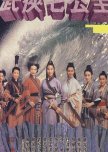
"I am damn satisfied to be killed this way!"
Holy Weapon boasted an amazing cast-Michelle Yeoh, Maggie Cheung, Ng Man Tat, Simon Yam, and Sangra Ng to name just a few. If you love Hong Kong martial arts comedy you will most likely enjoy this film more than I did. Very little made sense and often bordered on the bizarre-walking flowers, a green-haired vampire, and a woman who could turn into a spider were just the tip of the proverbial iceberg. I don’t mind martial arts madness, but the rape, poop, and penis jokes wore thin quickly for me.The Japanese Super Sword has come to China to take over the martial world. After cutting down thousands of men, Mo Kake aka Heaven Sword, juiced up on the “greatest drugs,” is able to temporarily defeat Super Sword. SS vows to return in three years. The drugs cause Mo’s personality to change and he goes on a killing spree seeing Super Sword everywhere. Not everyone was disappointed to be killed, "I am damn satisfied to be killed this way!" By the time the Ghost Doctor (“late again!”) arrives, Mo collapses after having driven his fiancée away. Ching Sze changes her appearance and name and becomes the Heartless Man Killer. In order to kill Super Sword when he returns, the good guys will need a secret book and seven female virgins in order to become their own super weapon. Fortunately, there are plenty of oddball and horny maidens to fill just that order.
Michelle Yeoh played the grownup in the room, Ching Sze aka To Col. She was, of course, wonderful as always, even with this material. Maggie Cheung played a dippy Princess protected by Sandra Ng as her bodyguard. Carol Cheng and Damian Lau were betrothed as children but he wanted out badly enough to kill her. He fell in love with the princess and her guard fell in love with him and then the guard later fell for his fiancé, Doll. Along the way, the characters met Sharla Cheung’s Spider, who ended up falling in love with To Col. Ng Man Tat played the Ghost Doctor with Einstein hair. Simon Yam was the deadly enemy who could turn into a sword who also needed to sleep with virgins to maintain his youthful skin care routine. Everyone was looking for love and not terribly hung up on gender (which I liked) or often consent (which I didn’t).
There were numerous rape jokes and attempts which I found horribly offensive. Poop jokes and penis jokes dropped every few minutes. The film was badly faded which made reading the white subtitles difficult at times. There were also frames where the subtitles were cut off at the bottom of the screen.
At first, I was thrilled to see so many accomplished actresses in this film, however, the material did not do them justice and wasted their talents for the most part. Holy Weapon had a few entertaining scenes, but I only finished it for Michelle Yeoh. Comedy is in the eye of the beholder so I wouldn’t want to discourage anyone who is a fan of the actors or genre from watching this film, it just wasn’t my jam.
2 March 2025
Trigger warnings: Snakes, horse parts flying, penis/poop/rape jokes, and several attempted rapes and an accomplished rape
Was this review helpful to you?
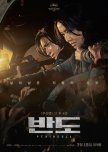
Dong won: SPEAK LESS, WORK/KILL MORE!
To be honest, Since it is mentioned as a SEQUEL to "Train To Busan", watched with a lot of expectations (that is my 9.5/10 n is a very interesting story from the beginning to the end) n so am disappointed with this.But One thing I would like to say about this is, WATCH THIS AS A STANDALONE (/Shared Universe) Zombie apocalypse n ONLY then U might ENJOY this .
**** POSITIVES:
The Car Chasing Scenes are AWESOME. Those graphics / visual effects are exactly like some racing / zombie mobile games ;)
**** NEGATIVES (/what I didn't like n felt boring):
The first 30 and the last 30 minutes are VERY GOOD.
Remaining are just boring.
Dong won has very limited screen presence and in the middle of the movie, almost for an hour (total running time is 2 hours), he has no screentime being the main lead :O
I need to tell myself that this may not be a single hero oriented movie but one with a team work or multiple main leads (just like it's prequel).
Also he has very very limited dialogues - this may not be a negative n actually maybe it's required for his character as so .
SPEAK LESS, WORK/KILL MORE! 😂
(I liked him from "The Priests" movie. Here, he is handsome even with this less screentime, haha )
Other characters are not so interesting too
Plot, direction n pacing of the story are just OK, could be made BETTER!
I liked ONLY Dong won's role
And His n the gal's car chase /racing scenes are interesting, that's all.
Nothing else is very Impressive !
Overall, it's just One Time Watch (as a standalone)!
Was this review helpful to you?
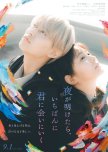
Yoru ga Aketara, Ichiban ni Kimi ni Ai ni Iku
0 people found this review helpful
THE MOST BEAUTIFUL JMOVIE IVE SEEN YETTT
MAN this was ADORABLEthe plot or story isn't something out of the ordinary but MANNN the execution? perfection.
Everything from the characters feelings to their romance is so perfectly shown goddamn i shed a tear.
what i liked:
-the FL: I felt for her, a people pleaser who hid her true feelings behind a mask, i felt so bad for her because her emotions felt so real especially thanks to the great actress.
-the ML: Hot dude who is a green forest, helping the fl gaining confidence while also showcasing his vulnerability.
-the cinematography: I have no words because the sunrise, the sunset and the rooftop scene all made me cry they were so beautiful
-non-toxic adorable and supporting side characters
WATCH IT RN
Was this review helpful to you?
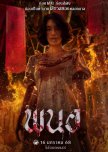
Not the best, but still a decent prequel.
If you’re a fan of the ‘Art of the Devil’ franchise or have ever watched any or all of the movies, you’re likely familiar with the infamous Panor. The story transports us to the 80s, delving into Panor’s teenage years and exploring her life in a rather pitiful way before she became an iconic notorious figure in the Long Khong universe.The production quality is truly impressive. Every aspect, from the cinematography and costumes to the sets, props, and special effects makeup, is crafted with great care. The details of every ritual involved are both scary and fascinating at the same time. I like how this film injects the elements of white magic, which is portrayed by Masri, a Muslim female shaman, reflecting the diverse practices of shamanism across different faiths and cultures.
Another noteworthy thing about this film is the performances. I personally think this is Cherprang's best performance to date. Having watched some of her dramas, I’m impressed with how well she carries Panor on her shoulder with such authenticity. She manages to shed the typical leading lady appearance to embody a more complex and darker character.
Despite the great execution, there are a few points that, in my opinion, reduced the perfection of the film. One, the storytelling feels rushed and a bit flat. When you try to cover many things in a limited timeframe, it’s easy to overlook significant plot points while overemphasizing less important details. Two, it seems like this prequel is prioritizing the gore over character development, resulting in a lack of character depth, even for Panor herself. And the minimal backstory for supporting characters also diminishes their appeal. Some characters are introduced only to disappear quickly, without enough context to justify their roles. Lastly, while the incorporation of CGI effects helped enhance the horror experience, it's not quite polished, making some scenes appear 'floating.'
As a horror fan, I’d say the scary level is moderate. There aren’t many jumpscares like other ghost movies. I’m not sure if it’s because I'm getting older that I seem to handle scary movie with much more ease. However, the unraveling of the sinister mysteries is intriguing. Like its predecessors, this film is not short of the gruesome scenes that are definitely not for the faint-hearted and weak-stomached. What would the ‘Art of the Devil’ films be without those graphic scenes, right? So brace yourself. And if you’re afraid of geckos, beware.
While the storylines may stumble here and there, this film excels in delivering horror and raw brutality. It stands out as one of the earnest depictions of Thai beliefs in black magic and witchcraft. Overall, it's not the best installment, but worth watching.
Was this review helpful to you?
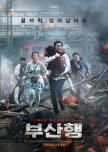
✒☠A Trainwreck That'll Eat Your He♠️rt Out °7.8° °Excellent°
🚅2B is an exploration of what happens when a zombie infected person stumbles onto a loaded train as it leaves the station. Loads of SK features have eating front and center, but in this movie, the dining car is closed. Only the zombies get to snack.The main protag is fund📈 manager and father, Seok-woo, who is traveling with his 10 year old daughter, Soo-an. She doesn't look 10, she's small and adorable. Newly divorced, dad is taking her to visit mom.
What ensues is what one can expect from a zombie thriller at 60+ full-steam-ahead-mph, with cars, doors, racks, & compartments everywhere.
The worst issue with the film is how characters don't take charge of their own well-being. None of these people are trained to kill. They aren't all grabbing or fabricating weapons. When a couple of them discover a major weakness the zombies have, they don't even inform the others or exploit it properly! One character had rigged armour, of sorts, around his arm, to go help rescue someone else. Why he took it off is perplexing: He needs it later. It isn't surprising that individuals would be paralyzed by shock, but the fact that nobody got fired up enough to take charge is hard to accept. More pro-activity would have kept one car of passengers on track to save many lives. I suppose it wouldn't be a horror film if nobody acts half brain-dead.
What's also on display is the best and worst of humanity. The moral centers are the 10 year old Soo-an, and the big man (Ma Dong Seok💘), along with his very pregnant wife (she looks like she's 11 mos in, or carrying triplets in some scenes). The embodiment of evil and conniving self-interest is portrayed by another passenger. As his true nature doesn't raise its ugly head until midway, his portrayal shows how dire circumstances can bring out the best and worst of people. Seok-woo is claiming the middle moral ground in the beginning of the show. He intends no harm, but he's not about to get involved or inconvenience himself, either. He even stores his investors' phone numbers in a file entitled "Lemmings" on his 📱. We watch his moral journey, not just his geographic journey, during the flick's windy route.
It all seems typical - not bad, not great - for the first 70-75% of the film. The last portion of the movie is excellent with regards to the filming, action, special effects, and acting (Zombies go flying all over in a fantastic trainwreck - we even see a train pull a horde of zombies as more and more of them jump onto the growing blob of a pile!). Kim Su-an, who plays the kid, may not get to kill a zombie, but she slays her part. SK entertainment, in an apparent overabundance of riches, parades a steady flow of amazing child actors.
All Aboard! T2B is definitely worth the trip, particularly for the excellent last stretch. It comes in at just under 2hrs, and it streaks by in no time at all. The focus is on the people, but the zombies make some 🆒 moves, too. In the final analysis, it is also a worthy primer of what not to do during a zombie apocalypse, which I daresay might come in handy someday.
IMHO🗣
🎬8 🎭8 😅0 🤔6 🎨7 ⚡8 🔚9
Age 13+
Originally 〰️🖊 5/2022
Was this review helpful to you?
This review may contain spoilers
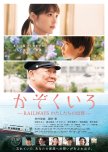
Who determines who is family?
In a world of harsh pains and challenges, most people can rely on family to get the through tough times. But does family only have to be blood deep? A film about the interlinks that bind people together.While at the heart of this film is the reminder that family are the ones who are there for you now in the present, I felt this story needed a little more characterization. The film's three main protagonist do their parts well from what they we given in the script. Kasumi always brings the best characters who are internally struggling despite their cheerful exterior. Kunimura San I found to be kinda lacking in this movie. I felt like his character needed overall more depth and time to really make you care about the relationship his character was pushed into. The young Ryusei did very well, particularly in the heart wrenching essay segment.
The scenary shots in this movie are absolutely brilliant. There's a little dodgy CGI thrown in a brief scene but it didn't detract from the movie. The trains which are a focal point of the movie are lovingly shown and many of the themes of the movie revolve around the idea of trains. Timing, maintenance, speed, braking.. All of these can be metaphors for the delicate relationship dynamics in families. It teaches us nothing must be too overdrawn, it must all work together for a smooth arrival.
I'm not sure I would highly recommend this movie but it wasn't a non pleasant ride. Surprisingly despite its heavy moments it wasn't as tear inducing as I was expecting and that I think had to be the byproduct again of the characters having time to show us why we should cry along them. Overall a good slice of life type story for a nice afternoon to night.
Was this review helpful to you?
This review may contain spoilers
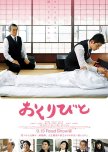
Who will you leave behind?
When you die, do you know who will be there to mourn for you? What will happen to your body? Will anyone care? These are the important questions this movie attempts to answer.The strength of this movie is the beautiful way it shows the preservation of life even when the soul is long gone. The careful motions of the nokanshi or coffinman have a almost sensual depth. There were moments where just these simple hand gestures brought me to tears. There's a real humanity to people who give their lives to make the final moments of others feel heard. The message of you existed and you mattered is effortlessly presented with all the scenes of these rituals.
I loved how the families presented all showed different stages of grief. The very real situations that can happen during funerals really allowed the film to explore these sentiments. Families have complicated histories and many of these inadvertently come out during times of great pain. The families dealing with sudden deaths and unfamiliarity all brought Daigo greater understanding and support to recontextualize his own emotions.
The harmonious cello piece that plays through the movie is some of Joe Hisaishi's best work. The music ebbs and flows with the scenes and bring emotional warmth to many scenes.
The acting is solid for the most part. Daigo does so much acting through just his eyes and hands on this movie. Mika his wife was well acted, although I found the drama to suddenly swerve with their relationship. I think this is just from more a cultural standpoint as the job of Coffinman is highly stigmatized in Japan. The supporting actors all got their little moments. I wish there was a little more development for the Coworkers in the film.
Most of the editing and directing were really precise and time seemed to move so slowly but then I realized that 60 mins had passed already. I think that's one of the greatest pleasures of the film. You get enraptured into this delicate work and before you know it, time has disappeared. I guess you could say that is also what plays on the central theme of the movie. Time may feel like it's standing still, but it forever moves onward.
Was this review helpful to you?
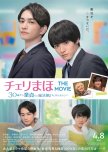
Cherry Magic! Thirty Years of Virginity Can Make You a Wizard?!: The Movie
0 people found this review helpful
Love is all you need - and a good job
Watched the movie after binge watching the series - demonstrates how much I wanted to see what happens to Kurosawa and Adachi, and their friends, too.The first few minutes run through their story from the series. The story here changes timelines and events slightly on the final episode and special.
What was interesting was how work continued to be of importance, and how a couple make decisions for their careers. I, too, worried when a nurse said 'we'd contacted family' and what that might mean.
Adachi's personal growth at work and his love for Kurosawa is here and brings more out of the actor. The chemistry between the two is better than the series, particularly Adachi.
I think some reactions were more positive than expected but it is a feel good drama after all, and it's raising the issues and it's not all easy-going.
Doubt there'll be another part, but would be good to see more of how Kurosawa and Adachi negotiate their relationship in the workplace.
Smiling at the end. Although will point out as of early 2025, same sex marriage Inc marriage abroad is not recognised in Japan. A 2024 court case in Sapporo thought something different of the constitution compared to some cases in 2023. Same sex certificates can be obtained in some prefectures.
Well acted, some beautiful landscapes, cosy, friendly or enclosed interiors as fitted the protagonists. Worth a watch for a slice of life with a same sex couple deepening their bond.
Was this review helpful to you?
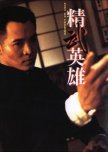
"The simplest attack is the most effective"
Jet Li starred in Fist of Legend, a remake of Bruce Lee’s 1972 Fist of Fury. While no one could top Bruce’s lightning-fast moves or charisma, I quite enjoyed this film. Jet Li, Kurata Yasuaki, Chin Siu Ho, and Billy Chow were accomplished fighters in their own styles adding a level of realism to their battles aided by Yuen Woo Ping’s compelling fight choreography.In 1937, Chen Zhen is studying engineering in Japan when he hears his sifu died during a duel. He leaves his Japanese girlfriend, Mitsuko, behind and catches the first ship out of town. After visiting his master’s memorial, he heads straight to the killer’s dojo and challenges him to a duel, after he defeats all of the students first, of course. He quickly determines that Akutagawa could never have beaten Master Hua Yuen Jia. In the process of clearing his master’s reputation, he runs afoul of General Fujita, a ruthless killing machine that has no use for the Chinese.
I almost rated this a 10 right off the bat for one reason, when Chen Zhen lived in Japan and was confronted during class by students from a nearby dojo, he dispatched them quickly and efficiently. No hitting someone 10 times with them barely feeling it. Chen Zhen went after their weak spots-shoulders, elbow joints, and knees. I cannot tell you how many martial arts films I’ve watched frustrated that the hero never hits his opponents in key anatomical places, but instead hits people dozens of times with ineffectual strikes. What also improved this scene was Kurata Yasuaki who played the students’ master, Fumio. He scolded them and told them to be thankful for the mercy their beater showed.
Yuen Woo Ping along with a couple of other Yuens choreographed the fights. The story may have been thin, but it provided plenty of opportunities for fists and kicks. There wasn’t a weak fight in the lot. Whether fighting a dojo full of offended students or one-on-one, the fights were fast, targeted, and entertaining to watch. A match between Chen Zhen and Fumio in an open field showcased different styles and a desire for understanding. The inevitable deadly brawl with Fujita was brutal and inventive. Jet Li was an accomplished fighter as were David Kurata and Billy Chow (Fujita). There was very little wire work and these guys put on a show. Nowadays, anyone can look like a fighter with wires, close-ups, editing, CGI, and slo-mo. This film was filled with people who knew what they were doing, adding authenticity with their speed and agility. The intricate choreography had me wondering how many hours were required to rehearse the complicated fights.
This story versus the original showed a more even-handed approach to both groups of people. As in Fist of Fury there was no sugar coating of the Japanese presence in China. Fujita was thoroughly evil as most Japanese characters were portrayed in these films. Instead of all of the Japanese being prejudiced and violent against the Chinese, there was Fumio who disapproved of Japan’s militaristic actions. Just a quick note to say, I loved that Kurata who was often relegated to villain roles was allowed to play a wise, old master here. Chen’s love interest was Japanese and though she was a good person she was rejected by both the Chinese and the Japanese. Master Huo had been betrayed by Chinese characters showing the universal flawed nature of people. The Japanese were absolutely demonstrated as being in the wrong for occupying Shanghai, but this time the approach had more nuance.
Fist of Legend was a thrilling martial arts film and packed with quality fights. For a 1994 kung fu film, the production values were high and the acting was not a letdown. Watching Jet Li in his prime without the overuse of wires was a treat. It’s been a long time since I’ve enjoyed a martial arts film this much. If you like these old films, you definitely should seek this one out to give a try. (As a reminder, my rating is based on comparisons to other martial arts films, not major studio productions.)
1 March 2025
Was this review helpful to you?
Legends of the Condor Heroes: The Gallants
6 people found this review helpful
This review may contain spoilers
A Martial Arts Cinematic Feast for the Eyes
First time in over a decade I went to the movie theater to watch something and it was an XZ film. I went in just like I go see any movie, no expectations and just enjoy what I'm about to watch hopefully. I can say for sure this was the type of film that you can only watch in the theater to get the full effect. It really was a martial arts cinematic feast for the eyes with a very LOTR vibe to it.Pros: The martial arts were top notch and given the director's experience in that sector, not a surprise. The large scale battles were amazing and breath taking. All of the actors delivered and I have to give it up to XZ as GJ for being able to so convincingly speak Mongolian; I mean monologues of it at a time. A total foreign language nothing like his own. The ending showdown between GJ and very creepy looking OYF was by far the best. Costumes, sceneries, CGI, OSTs, all the aesthetics were top notch. There are several battle scenes during ending credits so don't miss out by running away before the lights come on. There were comedic scenes which broke from the seriousness of the situations.
Cons: The greatest and saddest part that was lacking was the storyline. If you didn't know the plot to begin with you would have been very lost here. Thankfully, I watched last year's LOCH: HB series, though itself not great, I at least had an idea of the storyline. Because here everything was so rushed through that you had no idea how the leads met, when GJ met his shifus, or the guy who got him started on his path to greatness. Literally everything about the story was condensed into maybe 15 minutes of screen time. The 7 freaks dying on the island save one was done in 30 seconds and neither HR nor HJ were given the proper screen time to have a proper connection with GJ. Everything was battle focused.
I disagree with many and say that GJ had way more chemistry with HR than HJ who seemed more like a little sister though both of those were mere moments in time. Same could be said about GJ and his mom who it seemed to appear on screen for a maximum of 5-10 minutes total before she kills herself to not be used by Great Khan anymore as leverage. Another thing that made me scratch my head, the entire film the Great Khan spoke in Mongolian and in his last scenes, he busts out the Mandarin and it was like wait what? What just happened; completely inconsistent. Had this film been properly executed, it should have maybe been a trilogy like LOTR so the wonderful story wouldn't have been sacrificed for the sake of fight scenes; though very awesome ones.
Would I recommend it? Yes. If you're a fan of wuxia and the original work of the writer, you're in for a feast. The battles were absolutely phenomenal and it was a very entertaining film.
Was this review helpful to you?


