

This review may contain spoilers
Stuck on Repeat
Promising at first for the plot, but you need to bear with the repetitiveness and editing.Repetitiveness of the plot
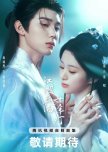
The plot keeps repeating itself in every aspect, and the pacing feels quite off. There are no major events that truly shift the direction of the story, instead, it's a series of small problems that feel artificially inserted just to keep the viewer going until the finale, which itself turns out to be not particularly thrilling. A bad guy appears, there's a forced kiss, the FL accuses the ML of deception and tries to kill him. Then they reconcile, a new bad guy appears, a new forced kiss or hug, and the FL accuses the ML again. The intrigue doesn't help either, since they need to find three different objects to cultivate the Ziwei Method, which creates the same cycle of plot twists over and over.
Another issue: Cai Zhao seems to be living out the same storyline as her aunt. First, it becomes tedious to watch a Cai Zhao scene only for it to be immediately followed by a flashback of her aunt doing essentially the same thing. Second, I would have appreciated more diversity in their respective developments and experiences.
In their defense, I think the writers focused less on making the overall plot compelling and more on showing how the characters were growing, which would make sense given the title of the drama. I liked the idea of an elder generation that faced many of the same challenges the younger generation is now encountering, and how the younger generation tries to avoid repeating the same mistakes. It's a genuinely nice concept, and I enjoyed all the flashbacks to the previous generation, which made for interesting comparisons. Overall, though, I think this is a case of wasted potential. It's like having a great idea for a book but being unable to write it well, or envisioning a beautiful drawing that ends up looking terrible in execution.
Production Issues
Setting aside the repetitive plot, the production itself is quite questionable. On the positive side, the costumes and some of the sets are nice. However, the editing is poorly done, the makeup on Cai Zhao is baffling (why is she so pale?), and the acting sometimes feels excessive, though that may partly be due to the strange editing choices (e.g., shots of Mu Qingyan making odd faces). Some scenes don't flow well together, and certain shots feel out of place. At times, we hear Mu Qingyan shouting something to Cai Zhao while the camera shows a wide shot of a mansion and garden filled with fighting characters. I found this very disorienting, as your eyes instinctively search for the people involved in the dialogue.
Romance and relationships
The romance, though, was completely wasted by Mu Qingyan's repeated unsettling behavior and Cai Zhao's constant rejection. Frustrating at first, then simply boring. I was hoping he would let go sooner, and that she would start chasing him a little. Their dynamic at the beginning was actually quite good: she was flirty and he showed nothing more than simple affection. Then came several awkward kiss attempts. Why not let her fall so deeply in love that she's the one trying to kiss him? Instead, they kept the obsessed-pursuer-and-rejecting dynamic all the way through, what a waste. I would have preferred the introduction of a woman he could have grown close to, to shake things up. As for Yuzhi, he should have either been simply her friend or someone she had some romantic interest in. What did his unrequited love actually bring to the plot?
That question, honestly, could be asked about many elements of this drama.
For example, I think they could have done something really compelling with Mu Qingyan's mother. He has so many repeated creepy scenes and moments of coughing up blood, they could have used that screen time to explore his mother issues, showing her trying to manipulate him and him resisting. That would have been far more interesting. His mother brought nothing to the plot tbh.
Good points
On the other hand, I particularly enjoyed the scenes between Lingbo and her mother, especially the one where Lingbo pushes back against her mother's advice, pointing out that her guidance didn't exactly lead to the best outcome given how her mother's own story ended. I also really liked Cai Zhao and Mu Qingyan's first meeting when she encounters him as himself. The enemies-to-lovers energy there was genuinely great. It was so promising and I actually loved the few episodes after this moment.
Conclusion
The repetitive plot combined with the production flaws makes the drama genuinely uninteresting at a certain point. They could have ended it after 20 episodes and it would have been tighter. I think it gets better toward the end, but I honestly couldn't watch at normal playback speed. It feels like the producers had a clear vision of the broad strokes and the ending, but didn't really know what to fill in between, which, for me, is the most important part.
Also, Rebirth has been in my watchlist for a while, but now that I've found out it's from the same director, I'm seriously reconsidering.
Was this review helpful to you?
"Do you know what the rich want?...To get richer"
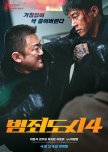
If you watched the first three Roundup films then you know what to expect from The Roundup: Punishment. Our wrecking ball ahjussi hitter takes on cyber crime this time around with his team and comic relief criminal sidekick.Detective Ma makes a promise to a grieving mother that he will find the criminals responsible for her son’s death. The investigation takes him and his team into the world of cyber gambling and sundry crimes. What he’s not initially aware of is he’s dealing with The I.T. Genius and his vicious, knife-wielding enforcer. Ma will have to call in help from the police department’s own I. T. crowd and also the shady Jang I Su.
There is something about Ma Dong Seok I find compelling to watch, even if he’s just throwing hands at bad guys and little else. I thought Ma “no cartilage” Dong Seok moved smoother in this film which was probably due to better choreography and shorter scenes. His punches and ducking were swifter and of course with a little movie magic, always highly effective. The bad guys, led by Kim Mu Yeol’s Baek Chang Gi used knives which I’m not a huge fan of and didn’t think the knife fight choreography was particularly creative. I was only invested when Ma and his meaty fists entered the room.
The film which bounced between the Philippines and RoK lost focus a few times, which may have been more to translation issues. Ultimately, when the big hearted, pounding hitter wasn’t on screen, the story’s momentum faltered. I enjoyed Roundup Punishment for what it was, and in that I wasn’t disappointed. If you’ve watched the other entries in this franchise this is one to give a try. The Big Guy with No Cartilage rarely disappoints.
10 April 2026
Ma has quipped that he has “no cartilage” in interviews before. Glad he’s still able to make the movies he wants for now!
Was this review helpful to you?

OMG ! Not a single dull moment.
These series has surely raise the bar for chinese dramas.All the characters in these series are woven intricately. They all have background story. And the execution of the show is done so well that it doesn’t bore us to know the story of each and every character. Character development is very important part of this show. First half was very well developed.
And what to say about main leads, they are already top notch actors. Their chemistry is breathtaking. I love them. Zhang Linghe never disappoints with his acting. But I must say FL is amazing in every episode. It is true women empowering show. I loved it. It has become one of my favourite cdramas.
Was this review helpful to you?

This review may contain spoilers
A Seemingly Light Story That Earns Its Ending
My Page in the 90s is one of those rare dramas that doesn’t aim for depth—and yet still manages to land emotional impact where it counts.At its core, this is a light, high-concept story: a modern influencer is pulled into a novel and must complete a “system” mission—win the male lead’s love and secure a proposal—to return to her own world. It sounds gimmicky on paper, but what makes it work is the execution. The female lead doesn’t “perform” the role; she inhabits it. Her reactions feel grounded, her choices feel real, and over time it becomes easy to forget how absurd the premise actually is.
The male lead complements this perfectly. He brings a natural, lived-in quality to the relationship—small gestures, subtle emotional shifts, and a steady presence that makes the romance believable even within a constructed world. Together, they build something that feels authentic rather than manufactured.
The drama also maintains strong pacing for most of its run. Each episode moves forward with new situations, challenges, or character moments. It never feels like nothing is happening—until it briefly does.
Around the late middle (roughly Episodes 14–17), the story falls into a familiar trap. The main couple becomes stuck in a cycle of avoidance and misunderstanding, repeating the same emotional beat multiple times. At the same time, the second couple—who are otherwise charming—are also caught in their own loop of hesitation and self-doubt. With both storylines stalling at once, the momentum noticeably dips. It feels less like intentional tension and more like the narrative marking time.
Fortunately, the drama recovers.
From Episode 18 onward, the story pivots in a meaningful way. Instead of continuing the same conflict, it raises the stakes and reframes the central question. The emotional weight deepens, the pacing tightens, and the characters are forced into choices that carry real consequence. What follows is a final stretch that is both moving and satisfying, culminating in an ending that feels earned rather than rushed.
The second couple also finds resolution here, and their storyline adds an important thematic layer about fate—what can be changed, and what cannot.
The finale, in particular, is handled well. Rather than relying on a last-minute coincidence, it allows time for separation, longing, and active searching before reunion. It doesn’t over-explain its mechanics, but it understands that emotional closure matters more than technical detail.
This isn’t a drama that belongs among the most intense or tightly constructed stories. The mid-section drag is real, and it does rely on familiar tropes at times. But it also knows how to deliver where it counts. The ending recontextualizes the journey and gives the story a sense of completion that many similar dramas fail to achieve.
In the end, My Page in the 90s succeeds not because it’s deep, but because it’s sincere. It’s a light story that understands its limits—and still manages to make you feel something real.
Was this review helpful to you?
CRINGE
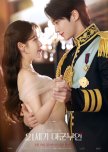
This drama isn’t just misguided—it’s intellectually dishonest in the way it frames power, hierarchy, and identity. It borrows the aesthetic of a modern democracy while quietly reintroducing a system built on birth-based privilege, and then expects the audience to find that romantic.Let’s be clear about the setup: modern-day South Korea is one of the most advanced democracies in Asia, built after decades of struggle against authoritarian rule—especially after events like the June Democratic Struggle, which pushed the country toward free elections and civil liberties. Against that backdrop, creating a fantasy where royal blood still defines status isn’t just creative liberty—it’s a reversal of hard-fought political progress.
And the comparison the show unintentionally invites is uncomfortable. When you build a system where identity, privilege, and even personal worth are dictated by birth, you’re not far removed from rigid authoritarian structures. The difference between calling someone “royal” versus “supreme leader” becomes largely cosmetic when both rely on inherited or unquestioned authority. Figures like Kim Jong Un don’t wear crowns, but the system around them functions on a similarly unchallengeable hierarchy—one where status is absolute and socially enforced.
Of course, the show will argue it’s a “constitutional monarchy,” like United Kingdom or Japan. But even in those real-world examples, royal families are largely symbolic, stripped of actual governing power. Here, however, the narrative treats royal status as socially superior, emotionally desirable, and personally transformative—which completely undermines the idea of equality in a democratic society.
Seong Hui Ju’s obsession with becoming “more than a commoner” is where the writing collapses entirely. She is already part of a chaebol family—a structure often criticized in South Korea for concentrating wealth and influence in the hands of a few conglomerates. Yet even that isn’t enough for the story. It insists that true fulfillment lies in bloodline, not achievement. That’s not social commentary—it’s glorified elitism.
And then there’s Yi An, portrayed as a tragic royal who “has nothing.” But what does he actually lack? Not status. Not public adoration. Not systemic protection. The drama wants sympathy for someone insulated by the very hierarchy it refuses to critique, while simultaneously elevating that hierarchy as something worth aspiring to.
What makes this especially problematic is how it mirrors real-world systems of discrimination. Whether it’s class stratification or caste-like thinking, the core idea is the same: people are ranked at birth, and no amount of merit can truly change that. Instead of challenging this mindset, the show indulges in it—wrapping it in romance, wealth, and visual appeal so it feels less like oppression and more like fantasy.
What makes this drama particularly disturbing isn’t just its premise—it’s the values it quietly promotes.
In the real world, elitism and discrimination still exist, but they are widely recognized as flaws in society—problems to be challenged, reduced, and ultimately eliminated. Entire democratic movements, like South Korea’s push toward equality after the June Democratic Struggle, were built on rejecting rigid hierarchies and inherited privilege. That’s the direction modern societies strive toward.
This drama does the exact opposite.
Instead of questioning elitism, it normalizes it. Worse—it romanticizes it. The idea that people would *aspire* to become part of a hereditary elite, not through achievement but by birth or marriage, is presented as understandable, even desirable. That’s where it stops being harmless fiction and starts feeling ideologically regressive.
The central relationship makes this even more uncomfortable. A contract marriage—something that should carry emotional, social, and ethical weight—is reduced to a transactional tool for status climbing. And what is the “necessity” driving it? Not survival. Not safety. Not even power in any meaningful democratic sense. It’s simply the desire to become “royal.”
That raises a fundamental question the show never answers: what is the actual value of this title?
In a true constitutional monarchy—like United Kingdom or Japan—royalty is largely symbolic. They do not govern. They do not hold real democratic power. Their status is ceremonial, not functional. So why is this drama treating royal identity as the ultimate prize, something worth sacrificing autonomy, love, and dignity for?
Seong Hui Ju’s decision is especially troubling in this context. She is already wealthy, influential, and independent—yet the story suggests that none of it matters unless she acquires a title tied to bloodline. It reduces her agency to a bargain: trade your personal life, your emotional freedom, even your sense of self, in exchange for a socially constructed label that holds little real-world value.
That’s not ambition—it’s submission to a broken value system.
And the show never seriously challenges that system. It doesn’t ask whether this hierarchy is valid. It doesn’t show meaningful resistance from society. Instead, it presents a world where people accept these divisions and even strive for them. That’s what makes it feel so disconnected from reality—because in reality, such systems are increasingly criticized, not admired.
At its core, the drama sends a troubling message: that identity by birth is more important than identity by choice, and that social elevation—even if meaningless in practical terms—is worth personal sacrifice.
In a modern democratic context, that isn’t just outdated—it’s deeply unsettling.
In the end, this isn’t clever world-building—it’s regression with better lighting. It takes a society that fought to escape rigid, top-down control and imagines a version where people willingly chase it again. That’s not just unrealistic—it’s deeply uncomfortable.
Was this review helpful to you?

They Really Ended It With a Video Game Scene. I'm Fine (I'm Not Fine)
If you're here for the romance, buckle up- this drama delivers. The chemistry between the leads is the kind that makes you forget to check the episode progress bar, and the kiss scenes and skinship are consistent once the leads figure things out, not just saved for the finale as a reward for your patience. The OSTs are genuinely beautiful and do a great job of carrying the emotional weight of the quieter scenes. For a romance-focused viewer, this is a very satisfying watch.That said, it's not without its frustrations. The middle episodes drag in places, and the pacing stumbles when the story loses focus on the leads. But the bigger issue and honestly the one that stings the most is the ending. After everything these two went through, the FL's reluctance to commit to marriage felt like a punch to the gut. A proper proposal scene would have been the natural, earned payoff this story deserved, and the fact that we didn't get that left a bittersweet taste at the finish line. The murder-game ending was a warm touch, but it couldn't fully fill that gap.
Bottom line: watch it for the chemistry, the kisses, and the OSTs , they're genuinely top tier. Just temper your expectations for the ending, especially if you're someone who needs that full romantic closure to feel satisfied. Recommended for romance lovers, with that one caveat in mind.
Was this review helpful to you?
School of Violence
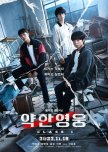
Uh. These high schoolers sure are violent. I never read the comic book, and I was intrigued and invested in the story for the first half of the season. But when everything switched, the show felt off-balance. There were no more good guys left — just pure madness.Maybe the production overexaggerated, but every time they fight, it feels like the students literally want to kill each other. And then, miraculously, everyone recovers quickly with only a bruise or two.
And Si-eun, our main hero... He seems intelligent in the first episodes, but his reasoning becomes more and more sinister as the story develops. Some may argue that he didn’t do anything wrong, but I’d say he did many wrong things. Unfortunately, by the end, I stopped caring about him. In fact, I lost interest in watching Season 2.
Was this review helpful to you?
The drama
The drama is amazing. I U as Seong Hui Ju and Byeon woo Seok as Grand Prince Yi An are perfect match for the character. I don't know what may fall upon their story or how will they ends up at last. But I am soo excited.Overall for this 1 st episode got a picky person like me hooked up means the coming episodes will be amazing. The staff,directors and also the actors deserve a big hands off for depicting the characters this much beautifully and marvelously.
Saranghaeo🤍
Was this review helpful to you?
Bloodhounds season 2 had everything we needed
This season was so damn enjoyable, it gave exactly what it needed to. Everyone feels more hardened, and the villain crew was a solid “well-oiled machine.” The fights were great too. Woo-jin’s vulnerability really stood out, he’s hurting but keeps it all inside, if you’re saying he was weak this season, shut up. His bond with Gun-woo was a so special and both of them were wonderful around each other. Gun-woo felt more quiet and in his head, trying to become “more beastly than the beast”.Was this review helpful to you?
No plot just vibes
Okay so I loved the first half of the film- beautiful visuals , cherry blossom, bookstore , feeling lonely in a new environment, shy/awkward to communicate, fear of stranger danger , lingering here and there on a bicycle, watching movies in cinema but fearing dark theater, desperate to find connection like home and female lead's dressing especially.Until it was revealed WHY she moved there , Pfft that was a turn off
Was this review helpful to you?
Destiny brought them together, love made them stay
This series is a visually stunning show with a thought provoking theme.I liked the way the story was narrated with flashbacks. The slow-burn romance unfolded realistically and beautifully. It made their confession worth waiting for!
The major point here is that Xu Huaisong was playing all along from school times, knowing that she too had a crush on him, to get her attention and he did succeed. On the other hand Ruan Yu was admiring him ( the person he was putting up to be) from a distance totally unaware that he too liked her.
If only it was as easy as 'Hi, I know you from school times and had a crush on you and wrote a book about it. Let's try it out!"
Or "Hi, I came back because I realised you are in trouble because of our story. Nice to meet you. Let's go!"
How one deals with the "re-appearance" of a secret crush is going to be very different with no one size fits all option
One is still lingering on the crush but can't reveal and can't afford to get hurt. The other, hesitates to show himself, being always in the weaker position in the relationship.
This is one of those shows requiring patience and a calm mindset to appreciate its nuances.
It's also quite humorous .
Visually captivating.
All around good acting.
Music is very soothing especially the 'After the rain 'song played by the male protagonist on the piano
Background sound effects were apt!
9/10
Was this review helpful to you?
Me and Thee: Fiction Within Fiction or Pure Reality?
To be honest, I had my doubts before starting this one. I felt that GMMTV productions, and specifically PondPhuwin projects, were becoming a bit monotonous, relying more on the actor´s real-life popularity than on the quality of the scripts. However, this series turned out to be a refreshing surprise that finally breaks that streak.The PondPhuwin Dynamic: Sweetness vs. Reserve
As a devoted fan of this pair, it’s impossible not to notice their contrasting styles:
Pond (Thee): He is truly in his element here. The role of a mafia boss who is secretly obsessed with lakorns fits his acting range perfectly. Pond is incredibly tender when showing love; he has that specific gaze that makes you believe he is genuinely head-over-heels.
Phuwin (Peach): While he feels much more connected to his character than in previous works, I still feel that in moments of intimacy or physical contact, he comes across as a bit forced or stiff. It’s something we fans have come to accept as part of his style, but the contrast with Pond’s natural, sweet delivery is evident.
What Works (and What Doesn't)
The series is witty and genuinely funny. The premise of a mafia boss falling for a humble photographer through the lens of cinema is brilliant. The humor is well-timed, and Peach’s flat, logical responses are the perfect foil for Thee’s quirky antics. Furthermore, Est and William (Mok and Rome) add an interesting layer to the story; their ending felt like a fun snippet of their real-life interactions.
However, it’s not without its flaws:
Perth and Santa (Ran and Tawan): I feel they got a raw deal. Their plot involving toxic jealousy masked as love was resolved in a rushed, almost asinine way by episode nine. Despite this, Santa delivered a very sincere emotional performance, and Perth proved once again that he is a powerhouse actor, though it’s definitely time for him to move away from the "sullen, angry boyfriend" roles.
Final Verdict
The ending of the series is, quite simply, perfect. Those few seconds after "The End" tie the entire concept together, framing the production as the actual love story of Peach and Thee.
Despite the pacing issues in the subplots and that slight rigidity from Phuwin that we’ve grown used to, the series achieves what many others fail to do: it feels authentic, hilarious, and mature all at once.
Was this review helpful to you?
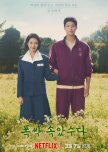
Beautiful, Deep, but Not Something I’d Rewatch
When Life Gives You Tangerines is honestly a really good drama—deep, meaningful, and emotionally rich.As a slice-of-life story, it focuses on everyday experiences and personal growth, which makes it feel very real and relatable. The writing is strong, and you can tell that a lot of thought was put into delivering a meaningful story.
However, some parts felt quite slow and even boring to me. In fact, I actually dropped the drama at one point and only continued it again after a few months. That alone says a lot about how the pacing didn’t fully keep me engaged.
Surprisingly, I didn’t find it as sad as I expected. Even though many people describe it as emotional, I personally didn’t cry while watching it. The story is touching, but it didn’t hit me that deeply on an emotional level.
Overall, I still think this is a great drama, which is why I’d give it a 9/10. But at the same time, it’s not something I truly enjoyed watching throughout, and it’s probably not a drama I would rewatch.
Was this review helpful to you?
enjoyed watching main leads! the rest is boring
Sometimes I feel like watching something light and sweet. Ofc a 30-episode drama can't be perfect. Although we've been waiting for the characters to reunite their love for a long time, I really enjoyed their love story. They look incredibly beautiful together and the last two episodes were absolutely stunning! I was completely delighted with both the beginning of their love and its continuation. Their visuals and chemistry were the reasons why I continued watching the drama.On the downside, there were abrupt shifts in the plot from one event to another, followed by a focus on the second event. This happened from episode 14 to 20, where the interactions between the main characters were minimized or put on hold for an extended period. This was disappointing, because all those side stories seemed dull.
When watching this drama, there's no need to overthink the events. It's like a fairy tale about a princess and her prince. Although the female lead had difficulty understanding certain things, we all know that it was done to stretch the plot. In certain situations, her lack of understanding even seemed amusing. So, just relax and enjoy the chemistry between Wei Zhe Min and Zheng He Hui Zi!
Was this review helpful to you?
This review may contain spoilers
Still okay to watch.
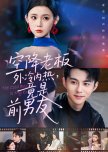
I actually watch few version and have lukewarm opinion about the script. This version takes a slightly bittersweet approach. FL is adorable and well-behaved. ML stills good match for FL. In this version, ML's family background isn't as bad, and he admits his mistakes quickly. There are many interactions between the ML and FL; the male lead dotes on and loves the female lead, even saying during their breakup, "Why didn't she play the long game? Why didn't she overcome her difficulties before dumping him?" She even blamed herself for not being there for her during her painful period. The chemistry between Li Ya Ya and Li Ke Le are still passable to watch but not to make your heart fluttering. Still recomended if you dont really like angst and bittersweet drama.Was this review helpful to you?


