


This review may contain spoilers
My June Recommendation Drama
Watch this because of Recommendation Challenge from 10𝑮𝒐𝒐𝒅𝑴𝒆𝒎𝒐𝒓𝒊𝒆𝒔.The story follows Karl and Vlad. Karl is an introverted 19-year-old architecture student who is forced by his parents to move into his uncle's condominium unit before the start of his second semester in college. The move is part of a family tradition meant to teach independence. Determined to prove that he can survive on his own and escape the suffocating expectations of his family, Karl promises to cover all of his living expenses himself.
To support himself, Karl takes on various online freelance jobs. However, when one of his major clients suddenly disappears without paying, he finds himself struggling financially and unable to cover his utility bills. Already uncertain about his future, Karl's situation becomes even more complicated when his lively and confident neighbor, Vlad Austria, unexpectedly enters his life.
A misunderstanding leads Vlad's protective older sister, Judit, to believe that Karl and Vlad are dating and sharing living expenses. To prevent Judit from forcing Vlad to move back home and to help Karl with his financial troubles, Vlad proposes a mutually beneficial arrangement. The two agree to become temporary roommates and pretend to be a couple.
Although the arrangement is highly practical, the two young men could not be more different. Karl is quiet, reserved, and tidy, while Vlad is outgoing, charismatic, and messy. Their contrasting personalities lead to frequent arguments, especially over Vlad's untidy habits, which constantly frustrate Karl. However, after a heartfelt conversation with Judit, Karl begins to see the person behind Vlad's carefree exterior and starts to understand him better.
Living under the same roof forces them to spend more time together, and what begins as a simple roommate arrangement gradually develops into a genuine friendship. As the days pass, Karl and Vlad grow closer through late-night conversations, movie marathons, shared meals, and moments of vulnerability. Vlad encourages Karl to step outside his comfort zone and confront questions he has long avoided about his identity, dreams, and feelings.
At the same time, Vlad carries emotional burdens of his own, including complicated family relationships and personal insecurities that he often hides behind his cheerful personality. As they open up to one another, their friendship slowly evolves into something deeper, bringing both excitement and uncertainty.
However, as their feelings grow stronger, Karl and Vlad must confront the realities of living in a society where acceptance is not always guaranteed. Family expectations, fear of rejection, and the challenges of self-acceptance become obstacles that test the strength of their relationship.
In the end, how will their story unfold, and where will their relationship lead?
That's pretty much the story without giving anymore spoilers.
What I like:
+ The harsh reality of gay in Asian countries… Watching too many Thai BL I sometimes forget most Asian countries are not accepting gay/lesbian that easily… And here we can see the fear beyond Karl’s eye…
+ The uncertainty that Karl experienced… That’s so real…
+ How Judit is so protective of Vlad…
What I don’t like:
- the ending… I don’t wanna be a spoiler here but I am really hoping for a better ending… Like the possibility of 2nd season... Haha...
Overall I quite glad I’m watching this…
Was this review helpful to you?
A story of obsessive psycho and his Stockholm syndrome lover he can't let go
The boundary between love and obsession is very thin. Nothing is good is if it's too much. Since the beginning Lu feng's obsession runs too deep and Yi chen is just a hopeless mouse who will never be able to get out of his paws. Two boys met, fell in love what could go wrong right? But here everything went wrong. As much as I hate lu feng's action I also realize that it was the society that driven him to take such drastic steps. Then again, you can't control what happens to you but what you do is your responsibility. Both parent family gave them no choice, either abandon the world or leave your love cause they knew even love cannot survive aloneLu feng and Yi chen were wronged by their parents, the society. Lu feng's anger management issue made him took some drastic steps that is irreversible. And Yi chen's cowardice only made it worse. Both of them are at fault. They can't be together yet can't stay without each other either. Such a paradoxical fate
Let me praise Ayden. This actor did a tremendous job. Lu feng before their separation, after meeting and at last two episode were totally three different people. His expression is perfected to the micro level. I enjoyed each of his scene. The more I hated Lu feng the more I loved the actor. He did that hell of a job
Yichen was cute, sunshine. perfect cast for what the role needed at the beginning. That's why their chemistry shined so much. But later his acting paled compared to Ayden
The worst part of this series is probably screenwriting. There is literally no coherent storyline going on. We are jumping from one scene to another. Everyone beside main two characters are show piece and barely has any value to the plotline. The second couple.... severed nothing though their story had so much potential. There is no logic behind what's going on. This show is only watchable if you are focusing on the main character's chemistry otherwise there's nothing really noteworthy
So my question is can a trash plotline actually be saved by a couple with sizzling chemistry?
Was this review helpful to you?

“Fight for Views!”
Adapted from a manhwa, Viral Hit initially looks like it belongs to the long tradition of Korean high school dramas... but in reality, it doesn't. In fact, Japan has completely embraced the original work and even turned it into an anime. What is most striking about this drama is its ability to tick every single box of the classic shōnen nekketsu formula without ever openly claiming that heritage: a weak protagonist who gradually grows stronger, a succession of increasingly difficult fights, ever more powerful opponents, friendships forged through hardship, and a crystal-clear power progression. One could almost call it the "perfect fake shōnen." Yet beneath that familiar structure lies another influence: the fūryō genre, those stories about delinquent high schoolers where violence becomes a form of social language and an alternative hierarchy. Here, hallway brawls have been replaced by fights recorded and broadcast online. School remains the playground, but the real audience is on the Internet. To truly enjoy Viral Hit, you have to set realism aside: this is essentially a live-action anime, and it should be taken as such.Kota Shimura (Oji Suzuka) is an outcast high school student, the favorite target of the school bullies. Coming from a very modest background, he lives alone while his seriously ill mother has been hospitalized for weeks. He has no real friends, and his classmate Kanegon (Sugou Araki) merely uses him to boost the popularity of his streaming channel. Kota works at a fried chicken restaurant to earn enough money to pay the bills, but he is on the brink of financial collapse. One day, however, his life changes dramatically. He discovers that someone has anonymously sent him a series of training videos and combat tips from a mysterious masked mentor known as Samdak, who hides his identity behind a chicken mask. Summoning all his courage, Kota confronts his tormentor by putting into practice the basic techniques he has just learned. Unbeknownst to him, Kanegon broadcasts the fight live. As ridiculous as it may seem, this passionate little brawl unexpectedly goes viral. Kota quickly realizes that fighting can actually make money. He then teams up with Kanegon—more foolish than malicious—and Aki Yashio (Ai Mikami), a fellow student who also suffers from bullying. She comes up with the perfect name for their combat streaming channel: Viral Hit.
First of all, I usually can't stand seeing 18-year-old high school students portrayed by actors in their mid-twenties or older, but here it works reasonably well... with the exception of Hamaken, whose actor is, after all, 36 years old! But let's move on. The series taps into something deeply rooted in manga culture: the story of young people left to fend for themselves in a world where adult authority barely exists. So don't expect traditional authority figures, whether at school (teachers) or on the streets (the police). The young characters evolve within a self-contained world where the rules are dictated by strength, reputation, or image. It is a grey zone where everything can spiral out of control at any moment. Viral Hit is a 100% action series wrapped in a dark and dramatic atmosphere. Beneath all the fighting, it also touches—albeit briefly—on serious issues such as exploitation, social inequality, the corrupting influence of fame, the darker side of social media, and the commodification of one's image. Against this backdrop stand the timeless values of the genre: friendship, courage, self-sacrifice, resilience, love, and humor. The narrative constantly shifts between light and darkness, and the balance works remarkably well thanks to its natural flow. Because the drama is so short, the pacing is relentless, sharp, and impactful. The visual style is polished and perfectly suited to the situations depicted, while the direction itself is another clear strength of the series.
Since this is neither the original webcomic nor the anime adaptation, everything inevitably moves at breakneck speed, and that is somewhat detrimental. Weeks seem to pass, yet they feel like mere days. Even so, the progression structure is remarkably well handled, despite the fact that the relationships between the four main characters are only lightly explored due to the lack of screen time. The presence of the stunning Kaho Asamiya (Meru Nukumi) also plays an important role. In truth, every actor fits their role perfectly and is instantly recognizable. Each episode functions like a new level in a video game: one opponent, one source of tension, one victory or one defeat, followed by the next challenge. Yet the central objective never changes: earn enough money to save Kota's mother. This formula creates an addictive sense of constant progression, making it feel as though everything is building toward one inevitable final confrontation. But it also raises an interesting question: how far can someone rise before losing control? The importance of the mentor figure—the sensei—becomes a pivotal element. He acts as a virtual father figure. Indeed, he is never just a trainer; he becomes the moral anchor, the one who reminds the protagonist of the rules before his growing strength turns into dangerous excess. And that is where Viral Hit proves to be more interesting than it first appears. Beneath its progression-based formula, it hints at the possibility of downfall—the downfall brought about by fame or by one's own ego.
The cast is excellent, and Oji Suzuka shines precisely because of his apparent ordinariness. The other young actors surrounding him are equally convincing. The drama is skillfully built around a suspenseful narrative that never relies on cheap escalation, and it delivers a well-crafted double twist near the end. In fact, every visual detail matters, and viewers simply need to stay alert, almost as if they were following a treasure hunt. Director Hideki Takeuchi is certainly no newcomer, and he works wonders with the very limited runtime Netflix granted him to tell the story of Viral Hit in such an overly condensed format. Watching the series naturally brings to mind iconic references such as The Karate Kid with Mr. Miyagi, or Dragon Ball with Master Roshi—the wise mentors who guide the hero. That said, here comes my biggest criticism, aimed squarely at Netflix, for showing so little respect for either the original work or the audience: adapting a webtoon spanning ten volumes and an anime running for around 200 episodes into a mere six-episode drama is, quite frankly, treating viewers like fools. How can anyone properly develop the characters' backstories and portray their growth with so little time available? This distribution strategy deserves a zero in my book. On the other hand, full credit goes to the director, who managed to convey the very essence of the original comic to someone like me, a complete newcomer, and above all, made me want to continue the adventure elsewhere.
In the end, this Japanese version of Viral Hit succeeds brilliantly as a live-action anime, but it is also built upon a strange sense of frustration. Following Kota's growth and getting swept up in these unconventional fights is immensely entertaining. The series thrives on excess and exaggeration, but that is entirely intentional, and one should never lose sight of that. Special mention also goes to the makeup department, which honestly outclasses what is usually seen in Korean productions. However, the ultra-compressed format imposed by Netflix severely undermines the emotional and relational depth of the original work. Like the mysterious Samdak himself, the series offers some valuable life lessons, but its far too abrupt ending leaves the viewer wanting more. The fast-paced rhythm leaves behind an unmistakable feeling of incompleteness. The potential is there—tangible and undeniable—and the show remains excellent entertainment, but it also feels as though someone has deliberately put restraints on a Ferrari. Because of that, secrets that should have been carefully preserved are thrown at the audience with unnecessary brutality. It slightly diminishes the overall experience, and for that reason, I feel compelled to lower my final score in response to this regrettable example of industrialized formatting.
Was this review helpful to you?
A Winter Sun Wakes the Wind in Spring Hills' Dream
13 people found this review helpful
A Young Servant and His Master in a Romance Set Among Beautiful Mountain Scenery
We barely get a handful of full-length BL series each year that run for a full 16 episodes, so I was excited to start A Winter Sun Wakes the Wind in Spring Hills' Dream on GagaOOLala. Four episodes in, and I am completely hooked.One of the biggest strengths of this series is its setting. Instead of the usual bustling city backdrop, the story unfolds among lush green mountains, endless tea fields, and breathtaking natural landscapes. The cinematography is stunning, creating a peaceful and refreshing atmosphere that feels almost magical. The scenery is so beautifully captured that it becomes a character in its own right.
The romance is equally captivating. Qinglang comes from the glamorous world of fame, while Xu Changyang is a free-spirited tea farmer who belongs among the forests and mountains. Their completely different lifestyles create a fascinating dynamic, making every moment of their growing connection feel meaningful and heartfelt.
The chemistry between the leads is incredible. Their interactions feel effortless, natural, and full of warmth. Xu Changyang is especially lovable. The way he cares for Qinglang is on another level. He feeds him, cooks for him, lets him use his lap as a pillow, and is constantly looking after him. Honestly, these two already feel like a married couple. Watching them spend time in the forests together while Xu Changyang quietly takes care of Qinglang in every little way is both heartwarming and addictive to watch.
What makes this drama stand out even more is how different it feels from many other BLs. The pacing is gentle, the atmosphere is immersive, and the emotional connection between the characters develops naturally.
Then came this iconic exchange.
In Episode 3, after Qinglang kissed Changyang, he asked, "Do you like men?" Changyang did not answer yes or no. Instead, he simply replied, "Is it important?"
Then in Episode 4, Qinglang asked again, "Do you like men?" This time, Changyang answered, "Is your name Men?"
There is so much meaning hidden in those few words.
If Qinglang's name were "Men," then the answer would be yes. Changyang was not saying he likes men in general. He was saying that the only person he likes is Qinglang. That is the beauty of poetic writing. Sometimes a single sentence can carry the weight of an entire love confession without ever directly saying it.
I was already smiling at the dialogue, and then... OMG, THEY KISSED.
Their kiss was one of the most beautiful kiss scenes I have seen in a BL drama. Instead of showing it directly, the series presented it through their shadows dancing across the ocean waves. The water seemed to capture the moment and carry it across the shore. It was artistic, romantic, and unforgettable. I had never seen a shadow kiss executed this way before, and the series absolutely nailed it.
It took four episodes to get there, making it a true slow burn, but every second of the wait was worth it.
This series reminds me that great romance is not built on kisses alone. It is found in the meaning hidden between the words, the feelings left unspoken, and the emotions woven into every conversation. A few carefully chosen lines can sometimes touch your heart more deeply than the grandest declaration of love.
So far, A Winter Sun Wakes the Wind in Spring Hills' Dream has delivered an engaging story, a gorgeous soundtrack, strong performances, breathtaking visuals, and a romance that feels both sweet and deeply emotional. It offers a unique vibe that sets it apart from many BL dramas airing today.
I am completely invested and already counting down the days until the next episode. If you love slow-burn romance, stunning scenery, poetic storytelling, and couples with undeniable chemistry, this series deserves a spot on your watchlist. ❤️
Was this review helpful to you?
This review may contain spoilers
The story follows Lu Feng and Cheng Yichen, two young men who fall in love during their school years only to be torn apart by family expectations, social pressure, and a series of painful misunderstandings. Years later, they meet again, but neither of them is the same person they once were. What follows is a complicated journey filled with unresolved feelings, resentment, longing, and the question of whether love can survive after so much damage has been done.The early episodes capture the excitement and innocence of first love surprisingly well. There is a sense of vulnerability and discovery that makes it easy to become attached to the characters before everything begins to fall apart. This emotional foundation is essential because it allows the later episodes to hit much harder.
Let's talk about the toxic nature of this relationship. Lu Feng is far from being a green flag, and many of his actions throughout the story are possessive, controlling, and difficult to justify. At the same time, Cheng Yichen is not a perfect victim either. His fear, passivity, and inability to communicate often contribute to the cycle of pain between them.
Despite all the toxicity, I found myself completely invested in their story. A large part of that comes down to the chemistry between Ayden Sng and Lyu Sitong. Their performances carry much of the emotional weight of the series. Whether the characters are in love, angry, heartbroken, or unable to let each other go, the connection between the actors always feels believable.
What impressed me most was how addictive the story became. Even when I disagreed with the characters' decisions, I always wanted to know what would happen next. The drama constantly balances hope and heartbreak, making it difficult to stop watching. There were moments when I wanted to shake both protagonists and tell them to communicate properly, yet those same frustrations made their journey feel more human and emotionally authentic.
The relationship is messy, emotionally damaging, and often uncomfortable to watch. However, for those who enjoy intense romances, morally flawed characters, and stories that are willing to explore the darker side of love, there is a lot to appreciate here.
Was this review helpful to you?

Ancora più hot and spicy.
Oggettivamente c'è molto poco da dire di questi episodi speciali. Ancora più hot ancora più spicy. Mi sono chiesta ogni tanto come Boat e Oat siano in grado di fare certe scene senza scadere nell'mbarazzo più totale e qui questo tipo di scene sono ancora di più. Per il resto devo dire che da una chiusura anche abbastanza carina alla serie e non ho visto i personaggi uscirte dalle loro stesse caratteristiche (come invece ogni tanto succede in questo tipo di storie). Devo quindi dire che è stata una degna e molto interessante (alias, un mezzo, vabbé) chiusura della serie.Was this review helpful to you?

Your Name
In my country, there is a custom of giving a baby one of their grandparents’ names as a second name. I think the purpose of this movie is to show how we carry the names and legacies of our ancestors. The film tells a story spanning three different time periods that are connected together. At first, it was confusing and unclear how they were linked, but by the end, everything comes together with a powerful impact — especially in the end credits, which list thousands of names that shouldn't be forgotten.The main character is an elderly woman named Jeong-sun. At the beginning, the movie focuses more on her son, and I think that was a mistake. The film struggles to find its balance in the first half. It felt like the movie tricks us into investing our emotions in the young students, only to then shift the focus to the mother, who is the true heart of the story. However, the second half is almost perfect, with outstanding acting performances, beautiful cinematography, and strong dramatic moments.
The conflict connecting the two time periods serves as a tragic reminder of how easily friends and neighbors can turn against each other. This movie is a mix of historical, family, and school drama, and I am sure it will be remembered for a long time. It points to the collective memory of many people whose names have been forgotten. By carrying someone’s name, we also carry their story and, hopefully, learn from it. This movie delivers an important message and deserves to be seen by everyone. Perhaps it will even help us rediscover the dignity of our own names.
Was this review helpful to you?
War is Over
Nel senso che finalmente ho trovato una serie della DMD che mi è piaciuta. Come dire, basta leggere quello che ho scritto di DWY e di CP per capire il mio rapporto con quella casa di produzione (forever una GMMTV girlie). Detto ciò finalmente posso dire war is over perché ho finalmente trovato una serie a cui posso dare 10. Mi è piaciuta molto, mi sono piaciute le ambientazioni (io amo le serie in costume), mi è piaciuto il teme dei viaggi del tempo (che mi piace sempre molte leggere)e ho amato le coppie protagoniste (così come il cameo dei TutorYim , che in maniera molto da GMMTV ho vista per circa 5 minuti). Detto ciò ho amato Net e JJ, che ho proprio trovato validi e ho imparato a conoscere anche Latte e Kim, che come i primo ho trovanot anche loro molto validi e carini. Devo dire che forse l'attore che mi ha stupito di più è stato Latte, il quale fra passato e futuro interpretava due personaggi con caratteristiche diametralmente opposte, mentre questa differenza nel carattere dei personaggi non la ho visto negli altri, di conseguenza l'attore che per me ha spiccato rispetto a tutti è stato lui (anche considerando che è stato il suo primo ruolo come attore). detto ciò una prova attoriale molto valida, da parte di tutti in una serie molto molto bella (e ho amato la scena con i genitori del personaggio di Net e JJ al matrimonio e tutta la loro lore dietro).Was this review helpful to you?
This review may contain spoilers
I can't tell if this is a good series or not. I did enjoy it, and was waiting for the next episode every Friday and Saturday, but it's an incredibly frustrating series as well. I guess that's the point? I do like the overall messaging in how homophobia, from society as well as the people around you, can completely damage you and your relationships. I think that's why I have empathy for Xiao Chen as well as for Lu Feng. And I like the way that all the circumstances turned Lu Feng into a completely different person. But I'm of the opinion that even dark and toxic storylines should not include depictions of rape, especially when you want the main couple to have a happy/hopeful ending. That's something that, in my opinion, you can't come back from. There were scenes during Xiao Chen's kidnapping that I just had to skip because they made me very uncomfortable. And all of it could just have been avoided if they had ONE good conversation. One person I couldn't stand was the little brother. God, he made everything so much more difficult.
That being said, I did like the ending. I think Lu Fen's bipolar diagnoses make sense, although it always gives me the ick when a mental disorder is depicted as if it makes someone dangerous. That's not the case at all. But I like that he got help in the end.
I guess this series is kind of like a gay Romeo and Juliet, but a lot darker and more toxic. I think that if that's up your alley, you're going to like this series. But do proceed with caution.
Was this review helpful to you?
Strange Tales of Tang Dynasty 3: To Changan
0 people found this review helpful
This review may contain spoilers
When Every Instrument Plays at Full Volume
Strange Tales of Tang Dynasty: To Chang'an brings our beloved detective duo—Lu Lingfeng and Su Wuming—along with their trusted companions, to the heart of the Tang Dynasty capital. As in previous seasons, they navigate a string of intricate mysteries, now deeply entangled with the volatile political undercurrents of the imperial court. Directed by Ju Xingmao, Season 3 arrives with noticeable ambition, a larger budget, and a clear desire to elevate the series' visual and entertainment value. Yet, in its pursuit of spectacle, it inadvertently drowns out the very elements that made the franchise resonate in the first place.Production & Direction
From a production standpoint, Season 3 is undeniably polished. The sets are grander, palace interiors meticulously detailed, and costumes exceptionally elegant—Princess Taiping's wardrobe alone is a masterclass in historical styling. Action choreography receives a significant upgrade, with nearly every episode featuring well-staged fight sequences. Leads Yang Xuwen (Lu Lingfeng) and Sun Xuening (Chu Yingtao) perform most of their own stunts, and the physicality is crisp. Romance and comedy also get more screen time: the Lu Lingfeng–Pei Xijun and Su Wuming–Chu Yingtao pairings are given dedicated moments, and Master Fei's banter provides consistent levity.
Technically, the season is a triumph. But craft alone does not make a compelling drama. Unfortunately, these enhancements come at the direct expense of the series' foundational pillars: its mysteries, narrative cohesion, and the psychological depth of its protagonists.
The Cases
The true heartbeat of Strange Tales has always been its cases. Season 3 delivers eight investigations, most orbiting palace politics. On the surface, they mirror earlier seasons, but structurally, they feel artificially stretched. Perpetrators are often revealed midway, yet the narrative drags out the remaining runtime with filler subplots and redundant interrogations.
Many cases open with a seemingly bizarre incident that ultimately has little to no logical connection to the core mystery. One case begins with mysterious crying in a temple—but the real story is about a teenager fleeing her mother. Another opens with a vampire-like embrace that has almost nothing to do with the actual investigation, which instead focuses on political intrigue. These "strange" moments function less as genuine puzzles and more as narrative clickbait—superficial masks designed to hook attention rather than reward it.
More concerning is the loss of the humanistic depth that anchored Seasons 1 and 2. Past cases explored grief, justice, and moral ambiguity, leaving viewers with emotional resonance. Here, that thematic weight is largely absent. Some argue political intrigue diluted the cases, but series like "The Vigilantes in Masks" prove court maneuvering and grassroots mysteries can intertwine seamlessly. In Season 3, the political backdrop feels pasted on rather than woven in. Most investigations are contrived, riddled with visible plot holes, and only one or two hold genuine interest. Compared to the tightly crafted mysteries that felt organic and strange in earlier seasons, the detective work here feels mechanically assembled.
Character Regression
Ironically, the increase in action sequences actively undermines Lu Lingfeng's character arc. In Seasons 1 and 2, we witnessed a compelling evolution: from a hot-headed young general relying on brute force, he gradually matured into a sharp, patient investigator who trusted deduction and restraint. Season 3 reverses that growth. He reverts to his impulsive, emotionally volatile self, solving problems with his sword rather than his mind. Deductive moments are sparse, replaced by prolonged combat that prioritizes spectacle over intellect.
Su Wuming suffers a parallel decline. While his comedic exchanges with Master Fei are entertaining, his analytical brilliance is sidelined. Clues frequently arrive through coincidence rather than systematic reasoning. When two characters who are supposed to be disciples of Di Renjie rely less on logic and more on physical confrontation or narrative convenience, a legitimate question arises: do they still embody the intellectual rigor the series once championed? This is deeply frustrating, especially when traded for more frequent fight scenes.
Thematic Overload & Identity Confusion
Season 3 makes a visible push toward female empowerment. Chu Yingtao fights a muscular guy, and Princess Taiping repeatedly asserts that she's just as capable as her nephew as a ruler. The intention is commendable, but the execution feels checklist-driven rather than organically integrated. This push also creates an identity crisis. Strange Tales was firmly established as a dual male-lead drama, with Pei Xijun, Chu Yingtao, Master Fei, and Xue Huan in supporting roles. Season 3 suddenly treats them as an equal ensemble, splitting narrative focus and muddling pacing. It's unclear whether the writers intended a buddy-detective story or a team-driven procedural. Season 1 and 2 knew exactly what they were. Season 3 seems unsure.
Adding to this confusion is the return of several characters from earlier seasons. Their reappearances lack logical narrative justification. Instead of strengthening the plot or deepening existing arcs, they feel like nostalgia bait—inserted to trigger recognition rather than serve the story.
Romance That Breaks Logic & Historical Flexibility as Fan Service
The increased romantic screen time doesn't just add atmosphere; it actively fractures narrative logic. Lu Lingfeng and Su Wuming were originally portrayed as brilliant but romantically awkward investigators. Suddenly, they're fluent in love language. Worse, character consistency is sacrificed for manufactured moments. In one glaring example, Lu Lingfeng allows Pei Xijun to tail a suspect alone. She is captured, prompting a rescue that culminates in a slow-motion embrace. As a seasoned general and lead investigator, why would he make such a tactically unsound decision? It's a transparent plot hole engineered purely for a romantic beat.
Introducing romance in Season 1 was a creative risk, but tolerable. Expanding it here adds nothing to the core plot and actively undermines character integrity. If romantic development was desired, it should have been built platonically first, then allowed to evolve naturally. "The Vigilantes in Masks" e.g. handled platonic-to-romantic tension with restraint, never letting it derail the central mystery.
Even historical flexibility feels misapplied. I understand the series takes creative liberties, but within its own established timeline, Princess Taiping's historical death occurred during a power struggle with Li Longji. She should have met her end early in Season 3. Yet she remains alive well past that point, not to serve narrative necessity, but seemingly to prolong palace subplots and cater to fan expectations. It reads less as creative license and more as strategic fan service.
Conclusion: An Orchestra Playing Everything at Fortissimo
In a well-conducted orchestra, harmony is achieved not by playing every instrument at maximum volume, but through dynamic balance. Strings swell while woodwinds recede; percussion accents while brass sustains. The conductor knows when to pull back so the melody can breathe. Strange Tales of Tang Dynasty Season 3 does the exact opposite. It cranks every dial to eleven: louder action, heavier romance, broader comedy, denser political intrigue, more nostalgic returns, and amplified female empowerment. The result isn't a richer experience—it's a cacophony.
When every element demands equal attention, nothing truly stands out. The core mystery, which should have been the soloist, gets drowned out by the noise. Scenes stop serving the plot and instead serve demographic checkboxes. But the plot itself suffers, becoming fragmented, logically inconsistent, and emotionally hollow.
Honestly, Season 3 is the most disappointing entry in the series. I typically rewatch each season two or three times to catch subtle clues and appreciate character nuances. This time, I have zero desire to revisit it. The technical polish is undeniable, but polish cannot compensate for a compromised foundation.
Season 3 sits at 7.5 to 7.8 out of 10 for me, but I just round it up to 8.
Was this review helpful to you?
This review may contain spoilers
?️ Some Souls Are Destined to Find Each Other Again
Honestly, one of the things that makes Love Upon a Time so interesting is its focus on destiny, past lives, and how our actions can continue to affect us even when we don't remember them. For those who believe that certain people are meant to meet again and again across different lifetimes, this drama feels especially meaningful.The story suggests that some of the things we experience in our present life may be connected to choices made long ago. Whether it's recurring misfortune, unexplained connections, or a feeling that you've known someone before, the drama explores these ideas in a very emotional way.
What makes the story even more fascinating is that Phop had already experienced that past life before Nakhun arrived there. He already knew what had happened and understood the connection between them. In the past, Nakhun was known as Klao, while Phop was simply Phop. In the present, Klao is Nakhun, and Phop becomes Tinnaphop. Because Phop already knew the truth, he wanted to get close to Nakhun, but if he had approached him too directly, their destinies might never have become intertwined the way they were meant to be.
I also loved the side couple, Jom and Kaew. Kaew is portrayed as a feminine young man living in a time when that was far from accepted. Despite the pressure and judgment surrounding him, he remains true to himself and only truly values the opinions of the people he loves. His story adds another emotional layer to the drama and shows the challenges of being different in a strict historical era.
What I enjoyed most about Love Upon a Time is that it doesn't just tell a love story. It explores fate, reincarnation, second chances, and the idea that some connections are powerful enough to survive across lifetimes. It makes you wonder whether some events in life happen by coincidence or whether they were always meant to happen.
I won't spoil too much, but if you enjoy stories about destiny, past lives, soulmates, and love that transcends time, then Love Upon a Time is definitely worth watching. It's emotional, thought-provoking, and surprisingly heartfelt from beginning to end. ❤️🕰️✨
Was this review helpful to you?

one of the best netflix dramas
watched episode 1 it hooked from from the start. In late 1999, as the impending arrival of the new millennium fuels widespread Y2K panic and apocalyptic doom-mongering, the fictional city of Haeseong becomes the epicenter of an unusual supernatural phenomenon. The city is home to a trio of social outcasts: Eun Chae-ni, a cynical, hot-tempered 27-year-old suffering from a severe congenital heart condition that leaves her facing sudden death; Son Kyung-hoon, a notorious public nuisance who constantly files petty civil complaints at city hall; and Kang Ro-bin, an overly timid man frequently treated as a neighborhood pushover.Desperate to travel the world before her illness claims her life, Chae-ni concocts a hare-brained scheme to stage her own kidnapping alongside Kyung-hoon and Ro-bin in order to extort ransom money from her wealthy, overprotective grandmother, Kim Jeon-bok. However, the plan goes disastrously wrong when Chae-ni suddenly suffers a fatal heart attack. The entire incident is witnessed by Lee Un-jeong, a socially awkward, rigidly rule-oriented civil servant recently transferred to Haeseong City Hall from Seoul. Known by colleagues as an oddball, Un-jeong secretly possesses powerful telekinetic abilities. Recognizing his prowess, the newly empowered trio dubs him their "master" and pressures him into training them to control their unstable gifts. Un-jeong, who reluctantly complies, harbours his own dark secrets tied to a closed orphanage that once stood on the grounds now occupied by a fanatical doomsday cult, the Church of Eternal Salvation. and the she WOKE UP THE WHOLE SCENE IS SO HILARIOUS SO GOOD AND SO WELL ACTED BY CHA EUNWOO, AND THE OTHERS.
Was this review helpful to you?
This review may contain spoilers
? Lu Feng Wasn't the Villain Everyone Thinks He Was
Honestly, I think a lot of people watch Double Helix and immediately label Lu Feng as the most toxic or delusional character in the drama. But very few people stop to ask why he became that way in the first place. Imagine being deeply in love with someone like Cheng Yichen, who constantly struggles to stand up for your relationship and often allows his family, especially his younger brother, to influence his decisions. That already shows that he doesn't have much control over his own life or relationship. Because of that, Lu Feng is always left fighting alone, which is one of the main reasons he ends up looking obsessed or delusional to everyone around him. Yes, later in the story we learn that he develops psychological issues, but when you're constantly fighting for a love that the other person isn't strong enough to protect alongside you, it's easy to understand how someone can slowly lose themselves. That doesn't excuse all of Lu Feng's actions, but it does explain them. Overall, Double Helix is a very interesting drama that explores love, obsession, family pressure, and emotional damage in a way that keeps you invested from beginning to end. For me, it's a solid 10/10. ⭐️✨Was this review helpful to you?

A Strong Couple in a Convenient Plot
I think the series is carried by its two main characters. Oon and Fun have a genuinely good dynamic, and their relationship feels natural and believable throughout the show. Their conflicts are usually realistic, and more importantly, the way they communicate, support each other, and work through their problems feels mature and authentic. The series is at its strongest whenever it focuses on their relationship and everyday married life.Where the series struggles is with its overall plot. Many storylines feel overly convenient, are resolved too quickly, or lack enough depth to leave a lasting impact. Side characters, especially the antagonistic one, are quite one-dimensional and often exist only to create short-term conflict rather than contribute to a larger narrative. Because of this, the story rarely builds toward bigger, more complex plotlines and instead relies on smaller, self-contained conflicts.
The series clearly prioritizes wholesome and heartwarming moments over dramatic storytelling. While that creates a very comfortable and enjoyable atmosphere, it also means that much of the plot feels predictable and underdeveloped. There was definitely potential for deeper character arcs, stronger antagonists, and more ambitious storylines.
The show remains enjoyable because of its charming leads, realistic relationship dynamics, and warm family atmosphere. It may not offer the most compelling plot, but it succeeds as a lighthearted and comforting series.
Was this review helpful to you?
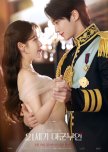
slow, predictable and dragged but it was made for an experience.
the ending was a good touch. i don't usually watch kdramas or series in general so i'm not fit to judge based on such thing. everything seemed 'too perfect'. it didn't feel genuine, but like a plastic toy resembling a human body.the characters were written precisely as if every single thing was calculated for absolute perfection. not necessarily wrong but it felt like one should pay attention to and consider every single aspect of the life yet at the same time didn't have to bother with it because the same aspect of life will be shown on it's own. it was directed to one direction only as if every atom in it was duplicated for the same intend. i didn't have to see anything as if i was told "hey, this is the only thing that happens so don't even think about anything else."
Was this review helpful to you?


