

This review may contain spoilers
just for tutoryim
plot was thin, you need to squint to see it but i watched it for tutoryim, their banter was fun, i think the most exciting part was world crossovers and jimmyohm as a couple. i dont think i'll be rewatching it as a series but as snipets and separate episodes for fun. i dont have much to say about this drama, it was fun but i wanted to stop watching it few times , it gets boring when theres not much to the plot, for some it may be perfect lazy day or comfort series but for me a series that can't keep me on the toes is tiring.Was this review helpful to you?
At Episode 11 the hook was in
Too bad there are so many early-out reviews and ratings. This is getting very interesting: the story, the characters, relationships. The confusion has lifted; I’m vested.300 characters without spoilers? Wardrobe is a star, too, especially the females.
And the Murong mother wins worst mother on the planet of all times.
Was this review helpful to you?
Really LOVE this drama ❤️
Please don't stop watching yet! Especially if you just watched it in the first 5 episode. Overdo is really very worth watching, in terms of story, ML/FL cast! Although so many complain by netizen about using AI in the intro and in the first 5 eps. (The production side has changed the intro to not AI anymore). But rest assured after the first 5 episodes everything will change! Only this drama that I can't skip because in every scene there is a key answer to all doubts.At the beginning, I also felt that this drama seemed to rush the story and not detailed, but I only understood it after the next episode. Therefore it is very worth watching. Believe me! And Zhang Linghe’s acting is really next level. His eyes can speak first before words 😍😍 Wang Churan also the best actress! Perfect combination 🙌
Was this review helpful to you?
This review may contain spoilers
This was nicer than expected
The older I get, the more I realise how bad the quality of 2020 Thai drama's actually was. Honestly, when we compare this series to other Thai series this was really not that bad. My main irritation is the colour grading and it actually quite improved through the show. At some point towards the ending I barely cared about it. Production aside, I'll try to make my review mainly about the storyline because this didn't bother me that badly. I have to say this series has amazing couples, even the side couples are good and enjoyable. It kinda felt like they were main characters to, aside from Solo and Gui.Production wise this could've been way better. The editing is really weird and I don't like the 'Kdrama' styled slowed moments. The cutting in the first few episodes is REALLY weird. If you're someone who also notices these things or cares about the editing I do not necessarily suggest to watch this series. But I can't blame them, this was 2020 after all. It's crazy how you can just see the year. I like to watch older things, so I don't mind too much. There's a few things that will probably be considered cringe nowadays, like the random ass guitar. Sometimes it just randomly appears. The music is also giving 2020 Thai Drama.
Starting of with Solo and Guitar/Gui. I really like Gui's name, just have to say that. They are extremely cute together and the high difference is killing me in some shots. I feel like Gui's backstory really lacks and although he did have some flashbacks, I still didn't feel much. I understand growing up in an orphanage is bad but it just didn't hit well. When I first saw Solo I thought he was a poor and depressed guy, but that wasn't true apparently. Actually, I just felt bad for him the whole show. His dad, the reaction his classmates had about him and even more. Am I the only one or did Gui have like zero moments showing he was in school? Like only at the last 3 episodes it even shows he studied Engineering. Same for Solo, he barely had moments about his study. How come at the last episode Solo was suddenly not at school anymore while it started with him being a Freshman? Maybe this is something that I just didn't see but he wasn't done yet right?
Gui and Solo has insane visuals and they had a LOT of chemistry. I knew Nut Supanut from other shows but Petch Chnapoom? I had never seen him before. They would've been a great pair but I don't mind them not being a pair. If I'm honest I didn't notice it was Nut playing as Solo until I looked at the casting and it made a lot of sense why I felt like I recognised him. Nut is a great actor and I hope to see more of Petch, as in Petch in solo projects. Petch was quite good in acting this series so I look forward to seeing more.
The dad of Solo irritated me so much. Like wdym it's not a big problem that Solo wants to be with Gui but Gui has to do all kinds of shit while Linda can easily be like "Let's marry next month" and get Solo. I really hate Linda, she acts jealous of the actual partner of her fiancé while she never was in a romantic relationship with Solo. She was so unnecessary dramatic. Like your fiancé already has someone else go find someone yourself girl. This whole part made me so emotional and I really felt bad for Solo. Like boy please eat? His dad fucking sucks for 'not caring'
Now one of the only side characters that I really didn't like... I don't mind Fujoshi's at all and honestly it's the same as consuming a lot of straight media. But this girl, Khim really pissed me off. It started to feel like straight up fetishising and as a gay man I just felt disgusted and weirded out by her. Where did she even get the idea from to obsess so much with other people their problems and romance lives? Anyhow, Dr Petch was really cute with Dr Perth BUT I actually hoped they didn't end up together. Mainly because Dr Petch was forced in this all and I don't like how Khim forced his sexuality. This is just something that PISSED ME OFF. AND I MEAN IT. Khim was really cute and she seemed like a genuine girl but her obsession over MLM was CRAZY. She and Dr Petch had amazing chemistry but it still weirded me out how Dr Petch got crush on her. Like she forces you to be gay yet you still like her? Hello? I also couldn't help but feel bad about Dr Perth and Khem and their feelings because they were basically 'test' subjects.
Kao and Phuri had a very slow romance and I never expected them to even share a kiss or hold hands during this show. At first it seemed like Phuri didn't even have feelings for Kao and I really suspected him being straight with the lack of interest. The interest from Kao however felt way to quick and excuse me but that was like falling in love at first sight. Not sure what I think of them aside from lacking romance. I normally like grumpy lead but this... it was maybe a bit too grumpy to my liking.
One thing about me and watching series is that I really tent to care about the ost. Sometimes even my reviews higher because of the ost's. This ost and just every single song in the show lowkey sucked. Not only was the lyrics like super cringe but it was just bad. When Solo had to sing his voice switched and it made me laugh so bad like hello? Nut can sing extremely well but My Oxygen was just a bad song. Also, if you don't understand Thai, the moments he sung it for Gui make no sense. Sure there was subtitles but the love song itself won't hit amazing. It's also just... cringe asf.
Anyways, I do like this series and some couples are adorable, some aren't. I suggest watching it and forming your own opinion of course but do keep in mind this is 2020. There is some stuff you'll have to bite through.
Was this review helpful to you?
This review may contain spoilers
Do not Watch !
I have watched probably around 30-40 K-dramas and I believe this is one of the worst. My recommendation: DO NOT WATCH for the following reasons:1) much too long: 50 episodes. There are some other long dramas like "Empress Ki" but it doesn't compare. There is so much happening in Empress Ki. Here however there are only 2 things happening:
a) in the first half of the show everybody tries to break up the main 2 characters (and they partially succeed), and I mean EVERYBODY, and in turn, not all at once: the Grandma, the 2 evil characters, the 2 mother in laws, etc. Even the FL's own mother, which is so unrealistic since she turns her back to her daughter without warning and in an unbelievable way.
b) in the second half, they give up breaking them up, but they try in every way to take the child away from them, even if there is a lawyer who confirms what we all know, that the mother almost always keeps the child. However, they constantly try stupid moves to take the child away. There is even one scene where one of the mother in law takes the FL to the evil father and forcefully tries to take the crying child from her arms and give it to him, like she would give an object. It gets tiring.
Or, apparently the natural but unmarried father can show up at a random police station, 1 year after the birth, and without any proof, without any document, and of course without the child, just with his hands in his pockets, he can legally change the child's name to his family name, even if the child was previously registered by the mother at birth. Seriously? if this was true, any person could walk in and change any other person's name just by declaring "his is my son/daughter".
2) it is NOT A FEEL GOOD drama - probably the most important aspect. In most episodes the ML and FL are so sad, crying, feeling so bad, doing stupid things against their own interest, like the FL leaving the ML and running away just 5 minutes after telling him she needs him so much, and so on. This happens all the time in the show. Even more frustrating, because in the first episode both are shown to be fighters, and the start of the show is very promising. But soon they forget about any fighting and just allow anybody to treat them like shit. The ML at some point even comes with the stupid idea to remove himself from the family register! I was fed up seeing them SUFFERING with no end in sight. At the very end, when all resolves for the best, all the other family members brag about being "such a great family who support each other", forgetting how awfully they treated the ML and FL all along the show.
3) too many [stupid] coincidences. Yes, I know TV dramas heavily depend on them , but here it is too much! There is at least a bad, unfavorable coincidence in each episode (never a good one for the ML and FL - all bad for them and good only for their enemies). For instance, the evil female character just happens to pass by in her car THE EXACT SECOND when the FL is about to be hit by a bike and so, she takes her to the hospital and then brags about "saving" her, which is of course not true. Or, in a later episode it is revealed that, in all of Korea, the missing grandson is... no other than the evil male character ! Really ? And in general, everybody is shown to be related in the most incredible way to somebody else in the show.
4) too many inconsistencies. At the beginning they decide to do an arranged marriage, which will help both of them, including the FL on her job (not to be an unwed mother), and soon they completely abandon the idea, and they only pretend to be married, which of course leaves the FL jobless and mocked by her colleagues and superiors. The Grandma starts by being the most feared head of the family, but soon nobody listens to her anymore. The ML's mother is either on the brink of being cast away from the family, only to come back as the one badmouthing and persecuting her own son. And many, many more. It's like there were more than 1 writer, who did no effort to synchronize their scripts.
In conclusion: there are so many good K-dramas, watch something else. This one is a waste of time and will just make you frustrated.
Was this review helpful to you?
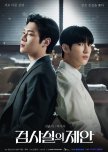
The crime is the ending
The series began with so much intrigue that it kept me glued to the screen, eagerly anticipating each new episode. It was a classic whodunit that constantly had me guessing who the real culprit was. While it lacked the intensity and suspense of a true crime drama, it’s difficult to expect that level of grit from a BL series.This was a low-production Korean series with plenty of potential. The premise was promising, but unfortunately, the writing never lived up to it. With episodes running only about 20 minutes each, the story lacked the depth needed to develop either the mystery or the characters. The romance didn’t feel natural and often seemed forced. Too many questions were raised throughout the series, only to be left unclear.
The acting, particularly by Park Si Woo, wasn’t convincing. Whether it was his performance or the director’s inability to draw out the necessary emotions, his portrayal of a broken, defenseless former police officer was difficult to believe. In contrast, Cho Min Kyu was the standout of the cast, delivering a compelling performance as the unhinged antihero.
The ending was perhaps the biggest disappointment. The obvious CGI beach scene felt completely out of place, and using handcuffs as a symbol of lifelong commitment came across as more cheesy than meaningful.
I genuinely wanted this series to succeed and found myself rooting for it from the very beginning. Sadly, despite its intriguing premise, it ended up being a missed opportunity that never fulfilled its potential.
Was this review helpful to you?
A drama that promises a lot, never delivers — and that's exactly why people watch it.
Overdo will probably be watched by a lot of people, and it will almost certainly become a hit. But I have a feeling it's the kind of drama you'll watch only once.It creates a very strange feeling: constant, relentless frustration. And that's exactly why you keep watching.
The plot moves at breakneck speed. Events unfold one after another without pause, the intrigue never lets up, and every episode is packed with action. But that's not the real issue.
The real problem is that the drama rarely gives the audience a chance to emotionally complete an important scene. You understand what has happened, but you don't have time to feel it. Just as the characters reach the point where an emotion should fully unfold, the editing cuts away and moves on.
The result is a strange effect. The story becomes a kaleidoscope in which each new scene immediately replaces the last. Some dramatic moments even begin to feel unintentionally comedic—not only because they aren't given enough time to become genuine drama, but also because of the sheer absurdity of the plot.
This is why Overdo feels so persistently frustrating. Instead of delivering emotional payoff, it keeps promising that payoff in the next scene. You keep thinking the drama is finally going to slow down, let the characters finish what they started, and allow the audience to experience the moment with them. Instead, another scene begins, another twist appears, and another wave of tension takes its place.
Perhaps that's exactly where the drama's appeal lies. Many people won't keep watching because they're emotionally satisfied, but because they're still waiting for the emotional release the drama keeps postponing.
Lin He and Wang Chu Ran will undoubtedly receive the recognition they deserve. Their performances hold your attention even when the direction doesn't allow the scenes themselves to fully breathe.
So yes, Overdo will almost certainly be a hit. People will talk about it, recommend it, and finish it. But I'm not convinced that, a week after the finale, many will remember the story itself. What may stay with them instead is the feeling of endlessly chasing an emotional payoff that never quite arrives.
Was this review helpful to you?
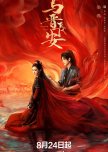
If milk and beige came together, it would be the colour of Song Yi's character in this show.
I want to say that I started watching the show with very low expectations of polish and excellence. I really just wanted to be entertained, and while the story was absolutely filled to the brim with plot holes and "wtf" moments, it was supremely entertaining for the following reasons:First, Cheng Lei being extremely s3xy in that face guard and black general uniform.
Second, Cheng Lei being extremely s3xy shirtless for as many scenes as possible.
Third, extremely tight pacing, well organized story line
Fourth, batsh!t insane Empress trope
Fifth, Cheng Lei transforming à la Sailor Moon style, my body was so ready for this. Loved every second of it.
It kept me going honestly and if you don't want tight coherency or plot rationale and you don't mind a really flaccid main couple pairing, then this is the show for you.
Which leads me to mention Song Yi. I mean, my god she is so pretty. She's adorable and lovely and she tries really hard to be badass, but she just like...ends up being milquetoast. All her martial arts scenes feel so crushingly underwhelming, that it's impossible to move past it when the fight scenes are like five minutes long and she's just been flinging arrows at extreme close range at soldiers who merely saunter over and collapse in front of her. Her only believable fight scene was when she fights Aodeng in episode 30-something and he absolutely crushes her. You can see she's really trying and he's just...so much more skilled at it.
I've only watched her in Destined, so I don't know if this is a pattern for Song Yi's acting style, but she also doesn't seem to transfer her emotions from scene to scene very well. It's like she resets every scene and starts afresh, like the grief from her previous scene is completely wiped off her face. I find the continuity of her expressions difficult to ingest because I'm never sure if she's actually recovered from the last scene or not, although that being said, she delivers her expressions well within the scene itself very well. It just...doesn't stitch together from scene to scene.
Frankly speaking, I found Cheng Lei to be MORE engaged and interesting with absolutely every other character. He had some topnotch bromance with Lu Xin. Lu was just 100% more interesting than Shuang I don't know what else is there to say. I wanted MORE of her chemistry with basically any of the male characters.
There were some really sweet moments between Shuang x Aodeng/Jin'an but instead of bittersweet or poignant, it just turned saccharine. The scene in which Aodeng visits Shuang in the shack and she smiles at him made my teeth rot. It was so adorable, but like... kinda not what I wanted or expected out of a really heavy scene? The whiplash was too much for me.
I don't know, maybe I got too hyped over Cheng Lei's string of absolutely stunning and steamy romances with a range of interesting actresses that this mid-strength romance just kind of threw me off.
Was this review helpful to you?
This review may contain spoilers
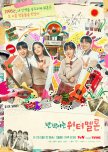
A mix between Reply 1988 and 25 21
This drama was the kind of drama that makes you feel like you are part of the friends group portrayed in the show 🥹🥹🥹 The feeling this drama gave me was similar to the feeling I had while watching Reply 1988, which is my favorite drama! The found family aspect is tearjerkingly heartwarming, the romance is tender, pure and innocent, and the fantasy is whimsical and well-thought-through ☺️In general I really like dramas set in the past, especially the 80s and 90s.
I also really loved the setting of the present in Hongdae ☺️ It made me reminisce about my trip there in summer 2024 😍😍😍
I really loved all the characters. Fake Se-Gyeong was a bit annoying sometimes at the beginning but it quickly changed to the better.
I also really liked how it ended. I had some alternative ideas in my head for how it could have ended but I really like this ending. It’s rare for me to like the actual ending of a show more than what I have envisioned 😂😂😂
The only thing that was missing was that I wished that Fake Se-Gyeong had re-opened her grandfather’s music shop Viva La Musica ☺️☺️☺️ That would have been the perfect ending… But nonetheless it was still great!
I also really liked how Cheong-Ah could resolve her relationship with her father 🥹 That was so heartwarming!
in general I laughed and cried a lot in this drama! Ie-chan and Cheong-Ah were hands down my favorite characters 😍😍😍 Their love story was just so sweet and tender 🥹🥹🥹
As for the romance between Eun-gyeol and fake Se-Gyeong I wasn’t as invested tbh 😅😅😅 But it was still nice!
And ofc since this is a music drama, the OST was amazing! Some of the sound design reminded me of American movies from the 90s and early 2000s as well. But it worked well with this drama ☺️😍😍
I can only recommend this drama!
Was this review helpful to you?
This review may contain spoilers
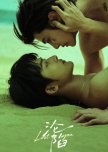
Need a Season 2 ASAP
I love the show...but the ending like WTF i hate cliff hangers...please give us a Season 2
I love the couples
i need to know the dad's history
i need to see where & how the couples develop over time
what happens to the town
do the towns people stop seeing him as a jinx
does wang get the surgery
so many unanswered question
Was this review helpful to you?
This review may contain spoilers
I was prepared to give this a 10 but wasn't prepared to be given a 7
I was expecting sooo much more from this. It's a great concept that requires several episodes and not just 10 but since this is a BL, they're allergic to that but somehow won't mind a 50-episode Kdrama.What really ruined this drama was the length. They've shortened and cut A LOT from the novel that it literally shows you how rushed it is. They did not even properly show how they proved the innocence of Chaeha's father by interviewing Pro Joo's brother. They didn't even show Chaeha and Pro Joo's date! I am so mad that they had a good material but didn't utilized it better.
As for the acting, they're fine. But I feel like Chaeha's actor could be better. He is very stiff.
Also, the reason why I don’t like watching kdramas or KBL is their cinematography. Like is Korea allergic to textured skin? Why do Korean dramas like to make the people poreless? It's giving 360 beauty filter.
I'm torn to say if this is a step up for a KBL or another let-down disguised as a step-up. Because yes, the kissing scenes here definitely on another level compared to other KBLs but on the other hand, the plot, the cinematography, the acting, and everything else are not.
Was this review helpful to you?
This IS a BL
I've read several reviews claiming that this isn't a BL, and from what I can gather it's because Johan and Ryu don't have the typical on-screen physical intimacy that we've grown used to. But, they have the same amount of on-screen sex as the straight couple: none. However, I don't see anyone denying that relationship. Johan and Ryu have emotional intimacy, they express deep care for each other, the compromise and negotiate, they make decisions based on their independent and mutual wants and needs, and they plan life events together. Without spoiling key plot points, I want to stress how sweet, loving, and understanding their relationship is. It is a beautiful story, and the lack of NC scenes does not take away from their connection.Was this review helpful to you?

Subpar, illogical and childish plot, which is very common in manhwa
The show relies entirely on a tired, cliché storyline disguised as a "secret agent dad" trope, dragging out a painfully predictable plot across its episodes. The pacing is a total snooze, relying on low-stakes tension with an outcome that will leave you wanting to fall asleep instead of watching. Why do they keep inserting unfunny comedic relief into a serious story dealing with school bullying? Also the author is reportedly a member of일베 Ilbe , a controversial South Korean online community associated with far-right politics and offensive content.Was this review helpful to you?

Great story, but lacks chemistry!
Overall this is series is a bit underrated. I admit, the first two episodes were somewhat annoying. This was due to the fact that the characters introduced were really not likable in any way. I found that two of the three protagonists just had no personality ... but Na In Woo saved this series for me. Kaya Kiyohara and Ryo Narita really didn't add too much for the entertainment, at least early on. Their characters just seemed so boring and no chemistry toward each other at all.In Woo's characters brought life to the series. And although So Ha doesn't appear to be a nice guy early on, give it time. He proves to be the most down to earth, positive guy in the story.
By the time episode 4 happens, we're introduced to some new antagonists and several sub plots to the main story. It gets so much better from that point on. As you get deep into the drama, everything really gels together, making for a pretty entertaining series. I think the only complaint late in the story would be, the fact the true antagonists really don't get the retribution they deserve. They're treated to kindly. I guess if it was a darker series, they might have seen a more harsh punishment.
All in all. it was good entertainment, and gave us an ending that was very satisfying.
Was this review helpful to you?
Can We Still Judge the Movie?
I never reviewed Real when it came out in 2017. Back then, I simply accepted it for what it was: an unusual psychological film that wouldn't appeal to everyone. Nearly ten years later, with everything surrounding Kim Soo Hyun and after reading countless comments describing it as "the worst Korean movie ever made," I decided to watch it again.What surprised me the most wasn't the movie itself. It was the reviews.
I spent some time reading opinions from different years before rewatching it. The reviews from 2017 were already divided, but most people talked about the cinematography, the confusing narrative, the symbolism, or the performances. As the years passed, especially after 2025, the discussion seemed to shift. Instead of talking about the film, many reviews focused almost entirely on Kim Soo Hyun, Sulli, or the explicit scenes. It made me wonder how many people were actually reviewing Real, and how many were reviewing the people in it.
Then I watched the movie again.
Honestly... I expected something much more explicit.
For years I had heard people describe Real as if it were one of the most shocking Korean films ever made. After finally revisiting it, I couldn't help comparing it to American and European productions I've watched over the years. Series like Queer as Folk contain scenes that are considerably more explicit, yet they rarely generated the same level of outrage. Real is certainly intended for adults, but the controversy surrounding those scenes feels far bigger than the scenes themselves.
Looking back, I still don't think Sulli deserved the criticism she received simply for accepting this role. Whether someone enjoys the film or not, actors shouldn't become the target of public anger for performing scenes that are part of the director's artistic vision.
That doesn't mean Real is a misunderstood masterpiece.
Far from it.
The film is ambitious, sometimes to its own detriment. Director Lee Sa Rang clearly wanted to create something where reality, identity and memory constantly overlap, leaving the audience unsure of what is actually happening. I appreciate films that trust viewers to think for themselves, but Real occasionally mistakes confusion for complexity. There were moments where I felt intrigued, and others where I simply wished the story would communicate its ideas more clearly.
Visually, however, I think the film deserves far more credit than it usually receives.
The neon lighting, the carefully designed sets and the dreamlike atmosphere create an identity that immediately separates Real from more conventional Korean crime films. Even when the narrative loses me, I never felt the production became lazy. Every frame looks intentional. Whether you enjoy the story or not, it's difficult to deny the amount of work that went into creating its visual style.
Kim Soo Hyun was also, in my opinion, a good casting choice.
His role demands constant shifts between confidence, vulnerability and psychological instability, and I think he handles those changes well. Ironically, after everything that's happened over the past few years, I found myself paying less attention to him than I expected.
Instead, Lee Sung Min completely stole the film.
I've admired him for years, and Real reminded me once again why. He has an incredible ability to dominate every scene without raising his voice or overacting. He isn't the kind of actor people usually describe as glamorous, yet his presence is genuinely intimidating. Every time he appeared on screen, I found myself watching him more than anyone else.
Maybe that's what makes revisiting Real in 2026 so interesting.
The film itself hasn't changed.
What has changed is the audience.
Whether consciously or not, many people now seem to approach Real carrying opinions about its actors before the opening scene even begins. I don't think that's unique to Korea, but I do think it's particularly visible here. We often separate artists from their work in Western cinema, while in Korea the public image of an actor can dramatically reshape how older projects are perceived.
Final Thought
I don't think Real deserves the reputation it has today, but I don't think it deserves to be called a masterpiece either. It's an ambitious psychological thriller with impressive visuals, solid performances and a story that sometimes becomes too complicated for its own good.
If you decide to watch it, my only advice is this: try to judge the film itself, not the headlines you've read over the past few years. Whether you end up loving it or hating it, I think that's the fairest way to experience one of Korea's most controversial films.
Was this review helpful to you?


