


Short, simple, and easy to watch—but too predictable
One thing that worked for me was that it's a very short series. Because it's so brief, many of the pacing and execution choices made sense. It felt like a short story—there were no unnecessary plot detours, the narrative is straightforward, and it doesn't waste time getting to the point or moving through key moments.Where the story fell short for me was the premise itself. At its core, it is a simple story about trying to change the course of someone's life, and I found that it leaned more predictable than surprising. The direction of the story was fairly easy to anticipate, so while I appreciated that it avoided dragging things out with endless misunderstandings or repetitive conflicts, I also felt that it lacked some of the twists or emotional discoveries that could have made it more engaging.
Had this been a longer drama, I likely would have struggled to stay invested, but the short format helped. Unfortunately, this one just wasn't a win for me.
Was this review helpful to you?
 1
1This review may contain spoilers
Familiar Story, Exceptional Execution
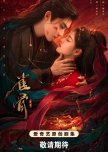
Key to the Phoenix Heart is one of those dramas that proves a familiar premise can still feel fresh when it's backed by thoughtful writing. On paper, it has everything we've seen before: an arranged marriage, a feared general, court politics, hidden identities, family conspiracies, military reform, and a love triangle. None of these ideas are particularly new, but the execution is what makes the drama stand out. Rather than relying on shocking twists or melodrama, it builds its story through strong characters, meaningful relationships, and political conflicts where every decision has lasting consequences.The story wastes very little time. Across just twenty-eight episodes, it manages to weave together military corruption, succession disputes, concealed identities, mechanical inventions, political factions, family tragedies, and revenge into one cohesive narrative. The pacing is undeniably fast, and there are moments where another two or three episodes would have allowed certain emotional scenes and political developments to breathe. Some character decisions happen rather quickly, and a few plot points are explained instead of fully explored. Even so, the story never feels incoherent. Every revelation connects back to something established earlier, alliances constantly shift for understandable reasons, and characters remain consistent with the people they have been written to be.
One of the biggest strengths of the drama is its cast of characters. There isn't a single major character who feels like they exist simply to create unnecessary misunderstandings or artificial conflict. Everyone has a purpose within the story, whether they are central to the political struggle or quietly supporting it from the background. That is something historical dramas often struggle with, but Key to the Phoenix Heart handles remarkably well.
The relationship between the three main characters was probably my favorite part of the entire drama. Instead of creating a conventional love triangle where two men simply compete for one woman's affection, the story intertwines romance with politics, loyalty, and duty. Their relationships are shaped just as much by their responsibilities and life choices as by their feelings. Every decision they make affects not only themselves but the future of everyone around them, making their dynamic far more compelling than a typical romantic rivalry.
Xiao Wuyi is undoubtedly the heart of the drama. Hou Minghao delivers one of his strongest performances to date, portraying a man feared throughout the kingdom as the infamous Demon General. Beneath that intimidating reputation, however, is someone carrying enormous grief, responsibility, and quiet compassion. He rarely asks others to understand him and almost expects to be misunderstood. Some of his strongest scenes are also his quietest, where tiny expressions reveal far more than dialogue ever could. He is ruthless when necessary, deeply loyal to those he loves, and never seeks recognition for doing the right thing. That balance makes him one of the most memorable historical male leads I've watched recently.
Jiayu was another pleasant surprise. Instead of existing solely as the general's love interest, she has genuine importance within the political narrative. Her knowledge of engineering, weapons, and military equipment gives her meaningful contributions throughout the story, allowing her to solve problems through intelligence rather than luck. She is mischievous, confident, and endlessly entertaining without ever becoming immature. Ai Mi did an excellent job bringing both warmth and determination to the role, and I was genuinely impressed by how naturally she held her own alongside a much more experienced cast.
One aspect I appreciated was how the drama handled Xiao Wuyi's two previous wives. The moment I learned he already had two wives before marrying Jiayu, I immediately assumed this would become another unnecessary harem storyline. Thankfully, that wasn't the case at all. Both women exist for very specific narrative reasons and have their own meaningful character arcs. Neither relationship is romantic, and both women become important contributors to the overall story rather than simply existing to create jealousy. It completely subverted my expectations in the best possible way.
That same level of care extends to the supporting cast. Xiao Wuyi's guards are exactly what elite military guards should be. They are competent, dependable, and never suddenly become incompetent just so the plot can happen. They protect their general, contribute to important missions, and remain valuable throughout the story. Jiayu's maid also avoids the common servant trope of constantly creating unnecessary problems. Even when she isn't central to the plot, she always serves a meaningful purpose.
The second male lead's sister also deserves special mention. She is one of those characters you constantly switch between disliking and sympathizing with. Everything she does comes from her determination to secure her brother's future, even when those choices are morally questionable. Her relationship with the Eagle King was something I genuinely wanted to see explored even further because their scenes together carried so much emotional weight.
The romance itself is probably the drama's weakest aspect, though not because it lacks chemistry. On the contrary, the leads have wonderful chemistry built on trust, admiration, and friendship. Their playful bickering is genuinely funny, and watching them slowly become each other's safe place is incredibly satisfying. I simply wish the romance had been allowed to express itself a little more openly. The emotional connection between them is beautiful, but after everything they endure together, I expected slightly stronger emotional payoff. Even so, I appreciated that their relationship was built on mutual respect rather than grand romantic gestures. Sometimes that kind of quiet companionship feels more genuine than endless declarations of love.
Visually, the drama consistently impressed me. The battle scenes looked far better than I expected given the production scale, and the opening sequence involving real fire remains one of my favorite openings in a historical drama this year. The costumes were beautiful, the cinematography maintained a cinematic quality throughout, and the soundtrack was excellent enough that I never skipped the opening credits.
I especially liked Hou Minghao's styling. The slightly curly hairstyle suited him perfectly and gave Xiao Wuyi a distinctive appearance that separated him from many other historical male leads. Ai Mi's styling, makeup, and costumes were equally beautiful and complemented her energetic personality. Ironically, the makeup department did a better job with her than with Hou Minghao, whose makeup occasionally looked heavier than necessary. The child actor portraying young Xiao Wuyi also deserves praise because he perfectly captured the emotional foundation of the character.
What ultimately stayed with me wasn't any single romance or political scheme but how well every character fit into the larger story. Nobody felt wasted. Every ally, enemy, servant, soldier, and family member had a role to play, and every storyline contributed to the bigger picture. That's one of the clearest signs of strong writing.
Overall, Key to the Phoenix Heart may begin with a predictable setup, but it transforms familiar ideas into a genuinely engaging historical drama through thoughtful execution, layered characters, and meaningful political storytelling. It isn't perfect, and the compressed pacing occasionally limits its emotional impact, but it never loses sight of its characters or the story it wants to tell. If you enjoy historical dramas driven by politics, loyalty, capable protagonists, strong friendships, and characters whose choices genuinely matter, this is absolutely worth watching.
Was this review helpful to you?
This review may contain spoilers
Calling It Just a Romance Is Far Too Narrow & A Psychological Look at the Complexity of Characters
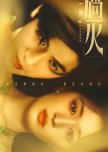
This is the first time I have written such a long review for a drama, because Overdo contains so many deep ideas that they cannot be fully explained in only one or two sentences.1. The Story Is the Drama’s Greatest Strength
The drama explores several important themes.
1) Human Trafficking, Fake Charity, and Women Helping Women
The drama shows human trafficking, fake charity in an orphanage, child abuse, and the selling of young girls.
In this part of the story, it exposes the ugly faces of so-called charity workers and wealthy people. It also shows the resistance of the children and girls who were abused, as well as the power of women helping and protecting one another.
2) The Lasting Scars Left by Family Trauma
The male and female leads both had tragic childhoods. Their past strongly affected their personalities, reasons for doing things, beliefs, values, and romantic relationships.
The effects of their emotional trauma are so complicated that I previously had to write a separate article analysing them from a psychological point of view. Anyone interested can read it on my Substack.
Some people say they cannot understand the male and female leads.
Yes, without enough life experience or a similar family background, it can be difficult to fully understand why they behave this way. This is also one of the reasons why so many people misunderstand this drama.
The drama handles the subject of family trauma very well. Unlike many dramas, it does not forgive people who do not deserve to be called parents simply for the sake of a happy ending.
Crucially, the ML refuses to pass this trauma down to the next generation. He does the hard work of healing himself.
He finally breaks free from both his adoptive father’s and his birth mother’s psychological grip, and gets to start over.
3) The Power of Goodness and Beautiful Human Feelings
The drama shows many beautiful kinds of love and care.
These include women helping one another, love and sacrifice between romantic partners, trust and support between brothers, the soldiers who are willing to risk their lives for their country, and help between strangers.
And these relationships aren’t just background — the sisterhood in the orphanage, the brothers quietly covering for each other, the strangers who step in when it matters. They land hard because the show actually earns them.
4) Love for the Country During a Time of War
This is a drama set in Republican-era China, probably around the early years of Japan’s invasion of China.
The final part of the drama is about biological warfare. Biological warfare in real history was extremely cruel. The drama has already reduced the amount of graphic content to make it easier for audiences to watch. Even so, we can still imagine the desperate situation China faced at that time.
In the drama, the second brother, Li Boze, becomes an undercover agent to destroy the “Red Pill.” He is even willing to be seen as a traitor.
One soldier after another gives up his life for the country, putting life and death aside.
The eldest brother’s lover, the female pilot Ye Zhi Hong, firmly chooses to fly her plane into the factory to destroy the red pills.
The male lead also fights the villain to the death to stop his plan.
During that time of war, countless people gave their lives in exchange for the peace we have today.
So, calling this drama nothing more than a soap opera is far too narrow and does not recognise the depth of its story.
2. All the Actors Deserve Praise
1) Zhang Linghe
This is definitely the most complicated role Zhang Linghe has played since his debut. It is also the drama in which he has had the most screen time. This drama gave him the chance to fully show his excellent acting skills.
In this drama, he has to show many different emotional states.
He shows sadness, weakness, self-mockery, and rebellion when facing his mother’s hatred.
When facing the abuse of his adoptive father, he shows obedience, fear, and a complicated emotional attachment.
He depends on and deeply respects his eldest brother.
He loves the female lead even while telling himself what he feels is hatred, and he keeps loving her anyway, fully knowing it might destroy him.
He is also gentle with his son, and saving his son becomes a way of saving the wounded child inside himself.
This character has a sharp tongue but a soft heart. He is sensitive, intelligent, and quick and firm when taking action. He is proud, bold, and unwilling to follow social rules or powerful people.
And for all that edge, he genuinely feels for the people beneath him and steps in to help them.
He sees exactly how ugly the world is and still refuses to wallow in self-pity. He just quietly puts himself back together and moves on.
2) Wang Churan
Many people dislike the FL. They believe she is selfish and that she does not truly love the male lead. But the opposite is true. She is not selfish, and she loves him deeply.
Because of her tragic past, she is afraid to express her love. In order to protect the ML, she would rather put herself in danger. That is why she hides many things from him.
From a psychological point of view, she shows a typical ‘Avoidant Attachment Style’.
It’s not that these people don’t feel things — they feel plenty. However, when a relationship becomes too close or requires too much emotional involvement, they may feel stressed. They then create distance in order to feel safe again.
The closer the other person gets and the more they want to confirm the relationship, the more they want to step back. But when the other person truly becomes distant, they may move closer again.
They may avoid commitment, keep the relationship unclear, or delay talking about the future.
Instead of directly saying, “I miss you” or “I need you,” they are more likely to show care by doing things or solving problems.
Once we understand this psychology, we can understand the female lead’s behaviour.
She also seems to have a very negative view of fate.
She believes that happiness will not last and that she is meant to be unhappy. That is why she pushes the ML away again and again.
The ML, however, is very sensitive and good at reading other people. He probably notices her unusual emotional state and her conflicting behaviour. That is why he keeps holding on to her at the edge of fate, refusing to let her fall into a deep darkness.
3) The ML’s Mother
This role is played by veteran actress Myolie Wu, and her acting is truly excellent.
At first, the character is extremely hateful. Later, she slowly becomes mentally unstable.
She is a hateful but also tragic character. Her twisted way of thinking originally came from the male lead’s biological father.
He did not love her and instead fell in love with another woman. Because of this, she became extremely obsessed. Even after his death, she continued to wear a piece of his bone, forcing him to remain with her in this disturbing way.
When the ML was only twelve years old, he risked his life to warn them about the danger.
However, his mother refused to believe him. As a result, his father did not change his travel plans the next day and was killed in an explosion.
Her huge regret, guilt, and other complicated emotions made it impossible for her to accept what had happened. She also could not admit that she had made such a serious mistake.
So for years she’s kept lying to herself and pinning the blame on the ML. As long as it was his fault, she gets to stay the poor victim.
The ML’s existence constantly reminds her of two things.
First, he reminds her of the mistake she made in the past.
Second, he reminds her that she has never fulfilled her responsibility as a mother.
Over time the ML turns into a subject she simply can’t face. The moment he shows up in front of her, she loses it.
She also shows strong narcissistic personality traits. This can be seen in the way she treats both her eldest son and her adopted son. She expects them to completely obey her and live according to her wishes.
So when the ML insists on living life his own way, she reads it as a direct threat to her authority. She can’t stand his defiance, so she belittles him constantly and even beats him.
The Supporting Cast
The other supporting actors, including the adoptive father, the two brothers, and the female supporting characters, also give excellent performances.
Every actor disappears into their role so completely that half the time it stops feeling like acting at all.
Honestly, the whole cast just clicks — nobody feels miscast, and that’s rarer than it sounds.
3. The Most Debated Parts: The Director and Editing
Finally, I want to discuss the most debated parts of the drama: the directing and editing.
I have watched Chinese dramas for twenty years. Objectively speaking, the directing and editing of Overdo are not the best I have ever seen, but they are still better than those of many other dramas.
Overall, I would say the quality is somewhere between average and very good.
Many people feel disappointed because they had already imagined a perfect final result after seeing leaked photos and videos from the filming period.
Another reason may be the success of Pursuit of Jade. Some viewers hoped that Overdo would reach the same level.
Some viewers may also have rarely watched dramas set in Republican-era China, so they are not used to a style that is different from both modern dramas and historical costume dramas.
Dramas set in Republican-era China are often filled with strong love and hatred. The story can feel like a roller coaster, with many unexpected twists, misunderstandings, and cruel turns of fate.
This drama also uses the storytelling style of a mystery drama. Of course, this style of storytelling may also make some viewers feel that the editing is too jumpy.
Many truths, clues, and memories are shown through flashbacks. Almost every episode ends with a new question or mystery, which makes the drama very addictive and makes viewers want to continue watching.
For the visual parts, the lighting in the drama is beautiful, and the costumes are also very detailed. Together, they successfully create the style and atmosphere of Republican-era China. The lighting also shows the actors’ strong facial features very well.
At first, the drama used an AI-generated opening sequence. Because it caused a lot of debate, the production company quickly replaced it with real scenes from the drama.
Ironically, Chinese dramas had already started using AI-generated opening sequences several years ago. Many recent dramas have also used them, but they did not receive the same level of public attack.
There are also two scenes in the drama that use CGI backgrounds. Although these backgrounds do not look completely real, they are still only small problems compared with the overall quality and enjoyment of the drama.
Unfortunately, negative online comments have greatly exaggerated these small problems. This has made many ordinary viewers who have not actually watched the drama believe that it is a cheap and badly made production.
Conclusion
In recent years, the stories of many Chinese dramas have become more and more similar.
Against this background, Overdo is a fresh and original drama that is difficult to stop watching once you begin.
It is also a drama that makes people think and leaves a deep impression after it ends.
Of course, everyone has different tastes. If you mainly enjoy light and relaxing romance dramas, I would not recommend a dark and heavy story like this one.
That is why judging Overdo by the standards of an ordinary romance drama is meaningless. The depth and scale of this drama go far beyond just romance.
Was this review helpful to you?
This review may contain spoilers
Blossom of POWER? It is.
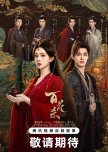
So basically this drama is only about Blossoming of power. It's got its flaws.It visually pleasing.
The osts are amazing.
BUT, The story was a bit off. I had lot of hopes for this drama. And I was pretty happy with how it started but then it went downhill mid way.... and I wish the story was stronger. The twists were good but it wasn't politically strong.
Overall fine I guess.
But for me.... the ending was sweet but i'm sorry that didn't make sense. The ending should have been stronger. Well, I know it's based on the novel... but there should be some substance for him to just come back. And I think it was bit abrupt. Everything just happened, everyone just dies, the kid comes, becomes the king and then Crown prince appears and it ends with the special episode which was kinda cute to watch but again it his whole arrival part didn't make sense.
AND AGAIN THE OSTS WERE SOOO BEAUTIFUL. I LOVED THE OSTS ESPECIALLY THE ONE SUNG BY ZHOU SHEN AND THE OTHER ONE SUNG BY ZHANG
So yea, overall an 8 or an 8.5
Was this review helpful to you?
Generational Sin, Hidden Tragedy, and a Palace Full of Wounds
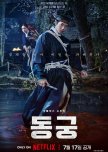
I finished The East Palace last week, and after the screen went dark, my mind kept circling back to one stubborn thought: that cursed palace felt more like a living, breathing monster than any royal residence I had ever seen.The Korean title simply calls it Donggung, the traditional residence of the crown prince during the Joseon dynasty. But the Chinese translation adds two extra characters that mean "ghost" and "mystery," and honestly, they nailed it. Because in this drama, the East Palace is not some hopeful cradle for a future king. It is a nest of vengeful spirits and a breeding ground for a curse that has festered for decades. Successive crown princes have died in bizarre ways, and the palace whispers that a vengeful spirit in the pond has sworn to wipe out the royal bloodline. The king secretly summons a ghost hunter named Gu Cheon, a man who can cross between the living and the dead, and assigns him a court lady named Saeng-gang, who can hear the voices of ghosts, to keep watch. The two distrust each other from the start, but they are forced to work together, peeling back layer after layer of a thirty-year-old court conspiracy.
To be perfectly honest, that premise alone had me hooked. Historical drama, ghosts, and sageuk court intrigue, three elements I cannot resist, all tossed into one bowl like a ramyun with double toppings. As someone who always enjoys layered storytelling and cerebral chess narratives, sageuk is my kryptonite. The East Palace promised a puzzle box wrapped in period clothing, with supernatural chills as the seasoning on top. I knew before I even pressed play that I was in for a treat.
Let us talk about the cast first. Nam Joo-hyuk returns in his first post-military role, playing Gu Cheon, an exorcist who can freely move between the human world and the spirit realm. The Nam Joo-hyuk I knew was Baek Yi-jin from Twenty-Five Twenty-One, sunny and bright, the kind of smile that could light up an entire screen. But here, he has packed away all that radiance and replaced it with a face that says, "I have seen too much life and death, and I do not have the energy to explain myself to this world." I could not help but notice how naturally Nam Joo-hyuk wears loneliness like a second skin. He is exceptionally good at hiding his pain behind that quiet, solitary exterior, letting just enough of the ache flicker through his eyes without ever spilling it outright. There is a difference between performing sadness and embodying it, and Nam Joo-hyuk clearly belongs to the latter camp.
Then there is Roh Yoon-seo as court lady Saeng-gang, and she is another revelation. To be honest, she was one of the core reasons I picked up The East Palace in the first place. I first encountered her in Our Blues, where her masterful acting gave me one of the most compelling teen pregnancy stories I had seen in a while. Then I saw her again in Crash Course in Romance, and once more, I fell in love with her acting as a student handling senior high-school pressure. There is something about Roh Yoon-seo that feels remarkably grounded; she never overacts, never reaches for cheap tears or dramatic flourishes. Instead, she lets her characters breathe.
In The East Palace, she sheds her good-girl high school image completely. Saeng-gang is no sweet, helpless heroine waiting to be rescued. She is a woman with her own schemes, her own stubborn obsession with uncovering the truth about her mother's death, and her own quiet determination to navigate a world that has never been kind to her. Born with the ability to hear the voices of the dead, she carries that curse not with melodrama but with a weary acceptance that feels deeply lived-in. The king plants her beside Gu Cheon as a spy, but she has her own agenda. Roh Yoon-seo brings a layered performance that balances vulnerability with steel; you can see the grief simmering beneath her composed surface, but you also see the sharp intelligence calculating every move. She is not just a love interest or a sidekick; she is a fully realized character.
The relationship between Gu Cheon and Saeng-gang starts with mutual suspicion, then slowly builds into trust and shared purpose, but it never rushes toward romance. Their connection is built through actions, a shared glance, a fight fought back-to-back, a sentence left unfinished. Their bond is subtle, emotional, and unspoken. And I really appreciate that The East Palace never reduces Saeng-gang to a mere sidekick female lead. There are moments where she takes point on the investigations, piecing together clues while Gu Cheon follows her lead. She is not there to simply support his journey; she has her own arc, her own ghosts to face, and her own battles to win.
And I cannot skip over Cho Seung-woo. I first encountered him in Stranger, where he played the emotionless but brilliantly perceptive prosecutor Hwang Si-mok. There is something about Cho Seung-woo that I have always found magnetic; he brings this effortless raw magnetism to every role, a kind of quiet intensity that makes it impossible to look away. That same quality is on full display in The East Palace. He plays the king, and his character carries the densest emotional weight in the entire show. His screen time is not the longest, but every scene he is in crackles with authority. This king swings between mercy and ruthlessness so deftly that you can never tell whether he is a victim or a perpetrator. Cho does not need to raise his voice to terrify you; he sits perfectly still, and a single look from him offers ten different possible interpretations. By the end, you realize that this king is both the maker and the sufferer of the curse. A character this morally complex could easily become a caricature, but Cho handles it with just the right touch.
Now, let us dive into the plot itself. The East Palace opens with a classic sageuk mystery: crown princes have been dying, one after another, over the last thirty years. What follows is a truly fascinating web of lies, tragedies, deceptions, betrayals, and redemptions that only a well-crafted sageuk can achieve. The show weaves together multiple timelines, hidden identities, and long-buried grudges with intricate care. Every character has a secret, every kind gesture hides a knife, and every whispered conversation feels like it could tip the entire kingdom off balance. I found myself constantly second-guessing my own theories, only to have the drama neatly upend them with a new revelation. It is the kind of storytelling that trusts its audience to keep up.
The conspiracy at the heart of the show stretches back generations, tying together the fates of court officials, royal concubines, and even the lowliest servants. Gu Cheon and Saeng-gang are not merely solving a supernatural mystery; they are untangling a knot of human wrongdoing so tightly wound that it has taken on a life of its own in the form of vengeful spirits. The drama balances its human drama with its ghostly elements beautifully, never letting one overshadow the other. The ghosts are always a consequence of human sin, never the cause of it.
On the audio-visual craft, is where The East Palace truly elevates itself. Director Choi Jeong-gyu makes a bold visual choice: the real world is rendered in cold, blue tones, while the spirit realm blazes in a barren red. One is cold, the other hot; one is life, the other death. The colour palette alone tells half the story. The blue of the real world feels suffocating, full of rules and pretense. The red of the ghost world is chaotic, primal, and free from the need to maintain dignity. The red, in particular, is used to denote the realm of gwi, the spirits, and it creates an unsettling contrast that makes every transition between worlds feel jarring and dangerous.
And the production team clearly did not cheapen out on the effects. The CGI is surprisingly robust, bringing the various ghostly entities to life with impressive detail. But beyond the visual effects, the sword fight choreography deserves special mention. The action sequences are truly breathtaking; they are fast, visceral, and beautifully staged, with none of that shaky-cam nonsense. Every clash of blades feels weighty and consequential. It is rare to find a drama that balances supernatural chills with such grounded, physical action, and The East Palace manages that balancing act with surprising grace.
But what truly moved me about The East Palace was not the flashy special effects. It was the core theme hidden beneath the ghost story. On the surface, this drama is about catching spirits, but underneath, it is about the human heart. The very name "East Palace" becomes a grand irony: it should be a place that nurtures a future monarch, but instead it is occupied by curses and vengeful souls. The real corruption never comes from ghosts; it comes from people. The real contamination is in the entire system of power. The most vicious characters in this show are never the snarling spectres; they are the living. The ghosts may haunt the halls, but their fury is always a reflection of something far more human. The real question the drama keeps asking is not who the ghosts are, but who made them that way.
This idea, that a curse is merely an extension of human wickedness, is not entirely new, but The East Palace wraps it in a court-mystery package and executes it with satisfying coherence. The whole story is about karma and retribution, about the sins of one generation being paid for by the next. And when the drama finally offers its resolution, it does so not with a grand exorcism, but with something far more unexpected: the king finally embracing humility, acknowledging his own humanity. That ending made me pause and think. I realised that true exorcism does not require a sword; it requires confession. Some curses persist only because no one is willing to admit they did something wrong.
Of course, the drama is not flawless. With only eight episodes, some plot points feel rushed. A few rules of the ghost world are not explained clearly enough, and I occasionally found myself confused about the logic of certain supernatural mechanics. Also, the heavy use of dark, shadowy scenes does get a bit tiring on the eyes after a while. Beyond that, The East Palace relies heavily on concepts from Korean shamanism, Buddhism, and Taoism that might not be familiar to Western audiences. The concept of Samsara is mentioned but never explained, and terms like Ak-gwi, Gwi-mae, and Won-gwi are used without translation. For those familiar with this lore, these are excellent Easter eggs; for others, it can be confusing. If you want to dig deeper, I posted a brief educational thread on my BlueSky account that you can use as a cheat sheet.
But these issues never overshadow the show's strengths. The East Palace is a work I would gladly recommend; its greatest assets are the performances, the story, and the atmospheric tension.
Lying in bed after that final episode, I thought: if the East Palace were a real place, it would not be a beautiful royal building. It would be a massive, silent wound. Those ghosts were not there for revenge, not really; they were there to remind us that every person who steps into the heart of power is walking on bricks that may be soaked in someone else's blood. Gu Cheon and Saeng-gang were just two people who wandered into that wound and tried to help it heal.
So, would I recommend The East Palace? Strongly yes, but with an asterisk. It boasts some of the best cinematography and fight scenes I have seen this year. For anyone missing a good sageuk, this is absolutely worth your time. That said, it suffers from the same tight runtime that pulled down The Art of Sarah from greatness, and unlike that show, this was clearly designed with multiple seasons in mind. That may frustrate viewers who prefer neatly wrapped endings. But even with those frustrations, I do not regret a single minute. The journey was thrilling, the characters stayed with me, and the themes of guilt and redemption resonated far deeper than I expected. If you go in knowing that not every mystery will be solved, I think you will have a wonderful time. It is not perfect, but it is ambitious, visually stunning, and emotionally rich.
And that, I think, is enough.
Was this review helpful to you?
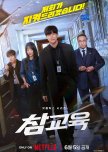
Satisfying watch!
The fact that this drama is so highly rated and so popular reveals how much we long for justice and competent leaders in a world where corruption and bureaucracy make things difficult.Obviously, some things in this show are controversial and unrealistic (beating up high schoolers or government agency having absolute immunity) but I am willing to overlook that as we all understand that it is a work of fiction.
The story is deeply unsettling and also deeply satisfying. Each episode is well crafted, with a great blend of action and emotion. It leaves you shocked, disturbed, angry before it makes you cry, hope and cheer.
The main protagonists are likeable, honourable, brave, vulnerable and quirky in their own way, which makes them belieavable. I especially liked Hwa Jin and the Minister of Education. They both have shown and immense strenght and perseverance and stayed morally upright even though they did not have to.
The main villain is masterfully written, a true psychopath with no remorse, only showing any real emotion when he doesn't get his way. The character keeps you guessing and questioning whether you read him well or not and also his story is kept unsolved until the very end, with the previous episodes only giving small clues.
In the end, everything is wrapped up well and you can finish the drama with a good, although a bittersweet feeling.
The best part, however, are the mighty SLAPS and mirror-treatment that each bully receieves. These characters are so despicable that you can't but cheer when the punishment finally comes. If only our goverments were so quick and thorough with giving out strong punishments where deserved.
The only thing I found a bit ridiculous that subtracts that one final point would be how lot of the students look so old that you cannot take them seriously as students. They oftentimes look like they're pushing 40 (and some of them are) which cheapens the story.
Otherwise, HUGE recommend!
Was this review helpful to you?
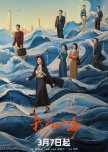
This review may contain spoilers
Bring Audiences Across the Different Era of China & Shenzhen development
I typically like romance and inspiring shows. Contemplated whether to watch it as I know that the romance but in this drama maybe limited. Also it is not a typical kind of show that I would like (older period storyline).Decided to proceed as I understand it’s Seven’s second drama with her BFF, Dong Qin and also learnt that Seven recommended her to the director as Dong Qin fits the character very well. Interestingly, I would say Yes!
All the characters acted really well in the drama, love the female lead’s foster father and mother. The upbringing and values that is so warm and welcoming. The storyline has show case to the world how females are being despised and also given away since birth (true story). The emotional expressions and actions by the female lead is very commendable - leaving the foster dad after an argument (not able to self explain and gotten hurt very deeply by the dad, also unable to face or address his dad). While some viewers, may have harshly said she is heartless… I can understand how devastated she has been, after her pillar (the foster mother) passed on and she has caused trouble to her dad. She just want to leave and not to be found anymore so that she will not burden his dad anymore and live on her own means. This show is well balanced with a lot of good actings for all - the two “sisters” in the show acted really well and carried the characters to life! Impressively that Hao Qian Qian the actress real person character it totally degree different from character!
Lots of touching moments for self reflection for me too to cherish your friends and elderly when they are still around. Was hoping that the foster father can have more time with the female lead… and not passed away. Also salute the male lead who has been supporting the female lead quietly till the end, my own interpretation is they are keeping each other as companions (even though there is no “official marriage involve) and they are happy with this kind of relationship without officially married.
At the end of most Seven Tan’s drama there is always some take aways and learnings which I enjoyed the most - relatable to cherish time with parents and love ones, inspiring for one to fight and lead a better life.
200% worth watching, if you have given up halfway, try to rewatch it again!
Was this review helpful to you?
A very gorgeous FAIL.
There is blame to be assigned for the various huge problems this drama has. I don't know how to assign that blame, so I won't even try this time.I started this, and finished this for He Yu. And as far as his contribution to this drama, he did not disappoint! He looks so hottttt ---> as usual! He has never let me down. I love his vibe and his acting and his devastating mischievous stare.
Yes the 2ML and 2FL were utterly PHENOMENAL, and if the story had been about them - and written well - this drama would have been a total blockbuster.
Costumes are incredible. Production value is high. All these things, yes they were good, it's true. BUT....
Now that that's been said, it's time to rip this drama a new a**hole like it deserves.
1) Let's talk about the first thing you'll notice when you start this drama, which is that He Yu's voice isn't actually He Yu's voice. It's a dark, dramatic, and wholly DISTRACTING voice that's basically the voice actor trying to steal the show from He Yu. In fact is ANYBODY'S voice their real voice?
Maybe you can pull this sh*t with lesser known actors. But this is HE YU, we all know his voice. We're used to it by now. This is current year, you can't just bag out on the dubbing anymore, this isn't the 90's, this isn't some lo-budget-whatever.
So I had to watch the entire thing on MUTE to even stomach watching it at all. If I had to watch with sound on, I wouldn't have made it 5 minutes before dropping.
2) It's like it was written by a college educated child. The vocaublary is there, the comprehension is there, but despite this, the writing is SO CRINGE especially during confessions. I feel nothing I'm supposed to feel. I just feel cringe at the terrible dialogue. It's like... soulless, Hallmark-ey, explicit without any poetry or nuance, artless. Honestly it sounds like AI had a hand in it, but really idk.
3) Plot holes like swiss cheese, jerky strange ways of doing plot twists that are distinctly anticlimactic.
4) FL as written is insurmountably difficult to empathize with. In fact I don't empathize with her at all, even after completing the entirety of the drama. She's cold, doesn't have a past we understand and know, and is - frankly - an ingrate.
5) The FL as acted was-- yknow I want to like this actress. I really tried. But this is the last straw for me with her. She has no microexpression game. She pastes this wide-eyed look on her face, and it's weird lookin, it just is. Her emotions are not convincing. She refuses to do a proper kiss scene, she in fact straight up RUINS kiss scenes, and I was disappointed but not surprised that she ruined every kiss scene in this show, AS USUAL. She can't cry right, she can't look in love, she can't look surprised, she can't convey genuine warmth, fear, confusion, none of it. Will legit never watch anything she stars in again, there's nothing raw or vulnerable or real about her acting at all.
6) The story is BORING. There are very few actual moving parts to the plot, and many middle episodes are like "the city flooded and now the refugees need food", episodic and resolved quickly, not moving forward the main plot at all, but only diverting from it. Getting to the end was such a slog, I lost all true enthusiasm for this show by about the one third mark and everything after that was just me hoping against hope that it would redeem itself. Which it didn't.
Do not let it's pretty packaging fool you. This drama was very pretty yes... and it was soulless. The only people I'd recc this to are He Yu fans, who want to watch "literally everything he's ever been in". I don't see anyone else actually enjoying this extremely gorgeous piece of crap.
Was this review helpful to you?
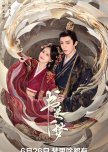
This review may contain spoilers
A Frustrating Drag Until the End
The biggest problem with this drama is how repetitive the characters' obsessions become. The second male lead is constantly obsessed with blaming the male lead for everything, no matter what happens. The female lead's trust issues are dragged out far longer than necessary, and the emperor remains fixated on believing his own son is guilty. These three repetitive conflicts make up almost 70–80% of the story.It becomes incredibly frustrating . The first 3–5 episodes were enjoyable, with some fun comedy and a promising start, but after that, the drama turns into an exhausting cycle of misunderstandings and dragged-out conflicts. It became so frustrating that I ended up watching the rest at a faster speed just to finish it.
I couldn't see any chemistry between the main couple, no matter how hard I tried. The male lead's love for the female lead was evident, but that alone wasn't enough to create convincing chemistry. A romantic relationship needs mutual emotional connection, and I just didn't feel it between them.
Throughout the entire drama, the female lead kept saying, "This is the script, this is the script," over and over again. It became so repetitive that it was incredibly annoying.
ep 37 If someone says, "We'll live together, we'll die together," the literal meaning is that they'll stand by you and fight alongside you, even if it costs their life. It doesn't mean they'll just stand there watching like the audience. If they aren't helping at all, those words become meaningless and completely illogical.
FL character is so frustrating
Was this review helpful to you?
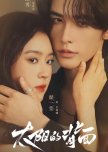
This review may contain spoilers
The drama said ‘trust me,’ and I absolutely did not
I went into this drama mostly out of curiosity, and honestly, by the end I felt like the writer must have been smoking something potent because the plot doesn’t just go off the rails—it launches itself into orbit. The entertainment value is undeniable, but the logic? Absolutely feral. The show asks you to accept that a doctor who has been mentally ill for years can just stroll back into medical practice like it’s a casual hobby, and we’re supposed to trust him with scalpels and human lives. Meanwhile, the four villains commit crimes so outrageous they should require a multi‑episode legal arc, yet the story conveniently sweeps everything under the rug as if accountability is optional in this universe. It’s fiction, sure, but even fiction usually pretends to care about consequences.And yet, despite all that chaos, I kept watching. Not because it made sense—because I wanted to see how much crazier it could get. There’s a strange charm in witnessing a drama fully surrender to its own absurdity. The pacing lurches, the emotional logic collapses, and the plot twists feel like they were generated by a malfunctioning slot machine, but the sheer audacity of it becomes its own kind of entertainment. I finished it with the same energy you have when you watch a storm from the window: fascinated, confused, mildly concerned, but unable to look away. It’s chaotic, it’s messy, it’s unbelievable—but I can’t deny it was entertaining.
Was this review helpful to you?
This review may contain spoilers
Career First Love Second
Took me awhile to pick this up to watch in yr2026. Have seen the clips on youtube but not sure why the male lead just doesn’t attract me to. Another reason is for modern shows, 40 episodes to me it’s abit too lengthy.From Seven Tan’s fan point of view, decided to proceed. Similar to some of the reviewers, it is hard not to put As Beautiful As You (ABAY) and Master Of My Own (MOMO) as comparison as they are career woman centric + romance from their “superior”. Fell in love from MOMO and Go ahead from Seven Tan’s acting actually. I would feel that MOMO story line and plot has more affirmation and convincing. However, can’t deny the CP from both in ABAY, gradually able to accept the male lead towards the middle of the show. Love how the female lead presents proves herself and her gusto into solving every obstacles that come her way. An entrepreneurial spirit that has been presented very well. Romance was sweet and very natural and the small details in having the game cards given some light touches to the romance in the drama.
Hope all has caught the special edition to this drama too and not missed out the final ended after the last episode - it is a complete wrap up with sweet endings though the male lead in the end passed away due to old age.
At the end of most Seven Tan’s drama there is always some take aways and learnings which I enjoyed the most
Was this review helpful to you?
This review may contain spoilers
The Stony Devil Strikes Again
Only the first two episodes are out so far, so it's obviously hard to tell how the show will evolve later on. So far, though, it's just like all the other time-travel Thai period pieces, including the very dramatic opening scene set in the past where someone also very dramatically falls into the water after being shot by someone we don't know yet.Then we travel to the present day, where we meet one of our protagonists, Dr. Great (lol), who is – surprise, surprise – a doctor. But we're definitely not going to talk about the medical accuracy in this show because it simply does not exist. Seriously, anyone with even basic medical knowledge should just cover their eyes and plug their ears during these scenes or suffer the consequences of the stroke that is sure to occur.
Dr. Not-So-Great loses a patient, to which there is only one completely logical response for a young doctor at the start of his career: quit immediately. Yes, of course. Silly me – what other options are there?
Thankfully, his boss refuses to accept his resignation, so Dr. Mediocre decides to drown his sorrows in a tall glass of... coffee (?) at a bar (The Stony Devil, lols again, which also happens to be an anagram of Love Destiny – gasp) he frequents. There, he saves a fortune teller from being beaten up by thugs, so obviously the fortune teller offers to tell his fortune. (You will never guess the first card.)
I do want to point out here that the fight choreography, while obviously not Bruce Lee-level, is actually pretty decent for a show like this, so that was a pleasant surprise.
Then let's rewind to the past, where we meet Dr. Great again, except here his name is Gaew and he is a total prick. He starts out as a cute, wet-eyed little orphan who is adopted into the household of another lord, jumping into the river with his adopted brothers/cousins with childlike glee, only to emerge from the water alone and as a full-blown gigantic a-hole. (Honestly, the transition scene was pretty good cinematography-wise. It was an unexpected moment of creativity from the director.)
Anyway, for reasons yet undetermined, Gaew grows up to be an arrogant and vile young man who hates Dech, one of his adopted brothers, to the point of trying to sink his boat (not personally, obviously; he has a servant for that) to get revenge for putting Gaew back in his place after some literal cockfighting fiasco. I, personally, really did not appreciate having to learn that, no, I really do not enjoy watching two cocks having a go at each other in this context. Is there no PETA in Thailand?
Anyway, it turns out that it wasn't Dech on the deck (har-har), but his mother, who falls into the river along with the servants. One of them is impaled through the leg by a log, another disappears and is presumed dead, so obviously everyone is very mad at Gaew for being so evil. So obviously they beat up... his servant.
And then the mother is still furious with Gaew, so yet again there is only one logical solution to this problem: perform a ritual that will kill Gaew if he is indeed guilty. And Gaew is very much guilty, so the ritual causes him immense pain, which he handles like the little bee he is.
And this is where I make a detour to the acting.
Oh boy, here we go again.
The acting is... happening. Sometimes. As long as there are no big feelings involved. As long as the scene doesn't require any emotional outbursts or any of the more complicated emotions like, I don't know, mild discomfort, the main leads are doing fine. But anything that requires any more skill than that (for example, dying in excruciating pain from the Thai equivalent of Avada Kedavra), the actors... well, bleed out.
Especially Jumpa, the mother, who only seems capable of delivering every single line with the exact same bitchy expression and tone, regardless of what she's actually saying.
Right, so back to the plot.
After having his fortune told, Dr. Great drives his obligatory generic expensive Asian car from point A to point B when storm clouds suddenly darken the sky above, and he gets struck by some very high-quality and completely believable CGI lightning that absolutely had every reason to be there. (Meanwhile, Gaew is being Avada Kedavra-ed in the past, so I guess there might be a connection.)
Right, sorry. I didn't take my ADHD meds today.
So Dr. Awesome wakes up in the past in Gaew's body. Everyone thinks he has gone completely insane, and they also want to drag him to the police station to answer for Gaew's crimes when news arrives that the servant who was previously impaled through the leg is doing terribly.
If only they had a doctor...
Dr. Gaew rushes over to help him, determines that he has an arterial bleed, and promptly saves this critically injured man by changing the dressing on his wound and elevating his leg.
Yup.
Because we all know that's all you need when your artery has been torn apart.
Afterwards, he no longer has to go to the police station. Dr. Gaew takes a beauty nap, wakes up hoping it was all just a bad dream, and then quickly realizes that nope, he's still in the past.
This realization causes him such distress that he almost sh!ts himself.
And yay! Yet another Thai BL that couldn't make it through a single episode without a poop joke! Isn't this awesome? Nothing smells "romance" more than a diarrhea gag that's made even better by a period-accurate loo! This is exactly what I want in my BL shows: not just any poop joke, but a whole series of poop jokes dragged out way too long.
Ha-ha, they didn't have modern toilets back then! He-he, no toilet paper either! And wouldn't it just be hilarious if this were the exact moment Dech walked in? Ooooh, it's so smelly!
(Please kill me now.)
Right. Sorry.
If you couldn't tell, I don't really find poop jokes all that funny.
To be fair, though, there are some genuinely funny gags in there as well.
Getting back on track, this is mostly what has happened so far. A few other things happen with Dr. Gaew in the past, which eventually lead to him publicly apologizing to the family for his behaviour and promising to become a better person. Since he is a doctor, he starts handing out mosquito nets and other supplies to the household servants, as well as giving them health advice and all that. But obviously Evil Stepmother cannot stand this, so she and her servant start coming up with evil schemes to teach him a lesson.
And that's where we are for now.
All in all, it's not all bad. The production seems high-budget, the locations look great, and the costumes are pretty too. (I have absolutely no idea how historically accurate they actually are, but I like them.) The fight choreography is decent as well. The main leads do a perfectly serviceable job as long as nobody expects Oscar-worthy performances from them. I'm just very easily annoyed by exaggerated facial expressions.
So... yeah.
I'm curious to see how—or if—it improves over the next few episodes.
Was this review helpful to you?

This review may contain spoilers
A Unique Story Plot
The way this drama is presented, there is a lot of flash back technics instead of presenting the story naturally from the schooling period to the adulthood story. Took abit of time to get used to it as I believe the audience have to connect the pieces from the different flash backs. It is a show to commemorate the people serving the country where are time and lives are for the country first and family second. Respectfully the show has presented the romance, family understanding of the job and the sacrifices that have to come. Still a good show in my opinion.Was this review helpful to you?

This review may contain spoilers
A drama that argues with reality and wins by sheer confidence.
This is one of those dramas where emotional logic keeps tripping over narrative convenience, but somehow the momentum carries you anyway. Jeong Jian is written like a walking contradiction—terrified kid in one scene, suddenly operating with adult-level tactical clarity in the next. It’s not her acting; it’s the script flipping her intelligence switch whenever the plot needs her to survive. And the whole “everyone wants to kill the clueless niece” setup? That’s where the frustration kicks in. If Jinman truly wanted to protect his family, maybe don’t acknowledge them so openly in a world where anonymity is survival. He practically painted a target on them, and the show knows it because it has him spiraling in guilt after their deaths. Fiction can bend reality, but this one bends it until it squeaks.The character dynamics don’t help either. Jeongmin sets off alarm bells the moment he appears with his soft smile and suspicious eagerness to help a grieving girl he barely knows. The instant he volunteered to clean the room where her uncle died, the ulterior motive practically announced itself. And then there’s Babylon—the underground mercenary organization contracted for dangerous missions—protecting Bale, a psychopath who kills for sport, while treating Jinman like a liability for having a conscience. It’s maddening, not because it’s unrealistic, but because the show frames it as normal organizational logic.
What is undeniably tight is the production. The cinematography is sharp, the action sequences are clean, and yes, the dead bodies pile up like set decorations, but the visual execution never falters. And Lee Dong Wook’s face card plus his performance do a lot of heavy lifting—he grounds the chaos, gives Jinman emotional weight, and makes the entire premise feel less absurd than it actually is. Even with an untrained girl surviving multiple assassination attempts and logic occasionally stepping out for fresh air, the drama stays entertaining. Messy, chaotic, sometimes ridiculous, but entertaining. Good enough that a season two feels not just welcome, but inevitable.
Was this review helpful to you?
This review may contain spoilers
Assault, abuse, and sexual violence cosplaying as romance
The drama starts out with an attempted forced abortion, flashes back to FL's drugged sexual encounter, and proceeds to domestic violence, workplace sexual harassment, violent assault (choking), and kidnapping a woman's children to force her compliance - and I'm not yet at the halfway point in this "romantic" drama. There's even a scene where the daughter admonishes ML for bullying her mother, but son "boysplains" to his sister that ML choking and assaulting FL is just 'kissing'. I've seen comments online where people are normalizing this and calling it "cute" and "romantic". That mindset is genuinely appalling and makes me fear for the safety of every woman and girl in China if this is the norm. The female lead should be grabbing her kids and running for their lives. Preferably to a different country.If I could have rated it less than 1.0, I would have. That this drama got written and produced and has a 7+ rating on MDL says something truly horrifying about the cultural normalization of violence against women.
Was this review helpful to you?


