

This review may contain spoilers
It was fun watching the crown prince
I really enjoyed this show. From the crown prince's coughing to the fight scenes to his shameless flirting. I normally don't like it when the male lead is a lover boy but i couldn't help but get invested in his character. Xihe started out could and i enjoyed her viciousness when dealing with people and loved her more when she fell in love. I loved the moments where the brothers showed they cared for another. I would definitely watch again but skip all the episodes prince xin isbon screen from ep 32 to 36. Jeremy played his role well.Was this review helpful to you?
visually stunning and ambitious
I wouldn't say this is the type of drama that hooks you from the beginning. Its the kind that you continue watching wondering to yourself if you are enjoying it or not. The first couple of episodes move very quickly, in fact it moves too quickly and fails to give an impactful back story to anchor the characters. Our female lead is 'reborn' into someone else's body 3 years after her death and she is able to retain her old memories and personality but also the memories of the body's previous soul. Her and the male lead meet by chance and he decides to use the very precious life saving plant he just risked his life to obtain to save this complete stranger. Later, to retrieve the rest of the plant he inserts himself in to her life and in doing so finds himself helplessly in love with her.I have so many questions that end up never being answered and the charisma of the male lead and beauty of the costumes can't make up for the consistent plot holes. What was the point of the female lead being reborn? Her family had been massacred but she took her revenge by using her life to end the perpetrators so she had no reason to hang around. Rebirth often needs fuel for the soul like revenge or desperation. Instead our female lead is just sucked back into life and her sole purpose from that point will be to obtain power. What happened to the original soul? Did the original Shen Xihe not want to live anymore? Her rebirth was used only as a plot device to make the 5th Prince crazy and that was all.
The male lead's instant love is pretty off putting in the beginning but he grows on you as the drama progresses because of the performance that the actor gives. His flamboyancy and charisma is what saves the show for me and made me complete it. Too much of defining moments are done off screen, especially in the first half where problems arise and are solved easily but done off screen. And then most of the drama felt staged making it difficult to feel immersion or much emotion. Scenes where the director obviously wanted a shot of them alone finding each other even if it makes no sense for either of them to be alone, or of sick villagers huddled under eaves of perfectly fine buildings instead of inside. There were many times where I could feel the staging and direction and it felt so unnatural that I could not connect with the drama.
Overall its a very pretty drama, it definitely feels very similar to the many other popular dramas just like this one out and is easy to watch. But it lacks a coherent plot outside of it just being a love story. We are led to believe that Xihe is brilliant and independent but then Crown Prince is actually the one doing everything for her. The Crown Prince is another sickly lead but is secretly a master martial artist and strategist. Problems are often handled with ease, certain villains are given plot armor to keep them in the story rather than actual intelligence, and the 'picture perfect' staging is often distracting.
Also I found the end to be so unsatisfying even though we were given a happy ending. It felt rushed but also unnecessary in many aspects.
**What I mean by scenes feeling staged: in the latter half we have a scene where the male lead is missing and everyone is looking for him, our female lead is with her group of guards also searching but then goes ahead on her own and happens to come across him for a picture perfect running reunion. In what world does it make sense that they would let their Crown Princess walk off alone in the dark with the Crown Prince having been kidnapped and the 5th Prince returned injured? There are many times when this kind of thing occurs and once you notice it, it reminds you that you are watching a story.
Was this review helpful to you?
This review may contain spoilers
The classic rise to power historical Chinese drama
Do not let the 70 episode catalog turn you off, each episode is simply unskippable. It's such a monumental feat to produce such a long drama that is so engaging that not one of the episodes lag.Ultimately, it is a tale of a sister's love. From the FL's intention to avenge her murdered sister to her growing relationship with the frail empress, her motivations are actually selfless. She's ruthless and manipulative but when she bears her heart, we can't help but emphasize with her loss and pain. She's one the of best manipulators I have seen on screen. Always thinking five steps ahead and having backup plans A-Z, it's so satisfying to see an unapologetic FL who's unafraid to be the villain.
Contrary to popular option, I do not believe the second ML should've been the one who ended up with her nor do I believe the Emperor should either. Let's be honest here, neither of them were able to handle her. She literally had them eating out of the palm of her hand. She's such a girl boss, I love her.
Yanxi Palace is THE Chinese historical drama. You can't call yourself a true Cdrama fan if you have not watched this.
Was this review helpful to you?
Sweet and Sour
Carino. Oggettivamente non ho di per se molto da dire, però ho apprezzato molto questa serie per la particolarità della base. Il nostro cuoco ha un'indea di base e da li si comincia a creare un piatto. Insomma un concept originale. Ovviamente credo che la mia puntata preferita sia stata la puntata 4 dove per una volta le cose non vanno come dovrebbero andare e ovviamente succedono davanti ad una persona che forse è stato l'ospite più importante di tutta la stagione. Ma anche se non tutte le ciambelle non escono con il buco, questo non vuole dire che tutte le altre avranno problemi. E infatti tutte le altre ricette usciranno sempre perfette, da alcune combinazione molto strane a dei grandi classici. Per ricordarci che alla fine dei conti la cucina è anche questo, sperimentare con quello che capita e con gli ingredienti (più o meno ricercati) che capitano.Was this review helpful to you?
Sweet university love story
This is a sweet love story during university years. Not much drama which makes it a fun and light series. I liked both main leads and of couse they are cute together. The music is surprisingly very good. What I like most is that there is a twist closer to the end of the series, and also no jealous drama which ofter happens in C-dramas.Was this review helpful to you?
A compelling look at trauma that left me conflicted
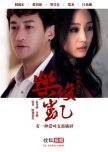
Trigger warning for mention of DV.The script didn’t fully land for me, but the psychological depth was compelling. The twist added another layer of heaviness to the story. What kept me watching was how complex the situations were. The emotions didn't feel simple or straightforward because the characters were often dealing with deeply flawed choices and circumstances.
The way the situations unfolded and the decisions the characters made were messy and, at times, difficult to understand—but people themselves can be messy and contradictory. The trauma and cycles of harm experienced by the characters, including the dynamic of someone being a source of pain and someone who has also been hurt, gave the story a raw emotional weight.
That complexity is what gave the performances their intensity and allowed the drama to explore difficult themes. However, where the drama lost me was in the way it sometimes approached DV. In certain moments, it felt like the story romanticized aspects of the situation or offered a resolution that was cleaner and more forgiving than the subject matter warranted. I don’t believe it’s my place to judge the choices of those involved in these circumstances, but while the drama did shine a harsh light on a difficult topic, I felt it occasionally softened the reality of it in a way that weakened its impact.
Was this review helpful to you?
Could have been perfect, if only...
Amazing show! I was hooked all along. Very nice chemistry between the leads, He Yu's acting blew me away in this show. Sweet supporting casts we lowkey get attached too, consistent characters and story from beginning to end. The drama is really great and get you addicted quite quickly. There is only 2 reasons why I can't give it a perfect score.First, the push and pull between the leads lasted to long, because of that it went from being fun and cute to just ridiculous. Why are we making a "badass" female lead who is not scared to appear ruthless and was married to a man she didn't even like in her previous life she remembers well some type of reluctant prude virgin who always need to be almost coerced and forced to display any type of affection towards the husband SHE CHOSE, fell in love with and is clearly into? Sounds out of character for such an audacious woman. And don't tell me it's because it's an historical, they have no issue when the display of affection is done by the supporting cast even though they exist in the same era as ther leads so...
Second, the ending with too many unanswered questions. It's way too much and the special episode doesn't cover anything at all ! That is a huge miss. I hate to end a show with a ton of questions!
The show remains very enjoyable despite this, a must-see and one of the best show of 2026 for me because I felt like a lot of things have been done right and we had some nice plot twist. 😊
Was this review helpful to you?
This review may contain spoilers
Lackluster, imbalanced military romance
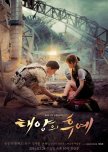
Yeah, I just don't understand the hype. A military, hierarchical-type romance that is centered on the damsel-in-distress trope is just not my cup of tea.It was just boring. The romance is cliche and the plot felt like going through the motions. I felt no love for any of the characters. I had no one to root for since I sensed no chemistry with is crazy because the actors ended up getting married. Maybe I'm biased because I'm coming from cinematic 2016 masterpieces such as Goblin and Scarlet Heart-Ryeo.
The stakes just didn't feel high. It was like watching a play. I can literally see the actors act as the characters. I wasn't immersed. I didn't feel the love.
Was this review helpful to you?
This review may contain spoilers
It got boring due to many filler content
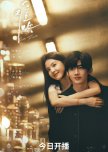
First of all to start off, I didnt really like the main characters. The female lead was very weak and ran off elsewhere instead of communicating with the male lead for once. She had her reasons during the first time since she was very young, but wdym ur going away to protect the ML during the second time also?? Like ur the person who needs protection not the ML. I really hate this self-sacrificing nature of characters. Sometimes u need to be a bit selfish.And the ML, he was a stalker basically. In the last 2 episodes this hypothesis was cemented coz wdym he went around following her everywhere even in yihe when the FL clearly told she didnt want to see him?? Even during the school days he was relentlessly following her around everywhere even when she asked him to stop multiple times. STALKER PRO MAX. And some of the dialogue in this drama is so unrealistic but hey thats why its fiction lol. Anyway I was struggling to finish after like EP 21. WOuld not rewatch but the music in this drama is so so amazing, they are in my favourites.
Was this review helpful to you?
This review may contain spoilers
Typical cliche drama
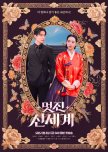
Id give it a 5/10, playing into the old cliches again and again. The ML is a red flag, someone who cannot take no for an answer and does not respect her career. As an actress there are some scenes you might need to act...? He is using his money to change the plot of the dramas she acts in. When was this shit cute?Even more than the ML, the FL is annoying. Wdym ur sacrificing urself for the ML?? Didnt u say the point of ur rebirth was to put urself first??? Ik ppl can be blind when it comes to love but this is pure stupidity lol. And wdym when the ML said again and again not to listen to his cousin u still go and meet the cousin in an isolated area, like bruh cmon that is dangerous. The last few episodes has a lot of unnecessary parts about the grandma it was so boring.
Was this review helpful to you?

Short, simple, and easy to watch—but too predictable
One thing that worked for me was that it's a very short series. Because it's so brief, many of the pacing and execution choices made sense. It felt like a short story—there were no unnecessary plot detours, the narrative is straightforward, and it doesn't waste time getting to the point or moving through key moments.Where the story fell short for me was the premise itself. At its core, it is a simple story about trying to change the course of someone's life, and I found that it leaned more predictable than surprising. The direction of the story was fairly easy to anticipate, so while I appreciated that it avoided dragging things out with endless misunderstandings or repetitive conflicts, I also felt that it lacked some of the twists or emotional discoveries that could have made it more engaging.
Had this been a longer drama, I likely would have struggled to stay invested, but the short format helped. Unfortunately, this one just wasn't a win for me.
Was this review helpful to you?
 1
1This review may contain spoilers
Familiar Story, Exceptional Execution
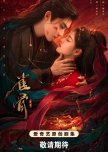
Key to the Phoenix Heart is one of those dramas that proves a familiar premise can still feel fresh when it's backed by thoughtful writing. On paper, it has everything we've seen before: an arranged marriage, a feared general, court politics, hidden identities, family conspiracies, military reform, and a love triangle. None of these ideas are particularly new, but the execution is what makes the drama stand out. Rather than relying on shocking twists or melodrama, it builds its story through strong characters, meaningful relationships, and political conflicts where every decision has lasting consequences.The story wastes very little time. Across just twenty-eight episodes, it manages to weave together military corruption, succession disputes, concealed identities, mechanical inventions, political factions, family tragedies, and revenge into one cohesive narrative. The pacing is undeniably fast, and there are moments where another two or three episodes would have allowed certain emotional scenes and political developments to breathe. Some character decisions happen rather quickly, and a few plot points are explained instead of fully explored. Even so, the story never feels incoherent. Every revelation connects back to something established earlier, alliances constantly shift for understandable reasons, and characters remain consistent with the people they have been written to be.
One of the biggest strengths of the drama is its cast of characters. There isn't a single major character who feels like they exist simply to create unnecessary misunderstandings or artificial conflict. Everyone has a purpose within the story, whether they are central to the political struggle or quietly supporting it from the background. That is something historical dramas often struggle with, but Key to the Phoenix Heart handles remarkably well.
The relationship between the three main characters was probably my favorite part of the entire drama. Instead of creating a conventional love triangle where two men simply compete for one woman's affection, the story intertwines romance with politics, loyalty, and duty. Their relationships are shaped just as much by their responsibilities and life choices as by their feelings. Every decision they make affects not only themselves but the future of everyone around them, making their dynamic far more compelling than a typical romantic rivalry.
Xiao Wuyi is undoubtedly the heart of the drama. Hou Minghao delivers one of his strongest performances to date, portraying a man feared throughout the kingdom as the infamous Demon General. Beneath that intimidating reputation, however, is someone carrying enormous grief, responsibility, and quiet compassion. He rarely asks others to understand him and almost expects to be misunderstood. Some of his strongest scenes are also his quietest, where tiny expressions reveal far more than dialogue ever could. He is ruthless when necessary, deeply loyal to those he loves, and never seeks recognition for doing the right thing. That balance makes him one of the most memorable historical male leads I've watched recently.
Jiayu was another pleasant surprise. Instead of existing solely as the general's love interest, she has genuine importance within the political narrative. Her knowledge of engineering, weapons, and military equipment gives her meaningful contributions throughout the story, allowing her to solve problems through intelligence rather than luck. She is mischievous, confident, and endlessly entertaining without ever becoming immature. Ai Mi did an excellent job bringing both warmth and determination to the role, and I was genuinely impressed by how naturally she held her own alongside a much more experienced cast.
One aspect I appreciated was how the drama handled Xiao Wuyi's two previous wives. The moment I learned he already had two wives before marrying Jiayu, I immediately assumed this would become another unnecessary harem storyline. Thankfully, that wasn't the case at all. Both women exist for very specific narrative reasons and have their own meaningful character arcs. Neither relationship is romantic, and both women become important contributors to the overall story rather than simply existing to create jealousy. It completely subverted my expectations in the best possible way.
That same level of care extends to the supporting cast. Xiao Wuyi's guards are exactly what elite military guards should be. They are competent, dependable, and never suddenly become incompetent just so the plot can happen. They protect their general, contribute to important missions, and remain valuable throughout the story. Jiayu's maid also avoids the common servant trope of constantly creating unnecessary problems. Even when she isn't central to the plot, she always serves a meaningful purpose.
The second male lead's sister also deserves special mention. She is one of those characters you constantly switch between disliking and sympathizing with. Everything she does comes from her determination to secure her brother's future, even when those choices are morally questionable. Her relationship with the Eagle King was something I genuinely wanted to see explored even further because their scenes together carried so much emotional weight.
The romance itself is probably the drama's weakest aspect, though not because it lacks chemistry. On the contrary, the leads have wonderful chemistry built on trust, admiration, and friendship. Their playful bickering is genuinely funny, and watching them slowly become each other's safe place is incredibly satisfying. I simply wish the romance had been allowed to express itself a little more openly. The emotional connection between them is beautiful, but after everything they endure together, I expected slightly stronger emotional payoff. Even so, I appreciated that their relationship was built on mutual respect rather than grand romantic gestures. Sometimes that kind of quiet companionship feels more genuine than endless declarations of love.
Visually, the drama consistently impressed me. The battle scenes looked far better than I expected given the production scale, and the opening sequence involving real fire remains one of my favorite openings in a historical drama this year. The costumes were beautiful, the cinematography maintained a cinematic quality throughout, and the soundtrack was excellent enough that I never skipped the opening credits.
I especially liked Hou Minghao's styling. The slightly curly hairstyle suited him perfectly and gave Xiao Wuyi a distinctive appearance that separated him from many other historical male leads. Ai Mi's styling, makeup, and costumes were equally beautiful and complemented her energetic personality. Ironically, the makeup department did a better job with her than with Hou Minghao, whose makeup occasionally looked heavier than necessary. The child actor portraying young Xiao Wuyi also deserves praise because he perfectly captured the emotional foundation of the character.
What ultimately stayed with me wasn't any single romance or political scheme but how well every character fit into the larger story. Nobody felt wasted. Every ally, enemy, servant, soldier, and family member had a role to play, and every storyline contributed to the bigger picture. That's one of the clearest signs of strong writing.
Overall, Key to the Phoenix Heart may begin with a predictable setup, but it transforms familiar ideas into a genuinely engaging historical drama through thoughtful execution, layered characters, and meaningful political storytelling. It isn't perfect, and the compressed pacing occasionally limits its emotional impact, but it never loses sight of its characters or the story it wants to tell. If you enjoy historical dramas driven by politics, loyalty, capable protagonists, strong friendships, and characters whose choices genuinely matter, this is absolutely worth watching.
Was this review helpful to you?
This review may contain spoilers
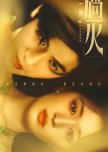
Calling It Just a Romance Is Far Too Narrow & A Psychological Look at the Complexity of Characters
This is the first time I have written such a long review for a drama, because Overdo contains so many deep ideas that they cannot be fully explained in only one or two sentences.1. The Story Is the Drama’s Greatest Strength
The drama explores several important themes.
1) Human Trafficking, Fake Charity, and Women Helping Women
The drama shows human trafficking, fake charity in an orphanage, child abuse, and the selling of young girls.
In this part of the story, it exposes the ugly faces of so-called charity workers and wealthy people. It also shows the resistance of the children and girls who were abused, as well as the power of women helping and protecting one another.
2) The Lasting Scars Left by Family Trauma
The male and female leads both had tragic childhoods. Their past strongly affected their personalities, reasons for doing things, beliefs, values, and romantic relationships.
The effects of their emotional trauma are so complicated that I previously had to write a separate article analysing them from a psychological point of view. Anyone interested can read it on my Substack.
Some people say they cannot understand the male and female leads.
Yes, without enough life experience or a similar family background, it can be difficult to fully understand why they behave this way. This is also one of the reasons why so many people misunderstand this drama.
The drama handles the subject of family trauma very well. Unlike many dramas, it does not forgive people who do not deserve to be called parents simply for the sake of a happy ending.
Crucially, the ML refuses to pass this trauma down to the next generation. He does the hard work of healing himself.
He finally breaks free from both his adoptive father’s and his birth mother’s psychological grip, and gets to start over.
3) The Power of Goodness and Beautiful Human Feelings
The drama shows many beautiful kinds of love and care.
These include women helping one another, love and sacrifice between romantic partners, trust and support between brothers, the soldiers who are willing to risk their lives for their country, and help between strangers.
And these relationships aren’t just background — the sisterhood in the orphanage, the brothers quietly covering for each other, the strangers who step in when it matters. They land hard because the show actually earns them.
4) Love for the Country During a Time of War
This is a drama set in Republican-era China, probably around the early years of Japan’s invasion of China.
The final part of the drama is about biological warfare. Biological warfare in real history was extremely cruel. The drama has already reduced the amount of graphic content to make it easier for audiences to watch. Even so, we can still imagine the desperate situation China faced at that time.
In the drama, the second brother, Li Boze, becomes an undercover agent to destroy the “Red Pill.” He is even willing to be seen as a traitor.
One soldier after another gives up his life for the country, putting life and death aside.
The eldest brother’s lover, the female pilot Ye Zhi Hong, firmly chooses to fly her plane into the factory to destroy the red pills.
The male lead also fights the villain to the death to stop his plan.
During that time of war, countless people gave their lives in exchange for the peace we have today.
So, calling this drama nothing more than a soap opera is far too narrow and does not recognise the depth of its story.
2. All the Actors Deserve Praise
1) Zhang Linghe
This is definitely the most complicated role Zhang Linghe has played since his debut. It is also the drama in which he has had the most screen time. This drama gave him the chance to fully show his excellent acting skills.
In this drama, he has to show many different emotional states.
He shows sadness, weakness, self-mockery, and rebellion when facing his mother’s hatred.
When facing the abuse of his adoptive father, he shows obedience, fear, and a complicated emotional attachment.
He depends on and deeply respects his eldest brother.
He loves the female lead even while telling himself what he feels is hatred, and he keeps loving her anyway, fully knowing it might destroy him.
He is also gentle with his son, and saving his son becomes a way of saving the wounded child inside himself.
This character has a sharp tongue but a soft heart. He is sensitive, intelligent, and quick and firm when taking action. He is proud, bold, and unwilling to follow social rules or powerful people.
And for all that edge, he genuinely feels for the people beneath him and steps in to help them.
He sees exactly how ugly the world is and still refuses to wallow in self-pity. He just quietly puts himself back together and moves on.
2) Wang Churan
Many people dislike the FL. They believe she is selfish and that she does not truly love the male lead. But the opposite is true. She is not selfish, and she loves him deeply.
Because of her tragic past, she is afraid to express her love. In order to protect the ML, she would rather put herself in danger. That is why she hides many things from him.
From a psychological point of view, she shows a typical ‘Avoidant Attachment Style’.
It’s not that these people don’t feel things — they feel plenty. However, when a relationship becomes too close or requires too much emotional involvement, they may feel stressed. They then create distance in order to feel safe again.
The closer the other person gets and the more they want to confirm the relationship, the more they want to step back. But when the other person truly becomes distant, they may move closer again.
They may avoid commitment, keep the relationship unclear, or delay talking about the future.
Instead of directly saying, “I miss you” or “I need you,” they are more likely to show care by doing things or solving problems.
Once we understand this psychology, we can understand the female lead’s behaviour.
She also seems to have a very negative view of fate.
She believes that happiness will not last and that she is meant to be unhappy. That is why she pushes the ML away again and again.
The ML, however, is very sensitive and good at reading other people. He probably notices her unusual emotional state and her conflicting behaviour. That is why he keeps holding on to her at the edge of fate, refusing to let her fall into a deep darkness.
3) The ML’s Mother
This role is played by veteran actress Myolie Wu, and her acting is truly excellent.
At first, the character is extremely hateful. Later, she slowly becomes mentally unstable.
She is a hateful but also tragic character. Her twisted way of thinking originally came from the male lead’s biological father.
He did not love her and instead fell in love with another woman. Because of this, she became extremely obsessed. Even after his death, she continued to wear a piece of his bone, forcing him to remain with her in this disturbing way.
When the ML was only twelve years old, he risked his life to warn them about the danger.
However, his mother refused to believe him. As a result, his father did not change his travel plans the next day and was killed in an explosion.
Her huge regret, guilt, and other complicated emotions made it impossible for her to accept what had happened. She also could not admit that she had made such a serious mistake.
So for years she’s kept lying to herself and pinning the blame on the ML. As long as it was his fault, she gets to stay the poor victim.
The ML’s existence constantly reminds her of two things.
First, he reminds her of the mistake she made in the past.
Second, he reminds her that she has never fulfilled her responsibility as a mother.
Over time the ML turns into a subject she simply can’t face. The moment he shows up in front of her, she loses it.
She also shows strong narcissistic personality traits. This can be seen in the way she treats both her eldest son and her adopted son. She expects them to completely obey her and live according to her wishes.
So when the ML insists on living life his own way, she reads it as a direct threat to her authority. She can’t stand his defiance, so she belittles him constantly and even beats him.
The Supporting Cast
The other supporting actors, including the adoptive father, the two brothers, and the female supporting characters, also give excellent performances.
Every actor disappears into their role so completely that half the time it stops feeling like acting at all.
Honestly, the whole cast just clicks — nobody feels miscast, and that’s rarer than it sounds.
3. The Most Debated Parts: The Director and Editing
Finally, I want to discuss the most debated parts of the drama: the directing and editing.
I have watched Chinese dramas for twenty years. Objectively speaking, the directing and editing of Overdo are not the best I have ever seen, but they are still better than those of many other dramas.
Overall, I would say the quality is somewhere between average and very good.
Many people feel disappointed because they had already imagined a perfect final result after seeing leaked photos and videos from the filming period.
Another reason may be the success of Pursuit of Jade. Some viewers hoped that Overdo would reach the same level.
Some viewers may also have rarely watched dramas set in Republican-era China, so they are not used to a style that is different from both modern dramas and historical costume dramas.
Dramas set in Republican-era China are often filled with strong love and hatred. The story can feel like a roller coaster, with many unexpected twists, misunderstandings, and cruel turns of fate.
This drama also uses the storytelling style of a mystery drama. Of course, this style of storytelling may also make some viewers feel that the editing is too jumpy.
Many truths, clues, and memories are shown through flashbacks. Almost every episode ends with a new question or mystery, which makes the drama very addictive and makes viewers want to continue watching.
For the visual parts, the lighting in the drama is beautiful, and the costumes are also very detailed. Together, they successfully create the style and atmosphere of Republican-era China. The lighting also shows the actors’ strong facial features very well.
At first, the drama used an AI-generated opening sequence. Because it caused a lot of debate, the production company quickly replaced it with real scenes from the drama.
Ironically, Chinese dramas had already started using AI-generated opening sequences several years ago. Many recent dramas have also used them, but they did not receive the same level of public attack.
There are also two scenes in the drama that use CGI backgrounds. Although these backgrounds do not look completely real, they are still only small problems compared with the overall quality and enjoyment of the drama.
Unfortunately, negative online comments have greatly exaggerated these small problems. This has made many ordinary viewers who have not actually watched the drama believe that it is a cheap and badly made production.
Conclusion
In recent years, the stories of many Chinese dramas have become more and more similar.
Against this background, Overdo is a fresh and original drama that is difficult to stop watching once you begin.
It is also a drama that makes people think and leaves a deep impression after it ends.
Of course, everyone has different tastes. If you mainly enjoy light and relaxing romance dramas, I would not recommend a dark and heavy story like this one.
That is why judging Overdo by the standards of an ordinary romance drama is meaningless. The depth and scale of this drama go far beyond just romance.
Was this review helpful to you?
This review may contain spoilers
Blossom of POWER? It is.
So basically this drama is only about Blossoming of power. It's got its flaws.It visually pleasing.
The osts are amazing.
BUT, The story was a bit off. I had lot of hopes for this drama. And I was pretty happy with how it started but then it went downhill mid way.... and I wish the story was stronger. The twists were good but it wasn't politically strong.
Overall fine I guess.
But for me.... the ending was sweet but i'm sorry that didn't make sense. The ending should have been stronger. Well, I know it's based on the novel... but there should be some substance for him to just come back. And I think it was bit abrupt. Everything just happened, everyone just dies, the kid comes, becomes the king and then Crown prince appears and it ends with the special episode which was kinda cute to watch but again it his whole arrival part didn't make sense.
AND AGAIN THE OSTS WERE SOOO BEAUTIFUL. I LOVED THE OSTS ESPECIALLY THE ONE SUNG BY ZHOU SHEN AND THE OTHER ONE SUNG BY ZHANG
So yea, overall an 8 or an 8.5
Was this review helpful to you?
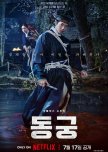
Generational Sin, Hidden Tragedy, and a Palace Full of Wounds
I finished The East Palace last week, and after the screen went dark, my mind kept circling back to one stubborn thought: that cursed palace felt more like a living, breathing monster than any royal residence I had ever seen.The Korean title simply calls it Donggung, the traditional residence of the crown prince during the Joseon dynasty. But the Chinese translation adds two extra characters that mean "ghost" and "mystery," and honestly, they nailed it. Because in this drama, the East Palace is not some hopeful cradle for a future king. It is a nest of vengeful spirits and a breeding ground for a curse that has festered for decades. Successive crown princes have died in bizarre ways, and the palace whispers that a vengeful spirit in the pond has sworn to wipe out the royal bloodline. The king secretly summons a ghost hunter named Gu Cheon, a man who can cross between the living and the dead, and assigns him a court lady named Saeng-gang, who can hear the voices of ghosts, to keep watch. The two distrust each other from the start, but they are forced to work together, peeling back layer after layer of a thirty-year-old court conspiracy.
To be perfectly honest, that premise alone had me hooked. Historical drama, ghosts, and sageuk court intrigue, three elements I cannot resist, all tossed into one bowl like a ramyun with double toppings. As someone who always enjoys layered storytelling and cerebral chess narratives, sageuk is my kryptonite. The East Palace promised a puzzle box wrapped in period clothing, with supernatural chills as the seasoning on top. I knew before I even pressed play that I was in for a treat.
Let us talk about the cast first. Nam Joo-hyuk returns in his first post-military role, playing Gu Cheon, an exorcist who can freely move between the human world and the spirit realm. The Nam Joo-hyuk I knew was Baek Yi-jin from Twenty-Five Twenty-One, sunny and bright, the kind of smile that could light up an entire screen. But here, he has packed away all that radiance and replaced it with a face that says, "I have seen too much life and death, and I do not have the energy to explain myself to this world." I could not help but notice how naturally Nam Joo-hyuk wears loneliness like a second skin. He is exceptionally good at hiding his pain behind that quiet, solitary exterior, letting just enough of the ache flicker through his eyes without ever spilling it outright. There is a difference between performing sadness and embodying it, and Nam Joo-hyuk clearly belongs to the latter camp.
Then there is Roh Yoon-seo as court lady Saeng-gang, and she is another revelation. To be honest, she was one of the core reasons I picked up The East Palace in the first place. I first encountered her in Our Blues, where her masterful acting gave me one of the most compelling teen pregnancy stories I had seen in a while. Then I saw her again in Crash Course in Romance, and once more, I fell in love with her acting as a student handling senior high-school pressure. There is something about Roh Yoon-seo that feels remarkably grounded; she never overacts, never reaches for cheap tears or dramatic flourishes. Instead, she lets her characters breathe.
In The East Palace, she sheds her good-girl high school image completely. Saeng-gang is no sweet, helpless heroine waiting to be rescued. She is a woman with her own schemes, her own stubborn obsession with uncovering the truth about her mother's death, and her own quiet determination to navigate a world that has never been kind to her. Born with the ability to hear the voices of the dead, she carries that curse not with melodrama but with a weary acceptance that feels deeply lived-in. The king plants her beside Gu Cheon as a spy, but she has her own agenda. Roh Yoon-seo brings a layered performance that balances vulnerability with steel; you can see the grief simmering beneath her composed surface, but you also see the sharp intelligence calculating every move. She is not just a love interest or a sidekick; she is a fully realized character.
The relationship between Gu Cheon and Saeng-gang starts with mutual suspicion, then slowly builds into trust and shared purpose, but it never rushes toward romance. Their connection is built through actions, a shared glance, a fight fought back-to-back, a sentence left unfinished. Their bond is subtle, emotional, and unspoken. And I really appreciate that The East Palace never reduces Saeng-gang to a mere sidekick female lead. There are moments where she takes point on the investigations, piecing together clues while Gu Cheon follows her lead. She is not there to simply support his journey; she has her own arc, her own ghosts to face, and her own battles to win.
And I cannot skip over Cho Seung-woo. I first encountered him in Stranger, where he played the emotionless but brilliantly perceptive prosecutor Hwang Si-mok. There is something about Cho Seung-woo that I have always found magnetic; he brings this effortless raw magnetism to every role, a kind of quiet intensity that makes it impossible to look away. That same quality is on full display in The East Palace. He plays the king, and his character carries the densest emotional weight in the entire show. His screen time is not the longest, but every scene he is in crackles with authority. This king swings between mercy and ruthlessness so deftly that you can never tell whether he is a victim or a perpetrator. Cho does not need to raise his voice to terrify you; he sits perfectly still, and a single look from him offers ten different possible interpretations. By the end, you realize that this king is both the maker and the sufferer of the curse. A character this morally complex could easily become a caricature, but Cho handles it with just the right touch.
Now, let us dive into the plot itself. The East Palace opens with a classic sageuk mystery: crown princes have been dying, one after another, over the last thirty years. What follows is a truly fascinating web of lies, tragedies, deceptions, betrayals, and redemptions that only a well-crafted sageuk can achieve. The show weaves together multiple timelines, hidden identities, and long-buried grudges with intricate care. Every character has a secret, every kind gesture hides a knife, and every whispered conversation feels like it could tip the entire kingdom off balance. I found myself constantly second-guessing my own theories, only to have the drama neatly upend them with a new revelation. It is the kind of storytelling that trusts its audience to keep up.
The conspiracy at the heart of the show stretches back generations, tying together the fates of court officials, royal concubines, and even the lowliest servants. Gu Cheon and Saeng-gang are not merely solving a supernatural mystery; they are untangling a knot of human wrongdoing so tightly wound that it has taken on a life of its own in the form of vengeful spirits. The drama balances its human drama with its ghostly elements beautifully, never letting one overshadow the other. The ghosts are always a consequence of human sin, never the cause of it.
On the audio-visual craft, is where The East Palace truly elevates itself. Director Choi Jeong-gyu makes a bold visual choice: the real world is rendered in cold, blue tones, while the spirit realm blazes in a barren red. One is cold, the other hot; one is life, the other death. The colour palette alone tells half the story. The blue of the real world feels suffocating, full of rules and pretense. The red of the ghost world is chaotic, primal, and free from the need to maintain dignity. The red, in particular, is used to denote the realm of gwi, the spirits, and it creates an unsettling contrast that makes every transition between worlds feel jarring and dangerous.
And the production team clearly did not cheapen out on the effects. The CGI is surprisingly robust, bringing the various ghostly entities to life with impressive detail. But beyond the visual effects, the sword fight choreography deserves special mention. The action sequences are truly breathtaking; they are fast, visceral, and beautifully staged, with none of that shaky-cam nonsense. Every clash of blades feels weighty and consequential. It is rare to find a drama that balances supernatural chills with such grounded, physical action, and The East Palace manages that balancing act with surprising grace.
But what truly moved me about The East Palace was not the flashy special effects. It was the core theme hidden beneath the ghost story. On the surface, this drama is about catching spirits, but underneath, it is about the human heart. The very name "East Palace" becomes a grand irony: it should be a place that nurtures a future monarch, but instead it is occupied by curses and vengeful souls. The real corruption never comes from ghosts; it comes from people. The real contamination is in the entire system of power. The most vicious characters in this show are never the snarling spectres; they are the living. The ghosts may haunt the halls, but their fury is always a reflection of something far more human. The real question the drama keeps asking is not who the ghosts are, but who made them that way.
This idea, that a curse is merely an extension of human wickedness, is not entirely new, but The East Palace wraps it in a court-mystery package and executes it with satisfying coherence. The whole story is about karma and retribution, about the sins of one generation being paid for by the next. And when the drama finally offers its resolution, it does so not with a grand exorcism, but with something far more unexpected: the king finally embracing humility, acknowledging his own humanity. That ending made me pause and think. I realised that true exorcism does not require a sword; it requires confession. Some curses persist only because no one is willing to admit they did something wrong.
Of course, the drama is not flawless. With only eight episodes, some plot points feel rushed. A few rules of the ghost world are not explained clearly enough, and I occasionally found myself confused about the logic of certain supernatural mechanics. Also, the heavy use of dark, shadowy scenes does get a bit tiring on the eyes after a while. Beyond that, The East Palace relies heavily on concepts from Korean shamanism, Buddhism, and Taoism that might not be familiar to Western audiences. The concept of Samsara is mentioned but never explained, and terms like Ak-gwi, Gwi-mae, and Won-gwi are used without translation. For those familiar with this lore, these are excellent Easter eggs; for others, it can be confusing. If you want to dig deeper, I posted a brief educational thread on my BlueSky account that you can use as a cheat sheet.
But these issues never overshadow the show's strengths. The East Palace is a work I would gladly recommend; its greatest assets are the performances, the story, and the atmospheric tension.
Lying in bed after that final episode, I thought: if the East Palace were a real place, it would not be a beautiful royal building. It would be a massive, silent wound. Those ghosts were not there for revenge, not really; they were there to remind us that every person who steps into the heart of power is walking on bricks that may be soaked in someone else's blood. Gu Cheon and Saeng-gang were just two people who wandered into that wound and tried to help it heal.
So, would I recommend The East Palace? Strongly yes, but with an asterisk. It boasts some of the best cinematography and fight scenes I have seen this year. For anyone missing a good sageuk, this is absolutely worth your time. That said, it suffers from the same tight runtime that pulled down The Art of Sarah from greatness, and unlike that show, this was clearly designed with multiple seasons in mind. That may frustrate viewers who prefer neatly wrapped endings. But even with those frustrations, I do not regret a single minute. The journey was thrilling, the characters stayed with me, and the themes of guilt and redemption resonated far deeper than I expected. If you go in knowing that not every mystery will be solved, I think you will have a wonderful time. It is not perfect, but it is ambitious, visually stunning, and emotionally rich.
And that, I think, is enough.
Was this review helpful to you?


