

Was this review helpful to you?

This review may contain spoilers
I was entertained
DisclaimerWhat I am writing here are my views and thoughts about this series. Some of you may not like it. That does not give you the right to try to come at me with your opinions on why this series should get a higher or lower score and why it is better/worse than I think it is. You have your own opinions, and I have mine. Kindly respect that.
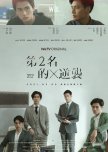
So. I only decided to watch this series as I am doing the challenge and one of the prompts is sport as it focuses on basketball. I was avoiding watching it for two reasons. One- this was the last series that Meen/Ping did before concluding their BL work relationship. And two- Frank Thanatsaran Samthonglai had a supporting role in this series and the last series that I watched from him made me question me in why I like to punish myself.
I was glad that I did watch it because while some parts of this series do have you scratching your head as it logically does not make any sense, it was easily the best series out of the three series that they did together. I can actually say that i enjoyed from the beginning to nearly all the way to the end (because in the last episode it just did not make sense to me what Zen did to ease the burden of his grandmother and then did a 180. By doing this, did this also still ease the burden for his grandmother, too?)
I will say this- I adored some of the side characters here and they also made this series enjoyable. I was especially pleased with the grandmother and how she accepted the relationship that Zen and Ryu were in and how happy she was that they told them (her and Ryu's mother). I also loved the character of Shogun and how they accepted him on their team, even though he was autistic. I also would like to add that the last game that the team played totally went in the opposite direction for me as I was not expecting that result.
All in all, I was entertained and I am grateful that I was able to watch this third and final series that Meen and Ping did together as they left us with their best work out of the three.
P.S.- That OST was one of the most addictive and sing along OST's that I have heard in a while.
Was this review helpful to you?
Was this review helpful to you?
This review may contain spoilers
Violence Is Not Teaching: A Teacher Should Never Resort to It, Even Against Bullies
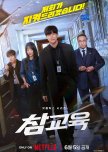
Teach You a Lesson is a deeply disappointing K-Drama that mishandles its central theme of school violence with alarming irresponsibility. Instead of offering a meaningful critique of bullying, the series gives the troubling impression that violence can be an acceptable response. That choice is not only weak storytelling, but also a serious failure in moral judgment, especially for a drama dealing with such a sensitive issue.The teacher character is one of the drama’s biggest weaknesses. Rather than embodying guidance, protection, or authority, the character feels ineffective, contradictory, and disturbingly misguided.
A teacher who tries to “teach a lesson” through violence is not solving the problem; they are becoming part of it. This completely undermines the role of education and turns what should have been a source of responsibility into a symbol of failure.
The series also suffers from a tone that feels careless and sensational. Instead of treating bullying with the seriousness it deserves, the drama often leans into scenes that seem designed to provoke shock rather than reflection. That approach makes the story feel exploitative rather than thoughtful, and it weakens any emotional impact the series may have intended to create.
Another major flaw is the lack of depth in how the drama handles victims, consequences, and institutional accountability. A well-made story about school violence should focus on the damage caused, the systems that allow it to continue, and the difficult process of real healing. Instead, this series gives the impression that aggression is somehow justified when aimed at the “right” target. That message is not just flawed; it is dangerous.
Overall, Teach You a Lesson is difficult to defend and even harder to recommend. Its reliance on violence, its confused moral perspective, and its shallow treatment of a serious social issue make it feel more harmful than insightful. Rather than delivering a lesson, the drama collapses under the weight of its own contradictions and leaves behind a frustratingly empty message.
Teach You a Lesson Fails Completely by Turning Violence Into a False Moral Solution!
Was this review helpful to you?
This review may contain spoilers
Thailand has been doing BL's far to long to still be putting out all these sub par shows
The writing for this was just awful. My score is quite generous only because the story had potential and it could have been interesting if the writers had just put some effort in.I found only two of the characters in this whole drama likeable and they were both sadly only very minor characters.
The situations were ridiculous and unbelievable even as a fantasy. The amount of yelling by the elders for no reason really got on my nerves also.
Thailand has been doing BL's for far too long to still be putting out so many storues with such terrible and unoriginal writing. I have basically given up on watching any coming out of Thailand for this reason. I thought I would give them snother try but the kevel of annoyance with the writing just isn't worth my time. Maybe I'll try again next year. Sigh...
Was this review helpful to you?
This review may contain spoilers
This K-Drama is glorifying school violence.
This K-Drama raises serious concerns because of the way it presents school violence. While it may aim to create tension or deliver a dramatic message, the execution can feel troubling, as it risks making violence appear more sensational than meaningful. For a subject this sensitive, a drama is expected to approach the topic with balance, responsibility, and emotional depth.Unfortunately, this series does not always achieve that standard.
Instead of offering a thoughtful examination of the effects of violence in school environments, the story may leave viewers with the impression that it is too focused on shock value. This can make the series feel uncomfortable and difficult to fully support, especially for audiences who expect television to handle social issues with care. When a drama deals with such an important topic, its impact matters just as much as its entertainment value. In this case, the balance feels questionable.
The reported protests from teachers in South Korea reflect the seriousness of these concerns. Their reaction suggests that the drama may have crossed a line in how it depicts violence and its consequences. Even if the intention was to spark discussion, the result appears to have caused discomfort rather than constructive reflection. That is a significant weakness for any work that tries to engage with real-world issues.
From a critical standpoint, the series feels less convincing because it does not consistently show enough sensitivity toward the emotional and social realities of school violence. A stronger approach would have given greater space to the victims’ perspective, the long-term consequences of abuse, and the responsibility of institutions in preventing harm. Without that depth, the drama risks appearing one-dimensional in a subject that requires nuance.
Overall, this is a K-Drama that may be difficult to recommend. Its handling of school violence feels problematic, and the controversy surrounding it only reinforces those concerns. While it may attract attention for its bold themes, that attention does not necessarily translate into thoughtful storytelling. For viewers looking for a more responsible and balanced drama, this one may be disappointing.
Was this review helpful to you?
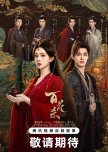
Beautiful Pieces, Broken Story
Blossoms of Power feels like a puzzle made of pieces that simply don't fit, yet are forced together to create a picture. Every individual piece is indeed beautiful, but once you step back to see the bigger picture, you would never know what image it's supposed to form. You can praise its individual parts, but on a larger scale, the whole story amounts to very little. The story is simply broken.This drama doesn't have a good start. And, for several episodes later, this state doesn't improve. The beginning (episodes 1-2) moves too quickly to introduce us to the characters and the premise. The first half moves too slowly and offers little in the way of plot. If anything happens, it is too shallow, forced, fake, and cringey, and focused only on romance.
1# Illogical rebirth, failed character's psychology
The drama remains faithful to its original IP by using a rebirth premise, which in itself isn't a problem. What feels annoying, however, is the particular form of rebirth it adopts. A mysterious lunar phenomenon allows the soul of a deceased person (the FL) to enter the body of another deceased person in the same era. As a result, the revived FL possesses two sets of memories: those from her "previous" life (Gu) and those of the body's owner (Shen).
That immediately raises questions about the FL's present identity. Who is she now? Is FL the deceased whose soul returned and gained a second chance, the original owner of the body, or a new individual? If she is a mixture of both, does that mean she should possess a dual identity or even a split personality? Surprisingly, the drama explores none of these interesting possibilities. Instead, the writer chooses the most convenient path to create a "super" woman. The FL retains Shen's body and public identity—along with her extraordinary beauty and privileged status—while inheriting Gu's strong personality and exceptional abilities.
This amalgamation creates the most perplexing female character I've ever seen! This character enjoys the advantages without confronting the consequences that such an extraordinary premise would naturally entail. She adapts too easily. Does she not have a bit of self-awareness to recognize that she is no longer the same? Even to just understand the new body of a Shen, the new family she is in, the new problem she must face, there are no such efforts to make this believable. What makes it even stranger is that nobody around her seriously questions her transformation. Everything unfolds far too smoothly. A woman who was once gentle and timid suddenly becomes arrogant and capable of killing and offending people. This enormous behavior shift is too drastic to pass without raising suspicion. Yet the story barely acknowledges it.
If you compare this drama to Blossom (2024), I don't think it reaches the level of Blossom, even though both stories feature a form of "rebirth." In Blossom, the FL learns about her alternate life through dreams and a storybook. Although this premise is supernatural, it feels more logical to accept because the drama explores its psychological consequences. We witness her reflecting on what she has learned, struggling to make sense of it, and gradually transforming the knowledge into wisdom. It thus allows her to make better decisions, navigate the dangers, and ultimately protect the people she loves. This kind of explanation is COMPLETELY ABSENT in Blossoms of Power.
2# Negative FL and ML's characterizations and development
After watching more episodes, it is hard for me to believe that the FL and ML are the story's protagonists. In my eyes, they act more like villains. They shared similar Machiavellian traits: manipulative/calculative and ruthless in endorsing their own interests. ML and FL wear too thick personas themselves. The drama doesn't give us a chance to truly know them before the plot begins to move. They are simply thrown into the story, cross paths almost immediately, and before we have a solid understanding of who they are, one character is already becoming attracted to the other.
The FL repeatedly uses physical force to bend others' knees and become a bully. Yes, a bully. She has no trouble making enemies wherever she goes; no wonder people want to kill her. She drove her father's concubine out of the house and showed no concern when she died. She let her "enemies" fall into a pond, kneel on broken glass, and nearly get killed in a carriage accident. To make things even more frustrating, she's the one who gets defended! Sorry and empathy are not there in her eyes! Just self-righteousness. Maybe I could understand it if the drama explained why she became so cruel, but it never does. It makes me hate her. Many viewers love her and call her a strong character. What the heck! She is just cruelly beautiful. She lacks the necessary virtues to be considered the "heroine". But, as an anti-hero, she is not interesting, either.
The ML is no better; he somehow exists just for comic relief. He utterly lacks maturity as an adult. He doesn't seem to care about the government, even though he is a crown prince. Repeatedly, he is stated as sickly and idle. But what our screen shows is that he is mostly healthy and indulging in romance. Why he even falls in love with FL cannot be explained. She is a woman without warmth and incapable of caring for others. Warmth and care should be his foremost needs, considering his life history. The ML and the FL are incompatible. But the plot forces them to become a couple. Multiple times, the ML praised FL for what she is doing, but as a viewer, I feel apprehensive instead.
3# Poor romance
The FL effortlessly becomes the object of affection for nearly every prince in the kingdom. One falls for her because of her beauty and because she once saved him. Another is drawn to her beauty and strong personality. Someone else is attracted by her beauty and her family's military power. Yet another sees echoes of his late wife in her beauty and abilities. Taken together, these romantic interests feel highly artificial. It makes no sense why all the princes are competing for her as if there were no other princesses in the kingdom. To deserve admiration, does she ever do a real, genuine, righteous thing for the world? The past FL (as Shen) is a pampered young woman, while as Gu, she is cold and cruel. The current FL (Gu+Shen) is arrogant and selfish. Not many things about her deserve admiration.
The problem is not only that multiple princes fall in love with the same woman easily, but that the drama never explores love as a theme in itself. In this drama, love is a matter of saying "I love you", "I want you to be mine", "I'll marry you", "I will sacrifice everything for you," and "I will prioritize you above everything." Those are coming straight from imagination, not reality. This drama doesn't explore the deeper emotional connection that each relationship is meant to fulfill. In fact, love is only natural when two people whose psychological needs, values, and experiences genuinely resonate with one another. But these emotional layers are completely ignored in the narrative. There is no moment of shared experience and appreciation, or sharing each other's dreams, pasts, and wounds, as foundations of romantic connections.
4# Lazy writing
This drama seems to combine romance with politics. However, the story is drenched in shallow romance, yet gone dry in quality politics. This drama has no antagonist/ enemy at all. What is the past struggle or the future aspiration that affects the present? Where are the political factions and notable politicians in the court, the competing princes, the other parties with comparable ambition and agenda besides the FL and ML? Nowhere to be found.
This drama never establishes a main conflict. What exactly is happening at the macro level? Yes, we learn that the Crown Prince was poisoned as a child in an assassination attempt. But he is now an adult. What is the immediate political crisis? Is the government plagued by corruption? Is another prince secretly maneuvering to seize the throne while waiting for the Crown Prince to die? Which prince? What are his motives? And if everyone expects the Crown Prince to die anyway, what purpose does all the political scheming and corruption actually serve? There should be something big, but where is the foreshadowing? Nowhere to be found.
And, why should we care about the FL's marriage and with whom? We are never shown why the FL is so crazy about power. It is said that someone intends to covet his family's military power. But at the same time, it is also stated that the border is stable, her family is trusted by the emperor, and she comes to the capital to marry, not to become a hostage. Some people say FL wants power to protect her family from those who want to destroy them. Really? When she is so ruthless, guarded by several bodyguards all the time? With a group this powerful, the story keeps portraying them as the vulnerable ones.
What political stake does FL personally have? Why does she become involved in state affairs while the other noblewomen and princesses remain largely on the sidelines? The story never clearly defines what makes her uniquely positioned for a political role. Has she ever studied statecraft, politics, or governance? Was she raised in a well-educated family with nurturing grandparents and a noble family legacy? Did she learn from the people's suffering? So far, her family has served no purpose other than comic relief. And she comes to the capital only to cause trouble in the royal family. Princes who were once on good terms end up competing against each other.
5# Weak resolution
Repeatedly, my jaw dropped at how they solve problems. Every time is like a deus ex machina moment! The challenge/ conflict is too easy, and the resolution is just meh. The pattern is super noticeable, and they never show, only tell.
The writer apparently wants the FL to stand out, so the plot keeps manufacturing opportunities for her to shine. Suddenly, a corrupt official's ledger appears. Suddenly, a secret map is stolen. Suddenly, a jealous princess appears. Suddenly, there's an assassination attempt. And right on cue, the crown prince (the ML) arrives to save the day. To win the audience's sympathy, the FL/ML are made to be nearly killed or suffer a few injuries, only to recover a day or two later after a visit from a physician checking pulse and some miraculous herbal remedy.
No background information and no supporting environment for intelligent problem-solving. No explanation of why the problem happened (the context, the inciting incident, the chain of conflict from the previous events), and no explanation of how the problem is technically solved. These make the story BORING as hell. They are doing nothing but sitting, meeting and talking, eating and sleeping, strolling and enjoying the scenery, falling off cliffs and taking medicine, getting sick, and the next day, recovering, or discussing things trivially, and suddenly the information comes in handy. What are the goals and the stakes? Where are the struggles and the process? Nada.
Also, the worldbuilding is too weak to support any grand story. The story treats the world as though it can be reshaped whenever the plot demands it. The "miracle" arbitrarily applies only to the FL. A twin-moon phenomenon, soul transmigration, resurrection, and the sudden emergence of a near-superhuman FL are all extraordinary concepts, yet the drama offers little explanation for how or why they work. Is it related to some "unfinished business" from the deceased? Or is it just a random event? The "bodily miracle" of the Crown Prince is also super confusing. We don't know how he is trained and what he studies. There are no "teacher" and martial artist guru in the story at all.
6# The last thing to say
Personally, I think the story would have been much stronger and more meaningful if it had begun with the Crown Prince's ordeal. That opening would immediately establish a clear narrative objective: uncover the mastermind behind the assassination attempts and bring them to justice. The tension would become even more compelling if the attempts on his life continued over the years, not just once in the past, and how he is traumatized by it.
Facing an invisible enemy, the good emperor could gradually descend into paranoia, viewing his officials, consorts, and his princes with growing suspicion. In turn, those who feel threatened by the emperor would begin building their own networks. Officials support one prince over the other, fueling corruption and political maneuvering that drive the conflict. In this version, corruption would no longer exist merely as a backdrop but as a believable consequence of fear and mutual distrust within the court. Then the ledger's appearance would make sense and be more meaningful for the righteous emperor to uphold justice.
I wish the story were more realistic rather than fantastical. The soul transmigration subplot is unnecessary, as the story can run without it. The FL could simply remain the general's daughter from the very beginning. Growing up on the frontier and alongside the military would already give her a unique perspective, resilience, and practical skills that distinguish her from other noblewomen. There would be no need to justify her competence through supernatural means. Gu and Shen have been best friends from the beginning, and they really exchange knowledge and skills.
The FL and the ML meet during their own journey, one to the capital to marry and the other to seek a remedy. When her ship sinks in a storm, the Crown Prince saves her life by giving her a rare medicinal herb that was originally meant for his own treatment. His decision carries genuine emotional weight because he has already begun to lose hope of recovering from the poison that has slowly been killing him. He doesn't need to be portrayed as an extraordinary martial artist (just so so is enough)—his vulnerability thus reveals the depth of his character through an act of selfless compassion. No need for disguise. He raised his hopes again after meeting the capable FL (who helped him acquire the stolen ledger). He wants her to ally with him so that he can become a true Crown Prince, despite his short lifespan.
Of course, I don't expect every drama to be perfect. I understand that making a good drama is not easy. But we've grown tired of the same romance-and-politics stories that lack creativity and logic. Too many dramas today feel like recycled versions of one another, reusing familiar tropes, plot devices (oh! the falling off the cliff), and character archetypes with little effort to create something meaningful, with a bit of change here and there. And, drama producers keep making everything look more lavish, grand, and visually intricate, but beneath all that spectacle, the stories themselves are surprisingly hollow. Spectacle may capture our attention, but only a coherent, thoughtful, and meaningful story can truly earn our admiration—and endure long after the final episode.
Perhaps you come to this drama for the heart-fluttering romance—and there's nothing wrong with that. But if you're searching for a story that rewards careful attention and deeper reflection, this drama offers little. To those who enjoy it, happy watching. As for me, this is where I stop. Time is too precious to spend on stories that leave me no better than before.
Was this review helpful to you?
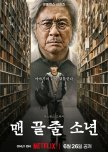
Heo Mun O, Just how real do you want your story huh?!?
What a fascinating, well written, well acted show! It is a commentary on the life of authors/writers and how impactful emotions, events and words can be. Whether it be college rivals or a callous adult towards a child. The power of story telling, emotional manipulation and dark desires. If you do not address your issues, don't be surprised when they become weapons in the hands of others.Choi Min Sik as Heo Mun O was spectacular as he spiraled into madness. Choi Hyun Wok as Lee Gang was sly as he wove a web of entrapment through story, basically every single character nailed their parts.
6 episodes was perfect and I liked the teaser of potential future seasons.
Was this review helpful to you?
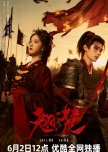
All of it are chef kiss!
The hanfu and makeup, cinematography, red crimson theme brings a fresh scene to the drama, feels unique despite knowing some people actually can't bear it. The casting is IT, i love them soo much and the constant changing allies and enemies (not including Xiao clan) is thrilling because in my mind that's really how politics chess works, no forever allies neither forever enemies. Each of them are working towards their own goal and ambition, can't blame them to be honest.I love how the small emperor is written smart despite the environment around him that intended to corrupt his moral. Chu Zhao did her best in teaching him and certainly it makes in to the plot.
But one thing i can't left unmentioned is how often Chu Zhao cries, literally episode to episode i really pity her especially Chen duling that has to endure lots scene of crying, what a dedication. I knew this is an angst but the plot felt so heavy for me when there's a lot of crying scene to serve. (I'm distracted tbh)
The ost and music are good, i enjoy them but i saw the beauty filter they attached over Chen Duling / Chu Zhao in the balcony scene where the scene then alternate to Zhou Yiran / Xie Yanlai and the beauty filter is suddenly gone, i don't know but it's so funny to me. Duling jiejie is goddess tier of looks already, i don't think filter will be needed.
Was this review helpful to you?
This review may contain spoilers
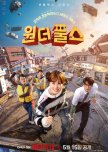
The WonderFools — A Perfect Blend of Heart, Humor, and Supernatural Imagination (Rating: 10/10)
The WonderFools stands out as a flawless achievement in modern K‑drama, delivering a tightly written eight‑episode arc that balances comedy, suspense, and emotional weight without compromising any single tone. The series’ concept; misfit neighbors unexpectedly gifted with imperfect powers; feels fresh yet timeless, with storytelling that honors character before spectacle.The screenplay is disciplined and inventive: each episode advances the central mystery while deepening character psychology and interpersonal stakes. Pacing is expert; moments of absurd levity are placed to relieve tension, not undermine it, and the midseason reveals feel earned rather than contrived. Plot threads converge in a satisfying final act that pays off earlier seeds with both narrative logic and emotional resonance.
The ensemble cast delivers exemplary work: the lead’s performance as Eun Chae‑ni is electric—an affecting blend of unpredictability and vulnerability that anchors the series’ emotional core; supporting actors provide nuance and comic timing, particularly in scenes that require precise balance between pathos and physical comedy. Chemistry among the four leads transforms them from caricatures into a believable found family.
Direction favors inventive staging and kinetic action; fight choreography and power manifestations are designed around the characters’ limitations, producing original beats (sometimes funny, sometimes harrowing) that never feel derivative. Production design evokes 1999 with tasteful nostalgia, and the score supports tonal shifts with clarity and restraint. Cinematography frames both the intimate and the epic with equal care.
At its best, The WonderFools interrogates what it means to be heroic when gift and readiness are not aligned; exploring courage, responsibility, and communal care. The series treats institutional abuse and the road to accountability with sensitivity, balancing justice with personal repair. Emotional payoffs are authentic rather than melodramatic, leaving the viewer satisfied and uplifted.
Editing, sound design, and visual effects are consistently high quality for a television production, supporting narrative clarity rather than distracting from it. The series uses practical effects and clever editing to make imperfect powers feel physically plausible in the show’s internal logic.
The WonderFools is exemplary television: original in premise, confident in execution, and generous in heart. It strikes an uncommon balance; delivering laughs, thrills, and earnest emotional beats while also offering thoughtful social commentary. For those reasons, it merits a perfect score: 10/10.
A standout scene that encapsulates the show’s strengths features a chaotic rescue where the team’s bungled attempts become the mechanism for success: Chae‑ni’s imperfect teleportation lands the wrong person in the wrong spot, Ro‑bin’s overcompensation freezes mid‑heroic pose, and Gyeon‑un’s adhesive mishap traps him; and yet, through collaboration, they free the trapped victims and reveal a crucial piece of evidence. The scene is both laugh‑out‑loud and cinematic, emblematic of the series’ tonal mastery.
The WonderFools exemplifies the best of contemporary K‑drama: original concept, tight execution, and emotional sincerity. It rewards viewers who appreciate genre reinvention, character‑centered plotting, and kinetic direction; earning its place as one of the year’s most accomplished television offerings with a deserved 10/10 rating.
Finally, I want to say The WonderFools is the best K-Drama series of 2026.
Was this review helpful to you?
Frustrating
One of the most frustrating dramas I've ever watched.Up until the halfway point, it's fantastic. The comedy, romance, and drama are perfectly balanced, the characters have surprising depth for a rom-com, and it's precisely because the story is so simple that it works.
The main storyline is excellent and had more than enough potential to carry the drama all the way to the end.
But then, out of nowhere, the main plot stops being the focus. It genuinely feels like they switched writers halfway through.
Suddenly, the story starts throwing in contrived conflicts just to force drama. The characters completely change their personalities and behavior, nothing resembles what was built during the first half anymore, important characters are gradually pushed aside, while others who barely had any relevance suddenly receive a level of attention that simply doesn't make sense.
The male lead had so much room for development, but instead they turned him into a complete fool—clueless, inexperienced, and painfully slow. Meanwhile, the female lead suddenly starts wanting things that contradict everything she'd shown she wanted up to that point. The pacing falls apart, plot holes appear, unnecessary subplots pile up, characters lose what made them who they were, and the shift in focus completely weakens the story.
The most frustrating part is that none of this was necessary. The premise was already strong: a contract marriage because she needed the money, while he needed to keep up appearances so he could continue being in love with his sister-in-law without raising suspicion. That was the conflict the drama should have explored. Instead, they kept introducing new characters, new storylines, and new conflicts, to the point where the sister-in-law—who had been one of the central pieces of the story—almost disappears.
I still think it's an okay drama. It's not bad by any means, but it really went off the rails. It had everything it needed to be an excellent rom-com if it had simply trusted its own simplicity.
Was this review helpful to you?

This review may contain spoilers
Cuteness overload
The fact that few people gave this negative reviews are so wrong. The story is a normal Wattpad story, but the execution was so good. I didn't have high hopes as I saw a few negative reviews but the first episode itself had me hooked. Useless rich person that had many scars and a happy disabled person hiding his insecurities in a smile are such a beautiful pair. Not only the main couple the side couple are sooo aggressively cute but they needed more screen time. All the side characters are soo healthy I mean mentally healthy. The parents of shoapeng should start a school for all disabled people because they need such persons in their life. I was thinking of giving it a 9 but I am giving 10 because of ep 11. It was such a wholesome episode I cried while watching it. Zixiang and shoapeng I wish to see them more zixiang was such a brat and sooo cute that I had to pause and squeal and play it again shoapeng despite being a top he was a cutest brat tamer. Overall the couple gave me a sweet tooth. I already expected the ending wouldn't be complete in bl dramas that are not thai but I liked the ending as it was realistic. That cousin character I didn't understand him what the hell he even wanted. This drama has love, one sided love, aggressive love, and just a fiance who can't get the idea of people in love. Overall don't think twice to watch it , just keep a smile on your face and watch it .Was this review helpful to you?
This review may contain spoilers
Non Con and a Whole Lotta Nope
He assaulted her for an unspecified but implied lengthy amount of time. He refused her food unless she begged like a dog citing Pavlov (who was later condemned for his work because it was immoral) and then could not fathom why she didnt love him, "like before?" And like an absolute idiot she saved him?! Even worse she went to visit him in the hospital? Then to firmly cement that she may be as sane as he is, she allowed him to come visit her? Knowing he abused her and imprisoned her already once and had fully planned to do it again?I think the only positive thing in this drama were the two decent human beings who tried to help her. I hope they ended up happy/together or with someone that made them happy because they were the only people in this show sane enough for it.
Was this review helpful to you?
This review may contain spoilers
Two Wounded Hearts, One Unforgettable Love Story — A Masterpiece About Healing and Growth
It's Okay to Not Be Okay is not just a romance drama; it is a story about three people who are hurt in different ways and slowly learn how to heal together.From the beginning, Moon Gang Tae and Ko Moon Young have a fascinating dynamic. Gang Tae looks like someone who has everything under control, but inside he is exhausted from spending his entire life taking care of his older brother while ignoring his own emotions. Moon Young appears confident and fearless, but behind her strong personality is a lonely person who has been searching for love since childhood.
Their relationship is what makes this drama unforgettable. At first, their personalities clash constantly, but slowly we see that they understand each other's pain better than anyone else. Gang Tae brings warmth into Moon Young's life, while Moon Young helps Gang Tae realize that he also deserves to be cared for.
One of the most emotional parts of the drama is Moon Young's character development. She starts as someone who pushes people away and uses her sharp words as a shield, but as we learn more about her past and her relationship with her mother, we understand why she became that way. Seeing her finally confront her childhood trauma and realize that she was not responsible for the pain she experienced was heartbreaking.
Gang Tae's journey is equally powerful. He has always sacrificed his own happiness for his brother, Moon Sang Tae. The moment he finally admits that he is tired of always being strong and wants someone to take care of him too is one of the most realistic and emotional scenes in the drama.
The bond between the brothers was actually one of my favorite parts. Sang Tae was not written as just a side character; his growth was important. Watching him overcome his fears, understand Gang Tae's feelings, and become more independent made their relationship very meaningful.
The romance between Gang Tae and Moon Young is also different from typical K-dramas. Their love story is not perfect, but that is what makes it feel real. They both have flaws, they hurt each other, but they also help each other become better versions of themselves.
The unique fairy-tale storytelling, beautiful cinematography, amazing acting, and emotional soundtrack make this drama stand out. Every character has a purpose, and every story connects to the main theme of healing.
Some people may find Moon Young's personality difficult at first, but her transformation is one of the best parts of the drama. Watching her learn how to love and be loved is incredibly satisfying.
Was this review helpful to you?
This review may contain spoilers
Everybody got opinion, and i don't think the drama deserve rate more than 7.5
Starting off the 10 early episodes were thrilling enough for me, i don't feel the slightest point of boredom until the moment they start dating that makes me feeling kinda.. ick? Especially with the sudden forced kiss scene, what's the reason behind random kiss scene in unfit situation, hello?This might come off as bias but since i always prefer strong female lead, The female lead in episode 17-18 keep making me shut my eyes and encourage myself to continue watching, for now.. i don't think i will. The expression she made when she killed Zhenxu was really unbearable, the acting ain't even it. And there's also few costume drama character whom has this scene where they killed someone unexpectedly like Li Leyan from The long ballad.
Especially since ML is someone whose hunted down from eight cardinal points, if she can't even stand for herself then does she expect him to keep protecting her? I'm happy with cheerful characters but not naive and weak one. FL has no personality besides being ‘funny and different’ to ML.
Maybe because the budget was short the drama cinematography doesn't looks like it was released in 2025, more like 2020 where those kind of plots still trending, the clothes design, makeup and styling looks unappealing, unfit to actors body and facial. Wanna make comparison to a drama named ‹rebirth for you› despite it was released by 2021 the cinematography are much better but can't compare it apple to apple because still is a Xianxia drama.
Was this review helpful to you?


