

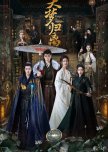
Unique, heroic, tragic, destiny, redemption…worth watching
Hope there was a tent with drip IVs for the main actors because I’ve never everevereverrr seen so many tears dripping down like rain and rivers of emotion. I was right there with them some of the time. If you don’t blubber floods of hot tears at least 1x when Hou Minghao’s haunting “Yuanzhou’s Youth” plays then you might be a soulless monster. Off to the Wilderness with you :)FoF broadcasts what you’re in for very clearly in the first few episodes, so it’s no spoiler to say…listen. And enjoy this often beautiful and poetic journey.
Tragic and visually stunning from the very beginning. Thoughtful words on the nature of good and evil, of choice, of love, and the importance of a humble light in the darkness. Big, bombastic, colorful fight scenes that are cinematic eye candy. Plus a soundtrack that plays in your mind constantly.
I was surprised that as this story went on, the nice but super square/one dimensional hero Zhou Yichen became so much deeper, bursting with layers of emotion and rivaling Hou Minghao’s sly, dry humored, impish and very easy -to-adore great demon. I hope Zhou Yichen’s actor sends the director a thank you card every Valentine’s Day, cuz it became allllll about him and less about HMH’s demon in last half. The bromance chemistry between the 2 male leads is way stronger from start to finish than the chaste love romance between ML/FL (which isn’t very romantic at all).
Evil and good, the nature of control and destiny vs free will…it’s deep without being preachy or so heavy that it’s not a blast to watch. But man, I had tears falling all through it (but NOT the kind that drags you down and makes the whole experience a downer, for the most part).
Took off a star because it went on much longer than needed. Could have ended perfectly at end of ep 27. Or mayyyybe another two or three well edited eps past that, but not seven. It began to lag, drag, and get TOO pointlessly over the top melodramatic in last few eps. I really missed the demon-of-the-week type of format of the earlier eps, and a truly memorable villain (there is one, but yawn) in the later part. The strong team aspect of it, which was so great in first half, began to splinter off later on, the characters stagnated, some of the team had nothing interesting to do (this also applies to FL character) or they were absent/off on individual tangents, etc.
There’s a 26 minute epilogue/extra episode after the official 34-episode run. Definitely watch it :)
Was this review helpful to you?
This review may contain spoilers
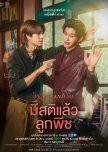
I don't know how they managed to ruined an already above mid series. I thought me and thee was above average then saw this. Like how. Again should've fired the whole screen writing team. The plots is all over the place. Unnecessarily villianized mok. Presenting him somesort of misogynist in the first scene when mira was revealed.
When they introduced mira, they could've written her so much better. But showed her as an incompetent female bodyguard. As if women don't suffer from discrimination in work places already enough, the writers said let's make it worse.
Tawan aran were like props, didn't add anything to the plot.
The last ep. Man idk. I liked it also kinda didn't at the same time.
Supposedly romcom but I can count on my fingers the amount of time it made me laugh.
Though one thing the last ep proved is that nobody can play Thee better than pond. He's the real thee.
Phuwin may need a bit more training to convey certain emotions right. William is still new actor. I'll hope he does even better in the future.
Est's acting was the best in my opinion. His micro expressions were spot on.
Overall I didn't have any issue with the acting. The cast was phenomenal. The acting was really good. But the story and plot was a let down factor for me.
Was this review helpful to you?
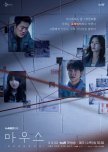
the line btw monster and victim.. completely destroyed
just finished watching it..and its soo unquestionably amazingif you think u have watched a good psychological thriller just hold my drink because this masterpiece will literally blow ur mind and then u will be forced to reassemble it again... I went into this expecting a 20 episode crime drama.. I thought that there's no way it could hold my attention for 20 one hour episodes without getting boring I thought it would be literally very slow paced but I was so wrong.. the plot twists are diabolical ..one min u r hating a character and the next min the show drops a bomb levaing u wonder what insanity is going on!!!... ur trust issue will peak.. people u think are angles..sus.. people u think are monsters .. devastating.. the moral alignment swaps in this show hit so hard.. damn u will be questioning ur own ethics..
its really not easy to pull of a story like this one..without leaving a single plot hole..its action survival mind bending suspense and just enough subtle romance to break the tension.. u will surely end up feeling for every single character.. the culprits ..the victims
watching a character struggle btw genuine guilt human connections and darkness is some of the most hauntingly beautiful acting + writing u will ever see.. the emotional climax will leave u in tears
Was this review helpful to you?
This review may contain spoilers
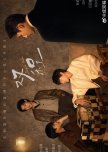
This story is very heart touching and movingIts a really great show and deserves all the fame and love
I recommend it to all viewers and it is tge best bl of this year
I have enjoyed Lu fengs character and it deserves all the love and hype
This is one of the most niche bls this year and everyone should try it
Was this review helpful to you?
This drama is such a gem!! Highly recommend!!!
Watching this because I became a Tian Xi Wei fan after Pursuit of Jade and she doesn’t disappoint!Have just finished 3 episodes and this drama is so refreshing. The scenes when they were younger were so sweet and touching. I have watched Hu Yi Tian before in Blossoms of Adversity and didn’t think much of him but he truly shines here. The chemistry between ML and FL is really good just in the first few episodes.
The sibling rivalry scenes are also very realistic and relatable. School scenes bring me back to school days and how some kids can be really mean 😢
Production value is great and the music thus far has been really good.
Can’t wait to see how it ends!
Was this review helpful to you?
Masterpiece
I'm a fan of the manhwa, so at at first i was sceptical of how would thai adapt the drama. But soon after i watched the first episode, it was blew me away. It was so good. The casts are looks straight out of the manhwa. They keep the actor's mannerism, the clothes, even the background looks just like the manhwa. And the acting are top notch. I couldn't tell the main leads are newbies. This is a perfect adaptation. There are some minor lacking, such as, the plot seems slow moving in the middle since the writers adding too many unnecessary improvisation of side character's scene, they didn't include all of Jay's the trivia questions and some of memorable Jay-Sun's scene are left out to give space to side characters like Sky and Pakin. But overall this is hands down the best thai BL drama to me. It means it even surpassed Bad buddy, last twilight, triage (my top three).Was this review helpful to you?
This review may contain spoilers
Not for me... Plot is all over the place. The second lead's storyline is messed up and doesn't make sense wrt to main lead. For example the forbidden love trope. Y'all can give it a try tho. For me it wasn't worth the hype. Was trying hard to find comedy in the romecom. All throughout I had a cringing face. Ruined tawanaran couple. They should've stayed separated.
The chemistry between the secretary mok and the cameo actor, Rome ig, was fire though.
Was this review helpful to you?

This drama is very underrated
I don't know why people are hating this drama. Bruh, what are you expecting from a short drama with a low budget? It's actually a good one.I really loved the female lead (FL) and male lead (ML), especially the ending where the FL, ML, and her sister were together.
I wasn't expecting the FL's sister to change after reincarnating for the third time. She chose a different path and teamed up with the FL and ML. The enemies-to-lovers trope was totally worth it, and both the FL's and ML's acting felt so natural.
The female lead was intelligent because she remembered everything from her past life. When her sister chose to swap husbands, she didn't say anything because she was already one step ahead of everyone plotting against her. She knew what her enemies were planning, and that doesn't mean the writer of the story was dumb.
The tropes weren't anything special, but overall, the drama was enjoyable. Most of it was predictable, but there were still a few unexpected moments.
I hated the second male lead. Bruh, what was he even doing? All he did was slap the FL's sister, provoke her, and seem to enjoy hurting her.
But when Fl's sister killed him, it felt satisfactory.
Was this review helpful to you?
Burnout Syndrome — We Judge People Before We Understand What Extinguished Them
I imagine that some viewers are discovering Burnout Syndrome now because Dew Jirawat is currently appearing in Mr.Kill. I am almost experiencing the opposite. I am watching Mr.Kill because Burnout Syndrome made me fall for Dew and showed me how naturally he can inhabit a character without appearing to perform for the camera. GMMTV’s current mystery series places him in another psychologically demanding role, but the quiet spontaneity that impressed me here has become even stronger there. Dew has a way of delivering dialogue as though the words have only just occurred to him. His pauses, reactions and changes in expression do not feel rehearsed, even when the scene clearly requires precise emotional control. It creates the impression that Pheem is thinking while speaking rather than waiting for the actor’s turn to recite a line. That quality is extremely difficult to fake, and placing him beside Gun and Off made the series a fascinating acting showcase.Gun is, as always, remarkable. Jira is not simply confused between two attractive men; he is someone who has lost his professional direction, confidence and understanding of what he needs from other people. After being suddenly dismissed from his job, he enters a period of creative and emotional exhaustion before becoming caught between Pheem, whose attention initially feels safe, and Koh, a wealthy technology entrepreneur who employs him as a public representative while also becoming the inspiration for his art. The ten-episode series develops this triangle from JittiRain’s novel and story, with JittiRain, director Anucha Boonyawatana and Sethinun Jariyavilaskul credited in the writing team.
The completed novel, Burnout Syndrome (ภาวะรักคนหมดไฟ), was released before the television broadcast, and Dew even created artwork for one of its Thai covers. This connection between the book, Jira’s identity as an artist and Dew’s own visual-art background makes his casting feel particularly appropriate, even though Pheem is not the artist within the story. The series remains closely tied to JittiRain’s central idea: three people who appear functional from the outside but have each lost something essential inside themselves. The title can also be misleading when approached too literally. The World Health Organization defines burnout specifically as an occupational phenomenon caused by chronic workplace stress, characterized by exhaustion, detachment or cynicism toward work and reduced professional effectiveness. In everyday language, however, people often use the word more broadly to describe the emotional depletion caused by life, relationships, social pressure, caregiving or loss. Burnout Syndrome begins with professional exhaustion, but gradually uses the image of a fire going out to explore something much wider: what happens when a person no longer possesses enough emotional energy to continue being the version of himself that everyone expects.
Most of us have experienced some form of that exhaustion, even when it would not qualify as clinical occupational burnout. It does not always come from a job. It can come from society repeatedly asking us to conform, from loving someone who cannot give us what we need, from death, loneliness, financial insecurity or the simple accumulation of disappointments that gradually removes our enthusiasm for life. Sometimes nothing visibly dramatic happens, yet we still reach a point where getting through an ordinary day requires more effort than anyone around us can understand. That is why writing characters like Jira, Koh and Pheem is difficult. Their most important emotions are not always visible, and the series refuses to translate every contradiction into a convenient explanation. They frequently behave in ways that are selfish, confusing or unfair because emotionally exhausted people do not suddenly become perfectly self-aware simply because they have entered a romance. They may want comfort while rejecting the person offering it, desire honesty while hiding their own intentions or hurt someone because admitting fear feels more dangerous than creating distance.
Playing those contradictions is even harder than writing them. Gun makes Jira’s uncertainty feel genuine rather than indecisive for the sake of extending a love triangle. His feelings change because his understanding of the two men changes, but also because his understanding of himself remains unstable. He is looking for love while still trying to identify which version of himself is real: the unsuccessful artist, the public representative created for Koh, the person Pheem believes he knows or the man whose desire returns when Koh becomes his subject. Off receives the least immediately lovable character, which is probably why so many viewers judged Koh so harshly. He is wealthy, controlling, emotionally closed and accustomed to arranging people around his needs. His fear of social contact does not automatically excuse the way he uses money, employment and authority to keep Jira close, and it is completely understandable that viewers would dislike him during the earlier episodes. However, disliking a character is not the same as the character being badly written. Koh is presented in layers because people rarely reveal the reason for their worst behaviour when we first meet them. What initially appears to be arrogance gradually exposes fear, isolation and an inability to form relationships without trying to control their terms. Off does not ask the audience to forgive everything Koh does; he allows us to understand how a man can become this emotionally distorted while still remaining responsible for the harm he causes.
Anucha Boonyawatana already proved with Not Me that she knows how to use Off and Gun beyond the familiar security of their pairing. That series placed romance inside political anger and social inequality, while Burnout Syndrome turns inward and examines the private systems of power that develop between people. The reunion could easily have become another vehicle built around OffGun’s established popularity, but Anucha instead gives them raw characters who are frequently unpleasant, vulnerable and difficult to classify. Her direction is particularly effective because she does not sugar-coat the relationships. These are not people who arrive emotionally prepared to love correctly. They bring financial inequality, professional dependence, jealousy, unresolved pain and incompatible expectations into every connection. The series looks attractive, but it does not polish the characters until their flaws become harmless or charming. That rawness also explains why the dialogue and performances can feel unusually spontaneous. Some viewers praised the fragmented conversations precisely because they resemble the way people actually speak when they are uncertain, embarrassed or trying to conceal what they mean. Other viewers interpreted the same tone as unnecessarily gloomy or mistook emotional opacity for weak characterization. The divided response therefore reflects the series itself: it asks the audience to observe people whose motives cannot be understood from their first actions, and not every viewer will have the patience to remain with them until those layers become visible.
Dew is essential to maintaining that balance because Pheem initially appears to be the easier person to love. He communicates more naturally, notices Jira’s emotional state and offers companionship without immediately surrounding it with Koh’s uncomfortable power imbalance. Yet, like everyone else in the series, the person we first meet is not the complete person. Dew allows Pheem’s charm to coexist with insecurity, desire and less attractive emotional choices, gradually complicating the character without making the change feel artificial. That is also how relationships work outside fiction. We often begin by loving someone’s face, humour, confidence or apparent kindness, but early attraction is based on a carefully limited amount of information. People usually show the version of themselves that feels safest or most desirable, not necessarily because they are deliberately lying, but because trust has not yet made complete honesty possible. The real person appears slowly. Sometimes we discover flaws we can accept because we understand where they come from and see that the person is willing to change. Sometimes we fight because love has not erased the ways we hurt one another, and sometimes we leave because understanding a person does not obligate us to remain with them. Burnout Syndrome understands that learning the reason behind someone’s behaviour does not automatically make the behaviour acceptable; it simply makes the choice to stay or leave more informed.
This is where the series becomes more than a conventional love triangle. Jira is not merely deciding which man is more romantic or attractive. He is learning what each relationship asks him to sacrifice, which person sees him most clearly and whether either man loves Jira himself or the function he performs in their lives. At the same time, Koh and Pheem must confront whether their feelings are truly love or another attempt to fill what has gone missing inside them.
The production deserves credit for supporting that complexity. Burnout Syndrome was produced by GMMTV with Chamade Film, whose catalogue was still relatively small when the series aired, including productions such as Whale Store xoxo and That Summer. Those projects received mixed responses to their writing, but they established a consistent ability to create polished, visually coherent worlds. Here, the restrained cinematography, urban isolation, artwork and desaturated atmosphere are more than decoration; they make the characters appear surrounded by people and opportunities while remaining emotionally separated from both. The small size of Chamade Film’s completed catalogue means it would be premature to claim that the company guarantees excellent writing. However, Burnout Syndrome demonstrates that it can support a mature production with experienced performers, difficult themes and a director with a clear visual identity. The disagreements surrounding the series have generally focused more on its characters, pacing and emotional darkness than on cheap filming, weak technical execution or the kind of production limitations that frequently damage ambitious BL stories.
Final Thought
I understand why some viewers disliked Burnout Syndrome. Koh can be infuriating, Jira’s uncertainty can feel exhausting, and Pheem is not allowed to remain the uncomplicated alternative he appears to be at the beginning. Watching damaged people repeat their mistakes is uncomfortable, especially when a romantic drama has trained us to expect love to heal everyone quickly and reward the character who seems nicest during the first episodes. However, I do not think the writing failed simply because the characters were difficult to love. The series is asking us to recognize how easily we judge people through isolated actions while knowing almost nothing about the fear, grief or exhaustion influencing them. Understanding those reasons does not erase responsibility, but refusing to look for them leaves us with characters who appear inconsistent only because we have decided that the first version we saw must be the real one. Gun gives Jira all the confusion of someone trying to rebuild himself while choosing between two imperfect forms of love. Off makes Koh’s cruelty, isolation and gradual emotional exposure exist within the same person without demanding easy forgiveness. Dew may have been the greatest discovery for me because his natural performance made Pheem feel as though he existed before the camera arrived and continued thinking after every scene ended. Anucha Boonyawatana created another down-to-earth work with OffGun, but this time the struggle is not fought in the streets or against an obvious political enemy. It takes place inside people who no longer understand what they need, inside relationships where affection and control overlap, and inside the distance between the person we present and everything we are afraid to reveal.
Those who saw only confused writing may experience the series differently after returning to it later. Time and personal experience can completely change the way we understand a character, because sometimes the problem is not that the story failed to explain someone. Sometimes we simply had not yet lived through enough exhaustion, disappointment or complicated love to recognize what the story was showing us.
Was this review helpful to you?
Great crime series
This was a great series, i really loved the crime aspect and it was very well executed. It had a very good story.The visuals were great and i loved the music.
The ending felt a little bit rushed, i would have been even better if they added 1 or 2 more episodes to play out the final conclusion.
It was very well acted, the mains had great chemistry and the kisses and NC scenes were great too.
This is a must watch!
Was this review helpful to you?
It’s a comfort story which you can watch anytime.
I'm writing this review after watching Touch Your Heart five times... yes, five times! And honestly, I could watch it all over again without ever getting bored. It's one of those rare dramas that feels just as magical every single time.For me, Touch Your Heart is the definition of a comfort drama. It's the kind of story I can always return to whenever I want to feel happy, relaxed, or simply at peace. Watching it feels like sipping a warm cup of tea on a cold, rainy day—gentle, cozy, and incredibly comforting.
Some stories are simply meant to warm your heart, and this drama does exactly that. Every character is written with so much care and portrayed beautifully. I genuinely don't dislike a single character, which is something I can hardly say about any other drama. Each person adds something meaningful to the story, making it even more heartwarming as it progresses.
What I love most is how naturally the drama balances romance, comedy, and emotional moments. The lighthearted humor, the perfectly timed comic scenes, and the sweet interactions between the leads make every episode enjoyable. Nothing feels forced—it all flows effortlessly.
And then there's the chemistry between the two leads... it's absolutely beautiful. Their relationship is so pure, comforting, and satisfying that I couldn't help rooting for them from beginning to end. Their chemistry feels so genuine that part of me secretly wishes the actors were together in real life. If that ever happened, I'd genuinely be so happy!
Touch Your Heart isn't a drama filled with intense twists or heavy conflicts. Instead, it's a warm, wholesome love story that reminds you how beautiful simple moments can be. It's one of those rare dramas that leaves you smiling long after you've finished watching.
For me, it will always be a drama I can come back to, no matter how many times I've watched it. And I know I'll be revisiting it again someday.
A timeless comfort drama that truly lives up to its name. ❤️
Was this review helpful to you?
This review may contain spoilers
How to ruin a decent plot
Things I loved1 The premise. It had so many possibilities. It didn't deliver on any.
2 Kim Young Dae. He didn't have much to do but he was good especially in the action scenes.
Things I disliked
1 The Ml. Not because of his character, that's a given but I didn't care for the actor either.
2 The introduction of stupid plots and characters no body cared about.
Things I hated
1 The FL. What an awful actress. She earned an award for that. What? Because she had no expression it was considered good acting? Let's be real. She's not a good actress and the character she played was also awful. She faked that she didn't know her stupid husband cheated until the end and that's ticked me off. She was either a fake manipulative person or a morn. Why should I care for any of these? She thought she was too smart. She was ridiculous. At the end of the day I think this was just a parody. Not a good one, but better than take it as a real plot. The egg line sealed it for me. No one would ever say that with a straight face. The ending as well was a given that this was a parody.
2 The ending. I wasted my time for this? So meta, not, so stupid, so manipulative.
3 The whole divorce and political plots. The characters were the worst and I didn't care for any of these. Happy though for the divorce. But they left so many things unanswered I feel like it was disrespectful to the viewer.
Was this review helpful to you?
This review may contain spoilers
Many Subplots, Too Much Pain, and Not Enough Real Revenge
This review is gonna be a long one so brace yourselves because there is a lot to talk about this series. I won't give spoilers much and rather talking about the story, I'll talk about some of the aspects of the story.As you can see from this show title, Payback, this show is about taking revenge. Or at least thats how it starts to represents itself in the beginning but we see that it's actually about what grief and self-hatred does to someone and wee see the journey of this person's growth along this story. I binge-watched this series after it finished airing, but I must say I regretted it because some of the dialogues and symbolism needed to be thought about thoroughly. I wish I would take a day or two after watcing 2-3 episodes in a row. That would be better to just let the story sink in. This show doesn't treat grief and phobia lightly. It delves into it and talks about it rather openly and painfully. These two themes are spread throughout the entire story.
After Episode 1, everything becomes more complicated and complex. Sun, our protagonist, realizes its not that easy to take revenge on someone. He makes connections, friendships, relationships along the way and his actions not only affects himself but others too. He finds out being an actor is actually not easy and not something you can do quickly at all. He wants to take his revenge on Bank by being better than him and take whatever he has and wants but he can't because it is not that simple. At all. normally, in BLs we would see this journey as "he's shit at being an actor but after a couple ep later, he improves a lot and achieves his goals" or some shit (like Top Form) but its not like this here. It's realistic. Instead, he tries to improve himself to achieve his goal but everything becomes more chaotic when people around him starts to get hurt. First my baby Sky, then our lovely Manager feels the effects of being with Sun. And Sun can't do anything other than to endure because he knows he doesn't have any power against Bank and just holds on. And while all these things happening, we see that the entertainment industry is not a clean and perfect and pure industry as it seems. They didn't hold back showing that brutality, filth and gore.
Our second protagonist, Jay helps Sun in the shadows while plotting his own agenda. They form a rather "special" bond and drift from there. I gotta be honest I'm not a fan of "abusing a broken man into loving yourself" kinda thing. I admit the chemistry between our two leads was on fire and the sex scenes itself were done perfectly. And these help soften things and kind of leads the viewers to turn a blind eye about the actual situation which is "is it a sexual abuse or not ?". But also, I think, you can't call it a sexual abuse too because Sun responds to Jay's actions too, but whether he responds because he is genuinely into him or because he is simply too broken to resist is a very thin line to walk. Jay's actions were, to put it mildly, questionable for me. Yes we see the reasons behind his actions after but in his case, this sets a weird tone on story-telling.
One of the things this show makes me think about is how overcrowded its story is. This doesn't necessarily mean a bad thing by the way. While Sun and Jay tries to achieve their goals, so many other things are happening. and Our protagonists, especially Sun, drifts apart from his goals. I thought a lot about whether this hurts the continuity of the story or not and I think the writers actually intended this. It reminds the viewers how life is I think. You set on a path, things happen, situations becomes more complicated, and you rise up from a different side than you inted to. Of course this story-telling aspect would be more effective if they didn't rush the last two episodes. So many bad decisions in the last two episodes is made for the sake of dramatic effect and to finish off the series. So many. This harms the show quite severly. Because up until these episodes, everything were going on solid ground and within both accurate emotions and reason. But damn, they had to finish the series so this is the result. Quite disappointing. I had to cut out 1/1.5 points from story just because of those damn two last episodes. Because the main issue for me was what this story wants to tell becomes inconsistent with itself. From this point onward, heavy spoilers watch out: Sun wants to take revenge on his Ex; he tries, he grows, he opens up and in the end he accepts that revenge doesn't actually feel good. But on the other hand, Jay wants to take revenge from who harmed his mother; he tries, he works, he fells in love along the way, he plots, he schemes and he actually gets his revenge and damn that is satisfying to watch and I think wasn't unhealthy at all. Our sweet little Sky wants to take revenge on Sunny because what he did to his career and he achieves this by overcoming his own phobia. Pakin, famous photographer tells his own satisying revenge story. Two-O wants to take revenge on who harms him and he brutally finds out he's in over his head and realizes revenge is not a good way to move on. so many subplots clashes with what this show is trying to prove. After seeing those successful revenge stories, you feel its unfair to Sun who couldn't get what he wanted in the first place. This inconsistency eats me up fills me with frustration because damn what a wasted opportunity.
I really appreciate how brave the writers/scriptwriters were in this series. They weren't shy from talking about heavy stuff and they also didn't do it lightly. Kudos to Sammon; my girl makes her pen known with her own unique storytelling and her symbolism. Even some of the camera angles were like "Aha! my girl wanted this secene to be taken this way specifically".
Props to production team, the quality was on top notch. I only wish Thai entertainment industry would stop using stock places/musics in so many shows. Main theme was actually very good, even some music written for this series were okay but I'm sick of hearing the "we are solving a mystery" theme in every goddamn show. Actors were also very good even though this project were their first. Overall, such a good production.
There were some specific scenes that I wanted to talk about and how good they were (when Bank finds out Sun for example) but I've decided not to make this review heavy on spoilers. Maybe I will if you guys wanna talk about it in the comments. I think thats all I wanna say for now. I'm writing this review one day later I finished the series. So my thoughts may not change much but I'd love to talk about it more with you all. thanks for reading.
Was this review helpful to you?

This review may contain spoilers
The story follows two bitter, modern-day rivals in the entertainment industry: Shen Juanjuan (JJ), a sharp and ambitious executive drama producer, and Chen Shaoheng (SS), the polished CEO of a rival production company. Operating in the fast-paced world of film and television, they spend their days fiercely competing for hot streaming scripts, top IPs, and high-stakes production deals.Their ongoing feud reaches a boiling point during an intense corporate clash over their latest project—the screen adaptation rights to a poorly written romance novel. Right in the middle of their bitter war over this exact drama script, their lives take an absurd turn when they both unexpectedly wake up trapped inside the pages of the story itself. To make matters worse, they are forced to play characters that completely contradict their real-world personalities—all to fulfill system missions so they can escape back to reality.
JJ is forced into the role of a heavily abused, helpless, and constantly humiliated maid; her task is to kill SS. While SS is cast as a ruthless, tyrannical, and brutal ancient prince; his task is to make SS fall in love with him.
Desperate to get out, JJ spends her nights sharpening her dagger, crazily trying to assassinate him to move the plot along, while Shaoheng spends his days relentlessly teasing her and trying to win her heart.
As the two engage in this chaotic, laugh-out-loud "love duel" to see who can successfully clear their mission first, they have to maintain their fake character personas while secretly trying to outsmart one another.
However, the deeper they get into the novel's storyline, the more they are actually caught in a much larger, darker conspiracy hidden within the book's universe.
So, how does the story end? Will they successfully escape the book world, or fall for each other instead? And what happens if they do fall in love, when one of their missions is to kill the other?
That's pretty much the story without giving anymore spoilers.
Overall this is one of the good short dramas… This has a good & unique story, great actor/ess. Although it’s still s*cks in the matter of missing voices… Haha… Thanx god the text still exists, so we can still follow it…
So, if you only have a little time on your hand to watch, this can be your choice…
Was this review helpful to you?
More Than a Thriller: The Tragedy of a Town That Lost Innocence to Delayed Justice
I binged the first half of Scarecrow, drawn in by its gripping blend of thriller and suspense. The narrative moves seamlessly between 1988 and 2019, unraveling the Kangseong Serial Murders. The pacing is taut and nerve-wracking, as we witness the lives of Kangseong’s residents, the chilling murders, and the relentless pursuit of the killer. Although the identity is hinted at early on, the drama masterfully sustains tension, refusing to confirm until the very end.Through the eyes of the male lead—a principled police officer—we see not only the hunt for justice but also the weight of his past. His personal and professional ties are tangled in ways he never imagined, forcing him to sacrifice more than he thought possible.
The second half shifts tone. With the killer revealed, the suspense gives way to tragedy. Justice comes late, after countless innocent lives are lost and families shattered. The slower pacing reflects this grim reality: the chase is over, but the scars remain. No one in Kangseong escapes unscathed. The drama refuses to offer a neat resolution, reminding us that in life, victories are often incomplete, and justice delayed is justice denied.
What elevates Scarecrow beyond its thriller framework is its philosophical depth. The revelation of the killer almost feels secondary—the true devastation lies in the irreversible damage done. The performances are exceptional: Park Hae Soo and Lee Hee Jun embody characters whose fates are intertwined in complex, almost mirror-like ways. Neither friends nor enemies, they represent diverging paths of morality, and the writing captures this duality with nuance and power.
The final scenes (a dream of ML's) reminded me of Reply 1988 (maybe cause the events took place in that year + dream/wishful thinking of the ML), contrasting what Kangseong could have been with the tragedy it endured. This bittersweet ending lingers, reminding us that beneath the suspense lies a heartbreaking meditation on lost innocence.
Overall: Scarecrow may not be flawless, but it is a deeply emotional, well-written, and superbly acted drama. A one-time watch that leaves a lasting impression.
Was this review helpful to you?


