

Un amore così bello
67 persone hanno trovato utile questa recensione
Questa recensione può contenere spoiler
Botched remake
Unfortunately, this remake failed to deliver the sweet cute chemistry and heart that the original C version did.I loved the C version and was so excited that they were going to remake it in Korea, but I think they really miscast this. And the director did a poor job of giving the story some heart instead of the typical cringeworthy deliveries.
The main problem was the FL. She was trying too hard to appear young. If you ask your parents to give you an impression of a 3 year old, I bet it would be the same as the FL's acting. No idea why they casted her as there are a lot of other actresses who have natural aeygo that could have played this role. And then there's the problem with the ML. He looked too young and did not make me believe he was the smart studious type. And together, frankly it was clear that she was the nuna and he was the dongsaeng which makes it hard to believe in their characters. They pretty much had zero, if not almost uncomfortable chemistry for most of the drama. It wasn't until the very end that it got a little better and I think a large part of that is because the FL dropped the whole toddler act. To be fair, I do see potential in both of them...I just think they need to take baby steps instead of leaping to fill shoes that are too big.
I also thought the 2nd ML did not have any charm. I didn't find him very likeable where in the Cdrama, I would go back and forth between the male leads. Even if I didn't compare to the original, I would not have liked this drama. It's way too cringeworthy. I had to skip a lot of the scenes that made me want to vomit. It's interesting though because the script is almost the same and I did not feel that way at all with the Cdrama which I've watched a few times. Amazing what miscasting and bad direction can do.
Questa recensione ti è stata utile?
Something in the Rain
71 persone hanno trovato utile questa recensione
My complaints break down into three groups - OST, plot lines and character traits.
OST: This may be my first k-drama with an all English soundtrack (if there were Korean tracks I failed to notice) and my first thought was how distracting it was watching people interact in a foreign language with somebody crooning in English in your earhole. After many dramas where the OST becomes as ingrained on your memories as the most touching scenes do, I wondered if Koreans watching dramas with more typical soundtracks are just as distracted by the constantly repetitive lyrics. If I never hear any of these songs again in any version I will count myself blessed.
Plot Lines: Every single storyline in this series had an unsatisfactory ending. Whether it be the relationship of the main characters, the friendship between Jin Ah and Kyung Sun, the behavior of Gyu Min or the sexual harassment in the workplace. In each case we were presented with an issue of conflict, there was much angst and aggravation until the worst possible outcome was realised (or forgotten in the case of the ex-boyfriend) - and then after a jump to the future there is brief resolution. I'm actually quite angry that such an important issue as sexual harassment in the workplace was given the treatment it got. I doubt anybody suffering from this treatment would feel inspired or hopeful about coming forward from watching this.
Character Traits: I will concede that in order for there to be drama, there must be conflict. Tropes like bad boy turns good or family disapproves of relationship all require failings of character and as a previous reviewer wrote "If you don't know anything about Korean culture or the passive characteristics of Asian, this drama will seem silly & annoying, and will never understand the reasons behind choices & actions made", I also recognise that these stories are being told through a different set of cultural norms. However just because something is prevalent within a culture doesn't mean it's right or acceptable and although drama as an art form is often about reflecting truth in society, it is also a medium for setting examples for how we could live. Nobody in this drama became a better person. Joon Hee was possessive and controlling until the end and Jin Ah was a compulsive liar throughout.
What I perceived as being a story about an unconventional relationship where true love wins out against negative cultural norms, turned out to be about a group of self interested and morally deprived individuals failing to grow as human beings. Truth in society indeed.
Questa recensione ti è stata utile?
Questa recensione può contenere spoiler
It went from excellent to bad to worse in no time.
Let me start off by saying I really dig Korean BLs because they usually have simple plots, which is pretty much the standard most of the time (don't take this as a negative; I'm complimenting). That's exactly why I was so excited to watch this series. For the first five episodes? Solid 9.0 or 9.5, no doubt. But man, did things take a turn for the worse in the last 2-3 episodes. By the time episode 7 rolled around, I was just trying to finish it off, not because I was excited, but more because I'd already invested so much time into it.Let's talk about Se Heon and Do Yoon for a sec. These guys seem to have a talent for picking the biggest red flags around (Yes, Tae Yi is a major red flag; argue with the wall). Do Yoon's whole "I'll still love you even if you bully me" with Joo Ha? What stupidity! Then there's Se Heon, who forgives Tae Yi way too quickly after he S/A him. I mean, even if you want to argue that it wasn't the case, Tae Yi's response was not how a normal, rational person would react.
I gave it an overall rating of 6.5 because I don't rate any series below 5, and for the most part, it was enjoyable. It started off strong but dropped the ball towards the end. Let's just say it left me scratching my head. Honestly, I was hoping for A LOT better.
Questa recensione ti è stata utile?
La Casa di Carta: Corea
79 persone hanno trovato utile questa recensione
Remake does the orignal justice
Although this was a remake of la casa de papel (money heist) it certainly does do the series justice in my opinion. I've watched and i am half spanish so when i heard there was gonna be a remake i thought ehhhhh i don't know if this is the right move by netflix because i thought the Spanish version was always gonna be the best however after watching the remake i think that the korean version of this show is as good as the original spanish version of the show. Certainly worth the watch even if u have already seen the original, there are some key differences in this remake to the original which makes the series a lot more exciting than you'd expect. I've noticed from the negative reviews that most people dropped the show within the first or second episode, all i can say to that is that if u give the show the chance and watch it fully it will grow on you and the unique storylines will certainly catch your attention here.Questa recensione ti è stata utile?
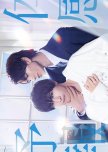
My Personal Weatherman
79 persone hanno trovato utile questa recensione
Amazing
Loving this BL!!! A nice fresh twist from most of the same BL story lines. I am falling more in love with Japanese BL's and the actors who play them with every new one i come across! I'm so in love with these leads and can't wait to watch the rest unfold. it's so hard watching the short episode knowing it'll be over soon and having to wait another.... or two to get more of my fix! This series they maynot be for everyone and your not going to be able to please everyone, so if its not for you do rate it low, still rate it on thr quality of the show for what its suppose to portray! Everyone is working hard on this production, Cast & Crew keep up the amazing work!!!Questa recensione ti è stata utile?
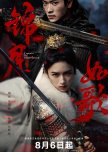
Legend of the Female General
99 persone hanno trovato utile questa recensione
Romance of the Female General
The scriptwriters for this show need to write a 10,000 word apology essay for butchering such a high budget, highly anticipated drama. There is absolutely no excuse for this poor of a script when the source material is right there for you to pull from, no matter what constraints and editing they had to do after.I have to say that the title of this drama is horrifically misleading. When you think of a drama called "Legend of the Female General", your first thoughts are probably of a female-lead drama and her journey and heroic rise to becoming a female general. This drama is not that. Instead, what we got was a was a bland, extremely watered down version of what the trailer promoted. It's like ordering a sandwich and receiving a half toasted slice of bread instead. They have completely cut out what should have been the core and bulk of the show - her journey to being a general. They have provided no context and almost no background on her past life as a general and instead, the audience is just supposed to go with the flow and accept that she's a well revered general despite having received nothing to support this fact.
While I have no issues with a FL who has a personality, she is also clearly overwhelmingly feminine for someone who has supposedly been living as a man AND among fellow soldiers for most of her life. She is seemingly so well versed in battle plans and tactics but the audience has no idea where or how she learnt this. She's angry and upset over the loss of her past comrades? The audience doesn't care because, again, we don't know anything about her life past life as a general. There's so many holes in the plot that it is honestly a bit frustrating to watch because we can see the potential but it's just not giving. There's also very little battle scenes and the few that we do get, leave a lot to be desired. Shaky sword-wielding with little strength behind it as well as overly embellished sound and visual effects by the editing team lead to unsatisfying fight scenes.
I think the scriptwriters and directors of this show aimed for this to be a romance story right from the start, and as such, it was terribly disappointing for most of us who expected more. One scene that really stood out to me and really highlighted how absolutely romance based and ridiculous this show was, was when they were in the middle of the battle and the FL thought the ML had died so she went crying out to find him and then ... she let go of her sword completely. IN THE MIDDLE OF THE BATTLEFIELD. WHERE PEOPLE ARE STILL FIGHTING FOR THEIR LIVES. And then after she finds him, they have a touching moment with soft words ... in the midst of the battlefield. And the audience is just supposed to believe she's an experienced general?
Truly, the only thing that pulled me through 36 episodes was the chemistry between the two leads. However, for the record, I don't think this is a terrible drama. It's just disappointing. And bland. It's perfectly serviceable as a romance drama. But would I recommend it personally to people that I know? No.
Questa recensione ti è stata utile?
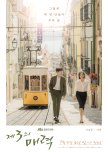
Questa recensione può contenere spoiler
Different does not mean good.This was one of the most discussed and controversial dramas this year. Many viewers felt cheated, angry because result totally differs from synopsis and marketing materials (hard to say it is even about romance). On other hand it had most intense discussions I ever saw. It was very fun to watch it live and later join in the comments. Though this drama has zero value to binge watch it. If you missed some episodes, I do not recommend to continue.
As writers tried to achieve ratings, create turmoil between viewers they forgot whole purpose of the drama, what message they want to convey. Seems all unprofessional work was covered up under "art", like you cannot criticize art though it has obvious flaws. Producers chose wrong methods to deliver wrong message. They had all the talent (actors, cinematography) to do right way.
Producers described drama as "poem about love during four different seasons". Usually artful dramas conveys strong emotional message and at the end leave you baffled, reminiscing what and why it happened. Here it is not the case. Chosen actors are really great and drama had many emotional turning points, Cinematography is artful too, there are many symbolic and hidden messages. But as story goes, felt like you were played around. Episode after episode you get really unexpected things but it became unimportant as story goes nowhere. In the end feels like everything returns to very first episodes. What was in the middle actually did not matter. There was no meaning behind those emotions. I felt less and less caring about character's ending. It feels tiring to watch it.
Story begins great. Feels very modern drama there main characters are very realistic and has obvious flaws. SKJ plays dorky geeky student with low EQ. What catches the eye, that SKJ does not try to be laughable or pitiful, but having friends, loving parents though very lost in social world. LS plays uneducated down to earth hairdresser. She is early matured, street smart, strong, willful but emotionally underdeveloped - she cannot express emotions freely, holds everything inside her because of dark past. These both socially awkward people unexpectedly blossom into love. Feels like one fits another, they both are outcasts, but combined together they are much better than other couples. This early love symbolizes spring - pure, naive etc. Personally such unique and realistic beginning rose huge expectations from this drama.
Sadly then came time jump into summer. They meet again and fall in love again. This time their love is free, head spinning but also burning and full of conflicts. Leads chemistry was amazing. Here are introduced 2ML and 2FL. These characters are very vague and only bring contrast to leads and source to their insecurities. They have no background or actual connection to the story or leads. They were so unimportant that I double checked whether they are on "main" or "support" cast. This was first very huge mistake from writers.
It was really hard to understand which secondary characters are important which are not, because many of them from first charm disappeared and many new were introduced. Who knows which ones will be left at third charm. Most importantly they had different purposes or if had any purpose at all.
Secondary stories were really boring and actually do not add anything to main story. Interactions with secondary characters brings more chaos than direction. Due to lack of direction many viewers started to search for hidden meanings between these dialogues, purpose of these characters. I call it "rise of conspiracy creators". This created huge contradiction - is this drama is artful or actually realistic? I lost what I am watching and what I should expect.
But what actually happened that producers created diffraction between two sides - one is ML, his friends, family and other is FL, accordingly. Between these sides there is no interaction. This automatically caused discussion, comments from viewers, which side they support, who was right and who was wrong during couple conflicts. Also viewers could not communicate among-selves because some saw drama as "art" and discussed hidden meanings of love, fate. Other saw it as realistic drama and what should actually happen in similar life situation.
Then came autumn (third charm) and everything fell apart. Drama did not had good ratings of viewership because of unimpressive first episode and sloppy work of writers. It attracted by its uniqueness, but plot was not engaging and consistent enough. Writers needed to save this drama somehow. The only strong point was that it caused discussions. Then producers created seesaw. One episode causes hate for FL and support for 2FL, then next episode causes pity and support for FL and uncovers hidden facts. Cycle repeats. Discussions and conspiracy theories ("child was his", "she was forced to marry", "he should chose comfortable realistic love") reached peak.
It was fun to discuss, read comments, but something important was lost - reason to continue to watch this drama (except "I will finish only because I like actor or actress"). Suddenly drama became very dark, sad and worthy of tag "tragedy". Drama became kinda a joke - "I will see how will writers clean this mess". I felt, that I was promised to see character development, growth, maturity from students to thirties. I thought third part should bring towards closure, not create additional mess. It had zero connection to first two charms. Most importantly I did not expect that writers will make FL character hateful and same time pitiful, just in order to create more discussions. It was very cheap move from writers. None of the promises were delivered.
Character development is not "crying while eating bread in Lisbon" or "losing everyone, and when none left asking for a help". Maturity is not talking less or looking at each other without words. There was none of character development or maturity displayed, only depression of growing old and coping with that.
And ending oh my... This is not even open ending. They did not define their happiness, it is even open for interpretation that makes them happy. What values left unchanged or changed during these third charms? After 16 episodes actually I do not know nothing about main characters for certain. Such ending made viewer further away from main characters rather than closer.
Second charm conflicts raised so many serious questions and none of them were answered till the end.
Second and Third charm discarded every possible meaning of romantic happiness:
-not a kiss (they both were together, no need to clear misunderstandings)
-not engagement (YJ was married)
-not married life with children, (YJ and HC had that)
-not mature comfortable love, (JY and SE had that)
-not passionate love, (JY and YJ had that)
-not supporting, extended love, (YJ do not meet JY parents, both friends)
-not healing love (who heals JY pain from being dumped, they never talk about it)
-not friends (still in love)
-not separation and moving on (neither is a bad person)
Writers shot themselves in the leg, not leaving any possible way to end the romance. The very worst way to end drama. Ending was not about romance at all. All four main characters ended in misery, not able to move on and not able to fight for.
It had huge potential. It had moments with very deep emotions. But it was totally wasted by direction. It has mix of styles (hidden messages+reality) (romance+majkang). It has no message, no core of the story that follows, connects these three charms. Feels like it was three different stories with very open interpretation. Zero consistency and definitely not a poem. Actually it is hard to describe as a drama, because story goes nowhere.
Each episode was great in quality, acting amazing, each episode was enjoying to watch even if it was very sad. But overall at the end I feel it was waste of the time, because producers cheated me.
Questa recensione ti è stata utile?
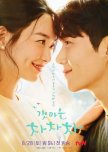
Hometown Cha-Cha-Cha
147 persone hanno trovato utile questa recensione
Meh
Is something wrong with me? Is it me? Am I the problem? Why can’t I see what everyone else seems to see in this drama?Everyone was buzzing for this but I honestly hate having to wait in-between episodes and decided to not start this drama before more than 10 episodes were out. So I waited. And it just wasn’t what I wanted from it.
I wanted to love this so so so much. I needed this show, I needed a sweet, cozy, wholesome romance. There were days where I told myself to push through solely so I would live, to watch Homewtown Cha Cha Cha. And I can’t say that I was heavily disappointed, but I wasn’t impressed either.
I want to start off by saying this: Hometown Cha Cha Cha is fine. It’s okay. It’s not bad by any means. But it’s just not more than that.
There are plenty of things to like about this: A beautiful, charming setting that will hit you with homesickness for a place you have never been to. Two good-looking leads. A catchy OST. A fun premise. Lots of lovable side characters. I sincerely love Yeo Hwa-jung, she was my favourite character by far, and even though I am not too pleased with the conclusion to her arc, she had the backstory I enjoyed the most and all things considered, she’s probably my favourite aspect of the entire show. There were a few comedic moments that made me chuckle. It was an alright watching experience. But people are calling this the romance drama of the year and I’m just not on board with that.
The number one thing I read about this show was how refreshing and healthy it was. And I just don’t see it. This felt more formulaic than I expected it to. We have our male lead who is perfect in every single way and always correct. His one flaw is being too caring. We have our female lead whose only job is to be proven wrong by our male lead or get saved by him. This is fine, honestly, what are most romance K-dramas if not female wish-fulfillment? But is it particularly new or interesting? I don’t think so. This felt less like a healthy and realistic portrayal of adult relationships and more like a self-insert fanfiction. There are times when I want that from a story but this wasn’t one of them.
Surprisingly enough, even though I am easy to please in that regard, I wasn’t crazy about the romance between the two leads. I didn’t really understand the progression of them falling for each other, to me, that kind of came out of the blue. Which is a shame because I do think that the actors have chemistry. But it took ages for their characters to even become something close to friends. They had the same surface-level arguments every single episode, which always ended with Doo-sik proving Hye Jin wrong, and next thing you know I was expected to believe that the two were in love as well when I wasn’t even convinced that they liked each other.
I wasn’t impressed with the way this show dealt with Hong's past either. Since we only unpack his backstory in the last ¼ of the show, the first ¾ of the drama felt weirdly trivial. All of the sudden, the entire feel of Hometown Cha Cha Cha just changed and got way too depressing for its own good. And the extent of trauma our male lead had, was way too heavy to be resolved in the little time the drama had left. It really felt like this show bit more off than it could chew. The subject matters were a tad too dark and the writing a tad too clumsy. Instead of our male lead having this ultra-depressing past, I much would have preferred it if both of our main characters could have been just two regular people, with regular people’s problems that made them flee from their city lives (similarly to Lovestruck In The City for example). But sadly Hometown Cha Cha lost everything that made it feel realistic or relatable by that point. And I honestly had to force myself to sit through the last few episodes, something I definitely didn't expect.
Maybe I am being too harsh on this drama. Maybe I would have given it a higher rating if my expectations had been lower. I gave My Roommate Is A Gumiho an 8.0 out of 10, and on every level, objectively speaking, that’s a worse show. But I knew what I wanted out of My Roommate Is A Gumiho and it delivered exactly that. I wanted it to be dumb, harmless, cheesy, and cringy fun and that’s what it ended up being. But out of Hometown Cha Cha I expected more. Something more adult, more, fresh, more interesting. And it just wasn’t any of those things.
Questa recensione ti è stata utile?
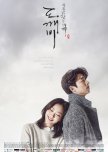
Goblin is a great drama. I went into it with low expectations, but I was pleasantly surprised, or more accurately, I was blown away. You can recognize a good drama by the way it makes you feel exactly what the characters in the drama are feeling. That's the way Goblin was for me, with each character, I laughed and I cried.
I'll TRY to keep the review sweet and short, so here are the reasons I enjoyed Goblin:
-The premise is unique. It's one of a kind. I haven't seen any other Kdramas with a similar plot-line to Goblin, so that was a plus point.
-The actors do a superb job. I could feel their emotions from across the screen. then again, nothing less to be expected from such a spectacular cast.
-The drama has everything, ranging from bromance, romance to mystery and suspense.
-The bromance is spectacular. One of the most epic bromance I've ever seen in a Kdrama. It made me laugh a lot, but it also had its heartwarming and heart-wrenching moments. Goblin and Grim Reaper's relationship is one of the best reasons to pick this up.
-The two couples- Goblin & Eun Tak and Grim Reaper & Sunny. Both couples had their own story. The sweet and cute moments of the Goblin couple & the sizzling chemistry between Grim Reaper and Sunny was enough to keep the 'romance' meter of the drama pretty high. You won't be able to get enough of the cuteness of Goblin & Eun Tak.
-The mystery of the characters. From 'the lady in red' to the king and queen, each episode just gave enough glimpse into their lives to keep us engrossed. It'll drive you crazy in a good way.
-Each minute of every episode was enjoyable. I didn't skip a single moment of any episode.
-The unexpectedness of the drama was really great. Just when you'd think you had something figured out, some twist would come along and surprise you. The writer sure did a tremendous job.
BONUS: Beautiful and addictive OST
I personally didn't find anything even remotely bad about it, but that's not to say other people won't, so here's a few things you should keep in mind before venturing into it.
-The age difference between Goblin [ (~939) he was 39 when he died and then immortal for 900 years] and Eun Tak (19).
-Comparatively less screen time for Sunny and Grim Reaper couple. But I suppose that's to be expected specially since the title alone indicates that Kim Shin (Goblin) is the main lead, so it's no wonder they get the most screen time.
-Worst product placement you'll ever see in a Kdrama. You might think I'm kidding but sometimes even the smallest thing can annoy you. I personally found those scenes amusing though.
So, to sum up- I LOVED this drama! Do give this one a chance, you won't be disappointed. Once you start it, chances are, you'll end up loving it. Happy Watching!
Questa recensione ti è stata utile?
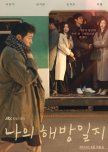
Il Diario della Mia Libertà
146 persone hanno trovato utile questa recensione
da unterwegsimkoreanischenD  4
4  2
2
4 2 Progressive Message: Quality of life increases with the degree of truthfulness (not scham&pretence)
"My Liberation Notes" is a ray of hope within South Korean series production.In short: The lives of young people in their prime (+/- 30) are at stake here. Considering their groaning under the pressure of the competition in the workplace, the dazzling promises of the modern lifestyle industry, and the claims of society and family traditions, this could all be pretty depressing. But amazingly, it's not. The protagonists manage to give their lives something like dignity - quietly, impressively and with gentle intensity. They walk the way that lies before them, spraying their personal touch, a little bit, but nicely, thus leaving color and warmth on their trail.
The KDrama presents itself as a Netflix co-production and is thus in a certain way 'pimped' for an international audience - you don't see anything of the typical and rather special elements like makjang, slapstick, glitter & glamor of Jaebeol, or traumatic childhood secrets. Just life, every day, like everywhere else. Without spectacular ups and downs. As if someone had blindly reached into a pot full of addresses from a random location on the outskirts of metropolitan Seoul and then simply turned the spotlight and camera on the family living there for a while. In principle, it could be any family living near the terminal stations of the Seoul subway network. This, however, identifies the KDrama as specifically South Korean. Finally, the story is high KDrama quality, when it comes to a carefully, multi-layered narrative with deliberately reduced pace and space for the sensitive moments in between.
----------------- SIDE NOTE: --- Provincial life in the metropolitan area around the capital Seoul ---
So the KDrama simply tells about the normal life of relatively normal people around 30. They don't live in the megacity of Seoul (while almost 10 million people do) or in Incheon (with almost 3 million inhabitants), but in the sprawling province of Gyeonggi-do, which makes up the majority of the metropolitan area around Seoul in terms of space. The provincial population makes up ca half of the population of the more than 25 million inhabitants of the entire agglomeration around the capital Seoul. (And this in fact is about half of the inhabitants of South Korea altogether). An insight into the living environment of those provincial residents thus also offers an insight into a good deal of current South Korean life issues.
The fictional 'Dangmi Station' is actually Line 1's 'Seonghwan Station'. Crucially, most people who work in Seoul (increasingly) cannot afford to live in the city. Every workday they commute about +/- 2 hours to do their job in the city. With the evening company dinners and collegial come-togethers, a day becomes very long. There isn't much time left for a life of your own outside of work. While it is convenient in many respects to remain in the family home until marriage, this further reduces the amount of free time you have at your disposal. Especially if the parents still do a bit of farming and the help of the 'children' is required here and there.
City and country clash, almost every day. Accordingly, different life plans collide, which either fit more into a fast-paced, hip city life or rather into a rural, decelerated provincial life. In reality, however, new hybrid variants are needed that function as a flexible joint between both realities that are equally relevant to everyday life - city and country.
You might want to think about the meaning of life. About goals that you would like to set for yourself. What is life? What does it offer me? What would I actually like to do? Or, wait a minute, is it better not to think at all? It is up to the young people of the recent and the following working generation, to grope, to stumble, to develop new, visionary as well as down to earth attitudes and inspiring blueprints to life in a South Korea from the 2020s onwards...
------------------
"My Liberation Notes" sails in this field of tension. Other than that, tension is not on the agenda. "My Liberation Notes" is processing the wisdom, the questions and the insights that the protagonists come up with over the course of the story - sometimes quietly to themselves, sometimes in conversation with friends.
The focus is on 4 protagonists who practically all live together in the provincial suburb of Seoul. Three of them are siblings and work in Seoul, the fourth is a stranger who helps their father in the carpentry shop and in the fields, eats with the family and lives next door. (A fantastic Son Seok-ko as an inscrutable stranger, as well as Lee Min-ki, Kim Ji-won and Lee-El as very different siblings, are presenting the range of everyday emotional worlds in a wonderfully haunting way.) All four wrestle with life in their very own manner and question, what freedom and quality of life could mean to them under the given circumstances. Promotion? Money? Success? A car? A partner? Marriage? Family? Living in an apartment in Seoul? Where is life? Is this life?
Eventually the aspect of reverence also comes to the fore: To respect and be respected. To be worshipped. To be adored... Yet how to express mutual adoration and respect (in order for your own life to feel maybe a bit more valuable)? ... Maybe just give it more space. That would be great...
The episodes pass as does life itself. The days are the same, and yet each one is new and different from the one before. Happiness is accumulated by the minute. And in the end, life is beautiful after all. Worth living. Distinctive. The quality increases with the degree of truthfulness that they give to their lives. And that's indeed a progressive message (as far as a society like the South Korean with its highly valued tradition of scham and pretence is concerned.)
Questa recensione ti è stata utile?
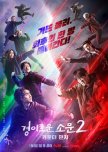
The Uncanny Counter 2: Il contrattacco
114 persone hanno trovato utile questa recensione
Questa recensione può contenere spoiler
Uncanny Counter 2; A Disappointing Follow-Up To A Brilliant Series…
When Uncanny Counter hit our small screens back in late November 2020, viewers were in for a great treat under the writing of Yeo Ji Na . The series was filled with intriguing characters, lore and high stakes to keep the plot engaging and well-written. What was delivered to our screens in 2023 left a lot to be desired, not just straying from the original webcomic, but being poorly written.The basic plot premise of the second season returns to our ragtag group of heroes, The Counters. Now slightly older, Mun ( Cho Byeong Kyu) has begun helping to train the other counters. Ga Mo Tak ( Yoon Joon Sang) has doubled up as a cop and Counter to help the team, while Do Ha Na ( Kim Se Jeong) and Chu Mae Ok ( Yeom Hye Ran) are left to harness their powers.
However, trouble is soon on the horizon when a trio of evil spirits Hwang Pil-Gwang ( Kang Ki Young), Gelly Choi ( Kim Hieora) and Wong ( Kim Hyun Wook) become an increasing threat to the counters. With the help of new Counter Na Jeok-Bong ( Yoo In Soo), the heroes find themselves running into more problems than one, especially for Mun and his friend Ma Ju-Seok’s (Jin Sun-Kyu)‘s journey down a dark path…
To understand where one of the major issues of the show lies, I think it is essential for us to address the writing change. Yeo Ji Na’s talents as a writer really shone through in season one. Her ability to address complex issues and themes, as well as facilitate them to shape our characters made the series engagingly dark, comical yet also filled with mystery and adrenaline. The story had stakes because the main villain was threatening and similar to Mun, viewers were new to the world of Counters and learnt about the lore and world of spirits along the way. It made the story engaging and proved Ji Na to be a talented writer.
After season one and for various conflicting and directional reasons, Kim Sae Bom took over from Yeo Ji Na as the main writer for season two in production. Kim Sae Bom, most likely standing out for his involvement as a screenwriter for Bad and Crazy, has a very different approach to writing than Ji Na even from the offset. Is this a crime in itself? No. In fact, the initial premise of season two did seem quite interesting alongside theme shifts, especially with new characters introduced onto the field. So where did things go wrong with Sae Bom’s writing? The big issue lay with the plot and character changes feeling jagged and convoluted , as well as the evident decline of writing between seasons.
Season one was well-balanced between themes of action, angst, friendship, supernatural and aspects of tragedy. It was far from a flawless masterpiece ( and did struggle a little with balance in places), but it was self-aware of its themes and characters. Season two tries to mimic a “ similar balance” in the mould of a mystery comedy setup. The fights are still there , but while the action is present, the emotional deliverance leaves a lot to be desired, even from the balance of themes. This resulted in a notable struggle with the writer attempting to imitate Ji Na in his own style while falling short of being a decent copy. As a consequence, witty jokes from season one turning into toilet jokes ( repeatedly) and yelling random English phrases to enact as the comic relief of the series.
When the series attempted to take a darker turn in parts, it struggled a lot to be poignantly reflective as the previous season. A mixture of sloppily rushed writing ( particularly out of character choices) as well as questionable connection with the audience, did often make these scenes feel more arduous than moving. ( One of the best examples being early on when we see the guardians first reunite with their Counters. Considering the emotional impact of their challenges throughout the first season, the cheesy happy family moments between the characters was somewhat out of place. It gave little opportunity to reflect on the actual development in the relationship between the Counters and their guardians from the previous season.)
The acting of the series was admittedly a little mixed. Although the series has a good cast and some brilliant names introduced into the lineup , a mixture of overreacting and wooden dialogue did have a big part to play with some more cringe-inducing scenes . Some noteworthy performances did come through Seo Byeok-joon as Park Do-hwi, Ha Na’s first love, and Hong Ji Hee as Lee Min Ji, the tragic wife of Ju Seok, in particular. Both actors delivered good performances as their respected characters, even if the writing did not give their onscreen personas full justice.
Character writing is another mixed bag. Main lead Mun stands out in particular as the epitome of the show’s changed writing quality between seasons. In season one, Mun was very much the tragic bullied teen, who goes through a lot of character growth from naivety to teen angst ( mixed with powerful abilities) and then to genuine acceptance of his circumstances . He stood out as a fairly good protagonist because he changed and grew a lot from beginning to end, while still remaining true to himself. In season two, Mun is noticeably different from his earlier counterpart.
Of course, he is meant to be older and thus a little different from his teen self, but the more noticeable traits of Mun being somewhat anxious at times and fairly defiant, is changed for him playing the role of the comic man in the first- half . It isn’t necessarily bad seeing Mun grow out of his shell, but it felt odd considering how much Mun’s noteworthy personality traits were not carried over more in season two, especially by replacing a key aspect of Mun’s personality as a fairly reserved individual. In particular, season one featured heavily on Mun’s deep bonds with only a few people in his life. He needed deep connections with people such as his two best friends and grandparents ( and eventually the Counters) to form genuine relationships. These were important parts of Mun’s life and helped him to carry on. In season two, while these characters do feature in some background scenes, it was beyond out of character to see Mun having such a “deep” bond a practical stranger. It did not reflect Mun as an individual, and even more disappointingly, did not convey the character we had come to love through his gradual growth.Episode eight and nine attempted to offer a “ twist” to Mun’s circumstances, but having already repeated the same concept from season one, it felt a little overused . Perhaps the only good aspect we saw through this “ twist” came through an opportunity to see some more traumatic sides to Mun’s inner-self, as well as his strong bond with Ha Na coming to light. However, the resolution to this convoluted “ development” episode was both rushed and incredibly sappy, giving little opportunity to actually explore Mun’s darker and more difficult issues at heart and growth.
Then there’s the other counters. Mo-Tak was beloved in season one for being the sarcastic “cool guy”, who helps out Mun. The fact that Mo Tak was going to play a bigger role in season two gave so much potential for this character, yet, rather than giving him an opportunity to be developed further , the show rendered him as the show’s jester; often spending most of his time making unfunny jokes and being the butt of someone’s jokes. To add insult to injury, there was also the attempt to weaken the previously strong fighting abilities of Do Ha Na and Chu Mae Ok. Considering their poignant backstories and strength, it was sad to see them being put on the back burner for most of the show . The series did attempt to offer some “ intriguing” aspects with Ha Na’s first love ( one of the few good aspects of this second season) and she did feature in some later episodes, as well as Mae Ok with her son, but aside from that, they were rarely given as much exposure as within the previous season. Choi Jang-Mul ( Ahn Suk Hwan) features again in the series, though while in season one he was the comical rich man (with a not-so secret crush on Mae-Ok), in season two he plays more of the role as a clown in some of his featured scenes.
Then there’s the new counter Na Jeok Bong ( Yoo In Soo), arguably one of the show’s greatest letdowns. Yoo In Soo is a good actor, but even he cannot entirely save his character from failing. Jeok Bong is meant to be the definition of the “ fool with a hero’s heart”. He is beyond awkward and useless at fighting, but he is seemingly a “good person”. The problem with Jeok Bong is that the writing confuses creating the unlikely and foolish hero with being likeable as playing the useless fool all the time. Rather than seeing Jeok Bong gradually grow or develop into a better person ( even through nuanced scenes like comforting others, or be given a more difficult issue to face ) he is still played out to be the fool for most of the series. Instead, a never -ending cycle of toilet jokes and failing fights pretty much encapsulates this character’s screen time time and time again . Whether the writers didn’t want Jeok Bong to grow from out of Mun’s shadow or be the “comic relief”, it is hard to say, but the writing direction this character was taken in was a sad reflection of wasted potential, questioning why another counter was even introduced in the first place . ( Aside from plot fodder.)
The villains of the series were unintentionally a little mixed. Their initial introduction did hold a lot of potential; a trio of nefarious evil spirits who gain Counter powers and are not afraid to kill others in their wake. The problem is that while they are played by very good actors, their characters struggle to be well-developed threats . In season one, the big bad of the series was just that; evil to the core and driven to complete his goals of bringing destruction and ruining the Counters . In season two, it’s hard to really work out what the trio actually wants aside from some measly power grabs here and duped powers . Sure, they want to stop the Counters from getting in their way, but where are the true stakes? Why are they so fixated on them to the point of going as far as they have done? What are their true goals aside from just being plot devices? As antagonists, they are fairly “evil”, just not particularly with a sense of impending threat or being a true foil for the Counters. The stakes could have been there, but season two does little to make them an imminent antagonistic force beyond obvious “ plot drive”. This is sad considering the fact that especially Hwang Pil-Gwang, as the leader of the trio, could have been a really interesting character if he had been developed properly as early hints suggested. Gelly Choi did get her moments later in the spotlight by proving that she is quite devious, but considering her featured screen time, Gelly and Wong were certainly underdeveloped and underused .
Last but not least with characters, it is hard not to mention Ma Ju-Seok, one of the show’s most divided characters for viewers. On paper, Ju Seok had a really interesting role; a “ nice guy” driven to the edge and Mun trying to help him. On the other hand, Ju Seok was simply a cause for plot rather than well-developed. One of his major flaws came through his “ deep bond” with Mun. The show constantly forces the message that Ju-Seok is a “good “guy, but the series forgets a key point in writing: show don’t tell. Rather than showing us these acts ( aside from helping Mun’s grandmother in some scenes ) we constantly hear the same narrative in dialogue that Ju Seok is a “nice person”, but not through very sincere actions or scenes in particular. To make it stranger, Mun is established to be intimate with a small circle of his family and friends, and takes time ( as shown with the Counters) to really develop intimate bonds. It makes little sense for Mun to suddenly trust Ju Seok on such a level ( helping his grandmother or not), without actually getting a sense of what has really drawn them to form such a friendship. For example, had Ju Seok played a role in scenes as an older brother/ uncle figure by encouraging Mun in other respects , then maybe this relationship would have been more poignant, or at least viewers could understand some of Mun’s trust in such a character . Instead, it rarely delivered the full intimacy it was suggesting, making it an odd spectacle to see Ju Seok try and go dark-side and for Mun to be so set on helping a near stranger . Ju Seok’s “ character arc” did have somewhat of a resolution, though it was rushed.
Perhaps the few strengths of this second season came through showing Mun’s darker issues ( though not in resolution), as well as the return of Mun’s friends Kim Woong-min ( Kim Eun Soo) and Im Ju Yeon ( Lee Ji Won). Although very much background characters, their teasing potential romance between the two characters: as well as their long-standing friendship with Mun, did provide quite fun and heartwarming in most of their featured scenes. Another minor character, Park Do-hwi ( Seo Byeok-joon), Ha Na’s first love, was also quite a delight. ( The series did seriously go about a very cliche way of his resolution , but his featured screen time was certainly engaging .)
The other issue at hand comes through execution. To put it simply, Uncanny Counter 2 struggles with pacing a lot. The major part of the series nearly drags along at a snail’s pace, trying to place some action in training montages and some villain scenes to lead up to the “ big showdown” . Later episodes did bit up the pace slightly and were slightly more engaging with the plot and some themes , but most episodes, especially the first-half, felt underdeveloped and quite repetitive. The ending was probably one of the show’s greatest letdowns. It certainly brought a bittersweet note for the show, but last minute plot points, which could have easily have flourished and been developed earlier on, were rushed and thrown in for quick angst. This lead the resolution to feel a little unresolved.
The directing of the series under director Yoo Soo Deong follows a fair sleek and basic cinematography. The CGI is decent enough, though compared to some of the more sleek palettes in season one, there is a little left to be desired for the eyes. The OST was okay; there were some good songs such as CRAVITY “Ready, Set Go” which helped set the mood in some scenes, and was quite catchy too.
Overall, Uncanny Counter 2 is not quite on the same level as its previous season both across the writing range and execution. It is understandable the show wanting to go in a different direction. Mun is no longer the naive kid we saw in season one, and has begun to grow beyond playing “ the heroic role” all the time. However, the way the show tried going about this with poor writing decisions made Uncanny Counter 2 feel a little rushed and convoluted in parts. There are definitely a few good aspects to the season , including accessibility to viewers who have not watched the previous part as well as some interesting characters and general setups . However, poor pacing did make this season feel out of place across thematic and writing styles. Overall, okay for a quick binge watch but that is about it.
Questa recensione ti è stata utile?
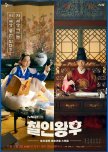
It's been a while since I've had so much fun watching a Kdrama!
OMG, this is so GOOD.From the very first episode, this drama will have you hooked.
There's something really special and unique about Mr Queen, I've seen several historical dramas but this ones a bit different. It's purely a comedy with a twisted interesting storyline to keep you captivated.
We follow Kim So Yong (Jang Bong Hwan) as she - or he? haha - discovers secrets within the palace, keeping viewers on their tippy toes. However, it's never too heavy as humour is sprinkled throughout scenes. It's easy to watch and although the episodes are long, they seem to fly by so quickly because of how entertaining they are.
The acting is something I must mention, both Shin Hyesun and Kim Junghyun are great for the characters they play and portray them perfectly, the director couldn't have picked better actors for those roles. It's like when Shin Hyesun is crying, I feel depressed and when she's content, I feel happy! The main characters all have their own story and dark secrets that we slowly learn about along the way. I'm was particularly invested in the Queen's true self, she's very interesting and there seems to be many dimensions to her character - not Jang Bong Hwan but the actual Queen.
I've been pleasantly surprised by how good this drama is despite my high expectations!
I loved how the story played out and I hadn't found myself getting bored while watching it which is always a plus. The OST is so so good, super addicting - definitely give it a listen.
If you want a good laugh, I totally recommend checking this out!
Questa recensione ti è stata utile?

As much as the plot was cliché, there are some things we need to point out about this show.
A lot of people think the plot is pretty cliché.Irrational, domineering boss ML and a starstruck ordinary girl FL. Contract Marriage. And Girl-Pretends-To-Be-A-Boy RP.
But I think some things need clarification.
1)The title is "Cute Programmer". I don't get why some people misunderstood the story to be about programming.
(=... =) when the title clearly hints that the story is about The Programmer. The CUTE PROGRAMMER, Lu Li, to be exact.
2)People called Luli, "the doormat FL". That's just so obvious that these viewers watched the show but never bothered to understand the plotline or the character settings.
This is a story about Luli who falls in love with a man. A man who lost his trust with anyone. A man who does not understand or refuse to understand social context more than he does 1s and 0s.
Imagine, if Lu Li could've just walked away when it was easier said and done. Then what about the years of affection she had cultivated for YiCheng? Was that a lie? A joke? A playtime series that took her entire youth?
Is it love if you could just walk away because everyone said you should?
3) Sure, Yi Cheng's character is annoying. And he treated Lu Li badly. But think about it.
His father never supported his dreams and his career. Constantly using his company and investment as a hostage and force YiCheng to what they want.
His first love and the only woman he allowed in his life,apart from codes, betrayed him, stole his work and sold it to the enemy.
It'll be weird if he didn't put up walls and kept angst at bay after all that, especially with his character setting.
But that wasn't the point, was it?
The point was how the "cute progammer" Lu Li's presence changed him and thawed the ice.
4) To be honest, this show is very lighthearted. Despite all the cliché drama obviously pitched into this show, it wasn't a heavy series to watch. They manage to pull your emotions up when it starts to get strained because of the main leads' conflicts.
5)The side couples are interesting and yet didn't hog the screen time meant for the main leads. But had enough exposure to cultivate their own romances.
6)I've seen a lot of Zhao Lin's other works. And honestly, this was not his first time playing the assholish, arrogant husband that only realized how he loved his martyr wife when she left him.
If you alao have, then you'd understand how good this was compared to his previous works. His previous works were dragging and prolonged the drama for aesthetics. And was truly stressing and emotionally draining. But "Cute Programmer", despite the drama, never dwelled in it. And character and plot development were pretty fast-paced but never rushed.
I gave the story a 9 because the story was really cute if not for the cliché parts.
The acting and actors are all chef's kisses. Especially because I'm a fan of Bambi and Zhao Lin's works.
Soundtrack wise, could've been better but definitely a 9.
Wouldn't say it's good enough to rewatch. But I think I can see myself rewatching one more time, but never more.
All in all this was a pretty good drama.
Questa recensione ti è stata utile?
Blue is the warmest colour.
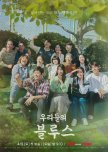
Blue indeed is a colour of warmth and as an object, is a compassionate ode to the vagaries of the heart. The emotional honesty, precision, abandon and need; all summed up within the blue, have been the greatest force of love and benignancy. Letting the blue sky meet the blue sea could lead to bedazzling consequences, opening unimaginable possibilities. "Our Blues", the drama and it's stories illustrate as well exhibit the blues of a varied spectrums of lives and the arrays to which the life can haul us to.Produced by 'GTist' and developed by 'Studio Dragon', "OUR BLUES (우리들의 블루스)" is an omnibus-themed Kdrama created and nourished by none-other-than one of the best Korean writer Noh Hee Kyung jakka-nim. Joins her, her partner-in-crime, Kim Kyu Tae PDnim, assisted by Lee Jung Mook PD-nim as a debutant who's in fact been the executive producer of several qualitative hits. With a super-duper multi-starrer cast, the show was originally broadcasted on tvN whereas Netflix is in charge of international distribution. This also marks Kim Woo Bin's comeback drama after 6 years long hiatus and has been shot in Jeju Oil Feild, while a fraction of it has been filmed in cities like Seoul and Mokpo.
Established against the backdrop of Korea's Pureung-ri in the famous Seogwipo, the 2nd largest city on Jeju-do island or the southern part of Jeju Province, "Our Blues" is formatted as an omnibus tale of 14 characters, divided into 8 stories, told in a total of 20 episodes. While the term "omnibus" literally refers to different stories in a single book, the drama takes on characters living in the same neighbourhood who are interconnected and their path crosses on a daily basis, but the manner of presentation emphasizes only 2 of them at a time. In simple words, at a particular, time only a few characters are the protagonist of the story, having them at climax/peak, whereas others are simply extrinsic parts of their lives, coming in and going out of the scene randomly.
The drama is a true example of what you called a star-studded cast, filled not only with soooo many popularly acclaimed and skillfully talented actors but also with renowned makers who have always proved their worth. Among many, the major cast are: Kim Hye Ja, Go Doo Shim, Lee Jung Eun, Cha Seung Won, Shin Min Ah, Han Ji Min, Lee Byung Hun, Kim Woo Bin, Uhm Jung Hwa, Choi Young Joon, Park Ji Hwan, Bae Hyun Sung and Roh Yoon Seo. Special mention to the child actress Gi So Yoo who played Son Eun Gi and won hearts with her realistic acting of a 5 years old child.
In supporting cast, the familiar faces are: Kim Kwang Gyu, Nam Kyu Hee, Cho Hye Jung, Baek Seung Do, Lee So Byul, Park Jee A and Yoon Byung Hee. Again, special mention to Jung Eun Hye who played Lee Young Hee, a person with Down's syndrome, who, in real, is someone with the syndrome, and did a spectacular job. There are so many other known faces in guest roles, here and there in the show.
Rather than writing a character description, describing different stories without spoilers is a better choice. It's important bcs the drama doesn't have a particular plotline, and as told earlier, it consists of several stories.
# Eun Hi and Han Su: The wealthiest fish trader Eun Hi, who's loved by the entire neighborhood, reunites with her long-missed first love Han Su, whom she dated during highschool but grew apart due to individual situations.
# Yeong Ju and Hyun: These 2 highschool students who live in the same apartment, and been friends since childhood, secretly start dating and plan to fly to Seoul after graduating. However, an unexpected hurdle come their way, disturbing their entire wishes.
# Seon-a and Dong Seok: Thinking she's hit the rock bottom, Seon-a travels to Jeju, where she meets his first love Dong Seok, whom she'd abandoned years back. Still, uncertain about their feelings, both of them become friends again and help each other comfort.
# In Gwon and Ho Sik: Considered brothers from different mothers, Ho Sik and Ingwon had been there for each other through thick and thins, but as life happens to them, they grow apart, resenting each other for years. Now that their children are involved, they seem unable to turn away, rather fight it off.
# Young Ok, Jung Jun and Young Hee: As Young Ok and Jung Jun grow closer, Youngok's uncertainties have always bugged Jung Jun, and he's afraid of being left back. There enters Young Hee, bringing love to the city and to the relationship between the couple.
# Eun Hi and Mi Ran: The highschool duo, the rich Mi Ran and the poor Eun Hi, known as princess and maid, respectively, has always been there for each other. But there exists misunderstandings created due to own's sense, which has to be dealt with.
# Chun Hee and Eun Gi: The boss of sea Chun Hee samchun is excited for her family's comeback to Jeju to live with her. But as life becomes cruel, not knowing what's happening, she is left to take care of her granddaughter Eun Gi, who's adorable yet irritating.
# Ok Dong and Dong Seok: On the verge of death, Ok Dong samchun wishes to make up with her son Dong Seok, who resents his mother and has separated for long. As they set out on their first and last trip together, will they be able to clear the distance between them?
I do wish to elaborate a little about the topics the drama has attempted to tease and start conversations about, and doing this separately without character names, in order to avoid spoiler...... The most important element the drama tries to emphasize on is depression and related mental health issues; through a character, the drama shows how severe depression affects the lifestyle of one as well as their relationship with others. I believe it's one of those few shows, having the real symptoms of depression, that can be triggering. The 2nd most important placed is Down's Syndrome, a specially-abled person and the way of embracing them; I loved how well they have tried to draw basic notions about the normalcy of it, it was simply overwhelming.
Unprotected sex and teenage pregnancy are 2 other important elements showcased in the story, through which the writer might not have put forth the cons of it, but using it she's demonstrated the possibilities of growths in relationships and strengthening of love. Through each of the stories, the drama again, has emphasized the power of confrontation. Confronting one isn't always intended to bring down the rival, rather it provides a great mean of bringing out all the inner thoughts, helping in clearing misunderstandings. On that note, the drama also highlights greatly on self-realization and putting forward the flaws of all the character, which is follows by learning and growth, no matter their age, gender, situation and roles.
One of the many things that I loved about the drama is how they have also clearly shown that, our feelings and complexes about our friendships and other kinds of relationships are not childish or silly, because our thoughts and emotions always carry some values and could burden us to unimaginable levels. Both male and female friendships, the similarities & dissimilarities and the gravities of sentiments have also been pointed out by the writer.
Another thing I liked was the portrayal of real behaviours of the old people; as in showing how they could be irritating, annoying, demanding and adamant about anything, frequently frowning and getting afraid instantly upon being screamed on and still crawling back to their own people, etc. These are not something to really complain about but most of the kdramas do not show it. Rather calm, relaxed and postured sides are the only tools used in typical Kdramas. I hope people don't misunderstand what I am trying to convey, it's simply a way of praising how realistically the makers have presented it. On that note, the makers were able to create a typical suburb environment and bringing out typical village lifestyle and human values.
Additionally, the show throws lights upon many small to big elements like: financial mishaps, aggrandizement of love, fraudulent intentions, custody battles, love for kids, reminiscence of foregone days, secrets and lies, shades of parenting, grudges from past, holding back thoughts, conflicts in group jobs, terminal illness, accidents, being long-term bedridden, poverty, bullying, etc.
The well-crafted show is a proof that something can be fun, exciting, thrilling, emotional and touching even when there isn't much going on in our lives or even in the contrary situations. The intricate and intimate glimpses into a character's life immerse you in their very worlds, not through glamorous and flashy visuals and actions, rather a realistic and relatable presentation; totally wandering, hazy, witty and totally absorbable. The drama successfully captures tumultuous moments, all the joys and all the growing pains meshed together.
The drama marks the comeback script of Noh Hee Kyung jakka-nim after a break of 4 years, but we know she was busy creating another masterpiece yet again. With the experience of over 2 decades and a half and creating numerous popularly acknowledged slice-of-life stories, jakkanim has comeback with a piece that is unique for Kdramas. The drama itself is character driven and the cerebral & in-depth portrayals of life remains the key feature, as her usual signature. The simple yet lesser discussed topics, the elements used to narrate the stories related and the touching plus triggering outcomes from each of them, everything has been sketched with lots if care and sense, that it directly hits the core of thoughts of the viewers.
As the maker of numerous highly acclaimed and huge budget dramas with skyrocketed ratings, Kim Kyu Tae PDnim is one of the top10 directors of Korea. Using the experience of almost 3 decades, he creates stories that most of the viewers are able to live than merely relating with their own lives. The presentation is all that matters, as they say, PDnim has proved to have mastered that craft, which clearly shows. Tell me a point that you thought was off about the flow of the show? Nothing, right? From screenplay management to scenario setup, from script interpretation to scene execution, from screen editing to accessory coordination and finally the filming supervision, everything reflects on how well PDnim has understood his job of absorbing the essence of the script, it's narrative and the storytelling style intended by the writer.
Cinematography of the show, as priorly expected from the audience because of the announcement of story being primarily set up in Jeju-do, went beyond the expectations. The agricultural land of varied green accompanied by propelling huge wind turbines, the coastal vincent and deeper navy blues of the sea paralleling with the story, the mysterious yet mesmerizing bed of ocean-floor decorated with planktons, abalones and conches and the sceneries of sunset and sunrise with contrasting yellow and orange hues, everything had their own significance and provided with alluring sights to the audience. Choosing the gauge, managing the speed, setting the sensitivity with diffusing filters and adjusting to an aesthetic frame with appropriate lens, the director of photography surely has mastered the art of moving photography.
The silhouettes of single houses with rock boundaries, having flowers blossomed on them, did serve as an unusual visual elements to me. I think I can stare at them for hours and still won't get bored. The marketplace was another location frequented by the characters, a place where almost all of them crossed paths on daily basis and from our pov, every single day. It was the place where several peak moments took place and served as a buffered zone, typical of village scenarios (though the show is set up in a town). The profuse number of occupations, little details added to their jobs and their ample contributions to the trade and business of the region, even so subtly, it's been shown resplendently.
The exclusive Jeju dialect (제주방언: bang'eon) used in the drama makes it even more indulging, particularly for people like me who're into language. The larger and more conservative vowel inventory of the dialect and nouns ending with ㅁ (m), make it unique. There were few moments where the characters used pure Jejueo for which the makers have given subtitles with standard Korean language.
Putting the emotions and momentarily paused reactions in a "frame" is how they want to emphasize that how the beauty of art is more to do with the backgrounds, rather than the art itself, which implies the small yet bonny inputs into our lives.
'Building back broken houses' (Ingwon and Hosik) or parts of it signify how the living entities always require to be mended with love, care and warmth. It's always wise to restore back what we have than desiring to get what we don't have. Even when things like approach and apology serve as saviors of relationships that you want to hold onto, do it.
'Harvesting abalone and conches, together', as the hanyeos said "We move as one", tells how unity is the key to prosperity. Before the fruits of prosperity can come, the storms of life need to first bring the required rains of testing, which mixes with the seeds of wisdom to produce a mature harvest. The lives of hanyeos reflected that a lot.
'Painting walls' (Dongseok and Yeong Jun) as a sign of renewing the preexisting ecstasy of life with a different colours, as your situations suit. Painting both dreams and nightmares, with one step further, painting own's reality, might result in eternity.
'Writing down the curiosity and thoughts' instantly is a tool for many to relief their pain, more than just keeping tracks. Dairy-keeping is not as simple as it seems and turning your diary into your best possible story, could be considered a miracle. While maintaining one, when you've struck the right vein, tiredness goes. It must be an effort, thinking wrong.
'One stone at a time', for life and prosperity; rock balancing is not new in Kdramas but through Ok Dong samchun, Noh jakka has tried to present the ways to extract hope from balancing rocks, slowly and steadily.
The coming-of-age essences to the stories and the characters serve as a perfect device to nourish the vitality of the messages the writer desires to give away to her audiences. The psychological and moral growth/transition of the characters, from a point of misery to prosperity or vice versa, has been a mesmerising chronicle to witness and preserve. Personal growth and change of them, contributed by different others, signifying the importance of community life, particularly in village, where all of them are protagonists of their own stories, makes it gratifying, which is again feathered by the beautiful dialogues, emotional responses and sumptuous actions & reactions.
Composed by Choi Seung-kwon and Kim Ji-soo, there are 10 OSTs in total, all sung by very skillful vocalists of South Korea, bringing back the OST queens back to track. I love how amazingly the OSTs have been used in the drama.
# "The Last" by Heize is my most favourite which is a comforting track about the warm moments in love.
# "Remember Me " by Davichi is a melancholic song about reminiscences.
# "With You" by Jimin (BTS) and Ha Sung Woon is a softcore and mesmerizing track depicting desires and confession.
# "For Love" by 10cm is a jolly romantic track as an ode to blooming love.
# "Whisky on the Rock" by Kim Yeonji is a retro-styled song with gracious vocals is an ode to the old and care free days.
# "ONCE AGAIN" by Winter and NingNing is a song about assurance of staying beside.
# "By My Side" by Taeyeon (GG) is a melancholically healing song about regrets.
# "Bye Bye" by Punch is a mellifluous song about missed opportunities.
# "Happy Song" by MeloMance is indeed a song about happiness and hopes.
# "STAR" by STAYC is about the beauty of love, written with gratifying lyrics.
The opening theme at the beginning of each episode with aesthetic set ups, as someone picks up the record for characters meant for that episode, playing the record player and unfurling their stories, all these provided great joy and was ecstatic.
Apart from these, the drama also has many old songs, not only Korean but non-Korean along with classic jazz, that has been either used as a background, or played/sung by the characters. The 1962 Italian pop classic song "Quando Quando Quando" by Tony Renis as well as it's English version cover by Korean singer Moon Haewon (문해원) is the most mesmerizing. "Our Blues,Our Life" by Lim Young Woong is a beautiful track.
My most favourite dialogue is...
"I heard this typhoon will pass by. But again, all of them do. Just like this typhoon, everything will eventually pass by soon. Now get some sleep, Yeong Joo-ah~ I love you."
Final Remarks... And just like that, once again, another drama has made me question my worth for daring to judge it; it took a lot of efforts to put my feelings and experiences into words. Another masterpiece slice-of-life drama is OUR BLUES which will be placed in the deepest cores of our hearts and remembered, for it was beautiful, healing and profoundly heartwarming, making us to think, resonate, rationalize and acknowledge the determinants life throws at us. I would have loved if it were more, I mean, at least that's what I desperately wished for. I would like to offer my gratitude to Noh jakka from offering us another spellbinding piece of art. Thank you to each and every one involved.
Questa recensione ti è stata utile?
 2
2 1
1 1
1 1
1 1
1 1
1 1
1A Captivating BL That Blurs the Line Between Fiction and Reality
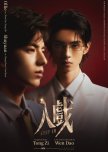
Honestly, this is the best Chinese BL of 2026 for me. I've watched a lot of Chinese BLs, and Deep In is easily the spiciest, boldest and most emotionally intense one yet. The intimacy is passionate, emotional, and completely earned. Every intimate scene serves the story instead of existing for shock value. Combined with its psychological themes, romance, and drama, it creates an unforgettable experience.The premise is incredibly refreshing. Two seemingly straight men, Zhang Zhun and Zhen Xin, both with girlfriends, are cast as the leads in a gay romance series. As they immerse themselves deeper into their roles, the line between acting and reality slowly disappears. What begins as performance turns into obsession, desire, emotional manipulation, and a complete loss of where fiction ends and real feelings begin. The title Deep In perfectly reflects how deeply they become consumed by both their characters and each other.
Episode 2 completely shocked me. The NC scene was one of the hottest I've seen in a Chinese BL. The director calls "cut" three separate times, but they keep on doing it because they're so lost in the moment. That scene alone perfectly showcases the incredible chemistry between the leads.
One of the biggest surprises is how young the cast is. Ollie, who plays Zhen Xin and Dr. Fang Chi , is only 20 years old and was likely just 19 during filming, yet he delivers such a confident, commanding performance with remarkable emotional depth. Shu Yuan, who plays Zhang Zhun the patient Gao Zhun, is only 22. Together, they have phenomenal chemistry that feels effortless and completely believable. Their performances are far beyond what you would expect from actors their age, and I genuinely hope they reunite in another series.
I also loved the behind the scenes perspective on acting. The story constantly shifts between the drama they are filming, where they play Dr. Fang Chi and the patient Gao Zhun, and their real lives behind the camera. Watching them step in and out of completely different characters while their own emotions begin to mirror the script adds another fascinating psychological layer. It truly feels like you're watching two stories unfold at the same time, and the director executes this concept brilliantly.
The acting across the entire cast is phenomenal. One scene that completely broke me was Gao Zhun revealing he had been sexually assaulted. His emotional breakdown felt heartbreakingly real. Then the director calls “cut,” and they instantly have to switch back into a completely different role. Playing two different characters in the same series and constantly adjusting between them is incredibly difficult.
And Can We Also Talk About That Iconic Snow Scene in Episode 7?
Out of more than 500 BL series I've watched, no scene has stayed with me quite like this one.
The kiss beneath the falling snow was absolutely breathtaking. I've already rewatched it five times, and it still gives me goosebumps every single time.
Instead of saying, "I like you," words we've heard countless times in dramas, Zhen Xin quietly says,
"I walked 472 steps following you from the hotpot."
That single sentence carried every feeling he couldn't bring himself to say.
His teary eyes spoke of longing, fear, regret, and love that had been buried deep inside his heart. Before another word could be spoken, Zhang Zhun stepped forward and kissed him.
There was no dramatic confession or grand declaration of love. Just two people who had finally found the courage to let their hearts speak for them.
The silence, the falling snow, the tears, and that kiss came together so perfectly that it became one of the most beautiful confession scenes I've ever watched. It wasn't loud or extravagant. It was quiet, gentle, and devastatingly emotional.
For me, this isn't just my favorite scene in Deep In. It's one of the greatest kissing scenes I've ever seen in any BL.
The cinematography is another highlight. I really appreciate that the intimate scenes aren't crowded with unnecessary people on set. Instead, the environment stays minimal while the director monitors everything from outside the room, making those moments feel much more natural, intimate, and immersive.
It's even more impressive knowing the director, Liu Jun Hao, is only 27 years old. He's both an actor and director, and the way he brought this complex story to life is seriously impressive. Seeing such a young director and two incredibly talented young actors create something this polished makes the series even more remarkable.
The soundtrack is fantastic, the pacing never slows down, and every episode leaves you wanting more. If you enjoy psychological manipulation, an obsessive and emotionally complex male lead, blurred lines between fiction and reality, unforgettable chemistry, memorable NC scenes, and a fresh, original story, Deep In absolutely delivers.
One tip if you're watching on Viki or GagaOOLala. Stay until after the credits because every episode includes bonus scenes that are absolutely worth watching.
Chinese BLs continue to raise the bar, and Deep In has quickly become one of my all time favorites. If you love mature romance, psychological tension, and emotionally powerful performances, this is a series you shouldn't miss.
For me, Deep In isn't just the best Chinese BL of 2026. It's one of the best BLs I've watched in years and a series I'll be recommending to everyone.
Questa recensione ti è stata utile?


