


I see this drama as Hotaru no Hikari with a sprinkle of Nodame Cantabile. There's the same sort of chemistry between the leads as in both but, unlike Hotaru no Hikari, I didn't find the lead unbelieving silly but, more like Nodame, just too kind, which some people look down on or take advantage of. When you see her for the first time, you think it's probably going to be a drama going around in circles but it's actually very direct. Kyoko Fukada is so versatile you don't know what you're going to find with her; her character, though too kind for her own good, is also very honest. Let me tell you, for a drama like this, that's actually refreshing.
But what I liked the most about this drama and the main reason I'm actually writing a review is the following: this is a romantic drama with love triangles and unrequited feelings in which none of the involved ladies take it on each other. They're not resentful, not vindictive and actually talk to each other about things other than the men in question. Heck, I even liked the relationship between the lead and her co-workers, which got developed from cliches that may have been unnecessary to something more realistic and interesting. There's a lot of ladies standing up for each other in this, I don't know if that's a merit of the manga which this is based of or not but hey, I'm so grateful.
All in all, I was faced with situations in which I thought the drama was intending to go towards a cliche and there it was, doing something else (especially with Shohei Miura's character). It's not devoid of cliches, mind you, there's a stern cold-seeming male lead saving a heartwarming cutesy female lead, but there's a lot in between I found absolutely worthy of my time.
Esta resenha foi útil para você?
Esta resenha pode conter spoilers
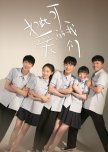
The best slice of life youth drama i ever watched!
First of all i would like to apologize as my english is not that good, but i simply want to share how i love this so everyone won't miss this beautiful drama! This is first time i write a review.Story:
Like other youth dramas, the story is about the friendship, school life, puppy love, problem with their parents. There are 5 main leads, they're childhood friends who grown up in the same neighborhood. The story is so simple, but the screenwriter combine with great acting of the actors make this drama is so beautifully done! The drama can make u laugh so hard and sad at the same episode with no evil characters, like "how can a highschool student plotting something so evil?" ( *cough At Eighteen). I love the relations between parents and childs even the relations between neighbors and build up romance of male lead and female lead. Even though romance is not the main plot, but romance in this drama is so satisfying especially in the last episode, make your heart melt with ML and FL sweet moment together. 16 episode is definitely not enough!
Acting/cast:
All the casts acting are so great, even the neighbors. But for me female lead is the star of this drama, she is so adorable and lovely. I love how Tian Xi Wei act as Cheng Zi who is cheerful, caring, positive and fragile at the same time, make me want to hug her everytime I see her cried. The way she act cute is so natural. I watched Marcus Li's other drama, go go squid and fairyland lovers, his character is not far from those two dramas so I guess he doesn't have problem acting as Tan Song. Finnaly he get a chance to be a male lead and I'm glad he did pretty good job. His chemistry with female lead is top notch, how they quarrel, get jealous and how they console each other when one of them have problem is so satisfying to watch.
Music:
Music in this drama are good, especially the ending song make u drown in emotion when it plays in romantic scenes. You can search it at youtube.
Rewatch value:
With great acting and no evil characters definitely worth to rewatch without skipping any episode
Overall:
If u like youth story, slice of life, satisfying romance and most importantly no evil characters this drama is yours, and I promise u won't regret it!!
Esta resenha foi útil para você?
Esta resenha pode conter spoilers
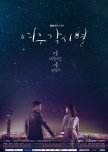
First of all, I will be honest that almost dropped this show watching the first two episodes, because I thought it would be one of the trending "relationship-between-human-and-robot" stories. However, I returned to this show after I was unexpectedly spoiled by YouTube and realized my guesses were wrong.This show focused on human relationships rather than real-life problems that happen in airports. Typical plots in airport dramas such as airplane accidents and troublesome passengers were covered, but briefly. Other than the relationship between the top two, the security couple, the manager couple, the lonely friend, some stressful bosses were covered.
The con reasons I gave 7/10 overall for this drama are the following:
- There was nothing deep or surprising. Basically, some ruined relationships in the past were fixed with some gangsters involved. They could have been fixed easily by simply communicating.
- Too many unique characters, and some were irrelevant to the story. Scenes like witnessing a husband cheating, workplace rumors, and relationship with some dark forces... these incoherent incidents messed up the main plot.
- Ending sucked. All those emotional struggles surrounding his disability became unnecessary in the end, because no one cared about it including him in the end right?
Like it said during the show, everyone is unique and have different views and opinions, despite working at a place where they serve customers who only care about themselves, because it's an airport. You can think of each other as "someone passing by in your life", and you will eventually forget about the encounter. I really liked this message.
It was really heartwarming to watch, with the help of some great OSTs. They really matched the theme of this show. However, it all ends up to this feeling, as if I rid on a ferris wheel instead of a roller coaster. Everyone carried stresses in the middle, but they all got along in the end.
Esta resenha foi útil para você?
A Heartwarming Friendship Fluttering Across Backgrounds And Age...
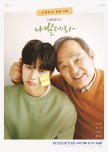
Based upon the eponymous webtoon by Ji Min, Navillera was adapted onto the small screen by screenwriter Lee Eun Mi ( Tunnel-2017) and director Han Dong Hwa ( 38 Task Force, Miss Lee) with the hope of bringing to life this story’s heartwarmingly atypical friendship between 70 year old Shim Deok Chul ( Park In Hwan) , and a young man his early 20s Lee Chae Rok ( Song Kang) who are both united through their shared adoration of ballet . A heartwarming friendship tale, Navillera tackled some profoundly upfront issues about ageism, mortality, mental and physical illnesses as well as social prejudice also.
Park In Hwan was undeniably brilliant with his role as our main protagonist Shim Deok Chul. Although older characters are not uncommon in K-dramas , it was a breath of fresh air to come across a character in his twilight years who took central stage as a less glamorised or “ fresher” protagonist in a Korean drama with an equally heartbreaking character growth over the course of the series .
Naturally, it is important to respect South-Korean culture and expectations, however, ‘ Navillera’ pivotal focus is highlighted by the peculiar friendship between two individuals of different ages, with different backgrounds and personalities, who learn to surpass these boundaries through their friendship. Deok Chul respects Chae Rok both as his teacher and being his “ manager”, both inside and outside of the practice room. This allows Deok Chul to take on both the “encouraging figure” and the “friend role” for Chae Rok by his kind actions and standing up for him especially against his young mentor’s rival Yang Ho Beom ( Kim Kwon). ( As well as developing a friendship with this individual also.)
This of course moves us onto the deuteragonist of ‘ Navillera’ Chae Rok. Whilst actor Song Kang’s previous performances have been a little stiff , he seemed to truly capture something vividly brilliant behind his character Chae Rok; a young ballet dancer caught between the pain of the past, and struggling to move forwards to a brighter future. Yet whilst ironically Chae Rok’s archetype does undeniably fall into the cliche of the “ young and good looking main character”, his role in the series is nonetheless just as multifaceted as Deok Chul. This did not push Chae Rok down the stereotypical root of being a ‘ heinous and bitter person’. He’s seemingly aloof and judgemental as well as quick to complain about Deok Chul, however, he is shown to constantly battle with loneliness due to the circumstances of his father Lee Moo Young ( Jo Sung Ah) . He possesses also a similar streak of altruism and kindness as Deok Chul, which manifests throughout his actions over the course of the series.
Over the course of 12 episodes, the duo’s friendship begins to truly bloom. Even Deok Chul’s normally hypercritical wife Choi Hae Nam ( Na Moon Hee) taking a later shine to the younger dancer .
However, against all odds of cliches,the side characters of the series were often given intriguing backgrounds also. Chae Rok’s mentor Ki Seung Joo ( Kim Tae Hoon) has had a complicated divorce and past due to his career as a former- ballet dancer and is determined to not let his young prodigy walk down the same route. Similarly, Deok Chul’s youngest son Shim Seong Gwan ( Jo Bok Rae) ‘s changed career decision often leads to tension during family meetings, whilst the eldest Shim Seong San ( Jung Hae Kyun)’s harsh attitude towards his daughter and wife is certainly more complicated than it seems whereas Deok Chul’s daughter Shim Seong Suk ( Kim Soo Jin) supporting her husband Byun Young Il ( Joong Hee Tae)’s decisions were equally endearing storylines .
Yet the notable story arc which should probably be mentioned along the way can be seen within the staged romance between Chae Rok and Deok Chul’s granddaughter and Chae Rok’s colleague Shim Eun Ho( Hong Seung Hee).There was nothing inherently “ terrible” about this romantic pairing.Eun Ho and Chae Rok were mutually respectful of one another , and shared common ground within their close relationship with Deok Chul. On the other hand, it is fair to say that whilst partially necessary for allowing both characters to overcome their own lack of self-esteem in different ways, the romance respectfully wasn’t the most intriguing or exciting part of the show.
Similarly, another major focal point of the series occurs within Yang Ho Beom’s long-held “ enmity” towards Chae Rok. Without revealing too much about the reasons behind Ho Beom’s contempt of Chae Rok ( due to feeding into the main storyline), it is pivotal to point out that this “ rivalry” begins to filter into the storyline many cliche events, though, this does gradually begin to fizzle out due to their circumstances. However, this is what was refreshing about Ho Beom as a character and minor antagonist . He was far from being a “flawless person ”, but, he wasn’t entirely shown onscreen as having “ no humanity” either. Without any spoilers , there is one particular scene in which Ho Beom later approaches and sits down for a meal with Deok Chul, in a heartwarming moment of the drama.
Besides some minor flaws of the series, the ending of “ Navillera” was bittersweet. An amazing ending point to see just how far the characters had come and the difficulties which Deok Chul is taking one step at a time.
It is easy for shows like “ Navillera” to become overwhelmed with cliches by detracting from the more important points of character growth and storyline. Admittedly, the drama didn’t entirely stray away from these angst-ridden tropes, however, they were used to screenwriter Lee Eun Mi’s advantage allowing " Navillera" to become a heartwarming, tearjerking from beginning to end about family, friendship and self-determination. An enjoying and heartfelt watch with prominent character-growth and pivotal and universal messages throughout.
Esta resenha foi útil para você?

Esta resenha pode conter spoilers
Why do they normalize so much toxicity?
I'm still shocked how they normalize threatening someone with suicide and jealousy. The lead girl revealed herself but because her boyfriend was jealous she became "ugly" again. How on Earth is this acceptable? He was willing to marry a girl he didn't love because she threatened him to kill herself and no one told her to see a therapist? I don't understand.It was cliché and painful to watch. The acting was not bad, but the characters are annoying. The only good point was the music.
I guess you can watch this drama if you decide to unplug your brain, but if you begin to think about how problematic it is, you never stop.
Esta resenha foi útil para você?

Watch Lighter and Princess first!
Listen to me. Have you seen Lighter and Princess? No? Watch that first. You’ve seen L&P already? Then be prepared for a downgrade when watching this. These two shows are quite comparable. The setups are the same (a college romance in the beginning) and the basic structures are similar. Both include a breakup at the midpoint with a timeskip (not a spoiler), with a significant business focus sprinkled in between while ML desperately attempts to salvage whatever love they have for each other. It’s difficult not to compare them.The first 14 episodes or so are fairly standard. Nothing to write home about. A college romance. He’s a sneaker designer starting his own business, while she’s a struggling college student entering the world of business finance to support her mother. Slowly but surely, a romance develops, only for the show to break them up in the latter half of the story. Sound familiar? I told you it’s similar to Lighter and Princess. This is where the writing truly begins to test your patience.
I wouldn’t call it toxic per se but the “will they, won’t they” shtick was really annoying. The pushing each other away in order to protect the other person had my eyes rolling numerous times. ML is particularly guilty of this, and his decisions led to significant consequences.
There is a second couple, but many would find a professor-student relationship pairing weird, but I didn't think much of it. Their storyline was not particularly interesting by the end anyway.
For me the best thing about this show was the opening duet performed by Arthur Chen and Sabrina Zhuang. Really good.
Esta resenha foi útil para você?
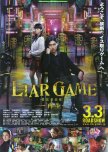
But once the players entered the playing field…That is when I sat up straighter, started to smile, munch happily on my overly buttered popcorn and get that excited feeling as if I am sitting in a theatre waiting for something good. Let the Games Begin! The game played in Reborn is intricate and will keep you entertained.
The cast of characters in the series are as quirky as ever. Mushroom Head and Gold Tooth both make appearances but most of the characters are new so it kept things fresh. The location is crazy. It looks like a really cool upscale techno nightclub that has been bombed and forgotten. The set design was awesome.
The execution of the game and plot was fun and entertaining. I love how smart Akiyama is when breaking down the game, forming alliances and figuring out his incredibly clever strategies. He is so cool in his plotting, so patient for the outcomes and totally badass when he needs to be.
The one thing that brought this film down a notch for me was indeed the absence of Kanzaki Nao. There was a chemistry between the lead actors and a relationship that developed between their characters that was lacking with this new pairing. There was a special dynamic from the series between Nao and Akiyama; his cynicism was attracted to her goodness. She softened his edges and that little touch made Liar Game a little more than just a drama about puzzles and ultimately enhanced the tension of the outcome. I felt the loss keenly. Matsuda Shota is a very solid actor and the rest of the cast does a great job...I simply missed Nao. I wish that wasn't the case.
The music was actually great. I liked the techno beats and some of the strange compositions that fit the mood and the tension of some scenes. As always, the theme playing when Akiyama enters the game was just as cool as his character. Loved it.
Overall, I totally recommend this film. It wasn’t perfect but it was a lot of fun.
Esta resenha foi útil para você?

However, this series has also created some of the most annoying characters on TV, ever - Aim, Jeed and Earn. Its not that these characters were written to be antagonists of the show - the characters, the way they were acted and the artists - were all annoying. Id like to scratch my tv everytime I see Jeed smirk on screen. These 3 characters were so unrealistic and unbelievable in their parts that everytime I see them on screen I just want to click fast forward. Grace was a villain and to say that i li ked her more than Jeed is just a testament of how annoying this Jeed character is.
Ive rated rewatch value to 6 because it is just painful to watch 36 episodes. If its 36 episodes of Phun and Noh being cute together, i would have rated it a 10. I give this an overall rating of 8, again, just because of Phun and Noh and if i can remove the Jeed, Aim and Earn from the whole series I would have given this series an overall rating of 10 - so just keep your remote handy and click when you see Jeed and Aim and Earn.
Esta resenha foi útil para você?

Aesthetically pleasing and simply heartwarming that it feels like you're reading a poem.
I started watching this drama with no expectation because I'm not familiar with the actors. Moreover the previous Shin Se Kyung's dramas I've watched weren't my cup of tea.I don't know how I ended up clicking this drama but after I watched the first two episodes I was totally hooked. Honestly, the plot is not really new and the characters themselves are obviously fictional but surprisingly this drama is so well written and nicely executed, so it still successfully gives you realistic feeling that you can relate to its story.
One of the most interesting parts about this drama is its range. I really like how diversed and woke the story is by including many aspects in life from love, friendship, family, career, gender, sexuality, environment, art, sport and many more. Although they bring up alot of issues, they still manage to keep its pace consistent and it doesn't go all over the place.
Another thing that I like about this drama is the meaningful conversation between main leads. Yes, this drama contains a lot of talking. However I don't feel bored at all. I like how honest, beautiful and pure the conversations are, even when they talk about ordinary things. They really put a lot of depth in their conversations.
You also don't have to worry about the angst because this is a lighthearted drama. So, despite its poetic vibes, you still can have many laughs. The humour itself is not exaggerated but it's right in its portion which I like it.
How about the casts? There are four main leads in this drama and I love all of them. Each one of them is unique in their own way.
1. Ki Sun Gyeom - He's so pure, selfless and innocent. I don't think this kind of person exist in real life but still I can't help falling in love with his character. Im Shi Wan portrays this role really really well.
2. Oh Mi Joo - She is probably the most realistic character in this drama but that's maybe also because I can relate the most to her character. I love how independent and straightforward she is. She's adorable!
3. Seo Dan Ah - She's a badass character here. She's a strong, an independent and a confident business woman. She is interesting.
4. Lee Young Hwa - I think he is the weakest among the main leads but he's still likable especially when he's with Seo Dan Ah and Ki Sun Gyeom.
That's all I can say about the characters. I think it's better for you to observe by yourself.
Overall this drama is really interesting and well executed. Each of episode keeps getting better and better. If you like a lighthearted and heartwarming drama, I really recommend you to watch this.
Esta resenha foi útil para você?
Nirvana in Fire 2: The Wind Blows in Chang Lin
29 pessoas acharam esta resenha útil
Closure
While NIF2 works as a superb standalone story, it is best appreciated if watched after NIF. Also be aware some of my comments may be spoilers for NIF so best not to read this if you haven't watched it.NIF2 is the story of the changing fortunes of the Changlin family as together with the Liang empire, they navigate a changing of the guard. While the story skips a generation, the ghost of Lin Shu "haunts" the drama. After all, the powerful Changlin Army is the legacy Prince Jing created in Mei Changsu/Lin Shu's memory. Xiao Tingsheng, the now elderly Prince of Changlin instills in his family the same moral values, duty, honor and loyalty that were innate to Prince Jing and Lin Shu. His sons Xiao Pingzhang and Xiao Pingjing grow up with and share a deep bond beyond blood ties with their imperial peers, especially the Crown Prince and their cousin Xiao Yuanqi. Their proximity to the throne and unbalanced power in the court is feared and envied by many. This sets the stage for political plots and intrigue at the highest levels of the court that pose many challenges for the Changlin family. This brings the free spirited and fun loving Pingjing back from the famed Langya hall to aid his more responsible elder brother Pingzhang, the heir who already shares their father's duties.
In NIF, we can only imagine what young Lin Shu's life was like. NIF2 invites us to experience being in the bosom of a close and loving family at the epicenter of power in the empire. We laugh and we cry with them, their friends are our friends, their foes our enemies, their hopes our hopes and we feel the pain of their losses in an acute and very real way. The script-writing and plot in this drama is deep and masterful in a way that rivals that of NIF. While political plotting, revenge, justice, loyalty, morality, duty and envy are still strong themes, it dives more deeply into relationships between sovereign and subject, parent and child, husband and wife and siblings and cousins while exploring the fine line between good and evil and nature vs nurture. Unlike NIF, the story does not revolve around one core character but a number of key characters. Like NIF there are many grey characters and even the good characters are very realistically written with their own strengths and flaws. These lead characters evolve over time as the story-line spans a generation shift and explores how these characters deal with change. The second half of the drama focuses on the younger generation and this is where weakness in the acting emerged as these demanding transitions are played out by younger and less experienced actors. That said, overall the cast was very strong and well populated with many veteran actors.
Newcomer Liu Haoran's Xiao Pingjing was stellarly portrayed from start to finish. He managed to "grow up" from the immature, playful, outspoken, impetuous and slightly irresponsible younger son to be a skilled pugilist, brilliant general and military tactician, the rising star of the Changlin family. This actor immediately conveyed that Pingjing must be what a young Lin Shu (whom we never met in NIF) would have been like. He is the young actor to watch coming out of NIF2. Sadly his love interest Lin Xi was played by a limited and forgettable young actress. Lin Xi's father was killed before she was born so she is an aloof character, a talented and capable lady doctor. She had to make a terrible, controversial and life altering decision in this drama. This is an awesome part that a better actress could have killed. This one wore a perpetually tragic expression and when pressed to defend her decision she overacted, wailing in a completely out of character way. There was no chemistry between Pingjing and Lin Xi and as a couple, they were not convincing. Pingzhang and his wife Meng Qianxue on the other hand were touchingly in sync with each other. Fortunately this is not a love story although there is more romance than NIF. Both female leads were strong and well written characters but only Meng Qianxue's role was well acted.
In the second half of the drama, cousin Xiao Yuanqi also comes of age, clawing his way up despite the disgrace his father (the youngest son of Prince JIng) brought on to their branch of the family. Yuanqi is a chameleon and the most interesting, complex and empathetic character in the entire drama. To be fair it is a challenging role, one that actor Wu Haochen was not up to. While his performance was technically good, it was also pedestrian and boring. He simply lacks onscreen presence and charisma. I didn't want to watch him and would either tune out or tune into whoever he was sharing the screen with. This was too critical a role for them to have miscast so badly. The character itself was exceedingly well developed, it just didn't come to life in the right way. It is why for me this drama is not a perfect 10 even though the script, plot and story-line can hold its own against NIF.
NIF broke my heart because even though Lin Shu/Mei Changsu got his justice, it was his final act. What he lost could never be recovered. I was inconsolable for a long time. Watching NIF2 was cathartic because NIF2 shows us that his legacy and everything he stood for lives on in all the lives he touched. And despite its own tragic moments, in NIF2 we get to imagine that maybe Lin Shu came back to fulfill his final promise. That gave me the closure I badly needed.
Esta resenha foi útil para você?
It is twice the pleasure to deceive the deceiver.
This Chen Kaige production more than lives up to its pedigree with a fresh and intriguing plot, unforgettable characters, eye popping visuals and costumes and movie quality production values overall. It is the rare Chinese drama that delivers a hefty and completely satisfying wow factor at the end that actually exceeds the exciting, high octane start. Unlike most Republican era dramas, this one is not at all just plain depressing and yuck.On his way home, fresh graduate Hua Minchu (Oh Hao) finds himself entangled in the affairs of the Eight, a vast and powerful jianghu alliance representing eight professions or guilds (spies, sages, mechanics, deceivers, thieves, assassins, poisoners and entertainers). The Eight guild masters have been long awaiting the emergence of a new leader (their Holder) to help them "go legitimate" by disbanding and exiting the grey underworld economy to become upstanding and productive members of society. But this is easier said than done as different factions emerge and other forces plot to seize power and unlock the secrets of a fabled magnificent treasure.
This drama bursts with colorful and multi-faceted characters from the most banal to the most divine; the most loyal to the most diabolical; the most compassionate to the most deadly and the most transparent to the most deceptive. While Oh Hao's Hua Minchu is clearly the lead and very well acted, this drama is about teamwork and the entire idiosyncratic cast steals my heart. All of the guild masters are legends unto themselves; each bringing an unmatched skill to the table that complements the skills of the other masters. Both good and bad are so dynamic, bad ass and so utterly awe inspiring it is literally a gangster's paradise. I love that this drama is about a team that works together, loves together, rejoices together and mourns together - the sum of the parts is greater than the whole. It is big fun to watch such impeccably well acted character dramas like this that doesn't just focus on one lead character. That said, I must admit that Oh Hau/Hua Minchu is delicious! He is a man's man - tall, tan, charismatic and ruggedly handsome - unlike the super androgynous, pasty white faced effeminate male leads we see too much of. He is not the best fighter nor does he always make the best decisions but he is clever and dang - he is way too sexy for whatever outfit they pour him into! I watched this through what I (mistakenly) thought were gaping plot holes just to savor his effortless charm and masculinity.
The villains in this show are very good villains - just as deadly, well resourced, smart and cool . Among others, our heroes are pitted against main villain Fang Yuanji, a viciously brutal, steroid enhanced lean mean killing machine and a shadowy mastermind with an opaque agenda. I had my heart in my mouth every time the Eight engages in hand to hand combat with Fang Yuanji and all their encounters are shockingly consequential. I don't think I need to elaborate on the visual virtuosity of action scenes produced by Chen Kaige - and in truth I don't have the words to do them justice.
From the start, I saw this as a character drama and did not have high expectations in terms of plot so I was wowed when it actually delivered. The story is tightly written and the plot unfolds at an exciting pace with enough conspiracies, twists, angst, betrayals, manipulations and manifold adventures within the well constructed and engaging arcs. However, it is not that easy to develop believable romance threads within such an action packed and heavily character laden story. As such, the romance between Minchu and Xishui (Tan Songyun) was not convincingly developed and it was quite obvious that many of their scenes were cut. That said, they still had good chemistry and Tan Songyun is always adorable, she just seemed to have been dealt a bit of a raw deal on her scenes. I don't enjoy triangles generally but in this case, it is handled very well and turns out to be actually relevant to the plot. In the middle, plot holes emerged with key actors making uncharacteristic decisions that had me rolling my eyes. And then in the final two episodes, I realized I was fooled - everything makes sense and every major loose thread comes together in an EPIC showdown and an exhilarating finale that will leave you thrilled, agonized, shocked and completely and utterly pleased by the way the deceiver is deceived. This is the one drama I have seen this year with a truly strong finish and it is the way dramas should end - shortly after a thoroughly satisfying climatic peak.
Make this the next drama you start. You can thank me later. My 8.0/10 rating would be higher were it not for the cut episodes and the somewhat weaker romance arcs.
Esta resenha foi útil para você?
2-Storyline/Plot : That's what captured me about this drama; the story about revenge, hate, action and even romance, the whole concept was was so deep.
Every episode i get amazed by events and several twists that made it very appealing whether it was action twists or romantic developments.
3-Acting/Cast : After this drama Yamashita Tomohisa became one of my favorite actors; he really did his role perfectly; the kind of cold, affectionate character that made me very invested in his character. There were Horikita Maki too, she was cool but not that great as a character. I actually loved the acting department though there were too many weird characters.
4-Music : Yes I remember the music, it was quite good.
5-Rewatch value : There are a lot of moments that deserve the rewatch plus it's short therefore, it's easy to do so.
6-The ending : I liked it even though i was expecting more but either ways it was nice plus there's the film so it's not actually an "end"
7-Overall : Kurosagi is a drama that can make anyone fall in love especially action-revenge lovers (as myself).
I had so much fun while watching it. My all time favorite part when Kurosagi says "Bang"!
Esta resenha foi útil para você?
Ironically, it had been sitting in my ptw list for a good year, waiting - so I thought - for me to be in the right mood for its somehow heavy subject. It came as a big surprise that this was the perfect moment and Algernon ni Hanataba wo is the show that finally reminded me why I fell in love with Asian dramas in the first place and became an addict so many years ago.
It enchanted me and pulled me into its world five minutes in. I hadn't even realized I was marathoning with bated breath until I exhaled.
The show is built on two different levels: the plot itself with its events and the story told by the characters. These two levels aren't of equal importance, that is, if you watch for the events it may disappoint you, as it suffers from the typical Japanese brevity and sudden, unexpected turns. However, this drama is meant to be valued for the thoughts it provokes and the way it does so, hence my perfect mark.
I won't lie, it made me cry. A lot.
This is a beautifully heart-wrenching story of diversity and the need to conform, be 'equal'. While most of us aim at being smart enough to earn more, have success in life and even wallow in our self-esteem, Sakuto dreams of becoming intelligent for the people around him to love him. This makes his journey all the more tragic, since it inevitably raises the question whether he was happier when only half cognizant of his surrounding or when he fully grasped the meaning of everyone's motivations and finds out that being a genius can be a sentence to loneliness. It also heavily probes on the benefits of intelligence when it's attained at the cost of humanity, empathy, compassion and even love.
I believe each single character in this drama has a precise purpose in terms of typecasting the different approaches to what is generally considered 'normal'. Here's a word I hate when referred to human beings, but it is the core of this tale, in its literal meaning of 'conforming to the norm'. This means that all the characters revolving around Sakuto find their justification only in connection with him, they represent the wide range of 'normality' as opposed to the extremes Sakuto's going to experience.
Which is not to say that they didn't act well. Quite the opposite: what fascinated me here is the fact that each actor played its part in a different way, according to his/her role in Sakuto's life. The same can be said about the direction, which plays a precise role too with its use of symbolism, archetypes, flowers, colours, camera focalization. Even Algernon is a great character. Tiny details are everything but irrelevant, a trait I always, highly appreciate.
And at the risk of being called biased, I maintain Yamashita's acting is impressive here. I was deeply moved by the sheer movement of his hand, the subtle, slow changes in stance, walk, gaze. I loved Sakuto as a viewer, as a woman, as a mother, as a sister, as a friend, to the point I desperately wanted to hug him and never let go. I could go on, but I'm becoming verbose and perhaps a little too emotional too.
The music is the only trait of the drama that gets a mere passing grade. I wish Japanese shows in general would put on their Osts the same amount of effort they spend on photography and characterization. The only song played here is very suitable to the story, but repetitive to the point of losing all its impact.
I've already rewatched many scenes soon after completing an episode. I simply couldn't help it. There's no doubt in my mind I'm going to re-watch the whole drama soon enough, certain it will lose none of its emotional impact on further viewing.
Esta resenha foi útil para você?
Esta resenha pode conter spoilers
Quiet in its voice, thunderous in its impact – a drama of nuance, humanity & whispered revolution
Between Wind, Clouds and Change – "King Maker: The Change of Destiny".Some dramas tell about history – others tell how history is made. "King Maker: The Change of Destiny" does both. It's also a historical KDrama that doesn't just focus on battles or hero myths, but makes the art of face reading (Gwansang) the narrative compass: Whoever wants power must understand people – and themselves. The story takes place in the late Joseon era, a time of political upheaval and dynastic power struggles. But instead of swords, the drama talks about people who deal with knowledge – and read faces. The series is based on the novel "Wind, Clouds and Tombstone" by Lee Byung-joo and creatively reinterprets historical events.
At the center stands Choi Chun-joong, a man not only talented at physiognomy, but who has a deep sense for the movement between fate and choice. His gift for reading personality, future, and intention from a face makes him a valuable advisor, but also a target for political intrigue. Park Si-hoo plays Chun-joong with subtle intensity – a man who thinks more than he speaks, but whose presence fills every scene. At his side is Princess Lee Bong-ryeon (Go Sung-hee), who struggles with her own tragic gift – seeing the fates of others. Go Sung-hee gives Bong-ryeon a quiet dignity, shifting between vulnerability and determination.
I´d say the quiet, deep relationship between Chun-joong and Princess Lee Bong-ryeon gives the series an emotional warmth that goes far beyond grand gestures and touches through small, sincere moments. Their love is marked by separation, reunion, and the burden of fate – less passion, more loyalty. Their romance is not the center, but rather the emotional backbone – giving the political drama a human depth. It's like a river that always flows, even as the banks change. Their bond is based on shared gifts – face reading and destiny reading – and becomes a kind of spiritual complicity. It shows how intimacy lives not in big gestures, but in shared understanding. The romance is quiet, but sustaining – an echo underlying everything.
The series doesn’t follow a classic hero’s journey, but tells of entanglements: between the power-hungry Prince Lee Ha-eung, who loses himself between reform and control; between officials who renegotiate their loyalties daily; and between people whose moral decisions influence the system more than titles. Especially impressive is the calm, almost tentative narrative style, using time jumps not as breaks, but as mirrors for human maturity.
The drama convinces with a finely tuned ensemble performance. The relationship between Chun-joong and the ambitious Prince Lee Ha-eung is a prime example of ambivalence and power psychology. Jun Kwang-ryul shines as the power-conscious Prince Lee Ha-eung, whose performance captures the full moral complexity of the era, balancing ambition and regret. The supporting characters are also carefully and multi-layeredly designed – from scheming officials to tragic outsiders. They’re not just decoration but part of a system that enables as much change as it prevents. Particularly interesting is the cultural background: The art of face reading – called Gwansang – gets a tangible, almost magical significance in the series. It’s not just a trick, but a mirror for responsibility, freedom of choice, and compassion.
What makes "King Maker: The Change of Destiny" so special is its quiet, poetic narration: Political intrigues, conflicts of loyalty, and personal sacrifice are not made sensational, but are shown with respect for the characters and their development. The love story between Chun-joong and Bong-ryeon is tender and believable – it grows out of mutual understanding and shared worries, not dramatic coincidences. Their relationship stands for mutual respect and quiet strength.
The production scores with atmospheric camerawork, detailed costumes, and a fitting soundtrack. Every scene feels lovingly staged and invites the viewer to let the slow unfolding of fate and change wash over them.
"King Maker: The Change of Destiny" is not a loud drama, but a quiet, intelligent masterpiece, convincing with its humanity, well-placed accents, and deep appreciation for tradition and change. Anyone willing to embark on a journey of delicate nuances, fascinating history, and gentle romance could as well love this KDrama.
This KDrama is a moving homage to the quiet forces of change, to the power of perception and humanity. A series for heart and mind – and a recommendation for anyone wanting to feel how history, magic, and love can meet on soft feet.
--------------------------- SIDE NOTE: GWANSANG in "King Maker: The Change of Destiny" --------------------------------------
Gwansang continues to shape the cultural self-understanding of many people to this day. What appears as “face reading” in historical dramas like "King Maker: The Change of Destiny" is more than just interpreting external features. It is an echo of ancient shamanic practices, an intuitive grasp of truth—deeply rooted in Korea’s spiritual history. Even today, many people seek counsel from face readers or shamans when it comes to fate, love, or decisions. Between tradition and trend, this art lives on—as a mirror of a culture that never completely loses sight of the invisible.
In Korean culture, the art of Gwansang has a centuries-old tradition. It is the art of drawing conclusions about character, fate, potential, and even future events from facial features. The forehead as a sign of wisdom, the eyes as mirrors of the soul, the jaw as a measure of determination—these are all classic elements of this ancient teaching. But Gwansang is more than physiognomy in the Western sense: it also touches spiritual dimensions, for behind the visible form, an invisible echo often resonates—an aura, an energy, a truth between the lines.
As a cultural practice, Gwansang becomes an ethical touchstone in “King Maker: The Change of Destiny.” Here, especially through the character of the “Taoist” or "Fortuneteller" Choi Chun-joong, Gwansang is not portrayed as magic but as an intuitive science that influences political decisions. The art of face reading is not romanticized but reflected upon. How far can one really see? Where does perception end and wishful thinking begin? The face becomes a map—not for destiny, but for decision. Princess Bong-ryeon, in contrast, represents another, intuitive level: she senses destinies in advance, has visions, and follows not the logic of what is visible but the inspiration within. Their connection brings together two paths of knowledge: calculation and intuition, reason and empathy. In this way, the series shows that true understanding happens not only through the eyes—but also through the heart. And so, King Maker ultimately becomes a meditation on responsibility: those who read faces must also be able to look within themselves.
Esta resenha foi útil para você?

The biggest reason being that this movie at times felt a touch too muddled in what it was trying to convey. It deeply explores an issue very well but yet not deeply enough. Deep issues are at times downplayed due to very stereotypical assumptions, and the end for me felt like a cop out. I admit, that viewpoint can be countered but I felt in the grand scheme of things, it allowed the audience to still retain their view of "normalcy". However, this isn't what made me dock points largely.
This movie deals with a topic that I rarely see and as a review mentioned, where a man trying to become a woman isn't the butt of a joke. Here, there is no laughter, little room for it. This movie cleverly approaches the topic as it takes this Herculean and manly guy who isn't happy with himself. He wants to become a woman. It creates an interesting and refreshing dichotomy as here is a guy who can easily fight any man and easily conquer a horde of attacking gangs yet he wants to be a woman.
The strong point is definitely Cha Seung Won's character (Ji Wook) and he carries this movie for me. The rest of the plot for me is kind of fodder as are a bunch of the characters. There were certain characters in here that for me had no legitimate reason to be here or to be included in the story as they were. Mainly because they muddle vs aid the story. There are other characters though I recognize their importance because they add to Cha Seung Won's character. For example, the antagonist here the sub-leader of a gang and while I find his character to add very little in terms of plot, he brings out Ji Wook's character. What I mean is that most of the action sequences come from the interaction between the two which allows for the story to cement the manly image that Ji Wook has. However, while a good portion of the action scenes are relevant, I have to pick a bone with a good number of them. I feel this way about a lot of movies and dramas that bring to the table an unsettling topic or a very intelligent topic. There are always dramatic actions sequences involved. Yes, it's a way for the director to sell the plot but it would be nice to just directly approach the topic. In this case, the topic is interesting enough to be the sole focus. I just feel that the action sequences at times distract from the main topic.
On a personal note, there were quite a few things in this movie I wish I could alter. I also wish I could make this movie go hard in terms of really exploring this theme. I feel like this movie should have shocked the viewer more than it did. It makes it feel a little regrettable in that regard. Nonetheless, definitely one to watch.
Esta resenha foi útil para você?


