

This review may contain spoilers
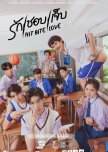
Have you ever watched a show that made you feel like you are a dirty pedophile? If not, and if you are looking for one, then this one is for you!Before anything, lets talk about the good things:
1.Newyear and Jur's King and Burger. Newyear somehow reminded me of a young Ohm and Jur's obvious over acting is endearing. I think the series will have a more positive reaction had they made them the focus of this show.
2. Is there a number 2?
Truth be told, I cant tell how anyone behind the show thought this was a good idea. This series is so reminiscent of the director's past works- Make it Right and What the Duck, but it seems like they never learned their lesson and instead amplified what people hated from those shows. Now lets talk about the not so good things:
1. The story. Cramming so many things within a 6 episode show is just too much, plus you really cant tell what the show is about. Is it a love series? Is it a murder mystery series?
2. Just like Love Sick 2, they managed to add another 2 of the most annoying characters ever on a tv show. There's no need to explain why Bookko's teacher is so despicable. And there's Mint's Pakaiwan. Also, special honorable mention to Ning's Pimtha, because
3. I really dont understand why some showrunners are so intent on making girls the villains in a boy-love series. Adding hate-able female characters doesnt automatically make viewers accept boy-love, if anything, its just lazy writing.
4. Speaking of lazy writing- this one seems like a mash up of a few other shows but is much more poorly executed. It is quite obvious that Burger King's story is derivative of Kieta Hatsukoi and there's an abvious attempt to make this into an Agatha Christie show.
5. I mentioned earlier that this show can make you feel like a dirty pedophile - the short shorts (it somehow felt like shorter shorts from Make it Right) is just too much and way too distracting. There was also quite a lot of disturbing shirtless scenes. I remember i was cringing during that scene when King removed his shirt and is trying to strip Burger - they obviously doesnt have what it takes to do that mature scene (they look like naked 10 year olds with those tiny bodies) but to force it does not look sexy, at all.
6. Bigboss' permanently constipated puppy sad look face. No matter what scene he is in, its the same sad face.
7. If they're planning season 2, which we all know is coming despite all the company's drama, I sincerely hoped they kept Pakaiwan dead because we dont need to see her anynore.
What's sad is there are hints that this could be a much better show. Overall, if you lower your expectations, it is still watchable and because of Burger and King i will give it a 6 (and also because i hate giving lower than that). Skip if you can only watch a few shows a week and save your viewing time for something much better.
Was this review helpful to you?
Season 2 is as good as Season 1
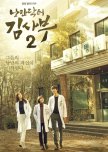
I've read some of the reviews and I was quite shocked that some of them gave this drama a terrible review/rate when in fact it was a great drama. First, I was a fan of Romantic Doctor that I've watch that first season a lot, and I think watching it again before starting this second season was not a bad move since the charm of medical drama is still there, as well as,the tension, and the romance. I was still amazed on the cases that they've brought every week and how Dr. Kim (along with Dr. Woo Jin and Dr. Eun Jae with the help of Doldam staff) overcome them. It was also good that they still mention the characters of Dr. Kang Dong Joo and Dr. Yoon Seo Jung in some scenes and even have Dr. Do In Bum a cameo that really hype up those last episodes.Second, I also want to praise the new characters for giving a new spice in the drama as they introduce their stories and backgrounds to the viewers. Lastly, I also want to compliment the OST as it gives life to the scenes that makes it more interesting and exciting to watch.
Overall, it is true that it is somehow different to the first season that some of us said that it already lost it charm when they started a new season with different leads. But for me, I think this drama has a different charisma that it captivates the viewers to watch it weekly which is obviously true as it passes a 20 percent viewership rating on its first airing and it breaks it record as a new episode comes. Still, I can say that when it comes to medical-romance drama, "Romantic Doctor" series will be on the number one of my list.
Was this review helpful to you?
A tale of three suitors
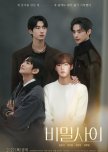
The drama, "Secret Relationships," plunges viewers into a world of passion as three suitors vie for the heart of a man named Jun Seo (Da On)Of Jun Seo (Da On)'s suitors, two display red flag behaviors that worsen over time. Sun Hyung (Seong Hyeon) distinguishes himself as the sole suitor genuinely committed to Jun Seo (Da On)'s well-being. He watches over Jun Seo (Da On), ever-ready to come to his aid and catch him before he can fall and hit the ground
A standout feature of this drama is its thoughtful examination of trauma and love's therapeutic power in mending emotional scars
"I don't deserve to love or be loved, everyone around me ends up miserable" (episode 7, 13:29)
We see the traumatized Da On in a mindset where he deems himself unworthy of experiencing love. However, he deserves to be loved and the possibility of a healthy relationship with Seong Hyeon is what he needs to rediscover his worth and find happiness. "You can't keep hiding forever, please, stop running away," drama Seong Hyeon says (episode 7, 21:04), encouraging drama Da On to confront his demons. Just like in the manhwa, drama Seong Hyeon is a turning point for drama Da On and the best thing that's ever happened to him: https://imgur.com/a/13vcR6T
Brilliantly written and executed, "Secret Relationships" is a must-watch for everyone. The four male leads have taken BL/gay Kdramas to new heights with their performances, and I, for one, crave more of their talent in the genre
Was this review helpful to you?
This review may contain spoilers
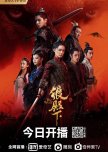
The Love Story of a "Wolf Pup" and a Spoiled Princess
EDITED 12/02/20Summed up for lazy readers:
-Wuxia Romance involving some politics and obviously, the concept of wolves.
-Not exactly tragic, but you will probably cry.
-Misunderstandings that some would call "stupid" or "unnecessary", but show the purest love. (just don't watch it for you can't bear misunderstandings)
-All main leads and seconds leads mature throughout the drama.
-Not the best CGI, but not the worst either.
-Not for people who dislike darkness and war.
This drama is simply...how would I say it...majestic. You may not be a big fan of wolves and darkness, but one thing is for sure: the moment you click that play button on episode 1, you are sucked into this mesmerizing world in which you cannot escape from. I ensure you, this drama will result in your panda eyes for the next few days.
(this review is kind of long. The main parts are in the first two or so paragraphs in every section)
---------------------------
Story: 9.0
The Wolf is a romance drama in which their story starts with an unbreakable bond of friendship. We have "Lang Zai", or Wolf Pup, the nickname given to him from Xing'er, our female lead. He was abandoned at birth, but miraculously saved and then raised by a wolf pack. They become his family, and he learns the way of the wolves. He is a "wild man", but he has the purest and kindest heart inside, and will protect his family and friends at all costs. After he meets Ma Zhaixing, the pampered and doted daughter of the city master, he starts to learn that he is a person, not a wolf, and they become the best of friends. It also includes the concept of political power; Prince Bo must learn to avoid the devious plot of others and gain the emperor's full trust. And with this, he must obey the evil emperor, even if it means sacrificing his purest love. At times, these scenes bored me, because I'm not particularly a fan of politics in dramas, but it was satisfying when the evil are exposed.
Why would I call this drama majestic? The story simply reminds me of mountains, of peaks that soar into the sky. First of all, the CGI in my opinion, is quite breathtaking. The animals created by computers may seem simple to make, but they include such intricate detail that their interactions with Wolf Pup, the later Prince Bo makes it hard to believe that wolves would have such kind hearts to take in a baby boy, a human, a wolf's greatest enemy. They truly do give us that feeling of familial love, the warmth, the affection, how much they care for each other. And when Wolf Pup's family members sacrifice themselves without any hesitation to save him, the tears start falling like an endless waterfall, they really do.
Xing'er starts out as this spoiled girl, the "jun zhu", or princess, of the city. Even though she is just the daughter of a concubine, she is most doted on by her father, and they have a very strong father-daughter bond. She is a playful and adventurous girl, always giving off happy bouncy vibes. After she meets Wolf Pup, she begins to go to the mountain to visit him regularly, and she eventually even persuades and encourages him to go down the mountain to see the world of humans, and that not everywhere is as evil as he thinks.
(SPOILER ALERT) We meet our next box of tissues when they have to separate. (I will not say much in case I spoil it too much) In every drama, sacrifices must be made, and unlike many other ones, this one was certainly not "childish" or "stupid". The female lead had a very good reason to leave our dear Wolf Pup, even if it was too heartbreaking for some of us to handle. The separation lasts 8 years. Xing'er still refuses to marry, as she can't let go of her love for Wolf Pup. Meanwhile, Wolf Pup has been adopted by the emperor and is made the third prince, Prince Bo. He is strong and powerful, but it hasn't occurred to him that his survival was just for the emperor to manipulate him for more power. After a tragic event, our princess meets this cold and ignorant prince, who keeps denying his true identity. Their relationship starts out on a bad note, but they become closer and closer over time. But as we progress further into the story, we meet our doom: a misunderstanding that causes even more heartbreak. Unlike the first sacrifice, this one seemed a little stupid and cliche. Chu Youwen breaks Xing'er's heart on purpose to "protect her" and although this is pretty necessary, his way of overcoming this situation was not the very best. Misunderstandings lead the drama for quite a long time, but we, the audience, could definitely learn a few life lessons as well as enjoy the bitter romance. At first, I thought that explanation would've been better, but I was wrong: The silent sacrifices that both of them made for each was true love. Some people say that it was dumb and that they could've just told each other everything, but would you be able to tell your love that you betrayed them? Most likely, no.
But the few misunderstandings doesn't stop us from loving this drama and following the couples as they experience love, hate, trust and doubt. It is truly an adventure. As for the ending, if you want to be spoiled, it will be at the very bottom.
-----------------------------
Acting/cast: 9.0
CHU YOUWEN- Darren Wang's wild side is truly wild. (and sexy!) He starts off as that "wolf" who is oblivious about everything, but after he experiences the terrible heartbreak from the person he was closest to and becomes a royal prince, Chu Youwen. That cold air around him is so cold that it makes me literally shiver. He still loves Xing'er, but thinking that she despises him, tries hard to let go of his past. (which, obviously, he fails at) We can see the desperation in his eyes when Xing'er is in danger, and he always saves her in that moment of terror. Xing'er's hero. And when he's cruel to the enemy, he is truly c-r-u-e-l. If anyone hurts his Xing'er, they're basically doomed. Prince Bo is not just a royal prince, he's also a wild wolf, loyal to the ones he love, but merciless to the ones he hate.
MA ZHAIXING- Personally, Li Qin's acting at the beginning was not the best, but the emotions she showed eventually were so top-notch that (you guessed it!) my tears start falling every few minutes or so. I wouldn't consider myself someone who cried often, but I'm just a few episodes in and my eyes are strawberry red. Xing'er's love for Wolf Pup is just so pure that you sometimes wonder why she won't simply just go explain to him why she said those terrible words to him. The tragic event causes a personality change in Ma Zhaixing, and although she is still bright and relatively talkative, we don't really see that spoiled princess anymore. Xing'er is intelligent, and undoubtedly kind. She will sacrifice almost anything for the people she loves, including her life, if she has to.
When I said that they were made for their roles, it also included chemistry. Their chemistry is one of the very best. When the main leads get close to each other, we also feel the excitement and the butterflies in our stomach. Their expressions show everything. Even if they try to be cold to each other, the coldness is only temporary.
As of the supporting roles, we have quite a few talents, including the subordinates of Prince Bo and Ma Qing, Zhaixing's friend. They are servants, but they are the most loyal and most caring. The evil characters were unlike the ones we see in other dramas. They are purely evil, evil to the point that they could manipulate people so easily that they wouldn't be discovered for years. We also have two other supporting characters that really gained my love: Ji Chong and Bao Na.
JI CHONG- Ji Chong, played by Xiao Zhan, is the second lead that will give you second lead syndrome. (unfortunately) He's there when the female lead needs him, and loves her as much as the male lead, but he just doesn't get the chance to show how much he loves her, because the female lead only sees him as a friend. He married Zhaixing, kissed her, hugged her, but failed to gain her affection. It has quite heartbreaking for me, because Ji Chong is a talented, caring and intelligent man, and he's no worse than Chu Youwen. He stayed with Ma Zhaixing for quite a long time, and helped her a tremendous amount, but no matter what he did, it simply wasn't enough. He met her later and that was the main disadvantage. Xiao Zhan's acting was especially nice (but it could also be because I'm a fan of him). As Ji Chong, he showed he care and desperation for Ma Zhaixing clearly, and I felt him tremendous pain when he knew that they weren't meant to be together. So yes, we have the ill-fated love triangle.
BAO NA- Bao Na is another character that I love. She starts out as the bratty princess who thinks that she will get everything she wants. She was "deeply in love" with Prince Bo at the beginning, and was terribly annoying. I was afraid that she would be a second female lead, but she actually isn't. She realizes her mistakes and after seeing Ma Zhaixing also die to protect her, becomes great friends with her. She also grows into an intelligent and brave young woman, very different from the whiny and bossy princess she started as.
YAO JI- She starts off as the archenemy of Chu Youwen because of certain reasons, and we hate her from the very start. I mean, even her look is 100% evil! She is skilled in astronomy and poison, and is very skilled in scheming. She is that most hateful character at the start, but she's unlike Bao Na, who just pesters Prince Bo. She's more of his competitor, but it always seems like she wants to kill him. But...that's not the case. As we move further into the story and she reveals more of her personality, it is clear that she cares deeply for Prince Bo, but she simply can't express her feelings. She has helped Prince Bo go through multiple hardships, and in the end, they become great friends, the kind of friend that will stick together no matter what. Bravo, Xin Zhi lei, for showing us that someone may look evil, but are the most caring inside.
-------------------------
Music: 10
There are only a few songs (7 to be exact), but I simply love the OST. While they may seem repetitive at times, the songs are presented to us in quite a few ways: Normal singing, different instrumental backgrounds, and the change in speed and pitch. The singing is beautiful, the background instrumental music matches perfectly and the lyrics are like the ripples of a river, moving the story along slowly. The songs clearly show us the longing the two main leads feel for each other, and the unsaid words they just need to say. There is also some rap incorporated into one of the songs, which takes the music up another notch.
---------------------------
Rewatch value: 8.5
I do not think that I will ever get tired of this drama. The amazing scenery alone is enough for me to stare at the screen for hours. And with the interaction of the main leads and second leads, oh, how would I not want to rewatch it?
--------------------------
Overall: 9.0
This beautifully written and majestic story is one rarely seen in C-dramas. We do start with a spoiled princess, but she meets the wild boy, and learns that some people have the evilest hearts. Even if you wanted to go take a break, I don't think you could, because this drama is certainly not merciful in terms of allowing you to get out of your seat. There are a few misunderstandings that seem a little unreasonable, but they all work out in the end. We are presented with the occasional comical scene to give us a short break from the next situation. Oh, and prepare the tissues and the explanation to your friends and family about why your eyes are so swollen and red.
Was this review helpful to you?
When it was great, it was great. When it was bad, it was reallllly bad.
How to start this?Was I disappointed? Yes.
To be fair, the crazy amount of teasing and build-up kind of set my expectations ridiculously high.
This drama is a mess. It starts out fucking epic. I got Night Manager vibes, which was a great sign. Then, I think after episode 7, it started to lose itself. There were still some great scenes with good dialogue, interesting symbolism, cool fight scenes, amazing cinematography, and fantastic acting. But they weren't the majority.
Obvious Problems:
#1. Let's be honest here: the third couple was unnecessary. Screentime devoted to them could have been put to better use.
#2. Unnecessary connections. Not every character needs a thread from their past connecting them to everyone!
#3. Once the main couple got together, they both got really stupid, fast. Lol.
Other Problems:
#1. While this was more comedic than serious, the comedy was still a bit much at times.
#2. The story should have been more focused on the mafia aspect. Sometimes, it felt like a side story.
#3. The finale seemed to throw everything at the wall. Will I get over the shorts? No, I will not!
Saving Graces:
#1. Vegas. Vegas, Vegas, Vegas. He ate up every scene. The visceralness of him was on another level. He made me conflicted, which is what some of the best characters do. One moment, he was clearly the bad guy; the next, he was a shivering puppy, and then he was a mix of everything. Bible . . . Just . . . Wow.
#2. Pete. God, the emotions he made me feel. He deserved so much more screen time.
#3. Vegas and Pete. They made me want to skip scenes with Kinn and Porsche. THEY MADE ME WANT TO SKIP SCENES WITH KINN AND PORSCHE! Also, they made me write a poem.
#4. Tankhun. Iconic! He is THE moment!
Was this review helpful to you?

This review may contain spoilers
Not an episode went by without me screaming in front of my screen
'Only friends' is a messy yet intriguing series and no the plot isn't the mess in fact the plot execution is really good, however the characters are absolutely messy and the whole plot revolves around these very messy characters. Red flags here, red flags there and I am honestly not a fan of red flags but this series had me ever since the trailer. One of the most striking elements of this series is the undeniable chemistry among the actors. The emotions, the tension they convey through the screen are palpable, tugging at my heartstrings and making the characters connections and conflicts feel all too real. I am so invested.Not an episode went by without me screaming in front of my screen, be it in excitement or frustration. I had to pause from time to time to take deep breath and to calm down because honestly this riled me up, made me swear and scream and I was still enjoying it.
WARNING: Major spoilers ahead!!
Starting with Sand because he is my favorite. He is sassy and has his own ways- both good and bad. He is confident, charming, mess with him and be ready for a payback. And he has my heart. I really can't see him getting hurt. He is so freaking precious and honestly I just want to throw some punches on Ray but then again I can't do that. One glimpse of Ray crying and my anger is all melted but then he does some shitty things again and my anger, my frustration is back. Ray, he is alcoholic, kind of lonely, one hell of a selfish prick, and I am so freaking mad at him or I am not. Honestly I don't know anymore. Also, he is such a tease. He says Sand isn't my type but then he is flirting with Sand every single second of every single minute Sand is around him. And yeah they were 'ONLY' friends even after all the smoke kiss and the nights and what nots and he liked Mew and he messed up a big time but call me color blind I still wanted to see Sand and Ray happily together. However, that doesn't change the fact that Sand deserves so much better.
Moving on to Nick, he is such a cute baby but a big no he ain't innocent. He is so certain about what and who he wants which is a good trait but he is suffering and I just wanna go and punch Boston but then again I can't do this either. I am a softie for them all. Sorry not sorry!! Honestly, Boston is a hot manipulative mess and a major major red flag. He's using Nick and I hate him when Nick is hurting, more so when he screws things up but guess what I still can't hate him completely. I don't even know if I hate him at all, he just gets me screaming in front my screen in frustration. Also, he and Nick were friends.. 'ONLY' friends after all the nights and sweet talks and what nots and Boston was playing around but call me crazy I seriously wanted them to be the endgame even after all of that. And trust me what Boston wants he gets it by hook or by crook.
Then we have Mew, the said nerd in the friend circle and the innocent yet not so innocent guy. He is into Top but he plays hard to get. Talking about Top, he radiates the vibe of a red flag but trust me he isn't the first one on the list. However, it's clear he does want Mew at the moment and I think he really does have feelings for Mew or am I just being clowned? I still don't know honestly. Okay so they had a thing going on and they too were 'ONLY' friends and then boyfriends for a tiny while and then they- aaaahahjahdahsjd- watch it yourself to know.
See, mess! mess! the head throbbing, heart wrenching mess they created!!
The most sorted relationship in the friends circle is of Namchueam and April and they don't really have enough screen time. It might look like I am complaining and yes I am because I was losing my mind and I was on the edge every single second while watching this. But damnnn the chemistry they have. I can't unsee it and I am so invested. Also, none of the characters are bland. There's Dan, who is hitting on Nick and his chemistry with Nick is no joke. Then we have Boeing, my god, this guy is the real deal. He made his entry like a tornado, shaking up the already messed up relationship equations and damn his charm is irresistible. Also, Yo and Plug they had minimum screen time but they ate up their scenes.
To add up the osts, the sound tracks, I love it mahn and even the lyrics of the osts. Honestly this series is a mess and it triggered my trust issues. I couldn't and I still can't trust anyone of them not even my favorites and still this is so worth it. Highly Highly recommended!!
Was this review helpful to you?
 1
1I absolutely loved the drama from beginning to end especially the romance. It didn't matter to me that Nam Shin III was infact a robot as I've seen other robot dramas with human/robot romances so its not anything weird to me. So as sci-fi with romance dramas go what else would I expect from it? I felt the leads had great chemistry especially as the drama progressed. I liked the fact that whilst there is indeed a second lead who I very much loved he wasn't your "typical" second lead. This drama made me fall for Seo Kang Joon, NS3 as well as NS. I think he did amazingly well portraying both NS and NS3. I also loved Kang So Bong's character, mostly because I saw a lot of her in her MOLS character. After the amazing character development, I loved her even more if that's at all possible.
The music for me fits perfectly with this drama, I love each and every song especially Kang Joon's one.
This drama is definitely rewatchable for me seeing as I've already rewatched it 12 times....not that I'm obsessed or anything. lol :D
I recommend this drama to those who enjoy robot/human romances because its been brought to my attention that a lot of people weren't happy about this but we each have our own individual preferences. Next, if you enjoy sci-fi, action, comedy then this drama is for you. Just make sure you have tissue because I honestly couldn't control myself.
Was this review helpful to you?

Thanks also to those on YouTube for the English subs [uncut] as without them we would never have know such wonderful talent.
Was this review helpful to you?
JUST " ONE &ONLY " U , ZHOU SHENG CHEN ~ BEAUTIFUL BONES [A MUST WATCH]
I have never doubted and never disappointed with ALLEN REN's acting, in any drama he is always very successful in carrying out his role well... this is his fifth drama that i watched in a row from UTP, i started to be his BIG FANS after UTP and continue to pursue all his works..and after this drama released the trailer, i'm really interested to watch it..no doubt again... his handsome and authoritative appearance, accompanied by the beautiful artist BaiLu, adds to my desire to watch it..... and after watching it...this drama is far from my mind....because....THIS DRAMA IS TOO GOOD AND PERFECT...in terms of story, acting, costumes, bgm to cinematography is very beautiful and perfect, like you are watching on the big screen... I was amazed when I started watching this drama and felt like I was watching a big screen cinema....
this drama has a very good storyline, developing and extensive, you will find every point of the episode is never boring and once you start, you will be drawn into the story and continue it until the end...even though the ending of this drama is very tragic and makes you will cry bitterly watching it but I am very satisfied with the ending, because the cursed Villains also get punished for what they have done...
This drama has many sweet moments between the two main leads " Zhou Sheng Chen and Cui Shi Yi although there are no very romantic scenes but their every gaze, smile, hug and concern for each other is able to melt and thrill your heart when watching it ... Their love are so sweet, sincere strong and pure....
the acting between the two mainleads is very very amazing and perfect in this drama....
Allen Ren brought ZhouShengChen's character very perfectly and amazing,he is a manly, handsome, strong, wise and highly adored character by his people...he is a character who not only has good skin but good bones too and deserves the called "BEAUTIFUL BONES" , people who have good skin, don't necessarily have good bones and vice versa...only ZSC has both...he doesn't chase wealth, doesn't chase thrones and isn't infatuated with beautiful women...only CuiShiYi who is able to melt his heart.... he is a patriot who is willing to sacrifice himself for the peace of the kingdom and the welfare of his people.... truly a hero whose name will always be engraved in the hearts of his people...
CuiShiYi played by BaiLu is very lively and perfect...she is a very beautiful, elegant, gentle and intelligent woman, she is the only female figure who can melt ZSC's heart, CSY's love is the MOST GREATEST I have ever seen in a drama, she is willing to sacrifice her whole body and soul just for the man she loves ZSC, willing to sacrifice herself forever not to marry just to be with him, the greatest happiness for her is to be by his side forever...
"CUISHIYI IS A WOMAN CHARACTER IN THE DRAMA I LIKE THE MOST BECAUSE OF HER LOVE IS SO STRONG, SINCERE AND GREAT..."
THE CHEMISTRY BETWEEN THE BOTH MAINLEADS IS REALLY AWESOME AND VERY POWERFUL...
not only the two mainleads, even the supporting cast also acted very very well which also helped make this drama so success...
besides that I also really admire the relationship between teachers and students, or with military advisors and between their brothers and sisters which is very deep, harmonious and strong, they look at each other like brothers and their own family, love each other, take care of each other and that makes me very touched, loved and admired their excellent relationship.
beautiful soundtrack song and suitable for every scene add perfect points to this drama, I love all soundtrack songs in this drama too.
this drama is not only worthy of 10/10 if possible i will give a rating of 1000/1000 for this drama 👍🏻👍🏻👍🏻
I also want to thank our two main roles, of course Allen Ren and Bai Lu for their amazing acting for this drama, besides that also our support roles, especially those who play CuiFeng, General Hong, XiaoYan, General Feng, General Zhou,XieYun, YangShao , Advisor Xie , Huan Yu and 3rd madam cui and Prince PinQin) and others, as well as the director and the rest of the crew for making this drama so lively and perfect
I re-watch this drama from the first episode and I might find it difficult to move on from this drama for the next few months after watching the sequel "forever and ever"... this is what I'm most looking forward to...
Was this review helpful to you?
What got me looking forward to watching every episode was not the story but rather the two main characters. The best way to describe their chemistry is extremely cute, like giggling while watching cute. I think that is mainly because of Kim Young Kwang as Director Do Min Ik. Even at his worst behavior, there was just always something super charming, sympathetic, and cute about him, and it really is an interesting role. He is matched by Jin Ki Joo as his personal secretary Jung Gal Hee, who despite being the kind of doormat that usually annoys me, she was also very cute in a way that made me want to root for her. Together, their super cute chemistry kept me involved from the very beginning, and I couldn't help but get hooked just from wanting to see them together, which never got old for me. At times the romance is super cheesy, but it's delicious cheese in my opinion, which made me overlook a lot of the show's other flaws.
The rest of the cast is pretty entertaining too (especially Gal Hee's blind brother and the campy Veronica Park), with one major exception... Koo Ja Sung as Ki Dae Joo. I don't know if it's due to inexperience or not but I found Koo Ja Sung to be extremely boring to have such a major role. Many of the actors knew how to play up the comedy and the drama but he seemed one note throughout. It was extra noticeable whenever he was in scenes with Veronica Park, who was such an over the top character, and in comparison, his character fell completely flat. There was an ambiguous nature to his character which did work for the story but he still never had much of a personality or depth in a show full of so many broad characters.
As for the story, it's mostly everything you've already seen in this type of drama with a random twist that at first seemed silly but it definitely made things more interesting. I also loved the way that part of the story unfolded visually. There is also a mystery element to this drama that was intriguing enough to make me want to know what was really going on, but it was the cheesy romance that really kept me watching. This is also a generally lighthearted story. Even though there are serious elements nothing is ever taken too seriously, even when characters are in tears or in danger. That definitely made it hard to take this drama too seriously or expect too much from the plot. There is also dual identity part of the story that is very far-fetched but was still fun to watch. I honestly had no real complaints while watching, but the ending did feel rushed. Still, I appreciated that they didn't add unnecessary new conflicts and rivalries to try to fill in the time, and stuck to telling one storyline without a lot of distracting sideline stories.
Would I watch this again? If I'm in the mood for a cute romcom, then yes. The cute parts are definitely rewatchable, and the short episodes are constructed well enough to not get too boring. However, I'd much rather see Kim Young Kwang cast as another male lead in a new romcom soon!
Overall I recommend this drama even though it's not joining my official list of favorites. It's more like a guilty pleasure drama. I think the key to enjoying it is to not expect too much or overanalyze the plot. There is also a reoccurring theme about what's really important in life and relationships that I liked. This drama may not have been what I expected at first sight, but I'm definitely glad I kept watching.
Was this review helpful to you?
when i fly towards yearning (for more episodes)
honestly, i only watched this because i saw on tiktok that *that* guy from falling into your smile was the main lead (i didn't know his name prior to this show, only his dimples xD), i didn't have many expectations - mostly, due to the romance (i am aromantic, which, often makes me unable to love romcoms, because it makes me cringe, and remind me of the things i will never be able to feel) but almost immediately, i knew that it wouldn't be the case for this show.this show was extremely cliché, i will say that - and i did encounter second-hand embarrassment every now and then - but not in the 'i want to throw my ipad across the room' instead it was bearable - and even made sense at times. because this is about youth, it's about the first experiences and those aren't always glorious. i loved the awkwardness and the realness of the show, i loved all the characters and the ways they completed each other. normally, i never like both the main and second lead couples an equal amount - i'll ALWAYS favor one of them, and yet, i loved everyone the same in this show.
another thing i loved was that there weren't any unnecessary miscommunications, even when that girl went after zhang lurang, i loved how instead of siding with the "wrong" side (mainly, for unnecessary drama, that can drag the show out) instead he believed in zai, and even played along with her, whenever the other girl tried to make a move. and as they grew they supported each other in every way they could.
thank you for giving us a healthy show, with a healthy relationship that contained beautiful growth. as well, as beautiful character development of kids finding themselves in the midst of this hectic world.
definitely rewatching this later.
Was this review helpful to you?
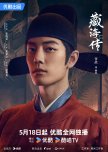
This review may contain spoilers
Legend of Zang Hai isn’t the kind of drama you say you enjoyed, it’s more of an experience.. A story about revenge, it follows our ML who after witnessing the brutal slaughter of his parents, friends and family at the age of ten sets out for vengeance with the help of a mysterious group of people..The script, direction and screenplay are just impeccable.. And the performances?? Absolutely out of this world.. Xiao Zhan’s portrayal of Zang Hai is unforgettable.. He fully embodies a boy shaped by trauma and driven by revenge, yet unable to let go of the softness he was born with.. There were so many scenes where he proves just how good his acting really is..
This drama might not be for everyone.. It doesn’t have your typical ML who goes around killing and beating people up in the name of revenge.. LOZH proves that not every hero needs to be a martial artist.. Instead, it dives deep into the emotional cost of vengeance and how destructive it can be.. The story makes us care about the characters so much that we are forced to question whether what Zang Hai is striving so hard for is truly worth it..
I absolutely love it when we have two main leads who can actually act and not just serve visuals.. And also the FL being the one with the physical strength and martial arts skills?? Always a treat.. There’s just something so fun about watching a badass FL protecting her man..
Zhang Jing Yi was extraordinary as usual.. Loved her chemistry with Xiao Zhan.. Even though this wasn’t a romance centered plot, it still gave us one of the best matched couples.. It was heartwarming to watch them fall in love and heal their broken hearts.. After he meets and falls for Antu, the story becomes more interesting.. Because now suddenly he wants to think about a life after revenge..
Absolutely loved the cinematography.. It was artistic and beautiful.. Zhen tower was just magnificent.. Scenes like the Empress Dowager’s funeral, the boat scene in ep 15, the Prince’s residence, the dinner fight at the Marquis’s home, and the rain fight, just to name a few were all stunning to watch..
Overall, Legend of Zang Hai is truly worthy of being called one of the if not the best CDrama of the year..
Was this review helpful to you?
Guilty or Not Guilty !?
The main plot of this drama centres around Euthanasia. Euthanasia becomes the unsettling heart of a moral dilemma that challenges both of the characters Kan and Wasan's values. What begins as a search for answers soon turns into a personal battle as Wasan, a police officer is introduced to confront the reality of mercy killings and whether or not they can be justified. His growing closeness with Dr. Kan adds an intriguing layer of complexity, blurring the lines between love, duty and the harsh realities of death.For me, this drama wasn't about uncovering the truth or catching the killer but about exploring the human cost of decisions that challenge life itself!
Tor and JJ delivered flawless performances. Tor's portrayal as Dr. Kantaphat was PERFECT! He brought a compassionate yet a chilling presence, the enigmatic doctor whose motives and choices remain shrouded in the mystery. At the same time, JJ as Wasan was subtle yet powerful. The turmoil and inner conflicts of a man torn between his duty and his feelings for Kan were delivered beautifully by him.
Both of them navigated the complexity of their roles really well making the ethical questions feel personal and real. The acting in the last episode was FLAWLESS especially Tor's.
The chemistry between them was so palpable! The tension, those gazes, the unspoken desire!! Their love story was not the main focus, I like how it was kept minimal but enough! The pace does bother me a bit, but considering the 8 episode run time, it can be managed.
While the emotional depth and acting were undeniably strong, it isn't without flaws. There were moments where characters just decided to overlook logic and reasons. And also I felt lapses in the police investigations distracting me from an otherwise gripping narrative. While as a viewer I understand it is to push the plot forward, but those unnecessary blind spots in the investigation sort of bothered me.
Overall, the balance between love, guilt and moral dilemmas makes this a good watch from start to finish despite its minor flaws. Recommended if you liked medical thrillers ( I would categorise it as thriller xD) and a bit of moral complexity, this is worth checking out.
Was this review helpful to you?
I don't understand why the rating is so low
First of all, I almost gave up of starting this drama because I thought it would be a mess since all the reviews are a bit negative. I was surprised. The story is a lot cute, there's the romance, the friendship, the visuals. I missed an OST more powerfull but that's all. The drama is refreshing, and it has a good story, the characters development it is really good, and now I ill point why I think this.Hye Jun - It is a character who puts a lot of effort in everything he does, if it is his dream, his relationship, his friendships. His relationship with his grandpa is something that worth watch and we can understand through the episodes how he was capable of maintaining his image even after all the scandals people tried to envolve him, it was all because he's really a good person, considerate, someone who values the people around him more than status. His relationship with his dad is a bit problematic but I thought it was enjoyable in the drama too because that's life, who of us never had any misunderstandings on our own families?
Let's talk about Jung Ah, she's someone who suffered a lot because of her mom, she felt abandoned most of her life so she thinks it's better to admire and support someone who is far, someone who will not dissapoint her, I completely understand. Many times in our lives we admire singers, athletes, models, people that as far as they are we think they are amazing, because you know, life gets a little complicated when we know people personally. She choosed the right person, and you know (maybe there will be some spoilers here), I think she did right when she decided to end/postpone a relationship to focus on herself and build her own career, sometimes you have to do this, you have to considerate your feelings more before things just end up ruined. So I think it's delighting the way they meet again years later after both stay more mature, more openly to live their love fully, I think the end of the drama shows it to us too, it's not a sad ending, it's like if they are starting again, but this time being complete on their own, as individuals.
Talking about the other characters I think this is just what happens with Jin u and Hae Na (but I have to say that I missed a better ending for them), and Hae Hyo discovering himself besides his mom influence worth to watch too because it's him getting out of his bubble to draw his own path.
Anyway, I think I was rambling a bit but I have to say, it's a good drama and the bad reviews doesn't define it really well, I enjoyed to watch and recommend it to everyone who wants to watch a simple drama that you can watch with family and have a good feeling about the story in the end.
Was this review helpful to you?
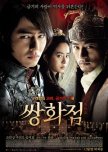
The acting was absolutely superb in every sense of the word. I was completely and undeniably convinced they were who they said they were, and it's safe to say that it's rare for me to feel that way.
My only complaint is that I could've lived without the more inappropriate scenes...I felt they carried on for far too long when other more important things could've been happening.
Overall, this is definitely a movie worth seeing.
Was this review helpful to you?


