

 1
1"Those who seek the truth, hit a wall at least once"
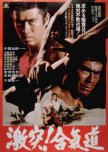
The Defensive Power of Aikido aka The Power of Aikido starred Sonny Chiba’s younger brother, Jiro, as the creator of Aikido-Morihei Ueshiba. A by the numbers fictionalized martial arts biopic, it was easy to watch, but not memorable.Morihei Ueshiba has moved to a farm in a village in Hokkaido. He practices jujutsu with his workers easily defeating them. When he helps a young boy running from the work camp he meets his match in Natori Shinbei and his karate. Morihei becomes determined to improve his martial arts skills and seeks out new teachers to guide him. After he defeats a karate sensei, the school seeks vengeance and he has to defend himself from vengeful students while learning new skills.
Chiba Jiro was not nearly as charismatic as Sonny, nor was his fighting style. He gave a satisfactory performance as a farmer who worked his way up, learning new martial arts skills, eventually developing his own style. The movie wasn’t very clear on what those specific moves were that defined his aikido. Sonny’s Natori broke the mold of brainless, revenge-fueled fighter which was a relief given all the other tunnel-visioned students looking for blood. Shihomie Etsuko from Sonny’s Street Fighter franchise made an appearance as a student well able to take on a gang of men.
The fight choreography was adequate with some fights better than others. As with many old martial arts films, the kicks often missed by a mile, thankfully the actors and stuntmen were able to sell the action. And there were a few super human throws. The fights improved as Morihei went from being owned by his opponents to being able to use their power against them.
The Power of Aikido had the requisite training sequences as Morihei sought to improve his fighting skills and reach enlightenment. There were those who lent a hand to and those who betrayed the determined fighter. Very little was shown of Morihei’s personal life and family. Entertaining, but not enthralling. Rated on a pre-1990s kung fu curve or in this case generous karate kurve.
27 August 2026
Trigger warnings: A rather large snake carried about in one scene. An arm lopped off in another.
Was this review helpful to you?
This review may contain spoilers
OMG
I was able to see the english subtitles. The episodes had me hooked up until episode 6 and then the story changed a bit. After watching a couple more episodes it started making sense again. All from a different perspective.Dr. Tyme and Great had some of the best chemestry and scenes. They were not and nor should they be about their amazing bodies. Their kissing scenes were very believable. Tyme had some action scenes where he was fighting and those were good as well.
The other love Ton and I fort
Got Greats brothers name were also two with with great chemistrey.
Was this review helpful to you?
The Cruel Reality of the Human Mind
An impressive, yet underrated piece of film.I just wanna start with saying that this film surprise me and made me think more about the human mind within Actors in the entertainment industry. Duality of getting into character outside of character and the fine line between them both.
The actors on this film portrayed, one of the most realistic instances of Metha acting, not a perfect depiction from the art, but a fair and realistic way that, us the audience can understand and see why some of those actors succumb to their characters and sometimes to a quick end for their career or even their lives. Some may stop acting for their whole lives, others just try to cope with anything or anyone that can maintain them in reality and such was portrayed in this film. That sometimes trying to be a better actor, to be the character can be painful, cruel, and sometimes suicidal.
Personally, you may love or hate this film for your own reason, for your own “vibes”, “tastes”, even circumstances, but we cannot portray such emotions such with subjectively to a objective point of view. To anyone that doesn’t like the film because of the actions that the characters portrayed or the actions that were depicted inside the film they doesn’t represent the actual value of such film, and the art that this film present to us.
In my opinion, this film was 10 for my own subjective way of thinking, but I also recognize that this film can objectively be a 10. Yes it could be a bit longer, yes they could’ve amplify more the depictions of each character for us the audience to understand a little bit more of them in depth. But nonetheless this film gave us: Love, Reality, Drama, Trauma, Psychological Thriller, Unrequierd Love, etc.
PS: I wanna end this with just a: don’t make a movie or a series suffer because of your own judgment, try and judge it fairly, take your pov out of your own live and think about what is the series or movie catering too. Just because me or you don’t understand something or what is the meaning behind it, doesn’t justify to rate it low or saying it’s bad, somethings are meant to be think-over in deep thought.
Was this review helpful to you?
This review may contain spoilers
A Game That Turned Into a Tragedy
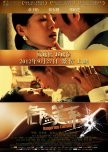
I watched this film years ago, and since then I've watched it a couple more times. It still fascinates me, but I am only now doing a review, triggered by the upcoming release of the K-drama version of the story The Scandal. Of all the adaptations of Pierre Choderlos de Laclos' Les Liaisons dangereuses, the 2012 Chinese version starring Zhang Ziyi, Cecilia Cheung, and Jang Dong-gun remains one of my favorites. While I still place Stephen Frears' 1988 Dangerous Liaisons with Glenn Close, Michelle Pfeiffer, and John Malkovich at the top, this adaptation comes remarkably close because it understands what makes the story timeless: it is not really about seduction. It is about people who believe they can control love, only to discover that love is the one thing no one can control.At its core, the plot is deceptively simple. Mo Jieyu (Cecilia Cheung), a wealthy, manipulative Shanghai socialite, makes a wager with her former lover, the notorious playboy Xie Yifan (Jang Dong-gun). She challenges him to seduce the virtuous young widow Du Fenyu (Zhang Ziyi) without falling in love with her. If he succeeds, he wins the prize he has always wanted: Jieyu herself. If he fails, he loses more than just a bet. He loses the carefully crafted identity that has defined him for years. The entire scheme begins as little more than entertainment for two bored, privileged people who view love, morality, and human emotions as pieces in a game. It is cruel, cynical, and almost laughably frivolous. That is precisely what makes the story so effective. Neither Jieyu nor Yifan expects genuine feelings to enter the equation. They believe they are the puppeteers, pulling strings from a safe distance. They think they control the script.
But the moment genuine emotions enter the equation, the rules no longer matter. Yifan unexpectedly falls in love with the very woman he was supposed to seduce, while Jieyu realizes far too late that she harbors genuine feelings for Yifan herself. What began as a seemingly harmless wager gradually spirals into a tragedy neither of them anticipated. What makes the story so powerful is that both antagonists are ultimately undone by the very force they spent the entire film trying to control: love. Despite their intelligence, sophistication, and confidence, they are caught completely off guard by emotions they believed they had mastered. Their downfall is not that they lose the game, but that they discover they were never truly in control. By then, the damage is irreversible, lives have been shattered, and the wager that once seemed exhilarating and intriguing leaves no real winners.
For me, Zhang Ziyi (De Fenyu) is the soul of this film; she is the emotional center of this adaptation. Many actresses could have portrayed Du Fenyu as simply innocent or naive. Zhang instead gives her depth, dignity, intelligence, and quiet strength. Fenyu is not weak. She is simply sincere in a world populated by people who mistake cynicism for sophistication. Her performance is what makes Yifan's (Jang Dong-gun) transformation believable. We understand why someone who treats women as conquests gradually becomes captivated by her. She represents authenticity, something completely absent from his world. The tragedy is that Fenyu enters the story with genuine intentions, while everyone around her operates according to hidden agendas. When the truth emerges, Zhang plays the heartbreak with remarkable restraint. Rather than becoming melodramatic, she allows the pain to feel deeply human. Without Zhang's performance, the story would simply be about manipulation. With her performance, it becomes about loss.
Mo Jieyu (Cecilia Cheung) is the architect of this tragedy, and Cecilia Cheung delivers one of the most fascinating versions of the Marquise de Merteuil archetype. Mo Jieyu is glamorous, intelligent, wealthy, and emotionally ruthless. She believes herself above ordinary weaknesses and looks down on people who allow emotions to influence their decisions. Yet beneath her confidence is profound insecurity. What makes Jieyu compelling is that she is not motivated solely by cruelty. She is motivated by wounded pride, jealousy, loneliness, and resentment. She wants revenge against those who have rejected or humiliated her. The wager is not merely a game; it is an attempt to prove she still has power. Cheung captures both the character's elegance and her desperation beautifully. The irony is devastating: the woman who initiates the game ultimately becomes one of its greatest victims.
Xie Yifan (Jang Dong-gun) is the man who lost because he won, and that is the biggest tragedy. Like Valmont in the original novel, he views romance as a sport. Success is measured by conquest, not connection. He is charming because he never takes anything seriously. But slowly, almost against his will, he falls in love. This is where the story becomes fascinating. Yifan technically succeeds in the challenge. Yet in achieving his goal, he defeats himself. The moment his feelings become genuine, the wager becomes meaningless. He wins the game and loses everything. That transformation is one of the film's strongest elements.
Ultimately, the message to me is that love is not a game, and what has always stayed with me about Dangerous Liaisons is how effectively it dismantles the illusion of emotional control. Both antagonists believe they are masters of manipulation. Yifan thinks he can seduce without feeling. Jieyu thinks she can manipulate others without consequence. Both are so devastatingly wrong. The irony is that they are destroyed for almost the same reason. They spend the entire story treating love as a game and discover too late that genuine emotions are unpredictable and uncontrollable. The wager that seemed so insignificant at the beginning becomes the catalyst for tragedy because neither player understands the forces they are unleashing. That lesson gives the story its enduring power.
I think what sets this adaptation apart from all the others is the Shanghai Setting. One of the film's greatest achievements is relocating the story from eighteenth-century French aristocracy to 1930s Shanghai, often called the "Paris of the East." The transition feels surprisingly natural. The wealth, social hierarchy, glamour, and moral decadence that existed among French aristocrats translate seamlessly to Shanghai's elite circles. The lavish costumes, nightclubs, mansions, and charity galas create an atmosphere that is seductive yet emotionally dangerous. The setting is not merely decorative. It reinforces the film's themes of social performance, appearances, and hidden agendas.
How It Compares to Other Adaptations: I will start with the Dangerous Liaisons (1988) film; the Frears adaptation remains the gold standard. Glenn Close's Merteuil is colder and more calculating than Cecilia Cheung's Jieyu. John Malkovich's Valmont is more overtly predatory than Jang Dong-gun's Yifan. Michelle Pfeiffer's Tourvel remains one of the most heartbreaking portrayals of innocence corrupted by love. The 1988 version is sharper and more ruthless. This 2012 version is more romantic and emotionally sympathetic.
Untold Scandal (2003): Like the 2012 film, Untold Scandal relocates the story into an East Asian setting, this time Joseon-era Korea. Both adaptations emphasize emotional tragedy more than the original novel. However, I find Zhang Ziyi's Fenyu more compelling than many versions of Tourvel because of the quiet strength she brings to the role.
Cruel Intentions (1999), on the other hand, modernizes the story for wealthy American teenagers. It captures the manipulation and seduction but lacks the operatic tragedy and emotional weight found in the best adaptations. The Shanghai version feels far richer and more mature in its exploration of love and regret.
My final thoughts on what makes Dangerous Liaisons (2012) special are not merely its beautiful production design or its impressive cast. It captures the fundamental tragedy at the heart of the story. Everything begins with a foolish wager, a joke, a challenge, a game. Yet that game ultimately destroys the very people who believed they were in control. The greatest irony is that neither antagonist expected to become emotionally vulnerable. One falls in love. The other discovers she was never as detached as she believed.
Zhang Ziyi's deeply moving performance is what elevates the film from a stylish adaptation to a genuinely heartbreaking one. By the end, the story is no longer about who won the bet. It is about the terrible cost of discovering that love was real when it is already too late. Absolutely worthy of anyone's time, if not demanding of it.
Was this review helpful to you?
Beautiful and sad
This was a beautiful but sad story, being gay in a time when homophobia is at it's peak is awful. The story is well told, the visuals and music were ok.The dynamics between the mains were good.
I recommend watching this movie.
--------------------------------------------------------------------
Was this review helpful to you?
This review may contain spoilers
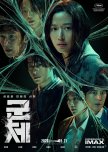
A real enjoyable gore and zombie film!
Good :- Power house casting. Jun Ji Hyun and Koo Kyun Hwan carried the film to the last minute. Ji Chang Wook and Go Soo were limited by character development story and very one face character.
- Zombies are great! The body twists, cracking, eyes bulging & the muscus (ewww~~!)! Even better than Train to Busan. They are the stars of the movie!
- The props and building preparation is very good as well.
Lacking :
- Story depth. Too many characters to focus on. Not enough time for even a scratch on the surface for most characters. Even the villian story is barely reasonable for the cause.
- Waste of actors talent. Ji Chang Wook, Kim Shin Rock,Kim Jong Tae, Shin Hyun Been and etc are all immensely talented actors wasted on subpar characters. It is almost like they are just there for the sake of power house casting.
- Monkeys CGI is the worse cgi I seen in a while in 2026. Lol...
Watch for the zombies!
Watch for the make up and sound/visual effects!
Watch for Koo and Jun acting!
Overall, a solid weekend movie. KUDOS!
Was this review helpful to you?
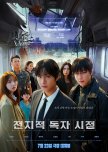
Maybe me not having a prior experience with the original novel or webtoon contributed to this cuz all the hate reviews I read had been from the novel’s readers. Good thing for that cuz that made me enjoy the show and not see much flop. The powerups, CGIs and action choreograph are the bomb and i even get to see Prince Gowon of Alchemy of Souls again here, have always had a soft spot for him. I enjoyed the movie and would be delighted if they come up with sequels, but looking at the hate it received I guess there wont be any continuation of this. Too bad for that really. The gang of five - Dokja, Hyeonsong, Sang Ah, Huiwon and little Gilyeong had been explosive, and i would really like to see them work with the supposedly hero of the novel Junghyeok. But i wont have my hopes up 🙁
Was this review helpful to you?
.
Very sensual movie. The heroine is 38 years old, she has a good family, a strong marriage, a child, a sister - everything is in place, and there seems to be nothing to complain about. But suddenly she really falls in love for the first time.It is important to me that there is no division into good and bad in the movie. No one is exposed as a villain, no one is justified to the brilliance. The story is not about guilt and not about morality, but about how a sincere feeling makes you a little selfish - not out of cruelty, but because you simply can't give up this light. You think with your head, calculate the consequences, and your heart pulls where it hurts and wrong, but for real. After all, you can't command your heart.
And that's the whole gap: you're torn between duty and desire, between what's right and what's alive. The film does not give any convenient answers, does not promise that everything will become easier. He just honestly shows this internal conflict - and that's why he responds deeply.
Was this review helpful to you?
Remember the Underground Heroes
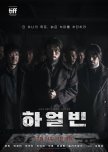
This is a brave and important movie. It has high artistic as well as social value. I say it is brave because it honours controversial people as heroes, while some may call them terrorists. In my country of Croatia we have people who fought for independence, and history remembers them as terrorists and criminals. But I deeply believe that in the difficult historical circumstances they did the best they could and contributed to the freedom we have today. That’s why I am impressed by how Korea honours her history through this movie and promotes the underground heroes who dedicated everything they had to a higher purpose. We can always debate whether the means were justified, and this movie gives us the chance to evaluate it once again.From the production side this is a great achievement. I liked the tone of the movie. The nature shots are all very beautiful and memorable, while the majority of the movie is spent behind closed doors in dark spaces filled with cigarette smoke and high-tension conversations about how to face the challenging situations. We don’t learn a lot about the characters, but we learn enough to appreciate them. There is also a clever use of black-and-white scenes when the movie shows past events. But this movie is certainly not black and white. It invites us to draw our own conclusions about the actions of the main characters and to learn more about the history behind it.
Was this review helpful to you?
Was this review helpful to you?
This review may contain spoilers
Too easy to guess the plot
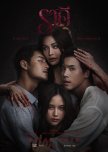
Storyline is kinda similar to Pee Mak but overall is good. I love the chemistry between Apo and Engfa, both of them are good. already predicted the plot twist but still good and fun to watch. It's a solid 10/10. Everytime Malee shows up, I alwasy got goosebumps LMAO.But tbh, It's really like Pee Mak but the differece is just that Malee had a dark past, same as Pran. BUTTTT, it's still good to watch because I enjoy their visual LOL
Was this review helpful to you?
This review may contain spoilers
Less Haunting, More Life—and a Little Bit of the Afterlife
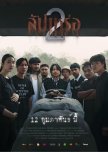
I didn’t watch the first movie, so I’m going in blindly.The movie started with an accident involving a white truck and a motorcycle. The accident was significant to the later plot but, I'm not going to spoil that. It then transitioned to a small temple where a funeral was being held—for a cat. That’s when I realized it was a comedy-horror. Xiang and Joed were the undertakers for the funeral.
As they were preparing to leave the temple after the funeral, they were approached by a man named Thup, who asked them to help with his wife’s dead body.
They arrived at his house, performed a ritual, and placed the body in a coffin. The family members would keep vigil for three days. Thup asked Xiang and Joed to stay for the night because he had no one else. He was so poor that he fed them the food he had prepared as an offering for his wife.
The movie then transitioned to a vigil taking place at a different house. The contrast was huge. The house was filled with visitors, who brought items and food as part of the ritual. Basically, it was like a feast.
An old lady, Grandma Joy, had just arrived home from work. It was late at night. Her grandson, Lod, lectured her while promising to find a job after his baby was born. Grandma Joy lectured him back. The next day, while at work, she passed away.
The family prepared for a vigil, with neighbors, families and friends contributing. Lo and behold, Grandma Joy came back to life. While everyone else fled the place, her grandchildren treated it like a normal day, happy she was still alive.
After three days, Xiang and Joed accompanied Thup to bury his wife. The monk suggested cremation instead. While preparing for the cremation, Xiang and Joed talked about Grandma Joy. They found it unbelievable, like something out of a movie, that a supposedly dead body had come back to life.
Thup was interested in the story and asked for more details, but Xiang brushed him off. Thup then decided to stop the cremation. Since it’s a comedy-horror, you can probably guess what happened next.
Lod sensed that something was off with his grandma. She was “nicer” to them. During an offering to the monks, we could see the suspense building as the monks looked at Grandma Joy.
We got our first ghost scene. Xiang and Joed saw Thup’s wife under a tree. They rushed to tell Thup, but he seemed happy about it.
Thup visited Grandma Joy while her family and friends were asking her for blessings, and asked her what she saw on the day she died.
She told them there were many people. She even saw people she knew. There was also a huge casket and a long line leading to it. The people in the line were divided between two different doors.
They reached another intersection. The left side had fewer people compared to the right. Grandma Joy decided to take the road with many people, where the road ended at a well and they had to jump into it.
Grandma Joy’s journey ended when her soul returned to her body. Thup was happy to hear that.
Thup told Xiang and Joed about Grandma Joy’s story. They both said they believed in karma. Xiang reasoned, “Otherwise, why would every religion teach people to be good?”
All of that happened within the first hour of the movie. The first half focused more on slice-of-life elements, introducing us to the characters while showing us the contrast between Thup and Grandma Joy. The former without anyone while the later, surrounded with people.
The second half was where the horror kicked in. It wasn’t really about being haunted, though. It leaned more towards slice-of-life rather than horror. One part about embracing death while the other part about letting go. And sometimes, everything doesn't always go our way even how well we planned it.
It's not a perfect movie, but it made me think. So, it worth something.
Was this review helpful to you?
This review may contain spoilers
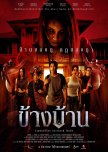
What Really Happened Next Door
The story centers around a story featured on a radio programme called The Ghost Radio. It reminded me that my country also had a similar programme back in the '80s and '90s, but it ended because of a phone call. Basically, the call was about a guy who had seen a ghost. The call ended with his scream. Until now, no one knows what happened to the guy. It still gives me the creeps whenever I think about it.Anyway, back to the spoiler... I mean, review.
Win and his heavily pregnant wife, Pat, buy a beautiful second-hand house in a quiet housing estate. The house seems almost too cheap, and the seller gives them an unusual warning: don't interfere with the neighbours and don't get involved with what happens next door. Basically, keep to yourself.
Win was sure the warning was meant for their neighbour across the road because the old lady was eccentric.
One day, Win notices a security guard always stopping in front of his house. Whenever he goes out to give the guard some food, the security guard disappears. What is left at the spot is an offering—the kind of food normally left for spirits.
Win is told by the realtor to inquire about it at the management office. He is told that a security guard had passed away, but his spirit still lingers. The offering was left there by the old lady.
Win is angry. Of all the houses, why did she choose his as the offering spot?
That same night, after leaving the management office, he removes every food offering left at the spot, including a boulder.
Yes, big mistake.
That's when the true horror begins.
Apparently, the boulder was an anchor placed by the old lady to keep the spirit living next door to Win's house from wandering. The spirit belonged to a beautiful woman whom his wife had once met.
That's when they find out that the woman had died in her house and wasn't discovered until her body had already decomposed.
Win and Pat couldn't handle the haunting anymore. Multiple shamans came to cleanse their house, and for once, everything seemed to settle down.
Pat gave birth, and their daughter grew up happily. They even threw a welcoming party at their house.
Then everything went berserk again.
Win discovers that the ghost had possessed his friend, and that his friend had removed a talisman from their house.
Win gets into an accident, and while he's at the hospital, Nuad, the previous owner, comes to visit. He tells them that the house once belonged to his sister and brother-in-law. He had been asked to babysit their daughter while they went on a spiritual journey.
Everything seemed fine until the last day of his stay—the day his sister and brother-in-law were supposed to return.
The ghost spared Nuad and his niece on one condition: he had to sell the house.
And that's exactly what Nuad did. He sold it to Win.
Nuad tells them that the only person they can turn to is the old lady.
And off they go.
The old lady tells Win to return to his house. She will open his third eye. They need to find out why the ghost is so obsessed with that particular house.
Once they discover the reason—which I won't spoil—the old lady suggests that they enter the house where the spirit died and cleanse it.
Pat asks another shaman to help them.
The four of them—the old lady, Win, Nuad and Ploy, the shaman—enter the house while Pat and her daughter remain inside their own home, protected by a sacred symbol and chanting scriptures.
When they think they are about to succeed, the old lady suddenly screams:
"Why didn't you tell me the two of you were entangled?"
Cue another flashback.
I won't spoil that one either.
Win becomes possessed by the ghost and runs back to his house, trying to murder Pat and their daughter.
Then, at a moment of clarity, Win pushes Pat and their daughter into a pool below and embraces the ghost.
Yes, if you've watched Dark Water, you might find the ending strangely familiar.
Nuad survives the ordeal and later shares the story on a radio programme, while Ploy promises to help Pat get Win back.
A sequel... maybe?
Was this review helpful to you?
"If the victim was a young woman, would he be in custody by now?"
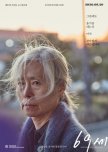
Director Im Seon Ae shone a spotlight on a topic rarely spoken about---sexual abuse of elders in An Old Lady. If rape is hard to prosecute with a young healthy woman, it’s even harder to prosecute with an “old lady.” There was nothing gratuitous in the film but Im made her point quite clear nonetheless.Sim Hyo Jeong is having a follow-up appointment after knee surgery. The casual conversation with the nursing assistant begins to make her uncomfortable and then the unthinkable happens. She later tells her live-in boyfriend, Nam Dong In, that she needs to go to the police. With some difficulty she fills out the paperwork to report a rape. With even more difficulty she endures a police interrogation where an officer quips that the nurse took “hospitality” too far. The investigation drives a wedge between her and Nam. While Sim handles the situation quietly and begins to distance herself from it as the prosecution shows disinterest, Nam ramps up his efforts to have the nurse arrested.
The film was set in 2012, apparently after a new law was enacted. The crux of the issue for the prosecutor was that who would believe a 29-year-old would rape a 69-year-old? Excuse me while I climb up on my soapbox. For all those sitting in the back: Rape is not a crime of desire, it is a crime of power and violence. Rapists don’t care how old or young a woman is, whether a woman is in a coma, or anything else. These are men who prey on the defenseless. They will prey on “friends”, the drunk girl at the party who passed out on the couch, a stranger, a small child, or old women in nursing homes. It doesn’t matter what a woman is wearing, her makeup or her sexual history. These men are predators plain and simple. The law in most countries barely protects obvious victims of violent sexual assault, much less ones with fewer physical wounds. And too often the law worries about “ruining” a man’s life disregarding the permanent wound in the woman’s.
Ye Soo Jung is an excellent veteran actress who brought quiet dignity and even quieter pain to the role of Sim. Ki Ju Bong as Nam, the widower and once poet, turned determined crusader for Sim also gave a powerful performance. If I have any quibbles, the transitions were wobbly at times, not explaining the changes in the characters’ lives clearly enough.
Despite my reservations about the vague transitions and revelations, this was an important film. Too often, the elderly are scuttled to the shadows so that people can forget them and their own mortality. 10% of people older than 69 suffer from some form of abuse-in their own home, a facility, or elsewhere. They may not be able to defend themselves physically, cognitively, or financially. I applaud Im Seon Ae for calling out the gross deficiencies in the social mindset and law enforcement for sexual abuse of older women. Sim found her own path to justice when the law let her down. Not as satisfying, but what she needed for peace of mind.
“The spring sun shines even on a teardrop.”
25 August 2026
Trigger warnings: Obviously, sexual assault. The assault was alluded to, but not shown graphically.
Notes: In my country it is important to go to a hospital immediately after a sexual assault so that a rape kit can be performed and evidence preserved. Even if you don't think you'll press charges, you might change your mind later and at least in this way you are covered. The rape kits are not always processed in a timely manner, and getting a prosecutor to bring charges is still hit or miss, but at least it boosts the chances of a conviction.
Unprofessional conduct note: The nursing assistant used the "she was asking for it" defense. He should have at least been fired for copulating on duty, even if admin didn't believe Sim's accusation. Try explaining that one in his next job interview.
Was this review helpful to you?

It's easy to miss the deeper message.
A great watch, don't go in expecting any actual romance, the movie mainly highlights two very interesting things that I will try my best not to spoil too much (at the beginning of the review) so that you can get a rough idea and watch it yourself.How does an ex husband psychologically deal with his wife becoming lesbian and how does he act around the girlfriend of that ex wife when he finds himself alone with her ?
The realism of his reaction and way of coping are exaggerated, not in the sense that "no one would ever act like that" but as in...most men would be more subtle, if even revealing anything about their inner feelings at all.
The exaggeration is genius, because as a viewer you're actually very much drawn onto how ridiculous the man is...
While missing how the wife's girlfriend is and even more subtly, how the wife is herself.
The script is written in such a way to draw your attention towards him, it's done so that you will miss the subtle parts of it if you're funnily enough similar to one of the two woman or strongly identified with "defending lesbianism" or anything like that.
I recommend that you watch it and see what this subtle thing is, hint: both sides are not that much better than the other, particularly the girlfriend.
Spoiler below:
The subtely is around the two woman, it's possible to pinpoint certain obvious aspects the ex girlfriend (hypocrisy, haughtiness, double-faced) but the deeper implications are kept vague and difficult to reach any conclusions with.
The man is obvious, the women are difficult to figure out.
This is roughly what can be understood from it.
The girlfriend mentions traveling, doing yoga, meditating.
It's implicated that she cares about her health and her step son, she is presented as highly tolerant and "kind" yet the reality behind her behavior is condescending, mocking, haughty and she seems to act in a justified way despite coming across as possibly knowing better.
One's behavior is not isolated from your mind, take care what you allow yourself to do, take care what beliefs and actions you allow to condition it.
“Like a beautiful flower full of colour but without fragrance, so are the well-spoken words of one who does not act accordingly.” Buddhist Dhammapada 51.
The ex-wife largely understands her ex husband and what kind of person he is, what his book is about and what he has done yet still allows herself to become involved with that person despite describing feeling mentally tired of it.
The divorce is also implied to not having occurred because of her coming out but because the husband cheated.
When the toy is discarded the ex wife asks her girlfriend whether or not they will really not use it anymore to which the girlfriend replies "we will see".
Depending on whether you side with the women or the man you will reach different conclusions from these informations.
And the more interesting and subtle part is, you can't really reach a conclusion on the two woman.
Deliberately so, the title is "anthropology 101".
What behaviors and tendencies are typically attributed to women and men ?
Was this review helpful to you?


