


This review may contain spoilers
Love is About Precious Moments!
True love is about absolute vulnerability, and frankly, there really isn’t a time when this is more apparent than a first love. The film perfectly captures the social awkwardness of first love, which is a big reason why this movie works so well.Park Se Ri is a young high school student who is enormously infatuated with the most popular boy is school, along with half the female persuasion! She has one problem, or at least, she thinks she does: her hair, which seems to be an eternal defiance as it’s so curly that she can’t stand it. Of course, she firmly believes that her hair is the reason why Kim Hyeon won’t take an interest. One of the biggest mistakes that people make is the assumption that they have to change in order to please someone else. This is never more apparent than when you’re a teenager, because everything revolves around vain attempts to win over someone of the opposite sex.
Park Se Ri is a giddy and vivacious girl, who isn’t depressed by her hair, but simply views it as an obstacle. She is warm and friendly and has a great circle of friends. Living in Busan, her favorite pastime is swimming in the ocean at her “secret spot,” a spot only shared by Kim Hyeon.
As Park Se Ri is swimming, Han Yeon Seok happens upon her clothes, which are neatly folded on the jetty. He picks up Park Se Ri’s name tag as he watches her swim. The wind sends her shirt into the water with Han Yeon Seok falling in after it! The problem is, he can’t swim, and Park Se Ri ends up saving his life and pulling him to shore, despite a broken leg, which he likely smashed into the rocks.
Han Yeon Seok is a quiet boy, whose mother owns a hair salon, which advertises that she uses a “magical formula” to straighten hair. However, the cost is expensive, and Park Se Ri decides to befriend and help Han Yeon Seok, in order to get a discount on having her hair done. Things are difficult for Han Yeon Seok, trying to handle his crutch, his backpack, and even his umbrella when it rains.
Things are somewhat predictable, which isn’t always a bad thing, as we know that Han Yeon Seok likes Park Se Ri. However, he knows that he’s not the object of Park Se Ri’s affections. Nevertheless, he does what any true friend would do, despite his feelings: he helps Park Se Ri, even securing a spot in Study Hall so that Park Se Ri can maybe sit with Kim Hyeon. I don’t know many teenagers who are this selfless. Han Yeon Seok is a true, selfless romantic!
It soon becomes apparent that Han Yeon Seok will simply do whatever it takes to make Park Se Ri happy. While he obviously likes her, he has no ulterior motives in his actions. In other words, he’s not doing these things to win her over, but simply to make her happy. People should take note that this is what love really is. No expectations. Simply small acts of kindness that let the person know that you’re thinking of them.
Just as Park Se Ri is ready to tell Kim Hyeon how she feels, she realizes that the person who has truly captured her heart is Han Yeon Seok. He’s always been there for her, helped her, and gone out of his way to make sure her needs are taken care of.
Just as they begin dating, we find that Han Yeon Seok has been living a pretty tough life, with an abusive and demanding father that his mother has tried to keep him from. In fact, when Han Yeon Seok walked out to the jetty that day, he was ready to commit suicide, which he confesses to a shocked Park Se Ri.
Park Se Ri enlists the help of her friends to write, “Se Ri loves Han Yeon Seok” on the beach, but he’s quickly called away to Seoul upon finding out that his mother is badly hurt, and he learn that his father savagely beat her, and even demands that Han Yeon Seok return to Seoul. Han Yeon Seok’s mother knows that their only option is to move to America to live with his aunt, otherwise, they will never be free.
Park Se Ri hurries to Seoul to find out what’s happened, after she hasn’t heard from Han Yeon Seok, and listens outside of his mother’s hospital room to find out that they’re moving.
It’s hard to judge Park Se Ri too harshly as she leaves a voicemail message, breaking up with Han Yeon Seok. We know she‘s trying to be noble and to let him go, but unfortunately, her act is done out of fear, rather than love. Otherwise, she would have told him the truth.
What makes her act harder for her to swallow, that she finds an album he’s made for her, filled with pictures and sharing his feelings for her. It’s such a sweet and powerful gift that reminds Park Se Ri that Han Yeon Seok has only ever loved her unconditionally.
The movie does such a great job of teaching us that love is about precious moments. It’s about the little things we do to let that person know how we feel. Whether it’s making crane eggs with messages, making an album, getting that person the one gift they crave (in this case, the snow globe), or perhaps the greatest gift of all: letting that person know that they are already perfect, and that they don’t have to change anything! I loved how Han Yeon Seok “botched” Park Se Ri’s hair as he’s washing it. It was his feeble way of letting her know that she doesn’t have to change anything.
This film can be a great way for young people to learn how to treat the ones they love, but it can also serve as a reminder to those who have been in a relationship for years that it doesn’t take much effort to let the other person know how much you love them. It takes a little bit of effort and a lot of imagination!
Was this review helpful to you?
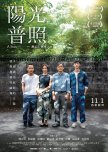
"Everything's fine
A Sun spanned several years in the lives of a dysfunctional family. One son shown like the sun, radiant and beaming. The other son lingered in the shadows, swallowed in darkness. Each would be envious of the other, unable to claim what they needed, both would suffer dire consequences for their unspoken desires.A Ho gets caught up in a violent event initiated by his buddy Radish and is sent away to a juvenile detention center. The criminal act is the last straw for his father who washes his hands of him. The father does, however, dote on his seemingly perfect oldest son, A Hao, who is testing for the second time to be accepted into medical school. The mother struggles to keep the family together and in the process the family is expanded when Ho’s girlfriend shows up with a surprise. When Ho is released, he works to take care of his family and put his past behind him. The darkness in his life, however, is not so easily eradicated.
The film hammered home that the two sons were a dichotomy of light and dark, good and evil, night and day, the sun and moon. Yet one yearned for the respite of the shadows, scorched to his soul by ever being the family’s light. Always giving himself away to others, with little leftover to nourish himself. The other son longed for the warmth of affection and acceptance from his family. Frozen from the darkness, afraid he’d never measure up, never feel the sun on his face.
The caretakers of the circus of light and darkness were the parents. Mother Chen fought tirelessly for her family. She tried to pierce the iron shield her idiot husband covered himself in regarding A Ho. With an open heart and open door, she accepted Ho’s girlfriend into their family and also trained her as a hairdresser. She even devised a better work situation for the two of them. Meanwhile, Papa Chen dug into his long-held prejudice against his youngest son. Prickly and recalcitrant, he distanced himself from everyone exasperating the situation. He was too often an impotent passenger at work and at home.
Along with the growth for the main three characters, the cinematography was gorgeous. This film was beautifully shot, including the all-important lighting in a film built on the metaphor. I also enjoyed the OST, especially a mournful instrumental that played during one scene. My biggest peeves were that in a 2 ½ hour film, Ho’s girlfriend was given almost nothing to do or say. Ho had very little interaction with her over the years. While she had a couple of key scenes, the character was badly underdeveloped. With all the time jumps and flash backs, I would have liked to have seen what caused A Ho to go down the criminal path he chose.
I may be a Butterfly but I have the attention span of a gnat and yet I was never bored with this film despite its length and slow burn. Most of the characters were deeply flawed and yet continued to move forward, refusing to give up when it appeared the easiest thing to do. There were moments of pain, humor, anger, and a gut level resiliency. If ever there was a film to express that “Everything’s fine” means exactly the opposite, it’s this one. Well-acted, well-written, painstakingly shot, A Sun shone brightly.
4 November 2025
Trigger warnings: Suicide. Dismembered body part early in the film. A short violent scene near the end.
Was this review helpful to you?

gentle melodrama
Watched en route to adding it to the database, with only an autotranslation of autogenerated Thai subtitles. It's gentle melodrama though, with a simple story told somewhat unconventionally, so it was easy to go on vibes, recognised phrases and words from the autotranslation. Then I found a summary (in Thai) which filled in the rest - I got most of it.The movie shifts tone, feel and focus as it progresses, reflecting (I think) the movie-making of the period each part was set in. Perhaps even to the extent of using vintage equipment. It begins with a father's love for his green vintage Vespa, then his daughter, a misunderstanding and argument, a boy who's like his son and a promise. There's a long road trip, a moving conclusion, and then a silly one, like an outtake added on. Chiang Khan in Isaan Province and several places in the Northern region feature, including Thailand's "Mt Fuji." The ever-present and much loved scooter ties it all together.
If you love Thai film-making or are just interested in seeing more of the northern province and the north of Isaan, this is worth seeking out. Look for it under Rak Kham Khan. The 'official' English title will only get you to a trailer - and don't read the synopsis under the trailer because spoilers. This gentle melodrama is perhaps a bit too Thai to have gotten whatever international attention its makers may have hoped for. And for some of us, that's its appeal.
Was this review helpful to you?

This review may contain spoilers
From the very first episode, this drama captivated me with its stunning cinematography and atmosphere. Every frame looked like a painting, and the color palette reflected the tone of the story perfectly. The production team clearly poured their heart into every detail — costumes, music, lighting — everything felt cohesive and intentional.The performances were equally impressive. The lead actor delivered a nuanced portrayal filled with quiet strength, while the female lead balanced grace and intensity. Even the supporting cast shone in their moments.
What I appreciated most was how the story wasn’t afraid to take its time. It allowed viewers to breathe, think, and feel. By the end, I didn’t just watch a drama — I experienced one. Truly one of the finest pieces of television I’ve seen in years
Was this review helpful to you?
This review may contain spoilers
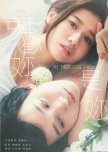
Portrait of a first love
This film that is grounded, if a bit somber, realistic lens into a lgbtq experience of girls that have always been in a religious single sex school and social environment their whole childhood where there aren't a lot of choices for romantic interests. The only choices they have are the school staff and each other. Thank goodness the teacher handles the situation responsibly. The small bit of bittersweet comic relief comes from the first time the couple was busted from a teacher witnessing them kissing as their bus passed bit and their parents were called in for a parent teacher conference. Both their dads are amiable with one another, both agreeing it's no big deal for the girls to be messing around as there would be no pregnancy and laughing that they're only like this because they never been with boys before. Wing Lam's mom is upset at her husband because their daughter takes after him, liking women. Sam Yut who is the sole provider for Sam Yut tells her he doesn't mind that she likes being with girls, so does he, but he has an honest conversation about their family's dire monetary situation and reminds her that she needs to keep her scholarship. Both dads offer and share their kid's snacks and sweets to comfort them. Their economic class difference shapes and diverge their paths. Wing Lam's family has both parents and is middle class, being able to afford a cell phone to sneak into their daughter's backpack though it is banned at school. Sam Yut makes it to University as a film major, but has to drop out to take care of her siblings once her father passes away and she refuses her derelict, estranged mother's offer to take them to the US. It's possible that Sam Yu is bisexual, having married a man before they have to act on their promise to marry each other if they are still single by 30. It's also possible she chooses the safer path of convention. In the end they were an important chapter in each other's lives as they move on in their respective directions.Was this review helpful to you?

A promising story that falls short of Its emotional depth
I was really hyped for this film because it stars JM de Guzman, whom I truly admired in *That Thing Called Tadhana*. However, after watching *Lasting Moments*, I felt that his performance here was a bit of a downgrade. The drama was present, but for me, it just wasn’t giving. The chemistry between the leads didn’t feel natural, which made some emotional scenes fall flat.It was my first time seeing Sue Ramirez in a movie, but I feel that this particular role wasn’t the best fit for her. While she tried to deliver, the character didn’t seem to match her usual charm and energy.
As for the story, the plot twist was quite predictable, which took away some of the excitement. Overall, *Lasting Moments* had potential, but it didn’t quite reach the emotional depth I was expecting.
Was this review helpful to you?
This review may contain spoilers
What was going on??
I loveeee the locations and the aesthetic it is filmed in, it gives sort of that nostalgic feeling but, although it was really pleasing to look at it was so confusing. Why the ghosts? What happened? Honestly love Gun, it's so weird seeing him in a movie made more than 10 years ago lmao. Anyways, I somehow felt a weird connection to this movie but it was pretty disgusting and I just don't understand what the message behind this series is.Don't watch this if u hate G0re lmao.
Was this review helpful to you?

.
In a world plagued by a deadly virus, loneliness reigns. Yet even in the darkest hour, a flicker of hope remains — friendship grows, and survival becomes a shared mission.You can find more of my reviews on Instagram. :D See my homepage about my Instagram account. Some of my reviews are under five hundred words so I can't post them here. (*^▽^)/★*☆♪(*^-゜)vThanks!
.. ... ... .... .... .... .... .. .. ... ... .... .... .... .... .. .. ... ... .... .... .... .... .. .. ... ... .... .... .... .... ..
Was this review helpful to you?

This review may contain spoilers
Amazing bromance, and a great blend of comedy, action and serious crime
I enjoyed this movie from the beginning til the end. It’s a great blend of comedy, action and serious crime. Park Seo Joon and Kang Ha Neul nailed their roles as 2 police students as well as close friends. They are a perfectly balanced duo, one is reckless but physically strong while the other is smart but weaker. Although this is the typical type of duo in every cop movie, it still felt very refreshing with Park Seo Joon and Kang Ha Neul’s great performances. The two’s bromance chemistry felt so natural that it didn’t feel like they were acting at all.The only issue I had with this movie was the Korean useless and weak police system being portrayed. How come they had to follow so many protocols in order to start catching criminals for a serious issue like human trafficking? Also, as police students, our duo should have been praised and rewarded as excellent individuals in front of the whole school and nation for their bravery, instead of being punished and threatened to get kicked out. What’s going on with this world? Those poor girls would have been killed with their organs being taken and sold by those criminals already, if our duo Ki Joon and Hee Yeol ignored them for fear of being kicked out of the school, just because those so-called ‘professional policemen’ didn’t take action immediately. If I were Ki Joon or Hee Yeol, I would definitely drop out of school right after rescuing the girls, after learning how f**ked up the police system is. Who would want to become a police in that corrupt system? The school didn’t even need to kick me out or punish me if I were them.
That was my only issue with this movie. Everything else was enjoyable.
Was this review helpful to you?
The noise really hurt the ears
It's a great story, the director play with noise really wellThe scariness really good and the storyline at first a bit slow, but immediately become more hectic in the middle. A bit confused with guys character in this movie because they doesn't have a lot of scene so I can't differentiate them at first
Was this review helpful to you?

This review may contain spoilers
Really?
Major spoilers here...
Proceed only if you're cool with it.
It starts off well as a fluffy story with two best friends who are super loyal to each other and would risk it all. Initially it felt like like their crush on the same person due to a huge misunderstanding would ruin it. Surprisingly that part barely last a few seconds and it got sorted. Now one might think, cool, the friendship is intact, the girl has supportive parents and would never object to her relationship, the boy doesn't seem to have any major problems either. He goes abroad for a short while with a promise to go to the same uni as her, they communicate via mails ( as the name suggests, it is set in the 20th century, where phones were not a thing yet).
So what could possibly go wrong right? Well well well, the girl suddenly stops getting any replies from the boy and was never able to move on because she always expected him to return. After 15 years she gets to know that the boy had passed away in a road accident.
Was it really necessary?
I already read spoilers and knew that it would end this way but only when I watched it I realised how sudden it was. I agree that life is like that and such things happen without any warning but if you look at the beginning, there is nothing serious. The girl does everything which most of us would never dare to do. They could have just kept it that way throughout.
Was this review helpful to you?
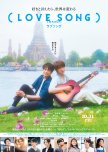
A well-done co-production.
(Love Song) is a film that took a pretty big risk, simply by being a co-production. With only two cast members that speak both Thai and Japanese with some fluency, putting this film together and it being good it quite the feat. With a Thai director, the Japanese cast members also found themselves bewildered by some cultural differences in the directing, which I saw them talking about in a special cinema-live broadcast interview before watching the film in the cinema.However, all that aside, this film works. There aren’t any characters who suddenly understand a language they shouldn’t, and there were also smart decisions made with which lines of Thai dialogue got subtitles and which ones didn’t. That is, that in scenes with an interpreter present, you don’t get the subtitles, you get to wait and listen to what the interpreter says, which I quite like personally as an immersive experience.
Now, looking past my initial wonder about how they made the film work linguistically, there is a story of unrequited love, difficulty in expressing emotion, and a solid dose of humour to go with it. The humour also was a good blend of Japanese and Thai-style humour. The comedic relief from the emotional main storyline was also well used. I will admit, I teared up at a couple points in the film, and considering how much laughter I also had to hold in, that is a feat. I spent a good portion of the film grinning, one way or another.
The song was great and the story, while relatively simple, had emotional depth to be appreciated. The film really succeeded by not trying to do too much, and by doing that, it a stand-out in the otherwise mixed world of international co-productions, which often struggle to impress.
I recommend this film to any and all who are interested! As for the cast, they suggested it could be enjoyed alone, with close friends, or even with family (albeit it may be a bit embarrassing).
Was this review helpful to you?

Warm hearted movie that leaves you wanting more
Before all, I have to comment on the ending cause it deserves it's own applause !! The whole room went silent when the revelation was made. Even an old woman in front of me just shouted from the shock as it was sooo unexpected !The storytelling is beautifully made. Even so that it truthfully depicts complex characters in a complex world where asian traditions and modern habits tend to confront everyday in our society. The relationship between the characters seem quite usual at first nothing out of the ordinary with a conflicted relationship btw a mother who seems to have lost all of her marks and her first daugther + a typical sister relationship.
But once you know how it ends, every little scenes take suddenly more importance !! That's when you realize how smart the storytelling was !
It's a 10 out 10 experience that you have to truly live and feel and will surely make you want to rewatch it again and again !
Was this review helpful to you?
Naway walang sinuman ang makaranas ng ganong klasing bullying!
Ba't need ng 300 characters bago matapos tong review? Tinatamad na ako!
😂
Was this review helpful to you?
Was this review helpful to you?


