

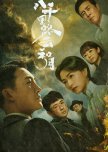
A magnificent Republican war drama depicting the resilience of ordinary people
Echoes of a Thousand Moons is a Republican-era war drama set between 1937 and 1944, during the Resistance War against the Japanese Invasion. Far from a generic production, this is a drama full of personality that depicts the war from the perspective of ordinary citizens; there are no big generals or remarkable lone heroes, just soldiers and civilians who convey the resilience of the people during that period.Although the story of its characters is fictional, the background is historically accurate, and the attention to period details is outstanding for the most part. This amazingly paced drama is grounded and realistic while also artistic, with a poetic flavour that talks directly to the viewer´s heart. A very cinematic and textured experience directed by Zhang Yong Xin, enhanced by a poignant soundtrack and fantastic performances led by Wang Yang, Wan Qian, Huang CheChen, Yu Hewei, Bi Yan Jun and Cao Lei.
The English name holds up quite well against the original Chinese title "Ba Qian Li Lu Yun He Yue" (八千里路云和月), which can be translated as "Eight thousand miles of road, clouds and moon". This is taken directly from one famous poem of the Southern Song Dynasty, written by the general and national hero Yue Fei: "The River All Red" (满江红), which expresses ardent patriotism and the desire to reclaim lost territory. So, just from the start, the drama establishes a tone of sacrifice, long journey, and unwavering loyalty.
The story revolves around the growth arcs of a righteous KMT Brigade Commander fallen from grace (Zhang Yunkui), his family - formed by his scholar father (Zhang Qi Xian) and well‑educated, generous wife (Ding Yu Jiao) -, and a simple, uneducated cook (Meng Wanfu) that happened to cross paths with them. Along their journey, they encounter many other characters from different backgrounds and personalities, whether in the countryside or the big cities, a fact that allows the director to show all the different and complex realities of war, but mostly the painful and relentless power that historical events have on individuals' lives, dreams and desires.
The storytelling is organized into four arcs, with two main storylines: one on the battlefront which follows the main events of the war, and one focused on the lives of ordinary citizens, mainly set in Shanghai. This structure affects the screen presence of the characters throughout the whole drama, so if you're thinking of watching it because of a particular actor, be aware: you might be disappointed.
The first arc spans from the Battle of Shanghai to the fall of Nanjing, led mainly by Zhang Yunkui and Meng Wanfu. It is one of the most powerful sets of ten episodes I've seen so far – it holds the record of making me tear up in almost all of them, yet it is so poignant that I rewatch several. The battle scenes – with no gore - are stunningly composed and capture the essence of those devastating events that are kept in historical pictures, including a nod to the real-life missionary nuns who protected refugees during the massacre in that city.
From now on, although some characters might get on your nerves – especially in the following arc -, you won´t have such emotionally demanding storytelling in a row except for specific and short parts. But don´t get me wrong, it still isn´t for the faint of heart, yet its excellent pace and the humour and warm moments in between help balance things out.
The second arc is focused mainly on Ding Yujiao (the wife) and her newborn son, Meng Wanfu (the cook) and Zhang Qi Xian (the general´s scholar father) and their life as refugees on the Shanghai French Concession. After doing some research on this, I was in awe of how well the whole situation was portrayed. Meanwhile, the battlefront storyline has less time on screen but if you don´t know about this war, it will help you follow the events as it´s structured around the key battles of the war. Again, you´ll find quite faithful portraits of historical war records regarding the soldiers.
Another highlight of the drama is its portrayal of the Sichuan Army, which first appears near the end of the opening arc and remains present until the conclusion. What makes this depiction particularly compelling is that it reflects a fascinating historical reality that many viewers outside China may not be familiar with.
Before the war, the Sichuan Army was considered the absolute bottom of China's military forces, famously known as the "Two Guns Army" because they often carried a rifle in one hand and an opium pipe in the other - a habit from years of internal warlord conflicts-, or the "Straw Sandal Army" because their equipment was shockingly poor. They had virtually no artillery, armor, or air support and their food supplies were so bad they often survived on sweet potatoes and wild herbs.
Despite their terrible state, the Sichuan Army's courage on the battlefield completely rewrote their legacy. The scale of the sacrifice is staggering: of the approximately 3.5 million soldiers left Sichuan to fight the Japanese, over 640,000 were killed, wounded, or missing in action. 20% of all Chinese casualties, the highest of any province.
As the refugee storyline settles in, the third arc broadens the canvas, balancing Shanghai's political intrigue with the evolving battlefront – roughly 60% to 40%. On one side, the Shanghai storyline starts to focus on the increasing political complexity between the Japanese, Chiang Kai‑shek's government, the collaborationist government of Wang Jingwei, and the Communist Party, and the pressure suffered by Chinese businessmen to help the Japanese.
This is the arc ruled by Tian Jiatai, a romantic and idealistic businessman inspired by a mix of Saint‑Exupéry – the writer - and Don Quixote – the character. What I love about it is the explicit presence of the former novel in this part of the series, adding another poetic and touching universal reference to a fight against what seems impossible and pointless.
This political complexity paves the way for the final arc, with stronger focus on guerrilla warfare in the south and the convergence of the two storylines. When all of them collide again, it is devastatingly sad, evocative and complex. The tension building to the climax and the resolution return the power and emotional weight of the first arc, including another significant battle: Cheqiao. The ending is indeed satisfying, and just as the characters who reach that point are not the same as when the war started, neither are we as viewers.
All in all, this is a magnificent drama about the cruelty of war – and this particular war – on ordinary people, but mostly about their resilience, their love for their culture and for their land.
Was this review helpful to you?
The Perfect First CDrama
My family and I take turns choosing what to watch next. This was my choice and I'm so glad it was the first cdrama they watched with me. All of us were glued to the screen, giggling and kicking our feet. We cried with the characters and loved every second of this. I'm sure this is being added to the rewatch rotation.The story was phenomenal, the acting was superb, and I got to open up a new world for my family. I've watched cdramas on my own for a while now, but this showed them a whole new genre.
Also - my crush on Victor Ma is not going anywhere anytime soon, lol.
Was this review helpful to you?
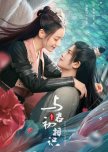
Demons and Fairies: Beautiful Execution with Some Narrative Gap
I really enjoyed this when I watched it during its original release—so much so that I even went on to read the novel afterward. Overall, the storyline was captivating, with well-crafted conflicts and strong narrative progression. The execution and world-building were equally impressive, and the supporting cast kept me fully engaged through their performances and character dynamics.This drama also features some of the most memorable and emotionally intense scenes I’ve seen, largely due to the strength of the supporting performances. Several characters are portrayed with a level of depth and emotional weight that makes their arcs especially impactful, and they’ve stayed with me long after finishing the drama. I don’t think they receive enough recognition for how layered and compelling their portrayals are.
This was also the drama that made Cristy Guo stand out for me. Her performance was incredibly convincing and added a strong emotional dimension to the story, further elevating the overall viewing experience.
Was this review helpful to you?
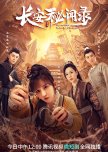
A Female-Driven Twist on the Tang Dynasty Mystery Formula
I loved this drama — it’s a real gem with a compelling detective narrative. It reminds me of Strange Tales of Tang Dynasty, but with a more prominent and intelligent female lead. Like in Miss Truth, she plays a key role in leading investigations and solving cases. The story is structured around four distinct cases, each solved collaboratively by a team of well-developed characters: the crown prince, Li Xinghe; Chu Qi, an investigator from the Court of Judicial Review; and Zhang Xiaomeng, a skilled coroner. Each character brings their unique expertise to the table, making the mystery-solving all the more engaging.Case 1. Posthumous Marriage.
Case 2. Serial Killer.
Case 3. Envoy Murder.
Case 4. Fox Spirit Murder.
Was this review helpful to you?
A Visually Breathtaking Costume Fantasy
A few films have really set the standard for me when it comes to Chinese costume dramas, and this is one of them. It checks all the boxes for what I personally enjoy in the genre:✅ Strong fantasy elements
✅ Dark, atmospheric aesthetic
✅ Morally complex characters
✅ Xianxia-inspired worldbuilding
✅ Strong adaptation source material
✅ Beautiful cinematography
This is a visually stunning adaptation of a Jiu Lu Fei Xiang novel, presented in a way that also works well as its own standalone interpretation. The storytelling is emotionally engaging, with romance that feels natural rather than overdone. The pacing is tight, with no unnecessary subplots or prolonged misunderstandings, and lighter comedic moments help balance the more serious tones.
The cast is well-selected, with strong performances from both leads and supporting actors that bring depth and energy to the story. Overall, it’s a highly polished fantasy production that I would recommend to anyone who enjoys xianxia or atmospheric costume dramas.
Was this review helpful to you?
A Character-Driven Political Drama Worth Completing
The storyline is intriguing, and I found myself genuinely invested in the politics and character dynamics. However, without watching both seasons, the story feels incomplete.That said, the comedic interactions between characters are enjoyable, and I liked all of the roles—though some stood out more than others. My biggest critique lies in Part 1, where a few character arcs felt rushed while others dragged. Still, I enjoyed the first part, adored the second, and ended up loving the series as a whole.
What I appreciated most is the psychological depth given to each character. We see lost and forced love, humiliation, regret, and abandonment shaping their lives. These emotional layers influence their decisions, affect their children, and echo into future choices. The actors did a wonderful job bringing all of this to the screen.
Was this review helpful to you?
Turn off your head and enjoy the ride
Look, logistically speaking, this show isn't the best. Important events never get mentioned again (the husband, the crime, the sa, etc) and the story relies very heavily on crazy coincidences, especially with the lead couple somehow meeting each other by accident every other day😂 Despite that, it's a very nice watch. The pacing is good. There's drama to entertain you but it never hurts you, meaning it never crosses the line to actual angst. The characters are enjoyable, they are also all flawed which makes them seem more real. As others mentionned, the time skip was a weird decision but it lasts for five minutes so not that big of a deal. The romance at the end with the lead couple was a bit disappointing which is my only negative. Even after officially being together, they still act like shy teenagers throughout their whole relationship. Which maybe could pass if it was their first ever relationship, but they're 30 years old grown people, one of them being divorced. It's just not realistic and makes it a bit weird.Was this review helpful to you?
Yu Xuanchen and Wang Xingwei Shine in Historical Comedy
I really enjoyed this and would recommend it. It is absolutely hilarious and engaging, one of Yu Xuanchen and Wang Xingwei's best comedic performances in my opinion. Some segments felt a bit dragged out (once relationships were established between the leads), but it didn't detract from the overall drama and could work better for people who enjoy romance or romantic tropes. Though they aren't unique and are predictable, I enjoyed the character and plot development, wanting to watch the entire drama for its light but fun storyline. It's a solid comedy that left an excellent impression on me.Was this review helpful to you?
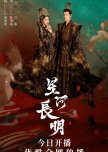
A Morally Complex Fantasy War Story. Not Perfect, but Still Entertaining.
I’m unsure how to review this because I don’t think the drama will appeal to everyone, yet I personally really enjoyed it. It’s not a top-shelf favorite for me, but it’s still a worthwhile watch, and I don’t regret seeing it.Pros
. Beautiful cinematography, from costumes to fight choreography to overall world-building and settings
. An engaging narrative that stays focused, with subplots that are well integrated rather than distracting
. Side stories that feel meaningful in their own right and sometimes even steal the spotlight
. A morally nuanced world where different sides feel understandable rather than purely “good vs evil”
. A continuation of the broader Novoland universe
. Subtle romance and fantasy elements that don’t overpower the main story
Cons
. Some action and plot developments feel underexplored, which can make certain moments feel flat
. Occasional inconsistencies in character behavior and tone without clear development
. Some supporting characters feel underdeveloped, leaving gaps in the overall narrative
. Certain relationships lack sufficient growth, which can make interactions feel a bit static
. Dialogue can feel stiff or unnatural at times
Overall, while it has clear flaws, I still found it engaging and enjoyable enough to recommend for viewers who like this type of fantasy political world-building with a more restrained romantic focus.
Was this review helpful to you?
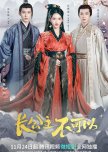
A Court Drama Full of Mysteries and Twists
I enjoyed this, though I have to admit I forgot I was watching it when it first came out. The pace is fast, and the drama is easy to finish within a day. The premise is engaging, but some subplots contain plot holes, and certain story developments didn't work particularly well for me.If you're comfortable with melodramatic revenge-driven stories, this drama blends palace intrigue, hidden agendas, shifting identities, and long-buried secrets. The narrative follows a woman whose life becomes intertwined with powerful figures from the royal court as she becomes caught up in a series of mysteries connected to the past. Along the way, the drama explores themes of loyalty, vengeance, power, and obsession while gradually uncovering the truths behind several interconnected events.
While I had some issues with the execution, I found the story entertaining enough to keep watching, especially given its brisk pacing and short runtime.
Was this review helpful to you?
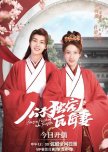
A Niche Drama for Lovers of Art and Craftsmanship
I really enjoyed this drama. I enjoyed it for its short transmigration backdrop, palace fights, and slice-of-life narrative. It also concentrates on industry work with a focus on the art of pottery. It covers techniques, fieldwork, ceramic designs, and art projects. So while it is very niche friendly, the storyline may not appeal to everyone.Was this review helpful to you?
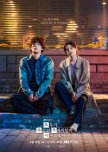
Four Episodes Away of Perfection
I have been watching Park Hae-young’s work for two years now, and honestly, I still do not know how to correctly review it. My Mister humbled me. My Liberation Notes finished the job. And then We Are All Trying Here arrived and did something neither of those managed to do, it made me question whether I had the language for this at all, not just in any of the five languages, but in the one I built specifically for this space. How do you put into words something that was always going to be better experienced than explained? I am genuinely not sure you can. But Park Hae-young did not write this drama for critics. She wrote it for the person sitting alone at midnight, heart still racing twenty minutes after the credits rolled, wondering why they cannot stop thinking about people they have never met. So consider this less a review, and more a letter from someone who got found.Park Hae-young sits in an SSS tier (mirroring Kiseki’s Bracer’s Guild ranking) of her own making in my book, a designation I do not hand out lightly and have never had reason to revisit. My Mister and My Liberation Notes remain two of the finest dramas I have ever watched, and both earned their place through the same terrifying gift: her ability to create a spectacle out of the mundane, to weaponise silence and negative space until the absence of sound becomes louder than anything a score offers, and to write human beings with a precision making you feel personally targeted. When We Are All Trying Here was announced, my expectations were already set at an altitude most writers never reach. What followed was something I did not anticipate even then: a writer I thought I understood, showing me she had been holding something back all along. Park Hae-young did not repeat her previous language here; she pushed it into new territory. The result is a drama that feels like a step forward in ambition, even if it is slightly constrained by its shorter twelve-episode structure compared to her usual sixteen.
It is not a comfortable watch. It is not an easy watch. It is, however, unmistakably a Park Hae-young work operating at near-peak intent, even when the format occasionally tightens around it.
I need to confess something: the character who almost made me quit this drama is also the reason I ended up loving it. Koo Kyo-hwan plays Hwang Dong-man, our male lead and, in a first for any Park Hae-young drama I have watched, a character who actively repulsed me in the opening episodes. Dong-man is an aspiring film director who has spent nearly two decades failing to debut while his entire social circle, a prestigious industry film club called “The Eight,” has long since surpassed him. He talks too much, he picks fights at dinner tables, and he radiates that desperate, sweaty energy of a man who is trying too hard to prove he still matters. His brother works odd jobs to keep them both afloat, the people around him walk on eggshells to manage his emotions, and he repays all of it with contempt aimed outward. It is much harder to feel compassion for someone cushioned by other people’s love who still chooses to be cruel, and for three episodes I was ready to file a formal complaint with Park Hae-young herself.
But here is the trick Park Hae‑young pulls. She wrote him as repulsive on purpose. Because once you sit with that discomfort, once you stop flinching and start looking, you see the layers underneath. What she did with him afterward belongs in the section below, but here I want to give Koo Kyo-hwan his full due: he plays Dong-man with a raw, almost frightening vulnerability that never feels like acting. There is no visible effort, no actorly plea for sympathy, no performance asking you to notice it. A man in a body that has been at war with itself for twenty years, and Koo Kyo-hwan makes every scene feel like something happening rather than something being performed. He fakes an injury just to have a moment of rest. He climbs a hill and screams his own name into the void so he can feel like he still exists.
Opposite him is Go Youn-jung as Byeon Eun-ah, in a role that finally made me sit up and seriously notice her. Eun-ah is a producer known in the industry as “The Axe” for the precision of her screenplay critiques, and she is the perfect emotional foil and counterbalance to Dong-man. Where he externalises everything, she keeps it all locked inside, speaking in short quiet bursts while carrying her own deep trauma of abandonment. The role demands enormous subtlety, minimal facial expression, and the ability to deliver devastating emotional weight through the smallest possible physical gesture. Go Youn-jung devoured every scene. There is a two-minute sequence in episode two, almost entirely silent, where she does more with a hesitation and a forced smile than most actors manage across an entire series. After this drama, she climbed straight into the same category in my mind as Shin Hae-sun, and I will be watching everything she does next with considerable attention. Byeon Eun-ah was definitely the quintessential Park Hae-young’s experience that I’m familiar with and she dragged me back in, kicking and screaming.
Of course, a Park Hae‑young drama is never just about the two leads. There is a whole ecosystem of side characters, and while I will not list all of them, a few supporting performances absolutely stole the show for me. Oh Jung‑se is, as always, reliably excellent as Park Gyeong‑se, a successful director who is secretly just as insecure as Dong‑man but hides it by lashing out at him. Then there is Kang Mal‑geum as Ko Hye‑jin, who became one of my favorite supporting characters in the entire drama. Hye‑jin owns a small production company with a bar underneath, and that bar serves as the main hub where all the characters gather and where most of the plots evolve. Kang Mal‑geum delivers a standout moment when her character finally snaps and tells Dong‑man the brutal truth about how his behavior affects others. It is the kind of scene that makes you hold your breath.
Another supporting character who charmed me completely was Jung Min‑ah as Park Jeong‑min. She is effortlessly funny and warm, and her character functions as one of the primary pressure release valves of the narrative as Park Gyeong‑se’s co‑writer. Her ability to flip back and forth between comedy and the more melodramatic moments as the plot evolves made me put her firmly on my radar for future works. And finally, I have to include Han Sun‑hwa as Jang Mi‑ran. I first noticed her in Welcome to Samdal‑ri, then accidentally stumbled upon her in Work Later, Drink Now. From romcom to straight comedy to now a dark comedic melodrama, I have started to see her range, and I genuinely look forward to whatever she does next.
We Are All Trying Here marks something of a departure for Park Hae-young in one specific way: it is her first drama to lean meaningfully into comedy, and the tonal balance she maintains between the genuinely funny and the quietly devastating is one of its quieter achievements. The first three episodes tested my trust in her more than anything she has written before. Hwang Dong-man was hard to love. He was, to put it plainly, bleeding other people to fund his own dysfunction, and the empathy contract Park Hae-young has always maintained with her audience felt deliberately fractured. Where her previous leads carried their wounds inward, Dong-man wore his outward and aimed them at the people who loved him most. However, as the narrative progresses, that perception breaks down. Dong-man is revealed as someone constantly drowning in unspoken anxiety. His noise is survival. His cruelty is deflection. His chaos is regulation. I felt guilty for briefly feeling relieved when his friends finally set their boundaries. This guilt, I later understood, was the drama working exactly as intended.
Because what Park Hae-young was building underneath the irritation was this: Dong-man and Eun-ah are distorted mirrors of the same wound. He externalises, she internalises. He creates noise, she creates silence. He fills every room he enters, she empties herself to make space for others. But underneath all of it, both are trying to say the same impossible sentence, help me, and the tragedy is that neither of them has ever learned how. Dong-man talks endlessly because silence feels like drowning. Eun-ah stayed quiet through things that would break most people, including a mother who crossed her off at nine years old and an ex-partner who erased her name from work she co-wrote, because asking for help was never something the people around her made available. Their relationship is not a Kdrama rescue mission. It offers something far more radical: the idea that comfort does not come from someone telling you everything will be fine, but from someone saying “I know why you are like that,” and meaning it without condition. This is a story about people finally willing to ask for help, and discovering it does not diminish their worth.
The OST deserves a mention, because this is a Park Hae-young drama and the music always pulls its weight. Starlight by Lucy anchors the lighter comedic register with exactly the right amount of warmth, and Pieces by TAEYEON is a standout in holding the emotional weight of the heavier sequences. I will admit I was surprised Sondia did not appear on this OST given her near-permanent presence in Park Hae-young’s previous works, but every selection here earns its place with the same quiet precision the writing demands.
Visually, the drama understands negative spaces in a way few others do. Those long silences, the shots of Dong‑man walking alone at night, Eun‑ah sitting in a room full of people and saying nothing. Park Hae‑young has always been a writer who weaponizes what is not said, and here the camera follows her lead.
Here is where my heart genuinely hurts. The real flaw of We Are All Trying Here is the narrative estate. Twelve episodes are simply not enough for Park Hae‑young to tell her story, and that constraint becomes painfully obvious in the final episode. She tried, she really did, and almost every plot point does get closed. But an 80‑minute finale is brutally tight pacing for a writer who usually luxuriates in 16 episodes. Something had to give. And what gives is Eun‑ah’s story with the script. Her conclusion is nowhere near as clean or as satisfying as the rest of the drama, especially when I compare it to Park Hae‑young’s other works. I do not say this lightly, but it left me feeling slightly dirty, like she became the sacrificial lamb because Dong‑man’s story needed more room to land. There is a strange and uncomfortable irony in a drama about a woman who spent her life being made invisible choosing to leave her resolution the least visible of all. I would have understood more if they had sidelined Hwang Ji‑man’s plot line instead, but they did not. And so here I am, sitting with the knowledge that this drama was four episodes away from my third Perfect 10 of the year. I am genuinely grieving those four episodes we should have had. This imbalance does not break the drama, but it does reveal its boundaries. The final stretch feels less like failure and more like a visible ceiling placed on an otherwise expanding emotional architecture.
As is typical of Park Hae-young’s writing, this is a drama you have to experience yourself. Behind the mundane and deceptively ordinary surface of people simply being people, layers fold into layers, and no summary does them adequate justice. She remains the only writer who has ever made me cry purely from dialogues. No swelling score, no camera tricks, no close-up held a beat too long to cue the emotion. Two people in a room, talking, and somehow I was undone.
For a drama that began with me wanting to remove Hwang Dong-man from the premises entirely, Park Hae-young got me to the point where the two leads’ unconscious cry for help shattered me completely. It is terrifying how thoroughly she dismantled every resistance I brought to this drama: an obnoxious lead, a gimmicky device I dismissed in episode two, a tonal register I did not recognise as hers at first. Because it is one thing to write within a viewer’s established preferences. It is another thing entirely to identify exactly what makes a viewer resistant and then dismantle that resistance so carefully and so precisely that by episode eight I was sitting there thinking she probably could have made me love a love triangle. That is not just good writing. That is a writer operating with complete command of her audience’s emotional interior.
It is, ultimately, a reminder of what Park Hae-young does best, and what she might achieve with even more narrative space. It really is unfortunate that the drama is four episodes short of what it needed. She needs the narrative estate. She deserves it. Give Park Hae-young all the narrative estate she needs, damnit. Hell, give her 20 episodes like Mr. Sunshine. She’d knock that out of the park too.
Was this review helpful to you?
Dropped: Fresh at the Time, Less Memorable in Hindsight
This is a drop review—commentary on the first two-thirds of the season. No numerical ratings, opinions only.This is a fantasy romance set in a world where the supernatural and mortal realms intersect. What initially drew me in were the mysterious atmosphere, the fantasy elements, and the intriguing cast of characters. At the time, the drama felt fresh, and I enjoyed following the unfolding story as new pieces of the narrative gradually came into focus.
However, at its core, this is very much a romance-driven fantasy, and many of its storytelling choices rely on genre tropes that felt novel to me when I first watched it but have since become much more common. As a result, it didn't leave a lasting impression once I moved on to other dramas.
While I enjoyed it during its original release, I never felt compelled to revisit it. It's been six years, and although I considered returning to finish it, I realized I've simply outgrown my investment in the story. Ultimately, this isn't a drop due to quality—it's just a case of moving on from a drama that no longer holds my attention the way it once did.
Was this review helpful to you?
Now at E3 the actors are all good. The male lead... Isn't just for me. When I saw it was zhou yiran in a historical drama, i almost not watch this but I have been waiting for this drama bcs of CDL. His aura and appeal is there but to be honest, he is not visually appealing with historical costume. Don't get me wrong, I am obsessed with his visual after watching him in 12 letters. I just really think he's not attractive enough for historical costume drama. Though he still gives me giggles bcs he is one of my fav modern drama actors.
Update: I take back my words, zhou yiran did a good job, his aura and all is too good for my heart. I have been avoiding generation to generation but I might try watching it after this!
Xiao tian is so attractive lol. I love that scene where a-zhao tripped. I've seen a lot of xiao tian and cdl's dancing videos in Tiktok I might even think he's the male lead.
Was this review helpful to you?
Psychology and Mystery, But a Missed Opportunity
Sorry folks, but this drama took a disappointing turn for me. I was really enjoying it at first—the opening was unique, blending psychological sci-fi elements with spiritual folklorism. I especially appreciated how the narrative revolved around a central mystery, with each episode working toward solving it while also exploring smaller cases that tied into both the main and a secondary storyline. As someone who enjoys detective dramas, this structure was right up my alley.What set this one apart was its approach: instead of traditional investigations, the show delved into the psyche of different characters and suspects. It was a refreshing take on the genre and kept things compelling—at least for the first half. However, by episode 19, once the secondary case was wrapped up, the show started to lose its spark for me. Although the characters continued tackling smaller cases leading toward the central plot, they felt flat and lacked the intrigue of earlier episodes. As a result, the pacing dragged, and the story started to feel stretched thin.
Was this review helpful to you?


