

This review may contain spoilers
Excellent psychological series!
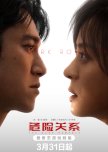
I was curious about this series and i waited until all the episode is up. Because i was watching another drama and there's no way i will be able to watch it. This drama is really dark and very entertaining. All the actors are amazing. Sun li as yang ling did a fantastic job portraying a character that has been manipulated and had gone through a lot. That uncle is a pervert he groom her into his side hustle. But when she's no longer young he dispose her and lead her to believe no one wants her. Even the mom blame her when her father died.Wu kang ren as luo liang did a fantastic job as a PUA
This series is one of my top drama of 2026.
Looking forward to season 2!
Highly recommended!
¿Te ha parecido útil esta reseña?
This review may contain spoilers
Contest for how many tropes can be used in 12 ep
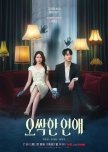
This series was very mixed for me. If you’re someone who can ignore plot holes and not think too hard about the overarching story, there’s plenty to enjoy. But if sloppy writing bothers you, prepare to be bothered.Park Eun‑bin is one of my favorite actors, so I’ll watch anything she’s in. Unfortunately, this series didn’t live up to her abilities. It genuinely felt like the writer was competing in a contest to see how many drama tropes could be shoehorned into a single 12‑episode run. I made a list—and I’m sure I still missed a few:
Corrupt politician
Corrupt prosecutor
Corrupt chaebols
Family fight for corporate control
Love triangle
Fake engagement turning into real love
Opposites attract
Crime‑solving romance
“Only you understand me” emotional bond
Trauma‑driven powers
Heart transplant from former love
Miraculous recovery from near‑fatal accidents
Shamans
Prophecy
Break‑up‑to‑save‑them (removing partner’s agency)
Family‑pressured breakup
White Truck of Doom
Wrongly blamed for murder due to own stupidity
Omniscient/omnipotent villain
Lying to partner leading to danger
Using many tropes isn’t inherently a problem, but here most of them were half‑hearted and never fleshed out. They felt included simply for the sake of inclusion.
That said, I did enjoy the series overall. The acting was excellent, and Park Eun‑bin and Yang Se‑jong had great chemistry. Their romance was the strongest part of the show. How they met, became involved, and grew into a couple was plausible (supernatural elements aside) and well paced. Ma Gang‑uk was definitely a green‑flag suitor.
The ghost plotline started strong, supported the romance well, and gave the series a solid foundation—but it fizzled out midway through. Maybe the writers wanted to avoid comparisons to Phantom Lawyer, but they could have kept the ghosts more involved in the second half. Thankfully, the supernatural thread returned for the coma‑dream sequence, which was easily the best part of the finale.
Ong Seong‑wu made an excellent villain. His romantic‑rival storyline was weak and deeply flawed, but his transformation into a full antagonist was performed extremely well.
The fashion was fantastic. Park Eun‑bin’s wardrobe was gorgeous, and she looked beautiful throughout. Her hair color was also perfect for her.
The romance wrap‑up was fine—not great, but not the worst I’ve seen. The final scene was the standard “together with a hint of future family,” but the epilogue blooper reel was a delight.
Now for the negatives. Going through all the issues would turn this review into a novel, so here are just a few examples of the sloppy writing/production that irritated me:
Gang‑uk is a heart‑transplant recipient, yet when being treated after the car collision he is shown with a pristine chest. Open‑heart surgery leaves a very large scar.
Seung‑jae blackmails his politician father to get out of jail, but the next time he’s arrested, the lawyer claims his father has cut ties—even though all the blackmail material still exists and should still matter.
Most of Episode 11.
We start with the “break up to save them” trope due to family pressure, ignoring Gang‑uk’s feelings. My least favorite uses of one of my least favorite tropes.
Then the prosecution office politically targets Yeo‑ri with false accusations—despite her being heiress to the 5th‑largest corporation in Korea (making it a stupid move to antagonize her for no gain). They compound this by transferring her fiancé to a penalty posting for whistleblowing.
Yeo‑ri then goes alone, at night, to meet a murderer (Seung‑jae) in a secluded location. She finds him dead, picks up the obvious murder weapon, and is immediately discovered by police. She’s released that night despite being the prime suspect with solid evidence against her.
The finale of the episode crams in even more nonsense: Gang‑uk revisits the crime scene just as the real killer realizes he lost a cufflink. The killer somehow arranges for a thug to have a White Truck of Doom ready to run over whoever leaves the crime scene—despite not knowing whether the cufflink was actually found.
The massively powerful yet somehow extremely quiet truck accelerates from 0 to 50+ kph in 20 meters that separate them. Obviously, Gang‑uk doesn’t hear it because he’s must be deaf. Fortunately, Yeo‑ri arrives just in time to see the truck coming, hop out of her car, run 20 feet to push him out of the way with just enough time to stand upright with a deer-in-headlight look before getting hit herself. Too bad she didn't think to tackle him out of the way so both of them would have been safe.
The cherry on top: the police accept the driver’s excuse that he “fell asleep”—in late morning, in an industrial alley, after just starting the truck.
But aside from Episode 11, I did enjoy the series. It starred Park Eun‑bin, after all.
¿Te ha parecido útil esta reseña?
A Place to Be
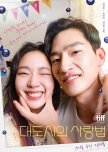
Love in the Big City is warm, witty, quietly heartbreaking, and emotionally messy in the best way. It tells the story of Koo Jae Hui, a free spirited woman, and Jang Heung Su, a closeted gay man, two misfits who gradually become each other’s safe place. As they navigate loneliness, prejudice, identity, messy relationships, and the growing pains of adulthood, the movie becomes less about finding the perfect life and more about finding a place where you can finally be yourself.What I appreciate most is how genuine the story feels. It never tries too hard to make a statement, nor does it romanticize the characters’ struggles just to squeeze tears out of the audience. Tragedy exists because tragedy is part of life, but so do laughter, desire, bad decisions, insecurity, friendship, and all the wonderfully complicated things in between. The movie simply lets its characters live through them. At times, it felt less like watching a movie and more like quietly witnessing the lives of two people trying to figure themselves out. Raw, imperfect, and very human.
I also really liked how the movie treats Jae Hui and Heung Su’s relationship. It never forces their bond into romance, yet somehow they feel like soulmates. Not the romantic kind, but the platonic kind. They have each other’s backs, tease each other, bicker, playfully hit each other, and somehow remain each other’s person even after the ugliest arguments. There were moments when they could have a huge fight and then, one second later, immediately worry about each other. That kind of friendship feels incredibly precious. Who says a soulmate has to be a lover?
Kim Go Eun was fantastic as Jae Hui. I have never doubted her performance, and she brings so much life into this character. While some people might see Jae Hui as a misfit, I honestly found her refreshing. She says what she thinks, owns who she is, and when she decides to make a statement, she makes it with her whole chest. Girl, slay! More than anything, I found myself rooting for her because there is something liberating about watching someone refuse to shrink herself just to fit into other people’s expectations.
And then there is that crying scene. My goodness. Script aside, Kim Go Eun’s performance alone broke me. The way she cried while trying to speak, gasping for air, choking on her words, and struggling to get everything out felt painfully real. It was as if years of pent up emotions had finally found the exit and came rushing out all at once. I especially appreciate that she did not try to make the crying pretty. It was messy, ugly, and completely human. I cried with her.
Noh Sang Hyun was equally impressive as Heung Su. He brought so much nuance to a character carrying layers of complicated emotions about his identity. His love life could be frustrating because he has genuine people interested in him, yet he keeps pushing them away. But honestly, I understood him. Before he can commit to someone else, he needs to figure himself out first. He has not even found the courage to tell his own mother, a person who clearly holds enormous influence in his life.
I also read Heung Su’s reluctance to come out as partly rooted in the fact that he does not want his identity to be treated as something abnormal. He wants to live somewhere where it simply is not a big deal. This is why his argument with Jae Hui about why her identity gets to be considered normal while his requires a coming out felt especially meaningful. Noh Sang Hyun delivered all of that uncertainty, frustration, fear, and vulnerability so convincingly that Heung Su never felt like a character designed to represent an issue. He simply felt like a person trying to live.
That brings me to one line that really stayed with me: “How can being yourself be your weakness?” It is such a simple question, but it hit hard. I have always felt that being different should not automatically make someone lesser, although I understand why Jae Hui and Heung Su are considered misfits within the world they live in. I feel fortunate to have grown up exposed to different kinds of people and perspectives, because it taught me to be more open minded. Still, seeing the characters constantly negotiate with a world that wants them to be more acceptable made that line resonate deeply.
The movie also made me think about how subjective the word “misfit” really is. Sometimes the problem is not that we do not belong. Sometimes we are simply standing in a room that has not learned how to make space for us yet. Jae Hui embraces who she is more openly, while Heung Su spends much of the story trying to understand whether he can do the same. Their journeys are different, but ultimately they are both searching for the same thing: somewhere they do not have to apologize for existing.
The visuals are pretty normal. Nothing particularly breathtaking, but nothing distracting either. The OSTs are similar for me. They work, but I was so invested in the characters and their story that I barely paid attention to anything else. And honestly, that is probably a compliment. The story itself was enough to hold my attention.
The ending felt a little rushed, especially when it came to Heung Su’s mother. I wish the movie had explored their relationship more because her shift from approaching his identity through a strongly religious perspective to seemingly trying to accept it felt a little too sudden. There was room for more emotional development there. Still, the ending works. It feels less like a conclusion and more like the opening of another chapter. The characters get their closure, and somehow, so did I.
By the end, Love in the Big City felt like a warm embrace or a gentle pat on the back. We have all been misfits in our own way. Some of us embrace it, some hide it, and some spend years trying to figure out what it even means. This movie does not promise that being yourself will always be easy. It simply reminds us that it should never be a weakness.
And perhaps that is what touched me most. Beneath all the messiness, humor, heartbreak, and growing pains, Love in the Big City is ultimately a story about finding someone who makes you feel at home while you are still learning how to make a home out of yourself.
¿Te ha parecido útil esta reseña?
dms fome
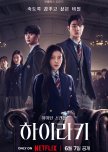
solo la vi porque esta eunbin pero es tan fome, me costó demasiado terminarla, era una buena historia pero la desarrollaron horrible, los personajes pueden servir rostro pero no una actuación destacable para elogiar.es una lástima que hayan desperdiciado la historia para crear esto finalmente 👎 para nada memorable, me tomó días terminar de verla, dificil de ver! no llegaba a nada, se daban mí vueltas, inconclusa
hay q destruir al director, queremos ver actuaciones buenas no rostros bonitos.
¿Te ha parecido útil esta reseña?
An interesting concept that falls flat
The storyline had a lot of potential—interesting and full of promise. But unfortunately, the execution just didn't land.I couldn't even finish the movie. I got stuck somewhere around the halfway point and ended up skipping straight to the end because I just wanted to know how it wrapped up. By that time, I realized I didn't really care about any of the characters or what happened to them. They lacked depth, and I never felt invested in their journey.
It's a shame because the premise was there, but the film didn't do enough to make me connect. A forgettable watch that could have been so much more.
¿Te ha parecido útil esta reseña?
The Completion of Marriage
A 1 usuarios les ha parecido útil esta reseña
This review may contain spoilers
If I had a hammer, I'd hammer in the morning, I'd hammer in the evening, all over this land
Drawing inspiration from a Hollywood-style premise that flirts with decidedly captivating classic genre archetypes — the marriage thriller, the suspect husband, the kidnapped wife and an invisible killer — “The Husband” builds tension through a gradual accumulation of elements, in what appears to all intents and purposes to be a descent into the gothic-crime genre that is sure to captivate, laying excellent groundwork and fuelling ever-higher expectations.However, just when the viewer seems to have grasped the parameters within which the story intends to unfold, the series takes a sharp turn, transforming what appeared to be a gradual evolution of the thriller into a substantial replacement of it.
What might have taken the form of a narrative metamorphosis — A becoming B without ceasing to be A — instead gradually takes on the contours of a rupture: the marriage and crime thriller of the first part gives way to a medical-scientific conspiracy that does not seem to fit organically within the initial premise, nor does it succeed in retrospectively lending it a deeper meaning.
A rupture that appears all the more pronounced precisely because the first part of the drama perfectly illustrates the narrative framework that the series had outlined with equal rigour;
Through a cohesiveness that is more than mere appearance, “The Husband” exploits and expands upon – whilst redefining them within the conventions of television – the three unities of classical drama, beginning with the action in which the protagonist, Tae-ju, is determined to find and rescue Se-yun whilst, at the same time, proving that he is not responsible for her abduction; inevitably linked to time, through the ransom countdown and the constant threat of Se-yun’s death – elements that imbue the narrative with a frenetically gripping pace; finally arriving at the unity of place, where the house, Se-yun’s prison, even the hospital and the car delineate the microcosm within which the desperate hunt unfolds.
Within this narrative puzzle, the portrayals of the characters — Tae-ju, Se-yun, Man-hui, the police, the parents, Su-hyeong — all serve this conflict, alongside all the narrative elements that help the viewer immerse themselves in the whirlwind of hypotheses that the story inevitably provokes.
It is therefore within such precise narrative parameters that the viewer is gradually led to formulate their own questions, building expectations consistent with what the series has shown them up to that point.
And this is the point at which “The Husband” makes its most problematic choice: rather than developing those premises organically, it begins to shift the narrative’s focus towards a completely different subject matter...
The first sign of the plot’s fragility emerges as early as when the series introduces characters and situations that appear destined to deepen the mystery, but which ultimately turn out to be mere plot devices.
Su-hyeong, a former police officer and a sort of maverick driven by revenge, embodies a whole series of elements that could potentially be crucial to the story’s progression: he has a previous case, he has lost his wife, he has studied the kidnapper’s modus operandi, he possesses information the police do not have, and he knows another victim; yet his role is exhausted almost immediately, without him being accorded the narrative weight that his introduction seemed to promise, effectively reducing him to a plot device serving the protagonist’s sensational escape.
The same mechanism is repeated, on a smaller scale, in the subplot involving the nurse’s grandmother, who is kidnapped and used by Man-hui as leverage to extract information from the hospital – a subplot introduced with sufficient emphasis but quickly absorbed and abandoned by the narrative.
It is, however, particularly as the story progresses that this mechanism takes on more pronounced proportions, because it is not merely that certain plot threads are abandoned: the very nature of the narrative gradually changes.
The action and survival thriller gives way to a hospital-based conspiracy linked to stem cell research, with the focus shifting from the kidnapping and the hunt for the killer towards a web of vested interests, blackmail, murders and repressed emotions involving doctors, patients and their families. The problem is not, once again, the ambition to broaden the scope, but the lack of a transition capable of making this new scenario feel like the natural consequence of what had gone before.
This same shift gradually extends to the characterisation. From the very first episodes, Man-hui demonstrates that he employs technology, surveillance and planning with such systematic rigour that he is constantly one step ahead of anyone attempting to stop him; what changes, therefore, is not so much his nature as the increasingly evident disparity between his ability to anticipate every move and that of a clumsy investigative apparatus that seems perpetually to be chasing him after the fact.
His characterisation thus ends up oscillating between that of a brutal serial killer – who resorts to mallets, hammers and stones with often impulsive violence – and that of an almost infallible criminal capable of devising extremely sophisticated plans, a combination that the screenplay does not always manage to render fully coherent. Crosses, rituals, an hourglass and Little Red Riding Hood seem to belong to a killer with his own ritualistic conception of violence; at the same time, however, the second half asks us to view him as a highly sophisticated strategist of intrigue.
Man-hui and Gyeong-ae are gradually absorbed by the demands of the plot, whilst the complexity of their relationship remains only partially explored.
From that moment on, everything seems to operate according to different rules: the police – running like headless chickens – continue to chase without ever getting ahead of the game, whilst a surgeon almost incidentally takes on investigative duties, the hospital is transformed into a microcosm of rivalries, secrets, crimes and repressed emotions, whilst Se-yun herself, after being kidnapped, tortured, recaptured and finally freed, is left exposed to further dangers with protection that, paradoxically, appears far more fragile than that afforded to the wife of her own tormentor.
It is at this point that the viewer’s sense of disorientation becomes more than just a simple shift in tone: the series seems to have reversed its trajectory without laying the groundwork necessary to make that turn.
It is not, therefore, a question of expecting every detail to be explained or of insisting that a thriller must adhere slavishly to the conventions of the genre; it is a matter of recognising a narrative progression and verifying its internal consistency. In “The Husband”, however, intentions, premises and developments often seem to proceed on different levels, to the extent that certain plot twists are not merely implausible, but difficult to reconcile with the logic previously established.
In many series, the problem arises in the final episodes: a rushed conclusion, an unconvincing resolution, an ending that fails to live up to its promise. Here, the issue is more radically: the fracture occurs at the very heart of the narrative, retroactively altering our perception of what comes next and, to some extent, of what has come before.
‘The Husband’ thus ends up feeling like a drama that is progressively split into two narrative identities that are difficult to reconcile.
This is perhaps the main reason for my disappointment: not that I am faced with a story devoid of ideas, but with one that contains far too many and which, instead of organising them into a coherent whole, ends up simplifying and trivialising them.
And yet, amidst the muddled plot development, there was a story. Perhaps even a far more interesting one than the one the series chose to overload with conspiracies: the one suggested by the title itself, through the possible parallels between the two families – Tae-ju and Se-yun on the one hand, Man-hui and Gyeong-ae on the other...
Two profoundly different couples, even irreconcilable on a moral level, yet united by the same notion of marital devotion, taken to the point of self-sacrifice. Tae-ju goes so far as to put his own identity, and ultimately his marriage, on the line in order to protect Se-yun; Man-hui, having shared with Gyeong-ae a guilt that will become the very foundation of their relationship, in turn chooses to take full responsibility to save her.
One attempts to protect his wife without losing himself entirely; the other, having already crossed that threshold, transforms his sacrifice into a final act of protection. An imperfect symmetry – morally irreconcilable yet narratively evocative – which could have elevated “The Husband” to something far deeper than a mere crime thriller.
The drama could have been a real gem: it has the premise, the atmosphere, the characters and even thematic parallels capable of sustaining it. But the writing ends up squandering exactly what had made the opening so promising, gradually replacing structure with a mere accumulation of events and causality with the need to drive the plot forward. This is perhaps its most bitter contradiction: having enough material to build a memorable story, yet ending up simplifying it, trivialising it and fragmenting it.
A story may deliberately leave something unresolved; what it cannot do without paying a price is to invest time, information, motivations and relationships in building up its premises, only to transform them – once their immediate function has been fulfilled – into mere tools for advancing the plot. For every narrative element to which significance is attached inevitably ends up creating an expectation, and that promise, sooner or later, demands to be fulfilled.
5/10
¿Te ha parecido útil esta reseña?

As the title says Sweeth Teeth
It wasn't on my top of recommendation but def one of Cdrama I can rewatch a couple of times. It's refreshing and no complex plot twist.I like Dr./Mr. Yi's personality the most. He's like a cat tbh, like a puppy almost 😅
For the music, good choices as well, there are some parts though where I felt like, the bgm is too loud but overall, the songs are great to listen to.
The acting, it wasn't the best but the characters are well portrayed.
I like the age-gap couple troupe too, not much fun of the third couple though.
¿Te ha parecido útil esta reseña?
The acting ruined the story’s potential.
Sorry, but this is going to be the first K-drama I’ve ever dropped. The female lead Shin Ye-eun was just acting, that’s it. Her crying scenes felt like she was simply pretending, and they weren’t convincing at all, even with the melancholic music. I tried so hard to continue, even checking the remaining episodes and the finale, but her acting just didn’t work for me.It’s just my opinion, but I feel like there are other actresses who would have been more deserving of the role. I just can’t stay invested, even though the male lead is good Ong Seong-wu. The story is promising, but her acting ruins the mood for me.
¿Te ha parecido útil esta reseña?
A slow burn I might not finish
This is a very slow romantic drama—most of the time, nothing particularly dramatic happens. And yet, somehow, it kept me interested enough that I never felt the urge to skip scenes. That says something.I was so happy to finally see Ji Hoon in a lead role, as I absolutely loved him in Begins Youth. He doesn't disappoint here. I really enjoy the main couple's dynamic—they have a quiet chemistry that works—and I also found the ML and SFL's friendship fun to watch. Their backstory, though, was hard to sit through.
That said, I paused this drama to watch something else, and now I'm struggling to get back into it. It's not that I disliked it—it just doesn't pull me back. The slow pacing makes it hard to pick up again after a break.
It will probably end up on my dropping list. Not because it's bad, but because it doesn't have enough urgency to make me return. A gentle, well-acted drama that might work better for someone with more patience than I have right now.
¿Te ha parecido útil esta reseña?
don’t wait, watch now!!!
i literally have not reviewed any of the dramas i’ve recently watched but this show made me feel SO many emotions that i just have to dictate it 😭can i just say that one of the things i love about this was the switch up of zhang lurang after falling in love?? he LITERALLY couldn’t stop smiling and neither could i 🥹
additionally, the scene of su zaizai ignoring him gutted me. girls do so much for the boy they love and it reminded me of high school me so bad.
i’m so excited for wimtm now!!!
¿Te ha parecido útil esta reseña?
A Captivating Journey Through Time: Seasoned Cast and Flawless Storytelling
A wonderful show with a seasoned cast delivering authentic performances! The narrative is engaging, revealing key events with excellent pacing as the story unfolds. The time jump to seven years later completely hooked the audience, leaving us captivated and eager to see how the characters themselves and their relationships had evolved. Interesting too to get a glimpse into life in S. Korea in the 80s.¿Te ha parecido útil esta reseña?
New Employee Chairman Kang
A 0 usuarios les ha parecido útil esta reseña
Too Many Tropes
An interesting start to the narrative ruined by predictable tropes. It’s devolved into a toxic parenting drama filled with cliché portrayals of antagonists and particularly the angry outbursts of the Chairman Na character. It's a failure of the director to opt for trite portrayals of emotions lacking nuance. I liked the performance of the two Lee's; particularly their acting was effective in humorous scenes. I'm curious to see how the plot unfolds so that in itself is positive but I think they are overplaying the despicable twins; though the actors were convincing. I am skipping over parts and I find that I am completely baffled by the 9.6 rating and that it's listed as a comedy. I now understand the comedy angle after watching the final scenes in the last episode.¿Te ha parecido útil esta reseña?
This review may contain spoilers
The Fallen Lady Got Up Greatly
The Fallen Lady Returns is such a great short drama. Zhang Xi Yin (played by Teng Ze Wen) was forced to marry into a family by the evil empress. Her husband and in-laws wanted her shops and wealth so badly. The husband killed her and left her for dead. She was reborn and set out on a path of revenge. She worked out a association with the emperor's brother, Prince Duan Jian Li (played by Zhan Yu). He was very apprehensive when it came to dealing with Zang Xi Yin, in the very beginning. When it seemed that their alliance was not going to work, she tried to meet the prince's sister, but the guards turned Xi Yin away. She waited in a building not far from the temple. An assassin wanted to kill the princess by knocking her out and burning her alive in the temple. Xi Yin rushed into the temple and got the princess out, but she herself was trapped until she was rescued by Prince Jian Li. The bond between Zhang Xi Yin, Prince Duan Jian Li and his sister was formed.Anyways, I will not rehash what others reviewers already reviewed. I would just say that Prince Jian Li was responsible for getting a divorce for Zhang Xi Yin, away from the evil family. She learned to kill and she was very intelligent. She was a great schemer. She saved the emperor from the empresses rebellion and thus saved the country.
Zhang Xi Yin and Prince Duan Jian Li were set on their course of bliss.
¿Te ha parecido útil esta reseña?
¿Te ha parecido útil esta reseña?
A love letter to Me, You, and Kashgar.
This was truly one of the most beautiful pieces of work I have watched. The portrayal of Kashgar culture was beautiful, while still staying rooted in its realities.As someone from Pakistan (which borders, and therefore blends with, Kashgar), I thought the way they presented the culture, their norms and customs, was really well researched, and I found myself relating and enraptured by the representation.
The story follows 3 girls, each with their own distinct stories, struggles, ambitions, and growth, as they move through life, make decisions, meet people, face consequences, and learn lessons. These people, along with every other character, make mistakes, fall, get back up, and grow. Their decisions feel realistic and comfort you with their familiarity.
They showed the beauty of the traditions and roots, while also displaying the problems with the society (something which I found the most relatable).
I think the love this drama has is so unique. I can't help but feel the true appreciation the production has for this drama, from the writers to the directors and actors, and even the camerawork.
Even though it was only 8 episodes, this is by far the best pacing I have seen in a drama, ever.
The cinematography was breathtaking, and the music unique in its presence.
I 10000% recommend this; it is worth every second.
¿Te ha parecido útil esta reseña?


