

This review may contain spoilers
They survived but....
Despite everything, I'm really satisfied with the ending. There's hope for them reuniting and resuming there relationship. I'm so happy for Zuo Yingying for finally settling in her homeland and finding potential love ❤️. Happy Lord of Rust-sword for not dying and finding a path for cultivation;as well as the Inn owner helping to save the day and her business is flourishing with the little rabbit demon working there. Lin Muhan survived as well but with the loss of his father and Junior sister😢. I was so happy at Chu Ying's appear near the end. And shout out to Bai Zhongying , his sacrifice will not be forgotten also RIP to Xin Xiong he was the best of all the sect leaders😢. I still feel bad for Jin Lun, ASheng should not have became a God, there I said it. I liked her but damn. Anyway I would rate this 9/10Was this review helpful to you?
.
Hou Ming Hao did a great job in this series as well, so it’s hard to feel disappointed. 😊
There’s just something about Chinese historical dramas that always draws me in. And the fact that it leans into bromance is definitely an extra plus for me.
.. ... ... .... .... .... .... .. .. ... ... .... .... .... .... .. .. ... ..
🌸✨🌈 Hiii~ Welcome to my kawaii corner~ ♡(≧▽≦)ノ✨🌸
You can find more of my reviews on Instagram~ 🌟💖
Check my homepage for my account~ (。♥‿♥。) 🌷
Some reviews are under 500 words, so I can’t post them here~ (≧ω≦)ノ💫
Thank you sooo much~ ☆:.。.o(≧▽≦)o.。.:☆ 💕🌸
Was this review helpful to you?
This review may contain spoilers
SCREENPLAY, ACTING and DIRECTION DISASTER
For starters, Dunk can't act. He sucks.Now onto the show, the direction and screenplay was lacking so much, not even Joong or Chimon's acting could compensate for it. Like, why were they romancing right beside a dead body? Why did they as police officers not act up when they knew the victims were getting killed one by one and they literally had the list of all the possible victims? AHHHH.. it gave me a headache. The plotholes are HORRIBLE.
Sing over exaggerated his finale scene. The only good chemistry was weirdly between Ohm and Dunk and Ohm and Joong, but that's it.
I must APPLAUD all the negative actors though. Did so much better job than the leads for sure. All of them looked PURE EVIL and I loved their performances cause I literally couldn't stand ANY of them.
Aou Boom's cameo was cool. Boom didn't have the girth of a police officer. But since it's only a cameo it doesn't impact the storyline that much.
The fans of the main couple are soo deluded at this point that they are enabling a shit show instead of calling GMM out. Even Joong seems to have acknowledged the disaster it was.
Joong and Dunk's chemistry in the previous shows atleast saved them but this was BEYOND SAVING. I hope Dunk seriously starts working on his acting chops and gets better with his next show.
Was this review helpful to you?
This review may contain spoilers
Temu ver of Princess Royal
Honestly, it’s a mini drama that spoke way more of a message in just 24 episodes (all 10 min), than your regular drama. Plot is pretty solid, cliche and overused, but not horrible. Pacing is rather quick, almost all misunderstandings are resolved after the first 15 episodes.But imo, the female lead saves the story, my heart goes out to her, poor baby suffered so so much. she is what makes this drama stand out. She is beautifully written, resilient and oh so extremely brave. The way the actor depicted the fl’s trauma was simply perfection. She is such a badass, and I love the subtle mentions of feminism.
She is so patient and forgiving, which leads me to feel extreme disappointment for the male lead. He’s short sighted, and failed to understand the female lead’s pov. He was a plain bitch during the first half of the drama, and safe to say, he did have a redemption arc. Ngl thou, he’s mad smart.
That aside, the actor did such a great job playing the character, he’s got that pathetic pretty boy gaze. I love the actress as well!
Overall, I don’t really recommend, but it gets over quickly. Almost like watching a movie. But there are better dramas to watch other than this one. “The princess decree”, is nothing special… Good ending.
Was this review helpful to you?
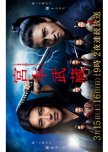
"For what purpose are you walking the path of the sword?"
Miyamoto Musashi was a crash course in the legendary figure starring Kimura Takuya. Despite it being twelve years old as of this writing, I thought the cinematography and quality of the drama were well done. And then there was Kimura whom I have a soft spot for, especially with a wig and sword. Battle on!Takezo is involved on the wrong side of the Battle of Sekigahara. More brawn than brains, often operating on instinct, he has the raw skills of a swordsman but not the patience or techniques required. After being captured attempting to leave a message for his friend’s mother, the monk Takuan imprisons him in order to teach him discipline. After his release the newly named Miyamoto Musashi heads out to make a name for himself with his sword hoping to find a job with the Tokugawa shogunate. Along the way he fights, finds love, new advisors, and personal growth.
I enjoyed Kimura in this role. He brought the wildness needed for Miyamoto’s youth, the bloodthirsty determination that followed, and ultimately the calmer swordsman attempting to balance life and death on the edge of his sword. Maki Yoko had the thankless role of Otsu who could be cloying. Nakatani Miki appeared as a geisha styled quite similarly as her role in Jin. Sawamura Ikki played Miyamoto’s rival and what could have been a beautiful bromance if swordsman pride did not come into play. Honestly, I don’t understand the need to be the best when the only way to prove it is, 'one of us will be the best and one of us will be dead'.
The fights were entertaining if straining believability. At least Mifune Toshiro used the terrain to his benefit in his film while Kimura had to take on 70 samurai at one time on flat, dry ground. There was quite a bit of wuxia wire work as Miyamoto leaped great heights or dropped from heights designed to kill other men. He also had super healing abilities because this story didn’t have time for such things as sword wounds. To quote one of the Yoshioka, “How come he won’t die?!”
I burned through both episodes which were around 2 hours each as this mini-series was fast paced, never slowing down much to bother with historical exposition or character development of supporting cast. It helped that I enjoyed watching Kimura devour this role even when the pacing could stumble and the narrative could be heavy handed. For three and a half hours characters berated Miyamoto for killing people even when his life was being threatened and then at the end, his use of the sword was deigned by the cosmos to bring greater purpose and potential to all people. Uh, say what again? Overall, I enjoyed this mini-series though I’d only recommend to people who are fans of Kimura, like martial arts flicks, and have a rudimentary knowledge of Miyamoto.
11 May 2026
Trigger Warnings: Though there was a LOT of sword action, no heads, arms, or legs went flying. Sexual encounters were implied with some groping but nothing bared or overt.
Was this review helpful to you?
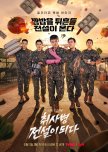
WHAT ARE YOU WAITING FOR???
OMGGG GOO WATCHHH ITT!!!ITS SO FUNNY OMG I LOVED IT AND OMG SEEING JIHOON AGAIN AFTER AGES!!! THIS DRAMA NEEDS TO GET MORE ATTENTION!!! ITS SO GOOOOODDDDD!!! GO PLS WATCH EP 1 AND U WILL LOVE ITTT!!
first ep was actually really entertaining and the ending just got me cuz i cant guess what will happen next omg THIS IS GONNA MKE MY MONDAYS BETTER I LITERALLY HATE MONDAYS BUT NOW I CANT WAIT FOR MONDAYS!! JUST FOR THISSS!!! JIHOON IS BACKKK REALLLYY STRONGGGGG!!! LETS GOOOOOO!!! SO GO AND WATCH IT!! DO NOT MISS OUT THIS MASTERPIECE !!
Was this review helpful to you?
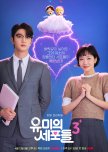
This review may contain spoilers
Slow burn romance after a longtime.
The ending felt kinda rushed i would've loved watching every detailed story of how she finally think of getting married then telling and inviting everyone ruby, yida, etc. And the last scene where every cell says goodbye was emotional specially after binge watching all the seasons from last 10 days😭🥹❤️.Bye to all the cells and uri yumiya!!noonaa annyeong🥹🫠❤️
Was this review helpful to you?
Is it a Crime?
Is it a Crime if I've finished watching Season 3 without watching the 2 previous Season?Soon Rok just catches my eye the moment the Trailer for this season came out and I don't wanna watch or wait to finish 2 seasons for me to meet him so I went my way of watching Season 3 and boy I was glad I did!
I've seen Yumi's Cell being published in Webtoon, I've read some but didn't get to finish it because I was too young to understand how the plot goes but after watching season 3 I realised that maybe I should read it again..
Being broken hearted for 2 times really did a toll on her that I really wanna know the story behind her blandness in life when S3 started, but I'm happy for Yumi for finding peace despite all of the things she'd been through
After finishing the series I can literally see myself to Soon Rok, whenever I'm at work I'm always on auto-pilot, but when I'm home I'm more of myself.. A Homebody..
I'm going to miss the gang!!
Was this review helpful to you?
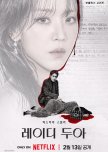
A Dud!
I wanted this drama to have its moment. In the beginning it did, but halfway through, the drama itself couldn't explain all the holes in their story and it became a sinking ship... I endured till the ending only because of LJH and SHS... I never skip their work, so naturally ended up watching this with high expectation but by the end of ep 8, I was glad it was over.This drama was such a great let down, even writing a low rating review makes me want to just stop here and not carry on because uhhh!!!
Was this review helpful to you?
Messy and Light
Heartstrings is a series that requires a great deal of initial patience as it attempts a number of themes and settles on the ensemble and romance genres. The large cast and the sampling of stories makes it initially difficult to discern who are main characters and who is support. The actors are competent and demonstrate the earnestness of the characters they portray. Singing, dancing, generational conflicts, conflict mirroring, political alliances, sabotage, and of course romance, it's all there in a light nibbly sort-of-way. The result is a drama that is engaging in moments of charm and performance, but uneven in emotional weight, often prioritizing tone and musical interludes over sustained narrative consequence.Was this review helpful to you?
This review may contain spoilers
What a good way to do a slow burn
So The Water is the second series in the Mega Project, and it’s already so much better than The Earth. The tension, the chemistry between the actresses, and the slow burn were all really well done.The actresses’ performances were really good, and I enjoyed them a lot. I especially loved Apo and Lada’s relationship it felt so soft, sincere, and natural. It was really fun watching them on screen, and I also really appreciated the development of their personalities and characters throughout the series.
Even the side characters left an impression on me, and so did the villains, which shows they did a really good job with the writing.
Yes, the series can be cliché at times, but honestly, I had a really great time watching it, and in the end, that’s what matters it was genuinely very entertaining.
The only bad thing to me was the episode was too long.
Was this review helpful to you?
So funny!
honestly didn’t expect Episode 1 of Legend of the Kitchen Soldier to be this entertaining 😭 I laughed out loud so many times because the comedy timing was genuinely good and the chaotic energy never felt forced.What made it even better for me was Park Ji-hoon. He played the role so naturally that every expression and reaction made the scenes even funnier and more lovable. You can already feel the charm of his character from the first episode alone.
The episode did a great job balancing comedy, character moments, and that slightly emotional undertone that makes you want to keep watching. Definitely hooked already.
Was this review helpful to you?

Ayaka Is in Love with Hiroko! 2nd Stage
0 people found this review helpful
This review may contain spoilers
Silly and sweet and a bit insightful
If you are reading reviews for S2 then you probably know what you're getting into. S2 continues the pattern of this being a silly romcom that relies heavily on misunderstandings to create conflicts. Overall this show has so much fun along the way, just being silly, and following Ayaka's joyous attempts to love Hiroko is a blessing.That being said, the core plotline can be a bit frustrating at times. The central conflict of this season is about physical intimacy, and it is immediately very confusing when they are living together and sharing a bed that this is still completely not discussed. Throughout this show the themes of lack of communication as well as the difference between infatuation and love, are explored pretty heavily. It is frustrating that it takes them years to figure it out, but also that is kind of relatable.
In the end though, it is rare for a drama to take the time to draw a line between the version of love that is one sided and in your head based on an infatuation, and the kind of love that you practice every day by actually communicating with the other person. This show takes time while having lots of fun shenanigans, to sketch this more serious conversation.
Was this review helpful to you?

This review may contain spoilers
Fun and silly
I went into this without much preconception other than it was recommended as a jdrama GL I should check out.Overall, I had a lot of fun. This is a pretty silly show, so it is very much a romcom that emphasizes the "com". That aspect is not my usual, but I still found the emotional beats satisfying and many aspects of this show very charming.
The biggest criticism is probably an obvious one, and that is the misunderstandings are dragged out way too long and repeat way too many times. The entire first season is pretty much centered on a bizarre insistence of one lead that the other lead is straight. This is never supported in any way, and drags out to an absurd extent. It is a common situation but just exaggerated for comedy. Accept it early or you won't have much fun, because it is THE centerpiece of S1.
Well the misunderstandings can get annoying, but perhaps the worst part is that what we are left with is the majority of the runtime just watching a single character just thinking to themselves and generating thoughts that are wrong and create problems. Not only is it frustrating that the conflicts are ..just made up by her having dumb ideas, but is it actually enjoyable to watch someone go down anxious thought spirals over and over and over by themselves? Where is the plot? This is actually a similar pattern we saw in Cherry Magic.
Which is sorta relatable, but do I need to live this for someone else? This may just be the line where anxiety "comedy" is not for me.
Was this review helpful to you?
This review may contain spoilers
FORCED SAD ENDING ! Do better netflix please
Excellent premise, casting, acting, action scenes. But characters didn't have brain which was the most necessary. Main faults of this cinema were -1. When Lhan finally put knife in hunter's stomach, she should've slit his throat to make sure he's dead. She should've carried those 2 knifes also.
2. Pran threw that trans lady from up, when he could've easily killed her. Most big mistake.
3. Biggest mistake of Pran was to give her blood right then. When he saw that bullet wasn't in her body anymore, he should've stitched her wound first. He didn't. A pure brainless creature. He could've easily lived.
4. They never showed us why this family became killers. Also no background of M which we needed.
Was this review helpful to you?


