


Never Thought I'd Love it This Much
I think whoever watched this drama would agree that it's unskippable. I'm a person that'll never admit that i like romcoms or just romance in any way, as it is boring. But this drama moved something in me, I cannot talk highly enough about how this drama had me on a chokehold.The cast is perfect, story is perfect, I loved every moment in this kdrama and I have never ever felt that way towards any kdrama. Which made me ask myself this question, is it the romance magic? because it certainly made me feel like i belonged when I'm just a watcher nonetheless.
I really like the FL personality, it somehow makes me so curious about her in every aspect, and I love when I'm curious. Plus, the OST is fire, I danced to it, cried to it and it was a blessing to my ear. Since when a show can be this perfect it feels illegal to watch it for free!
Overall, this is number 1 in my list and i don't think I'll change my mind about it. And i look forward to find other masterpieces in the future.
Sincerely,
ChukChuk
Was this review helpful to you?
This review may contain spoilers
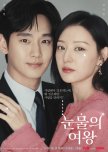
10 - because It speaks to the heart, that’s why.
Queen of Tears is being re-released marathon-style this weekend (6/3-5/26) in Korea. This feels like the perfect opportunity to revisit and review one of my favorite dramas and also respond to some of the criticism I’ve seen out there.To those who have thoughtfully articulated their criticisms on various sites, I respect you for clearly explaining your perspectives. However, to those who gave this drama a low rating after dropping it within the first three episodes, to keep ratings fair, I would respectfully suggest placing those early impressions in the comments section rather than the review section.
—The Acting
I believe the director of Queen of Tears intentionally employed a restrained style of acting between Kim Soo-Hyun and Kim Ji-Won for Baek Hyun-woo’s and Hong Hae-in’s characters. Meaning there was more silence and less dialogue, with much of the communication happening through eyes, facial expressions, delayed reactions, and unspoken emotions. This approach drew viewers into the characters’ thoughts and feelings, allowing us to experience their emotional journeys alongside them.
For me, much of the drama’s suspense came from these moments rather than from cliffhangers at the end of episodes. Both Kim Ji-won and Kim Soo-hyun portrayed their characters with remarkable refinement and skill. Each displayed the wide acting range necessary to create truly multidimensional characters.
Not only can Kim Soo-hyun portray profound sorrow, but he also excels at restraint. He masterfully utilizes subtle gestures and micro-expressions, communicating volumes without words. I’ve seen many of his dramas and films. Never have I seen him display more varied gestures, facial expressions, or dimensions within a single character than he did with Baek Hyun-woo. As Baek Hyun-woo, he convincingly portrayed boyish innocence, explosive anger, intense longing, devastating heartbreak, emotional collapse, and everything in between.
To the critics, how is that not great acting?
Kim Soo-hyun needs no defense from me. He proved his ability years ago. Part of South Korea’s finest assembly of actors, he became his country’s highest-paid K-drama actor and one of its most awarded actors through consistent excellence. One does not reach that status by being flat or mediocre.
Kim Ji-won has likewise evolved into an exceptionally dynamic actress. I first enjoyed her performance in Descendants of the Sun, but there is a night-and-day difference between her acting range then and what she delivered in Queen of Tears.
She gave us a subtly layered Hong Hae-in: a strong, uncompromising Type-A personality who is fiercely defiant but too proud to openly express emotions that might be perceived as weakness. Some of her funniest moments came through her indirect expressions of affection—asking leading questions, offering backhanded compliments, or scolding Hyun-woo before admitting he made her heart flutter. These moments, in my view, highlighted just how difficult it was for her to communicate genuine romantic feelings.
As Hae-in’s journey progressed, Kim Ji-won revealed her character’s deepest vulnerabilities at precisely the right moments and in exactly the right measure, making her both believable and relatable.
Queen of Tears would not have been the same story without both Kim Soo-hyun and Kim Ji-won. They were equals as actors, just as their characters were equals within the story. To say they had little or no chemistry is, in my opinion, to have missed much of what the drama intended to convey.
—The Character Development
Kim Soo-hyun once remarked in an interview that Baek Hyun-woo begins the story as a loser. In some respects, he was right.
Hyun-woo was passive, submissive, and immature in his understanding of love. He believed enduring mistreatment without protest was an expression of devotion. Eventually, being constantly wounded by the Hong family—including his wife—became unbearable.
He convinced himself that he hated her.
Not surprisingly, with that mindset, divorce appeared to be his only escape. Then came the shocking realization that his wife’s impending death might conveniently solve his problems for him.
What a cowardly way of thinking.
Hae-in sounded as though she understood what love was when she spoke to Eun-sung. In reality, she was every bit as immature as her husband. She seemed to believe that as long as Hyun-woo remained “by her side,” they would be alright. He said he would always be there, didn’t he?
At the beginning of the story, we see how thoroughly she has adopted her family’s arrogant sense of superiority, which justifies mistreating those of lower status for personal gain—even when that person is her husband. As we saw in the nursery scene, she hid behind that arrogance as a way of coping with the miscarriage.
While utterly foolish, Yang-gi’s suggestion that Hyun-woo pretend to love Hae-in in order to secure a place in her will became a blessing in disguise. Or…, perhaps it was a calculated move by Yang-gi to help his best friend see the truth beneath all the hurt.
Luckily, Hyun-woo cannot truly pull off hating Hae-in. As her condition deteriorates, his resolve gradually crumbles. His love for her reignites.
In reality, he never hated her at all.
The pivotal moment comes in Germany. Completely defeated, he deliberately provokes a divorce battle from Hae-in, not because he wants to leave her, but because he desperately wants her to live. He gives her something to fight for, even if it is not with him.
This is where Baek Hyun-woo fully embraces what love truly is—not merely a feeling, but a choice and a commitment expressed through action.
In helping the Hong family escape to Yongdu-ri, Hyun-woo proves that love by devoting himself completely to protecting Hae-in and her family. We later learn that he contacted hundreds of cancer centers around the world in search of treatment options for her.
Likewise, Hae-in’s growth begins when she finally “wins” the divorce. Only then does she begin to examine herself honestly and see Hyun-woo for who he truly is, the only man she could ever love. She realizes that he gives her a reason to live and that she cannot bear the thought of a future without him—whether in life or in death.
For a fiercely independent and emotionally guarded woman, this was enormous character development.
When she found herself separated from the pressures of her corporate life in Yongdu-ri, Hae-in revealed a softer side she may never have known existed. The ultimate expression of her selfless love for Hyun-woo came during the press conference, where she exposed Eun-sung in order to protect him.
The overall family relationships ultimately reinforced one of the drama’s central themes: that love outweighs money, status, and power. When they lost it all, they could finally see and appreciate each other.
Beom-ja, although initially too eccentric to be taken seriously, became a scene-stealer who consistently provided much-needed comic relief.
Yang-gi also stole nearly every scene he appeared in. In fact, I think his final scene with Hyun-woo was one of the most memorable moments involving any supporting character in the entire drama.
Ironically, Eun-sung did nothing to weaken the Baek-Hong relationship. If anything, he strengthened it. Despite all their resentment and misunderstandings, neither Hyun-woo nor Hae-in seriously looked elsewhere. Eun-sung, wonderfully portrayed by Park Sung-hoon, never truly had a chance.
—The Story and Valid Criticisms
Queen of Tears was approximately two years in the making, including about a year of filming. Across its roughly 23-hour runtime, Studio Dragon delivered a beautiful story about two people who had forgotten how deeply they loved each other and who rediscovered that buried love after a life-threatening tragedy nearly ended their relationship forever.
It’s worth remembering that the drama was reportedly inspired in part by the real-life story of a Samsung heiress who married a regular employee.
Stories, fables, and even biblical narratives often use extreme or unrealistic circumstances to communicate deeper truths. I view many K-dramas through a similar lens. Not every detail needs to be realistic if the emotional truth resonates.
This is why I can accept some of the more exaggerated elements of Queen of Tears. One could dismiss parts of the story as unrealistic, yet real life often proves stranger than fiction.
That said, even as someone who loved the drama, I can acknowledge its flaws.
Too much screen time may have been devoted to the mechanics of the conspiracy against the Hong family. The writer and director likely felt it necessary to illustrate the lengths psychopaths will go to in pursuit of power and wealth, but I was not heavily invested in all of the related side characters and their storylines. Some of that time could have been spent further developing the Baek-Hong relationship.
The Hong family—excluding Hae-in—sometimes came across as overly naive in their trust of people who clearly sought to exploit them. At first, I found it difficult to believe that Hae-in’s mother remained trapped in grief over her son’s death for so many years, but unfortunately some people never fully recover from such losses.
Grandfather, who trusted every word Baek Hyun-woo said, suddenly placed his faith in a complete stranger and eventually removed Hyun-woo from the board. That transition felt abrupt.
Eun-sung’s character arc never truly evolved beyond his obsession with possessing Hae-in and controlling Queens Group. Despite the writers’ efforts, viewers never developed meaningful sympathy for him or for his mother, Moh Seul-hee. We were repeatedly reminded how terrible a mother she was, often more times than necessary.
—The Second Half
The collapse of Queens Group and the destruction of Baek Hyun-woo’s life is where some viewers felt the drama lost focus. With so many moving parts, keeping track of everything could be challenging. Grace’s role as a double agent often felt like a wrench thrown into the machinery of the plot.
The exile to Yongdu-ri introduced numerous additional storylines, some of which felt unnecessary. Yet the central focus remained the Baek-Hong relationship. Every major event either contributed to or reflected their gradual surrender to the love they had spent years suppressing.
These moments may seem like plot diversions, but most of them serve a deeper purpose: they forced the building of a new relationship between two people who thought they knew each other but actually didn’t.
—The Illness and the Plot Extremes
Critics who argue that Hae-in’s illness lacked realism make a fair point. The drama could have done more to show its physical effects and the reality of her recovery.
Likewise, Hae-in’s post-surgery recovery was far more glamorous than reality would allow. Still, those shortcomings were not deal-breakers for me.
The arrest in Germany, the kidnapping, the hit-and-run, Hyun-woo somehow leaving the emergency room in one piece, and the winter gunshot sequence all pushed the boundaries of plausibility. But these were narrative devices designed to intensify the emotional climax between Baek Hyun-woo and Hong Hae-in.
Alchemy of Souls was pure fantasy, yet audiences embraced it because they connected emotionally with the characters. The same principle applies here.
—Why I Still Rate It So Highly
Even someone who loves Queen of Tears can acknowledge its flaws and still give it a 9 or 10.
Why?
Because, taken as a whole, the drama speaks to the heart.
I have never been wealthy, nor did I marry into a chaebol family. Yet the relationship between Baek Hyun-woo and Hong Hae-in reminded me of my own marriage.
My love was immature in the beginning. Like many couples, we experienced our share of dramatic and difficult moments. Then, in our sixth year together, my husband began suffering life-altering medical episodes while still appearing healthy on the outside.
I had to grow up. I had to choose to love him, not simply rely on the fluctuating feelings associated with being in love.
An emergency room doctor’s quick thinking over the phone taught me how to respond during his episodes. What I learned helped save his life at least a dozen times.
A year later, the end came suddenly and tragically. There was no opportunity to go back and correct my mistakes. No chance to revisit the moments when I had been immature or selfish.
After spending enough time blaming myself, I eventually realized something important: he never held those mistakes against me. He had made plenty of his own. We always understood that about each other, even during our worst arguments.
That realization changed how I viewed Queen of Tears. Forgiveness is one of the highest forms of love in action.
I love the song “Way Home,” but because of my own experiences, it is still difficult for me to listen to the final soundtrack without becoming emotional.
—Why is Queen of Tears a treasured story for many
I am certain I am not the only viewer who found pieces of their own life reflected in this drama.
Queen of Tears may contain over-the-top moments, but many viewers accept them because extraordinary moments exist in ordinary lives. We just don’t read about them every day.
In the end, despite its plot holes, detours, and occasional excesses, Queen of Tears succeeds where it matters most.
It reminds us that love is not merely something we feel.
Love is a choice. And it is not for the faint of heart.
Was this review helpful to you?

Fame but not commensurate with facts
Besides the visuals and popularity, honestly the most annoying thing is the male lead. Viral and popular because he's handsome. But the supporting actors 2 and 3 have better acting. Here, even the female lead is more badass even though the male lead is nicknamed the god of death and the supreme general of war. But he can't fight and is too weak. Then, from the plot in the drama and novel, the drama is extremely bad. It's only saved by the huge promotion from the higher-ups and the male lead's visuals. The rest of the drama is carried by the female lead, making it worth watching.Was this review helpful to you?
 1
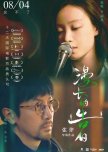
1“What you see is no longer what it once was.”
Yanagawa was a story of love, loss, and lives that were sadly isolated. A friendship from twenty-years prior had made it difficult for at least two people to move on, and one of those people had far less time ahead of him to reminisce.Li Dong stumbles out of a doctor’s appointment and bums a cigarette off a stranger. He’s just discovered he has stage 4 cancer. He meets with his brother without telling him the diagnosis and proposes a trip to Yanagawa, Japan. When his brother rejects the idea, he tells Li Chun that their old flame, Liu Chuan, is living there. The brothers haven’t seen her in 20 years and have never gotten over her. The two men catch the first flight out of Beijing and are soon checking into their room at a Japanese house. They find Chuan singing in a small bar. Will she be as excited to see the men as they are to see her?
The first hurdle to overcome with this film were the age gaps. Ni Ni would have been 32, Edward Zhang-40, and Xin Bai Qing-47. That 20-year time lapse would have made Chuan 12 years old when she left Beijing. Apparently, the writers assumed the audience would age her up in their minds to make her compatible with Xin’s 27-year-old Chun. The brothers were also in their 40s which meant they were grown ass men stumbling around. I never could reconcile the ages.
The brothers were opposites with Dong being the quiet, reserved, bookish brother and Chun the outgoing extrovert who sought to be the center of attention. Dong never wanted to leave a trace of himself in the world and began to put his house in order. The top two things on his bucket list were to take a trip with his older brother and see Liu Chuan one more time. During the trip, Chun often belittled or interrupted Dong. The older brother was married with a child, yet made every effort possible to sleep with Chuan. Despite declaring his eternal love, he was the one who caused the alienation between the two twenty years prior. So self-absorbed, he could never imagine that the beautiful Chuan would have ever been interested in shy Dong. And Dong must have merely wanted to gaze upon the object of his affection as he never held an important conversation with her. His best joke was one he forgot. Aside from the brothers, the landlord of the house they were staying in also had eyes only for Chuan. Ni Ni’s character spent most of her time with the reverse harem fending off grabby men or singing sorrowful songs. I’m a huge fan of hers and this film felt like a waste of her talent. She still managed to shine, though her best scene was with the Izakaya where the two women deeply understood each other empathically.
The characters spoke a variety of languages. The three from Beijing spoke Mandarin though in different accents. Dong also spoke Japanese. In order to converse with Nakayama Noki, the landlord, they switched to broken English as neither Chun nor Chuan could speak Japanese. Korean singing was heard coming from one of the boats. Both Chinese and Japanese folk songs were also sung. Regardless of the thin reason for Chuan deciding to live in Yanagawa, I wondered how lonely she must have been with the language barrier. Though she often sang John Lennon’s “Oh My Love,” which spoke of finally seeing clearly and living peacefully with the world so maybe it wasn’t a problem.
Yanagawa was a low budget film that managed to be aesthetically pleasing due to the scenery and cast. Much time was spent talking on boats and benches or in Izakaya’s bar. Loose ends were left dangling as people conversed little knowing that one of them was on a ticking clock. Twenty years is a long time and people mature and outgrow the familiar. “What you see is no longer what it once was. Nothing is what it used to be.” Yet truths eventually made their sorrowful appearances, ones that could only be seen clearly in the rearview mirror.
“Oh, my love, for the first time in my life
My eyes are wide open
Oh, my lover, for the first time in my life
My eyes can see”
(John Lennon)
2 June 2026
Was this review helpful to you?

This review may contain spoilers
DO NOT FOLLOW THE NEGATIVE COMMENTS!
I have literally never watched a Gl series before because they are usually not so fun to watch. They usually start off boring with a no chemistry at all. I was watching a Chinese drama and it was almost through so I started to search for something to watch and I came up on the series let me just tell you this one was different from the others it was actually so entertaining so chemistry filled and the two leads were absolutely beautiful so I started watching it let me just tell you I'm at episode 11 and I just don't even want it to finish. There are some stupidity that happens in there between the fathers and stuff but let me say this one is the most amazing life chemistry 1 million out of 10!! acting 20 out of 10 it is just absolutely amazing drop what you are doing and watch this watch don't let the comments of below fool use I don't know what they were watching but I thought it was a series maybe they got a mixed up because this is so great! *Watch it you will not regret it*Was this review helpful to you?

Just finished the series
I can’t explain the feelings i had while watching this every episode every moment make ma thinking of my life and my dreams. i don’t know how people just stop watching before finishing the whole episodes and how others just disliked the series because the actor is not handsome enough!! OMG i wish all of this is real and Im in relationship with him ! Thank you so much . It has been so long time since I felt like these .Was this review helpful to you?
Buckle-Up, Many Twists in the Night!
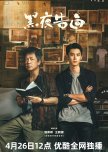
This was a very intriguing series. Although the script had some weak aspects, I still really enjoyed it. The production team did a great job grabbing my attention from the very beginning. There was a point when I felt the storyline was dragging a bit by the 9th episode in which they introduce the first plot twist. Although it’s a very heartbreaking twist, it revised my interest in the series. The script was very well laid out and did a great job connecting multiple aspects together. It also did a great job integrating many of the supporting characters into the various stories during the different timelines. This also did an incredible job switching between the various timelines. This series had some very complex characters. Just when you think you understand their actions, the script flips it around. However, the main weak aspect in the script was the 2002 storyline involving He Xiao He. A very minor weak aspect was the questionable police work done throughout the series. The styling and costume department did an incredible job creating different looks with each character for the various time lines. They also did an amazing job with the props and set/location designs to create the lapse of time. The entire cast was incredible throughout this. This also had amazing cinematography, CGI, and special effects. However, there was some odd background music choices at times.Random Note:
Yuanlongli International Gardens should also be listed as a main lead.
This has a lot of plot twists. Two were a big surprise for me and one I guessed from the beginning.
This had some of the most heartbreaking moments I’ve ever seen in a drama. This included the very last scene which was also slightly bizarre.
The series synopsis on MDL does not give an accurate description and is a little off. My favorite miss information is “use a yellow-painted jeep and a makeshift excavator for investigation”. This part is hilarious and nether one is in the series. The synopsis on Viki is more accurate.
Was this review helpful to you?
This review may contain spoilers
First episode
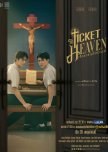
Only the first episode is out and it already had me crying at the intro and the whole friggin episode. this isn't good news at all 😭😭I genuinely couldn't stand the thought of tanrak being the one getting ordained at the beginning when barth said it was someone important to him. it screams no happy ending and I am so dreadful 😭 This show is about to be the best BEST masterpiece ever. Already one of my favorites yet I'm so sad. The acting is already unbelievable. I'm really hoping for the next episodes to hurry i can't wait any longer.
Was this review helpful to you?
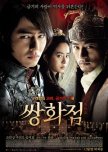
Where Loyalty Ends and Desire Begins
A Frozen Flower* is not an easy film to watch, nor is it meant to be. Set during the late Goryeo Dynasty, the film explores the complicated relationship between a king, his loyal military commander, and the queen. What begins as a political solution to secure an heir quickly evolves into a tragic story of love, jealousy, obsession, and betrayal.One of the film's greatest strengths is its performances. The actors bring emotional depth to characters who are trapped by duty, desire, and the expectations placed upon them by society and the throne. No one in the story is entirely innocent, yet viewers can understand the motivations and pain driving each character's choices.
Visually, the film is stunning. The costumes, palace sets, and cinematography create an atmosphere of beauty and elegance that contrasts sharply with the emotional turmoil unfolding beneath the surface. Every scene feels carefully crafted, adding to the tragic tone that hangs over the entire story.
What makes *A Frozen Flower* stand out is its willingness to explore themes rarely addressed openly in historical films. The story examines love in its many forms—love as devotion, love as possession, and love as sacrifice. It also asks difficult questions about power and whether true affection can survive within a world governed by politics and obligation.
The film is not without its weaknesses. Some viewers may find certain scenes overly graphic, and the pacing occasionally slows as the story focuses on emotional conflict rather than action. Additionally, because the characters are deeply flawed, it can be difficult to fully support any one individual throughout the film.
Despite these criticisms, *A Frozen Flower* succeeds as a tragic historical drama. It is a story filled with passion, heartbreak, and consequences. The ending leaves a lasting impression, reminding viewers that in a world ruled by power and duty, personal desires often come at a terrible cost.
This is not a lighthearted romance or a feel-good historical drama. Instead, it is a mature and emotionally complex film that stays with you long after the credits roll.
A Frozen Flower* is a visually beautiful and emotionally powerful tragedy that explores the dangerous intersection of love, loyalty, and power. While not suitable for every audience, those who appreciate serious historical dramas with strong performances and complex relationships will likely find it unforgettable.
Was this review helpful to you?
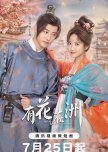
Secrets, Kingdoms, and a Love Destined to Bloom
A Flower on the Continent* is one of those historical romance dramas that does not try to reinvent the genre but succeeds by delivering an entertaining mix of romance, comedy, mistaken identities, and political intrigue. The story follows Hua Xiyu, a young woman forced to disguise herself as a man from childhood, whose life becomes intertwined with Prince Ning Xuanzhou, a royal hostage from a rival kingdom. A misunderstanding regarding each other's identities leads to a series of humorous and often touching moments that gradually blossom into romance.One of the drama's greatest strengths is its lighthearted atmosphere. While there are conspiracies, political struggles, and threats of war between kingdoms, the series never becomes overwhelmingly dark. Instead, it balances tension with humor, allowing viewers to enjoy the growing relationship between the main characters without feeling emotionally exhausted.
The chemistry between the leads is another highlight. Their relationship develops through misunderstandings, friendship, trust, and eventually affection. The cross-dressing storyline, a familiar trope in historical Chinese dramas, is handled in a way that creates plenty of amusing situations while still allowing the characters to grow emotionally.
Visually, the drama is pleasing to watch. The costumes are attractive, the sets are colorful, and the overall presentation fits well with the romantic fairy-tale tone of the story. The shorter episode format also helps keep the pacing relatively quick, making it easy to binge-watch.
However, the drama is not without flaws. Some of the political conflicts lack depth, and certain plot developments feel predictable. Viewers looking for a highly complex historical drama with intricate court politics may find the story somewhat simplistic. Several supporting characters show promise but are not explored as deeply as they could have been.
That said, *A Flower on the Continent* understands exactly what it wants to be: an enjoyable romantic historical drama filled with charm, humor, and heart. It may not be groundbreaking, but it is entertaining from beginning to end and offers enough sweetness and intrigue to keep viewers invent
If you enjoy historical romances featuring disguised identities, lovable misunderstandings, charming lead chemistry, and a balance of comedy and adventure, *A Flower on the Continent* is definitely worth adding to your watch list.
Was this review helpful to you?
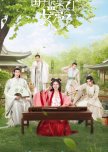
A Female Student Arrives at the Imperial College
0 people found this review helpful
A Lighthearted Story About Courage, Friendship, and Following Your Own Path
I recently finished watching A Female Student Arrives at the Imperial College, and overall, I found it to be an enjoyable historical romantic comedy with a refreshing premise.The story follows Sang Qi, a spirited young woman who becomes the first female student admitted to the Imperial College. Unlike many historical dramas where the female lead is constantly waiting to be rescued, Sang Qi is intelligent, determined, and willing to challenge traditions. Her lively personality brings a great deal of humor and energy to the series.
One of the strongest points of the drama is the chemistry between the main characters. The relationship develops gradually, allowing viewers to enjoy both the romantic and comedic moments. The supporting cast also contributes to the story, providing friendships, rivalries, and plenty of entertaining situations.
Visually, the drama is bright and colorful. The costumes and settings create a pleasant atmosphere without feeling overly heavy or serious. The lighter tone makes it an easy watch for viewers who enjoy romance and comedy mixed with a historical setting.
While the drama is entertaining, it is not without flaws. Some plot points feel predictable, and there are moments where misunderstandings are stretched longer than necessary. Certain supporting characters could have received more development, and some viewers may find parts of the story unrealistic compared to more historically focused dramas.
However, if you are looking for a fun, lighthearted series with a strong female lead, charming romance, and plenty of humorous moments, A Female Student Arrives at the Imperial College is worth watching. It may not be the most complex historical drama, but it succeeds in delivering entertainment, warmth, and an uplifting story.
A delightful historical romantic comedy that proves determination and courage can open doors that society once believed should remain closed.
Was this review helpful to you?
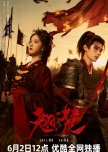
A total must-watch!
Ashes to Crown is such a breath of fresh air to watch. It is rare to see a female lead who fully embraces the role of a villain, and she does it brilliantly. She is clever, manipulative, and bold in every moment, which makes her character so captivating. Chen Duling is undeniably a phenomenal actress; she brings this role to life in such a realistic way that I actually get chills whenever she shows up on screen. The way she acts and carries herself is simply unmatched and absolutely incredible. I am so drawn into the story that I cannot stop watching until I know exactly what happens. The connection between Chen Duling and Zhou Yiran is impossible to ignore. Their interactions are full of tension, spark, and excitement that makes every scene between them impossible to look away from. I am extremely excited to find out where this spectacular drama will take us next.Was this review helpful to you?
totally entertaining ?
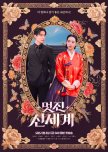
⭐⭐⭐⭐⭐ Review for My Royal NemesisMy Royal Nemesis has officially become my latest obsession! Every episode keeps me hooked and leaves me wanting more. The story is fresh, entertaining, and perfectly balances romance, comedy, and fantasy. The chemistry between the leads is incredible, and their interactions are one of the best parts of the drama.
I especially love how strong and charismatic the female lead is. The drama delivers both hilarious and emotional moments, making every episode enjoyable from start to finish. The acting, visuals, and overall atmosphere are absolutely amazing.
If you enjoy enemies-to-lovers romance, great chemistry, and a fun yet heartfelt storyline, this drama is a must-watch. It has completely captured my attention and quickly became one of my favorites.
Rating: 10/10 ⭐❤️
Was this review helpful to you?

This review may contain spoilers
This is the first historical drama I’ve ever watched, and for the most part, I think it was genuinely excellent - enjoyable, engaging, and easy to get invested in. Almost until the very end, the story was handled really well, so there was never a sense of boredom or the feeling that the drama was dragging. The only exception was the culinary battle arc against the Ming delegation, which could be considered somewhat stretched out. Personally, I enjoyed it, but it definitely slowed down the pacing. It could have been shortened to two episodes, which would have left more time for a stronger ending. Unfortunately, the final twenty minutes were quite disappointing, but I’ll get to that later. Another huge strength was the visual aspect of the drama - the costumes, scenery, and overall atmosphere were beautiful. The food also looked absolutely delicious, although I do think that, over time, watching everyone jump around in delight every time they ate her dishes became slightly repetitive and unnecessary.Now I need to express my love for the actor who played King Yi Heon - Lee Chae Min. This is the first drama I’ve watched featuring him, and I’m completely captivated by his performance. In my opinion, both his character and his acting were the greatest strengths of this drama.
Moving on to the main couple - Yeon Ji Yeong & King Yi Heon. They were complete opposites, and the fact that they came from entirely different time periods made that contrast even stronger. Their dynamic was wonderful to watch. I loved seeing how she gradually helped him become a better person and show more humanity, and how much influence she had on him. I also loved the way he fought for her. Their chemistry was very good as well, although I do think there was still room for improvement.
It was also fascinating to watch whether she would succeed in changing history and whether that was even possible in the first place. As the story progressed, we were given increasingly strong hints that she had already lived alongside him during the Joseon era, which strongly suggested that she was reliving their story. And this is where one of my biggest issues appears. I felt that the drama never properly explained who she had been in her previous life. We know she was a cook, but how did she end up in that position? Even more importantly, I wanted to know what their original story had looked like. And why was her absent from recorded history? I also struggle to understand why, if she was trying to change the future, she never told him who was going to betray him. She knew exactly who it was.
Speaking of negatives, my second biggest issue was the ending itself - pretty much all of it. Have I seen worse endings? Absolutely. Was this a good ending? Not really. First of all, she suddenly wakes up in the hospital, and we’re never told how much time has passed. Then lookalikes of her chef friends suddenly appear in the restaurant, which honestly makes little to no sense. Later, we see a lookalike of Im Song Jae, and at the same time the male lead shows up. Their reunion left a lot to be desired. He seemed completely cold toward her - I genuinely thought he didn’t remember her - despite the fact that we had just seen how devastated he was by her disappearance. Even stranger, he treats Im Song Jae’s lookalike even more coldly and shows no interest in him whatsoever, even though it’s the counterpart of the secretary whose loss he mourned so deeply in the forest. And things don’t get any better afterward. The drama turns the question of how he arrived in the present into some kind of mystery. Personally, I see that as a slap in the face to viewers. I can’t shake the feeling that the writers wanted a happy ending in the present day but simply couldn’t come up with a logical explanation for how he got there, so they hid it behind vague mystery instead. Even if we assume he traveled through time using a page from the Mangunrok, what guarantee do we have that he won’t suddenly disappear back into the past? There should have been at least one full episode showing his return to the palace, his attempts to get back to the female lead, his arrival in the present, his struggle to adapt to modern life, and a much better-written reunion between them.
While we’re on the subject of her chef friends, I think they were treated terribly in the end. They played important roles throughout the story, yet by the finale we know absolutely nothing about what happened to them afterward. They never even found out what became of Yeon Ji Yeong and King Yi Heon, both of them simply vanished. I especially feel bad for Seo Gil Geum, whom I absolutely adored. I really wanted to know how her story ended, including the hinted romance with Gong Gil, but instead we got nothing.
On the positive side, the drama featured plenty of political schemes and manipulation, which were genuinely interesting to watch. Among the villains, the acting performance of Kang Mok Ju deserves special praise, and I also appreciated the fact that justice finally caught up with the antagonists in the end. The most satisfying moment was undoubtedly her death at Gong Gil’s hands. There’s also one thing I keep wondering about. At one point, I got the impression that the drama was hinting that Kang Mok Ju had been drugging or poisoning King Yi Heon in some way, which might have been the cause of his attacks. However, the story never returned to that idea.
Was this review helpful to you?

At just 81 minutes, it still manages to feel bloated, filled with unnecessary filler while more compelling plot threads go underdeveloped. Character work is minimal, making it difficult to stay engaged as the story drags on, leading to wandering attention by the final stretch.
The rushed ending does little to resolve this, leaving the impression that little has truly changed. What begins as an intriguing premise ends up feeling like a missed opportunity.
Was this review helpful to you?


