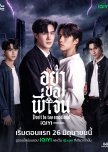
I have to write a review after just 2 epi…that’s how good this series is!
I wanted to do justice by writing a review after completing the series but damn no way I’d wait just to say how good this series is. If you wonder whether or not to watch…please do! It’s really good right from the get go. Love how Fourth and Gemini delivered on point their characters and the story is seriously enticing…waiting the whole damn week for another episode is pure torture and I’ve never felt like this with any series.Was this review helpful to you?
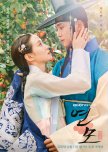
Analysis of the Theory of Emptiness, or a Failed Parody
This review was conducted without any trickery, though it contains minor spoilers that have no real consequences. Well, the time has come to perform an autopsy on the beast, which—after a slow 12-episode agony—finally collapsed, torn between mediocrity and embarrassment. Sometimes one can be mistaken, but for a major public broadcaster in a prime-time slot, the conclusion is unmistakable: this is not merely a failure, it is a full-blown industrial accident. The 2026 audience has spoken. Viewers refuse to be treated like fools, and this disaster proves that the era of glossy, algorithm-driven rom-coms is coming to an end. Lightness is fine; stupidity and mindless nonsense are not—never again, thank you. As a viewer, I’m tired of being taken for an idiot. I’m willing to be indulgent, to swallow a few absurdities for the sake of a “cute” romantic comedy, but my patience has limits. I made it to episode 6 and then bailed. Yes, even my intrinsic masochism told me to stop the carnage. That, in essence, explains my 2/10 rating. I got off the bus, and as Denis Brogniart would say: the verdict is final.Matthew Lee / Lee Hae-seok (Ahn Hyo-Seop) is a young farmer (well… sort of) with a rough-around-the-edges personality but a heart of gold (like Elvis). He passionately cultivates white-flowered nuri mushrooms. One day, Dam Ye-Jin (Chae Won-Bin) disrupts his peaceful routine. A star host on a home-shopping channel, she has made it her mission to get Matthew to sign with Eric Seo (Kim Beom), co-CEO of the international cosmetics brand L’Étoile. (Naturally, despite having spent half his life in France, he doesn’t speak a word of French.) She comes to renew their contract. Despite his repeated refusals, she persists. Their relationship begins to evolve. Long story short: love triangle, romance, childhood psychological baggage, and all the usual tropes—except without nuance or depth, because apparently we had better things to do, right? It’s the “seen it 100 times before” syndrome… and even on a good day, it still doesn’t work.
Sold Out on You (the French title is frankly awful) suffers from lazy, mechanical writing that confuses humor with hysteria. Between flat, unfunny characters, misunderstandings staged like advertising sketches, and editing that feels like a poorly assembled scaffolding just to exaggerate effects, the series generates a constant sense of discomfort. The childish reactions of thirty-year-old adults and the “cute” scenes devoid of any real emotion instantly break the viewer’s engagement. The unsettling part is that the drama believes itself to be adorable, while it actually sinks into pathetic overacting. There is no emotional connection possible because everything is pre-calculated to the millimeter. It reminded me of Mozinor’s parody generator: take the same ingredients, reshuffle them, change the setting and job titles, but keep the same mechanical structure. The characters are no longer coherent individuals, but bundles of recycled tropes: the clumsy yet “modern working girl” heroine, the taciturn but perfect male lead, the chic but empty rival, and eccentric villagers used as joke machines. Everything becomes predictable ten minutes in advance. It could almost be turned into TikTok Shorts.
As mentioned, it all feels like déjà vu: a clone of Brewing Love, with hints of Hometown Cha-Cha-Cha and Business Proposal. There is absolutely no originality or new creative direction. It shamelessly recycles past dramas in bulk, scene by scene. The same tired formula is everywhere: a fake “artisan, rural, bucolic” aesthetic used purely as decorative background, and the same artificial clash of opposites (the hyperactive city girl versus the overly sensitive country man). There is a complete absence of social realism, as physically demanding jobs are stripped of substance to become aesthetic wallpaper. Sold Out on You clumsily attempts to replicate a formula that was already showing cracks, confirming the creative drought of its writers. In truth, it feels like a collapse of social coherence disguised as luxury advertising. The drama descends into involuntary absurdity by disconnecting its characters from any sense of reality. A 25-year-old home-shopping host driving a Porsche convertible, living in a Gangnam showroom-style apartment, and owning a wardrobe worthy of Céline Dion instantly destroys credibility. Many recent rom-coms seem afraid of reality: everything must be Instagrammable, and sincerity—romantic or otherwise—is killed before it can even emerge.
If the writing no longer even smells remotely fresh, the waste is equally evident in the casting and technical execution. The directing is a disaster, the editing even worse, with constant continuity errors and scenes that make no sense in real life (yes, it’s a rom-com, fine—but still). The most frustrating part is how the actors are handled. Ahn Hyo-Seop is drowned in hollow dialogue lines worthy of a teenage sitcom, while poor Kim Beom is reduced to a ghost-like presence or a glorified food courier, disappearing from entire sequences without explanation, a collateral victim of a broken script. And worst of all is Chae Won-Bin: unconvincing, poor performance, completely unfit for the role. To top it off, the technical side is a mess. The pacing is artificially chopped up in a desperate attempt to revive a drama already brain-dead from the start, while advertising constraints are visibly dictating choices. The production team seems to have given up, resulting in sheer chaos. It’s a parade of clichés and worn-out tropes; everything is black and white, and the series proudly embraces it. Supporting characters are stuck in the same repetitive roles to the point of exhaustion (family ties, friendship clichés, etc.). In short… it’s boring.
In conclusion, Sold Out on You is the very definition of the “theory of emptiness”: visually, we are saturated with an aesthetic that feels entirely out of place, fake luxury, and clinical filters—everything reeks of artificiality. This historically low 2.9% audience share is a much-needed wake-up call from a viewership that has matured and now demands texture, sincerity, and respect. Subjecting myself to six more episodes of this marketing parade would amount to pure televisual masochism. The series never actually tells a story; it merely recycles a catalogue. It is often childish and saccharine. For newcomers to K-dramas, it might still pass (I might have stuck with it last year, perhaps). But for those who are tired of being treated like fools, it’s better to move on—you’ll save your time. I’m not asking for a perfect romance in a perfect world, only for credible characters capable of conveying emotion, even within an imperfect script. Beneath the filters, the Porsche, and the romantic slow-motion shots, there was ultimately… nothing. The “stop” button has been pressed. Definitively.
Was this review helpful to you?
The Secrets of Auditing… and Love
Yet another completely misleading K-drama title translation that ends up confusing viewers rather than helping them. With Filing for Love, you should not expect anything in the vein of What’s Wrong with Secretary Kim, Business Proposal, or even Crazy Love. This drama is worlds apart. In fact, romance only takes up about 30% of the runtime. The main focus is instead on portraying—albeit in a dramatized way—the workings of an audit department within a major chaebol. Such oversight bodies exist in all large corporations, including in France, though under different regulations. The interest of the series lies primarily in exposing misconduct that can harm a company in any form. However, the script sometimes veers into moralizing melodrama, so consider yourself warned. One last important point: avoid viewing certain situations through a Western lens, or you may find yourself somewhat shocked by local cultural norms.Joo In-A (Shin Hae-Sun) is appointed head of the audit department at Haemu Group, the country’s 7th-largest chaebol. Cold, distant, and rigid, she is unwavering in her principles. Noh Ki-Jun (Gong Myung) is part of the elite team handling major corporate disputes. However, the arrival of this new boss disrupts his daily life: In-A demotes him to Team 3, which handles internal scandals. Disillusioned, he struggles to understand this “promotion,” which he interprets as punishment. At the top of the hierarchy, Vice President Jeon Jae-Yeol (Kim Jae-Wook) is going through both a family and professional crisis. A kind man, he was In-A’s lover more than ten years ago but was forced into an arranged marriage. Park A-Jeong (Hong Hwa-Yeon), his secretary, is Ki-Jun’s former girlfriend; she is in love with the vice president, who remains emotionally tied to the past. As investigations unfold, Ki-Jun discovers a different side of In-A and gradually develops feelings for her.
The drama focuses on a small group of main characters, allowing their relationships and personal arcs to be developed solidly without scattering the narrative. Like a crime procedural, there are cases to solve, but the goal is not simply to identify a culprit: it is above all to showcase the work of the Audit Team and reveal the wounds, secrets, and sometimes hidden suffering behind corporate life. I enjoy this kind of drama that sparks curiosity, and it even made me want to learn more about how audit departments actually operate in South Korea and what their role is within large corporations. However, at times I felt the series went a bit too far into people’s private lives. For context, adultery was still a criminal offense in South Korea until 2015, and extramarital relationships within companies remain highly frowned upon. Indeed, a conglomerate’s public image is of paramount importance. The story truly picks up around episode three. Alongside the main plot, we follow investigations involving inappropriate (or allegedly inappropriate) relationships, including sexual and moral harassment, defamation, infidelity, and more. There are genuinely serious and dramatic moments. Office life can be harsh and resemble a real ordeal for some, with constant stress driven by work pressure and expectations.
As this is a dramedy with romantic elements, the narrative lightens the heaviness with humorous and offbeat moments. This comes either through the central couple, who must keep their relationship secret, or through the members of Team 3, all of whom are quite endearing. I also appreciated the absence of a love triangle. The situation is clear-cut, even if romantic conflicts can still arise from elsewhere and cause collateral damage. At times, it genuinely feels like an internal corporate morality police force. However, this should be understood within the South Korean context, where issues of reputation, social image, and personal relationships are perceived differently than in the West. This does not mean everything must be accepted uncritically; one can disagree with certain practices or how they are portrayed. But it is more meaningful to try to understand the cultural context rather than judge it solely through Western standards. The drama also highlights how thin the line can be between legitimate investigation, defamation, slander, and intrusion into privacy. It prompts reflection on working conditions, and is therefore far from the saccharine, simplistic romances often found in the genre.
Some moments are genuinely touching, while others are quite disturbing. Moreover, the drama gives Joo In-A a complex psychological backstory that explains her current behavior. She is a woman shaped by hardship, self-made, a powerful and respected career woman. Ki-Jun, meanwhile, was raised in a matriarchal household consisting of his mother and three older sisters, who still dote on him because he remains single. The pairing of Shin Hae-Sun and Gong Myung works well, especially by placing a slightly older, authoritative woman opposite a younger man with wit and personality. The core of the series is strong and engaging, even if it does not entirely escape familiar tropes. Humanity is at the heart of the story, whether in professional or romantic relationships. The balance between dramatic, romantic, and lighter scenes is generally well handled. The romance is present but never the central focus. This is прежде all a story about wounds, recovery, work, responsibility, and repressed emotions. The love story unfolds slowly, shaped by past emotions. Those looking only for quirky situations, caricatured characters, or shallow romance will likely be disappointed. This series takes a more mature and restrained approach.
It is unfortunate that the final episode, which serves little purpose for about 80% of its runtime, feels somewhat out of place. It acts as a decompression episode, releasing narrative pressure. We even get the obligatory “one year later” segment used to add a few extra scenes. Still, overall, Filing for Love is a work that, while not entirely flawless, offers an interesting dive into corporate mechanisms, reputation, human relationships, and the sometimes heavy consequences of our choices. It is a journey into unfamiliar territory for viewers unacquainted with the internal workings and regulations of large corporations. Beneath the romance lies far more than superficial lightness: the writing is much smarter than the title suggests. And yes, as is often the case in the genre, someone gets a second chance—and perhaps more. Ultimately, the series focuses on the positive. The Audit Team can be ruthless toward those who harm the company, but it is also portrayed as attentive and protective of ordinary employees facing pressure from above. Behind every worker may lie someone emotionally struggling. A worthwhile watch, both educational and entertaining.
Was this review helpful to you?
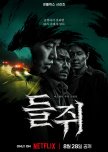
The Masks of the Scarecrow
The Scarecrow is a crime thriller that takes place primarily in 1988 during its first ten episodes, with the final two shifting to 2019. Why 1988? For one, it is a year frequently used in K-dramas (most notably Reply 1988), partly because South Korea hosted the Olympic Games that year. More importantly, it marks the final years of military dictatorship before the country's democratic transition. This historical context is crucial and should never be forgotten while watching the story unfold. It was an era when brutal police methods were commonplace. If investigators failed to catch the real culprit, they often settled for extracting confessions from innocent suspects through violence. The title The Scarecrow refers not only to the serial killer himself but also serves as a metaphor: a scarecrow is, above all, a decoy. Its purpose is to deceive, manipulate perception, and create an illusion. Throughout the drama, the line between truth, accusation, and manipulation becomes increasingly blurred, constantly confronting viewers with morally questionable decisions and difficult dilemmas. Emotionally, this is not a drama one walks away from unscathed.Kang Tae-joo (Park Hae-soo) is a seasoned and fearless detective with little respect for authority. After being demoted and disciplined, he is transferred from Seoul back to the small town where he grew up. There, he soon finds himself investigating a serial killer targeting women at night along a rural road lined with rice fields and scarecrows—the murderer disguises himself as one to lure and deceive his victims. Tae-joo's path crosses once again with prosecutor Cha Si-young (Lee Hee-jun), a man who left deep psychological scars on him during their high school years through relentless bullying. Though Tae-joo still harbors a strong resentment toward him, the two bitter enemies are forced to work together to stop the monster terrorizing the region. However, Si-young comes from a powerful family, and his position as a prosecutor during the dictatorship grants him influence that often extends beyond his official authority. While the serial killer embodies calculated cruelty, the drama also exposes another form of monstrosity: the brutality of police officers serving a ruthless and corrupt system that shows little mercy toward the vulnerable. What follows is a manhunt spanning more than thirty years, leaving irreversible damage in its wake and destroying countless innocent lives.
The drama's structure relies on brief time jumps scattered throughout the narrative. The director carefully plants flash-forwards that either open or close chapters with prison encounters between Tae-joo and the real killer. Their exchanges become psychological duels, made all the more frustrating by the fact that the murderer's crimes are now beyond the statute of limitations, while he is incarcerated for entirely different offenses. This narrative device creates a fascinating dual timeline. As we follow the 1988 investigation—with all its flaws and systemic violence—these glimpses into the future act as a tragic countdown. We already know the hunt will last thirty years and that irreversible mistakes will be made. Yet the mystery remains compelling, as the killer's identity is not officially revealed until the end of Episode 7 (although attentive viewers may figure it out sooner). Knowing the culprit relatively early is not a problem because the story's real strength lies elsewhere. The suspense remains intact until the very end because the audience never truly knows what to expect, even when they think they do. The Scarecrow is, above all, a psychological drama that deliberately presses on painful wounds. It is raw, violent, often disturbing, but firmly rooted in reality.
Beneath its crime-thriller surface lies a much broader reflection on wrongful convictions, coerced confessions, and the institutional abuses that plagued South Korea during decades marked by authoritarian rule and anti-communist paranoia. The brief but remarkably filmed confrontation between students and police perfectly captures this atmosphere. Through characters who are falsely accused, imprisoned, or destroyed by suspicion, the series shines a light on the forgotten victims of rushed investigations, police pressure, and a justice system sometimes more concerned with closing cases than uncovering the truth. In this sense, the investigation itself ceases to be the heart of the story and instead becomes a symbol of a flawed system whose mistakes continue to haunt survivors decades later. That said, some writing choices raise questions. Why are certain characters never seriously considered as suspects? Why does the investigation cling so stubbornly to fragile assumptions, particularly regarding blood types? Viewed strictly as a detective story, the investigation can occasionally feel like a complete disaster. One ultimately accepts these shortcomings by reminding oneself of the historical context and investigative limitations of the period.
There are no simplistic heroes or villains here. Apart from the serial killer, every major character carries deep emotional wounds that cloud their judgment and threaten their mental stability. The line between good and evil is often razor-thin, and some will pay a terrible price for crossing it. What truly elevates the series is the confrontation between Park Hae-soo and Lee Hee-jun. Quite simply, both actors are exceptional in their respective roles. Having reportedly dreamed of acting together for over a decade, they bring remarkable authenticity and emotional intensity to their performances. Park Hae-soo delivers a nuanced portrayal of a man worn down by time, haunted by failure, and consumed by guilt. Opposite him, Lee Hee-jun is equally impressive. His constantly ambiguous performance maintains an atmosphere of tension throughout the entire series, making his character fascinating, unsettling, and profoundly human all at once. In a thriller, credibility is everything, and these two actors make every moment believable. Their conflict, rooted in a dark shared past, follows them throughout their lives. Eventually, one of them must step aside to protect the people he loves, displaying extraordinary resilience and self-sacrifice.
The production itself deserves praise as well. The opening sequence is magnificent, the direction often feels cinematic, and the rural late-1980s atmosphere is recreated with remarkable authenticity. At times, the show even evokes the feeling of an old American crime film, with acoustic guitar melodies adding an extra layer of charm. The supporting cast also deserves recognition for delivering strong performances across the board. As a fun piece of trivia, Lee Min-ki makes a brief appearance toward the end. The reason is simple: the director is also behind the K-drama Crash (Seasons 1 and 2), in which Lee Min-ki stars My only real reservation concerns the conclusion presented in the final episode. Personally, frustration outweighs satisfaction, even though I understand the creative choice the director made. Without revealing spoilers, the reactions of certain characters—particularly Sun-young, Tae-joo's younger sister, and her son—left me puzzled.
Some individuals are eventually exonerated, and the justice system acknowledges its mistakes, but not all cases can be corrected due to statutes of limitation. Curiously, some investigative avenues also appear to have been ignored in 2019, despite South Korea abolishing the statute of limitations for murder in 2015. At times, the suspense can feel predictable, and a few inconsistencies emerge to move the investigation forward. Morally and legally, however, do not expect a neat or universally satisfying ending. What remains is a masterclass in acting, a chilling story, a dark and melancholic atmosphere, and thought-provoking questions about ethics, justice, and morality. The Scarecrow is not a puzzle-box mystery designed to challenge viewers to identify the killer. Instead, it is a story about the suffering of innocent people and the devastating consequences when justice fails—or refuses—to do its job properly. Despite its imperfections, it is both heartbreaking and shocking. In the end, The Scarecrow is a powerful drama with real substance and weight, all the more compelling because it is deeply rooted in history.
Was this review helpful to you?
The Uncanny Counter Season 2: Counter Punch
0 people found this review helpful
I absolutely looooveed it
I watched both seasons back to back because I hadn't seen since it came out. And I love both seasons. But I love season 2 slightly more. The jokes landed for me. And the villains ate. Not all villains need a backstory or a redeeming story. Some villains are just evil and just want power. Pilgwang and Felly, 10/10 as villains. They really embodied evil. Ma Juseok on the other hand was the kind of villain you had to have pity for because he was pushed into it, so that's another kind of villain/bad guy, 10 out of 10. I loved his story. I also loved the fact that Hana and So Mun have a sibling relationship instead of romantic relationship. I'm soo happy about that. I loved JangMul here as well, and how he still continues to pursue Mae-Ok and look after her. The only thing I'd say that I was a bit disappointed in was Jeong-gu as the new counter. I was so excited for the new counter and was more excited when he became one. And I was all for the “fool with a hero's heart” storyline. I'm just a bit disappointed that his potential was doused. I felt like he should have learnt how to fight well by the end of the series as So Mun. Yes, he was an asset to the team with his sniffing skills but I felt like he could've done more if he had gotten the treatment So Mun got when he first came, y'know the training and lessons and all of that. I just had a lot of expectations for Jeong-gu and I feel like he had so much potential.Nevertheless, I enjoyed the season very much. Final rating, 9 out of 10.
Was this review helpful to you?
silly yet heartwarming in its own way
the premise of age gap bl got me hooked, yet the one that truly mattered was the obnoxious storyline. i love how this drama puts bl like it's a part of a bigger complex social issues rather than solely relying on bl to keep you interested. the highlights about having a dream, letting go of your idealism, and accepting yourself the way you are despite being different than everyone else made this drama more charming and heartwarming in its own way. watching this sorta feel like a trauma healing session.the storyline's a bit repetitive at some point, but hey it's mimicking real life and real life's boring sometimes, so the portrayal is kinda spot on. acting was good, i could feel the awkwardness past the screen though. seeing that hatano genichi was really supposed to be an awkward character, i guess that's more of a praise than a hate.
really recommend to watch if you're looking for something lighthearted! remember to put no expectation at all because this is a slice of life drama after all~
Was this review helpful to you?
it's a such a amazing drama
this drama is so good, istg this one holds my heart!!! Zhou Yiran got a new look, which looks absolutely amazing on him!! the story is breathtaking overall!! the acting is so peak too!! I loved this drama literally sm, it's a MUST WATCH!!! If you haven't watched it and are thinking to check the reviews to watch it, listen gurlie this drama is SO peak!! like fr??? the storyline is so unique too, the acting ate so badly y'll!!😭😭 It's airing rn so I've watched till the 10th episode, 11th is gonna release tmrw in Netflix!! I'm so excited yllWas this review helpful to you?
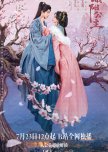
Love Upon a Time should be the standard for the BL industry.
Net Siraphop, JJ Radchapon, Latte Thanutchon, Kim Pongsaton and all the other incredible actors and actresses that made Love Upon a Time come true, I wish I could give you the biggest hug and "thank you" ever. I don't exactly know what happened to DMD''s ever since they produced Your Sky but they've been hitting the jackpot over and over again.Love Upon a Time starts as a really light and even funny (for the first three episodes) series and then it starts with the "real" lore and Nakhun's realization that he is in Klao's body and has a duty to complete. I don't have enough words to describe how incredible JJ is for this role; his acting is phenomenal and we can notice the difference between Klao from the past and Nakhun pretending to be Klao, just because JJ is THAT good. Net is always delivering with his acting and I'll never get tired of appreciating him and all his effort to make LUAT come true. Jom/Thee and Kaew/Pun are also portrayed extremely well and I truly love their stories — but I still wish the series had focused a little bit more on them and their stories, like with CharnJet in Khemjira. All the other actors that gave life to amazing characters to the series, like Chuay, Sai, Kong, Pim, Cherd, Harn, Warna, Chai, Meng, Klao's dad and Phop's parents, you all deserve so much acknowledgment.
LUAT is everyting we needed and I hope it is remembered for being a true masterpiece for the bl industry. I can't wait to see NETTJJ and LATTEKIM in new projects and showing the potential they truly have.
Was this review helpful to you?
A Bitter-Tasting " Bouillabaisse "
Adapted from the webcomic Chamkyoyook, No. Lesson for Everyone! (or Get Schooled!) sets out with a clear ambition: exposing school violence, bullying, abuse of power, educational pressure, and the failures of a system that is supposed to protect the most vulnerable. On paper, it's hard not to support such a project. Yet as the episodes progress, a growing sense of frustration begins to emerge. Not because the subjects themselves are uninteresting, but because the series constantly seems to favor spectacle over reflection, instant emotional gratification over analysis, and punishment over understanding. The show relies on radical and highly efficient methods that are undeniably satisfying in the moment. But then what? What are the long-term results? What perspective does it offer? In many ways, it's a lot like politics: plenty of smoke and mirrors. The series focuses almost exclusively on the consequences while rarely addressing the root causes. That's the central paradox: I completely agree with the diagnosis, but less and less with the way it is presented. From the very beginning, it reminded me of Gordon Ramsay-style rescue shows: the hero arrives, cleans up the mess, and leaves. Fine—but what happens afterward?The premise itself is strong. Following the alarming observation that teachers' authority has significantly eroded and that school violence continues to rise, South Korea's National Assembly passes a new law. Supported by the President and the Minister of Education, Choi Gang-Seok (Lee Sung-Min)—whose own daughter, a teacher, was murdered by a high school student two years earlier—a Bureau for the Protection of Educational Rights is created. On the ground, it is led by Na Hwa-Jin (Kim Moo-Yul), a former elite soldier who was also the deceased teacher's husband. He is assisted by Im Han-Rim (Jin Ki-Joo), who once served under him in the military, and Bong Geun-Dae (Pyo Ji-Hoon), a computer genius. Their mission is simple: intervene directly in schools and deal with problems at their source, using force when necessary. Like a procedural crime drama, the series tackles bullying, parental pressure, corruption, physical violence, social inequality, juvenile delinquency, and institutional failures. All relevant topics, certainly—but far too many to be handled thoroughly within the show's limited runtime.
To give you an idea, it's as if someone threw a little bit of The Glory, Extracurricular, Weak Hero, Study Group, ONE, and even GTO into a giant wok and stirred everything together. Unfortunately, the "one case per episode" structure weakens the overall narrative, especially in a series consisting of only ten episodes. Sixteen would probably have been necessary to properly explore everything. The formula rarely changes: a problem appears, the Bureau intervenes, the guilty parties are punished, and the story moves on to the next case. As a result, everything feels somewhat superficial because the show almost never takes the time to examine the origins of the conflicts, with only a few exceptions. Yes, it is satisfying to watch bullies and incompetent adults finally get what they deserve. But to what end? The consequences quickly disappear, the situations lack depth, and most importantly, everything becomes predictable. The story simply moves from one school environment to another, checking boxes along the way. It often feels less like a coherent narrative and more like a catalogue of social issues. The repetitive structure quickly becomes tiresome: a victim, a bully, a forceful intervention, punishment, and then on to the next case. At first glance, that sounds entertaining. In reality, not so much. The series never seriously examines the deeper causes of these problems. How did such violence emerge? How did the system allow it to flourish? Why did institutions fail, and more importantly, did they ever genuinely attempt to solve these issues before they reached crisis point? The protagonists act like firefighters: they put out the fire, but the show rarely cares about why the house is burning in the first place. There are simply too many cases and not enough episodes to properly develop the ideas being presented.
Another issue is the complete absence of tension. Na Hwa-Jin, much like prime Steven Seagal, is never truly challenged. He functions more as an archetype than a realistic character—a cross between Superman and Zorro. Somewhere between vigilante fantasy and rough justice, he bulldozes through every obstacle, solving situations either through cleverness or physical force. Twenty opponents at once? No problem. He's essentially an unarmed version of So Ji-Sub, with a smug smile added for good measure. Physical confrontation frequently replaces actual conflict resolution. To keep the story moving, the series constantly escalates situations, but this escalation destroys much of its credibility. Seventeen-year-old students look thirty. Thirteen-year-old middle schoolers look twenty. Adults are passive, absent, or incompetent. Institutions barely seem to function. Where is the police? What are the prosecutors doing? There are never any meaningful investigations beforehand. Everything is exaggerated for dramatic effect. The series embraces pure black-and-white morality: the untouchable hero, the irredeemably evil villain, the fragile victim, the complete absence of accountability, and bystanders who never react. Another weakness is the lack of a true antagonist. It's difficult to determine whether the corrupt politician or the murderer of Na Hwa-Jin's wife is supposed to be the show's central adversary.
That being said, there are some genuinely strong moments. I particularly enjoyed Episode 5, which follows a teacher being relentlessly harassed by a deeply troubled parent, and Episode 8, which echoes the themes explored in SKY Castle, portraying parents willing to sacrifice anything for their children's success. These episodes are more nuanced, more human, and encourage reflection about parenting in a society where children are either treated like royalty or thrown into the arena of relentless competition. Ultimately, the series is more interesting for the questions it raises than for the answers it provides: school violence, juvenile justice, and the limitations of educational and institutional systems. At times, it also reminded me of Taxi Driver. Whenever all hope is lost, the Bureau arrives as a miracle solution capable of fixing everything within days. Another aspect that bothered me is the complete lack of scale. Although the issues presented are supposedly systemic and nationwide, everything feels strangely localized on screen, as if these problems only exist within the boundaries of a single mid-sized city. The broader national dimension is never convincingly portrayed.
And then there's the Bureau itself. A four-person team reporting directly to a government minister simply makes no sense. Everything is simplified to maximize the appearance of efficiency, but it often feels more like a narrative shortcut than a genuine attempt to engage with reality. As a result, much of the show's impact and authenticity is lost. Nearly every development feels telegraphed, leaving little room for surprise. As for the cast, while the direction is effective enough, I wasn't entirely convinced by the performances. Kim Moo-Yul gets the job done but brings little nuance to his character. Lee Sung-Min, on the other hand, fits his role perfectly. However, I'm still struggling to understand the narrative purpose of Jin Ki-Joo and Pyo Ji-Hoon's characters. Were there really no better options available?
The series relies heavily on implausible situations and exaggerated set pieces to keep the audience entertained and move the plot forward. In the end, it doesn't reveal anything particularly new about the issues it discusses. The final episode falls completely into convenience and narrative shortcuts in order to justify the Bureau's existence. This feels very much like a low-budget Netflix production that deserved a far more sophisticated treatment. Adapting a webtoon should have allowed the writers greater freedom, yet the result remains surprisingly constrained. While the original webtoon generated controversy—particularly in the United States, which I find somewhat amusing—the drama adaptation will likely spark debates of its own.
In the end, I fully agree with the show's core premise. The issues it addresses are important, timely, and universal. However, the execution is often counterproductive. By constantly prioritizing spectacle, escalation, and quick resolutions, the series ultimately weakens its own message. The problem isn't the subject matter—it's the way it's handled. A worthy intention. A relevant diagnosis. But an oversimplified demonstration. Despite occasional flashes of insight, the final result remains unsatisfying because there were simply too many ingredients, and none of them were ever given enough time to fully develop their flavor.
Was this review helpful to you?
This shows what chemistry looks like
rewatching my favouriteThis is my favourite couple in kdrama I already rewatched multiple times, now did again
i like them more in this than kill me heal me
i feel they have the best chemistry, any kdrama couple hasn't been my favourite as much as them they're top 1
ml- it's better to watch for ml than FML here boy gets scammed by 2 people the FML and his bf I feel only bad for him first later FML , he's one of the best character in drama the obsessive type I have seen men like him only in manwha and this drama
he wasn't wrong to FML at all, same people meet eachother that do too much or extra in love
FML - so she was getting married to a guy who didn't like her that much? and knowing she did it ? she ruined her own life , the way the man let her go to prison says enough that he doesn't love her because being in prison is suffering for her , girl also abandoned her own father for bf ? who is alone and old ? FML is hard to like when she cause a mess like this in real she a good person but she choose a wrong guy, I also dislike the fact she hide the bf being the killer till end
romance - , visual couple,both are so good looking,I am type to like interactions more than intimate moments like kiss ? they have the best interaction I have ever seen in drama and feels realistic , sadly story focus too much on melodrama and villians 😭😭😭😭 less space for romance my most favourite couple romance appears barely 30-40 % even in that they breakup ? seriously? 😭😭😭 i wanted to see more romance I'm really annoyed by less romance shown here , other stories have satisfying romance here interaction is more satisfying than romance
what I dislike
too much side characters even though they're main but villians? since I'm rewatching I skipped all scenes of ml friend and FML ex
plot/villian - as this is old drama the romance part is really satisfying even though less but when it comes to villians? no ? only till last end ep the FML ex got arrested seriously? after tormenting her continuously and other crimes they show it like this ? not even that ,ml broke up because of FML ex and his female friend ? and successfully got married or engaged? i dont know I skipped ? I'm really dissatisfied by this really annoying, villans annoying till the end
end - I forgot story so I think when ml company has problem because of that FML ex everything turns back to him ? but no ? instead ml gives up and does what his family and female friend wants ? and time skip ?
as I rewatched I only remember the satisfying romance and forgot the end eps sucks even though only at last scene they get back together, the revenge or villians party is completely annoying since nothing satisfying happened in the end , the romance did ....
the villians ml friend and FML ex feel they're shown way too much or even more than main couple? because I skipped all their parts I felt the main couple had less screentime? their meet-ups were shown more than the main couple ? like who wants to see that ? every few minutes they would meet and talk ? and both were toxic
the fact that ml being so crazy to punish the killer forgets when he found out the ex is the one? because he didn't do the same to him like he did to FML ? and he being rich and powerful couldn't handle a lawyer? the way ml himself put him in his company was also ridiculous
not logical or ridiculous - now I saw ml had already fallen for her knowing she killed his ex? how is that possible? i thought he liked after finding out she didn't kill her
Was this review helpful to you?
Something New
Wardrobe 10/10, I loved the ml's and fls clothes they were giving royalty. The story is fresh and new and it also has you sitting in the edge of your sit. I gave it a 8/10 because they didn't show what happened to the prime minister after it was revealed that he tried to kill the prince meaning he got away with it. They also didn't show how the king really died and if it was the queen mother she was supposed to go to jail. Rich girl rich guy. Overall it was a good watchWas this review helpful to you?
sweet, short and that's basically it.
a very short sweet drama perfect for times when you just want to turn your brain off and enjoy good things.plot:🗯️
our FL get dumped by her asshole boyfriend and runs into her childhood friend. they start living together and support each other. will romance bloom between them?
the drama🗯️🗯️
the plot is all in the premise. our female lead is on her journey to regain her happiness. at first she thinks getting back with her ex will be her end dreams but as time passes, her childhood friend turns into something more than an emotional "crutch".
there is nothing really groundbreaking here or memorable, it's just a good time with cute actors.
the most "memorable" thing in the drama is the concept that women are at their lowest in terms of beauty or stress on Wednesday at 15.30. I did a quick Google search and it's apparently true😅.
the actors and characters"🗯️
I liked them both. I was already familiar with the female lead. she is funny, cute and good with a different range of emotions.
never saw the main male lead but he is fine. maybe his "golden retriever. energy " was a bit too much for my liking, but that's his character and I'm fine with it.
the bad boyfriend was a paper thin villain. he didn't feel like a real person in screen.
conclusions:🗯️
should you watch it?
I'd say yes only if you don't have anything else in your list.
there is really nothing new here or moving too such an extend you should ditch something else to watch this instead.
maybe keep it on your list in case you feel bored.
Was this review helpful to you?
Such a sweet, heartwarming modern drama!
this drama was a nice sweet watch! what interested me was that it starts off with them meeting as players in a VR game then having encounters irl, and lord they had soooo much chemistry i swear lyx never fails to deliver on that aspect she always clicks well with her mls; the story is quite simple and not overcomplicated or filled with lots of scheming or annoying side characters, it was a bit slow at times but the build up to the romance was done well and i loved the tension they had 🤭 it’s also the first time i watched a drama that had architectural aspects which was pretty interesting. i loved the fl’s strong personality, never giving up on her dreams even when things got hard and i loved how supportive ml was of her and how sweet he was with her as well, they were such a nice couple their relationship is defo one of the best ones from the modern dramas ive seen up to now imo! the only thing that left me a bit disappointed was the VR didn’t play a major role in the plot like i thought it would cause i would’ve loved to have seen more scenes of that (plus more excuses to see them in that republican era clothing 😹) but overall this drama was a light watch and very satisfactory, with great cinematography, and amazing acting and chemistry delivered by lyx and cxx!Was this review helpful to you?
This review may contain spoilers
Chu hwa hwa Chu hwa hwa
This theme sticks to the plot of the actionwithout this theme, i can't imagine the action scenes from this series
Story wise, i give it a 9 because it tackles the life of high school and college students not just in Korea, but other parts of the world, world is not perfect and the story message is very strong about what's happening on the pressure that our environments creating towards individuals.
can't say about the casting
Rewatch definitely if you are into this kind of stories narrowing the line between reality and story telling.
a good rewatch
a good 10 episode series
not all issues was shown,
there are drugs, pressure from parents, status abuse, attempted murder, online gambling, online misinformation by an influencer,
but they did not touch sexual harassment but a part of it but not an entire episode. they toned it down a bit.
Was this review helpful to you?
Wishing Upon the Shooting Stars: A Tale of Electric Chemistry and Uneven Pacing
When the trailer for Wishing Upon the Shooting Stars dropped, its promise of emotional depth and an intriguing premise immediately hooked me. This 12-episode Taiwanese drama, starring Jed Chung and Chu Meng-hsuan, kept me eagerly awaiting every weekly release.The Premise
Xingpu Island is anchored by an ancient legend: throw a stone into the sea, and your wish may come true. He Xiang-yong (Jed Chung) returns home from the city, crushed by failure, and wishes to be someone else. He wakes up with a new identity—Zhong Xiao-you—forgotten by everyone except his best friend. Complicating matters, he runs into his high-school crush, Chen Hao-wei (Chu Meng-hsuan), who is now working at Xiang-yong's family B&B, unaware of their shared history.
The Breakdown
The drama's greatest strength is the seamless weaving of past and present, anchored by the stellar chemistry between the lead pairing. The connection between the characters feels authentic, grounded in shared history, and bolstered by raw, emotional performances that elevate the production.
However, the series is not without its flaws. The secondary romantic arc feels forced and unearned, leading to "cringe-worthy" moments that disrupt the tone. Furthermore, inconsistent pacing and unnecessary filler scenes often stall the story whenever the spotlight moves away from the leads, breaking the show's momentum.
Final Verdict
Despite inconsistent pacing, gaps in character development, and uneven performances from the secondary leads, the show remains a compelling watch. The emotional core carried by the lead actors—and the standout work from the younger cast—more than makes up for the script's occasional missteps. This is definitely worth your time.
Read the full flash verdict and my upcoming in-depth analysis on my Substack: https://dramasfromaworldaway.substack.com
Was this review helpful to you?