


This review may contain spoilers
Very far from Love Beyond Dreams (but it's a good thing). While LBD is serious and somehow dark, AI Girl is lighter and sweet. It's an android learning how to love - nothing new in Sci-fi. While her master learn how to be herself and free herself.
I know some people might feel uncomfortable with girls with a robot, and I kinda understand. In my opinion, Robot and human love is nothing new in sci-fi, so I'm not shocked.
To be honest, at first I expect that Irene would take AI place at some point but it only happen once.
Was this review helpful to you?

Becky's A Beauty
I don't know what to say about this. Some episodes I liked, like the last two episodes; I genuinely liked them, but apart from that, the whole series is a mess in its own right. I don't know what they're trying to do with Nanno and Sky. Compared to the previous season, it just doesn't have that same charm, and I don't thinkit'ss the actor's fault but the fault of the story.I don't know how to explain it exactly, but the earlier season has this weird, unsettling energy that made Nanno feel unpredictable. Even when you know something was coming, it still felt satisfying, which was missed in Reset. The other concern was the laugh; the laugh itself is good and all. I like Becky, don't get me wrong, but it kinda feels off in a way. Nanno's laugh in the previous seasons had this natural, creepy yet playful feeling to it. Maybe I'm too attached to the previous seasons, but I really missed the old feeling.
One more thing: the older seasons or episodes were more grounded and brutal,l which had this constant feeling of threat which was missed in this Reset. They're making it more funny now; I think they don't wanna play with fire or something.
Overall, I enjoyed it, and Becky's a hottie.
Was this review helpful to you?

A Splendid Bloom in Poisoned Soil
What I appreciated most about "The Road to Splendor" was the care given to why people behave as they do. Its characters are all trying to build lives within the same poisoned soil of family pressure, social expectations and limited choices, yet what grows from it is different in each of them. Not every decision is reasonable or forgivable, but most can be traced back to something: lost opportunities, fear, ambition or the need to survive.This is already apparent in the opening episodes. Zhao Ling and Fu Tingyun are introduced through separate storylines that establish their intelligence in different ways. Zhao Ling survives as a salt smuggler by thinking quickly and taking advantage of whatever situation presents itself. Fu Tingyun is more measured. She has been educated to understand people, reputation and the rules governing a noble household. Their early encounters work because neither is made foolish so the other can appear clever.
Fu Tingyun’s life in the Fu household initially seems secure, but everything she has been given has a purpose. Her family has invested in her because a good marriage may reverse its decline. The tragedy is that the grandmother’s affection is not entirely false. She does care for Fu Tingyun, but that care remains tied to the interests of the family. Once Fu Tingyun’s reputation is ruined and the marriage is lost, the grandmother chooses the family over the granddaughter she raised.
Fu Tingyun’s maid choosing to remain beside her was deeply moving, while Fu Tingyun’s attempt to save herself was made deliberately difficult to watch. She is not rescued while lying there. She participates in her own survival, even when that means eating something revolting to force the poison from her body. The scene strips away the dignity she has been trained to preserve and leaves only her determination to live.
Madame Zuo is another example of the drama looking beyond the obvious role assigned to a character. She could easily have remained an unstable sister-in-law whose only function was to harm the Tingyun. Instead, we learn what brought her to the Fu family and what kept her there. She entered through a ghost marriage while still young, traded years of her life for financial security and the promise that her brother would be supported, and gradually watched those promises narrow into resentment.
Her suffering does not make her actions acceptable, but it makes them coherent. She knows what the Fu family’s chastity arches have cost its women, yet she is still prepared to sacrifice Fu Tingyun if doing so will secure her brother’s future. Madame Zuo was the strongest performance in the drama for me because her anger never felt detached from the life behind it.
Yu Jingxiu is similarly shaped by control. His mother has planned not only his marriage and career but seemingly the ambitions of the next generation as well. I understood why he wanted to escape her, but the way he pursued that freedom was cowardly. He lacked the courage to oppose her directly and instead destroyed Fu Tingyun’s reputation, used Fan Yake and treated the lives of people beneath him as expendable. The drama gives him a reason without turning that reason into an excuse.
These early character threads gave the later political story a strong foundation. The salt reforms were especially engaging because the conflict involved practical interests rather than empty court intrigue. Money, drought, official advancement and family alliances all influenced the choices being made.
Zhao Ling and Fu Tingyun made complete sense to me as partners. He understands danger and the world beyond respectable society; she understands institutions and the people operating within them. Their trust grows through experience, and I believed they would risk their lives for one another. The romantic side was less convincing. I sometimes felt their dependence and loyalty more strongly than their affection, particularly in the later episodes.
I thought both leads gave solid performances without being outstanding. Ding Yuxi has natural charisma, but some of his early mannerism, the lowered gaze, tilted posture, felt a little too deliberately maintained. His performance improved later when Zhao Ling became quieter and more emotionally isolated.
Deng Enxi seemed to understand Fu Tingyun’s defences better than her softness. She was strongest when fear or humiliation forced the character to fight for her composure. Elsewhere, the performance could feel less certain, especially when the confidence of the voice exceeded what was visible in her expression. Fu Tingyun’s pride and intelligence were always clear; the tenderness beneath them was not.
The production is beautiful, particularly its use of real locations, architecture and landscape. At the same time, the smoothing was too heavy for my taste, and a few scenes seemed so carefully composed that they lost some spontaneity. The physical world often felt authentic, while the actors occasionally appeared visually separated from it.
Overall, this was an 8 out of 10 for me. The romance and performances did not affect me as deeply as I had hoped, but the story remained engaging because its characters had understandable histories and its conflicts grew naturally from the world they inhabited. "The Road to Splendor" may not have been exceptional, but it was thoughtful, well made and far more substantial than many recent costume romance dramas. The soil surrounding these characters was poisoned long before they arrived; what interested me was seeing what each of them chose to grow into.
Was this review helpful to you?

The Heroes Won, But It Didn’t Feel Satisfying
The friendship between Gon-u and U-jin was honestly the best part of the series. I have to say, the story started really strong and was so good at first, but things started going downhill when the guy began talking about his wife and mentioned that he was going to become a father. From that moment on, I started feeling like the story was losing its direction, but I still had some hope that things would turn around.Then the first guy died, and the whole team ended up getting such a terrible ending. But in the middle of all this mess, I’m really glad they decided to keep U-jin’s character. Honestly, if they had gotten rid of him too, the series would have completely lost me.
As for the revenge arc, I really wish the villain team had been beaten much harder. The ending they got didn’t feel satisfying at all; it felt a bit rushed. They gave way too much screen time to the enemies, and while it’s true that the heroes won in the end, it just didn’t feel satisfying enough. They basically lost everything and ended up with only two huge gold bars each. After everything they had been through, I really hoped they would get a much better ending.
But at least they still had Mommy and a home to return to. After everything they went through, at least they had somewhere to go back to.
Was this review helpful to you?
This review may contain spoilers
Two Boxer Besties vs. One Loan Shark Empire
📝 So... How Did I Feel About This One?(⚠️ WARNING: Potential Spoilers — I’m Not Saving You from Emotional Damage)
I loved this.
Like...
I really, really loved this.
I went into Bloodhounds expecting a good action drama.
What I got was a surprisingly emotional story about friendship, loyalty, family, and two absolutely determined idiots who decide they're going to take down a loan shark empire.
And I'm here for it.
The Geon U and U Jin friendship was probably one of my favorite things about this entire show.
You've got Sweet Boy Next Door Boxer meeting Mr. I've-Seen-And-Done-Things Boxer, and somehow they immediately click.
They're completely different personalities, but they work so well together.
And once Geon U's mother's café becomes caught up in Smile Capital's scam, U Jin doesn't hesitate.
He's there.
That's what I loved about their relationship.
It wasn't some complicated friendship where everybody spends eight episodes wondering whether they can trust each other.
They just...
Do.
They trust each other.
They show up for each other.
They fight for each other.
And when things get ugly, neither one of them is walking away.
The story itself was also surprisingly coherent.
The plot made sense.
The motivations made sense.
The villain's operation felt big enough to actually justify the amount of chaos happening around it.
And even though there are definitely moments where you're watching people get punched so hard that their ancestors probably felt it, the overall story still felt grounded enough to work.
That's a difficult balance to pull off.
And Bloodhounds managed it really well.
The action also kept me watching.
There was enough happening that I never found myself thinking, Okay, can we get to the point already?
Nope.
We're moving.
Someone is fighting.
Someone is getting chased.
Someone is planning something.
Someone is about to get punched.
And then someone gets punched.
The pacing worked really well for me.
And then there's Hyeon Ju.
I genuinely expected this show to eventually try to shove her into a romance with one of the guys.
But they didn't.
They let her just be a badass woman with her own motivations and her own story.
And then she basically disappears toward the end.
Which...
Okay.
Girl.
Where did you go?!
💕 Things I Loved
THE FRIENDSHIP.
Seriously.
Geon U and U Jin are fantastic together.
I loved watching their friendship grow from a boxing match into this incredibly loyal partnership.
They don't need some giant emotional speech every five minutes to prove they're friends.
They just show up for each other.
And I love that.
I also loved Geon U himself.
He's such a genuinely good character that watching him get dragged deeper and deeper into this mess actually made me care about what happened to him.
He's not some invincible badass from the beginning.
He's a boxer.
He's talented.
He's strong.
But he's still learning.
And watching him become more capable as everything escalates was really satisfying.
U Jin was also great because he brings a completely different energy to the story.
Where Geon U is quiet and reserved, U Jin is basically running his mouth while everything is on fire.
Perfect.
No notes.
And then we have the action.
THE ACTION.
This show absolutely understood the assignment.
There are some genuinely brutal fights in this.
And because these two are boxers, the physicality of the fights felt especially good.
The punches have weight.
The choreography works.
And there was enough variety that it didn't feel like I was watching the same fight repeated eight times.
I also really enjoyed the older characters, particularly Tae Ho and the people working with him.
The mentor/student dynamic worked really well, and I liked the idea of Geon U and U Jin learning from people who had already spent years navigating this world.
And finally...
NO ROMANCE.
Hyeon Ju gets to be badass.
The boys get to be badass.
Everybody gets to be badass.
Nobody needs to kiss anybody.
Bless.
😭 Things That Hurt My Feelings
The biggest thing that bothered me was Hyeon Ju disappearing.
Because...
WHERE DID SHE GO?!
We spend all this time establishing this badass woman, watching her fight, watching her work toward taking down Myeong Gil, and then she basically disappears.
And I'm sitting there like:
Excuse me?
We are not finished with her.
I wanted more.
I also wouldn't have minded a little more development for some of the supporting characters.
There are a lot of people involved in the story, and some of them obviously get more attention than others.
But honestly, that is a pretty minor complaint.
Because the main story was strong enough that I didn't spend much time thinking about what was missing.
🔥 And Then There Was THIS...
The fact that Geon U and U Jin basically go from:
“Hey, nice fight.”
to
“Let's take down an entire loan shark empire.”
Sir.
How did we get here?
😂
I also loved the way the show slowly expanded the problem.
At first, it's about Geon U's mother and her café.
Then it's about the loan.
Then Smile Capital.
Then Myeong Gil.
Then the people connected to Tae Ho.
And suddenly we're dealing with this much bigger operation.
It never felt like the writers randomly decided:
“You know what this story needs? A bigger villain.”
The escalation actually worked.
And by the time Geon U and U Jin are fully committed to taking Myeong Gil down, you're right there with them.
Because at that point...
Fuck this guy.
Take him down.
🫠 Final Mood
I genuinely loved Bloodhounds.
It came at exactly the right time for me because I was still riding the action-drama high from Weak Hero and High&Low, and this gave me another eight episodes of people solving problems with their fists.
But what surprised me was how much I enjoyed the relationships.
The friendship between Geon U and U Jin was easily one of the strongest parts of the show for me.
It was uncomplicated.
Loyal.
Funny.
And believable.
The story itself was also strong. The plot was coherent, the villain was suitably awful, the action kept things moving, and the characters had enough motivation behind them that the whole thing worked.
The music wasn't quite on the level of some of my other action favorites, but it didn't hurt the show.
And the rewatch value?
Absolutely.
This is one of those shows where now that I know where everything goes, I could easily go back and watch it again.
My only real complaint is that I wanted more Hyeon Ju.
Because she was badass.
And then she disappeared.
Girl.
Started: Finally giving that Bloodhounds show I've been putting off a chance.
Finished: Completely invested in two boxer besties beating the absolute hell out of a loan shark empire and wondering where the hell Hyeon Ju disappeared to.
Was this review helpful to you?
It’s so AMAZINGG
I love everything about this series. The oast, the cinematography, the plot, the scenes, and especially the female lead’s acting! This show remains one of my comfort shows I already rewatched it so many times because of how good it is 💯 I wish to see Li Qin in a new series where she’s a strong general again, the ruel REALLY suits her ❤️!Was this review helpful to you?

This review may contain spoilers
Better Than the First, Still Not High&Low
📝 So... How Did I Feel About This One?⚠️ WARNING: Potential Spoilers — I’m Not Saving You from Emotional Damage
Crows Zero 2 is where the connection between this world and The Worst becomes a little more obvious.
Not because the movies suddenly become part of the High&Low franchise.
They don't.
It's really because Housen Academy is involved this time.
And if you've watched High&Low: The Worst, you already know that Housen is a pretty important part of that world.
So watching this one after getting into High&Low was definitely interesting.
It was like finding another little piece of the puzzle.
But once again, that's pretty much where the connection begins and ends for me.
This is still very much Crows Zero.
Same general tone.
Same cast.
Same world.
And, unfortunately for me...
Same music problem.
The J-rock isn't bad.
But it still doesn't quite fit the way I want it to.
There are moments where the music should be making the scene feel bigger, more intense, more badass.
Instead, I'm sitting there thinking:
“Okay, this is a perfectly respectable song, but why does it feel like we're about to have an emotional breakup instead of a school-wide beatdown?”
Maybe that's just me.
But after experiencing the High&Low soundtracks, I definitely noticed the difference.
That said, I did enjoy this one more than the first movie in some respects.
The battles were better.
The Housen conflict gave the story a bigger sense of scale.
And having the two schools finally come together for a massive confrontation was definitely one of the more entertaining parts.
💕 Things I Loved
The biggest thing for me was getting to see Suzuran and Housen finally go at each other.
Because let's be honest.
That's what I came for.
These two schools have history, and putting them on opposite sides of a giant conflict gives the movie a much bigger feeling than the first one.
The battles were also noticeably better this time around.
There was more going on, the confrontations felt bigger, and the action had more weight behind it.
Still not quite High&Low levels of insanity for me, but definitely an improvement.
I also liked having the same cast return.
After the first movie, it would have been weird to suddenly lose half of these characters, and thankfully, we get to continue with the people we've already met.
There's something satisfying about watching the rivalry between Genji and Serizawa continue while a much bigger threat is closing in around them.
And finally, the Housen connection.
As someone who came to Crows Zero through High&Low, seeing Housen here made the whole thing much more interesting.
It really did make me understand why this school keeps showing up in conversations surrounding The Worst.
😭 Things That Hurt My Feelings
I still had questions.
And one of them involves the kid connected to the Housen student who was killed.
I'm sitting there trying to figure out exactly what his relevance is supposed to be.
Because honestly?
I wasn't entirely sure.
He felt like he should have been more important to the story than he actually was.
Instead, I was left wondering:
“Okay... so why are you here?”
And yes, he's pretty.
We can acknowledge that.
But pretty does not automatically equal plot relevance, sir.
I wanted more explanation about his role and why his presence mattered to the larger conflict.
It felt like there was supposed to be more there, and I just wasn't getting it.
🔥 And Then There Was THIS...
The fact that these two schools basically have generations of beef.
Suzuran.
Housen.
Years of grudges.
Dead students.
Revenge.
And somehow everyone still thinks the best way to resolve all of this is to assemble several hundred teenagers and let them beat the hell out of each other.
Which is apparently the educational philosophy of this entire universe.
I will say, though...
Watching Suzuran and Housen finally collide was worth it.
The battles in this movie were better than the first one, and the scale of the conflict made the action much more satisfying.
This was definitely the moment where I could see the DNA that eventually made Housen such an important part of The Worst.
🫠 Final Mood
Crows Zero 2 was an improvement for me over the first movie.
It had better battles, a bigger conflict, and the introduction of Housen into the story made it much more interesting, especially after watching High&Low: The Worst.
This is really where I started seeing how the different schools exist within the same larger world.
But again, I wouldn't really call it part of the High&Low franchise.
It's more like they're neighboring pieces of the same delinquent-movie universe.
And honestly, I'm okay with that.
The cast was good.
The story was decent.
The battles were better.
But the music still didn't quite work for me, and I still had questions about certain characters that the movie never really answered.
Overall, though?
I enjoyed it more than the first one.
And now that I've seen both Crows Zero movies, I can definitely appreciate the Housen connection to The Worst a little more.
But if I'm being completely honest...
If you gave me a choice between watching another Crows Zero movie or another High&Low installment?
I'm picking High&Low.
Every.
Single.
Time.
Started: Curious to see where the Crows Zero story went after the first movie.
Finished: Better than the first one, especially the battles, but still firmly in the “good, not great” category for me.
Was this review helpful to you?

This review may contain spoilers
Good, But High&Low Has Ruined Me
📝 So... How Did I Feel About This One?⚠️ WARNING: Potential Spoilers — I’m Not Saving You from Emotional Damage
So, Crows Zero.
This is one of those movies where I can absolutely understand why people like it.
It's entertaining.
The cast is good.
There are plenty of fights.
The characters are memorable.
And the whole idea of Suzuran High being this legendary school full of violent little psychopaths is honestly pretty damn entertaining.
But after falling down the High&Low rabbit hole?
I couldn't help comparing it.
And that's where things get a little complicated.
Based on how these movies connect to the larger universe, you could probably look at Crows Zero as a predecessor of sorts to The Worst.
But honestly?
Not really.
They're connected through the world and the schools, but Crows Zero doesn't feel like part of the High&Low franchise itself.
And after watching everything I've watched in the High&Low universe so far, I'm actually glad it doesn't.
Because while I enjoyed Crows Zero, it just didn't hit me in the same way.
It was good for what it was.
But it wasn't good enough for me to think:
“YES. THIS SHOULD HAVE BEEN PART OF HIGH&LOW.”
And that's okay.
Not everything needs to be absorbed into the cinematic universe.
Sometimes a movie can just exist over there doing its own thing.
💕 Things I Loved
The cast was definitely one of the strongest parts for me.
There's a lot of recognizable talent here, and everyone does a good job making their characters memorable.
I also liked the overall concept of Suzuran.
The entire school is basically organized around strength, reputation, and which group of idiots can beat the other group of idiots.
Which, admittedly, is not exactly revolutionary territory for me anymore.
Apparently I've watched enough Japanese delinquent dramas that this is now a legitimate genre of interest.
The rivalry between Genji and Serizawa also gives the movie a solid central conflict.
You know where this is going.
You know these two are eventually going to have to face each other.
And the movie takes its time building toward that confrontation.
The action is also good.
It's not High&Low levels of “HOW DID THAT PERSON SURVIVE THAT?” but there are definitely some solid fights.
And honestly, watching everyone fight over who gets to be king of Suzuran is entertaining enough to keep things moving.
😭 Things That Hurt My Feelings
Okay.
Let's talk about the music.
The J-rock itself wasn't bad.
I actually like J-rock.
But the way it was used here leaned much more toward the ballad side, and it just didn't always fit the aesthetic for me.
After getting used to the High&Low soundtracks, this felt noticeably different.
High&Low's music has this energy that makes the fight scenes feel even bigger.
Here, there were moments where I was sitting there thinking:
“Okay... this is a perfectly decent song.”
But also:
“Why does this feel like it belongs in an entirely different movie?”
And then there was the R&B/pop music from the live house.
Girl.
Can we not?
I am trying to watch teenage delinquents destroy each other.
Please give me something with a little more bite.
🔥 And Then There Was THIS...
Suzuran High School.
Because good lord.
This school is a whole damn ecosystem.
You've got the Serizawa Army.
You've got Genji building his own faction.
You've got individual class leaders.
You've got the Armored Front.
You've got the Ebizuka Trio.
You've got Rindaman wandering around being treated like some kind of urban legend.
And somehow everyone knows exactly who everyone else is supposed to be afraid of.
At one point, I was mentally trying to keep track of all the different groups and realized I was basically watching a high school political thriller where the primary form of diplomacy is punching somebody in the face.
And honestly?
That might be the most Crows Zero thing imaginable.
🫠 Final Mood
I liked Crows Zero.
I thought it was entertaining, the cast was good, the story was solid, and there was plenty of delinquent-school chaos to keep me occupied.
But after getting completely swallowed by High&Low, I can definitely see why I prefer that franchise.
Crows Zero is good for what it is.
It just didn't have that same spark for me.
And honestly, I'm glad it stayed its own thing rather than becoming another branch of the already enormous High&Low universe.
Because at this point, I already have enough schools, gangs, factions, characters, rivalries, and emotionally complicated men punching each other to keep track of.
I do not need another twelve tabs open in my brain.
Still, I'm glad I watched it.
Especially because now I have a better understanding of where some of those connections to The Worst come from.
And apparently, this is what happens when you casually watch one Japanese delinquent movie.
You end up researching an entire cinematic ecosystem.
Again.
Started: Curious about the movie connected to the High&Low universe.
Finished: It was good, but I'm perfectly happy keeping Crows Zero in its own corner of the delinquent-movie universe.
Was this review helpful to you?
This review may contain spoilers
I Loved It, But Something Was Missing
📝 So... How Did I Feel About This One?(⚠️ WARNING: Potential Spoilers — I’m Not Saving You from Emotional Damage)
High&Low: The Worst X is the second movie in The Worst Saga, and this time we're dealing with one very overzealous guy who wants to take Oya High's spot in S.W.O.R.D.
And apparently, his strategy is:
Pay other people to punch their way through every high school standing between him and Oya High.
Honestly, I respect the commitment to a terrible plan.
Meanwhile, Fujio is off meeting Misaki Mario, the head honcho of his school, while everything around Oya High is starting to fall apart.
This one wasn't bad.
Not even close.
I actually really enjoyed the movie.
But...
Something was missing.
And I cannot quite pinpoint what it was.
The previous installments had this particular energy to them. There was a certain spark, a certain rush that made me sit there completely absorbed in whatever ridiculousness was happening on screen.
The Worst X didn't quite hit me with that same feeling.
I still loved the movie.
I still enjoyed the characters.
I still enjoyed the fights.
I still loved the music.
But I wasn't sitting there with the same adrenaline-fueled excitement that I had with its predecessors.
And that's what left me wanting a little more.
💕 Things I Loved
First of all, I still love this cast of characters.
Fujio continues to be a great central character for The Worst Saga, and I like seeing him grow into someone who's willing to stand up for the people around him.
I also really like that we're continuing to get familiar faces mixed in with the new generation.
That connection to the earlier movies is important because it keeps The Worst Saga from feeling completely detached from everything that came before.
And then, of course...
THE MUSIC.
Ten out of ten.
Again.
I don't know what High&Low is putting into these soundtracks, but apparently I'm legally required to love all of it.
And the action?
Still damn good.
There are fights in this franchise where I'm pretty sure my brain temporarily forgets that people cannot actually absorb that many punches to the face.
But I don't care.
It looks good.
😭 Things That Hurt My Feelings
Honestly?
This one didn't hurt my feelings nearly as much as the previous movie.
And that might actually be part of the problem.
There were moments I enjoyed, and there were characters and relationships I was invested in, but I didn't feel that same emotional punch that some of the earlier installments delivered.
It was missing that little something that made the previous movies feel bigger.
More intense.
More emotionally charged.
I kept waiting for that moment where I would be completely sucked into the chaos.
And it never quite happened.
Which doesn't make the movie bad.
It just means it didn't hit me in quite the same place.
🔥 And Then There Was THIS...
The whole three-school alliance.
Because apparently Senomon looked at Oya High and thought:
“You know what would make this easier? More schools.”
So now we've got Senomon, Kamasaka, and Ebara teaming up to take down Oya High.
And somehow this entire situation escalates into another massive showdown for the title of Teppen.
At this point, I've learned not to question the logic.
You want to know who is stronger?
Fight.
You want to take over a school?
Fight.
You want to establish yourself as the strongest person in the area?
You guessed it.
Fight.
High&Low has a very simple problem-solving philosophy.
And honestly?
It works for them.
🫠 Final Mood
I really enjoyed High&Low: The Worst X.
It was a solid continuation of The Worst Saga, and I liked seeing Fujio and the new generation continue to establish themselves.
But compared to the movies that came before it, something felt missing.
I can't quite put my finger on exactly what that something was.
The story was good.
The cast was good.
The action was good.
The music was, naturally, still fantastic.
But it didn't have quite the same luster as its predecessors.
I wasn't getting that same adrenaline rush.
That same feeling of being completely sucked into the madness.
And that's what keeps this one from being quite as memorable for me as the others.
Still, I enjoyed it.
Still worth watching.
Still absolutely rewatchable.
And now I'm looking toward the next installment and hoping they manage to bring some of that original High&Low energy back.
Especially since there's supposedly another movie coming in 2027, and apparently that one is supposed to be the final installment of the franchise.
If that's actually true, then I'm hoping they go out with a damn bang.
Because after everything we've been through with this franchise, I want that original vibe back.
Give me the chaos.
Give me the ridiculous fights.
Give me the soundtrack.
Give me the emotional damage.
Just don't give me a quiet ending.
Started: Ready to see what Fujio and the new generation were getting themselves into.
Finished: Still loved it, but something was missing, and I desperately hope the next one brings that old High&Low spark back.
Was this review helpful to you?
Bit meh, honestly
I love Zee and Nunew and they did the best they could with the material they were given, but they should not have let this script darken their doors. Bit bland - their dull clothes mirrored the plot line.The story is a love story, obviously, but it’s the old fashioned haters to lovers, but with a supernatural twist caused by a revenge centric ghost.
Not one I’d bother to watch again.
Was this review helpful to you?
This review may contain spoilers
I Accidentally Enrolled in High&Low University
📝 So... How Did I Feel About This One?⚠️ WARNING: Potential Spoilers — I’m Not Saving You from Emotional Damage
Officially, we're into The Worst Saga, and this was actually the first one I watched in the entire High&Low franchise.
Which, looking back, probably wasn't the best way to start.
Because I had absolutely no idea what the hell was going on.
The movie itself was really enjoyable. The characters were entertaining, the action was great, and the whole thing was very well done.
But because I hadn't watched any of the predecessors yet, there was a LOT of context that I was missing.
The storyline was definitely confusing the first time around.
Then I went back and watched the previous movies and series.
And when I came back and rewatched The Worst?
Suddenly, everything made a whole lot more sense.
Funny how that works.
It also helped me appreciate what the movie was doing with the transition into a new generation.
We're moving into The Worst Saga, which is centered around Oya High and introduces a new group of characters, but we're not simply throwing away everything that came before.
The previous characters and storylines still matter.
And I really liked that.
It made the transition feel much more natural instead of suddenly feeling like we were watching an entirely different franchise.
💕 Things I Loved
The biggest thing for me was seeing this new generation of miscreants take center stage.
There is always a risk when a franchise starts moving away from characters you've already grown attached to.
You spend all this time getting invested in one group, and then suddenly you're expected to care about a bunch of new people.
Thankfully, The Worst makes that transition work.
The characters are entertaining, the story gives them room to establish themselves, and the connections to the previous storyline help keep everything feeling like one larger world.
I also really enjoyed the action.
Because let's be honest.
We're watching High&Low.
The fighting is basically part of the food pyramid.
And this movie delivers.
But above all else...
THE MUSIC.
This franchise continues to absolutely refuse to give me a bad soundtrack.
The music is easily one of my favorite things about these movies, and The Worst is no exception.
😭 Things That Hurt My Feelings
Murayama.
That's it.
That's the section.
Okay, fine. I'll elaborate.
It made me genuinely sad knowing that this was Murayama Yoshiki's last appearance and that his departure signified that the S.W.O.R.D. saga was officially coming to an end.
We've spent so much time with these characters.
We've watched them fight.
We've watched them grow.
We've watched them turn what should probably be an absolute disaster of a school environment into something resembling a found family.
And now we're moving on.
Sighs.
I knew it was coming.
I still didn't like it.
Apparently emotional attachment was the real final boss of the S.W.O.R.D. saga.
🔥 And Then There Was THIS...
So, after watching this movie, I discovered that High&Low: The Worst also has ties to another set of movies called Crows Zero.
Because apparently one franchise rabbit hole wasn't enough.
Now, in all honesty, while the premises are connected, they aren't really related in the same way the various High&Low installments are.
There are connections between the worlds, but you don't need to have watched Crows Zero to understand what you're watching here.
Still, finding out that there was yet another branch attached to this whole thing was certainly a moment of:
Wait... there's MORE?!
Apparently I had accidentally enrolled in High&Low University.
🫠 Final Mood
This was a really good movie, especially considering that it was the one that accidentally introduced me to the entire High&Low franchise.
Watching it the first time, I was confused.
Watching it again after going through the previous installments, I understood it so much better.
And honestly, I think that made me appreciate it more.
I liked the introduction of the new generation, I liked how the movie connected them to the existing world, and I loved the action and music.
It was also incredibly bittersweet knowing that this marked the end of Murayama's story and officially closed the door on the S.W.O.R.D. saga.
But it did leave me with some questions.
Like...
After Murayama leaves, what happens to the O in S.W.O.R.D.?
Because somebody needs to answer this very important question.
There's still one more movie that comes after this, and I've also heard that another installment is currently in production, supposedly set to be released in 2027.
Apparently, they're claiming that one will be the final movie.
But who knows?
Hopefully not.
Because if I've learned anything from this franchise, it's that there is always another fight, another gang, another school, another movie...
And apparently another rabbit hole waiting for me.
Started: I thought I was watching a random Japanese delinquent movie.
Finished: Somehow deeply invested in an entire cinematic universe and emotionally attached to people who solve problems by punching each other.
Was this review helpful to you?
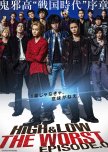
This review may contain spoilers
New Faces, New Problems, Same Damn Addiction
📝 Review(⚠️ WARNING: Potential Spoilers — I’m Not Saving You from Emotional Damage)
After completing the S.W.O.R.D. saga, we're officially stepping into The Worst saga, which is based around Oya High School.
And I actually really liked how they handled this transition.
We're introduced to the main characters of The Worst saga while still seeing some of the original characters we've already grown attached to. Since this takes place while the S.W.O.R.D. storyline is still unfolding, it doesn't feel like we're suddenly being thrown into an entirely different franchise.
Instead, it feels like we're watching the next generation slowly step onto the stage.
And that's what makes this work.
We're getting new characters, new rivalries, new personalities, and a whole new set of problems at Oya High, but the familiar faces are still there in the background reminding us that this world is bigger than just one group of characters.
The music is still banging.
The fighting is still a class act in perfection.
And honestly, High&Low has reached the point where I don't even question how they manage to make people getting punched through walls look this damn good.
It's art.
Violent art.
But art.
💕 Things I Loved
The biggest thing for me was the introduction of the new characters.
It's always risky when a franchise moves away from characters you've spent multiple seasons and movies getting attached to. You can easily end up sitting there going, “Okay, but where are MY people?”
Thankfully, The Worst Episode.O avoids that problem by slowly bringing the new generation into the existing world.
I also loved that the S.W.O.R.D. characters weren't simply erased.
They're still part of the story, which makes the whole thing feel connected rather than like we're starting over from scratch.
And, of course...
THE MUSIC.
This franchise continues to absolutely refuse to give me a bad soundtrack.
At this point, I expect nothing less.
😭 Things That Hurt My Feelings
It is sad saying goodbye to the S.W.O.R.D. characters I've grown attached to.
We've spent so much time with these people.
We've watched them fight.
We've watched them argue.
We've watched them nearly destroy themselves.
We've watched them somehow turn gang warfare into found family.
And now we're moving on.
I knew it was coming.
I still didn't like it.
Apparently emotional attachment was the real final boss of the S.W.O.R.D. saga.
🔥 And Then There Was THIS...
The fight scenes.
Because obviously.
This franchise does not know how to make a boring fight scene.
The choreography, the camera work, the soundtrack, the sheer ridiculousness of some of the physical stunts... it all comes together in that very specific High&Low way where you end up sitting there completely invested in a bunch of fictional teenagers beating each other senseless.
And somehow I'm emotionally invested in it.
Again.
This is my life now.
🫠 Final Mood
This was a really good introduction to the next generation.
It's sad to officially move away from the characters I've grown to love throughout the S.W.O.R.D. saga, but I think The Worst Episode.O does a solid job of making that transition feel natural.
We're not just abandoning everything that came before.
We're building on it.
And after six episodes, I'm definitely interested in seeing where The Worst saga goes next.
The S.W.O.R.D. era may be over, but apparently my High&Low addiction is very much alive and well.
Started: Curious about the new generation.
Finished: Still emotionally attached to the old generation, but completely ready to see what these new idiots are going to do.
Was this review helpful to you?
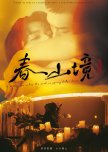
A Winter Sun Wakes the Wind in Spring Hills' Dream
2 people found this review helpful
A Winter Sun Wakes the Wind in Spring Hills’ Dream — Between Private Love and Public Silence
I really loved A Winter Sun Wakes the Wind in Spring Hills’ Dream. Not simply because the romance worked for me, but because it is one of the rare Chinese BLs willing to look directly at the contradiction surrounding gay life in China without reducing the country to either “everyone is homophobic” or “everything is fine.” Feng Qinglang is a famous actor who falls for Xu Changyang, a tea maker from a wealthy family in Yunnan, but their relationship quickly becomes about much more than celebrity meeting civilian. It becomes a story about what can be accepted privately, what can be acknowledged publicly, and how different those realities can be.That distinction interested me most. Xu Changyang’s father can respect his son’s relationship while warning Feng Qinglang that the real danger will come from public scrutiny and the media. The obstacle is not that nobody can imagine two men loving one another. It is that accepting that love around a family table is very different from allowing it to become part of a family’s public identity, an actor’s commercial image or a socially recognised future.Research on LGBTQ attitudes in mainland China reflects some of that contradiction. Personal acceptance is higher than outsiders often assume, while same-sex marriage remains unrecognised and family pressure to marry and continue the family line is still real. Marriage can involve parents, reputation, grandchildren and the joining of two families, not only two people choosing each other. Understanding that does not make the pressure fair, but it explains why the drama never treats acceptance as simple.
The series becomes even sharper when it moves into the entertainment industry. Feng Qinglang does not entirely belong to himself: his face, relationships and the way fans imagine his romantic life have commercial value. That is why the obsessive shipper was so interesting. She is so invested in her favourite actor’s fictional ship that discovering her own brother is genuinely involved with one of those men becomes unacceptable. She supposedly loves the actor, yet she will hurt the real person to preserve her fantasy. Even her brother’s happiness becomes less important than the couple she wants to consume. That is one of the ugliest sides of parasocial fandom: admiration can turn into ownership. The celebrity is no longer allowed to love whomever he chooses because his private life interferes with the product the fan wants. She is even willing to damage the reputation of the actor she claims to support in order to “protect” his ship. The drama understands that extreme fandom is not necessarily love. Sometimes it is control disguised as affection.
The entertainment-industry story works for the same reason. A closeted actor does not simply have a secret boyfriend; he has information that can affect contracts, endorsements, fandoms and family reputation. Secrecy gives power to anyone capable of exposing him. Where public representation of male-male romance is restricted, that gap between private truth and public image becomes especially meaningful.
What I particularly appreciated is that Feng Qinglang and Xu Changyang are not written as idiots once those pressures arrive. BLs often create conflict by making two supposedly intelligent adults suddenly incapable of having one conversation. Here, distance between them sometimes has a purpose. They step away because making the relationship more visible at a particular moment could hurt one another or their families. Loving someone does not always mean standing dramatically beside them while the world burns. Sometimes protecting the relationship means waiting until the noise dies down. That made their love feel much more adult to me. Every attempt to separate them ultimately fails because the relationship is not based only on attraction. They repeatedly act with the other person’s interests in mind. They protect each other, protect their families and, when necessary, accept distance. Temporary separation therefore does not mean their love has weakened. It becomes another way of maintaining it. I also loved how the physical relationship was handled. There is skinship, desire and intimacy, but the series never seems desperate to prove it is “really BL” by showing more. A look, a touch or simply waking up together can tell us what happened when the camera was not there. The restraint made some scenes more intimate because the viewer can imagine what remains outside the frame. Their love is always clear even when it cannot always be displayed completely.
The deaths were equally important because they prevented the beautiful mountain romance from becoming an artificial safe world. Xing Lan’s road accident brutally changes Qinglang’s emotional life. The other gay relationship was even harder for me. A man has to cope with his lover being left in a coma while the lover’s family directs blame toward him, as if their relationship itself caused the tragedy. That kind of grief can become poisonous because bereavement and guilt start feeding one another. Finding someone else afterwards does not magically cure that. Someone can genuinely care for another person and still remain attached to a dead or unreachable first love. Trauma is not infidelity, and grief does not disappear because enough time has passed or because someone kinder arrives. The tragic end of that storyline is painful precisely because love was present around him and still could not remove the guilt he carried. That darkness makes the central couple’s ending more valuable. This is not a universe where love automatically saves everyone. Some people die. Some people arrive too late. Some wounds remain. Qinglang and Changyang surviving one another’s world therefore feels earned rather than guaranteed simply because they are the leads.
The acting helped enormously. Xiong Yiwen, Kuma, makes the difference between public celebrity and private man visible in his body. When Qinglang is “on,” there is control; in the mountains, that control gradually loosens. Liu Jingyu works beautifully in the opposite direction. Xu Changyang feels rooted, calm and connected to tea, land and family, so he never needs to compete with Qinglang’s star persona. Their contrast strengthens the relationship. The production deserves just as much credit. The mountains are not decorative wallpaper. The tea-growing villages, real paths, old buildings, weather and open landscapes become part of the emotional language of the story: the place where Qinglang can stop being a commodity and simply exist. The camera lets those places breathe. Sometimes the characters are simply small human figures surrounded by something much larger than themselves. That is filmmaking, not just pretty scenery.
Then came that ending. After everything the outside world placed between them, returning to the mountains was exactly where Qinglang and Changyang needed to finish. Their relationship began in a place where Qinglang could temporarily abandon his public identity, so finding one another there again transforms the landscape from an escape into a home. They are no longer hiding because they cannot face reality. They have faced it, survived it and finally chosen what remains when the noise disappears. I also loved that the drama actually ended. No mysterious phone call, no new enemy watching from a car, no last-minute suggestion that another season is needed. The story completes the emotional journey it started. Sixteen episodes were worth it because they actually led somewhere.
Final Thought
I hesitate to say that A Winter Sun Wakes the Wind in Spring Hills’ Dream shows “the true China,” because no drama can show the true face of a country containing more than a billion people. But it does show a much more interesting China than the two caricatures we are often given from outside. China is not a country where every ordinary person automatically hates gay people. Nor is private tolerance the same thing as equality. A father can accept his son and still fear what society will do to him. Friends can know. Gay and lesbian people can love, work and live ordinary lives while marriage remains unavailable to them. An actor can be surrounded by people who privately understand him while his career still depends on the public never knowing the same truth. That is why I think this drama matters for Chinese BL. It does not need explicit sex to prove that Qinglang and Changyang are lovers, and it does not turn them into “bros” while expecting the audience to decode a censored romance. They love each other. The series knows it, the characters around them know it, and we know it. What becomes complicated is not whether the love exists but where that love is permitted to exist. Behind closed doors, around a family table or high in the mountains, their relationship can simply be love. The moment cameras, reputations, fandoms, careers and social expectations enter the room, the same relationship acquires consequences. Yet none of those forces ultimately manages to redefine what they are to each other.
The scenery was extraordinary, the romance was beautifully framed, the intimacy was restrained without becoming cowardly, grief was allowed to remain painful, and the entertainment industry was shown as something capable of creating dreams while simultaneously imprisoning the people whose faces sell them. Then, after sixteen episodes, the drama had enough confidence to put its characters back on top of those mountains and simply let their story be complete. For me, that makes A Winter Sun Wakes the Wind in Spring Hills’ Dream not only one of the best Chinese BLs I have watched, but one of the most complete.
Was this review helpful to you?

Also, regarding the actress chosen for Toto's mom, she looks more like his love interest than his mother.
Overall, it's a series with a light plot, and the comedy lands well. By the way, in the final episode near the ending scene, I thought the incident was a joke and Toto was going to pull another cringey act like usual, lmao.
Was this review helpful to you?

TOO SLOW *crying emoji*
When I said it was too slow, it wasn't about the pace of the story; it was about the movements and the dialogue. Like, the movements were too stiff, and they didn't look natural. People said that the chemistry was kind of lacking, and they were talking about intimate scenes. I lowkey agreed, but I think the intimate scenes were actually in the right amount but like I said, their movements were too stiff, and watching them made me wonder if they would feel sore holding those positions. I even watched it at 1.5x speed, and it felt right.Additionally, I expected this mini sequel was going to focus on Peach, Thee, and their children, but they just kept adding new characters (yes, Mira, and I think their love story was unnecessary). In the previous season, the screen time distribution for these side couples was better, but now they added more couples even though the episodes were shorter. It didn't make sense.
Overall, it was enjoyable.
Was this review helpful to you?


