

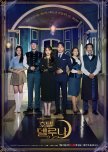
Amazing Drama!
I love this show so much, this is probably my third time rewatching but my first time posting a review on it. This drama got everything you would need, romance, comedy, a bit of scares, and a bittersweet ending. Be prepared to cry during the last couple of episodes.Story :
The story talks about a girl/spirit, Jang Manwol, she got tied down to this magical tree and became the owner of a hotel for the dead. As time went on, the hotel developed and eventually comes Goo Chan-sung, a Harvard graduate and becomes the manager of the hotel, helping Man wol with work while allowing her to grow and let go of her hatred and learn to love. This story is so sweet, I love the romance between chan sung and man wol, though it is a bit weird that a relationship between a ghost/spirt and a human formed but the producers did not make it feel weird or different.
Music :
The songs were pretty good. Not much to say about them but they definitely sound very calming. The soundtrack was also really good, certain parts had certain feels to them. The costume design was phenomenal!!! I love every piece that Jang Man Wol wears, it really speaks classy and chic and girl boss.
Acting:
The main lead acting was soooo good. I wouldn't put it past IU because she is a queen in the acting industry and she slays every role. The actor who played Chan sung was also really good, he embodied his role really well. I love the supporting cast as well, especially the guy who makes the drinks. He was really funny. I love the different deities/versions of Mago, they really made the show entertaining. I really think the casting person did a really great job! I also like how the second leads, specifically Lee Mi Ra, she didnt hang on to Chan sung a lot and eventually moved on, which allowed for the plot to move a lot smoother without unnecessary plot holes or annoyances.
Ending:
The ending was nice and where I definitely cried the most, so prepare them tissues lol. I love how the director and producers made sure every character had a happy ending and were able to let go of their grudges and move on. It's very rare to see, I also love how we get to see everyone again at the end doing thei rown things and enjoying a new life reincarnated. Also, the way each person who worked at the hotel was sent off really tied everything together.
Absolutely loved this drama! So worth the watch.
Was this review helpful to you?

This review may contain spoilers
Just like the first season it got better with the second couple
So this series seems to have a pattern where the second couple is more interesting than the first one. There is nothing wrong with Phoon and Fah, but Dao and Arthit had more of an interesting dynamic.What I did like about the first pair was Phoon getting a close knit group of friends around him that will defend him to the very end (as we saw with North). Generally the story of him getting to stand up against his abusive father and finding his mother were also really nice to follow.
I do find the dynamic between him and Fah bit creepy, mainly bc of the aspect that Fah used to view him more as a brother type of figure which then shifts to a romantic interest. Sure this can happen in real life when ppl know each other from longer period. Just something about the dynamic feels bit unbalanced in a way, where I feel Phoon would be willing to do almost anything bc he admires Fah so much, even if he would not be personally comfortable with some of the things Fah wants to do. But they get their happy ending, Fah obviously yes is eager, but adores Phoon and Phoon got out of "little brother" zone into being a proper boyfriend with the guy he loves.
Now about Dao and Arthit. Did this dynamic have it's issues? Yes there were some very questionable line crossing. I get it, Arthit aside from Johan (who is a complete simp now that he has North) is meant to be the second edgier character and I'd say he is the most "imperfect" character of the series. Dao has his own past issues to deal with, and still somehow two of them make a really deep connection during the first episodes. What maybe bothered me, especially after they shared such a significant moment, trying to contact Tith's mother's spirit is the part when Arthit starts to court Dao. Despite the fact that Arthit knew the crap Dao's ex made him go trough, he still resulted into pressuring tactics in gaining Dao's affection. Dao does put him into his place at times, but still some of the stuff did leave me wondering that is Dao going along with it, bc he genuinely is catching feelings or bc of the pressure Arthit puts on him and emotionally he doesn't have the capacity to properly just put a stop to it. Despite the courting process being questionable, I do feel this was in one way the most rewarding couple to see getting to the end.
I am calling the trailers for Dao and Arthit false advertising unless we get a special EP later! The studio trailer made these two to be the most spiciest couple to be expected and we only got one scene in the last ep 16 for them. Yes the scene was definitely more than what we have seen from the other couples, but everything else was the same fluffy stuff we saw from other couples once they decided to become boyfriends. This would have been fine, unless I had the original trailer as a base material for the expectations.
For me this is still a 7/10 series, but if you like university romance with long character development archs this isn't a bad choice.
Was this review helpful to you?
Don't Meet Again
Regrettably, this is yet another BL love story where a somewhat successful but isolated individual in the present is still living in the past. Racked with guilt about something traumatic, he has obviously not dealt with its lasting effect. It seems to hang over him like a continuous voice that whispers into his ear – perhaps if I could go back to stop a tragic situation, maybe everything would be different. Although I had been lied to as to what those circumstances were, I still want to go back and change something else just to make sure the same predicament which I am not sure what that is, never happen. Confused? Well, you should be. The story frankly is bewildering from a logical point of view. Oddly enough, it also made little sense from a mythus frame of reference. Is this series enjoyable? Well, yes, it kind of is, only because of the acting of the main protagonists. Yet, the screenplay itself let the actors and the story down, I am afraid. Unless you find a way to travel back in time to be completely 17 again – fully, wholly, and unequivocally – then do not. You will always bring some part of you back with you that will inevitably change elements you did NOT want to change. That alone will digress the outcome you intended. Perhaps it might be best to leave the past – alone.Was this review helpful to you?
This review may contain spoilers
not bad but not good either
2gether is honestly a great series but this really was just a recap of the two seasons. almost 1.5 hrs of scenes from the og show. the graduation scene wasnt bad i just wish sarawat proposed with a ring instead of the guitar picks. i get the significance but its too much imo. the rings would make it feel more official and in a sense show that they’re a couple who’s gonna last. I honestly wish they got married instead tho and they had a kid. PLUS IM SO SAD WE NEVER GOT GOOD KISS SCENES DESPITE THE CHEMISTRY. still a good watch tho.Was this review helpful to you?

This review may contain spoilers
Beautiful Unique Love story
The story is unique and I really like it. It evolves around the unequal and very different lonely souls. Both yerned for love and both had fear in relationship.The ghost queen afraid of the departing of the one she loved so she afraid to love. The mortal afraid of loosing the important in the heart of his beloved, so he cling and sacifice everything including his life.
You can understand both He Simu and Duan Xu. Both actors/actress did a good job conveying this relationship and it is beautiful. The music, the CG and costume are all great. All of the other actor/actress did well. The story is believable and cause you to think.
Was this review helpful to you?
Finally, a drama that broke my K-drama Slump
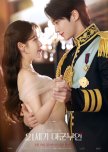
I was in a serious K-drama slump for so long nothing could hold my attention, and I kept dropping shows halfway. Then Perfect Crown happened. I literally subscribed to Disney+ just for this drama… and I have zero regrets. After watching the first 2 episodes, I’m completely hooked. I’ve already rewatched them multiple times while waiting for the next episode, and honestly, the wait feels like torture. Suddenly, Friday feels so far away 😭 The story setting itself feels so refreshing. The modern monarchy concept adds a unique layer to the usual romance setup, making the world feel both familiar and different at the same time. It creates an interesting contrast between power and restriction, status and freedom, which naturally shapes the characters and their choices.Byeon Woo Seok as Prince I-an is honestly so impressive to me. His character is someone who has lived his entire life being controlled told not to stand out, not to express, not to want too much. And you can feel that in the way he carries himself. His posture, his stillness, the way he speaks calmly even in tense situations it all reflects someone who has learned to suppress everything. What I really love is how his emotions are not loud, but they are there. You can see it in his eyes, in the pauses, in the way he slightly reacts rather than overreacts. It feels like there’s so much going on inside him that he’s not allowed to show. That kind of restrained acting is very hard to do, but he makes it feel natural and believable. It never feels empty to me it feels controlled, intentional, and layered.
IU as Seong Hui-ju brings such a different energy that balances him perfectly. Her character is confident, expressive, and emotionally open, but not in an exaggerated way. IU plays her with a lot of charm and sharpness, but also vulnerability underneath. You can tell Hui-ju has her own struggles despite her strong exterior, and IU subtly lets those cracks show without losing the character’s strength.
What makes their pairing so enjoyable is the contrast: he is quiet, contained, and unreadable at times, while she is direct, lively, and emotionally transparent. And yet, when they are together, their energy blends so well. Their chemistry doesn’t feel forced—it feels like two very different people slowly understanding each other. Even small interactions between them are engaging, and that’s why their scenes are so rewatchable. For me, both of them are portraying their characters really well. The acting doesn’t rely on dramatic exaggeration but on nuance, presence, and emotional layering. That’s exactly why it pulled me in so deeply.
The supporting characters deserve special mention because they genuinely add depth to the story. They don’t feel like background fillers each one has a purpose and brings their own energy into the scenes. Whether it’s through subtle humor, tension, or emotional support, they help build the world around the leads and make everything feel more complete and alive. Visually, the drama is absolutely stunning. The cinematography is beautifully done every frame feels polished, with thoughtful lighting and composition that enhance the mood of each scene. There’s a soft elegance to the visuals that perfectly matches the royal theme. The artwork and set design are equally impressive. From palace interiors to modern spaces, everything feels carefully curated. The environments don’t just look pretty they reflect the characters’ worlds, especially the contrast between restriction and freedom. The costumes are another highlight. The styling perfectly captures both the royal aesthetic and modern fashion. Prince I-an’s outfits emphasize his refined, controlled image, while Hui-ju’s wardrobe reflects her confidence and individuality. The attention to detail in clothing adds another layer to the storytelling.
Most importantly, this drama made me feel something again. After such a long time, I found myself laughing, smiling, and giggling while watching a K-drama. That feeling alone makes Perfect Crown special for me. Until the next episode releases, I’ll just be here… rewatching these two episodes again and again 🥲
Was this review helpful to you?
This review may contain spoilers
Worst Story+Worst Acting+Worst Screenplay+Worst Editing= Worst Drama
No wonder this drama has the lowest ratings..literally in every department this drama is so bad..! Story, Acting, Screenplay, Editing everything seems messy. i think they knew from the start that this project has 0 potential & it'll turn out to be a disappointment that's why there is no any big actor or known face in this drama..that's why they had to go with new actors or unknown actors...let me tell you what i found unbearable about this drama after watching just few episodes: #1 Story is very illogical & absurd #2 they just randomly & so often switch between past & present scenes that after one point you just left confused..#3 another problem is that you will feel many scenes, specially the ones where main leads are having conversation are unnecessary stretched out so lengthy & boring that you just loose interest in their conversation, they just talking talking talking & keep on talking (in one episode there is literally a 14min long conversation scene between two leads & btw one episode length is 1hr).. ..#4 Bad acting: everyone is in some kind of competition that who will act bad.. i don't know when was the last time i saw a kdrama this bad...Was this review helpful to you?
This review may contain spoilers
Contains spoilers
I honestly can’t find anything to criticize about this drama. From start to finish, it was such a beautiful and emotional experience that left a lasting impression on me.The story was incredibly well-written—full of depth, tension, and just the right amount of angst. Every conflict felt meaningful, and nothing was dragged unnecessarily. The pacing kept me engaged the whole time, and I was always looking forward to what would happen next.
The actors did an amazing job bringing their characters to life. Their chemistry felt natural and heartfelt, making every scene—whether soft or painful—even more impactful. You could really feel their emotions, especially during the heavier moments.
And the OST… it was perfect. Every song matched the scenes so well that it made the emotions hit even deeper. It’s one of those soundtracks that stays with you even after finishing the drama.
If there’s one thing I wished for, it’s that Xiaotao and Wei Liang were given a happy ending too. They deserved more, and their story left a small ache in my heart. But at the same time, I understand that their outcome added to the overall bittersweet tone of the drama—it’s one of the few lingering angsts that makes the story feel more real.
Overall, I loved everything about this drama—the story, the actors, the OST… everything. I just wish it didn’t end yet. I wanted more.
Rating: 10/10
Was this review helpful to you?
Absolute one of masterpiece series
Actually I hold a little hope of two main characters uniting 😭I already guess to end like this.
But the plot is really great and the actors chemistry is very good, also the CGI, the cinematography and the background music, costumes are far so so good. Worth watching!!!!!
Most importantly Jie Jie you’re too pretty to handle for my mind😭
I always fell in love with you every time I watched your series.💕
Good choice to watch this drama. May all of your days fill with blessings .
Was this review helpful to you?

This review may contain spoilers
Love them!!! Pretty inline with the novel
I never expected I'd love ArthitDao soo much cz JohanNorth and FahPhoon are my favs but after i read the novel i just couldn't stop myself from watching the drama and damn expecting the last episode they were pretty inline with the novel and made me cry a couple of times.Like when Arthit gets to know his mom is no more or when Dao feels Arthit's sadness and cries for someone for the 1st time.
I also really liked DoMeen's story although i felt soo bad for them and cried a lot when Do left❤️.
Overall i really loved it but the only thing that I'm kinda sad about is they didn't show Dao's back story especially the one where he burns his bully for trying to r*pe him. That was kinda the reason Dao is Dao n the reason the ex had that bet in the 1st place and everything happened so that was kinda the core scene that was absent. Also the casting for Dao's dad who was supposed to be a tall muscular white man like the inspector from "heart killers". It bothered me till the end😆😆 cz i didn't think he was hot enough for Arthit to doubt Dao.
Anyways its good i give it a 9.5 cz of the minor flaws
Was this review helpful to you?

This review may contain spoilers
Better late than never! ♥️♥️♥️
*Spoiler Alert*
Aww they don't deserve this kind of ending 😭😔 they deserve better.. This is sadder than make our days count.. They deserve a happy ending. 😔
Yamada's back story hurts the most 😢 what do you mean that's not his real family? 😔
They look so cute together especially at that camping scene..
I know I'm late but I hope they get more series together... I love the OST of the intro very catchy and pleasing to the ears 😍🥰🤩🤩 the last ost was pretty too the lyrics are spot on. Overall, 10/10
Was this review helpful to you?
This review may contain spoilers
ThitDao Made Magic
Of all the stories this one surpassed the others with interest in the supernatural, emotional moments, bonding and resolution.Ngern proved his worth as an actor by embodying the character and effortlessly portraying Arthit. His emotional breakdown with the acceptance of never being able to connect with his mother again, will live in memory. There is a fluidity in his body movements and speech that doesn't appear to be over rehearsed.
Oat filled Dao admirably. His stoic and dead pan delivery created many humorous moments and welcomed after the overly sweet moments of previous couples. Though I will confess, the bedside conversation at the hospital was rewarding.
Together they blended beautifully to create the most natural pairing of all. This is the jewel. I cried, laughed and loved along with them. Direk included. A pleasure to see their bond. I truly appreciated the complete honesty the three shared.
As with most Thai productions, they tend to over state the obvious. The translation a little not stable coming to the end but understood.
I will miss them.
Was this review helpful to you?
This review may contain spoilers
In my top 2 fav dramas for 2026 so far
One the best stories in general ive seen in long time the talk about how obsession can hold us back in life and after death is good life lesson arthur and reba both strong presence on screen regardless when negative comments have said their chemistry is strong. What i loved is seeing enteral love of dream reunion with actor who play bai san xing. Also miles wei was so good as villain in this drama i have to give him. His props Seeing the adopted brother of the leads become the next ruler of the spirit world was beautiful. But fang xian ye death def hurt this drama had me so emotionally crying most episodes. Im glad we found out why he simu kept losing lovers cause of family curse by goddness he simu descent was funny as well. Im glad the leads got their happy ending i def watch it again. I hope the leads do another drama together like modern one i def recommend this to watchWas this review helpful to you?
one of the best bl series
-an interesting story,-great cast,
-good acting,
-great chemistry,
imo i wish that this is longer than 8 episodes i was enjoying it a lot and it feels underrated like more people need to watch it, i highly recommend.
i hope to see the male leads in more bl series in the future~~ (❤️ ω ❤️)
Was this review helpful to you?

What I found most fascinating was the treatment of spirituality. The series avoids the cheap cliché of mocking the supernatural; instead, it presents the spiritual world as something everyday and, at times, even comforting. The true horror doesn't come from the beyond, but from characters like Bom, who demonstrate how faith, when used to justify the unjustifiable, transforms into an absolute weapon of control.
At the epicenter of this tragedy is Thup. It’s heartbreaking to watch how his gift, acting as a bridge between the dead and the truth, ends up making him the prime suspect in a rotting system. It’s a constant reminder that in a corrupt world, trying to give a voice to the forgotten puts a target on your back.
Narrative Balance: I truly appreciated that the romance between Thup and Singha remained in the background. In such a suffocating atmosphere, a forced "lovey-dovey" subplot would have shattered the necessary tension.
Character Dynamics: Ironically, the secondary couple (Darin and Sey) felt much more solid and well-developed. Darin’s unconditional love, contrasted with Sey’s emotional blindness, provided a much-needed human layer to the chaos.
Loose Ends: The disappearance of King and the unresolved father-son conflict still bugs me. Was there high-level corruption to cover up the case? Most likely, but the script chooses to leave us with that unsettling ambiguity.
Performance: Pooh still has a long way to go with his diction before he can be considered a top-tier actor, but his facial expressions are spot-on. He conveys exactly what the character needs through his eyes alone.
A raw journey about what it means to die twice: first physically, and then through imposed silence. A must-watch if you’re looking for horror with actual substance.
Was this review helpful to you?


