

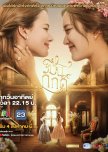
THE BEST GL SERIES I HAVE WATCHED YET!
The Loyal Pin is, without a doubt, my favorite story of all time. I’ve watched a lot of series, but nothing has ever made me feel the way this one does. To me, it’s a complete masterpiece, and I genuinely think it deserves so much more recognition than it gets. I wish more people would give it a chance because it’s one of those stories that stays with you long after you’ve finished it.I’ve honestly fallen in love with everything about this series. The story is beautiful, emotional, and so well written. Every episode had me smiling, crying, and completely invested in the characters. It isn’t just a romance—it tells a story about love, loyalty, sacrifice, and choosing your own happiness even when life makes it difficult. Every emotion felt real, and that’s what made it so special.
One of the biggest reasons I love The Loyal Pin so much is because of the actresses. They brought their characters to life in such a natural and heartfelt way that I completely forgot I was watching a show. Their chemistry is absolutely incredible, and every scene between them feels so genuine. You can really tell how much hard work, passion, and love they put into this project. They made me laugh, cry, and feel every single emotion alongside them, and I honestly couldn’t imagine anyone else playing these roles.
I also have to appreciate how stunning the production is. The cinematography is breathtaking, the costumes are gorgeous, the soundtrack fits every scene perfectly, and every little detail was clearly made with so much care. It feels like everyone involved wanted to create something truly special, and they absolutely succeeded.
For me, The Loyal Pin is the best GL series ever made. It isn’t just my favorite GL—it has become one of my favorite stories, period. It has a special place in my heart that I don’t think any other series will ever replace. I’ll always recommend it because it deserves all the love, praise, and recognition in the world. It made me fall in love with the story, the characters, and especially the amazing actresses who made it all feel so real. I honestly don’t think I’ll ever stop talking about it.
Was this review helpful to you?
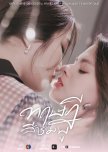
This was the start of the Gl industry ?
I think Gap The Series is one of the best shows I’ve watched because it has such a good mix of romance, comedy, and emotional moments. It isn’t just about two people falling in love. It also shows how the characters grow, deal with family expectations, and learn to be themselves. That made the story feel more real and meaningful.One of my favorite things about the series is the chemistry between the main characters. Their relationship feels natural, and you can really see how much they care about each other. The funny moments make you laugh, and the emotional scenes actually make you feel something. Every episode kept me interested because there was always something happening, but it never felt rushed.
Another reason I love Gap is because it’s a comfort series for me. Whenever I’m stressed or having a bad day, I can rewatch it, and it always makes me feel better. Even though I already know what’s going to happen, I still enjoy every scene because the characters are so lovable and the story is heartwarming. It gives me a sense of comfort and happiness that not many shows can.
The acting, music, and filming are also really well done. Everything fits together perfectly and makes the emotions feel even stronger. I also like that the series shows a love story in a respectful and genuine way, which makes it even more special.
Overall, I think Gap The Series is definitely worth watching. It has a beautiful story, amazing characters, and lots of memorable moments that stay with you even after you finish it. It’s one of those shows that I know I’ll keep coming back to because it always makes me smile and reminds me why I loved it in the first place.
Was this review helpful to you?
This review may contain spoilers
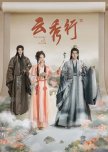
Give Us Back the Real Saiunkoku Monogatari
Disclaimer: This review only covers the first 31 episodes as I have no inclination to proceed further + I'm not so patient to wait for the express package to come by in pirating sites.Back in 2023, I was so exhilarated that Saiunkoku Monogatari would get a live-action adaptation into a C-drama. The synopsis was pretty convincing for me to dive in, plus we were served an assemble of eye-candy actors who could act well. Also a huge bonus for Tian Jiarui's fans because this was the first time he broke through Guo Jingming's shackles and became independent of himself. Nevertheless, this drama faced a huge setback as it was shelved for almost 3 years and served its sentence in iQIYI's dungeon. The reason of the shelving was due to copyright issue against its original author, Yukino Sai. After negotiating back and forth, she finally agreed to its broadcasting and the production team began preparing materials for its upcoming release. However, numerous high-quality dramas keep coming by, and they have to wait for a little while until there's an empty airing slot. And that's how "The Legend of Rosy Clouds" finally airs. Basically, I really hate their new names after the copyright issue because they just sound so fucking cringey to me (I'm going to use their real names here, so please don't get dizzy about who's who).
The story is actually set in a fictional country named Nine Clouds Country, but they decide to change the country into a mere city, and emperor becomes city governor. The protagonists of the story are Fan Yun (Kou Shuurei), a determined and resilient girl from a middle-class family who wants to change her fate through education so that she can help other people in need and restore the rundown Kou Mansion (besides, she also has her clumsy father Kou Shouka (working in the imperial archive's library) and adoptive brother Gao Ran (Shi Seiran) (taken in by Shuurei's parents during his youth and grows protective of Shuurei) to feed) (Shuurei is supposed to take the selection exam and clinches the third position, but the drama makes her into a special probationary official through Ryuuki's implore after she is forbidden to take the exam, which is a heavy disregard against the OG source), and Qi Zheng (Shi Ryuuki), the city governor/emperor (if you prefer it) who has been idling away and living a frivolous life as a guise of his true nature as a lot of officials are coveting his position. The two meet under an unfavorable circumstance where one of the officials/prime ministers (if you prefer it again) makes an offer to the Kou family to let her enter the harem/residence and become Ryuuki's wife in order to help him put things right. Due to the tempting reward, Shuurei can't resist to decline and soon has to put up with Ryuuki's antics as he keeps troubling her to make her go away. However, not only does his method fruitless, but Shuurei also grows more curious of Ryuuki's true self and begins to understand his troubled past behind his carefree persona.
Other characters are:
1. Gao Ran (Shi Seiran), the elder brother of Ryuuki who was exiled back in their teenage years. Seiran was supposed to have died during his journey, but a gang of bandits took him away and taught him some martial art skills. Seiran was nicknamed "Little Whirlwind" back then and befriended Ro Ensei (have been omitted from the drama). Seiran later was adopted by Shuurei's parents and he becomes the affectionate caring brother who loves to dote on Shuurei. Shuurei's parents literally know about Seiran's background, but decide not to pursue it as it may be bring back the unpleasant experiences that Seiran once faced. Seiran isn't supposed to be the second couple with Wei Shisan (Ran Juusan), but the screenwriter felt that both of them are compatible of each other. With Juusan around, Seiran lets down his guard and becomes less stoic as Juusan believes that Seiran also deserves love from other people.
2. Wei Shisan (Ran Juusan), the spoiled yet rebellious daughter of the Ran Family. In the OG source, Juusan is to be paired with other man, but thank goodness she is paired with Seiran here. Juusan is supposed to marry Ryuuki as his concubine, but she falls head over heels instead towards Seiran. Soon, she's going to chase Seiran all over the place even if he acts unbothered and wants to push her away. Juusan is also a loyal and sincere person.
3. Wei Ying (Ran Shuuei), the fourth son of the Ran Family. As one of Ryuuki's most trusted right-hand man, Shuuei is a serious and responsible person when it comes to official business. However, Shuuei is also a womanizer and has a tendency of visiting brothels, much to Kouyuu's displeasure. He has a bad time of disciplining Juusan and Ryuuren too.
4. Yan Jiang (Li Kouyuu), the adopted son of Kou Reishin (Shuurei's uncle) and one of the most remarkable scholars in his era. Reishin took him in after learning that his brother had adopted Seiran, so he wanted to taste what it felt like to have a son. So, Kouyuu was taken in to Reishin's residence and grew up guarded against his adoptive father. Kouyuu also develops a bad sense of direction (presumably because of Lady Yuri's (Shuurei's aunt) tendency to change the residence's formation so that Kouyuu couldn't escape easily). Kouyuu has a bad temper as well, and may blatantly lie to others who remind him of the real direction. However, Kouyuu's background in the drama isn't clearly explained and even his tendency to lose direction is omitted as well.
5. Wei Rong (Ran Ryuuren), the fifth son of the Ran Family. As the most eccentric person in the whole family, nobody can stop Ryuuren's wacky antics and most of them let him have his way. Ryuuren is a prodigy as well, securing the second place in the selection exam to become an official, but doesn't seem to be bothered to attend morning courts (by feigning illness of course). Ryuuren wears an assortment of weird clothing and always takes his flute with him, playing whenever he has the mood. Alas, a lot of people are troubled by this flute the most.
6. Jian Xing (To Eigetsu), a commoner academician and the rakes up the first place of the selection exam. Eigetsu is a kind-hearted and caring person who always supports Shuurei unconditionally as both of them are bullied by other officials. Eigetsu has an alter ego named Yogetsu, who only appears if Eigetsu gets drunk. In the drama, the screenwriter had altered Eigetsu's backstory, to the point of inventing a "nonexistent" cultist sister - as far as I remember, the OG source never mentions any family member related to him (Yong City is not Sa Province, but merely a plot device meant for Eigetsu's growth - as far as I know, the novel never mentions Eigetsu's hometown nor a devastating plague).
7. Su Yin (Kourin), Shuurei's former maid who secretly works for Sakujun's grandpa. Despite her initially ill intentions, Shuurei still forgives her and even lets her go to Sa Province as well. Kourin's love interest is Eigetsu.
8. Zheng Shi/Lou Qiyan (Sa Sakujun), the cunning second young master of the Sa Family. In order to get Deng Wei more screentime, the screenwriter had turned the tables to Sakujun's character. I literally skip all his scenes in the drama, but from what I know, he's obsessively in love with Shuurei and is willing to ride or die for her. Sakujun is a grey character - you can't say he's good, but you can't consider him as evil either. Sakujun is also flirty and his attractiveness has attracted dozens of girls in the Sa Province as well. He only appears when Shuurei and Eigetsu are sent as the joint governor of the province, while in here, Sakujun has appeared from the get go (ep 1). Sakujun also has an avaricious grandpa who stages the most uneventful coup d'état ever happened in the C-drama world. It stretches over several episodes and makes the drama more underbaked, but seriously a frail sickly old grandpa even wants to overthrow the current governor? After the death of grandpa, Sakujun resorts to take up the mantle of Sa Family's leader despite facing insurmountable pressure from other family members who don't approve of him. As the drama nearly comes to an end, they abruptly travel to Sa Province (Jing City) where the Sa Family holds absolute control of it. In order to quell the hidden threat posed by some of the sinister family members, Shuurei and Eigetsu are dispatched to Sa Province as joint-governors, with Seiran and Sakujun escorting them. Come to think of it, I'm not sure how many details the screenwriter is going to cram in this arc, since traveling to Sa Province is partially the second season of Saiunkoku Monogatari. Grandpa also manages to expose Sakujun's second identity as the bearded businessman (I must say grandpa has a pair of keen eyes, even with the moustache stuck on his jawline, grandpa can identify him as his grandson).
In the original story, Saiunkoku Monogatari promises a rich character building, poignant tale of love and duty (Shuurei and Ryuuki's chemistry can be the evidence for that), and the hilarious banters and comedic relief provided by several funny characters, especially Shuuei, Kouyuu, and Ro Ensei (I'm really pissed off of why they omit his character - he has so much history with Seiran in the bandit gang before). However, "The Legend of the Rosy Clouds" provides none of those qualities, and instead transforms a wonderful masterpiece into a trashy garbage that deserves to stay in iQIYI's dungeon as long as possible. If it hadn't been for the second couple and Shuuei-Kouyuu's pair, I would've dropped this long ago from ep 1. I don't really care about Sakujun and his scheming grandpa, I don't even want to see the superficial romance between Fan Yun and Qi Zheng - and she's caught up in a dilemma between love and duty that she can't even reciprocate Qi Zheng's sincere feelings for her. The final straw comes in the form of a severe plague disseminating the entire Yong City aka Sa Province - which I believe never occur in the OG source. What is more incredulous is the Spirit Immortal Cult that appears out of thin air. The whole arc is so badly done that I skip almost all of their scenes except the fighting ones. Not to mention the fake stones and boulders which make it obvious that they're shooting in a little set inside a studio. As the drama unfolds, Seiran-Juusan and Shuuei-Kouyuu pairs get literally minimal screentime, especially during the coup arc. More scenes are dedicated for Shuurei-Ryuuki-Sakujun love triangle trope, which is getting more and more tedious as it goes.
Now, to the acting. I've mixed opinion about Li Yitong's performance in this drama. Firstly, the atrocious dubbing makes her sound like a spoiled little girl. Secondly, she's trying her best to act over-the-top and perform several slapstick comedy scenes, all of which fail horribly. Thirdly, the screenwriter had made her character to be a damsel-in-distress as she needs constant rescuing from both male leads. Joseph Zeng is so-so, if you ask me - I've never been fond of him since "Mysterious Lotus Casebook" and now he's been in a hit-or-miss list for me. But, he does manage to convey the emotional impact of Qi Zheng, which shows how much devoted he is to Fan Yun even when she's in an uncertainty. But then, Qi Zheng grows into a ten-year-old kids begging for candies since he always implores Fan Yun to stay by his side and gets super duper jealous whenever Zheng Shi or Gao Ran speak affectionately of her. You're already a governor bro, so please do know your boundary - you can still have her in your free time. Deng Wei is also so-so to me - come to think of it, I don't see a point of him ruining the city for the sake of business or to make Qi Zheng furious - and I don't like his scholarly vibe as Zheng Shi too. Meanwhile, kudos to Riley Wang and Dai Luwa for being the MVP couple in this drama - their hot-and-cold personality complements each other and I like the way Shisan tries to remind Gao Ran that he can love and be loved too. Their push-and-pull relationship is fun to watch, even when Shisan is on the stalker mode. Special mention to Cheng Hongxin and Tian Jiarui for creating such a strong brotherhood too - if it hadn't been for them, God knows what would happen to this drama. Jerome Deng has less scenes, but he absolutely nails Wei Rong's enigmatic style and even his meh expression is superb to me. For Jian Yuxi (portrays Tian Xing/Tian Yue) and Fan Jingwen (portrays Su Yin), I should say their acting is better than my expectation, given that they play teenage characters. For those old men or grandpa sticking out their noses on others' business, I don't care what you wanna do, your lives is yours to control, thank you.
OSTs are meh as well despite inviting Zhou Shen, Liu Yuning, Huang Xiaoyun, Zhang Zining, Tian Jiarui, and Deng Dian. The costumes look drop-dead gorgeous despite being limited in numbers. Sets are limited as well, with the desert being the fakest of all.
Overall, don't touch this drama unless you want to suffer like me. I'm really fucking disappointed in "The Legend of Rosy Clouds" and hope that more OG sources can get the justice they deserve in the future. Thank you for listening to my yapping again (I'll continue yapping in "The Eternal Fragrance" if I may). Good luck and happy watching!!!
Was this review helpful to you?
This review may contain spoilers
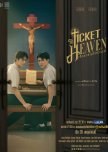
Cinematic Masterpiece
This drama was a beautiful masterpiece on religion. I was a bit surprised at how easily you could have swapped the main characters for a straight couple and the plot wouldn't have changed. Throughout the whole struggle shown between Tanrak and his faith, not once was it explicitly stated that he believed being gay was a sin. He felt like he was sinning because he liked someone who took him away from his faith not BECAUSE he was gay. He felt like he was sinning, because he was choosing to be selfish and walk away from priesthood, not because he was gay. As an ex-Christian who deeply struggled with accepting my feelings while still being in the faith, I really would have loved to see them show how Christianity believes gayness is a sin, and how that can cause internal turmoil. I also would have really loved to see Tanrak struggle to accept his own feelings more, rather than the pain come from him feeling like he was sinning and because he was questioning being a priest. But maybe that's just my Western perspective, maybe Christianity in the East really doesn't demonize queerness as a sin. Either way, this was a beautiful portrayal of emotion and everything about this drama is absolutely top-notch.Was this review helpful to you?
A Heartwarming and Unforgettable Series
The Air is one of the best series I have ever watched. From the very first episode, it captured my attention with its emotional storytelling and beautifully developed characters. Every episode felt meaningful, and I never got bored while watching. The chemistry between the leads was natural, heartwarming, and full of genuine emotions. Their performances made every happy, sad, and touching moment feel real. The cinematography was stunning, the soundtrack perfectly matched every scene, and the pacing allowed the story to unfold naturally. I laughed, smiled, cried, and became emotionally attached to every character. This series left a lasting impression on me and reminded me why I love watching GL dramas. It is a beautiful journey filled with love, growth, friendship, and hope. I will definitely rewatch it in the future because it deserves all the love and recognition it gets. Thank you to the entire cast and production team for creating such an unforgettable masterpiece. I highly recommend The Air to anyone looking for a heartfelt, emotional, and well-made series. 10/10, absolutely worth watching! ❤️Was this review helpful to you?
Solid healing drama and very memeable
I really enjoyed this show and the chemistry between the actors. I think it was a drama that is best enjoyed when airing. I feel like watching two episodes per week was perfect.I enjoyed how funny and light this drama felt. I also liked the comedy of the show.
Shin Yeeun and Lee Jaewook are so good at crying. Like they made me so sad whenever they were crying. I hope they get to work together in the future on another project. Their chemistry feels very natural.
I also liked how the second lead plot was solved relatively quickly and how he became very lovable even if plutonic. I’ll miss the vibes this drama gave every single week.
Was this review helpful to you?
This review may contain spoilers
A Lovey Dovely Drama With Touches of Emotional Scenes
In *Youthful Glory*, a medical romance drama, the vulnerability of lead character Do Ji Uin becomes a magnet for women who long to protect their man. Much of the series left me puzzled—how could a drowning incident involving a friend trigger PTSD in Dr. Do? Shin Ye Eun, portraying Yook Ha Ri, was a refreshing discovery. Her natural, unblemished features stood out in an industry often marked by cosmetic enhancements. Yet the drama never revealed how she actually resolve the scandal that drew her back to the island.The finale was predictable, but I admired the production team’s effort to make the surgical scenes strikingly realistic. Comic relief came through hooligan Yeom Byeong Cheol, balancing the heartbreak of Ha Ri’s grandmother’s passing. Nurse Um Jeong Seon, initially unsympathetic with her deep-seated inferiority complex, underwent a heartening transformation. Meanwhile, Dr. Do’s battle against the governor seemed hopeless until Yeom, in a surprising turn, provided crucial evidence—even at his own expense.
The drama frequently highlighted the young doctors bonding with islanders, underscoring the spirit of community. Ultimately, each staff departed for better career prospects or National Service, leaving Nurse Hwang Sin Hye as the clinic’s steadfast fixture.
Was this review helpful to you?
This review may contain spoilers
Tough it out!
Some may say that this drama has some similar notes as Hometown Cha Cha Cha- For one, the story takes place in a small town wherein livelihood focuses on seafood
- The people are simple folks, who know each other's stories, and nothing quite escape their notice.
- One of the leads is in the medical profession.
However, this drama focused on a doctor who had anxiety due to his past experience. Being a doctor exempt him from being in an active duty, yet his assignment was not what he wanted nor expected. It also features the rest of the doctors and nurses with whom he has to work with. His presence somehow made a difference to the island folks as he placed treating people above liking or disliking. We see conflicts with a governor, yet he did not just bow to his wishes. In the end, he learned to tough it out as he matured, opened up his heart and be truer to himself. He may be anxious at sea, but his heart as a doctor remain intact. With the way the last episode ended, this can have a Season 2.
As for the actors, they all did a great job. The different characters bring flavor to the drama
- Lee Jae Wook - as Dr. Do played it well how awkward he was in trying to adapt in the island life
- Shin Ye Un as Hari is pretty, first time to watch a drama with her as main character. She is not a damsel in distress kind of character
- Hong Min Gi as Dr. Chiyeon, he played the 2nd guy who liked the lead just like in My Beloved Thief. I think his non-smiling face is good for that no-nonsense character. His character balances somehow the weakness of Dr. Do.
Overall, I give this drama a 7.5 score, perhaps the rewatch value pulled down my score. I like this drama as it touches the reality of depression, dealing with difficult people and learning to adapt in new environment. As I said in my other reviews, I watch dramas not just for entertainment purposes, but also to reflect on life, gain insights from other people and perhaps get some gems to live by. This is one drama that says that.
Aside from the story, I love the sceneries, the sunsets and sunrises, the forest walks. It is enough healing for one's soul.
Was this review helpful to you?
With the right vision, a well-written screenplay and creative use of props and sets, this could have been a top-tier It's-so-bad-it's-good C-grade low-budget SF spoof.
I really liked the aliens' shiny cheap polyester clothing and their obvious hand-wavey misunderstanding of Earth's culture. I liked the poser-like "grandeur" of Prince Raon and Hachi's ever-changing dog-ears. I liked the reason for using three different languages in the series.
Unfortunately, the series doesn't hold what the first episode promised. Obviously, the circumstances of its history are partly to be blamed: Filmed by a Korean company (one which is now known for productions of questionable quality) and never finished, the material was then boought by another Korean company, who tried to finish the series. I don't know how much editing and general post-production had been done at that point, but to me, it seems that it must have been either extremely poor or not at all -- the end product shows much unevenness, jumps in continuity, and in one case, material from either the casting videos or a workshop was obviously used.
The cast's performance varied between "poor" and "quite a bit better than adequate".
Another point that did not help with the overall quality was that the script tries both to be a Whacky Comedy With Much Silliness and a sweet Romance With Tragic Background. Combining these two very different genres into one whole is not an easy task, and then the script introduces a third plot-line of Conspiracies And Backstabbing. None of it is developed properly, plot lines appear and disappear at random, and some characters lose any characterisation they had. No effort in editing could have saved this. The interesting points I mention above are toned down or not used at all (For example, I would have gone overboard with the language thing and let every alien character speak different languages).
I suspect that the script was already poorly written, but that the production was started by one group of people (who had a specific idea what they wanted to make) and finished by another group (who probably put their own spin on it), was certainly the nail in the coffin.
The potential for a silly C-grade comedy series was there. But it never came to fruition.
Was it good?
Not really. There were some great ideas, but none of them were developed well.
Did I like it?
I kind of want to see a Japanese remake, I think that could be brilliant.
Would I recommend it?
No.
Was this review helpful to you?
This review may contain spoilers
Unnecessary Sequel
If i thought watching S2 was the screenwriter dumbing me down with those ridiculous philosophycal crap, this S3 made me feel like being zombified by them.1. The whole season being triggered by quack professor obsessed with the afterlife, a crackhead enough to take down 2 people for him to get the useless answer that, mindfckingly, he never got til the very end. Like whaaaaaat?
2. A woman with a good husband and happy life who’s so hung up with her lost father that she’s willing to venture into the world she fought so hard to leave just to see him again. Like whaaaaaaat? If he’s dead, you won’t find him in borderland cuz that’s the land between death and life, and it’s not possible that he’s been in between life and death cuz it takes at most 2 minutes of dead heartbeat to traverse between that life and death, and he’s been missing for months (or years). And if he’s alive somewhere in the wilderness, then he would definitely NOT be in borderland. There’s just no way for him to be in the borderland so where is the sense of having Usagi following the professor to go to the afterworld? The professor isnt even a therapist she mightbhave wanted to consult with, so how did he convince her to go with him? She’s that fcked over her father’s disappearance that she’s willing to throw away the good life she has now, the good life that she was convinced her father would want her to have back in season 2, which is the reason why she fought so hard to get back to. How could someone who had gone through that, realize the meaning of life and found happiness suddenly throw everything again to follow this quack professor she knew days before just for the unplausible possibility of finding her dad again in the borderland? Where is the logic and sense in that? That’s a total mindfck the writers did on us the audience there.
3. There is no explanation whatsoever as to how the borderland citizens (the gamemasters) could influence real life people to want to come the afterlife, up to the point of arranging the death games in the real world. Like how? Nothing explains this.
4. The dramatic scenes on this one is even cringier than season 2. Of course why not we just opt for the couple straining themselves trying to hold hands between two moving trains when you can simply just jump across and hug? That gap was a no brainer for Usagi the mountain climber, but nope, lets just try hold hands instead 😒🙄 what a drama trope. And how did this badass spiderman FL suddenly needs to rely on a crippled man to get through the games? Guess japanese shows also suffers from cdrama plague of dumbing/powering down FLs just so the next male character could shine. OMG such cringeful of tropes they threw in there.
5. I dont get the kind of attachment Usagi has on the crippled professor. He offers empty promises, telling Usagi she could find her father in the borderland but when she arrives, she wants to go right back. But when Arisu lays a punch on the bastard when they reunited, she spared no second to come to his defense, yelling that he got them back together cuz he helped her clear the games. What the heck now? Girl, he’s the one who separated you guys in the first place for his own selfish desires, he deserves more than that punch even after he ‘inadvertently’ helped you reunite 😒
6. All that trouble to lure Arisu to stay in borderland as citizen for the gamemaster’s entertainment, then in the end the master of borderland would just let him choose whether to live or to die, whichever he chose would still not make him stay in borderland. What kind of mindfck is thattttt?? So what the hell is the point of this whole shenanigans? 🤬🤬
All the above made me thought the hours i spent on this stupid show was such a waste. There is no point whatsoever of this season’s existence. I shouldve dropped this on season 1. Like for real. I’m gonna go with my first hunch for the next shows. Don’t get reeled in by curiosity, woman!
Was this review helpful to you?

This review may contain spoilers
Best surprise since Love Between The Lines...
Updated after finished all. Unique well thought out story including mature healthy romance, though kept PG, didn’t leave viewers thirsty. I simultaneously watched Love For You which I could barely finish due to story and FL character/actress and was left “T” for all the hype. Don’t like every performance but admire FL’s work ethic esp. as dubs many/most dramas. I had watched ML before and look forward to his upcoming modern dramas ( with Alyssa and Elvira when finally unlocked on YOUKU ).Was this review helpful to you?
This review may contain spoilers
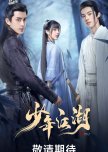
feels like the target audience is people who fetishize incest
So this was one of my friends' first cdramas (said friend only vaguely remembered it but had fun w/ it), and one day when we were talking about the current era of cdramas having polyam vibes, Wanru's Journey came up as a recommendation bc I'm a sucker for a triad. TBH the premise already turned me off from being into the triad since Xiao Ru is pretending to be Murong Zhuwan (since they look identical), so as far as any outsiders know her and Murong Chong are siblings.............. like. why are we doing a pseudo-incest romance?????? Cause (minor) spoilers but the show definitely has a Murong Chong x "Murong Zhuwan" agenda. But I've watched things where I didn't care for or even outright hated the main pairing and still had a mostly enjoyable time so I was like "the whole mistaken identity situation is actually kinda interesting if you ignore whatever is going on w/ these two so I'll keep watching." Should've known that was a mistake given the pseudo-incest lmao.Basically there's this whole enemies to lovers vibe going on with Murong Chong and Xiao Ru where he's repeatedly threatening her life over relatively minor things but then she'll watch him in secret and be like "he's so handsome 😍🤤". It's uncomfortable. I finally tapped out bc there's a scene near the start of episode 6 of Xiao Ru having written (erotic?) fanfic about Murong Chong (and I think his friend Fu Hong? I don't fully grasp the details of what she wrote) and he tries to strangle Xiao Ru over this but they get caught by Fu Hong and Xiao Ru is lying on the bed and Murong Chong is like..... basically straddling her so Fu Hong is like "wtf is happening???????" and then Murong Chong gets up and somehow his belt slides off??????????????? and he's like "[nervous laughter] it's not what you think" and it's like...................... he thinks that's your sister.................... no one would be thinking you are having sex unless they think you are assaulting her............................ and then Xiao Ru makes her clothes all disheveled to accuse Murong Chong of just that and it's supposed to be a funny moment????????????????????? WHAT ARE WE DOING???????????????????????????????????????????????????????
Basically the writers are weirdos who had a lot of fun playing up the pseudo-incest. I don't recommend this.
Was this review helpful to you?
War Wuxia, actually not Romance
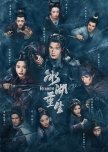
If you like real Wuxia and war politics you will like thisIgnore the bad reviews from people who
1) compare with season 1
2) compare with the book
3) compare with the previous casts
DON'T COMPARE. Be professional and non bias in your reviews, this is a drama and a new story in it's OWN RIGHT
However, despite the good story and acting, Chinese drama needs to shorten,it gets boring
Needs to simplify, people come for entertainment not to learn exam and memorisuze names
Chinese producers and directors need to stop trying too hard to make everything arty, like slow motion aerial views with wind blowing and poetry in every scene -,hello! GET ON WITH IT
All the cast are very good looking,both boys and girls, and acted very well
So in summary there's a lot of positive in terms of good story and good acting. Worth watching if you like Wuxia
If you are looking for fast shallow romance then this is not for you
Was this review helpful to you?
Nauseatinf roller coaster ride
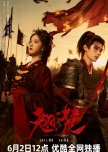
To be honest, this series started with a compelling premise: the daughter of a respected general becomes a Grand Princess caught in the deadly political struggle between the Regent and the King’s uncle. Add a handsome love interest and a disgraced prince, and it seemed like all the ingredients were there for an engrossing historical drama.Unfortunately, the writers became so obsessed with plot twists that the story lost its way. Watching this series felt less like following a well-crafted political intrigue and more like riding the biggest roller coaster at Six Flags except every climb was followed by another unexpected drop, twist, and loop.
Every revelation was immediately replaced by another. Just when you thought you understood someone’s motives or identity, another twist turned everything upside down. Nothing was ever what it seemed until the very end, when every secret was suddenly revealed. It tried to be the perfect whodunit, but instead became so convoluted that it was exhausting to follow. I found myself spending more time trying to piece together the plot than becoming emotionally invested in it.
The romance, which should have grounded the series, felt like an afterthought. Instead of driving the story, it merely passed through it. Even more disappointing, the male lead often felt like a supporting character in his own drama.
Ironically, 24 episodes should have been enough to tell this story, yet so much time was spent on unnecessary twists that the emotional arcs and supporting characters never had the room to breathe. By the finale, I wasn’t surprised by the revelations, I was simply relieved the ride was over.
For viewers who enjoy nonstop plot twists and intricate palace conspiracies, this may be entertaining. For me, however, the series sacrificed coherence and emotional depth in favor of constantly trying to outsmart its audience.
Was this review helpful to you?
Chemistry that makes you melt
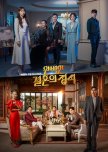
I rewatched it. And I never rewatch shows! I just love seeing a great love story happening AND evil people getting what they deserve. Now, the plot isn't groundbreaking and it is quite cliché. However, the writing is well done, the chemistry is groundbreaking and the acting is good, so you are still sucked into the story. The romance between the leads is truly what makes this show shine. Watching those two together is just *chef's kiss*. The way the relationship develops, the trust and care they have for one another is a must watch for romance-lovers.Was this review helpful to you?


