

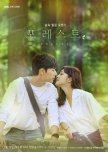
Didn't get quite what I was expecting from early descriptions though - so, it's roughly: FL gets sent to the country hospital as punishment, ML turns up with a view to buying the place up for a resort, joins the rescue team to get more knowledge, conspiracies happen, fires happen, bad people do bad things etc. :) I should write them for a living don't ya think? :-P
I enjoyed the main storylines and the romance between the ML and FL but there did seem a couple of times that the FL just decided to move on from a previous issue and forgive rather than it feeling like things had been properly worked out...
The bad guy was really quite deranged and I enjoyed (in a 'throw popcorn at the tv' kinda way) when he was on-screen.
There's lots of touching moments, since it's based around a village suffering from problems and a 119 rescue team.
Park Hae Jin had a commanding presence as always and worked will with the scenes and script, whether he was in mega business-man mode, loving boyfriend mode, or action-man rescue team mode.
Jo Bo Ah - this is the first drama i've seen her in so I need to see more (i'll do that, just for you all, i can take it :) ) to get a broader view but i'm tentatively impressed with what I saw. There were some aspects where she seems to be smiling as she delivers her lines that I didn't think smiling was quite the right thing - so it felt out of sync - but - I enjoyed her performance more overall.
I really enjoyed the side couple with the police officer Oh Bo Mi - while the male in that couple was ok, I thought her character and how she played it was brilliant and then the play-off between her and the FL was great too.
Overall it's a great watch, even if you don't gel with the story for some reason, there's some gorgeous scenery and just a generally quite different feel to it than other dramas due it taking place in the depths of the forests in Gangwon-do.
Was this review helpful to you?

Peak Comedy
this is probably the most ORIGINAL PLOT for a kdrama to exist in KDRAMALAND like come on she literally turns into a chicken nugget , I went into this with zero expectations , the cast is what drew me in to begin withand it's safe to say that I don't regret it one bit , I'd never laugh as hard I did when watching a drama , like it's the driest jokes and scenes ever but somehow it's what makes this drama so hilarious 😂😂😂
the casting is really well done and thought out, everyone did amazing and DELIVERED.....
so if you love comedies you will definitely not regret watching this drama I can guarantee it
Was this review helpful to you?
Was this review helpful to you?
To Catch a Thief
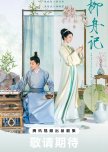
Cui Xingzhou, the mighty Prince Huaiyang has been trying to catch a thief, the slippery bandit Lu Wen for some time. He stumbles upon a comatose Liu Mintang and like all princes, he simply cannot let sleeping beauties lie. Convinced she must be the beloved mistress of his nemesis, he rescues her intending to use her as bait. Conveniently, she has amnesia and mistakes him for her husband ! Thus this cold and formidable fief lord awkwardly assumes the persona of an indolent and not terribly successful merchant who dotes on his wife. Miantang's true colors emerge as a determined and capable business woman with an scary knack for turning hairpins into lethal weapons. It seems Xingzhou may have bitten off more than he can chew as it becomes clear Miantang has secrets and hidden depths that she herself barely remembers. Meanwhile his elaborate charade and lies keep snowballing until eventually half the town is complicit. What ensues is the kind of comedy of errors that arises when hero syndrome meets analysis paralysis. Complicating matters, her memory and past life catches up with them just as they both become invested in their fake domestic bliss and fall for each other. How will they to resolve their past grievances and make a life together as their true selves?What I appreciate most about this drama is both Xingzhou and Miantang are grey characters who have agency if not free will. They are well matched in terms of cunning, intellect, ability and ruthlessness. I enjoyed watching them work against each other almost as much as I enjoyed their working together. As someone who loves dark characters, I wish they toned down the comedy and dived into a darker and more passionate exploration of their undeniable chemistry and stunning visuals. While Zhang Wanyi is an exceptional character actor, comedy is not his forte. His expressions and delivery is almost too textbook perfect and his comedic timing lacks spontaneity. He pauses for too long to let the punchline sink in when he should keep going as the audience already got it and is waiting for the next joke. The humor is straightforward and not that sophisticated so it needs to unfold at a fast pace to hold audience interest. To speed things along, I watched most of this drama at 1.25 speed, something I almost never do. The comedy also masks that Xingzhou is quite a dark character that does controversial things to Miantang, manipulating her to the point of gaslighting. Zhang Wanyi could have pulled off a darker portrayal in an absolutely riveting and charismatic way so that is an opportunity missed. Nonetheless, he is compelling as a powerful and complicated fief lord who to his chagrin, falls in love with the enemy; a most unlikely and unsuitable woman.
Wang Churan is a vivid beauty and her comedic timing is more instinctive than Zhang Wanyi's. Her portrayal of the amnesiac Miantang is natural and charming. However, her character transitions after Miantang recovers her memory could be better written and portrayed. Part of the problem is in the novel, Xingzhou crosses some lines that he does not cross in the drama. Thus Miantang's rage and sense of betrayal is disproportionate to what actually happened. The stabbing scene was undeserved and this kind of violence is off-putting and has no place in a story where the couple is not breaking up for good. Beyond that, Miantang is a worldly character, a rebel who was on fairly intimate terms with Ziyu without much regard for her reputation. She played in the same sandbox with the big boys so it was baffling to see her go so full on girl angry at Xingzhou, who was just doing his job. These are mostly writing issues but there is also something lacking in the acting. Wang Churan was not able to reflect the character's evolution and approached it as if Miantang became a different person. There are unspoken ways to convey that at the core, Mianting is still the same Miantang; that the person Xingzhou fell for is still there. A more experienced actress would have used micro-expressions and subtle character traits to achieve this. And then just as inexplicably after the angst drags on long enough, she becomes sweet and forgiving domestic Miantang again! Since Wang Churan is new to lead roles and she is so lovely, I am happy to be forgiving. Nonetheless this diminishes Xingzhou as a character and made him appear no less a foolish, love brain than Ziyu. I am also left with a nagging concern that Miantang may be bipolar!
Even though this drama has some interesting and unique ideas and is refreshing in the way women are portrayed, I found it to be a bland watch overall. Despite some fun and memorable moments, the plot arcs are shallow and rehash well known battle for the throne tropes. Which is fine if the character arcs are well done but while the main characters are complex, they are dumbed down by the comedic focus. Miantang is inconsistently written; she starts out as a strong and independent woman who doesn't need to get married to have a fulfilling life. She abandons Ziyu's cause without a backward glance, abandons her revenge arc after a half-hearted attempt to infiltrate the palace, takes over an escort business before deciding she liked playing house best. At the end, I couldn't figure out what she was about. The character I enjoyed best turned out to be Shi Xueji. She finds so much joy in life's simple pleasures, is resilient and her quiet wisdom and dignity impressed me as much as Miantang's inconsistencies did not. I loved how the actress conveyed a layered character with deep and moving emotions via subtle expressions and a gentle smile that radiates with unbridled happiness. I also quite enjoyed Ziyu's character but the second couple was coma inducing and completely irrelevant to the story.
The drama finishes strongly at the climax in both the conspiracy and character arc but doesn't change the fact that despite its fresh premise it did not have enough substance to support 40 episodes. It would have been a more enjoyable watch at a tight 24 episodes or if they had engaged in a deeper and darker exploration of the characters. Nonetheless if you don't over analyse, it is very entertaining as a light romantic watch with phenomenal acting by Zhang Wanyi. My rating is 8/10 but I can see romance fans rating it a bit higher.
Was this review helpful to you?
Aged to perfection.
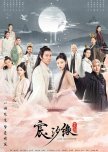
Since Love and Destiny was produced by the same team and resides in the same world, comparisons to TMOPB are inevitable. Pleasingly, the only connection is that it takes place earlier in the same 3L3W universe. This is efficient as less time is wasted on world building and explaining the tribes, hierarchies, time and other conventions. The story-line sticks to the 3L3W formula of an unforgettable love story that spans three lives and three realms. While TMOPB was an intensely passionate love story, this has more of a romantic comedy flavor. This is the story of a pure heart-ed young fairy who falls in love with the powerful and much older God of War. This relationship dynamic sets up for a different love story that again succeeds in delighting and captivating in a way that is now becoming a 3L3W brand.The plot is common for this genre (save the world or save the girl) and is this drama's biggest weakness. Those familiar with the director may observe the backstory of some leading characters (Jiu Chen, Ling Xi and Jing Xiu) were inspired by Journey of Flower - (Bai Zhihua, Hua Qiangu and Dongfang). That said, L&D is neither another TMOPB, nor JOF but a delightful story that stands on its own, albeit with a few cliche tropes. The three main arcs could have been better balanced - the first two took too long and did not leave much time for the final, most satisfying arc. There were too many (well executed) comedic fillers in this drama. This made it feel like "nothing's happening" or the relationship progressed too slowly.
The weak plot was compensated for by superb acting by the main leads. Veteran actors Chang Chen (Jiu Chen) and Ni Ni (Ling Xi) were perfectly matched. They are both gorgeous actors whose emotions and facial expressions transform and make them compelling in their appeal. The role of Jiu Chen was made for a Chang Chen that is aged to perfection - his sculpted bone structure and fierce expression exudes the aura of a stoic, mature and powerful God of War. Any suggestion that some young idol actor could have pulled this off is ridiculous. Jiu Chen is a formidable character that wears the lonely responsibility of keeping the realms safe. He moves mountains to force a win-win in his terrible conflict between duty and love. His instinct is to protect Ling Xi, to the fault of hiding the truth from her. He is alternately stern and helplessly indulgent with her. His impassive expression softens, he even smiles and becomes open and vulnerable only with Ling Xi. He is touchingly candid and unguarded when he confesses his feelings to her. With insight beyond her youth, Ling Xi recognizes the loneliness and burden inherent in Jiu Chen's role. She captivates him with her spell-blinding smile and mischievous antics; he is touched by her devotion and inept attempts to aid him. As their feelings grow, you can feel the invisible bond of their awareness and affection for each other. Ling Xi's best, most courageous moments are when she makes unbelievable sacrifices in order not to add to Jiu Chen's burdens. Each loves the other more than they love themselves.
In the first arc (20+ episodes), the Ling Xi wakes up Jiu Chen, who had been frozen for 50,000 years after sealing the Demon King. He is suspicious that such a weak fairy could have awakened him and takes her in, ostensibly to care for his health. The guileless and infatuated Ling Xi is delighted and disrupts his household with her comical attempts to entice him. She loses her senses over him and fires up his stone cold heart with her devotion. However, as God of War it is his duty to execute the young fairy with the ability to release the Demon King. Initially I found Ling Xi too subservient; a bird immortal with a bit of a bird brain. Yet Ni Ni's portrayal of Ling Xi was never annoying, indeed I was charmed despite my preference for stronger characters. She won me over when she bravely steps up to protect Jiu Chen and takes responsibility for her own life.
In the second arc (up to episode 50), Ling Xi is reincarnated as a mortal Lin Mo who has to go through three trials. She overcomes many challenges and becomes independent along the way. This is where Jing Xiu emerges as a manipulative, petty and sinister love rival to Jiu Chen. Episodes 30-40 can be skipped - this part was draggy and I struggled to empathize with Jing Xiu. This actor overacted the villain when he is actually supposed to be a grey character - he was so selfish, manipulative and creepy I was irritated at Ling Xi for not being wary of him. There were many unnecessary side characters in this arc that lingers too long on Ling Xi's coming of age. The best moments are between episodes 40-50 where Jiu Chen and Lin Mo fall touchingly in love (again). The final arc was the shortest and the sweetest. Ling Xi becomes a powerful high goddess who forces Jiu Chen to let her share his burdens and they face their enemy together.
The supporting cast was strong and there is a lovely secondary love story between Yun Fung and Qing Yao that is nicely intertwined with the primary. The villains did a decent job being evil and hateful but their motivators were typical: revenge, envy and obsessive unrequited love. The OST is very good but the CGI is quite dreadful. Overall a quality and enjoyable drama with a big budget. The bottom line remains as a love story, it boils down to the main leads. In this, they delivered - virtually all of their scenes brought a silly, lovesick and goofy smile to my face. You will enjoy this immensely if you appreciate leading actors and a love story that is truly aged to perfection.
PS - got a number of PMs re: comparison to TMOPB. I avoided directly comparing them but I also reviewed TMOPB and if you read that, what I think the differences are is obvious and reflected in the rating.
Was this review helpful to you?
This review may contain spoilers
Good start, poor finish!
To be honest, I didn't know from the start that we would get this series. I found about it in a random way, but when I saw that Gun had the main lead, I was super excited. When I watched the first episode, I felt that they would provide us with the sth different that the rest typical Thai BLs. Boy was I wrong....
Quick summary: A good start that led to a crappy finish.
CHARACTERS
Our main lead couple is Sun and Sky. Sky, who is portrayed by Gun, is the rich son of a ethical mafia boss. I know that "ethical" can't describe a mafia boss, but bear with me. On the other hand, Sun (Boat) is an orphan man that was put under Sky's father guidance since he was young, for a weird reason. After some incidents and as Sky's life is in danger, Sun is appointed as his bodyguard and follow him 24/7.
Our second lead couple is Pitch and Bank. Bank (Tenon), is the goofy childhood friend of Sky, and is familiar with Sky's background, and he attends the same university as SunSky. On the other hand, Pitch (Sugus), is a senior of the three boys. On an unrelated topic, Sugus has a powerful eyebrow game. That dude can do anything with his eyebrows.
Lastly, we have our two females in the series, Juno (Apple) and Toktang (Jane). Both of them are classmates with our trio and friends with Pitch. Toktang is a shy and down to earth girl and at first she seemed to be the love interest of Sky, as he seemed interested in her; while, Juno, is an honest girl who was openly interested in Sun.
PLOT
I am sure that most of us when we read the description for the series we already had an idea of what the plot is going to be like. Honestly, what I thought about the series was true. Every assumption and stereotype that I predicted was true. Bodyguard and young master are falling in love, their statuses won't allow this relationship, they fight, they reunite, happy ending. That's it. Okay, sure, for once the real villain in the series isn't another love interest, but it is an unethical mafia boss that wants to sell drugs on Sky's father territory, but he refused. So, the bad mafia boss tries to kill the son of the good mafia boss.
Though, I have to admit that the first episodes were exciting and I thought that finally we found a thai series that won't have stupid clichés. Well, as I said earlier, I was wrong. One cliché after the other, people falling in love with the other person in a spam of a second, fights between the couples for the silliest things, unwanted jealousy, and happy ending.
ACTING
Well... I might be an asshole... but... the acting... was bad....
First of all, let me say about the role of Gun. I was glad that in this series they didn't make Gun's role as the typical non-good-looking character (e.g. LBC in which everyone pointed out how plain and ugly he was); and instead he played for once a confident role. Even though I liked Gun's role, I didn't like his acting that much. I believe that he is better of with a comedy role. In the series, there were many scenes that required him to either cry or be sad; and for me it just didn't work. That being said, in my personal opinion, I feel that Gun's acting is getting better as the time goes by.
Moving on to Boat's performance, I have to admit that this was the first that I watched with him in the cast. I found that his expressionless face was kind of fun in many cases, but again I don't think that I liked his acting. One of the main reasons, is due to the script. I believe that as an actor he has many things to give, but he needs the right script and plot.
As for Tenon, I found him a little awkward in many scenes and I thought that his expressions could be improved. Taking into account his age, I think that in the future we would see more of him. Last but not least, we have Sugus. That dude he was a master in controlling his eyebrows. What the hell? I found his flow and personality better than the rest of the cast. However, he also had some awkward scenes.
I may point out the negative parts, but as an overall, I believe that the four actors could give us more, if they had better script on their hands.
MY OPINION
I know that nobody cares about my opinion, but whatever! To be honest, the description was pretty descriptive so I do not know why I am so disappointed with what I watched. The thing is that this series seemed to be different from the rest. We didn't have any cringe/stereotypical scenes in the first two episodes, we had a manly main lead, and a story that could give us many things. But then the third episode happened.
WHAT THE FUCK? It was the cringiest and the worst episode that I have ever watched. We have two people, that in the beginning Sky doesn't like Sun, but when he learned that he never relaxed or went to a nice place, he would take him. LIKE A DATE... DUDE!!!! Sky who doesn't like Sun, I REPEAT, takes Sun for a date, and they share their drinks, their food, they wear matching funny hats, take pictures, and Sky buys them a matching heart necklace, that each of them has one part of the heart. DO YOU HEAR ME SCREAMING? Dude, that was so cringy to watch. wtf? I haven't read the novel of the series, so I'm not sure when they were supposed to develop feelings for each other, but that was so tough to watch.
That leads me to my next point. As someone who was only watching the series, I wasn't able to understand when our main leads developed feelings for each other. It was like some scenes didn't make it to the final cut, and we were left with half the story. We don't get to know why Sky's and Sun's blood was so important till the last two episodes. Why? Moreover, if Sky's life was in danger, and many assassinations happened against him, why did he still attend the university and the university activities? Lastly, where is the police in those type of series? Sky was almost killed in the university's bathroom but nothing happened after that? WHAT IS GOING ON? I think that the screenwriters wanted to create more tension for the couple and just used everything they thought.
Also, I want to touch the topic of product placements. As you may have noticed, in the first episodes, there is no product placement. As someone who hates how the products are being showed in the thai series, I was happy with the absence of them. Until that fucking episode came. You know what I am talking about, the one in which they leave for the camping. DUDE! DONT! DO! THAT!
Anyway, that's it. It's a shame that it didn't work out in the end, but I didn't have any kind of expectations for this series.
Was this review helpful to you?

This review may contain spoilers
This series was absolute bull shit for so many reasons First of all its not a BL series so i dont know where this idea came from - all the two leads talked about was his scalp treatment there was absolutely no romantic interest or feeling's involved.
One of the female characters needed to go - she sexually assulted a man while he was drunk and they tried to pass it off as comedy - that shit aint cute it so disgusting and disturbing that they believe its fine for her to do it to him, but when its the other way round people start getting mad.
Thirdly the series ended without a conclusion- the couples didnt get together, their feelings for each other (the heterosexual couple) was not explored and in all felt like they just gave up with the series and called it a day. And to conclude this shouldnt even be called a drama/series when it was just a dermatologist advertisement
Was this review helpful to you?

Jun Yu Mi was perfect as the cute and flawed Han Yeo Reum. I like that she tried so hard to do what she thought was right. Eric Mun is exceptional as Kang Tae Ha. I had no idea he is such a good actor. He can kiss and is totally hot so he being a good actor is a plus. Sung Joon is one of my favorite actors. I have seen all of his dramas except I Need Romance 3. He does not fail to deliver as Nam Ha Jin. Thee other actors are good too.
Edit: I forgot to mention that Yoo Ah In is the last episode. Whoop Whoop
The music is really good.
If you would like to watch a more realistic drama on love, then I recommend this one.
Was this review helpful to you?
why yall mad for
I don't know why all of you stay hating this show. It's literally so simple and cute for people who need a break in between shows that are hectic and all over the place. Sure, the characters were a little show at advancing with their love, but at the end it was still all cute and was worth it in my opinion. I don't know what you guys expected from a 5 episode show where they're all each 15ish minutes. I'm actually really happy the show ended the way it did. The first season was very wholesome so it would have been weird if they included more "adult" situations into this one. I really recommend this and the first season to anyone who needs a little break and who needs a calm show.Was this review helpful to you?

The plot is very simple. It is about a teenager crush that evolves into a beautiful relationship once reciprocated. While it is simple, I think the show did a good job overall in portraying the different stages of the relationship. There is no unnecessary angst and the tone remains light and fluffy throughout.
The only thing that makes me rate the story lower is the lack of scenes showcasing ML thoughts. The drama could have used an extra episode to flesh out ML character more. His background story is way too short and he changed from brotherly affection to full on loving the FL so quickly that I find it a bit abrupt. It would be better if there are more scenes showcasing his hesitation and motivation. The novel did a much better job fleshing out his character imo.
The casts are definitely the highlight for me. Everyone fits their role so well and the acting feels quite natural. I love all the 3 leads, though I am most impressed with Chen Zheyuan. His eyes deliver so much emotion! The chemistry between the 3 leads are amazing. I definitely will be checking out their future projects.
I also really like the OST because they fit and added so much to the scenes.
Overall I really like this drama. It is well produced and I could tell a lot of thought and effort went into it. It was good from beginning to the end. Although I feel like they could use 1 or 2 more episodes, but overall I'm very satisfied with the series.
I would recommend this drama for anyone that likes romance, slice of life, and something simple in general. This drama has been my happy pill after a long tiring day at work for the past 2 weeks, so I would definitely missed it.
Was this review helpful to you?
Suddenly you had your typical K-Drama over-dramatic melo shit everywhere. Everything became a thousand times more sappy, illogical and emotional in a try-hard way. The pacing became shit. Plot-holes tumbled in and things that should’ve been huge just ended up being anti-climactic. And before you know it, Chicago ends on a note so “MEH” that it’s a disservice to the once precious drama. For sure, most people are probably going to love Chicago’s ending episodes too but for me since this drama was all about being subtle but powerful the extra turns it took, did not slide.
Here are some aspects of the show and my take on it:
-Yoo Ah In’s BeWhy inspired shitty haircut:
We are all superficial people to some extent and Yoo Ah In’s egg shaped haircut is no doubt a fashion disaster but there are some actors who don’t need appearance to make things work because their talent is enough. And Yoo Ah In tops the list. He just gets how to handle me and he always manages to wring my emotions like a masterful puppeteer. So much so, that at this point I think that he’d be able to perfectly emote even if he had a giant garbage bag on his head. He is spectacular as always here, playing two roles with different personalities all at the same time and excelling at both. And just for those of you, who simply cannot get over the hair-do, the drama comes with a sexy as hell past version of Yoo Ah In, with great hair and a lot of badass. ;)
-Weak female lead:
I’ve said this before and I’ll say it again. If there is one person who can sell me a damsel in distress it’s Im Soo Jung. I remember her brilliance in MiSa about 7 years ago and I still find her really likeable. Unfortunately because of her doe eyed look and an eternal stupid expression, she is often typecast into the “dumb but kind” roles. But I feel like despite that she always manages to shine through with her inner strength and true, she does exactly that in the first ten episodes. But after that, the writers started to confine her in a box again. Too much crying. Too much need saving. Too much “woe-is-me” bullshit. That her personality just falls under. And it’s a shame too because she is supposed to me this “bad-ass sniper” with like a trillion qualities and so sadly this whole thing made me realize that while I do like Im Soo Jung, I hate damsels in distress more. And soon for me, Jeong Sol turned from being adorable to annoying real quick.
-Han Se Ju:
A lot of people think that HSJ is just one of those “bad boys” who are actually bad guys but that’s just not true. Sure, the writers tried to force the image on him with the whole “wrist grabbing, temper tantrum throwing, macho alpha asshole” bullshit but it still isn’t true. Because Han Se Ju is an actual sweetheart. A passionate, sensitive and thoughtful man who can act like a complete petty toddler at times but an admirably strong old soul at others. For me, he was a character close to my heart ‘cause I know I’ve myself thought so many of the things that he believes in, I have felt so many emotions that he goes through and that makes him so relatable to me. He’s a beautiful man inside-out, with all his lows and trust issues intact.
Sound track:
While Chicago has a brilliant soundtrack and the show makers did get the play timing right most of the times, there’s one weird ass instrumental that they unfortunately play in the most poignant scenes in the later episodes, effectively ruining the impact. Tragic.
Bromance:
By far, my favorite bromance, simply because of how natural and heartfelt it is. It stays strong from the first episode to the last and soon became the only reason I continued with the show.
Other:
The romance is good. The side characters are endearing. The kisses are enjoyable. The antagonist does a very good acting job. The past and present weave effortlessly and are interesting to follow. The cheeky and often hilariously cringey supernatural effects are a delight. While the ending episodes are mediocre at best, the first ten are so emotionally powerful that at the end I couldn’t help but give it an 8.5, still.
Do I recommend? Yes. Definitely. Because despite its flaws Chicago in its core is a beautiful story about friendship, loyalty and the inseparable bond between three people that transcends time. This is a show that you absolutely have to give a chance to. It doesn’t matter whether you like it or not, it’s worth at least a try. This isn't a drama you should judge by reading other people’s opinion, you simply have to experience it yourself.
Was this review helpful to you?
I am not sure where to start with this drama as this is an amazing drama. Probably one of the best dramas of 2015 if not the best. I could talk about how great this drama is for a long period of time but I will try to make this review as short as I can.
First things first. I started watching this drama as soon as it came out because I found out about it a month or so beforehand. As soon read the synopsis I was hooked. I have never seen or heard of anything like that for a Korean drama. So the synopsis is what drew me in but seeing who was cast as the lead characters made me want to see it more. The only thing I was worried about was where they going to be able to pull off a drama like this. Well my worry went away straight after the first episode and left me blown away. Some dramas start really great but then start to slow down and others take a few episodes to get going. While watching D-Day not once did it slow down, it continued the momentum it started and kept it going through all 20 episodes. I never felt bored or tired and each episode left me wanting to watch the next one right away.
Story
The story for this drama as I said before is something that I have not seen or heard of for a Korean drama. I was worried how it was going to work out but it was done way better than I expected. The special effects and sets they had made it more realistic. What I really like about the story is that it is so believable. This is something that could happen and I think that is what first drew me to it. I am a person who loves romantic type dramas but what I like about this one is romance is not the main feature. The romance is there but it focuses on the disaster a bit more. You get to see how the doctors and other emergency workers deal with a disaster like this. If you are a person who loves romance in your dramas and likes shipping the main leads together then I will say this drama does have that. It does have some sweet and cute moments admits the tragedy that happens. So don’t worry about that.
Acting/Cast
The cast for this drama I think is perfect. I loved all the actors and their characters even if some characters where not so good. Kim Young Kwang does a phenomenal job in this drama. I first saw him in Love Rain and every time I saw him since he has played a supporting role or played the second male lead. So I loved that he was finally the main lead in a drama and boy did he do an amazing job. He is such a great actor but in this drama you can see just how good he is.
Jung So Min played the female lead and also did a great job. I first saw her in Playful Kiss and while watching this drama you can see how much she has grown as an actress. She plays a doctor in this drama just like Kim Young Kwang and does a great job at it. I really liked her character and also Kim Young Kwang’s. I think both lead actors had great chemistry together and I would love to see them both again in another drama.
Also loved the other actors in this drama. A few of them I recognized and had seen before and loved seeing them again.
Music
The music in this drama was so good. Most dramas have about 4-5 or more OST songs that have music and lyrics but this drama only had 3. But the 3 it had were so good and fit the drama perfectly. One of the best parts about the music was the instrumental/Score soundtrack for the drama. It was amazing to listen to and scored so perfect for the drama. So in all the music is really good and I have already bought the 3 OST songs that were released. I also plan to download the rest of the soundtrack once it’s available on iTunes and possibly buy the physical soundtrack as well. That is how much I just loved the soundtrack.
Rewatch Value
The rewatch value of this drama is so high for me. Actually while I was watching this drama I went back and rewatched a few episodes. This is a drama that I would defiantly rewatch from start to finish a bunch of times. I will probably watch it again very soon and this time introduce it to a friend. Since I watched this drama by myself it would be a great drama to watch with a friend or friends. Also if this drama comes out on DVD with English subs I will defiantly be buying it.
I highly recommend this drama as everything about it was so good. All that is left to say is if you are reading this and trying to decide if you should watch this what are you doing. Go watch it now. It is a must watch drama that should not be missed. One of the best or if not the best drama of 2015.
Was this review helpful to you?

 1
1 1
1Washed up and empty!
I hate to be this person, but what did I just watch and why did I continue watching ?!I binged all 10 episodes and it simply doesn't work. When I read the synopsis I was expecting tension, push and pull between the two contrasting personalities and all the basics that usually come with a contract relationship trope. But I got NONE. I repeat none.
Calling this a story might be generous. The nature of their relationship demands and justify NC scenes but at the cost of the whole story? If I remove those from each episode, we will barely have a minute or two left. And honestly, I didn't find them appealing too.
Both the characters were less “written” and more “present". They spent most of their screen time staring into the void, as if hoping a personality or a line of decent dialogue might eventually appear. It didn’t.
I fail to understand this choice because if you are working with such a painfully short runtime, wasting it on hollow pauses and meaningless moments is just weak writing. Instead it could have used those minutes to build tension, give some depth to the characters, or just something more.
Coming to the chemistry between them, somehow it didn't work for me but it wasn't the worst part about the drama.
I have seen both the actors in Sweetheart service, and I didn't dislike it to this extent. I hope they choose and get better projects in future.
Again, I wasn't expecting this to be a masterpiece and I understand low budget restrictions so I won't nitpick on the visuals and sound effects but honestly, this isn't worth your time even though it's barely an hour.
Was this review helpful to you?
 1
1The thundercloud that growled but only drizzled...
A promising beginning which concluded with a lackluster ending.When this drama started, the first four episodes were super intense and exciting. But as it proceeded towards the second half of the drama, it lost the angsty essence and circled around a vague story that was only full of misunderstandings, miscommunications and ego problems. Personally, Jeonghan's character seemed very interesting to me but not Iljo. And shout out to Iljo's best friend Suho, who never expected anything in return but stayed by his side when Iljo was nothing.
Some characters spiked my blood pressure, some only made me roll my eyes, so overall it's a decent drama that you can binge on as a one-time watch, but it won't leave any long-lasting impression on your brain (only the important scenes like— well iykyk 🤭)
Was this review helpful to you?
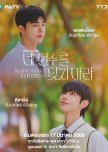
An uneven experience: sometimes frustrating, but still engaging enough to keep you watching
Never Forget Your Enemy starts with a premise that immediately grabs your attention, but over the course of its eight episodes, it becomes clear just how much that initial idea is both its greatest strength and its biggest limitation. The combination of rivals to lovers and amnesia works well as a starting point, creating an engaging emotional conflict between past and present. The reveal that the protagonists were never truly enemies, but rather victims of misunderstandings and poor communication, adds a more human layer to the story. Even so, the development doesn’t always live up to its potential, and what begins as something compelling gradually becomes uneven as the series progresses.The non-linear structure, shifting between different moments in the characters’ lives, is an ambitious choice that adds depth but also creates confusion. At times, the flashbacks genuinely enrich the narrative, showing how the relationship evolved and giving more emotional weight to the present. At others, the execution struggles to clearly distinguish between timelines, which hurts the flow and requires more effort to follow. This sense of disorganization becomes even more noticeable toward the final stretch, when the series expands into thriller elements, introducing more extreme conflicts that clash with the original tone and feel exaggerated or underdeveloped.
The writing is, without a doubt, the most problematic aspect. There is a solid foundation built around themes like memory, identity, and emotional reconnection, but the way these ideas are handled raises several issues. Amnesia, which should be the emotional core of the story, is treated inconsistently, both in how characters react to it and in how the protagonist’s journey unfolds. On top of that, the series tries to juggle too many subplots for its limited runtime, including stalking, revenge, unresolved secrets, and family conflicts, without giving any of them the depth they need. As a result, the narrative often feels rushed, messy, and at times even illogical.
The acting delivers mixed results, but not without clear strengths. The leads have strong chemistry, especially in more intimate scenes, which end up being some of the most convincing moments in the series. There is a natural ease in their physical interactions and an emotional sincerity that helps carry the relationship even when the script falters. However, technical limitations become more noticeable in heavier scenes, where the emotional delivery doesn’t always reach the depth required. One actor shows more confidence, while the other can feel a bit stiff at times, with a more limited range of expression. Even so, considering these are relatively early leading roles, there is clear potential for growth.
In the end, Never Forget Your Enemy comes across as an ambitious series that doesn’t always manage to support everything it sets out to do. There are undeniable strengths, such as the engaging premise, the chemistry between the leads, a memorable soundtrack, and well-executed intimate moments. At the same time, issues with the writing, narrative inconsistencies, and uneven execution keep it from reaching its full potential. It works best when approached as a romantic drama with touches of mystery, without expecting strict realism. It may not stand out as one of the most memorable entries in the genre, but it’s far from forgettable. Ultimately, it’s an uneven experience, sometimes frustrating, but still engaging enough to keep you watching until the end.
Was this review helpful to you?


