

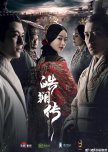
Excellent Acting and Production
This is the true story of the mother of China's First Emperor, Qin Shi Huang. How close this story to the real events happened more than 2,000 years ago is anybody's guess. However, many of the main characters in the story were actual people during that time. Since this is a true story, the "real romance" parts are limited. So if you are a romance buff, you may likely be disappointed.This drama depicted the arduous journey Hao Lan had gone to survive the various palace politics, scheming, back stabbing, both in the Zhao palace (where she was from) and Qin palace (where she was married to). She helped her son become the King of Qin, who ultimately became the First Emperor of China, unifying the various kingdoms.
The cinematography of this drama is epic, the acting is excellent, and the story is exciting. One can tell that the director and his crew put in a lot of effort into making this drama. Every detail was taken care of. Everything was done close to perfection.
I love the color palette of the scenes, especially the costumes, the interior designs and decors, and the gardens. I find myself binge watching a lot. However, having said that, I find the palace politics overwhelming, and at times, I could get pretty exhausted.
This is a serious, no nonsense drama. It can get quite dry for some people who are not into history. For me, I love history and I am especially intrigued by Chinese history.
Was this review helpful to you?
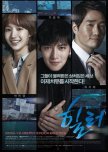
Coming to characters, Healer. God I love healer. I love how he's jumping around buildings and coming up with these exciting plans. I love what he does for a living and I love his little high-tech shack. I love that he's a loner. I've only watched Ji Chang Wook in Empress Ki other than this drama but I must say he is always a delight to watch.
Park Min Young. I must admit that the only reason I ever hesitated to watch this drama, it was because of Park Min Young. I've watched many of her dramas and I've generally not cared much for her roles. But it was Kim Nana in City Hunter that ticked me off. God I hate Nana. She's a bodyguard who needs a bunch of bodyguards. In fact, I think it would be better if someone locked her up somewhere far, far away until everyone's done with whatever they're trying to do. She seriously messes things up and then goes around acting cute about it. So, yeah, basically I was weary that Park Min Young is going to play a role like Nana here. But I guess 2015 is the year of Reinvention for Korean actresses (with Park Shin Hye also winning hearts for her performance in Pinocchio). Park Min Young not only did a wonderful job in this drama, her character Cha Yeong Shin was a delight to watch. There were a few times in this drama where I held my breath because I was afraid that Yeong Shin would make a terrible choice that would create a havoc and make me hate her. But she was so awesome at those points that it really made me love her character overall.
The rest of the cast was great too. My favorites were definitely ajjumma and Yeong Shin's family (her dad and the rest of the criminal staff). I really held my breath there towards the end when I had a feeling Ajjumma is going to die. My Eun Shi Kyung feels were returning to me, I was all set to cry. I'll never forget that moment of relief when I realized she will escape. Thank you writers for not killing her off. I wish they had shown an emotional reunion of mother and daughter though. The ending was just a little rushed. Or maybe it's just me never wanting Healer to end. lol.
The music was great. I have the whole album on my phone. My personal favorites are Eternal Love and When You Hold Me Tight. I like that song by Ji Chang Wook too, although I've only heard it a few times.
Overall it's a masterpiece and even though the ratings in Korea weren't all that great I'm so glad it's getting it's due on MDL (9.2 avg yay!) and other internet portals. It's doing well in China too, with Ji Chang Wook being one of the most searched Korean actors there these days. I guess a good story would always find it's worth one way or the other.
Was this review helpful to you?
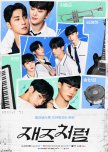
some things said or done can never be undone...
Overall: I'm pretty torn on how to rate this series. I thought it had a strong start but the writing/pacing ruined the series for me. This was adapted from a webtoon which I didn't read (it's on Lezhin Comics) and I reviewed the series on its own merits. 8 episodes about 30 minutes each. Airing on GagaOOLala & iQIYI country dependent. Ep 1 GagaOOLala link (vpn to Taiwan works) https://www.gagaoolala.com/en/videos/4176/jazz-for-two-2024-e01 Episode 1 iQIYI link https://www.iq.com/play/jazz-for-two-episode-1-xiat5zva94?lang=en_usContent Warnings: past death (see comment for another one), manhandling/injury, mental health struggles, bullying, non con touching, sexual assault, non con kiss, grief, beaten up/violence, parental abuse, homophobia, manipulation
What I Liked
- explored more serious topics such as internalized homophobia
- some mystery of what happened in the past
- A Shoulder To Cry On cameo for 2 characters
- the blue haired guy's friendship with the two leads
- that Se Heon wasn't a total pushover
- the jazz music
- the bike riding in episode 6 was funny
- sweet moments mostly in episode 6
- showing taking medication and going to therapy for mental health struggles
- the revelation at the end of episode 7 was interesting but not enough time to fully explore it
- the final kiss in episode 8 was well done
- production value
Room For Improvement
- failed redemption arcs for multiple characters, they needed to tone stuff down if they wanted me to root for their romantic relationships, one "I'm sorry" was not even close to what was needed for what those characters did, they also needed to shorten the length of bullying because a character was a jerk for five episodes and then again for part of episode 7 (and the writers leaving out a character repeatedly kicking/beating up another character many times in episode 7 flashback did not escape my notice though it seems like they wanted viewers to forget that part)
- pacing, there was way too much time searching for an apartment but then the ending episodes were extremely rushed complete with a 3 year time jump and no sign of a few characters, they had too many relationships and it meant not enough time on any of them
- cliche poor communication/noble idiot trope (thankfully it didn't last long)
- multiple dead fish lip presses/blocked kisses
- started with a confusing flash back/forward (later realized it was a flash forward)
- exposition dump/voice over in episode 1
- cliche female character pursued a disinterested guy (she did eventually stop/apologize indirectly)
- nonsense stuff including a bar only having milk or water as non alcoholic options, they'd have juices/sodas to mix with the alcohol to make drinks, (let me know if it's common to have only beer/wine at a bar in South Korea and I'll remove this)
Thoughts on Bully Characters/Their Romantic Relationships
Sometimes these characters and their dynamic work for me and other times they don't. Here are the factors that I'm thinking about. The first response is the lead couple and the second are the second couple.
1. does the reason why the character bullies the other character make me empathize with them, note that there is never a good reason to bully another person but whether or not I can empathize with them is important (kind of and no)
2. how severe was the bullying (verbal/mild physical/sexual and severe physical)
3. how long did the bullying last (we don't really know times but first 5 episodes and then some more for 1 and seems to have been an ongoing long term thing for the other)
4. is there some kind of apology/amend making (just 1 verbal apology and just 1 verbal apology)
5. is there character growth (maybe a bit for both but not really shown)
6. do I believe that the characters will stay together in a happy romantic relationship (maybe and no)
Was this review helpful to you?
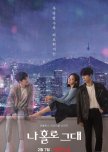
The story is one that fits my ideal show. I love when it's not your average normal romance, there has to be something different. The difference was having one actor playing two characters. One a hologram, one a human. The story was cute. It has only 12 episodes unlike the usual 16 or 32 but it did not feel short or rushed, it was well paced and you don't really feel bored waiting for the next moment.
The two leads were cute together. The chemistry between them I felt was believable. I enjoyed seeing how someone who has facial blindness interacted with A.I. It was interesting how A.I could really help someone who has these sorts of disabilities. Technology is a main part of this, and we saw how it can be used for good or evil.
The story itself was unique, others may say it would be unbelievable and cliche, especially with the facial blindness trope we always see, but it felt different. The story had good mystery to it and it was hard to predict how it would end.
One bonus is, there really isn't any usual second lead syndrome in this one. Usually k-dramas always have to have another guy, but since the main actor is the two male characters, you can actually feel content with the ending and not feel like a guy has just been thrown off to the side.
All in all, I think it could be worth a try if you enjoy plot lines that aren't the usual lives we live day to day. It isn't a show that everyone will love, but it definitely one I recommend and definitely will watch again when I need a good sci-fi romance fix.
Was this review helpful to you?
This review may contain spoilers
Don't Forget Your Dream, Don't Forget Your True Self...
Master of My Own is one of those polarizing dramas where many viewers lauded the show as one of the best C-Dramas of 2022, while others criticized it for being too slow or boring. For me, I enjoyed this intelligent and inspiring show, and I think it is misunderstood and under-rated on MDL.Instead of being a typical rom-com or other more established genres like melodrama or horror, MOMO is a "slice of life" show, which concept is much hazier but provides a different kind of enjoyment especially when the viewer can relate to the story.
MOMO's appeal for me is how well the show depicted the everyday experience, the recurring themes of family and friendship, the struggles of daily life, and the stark portrayal of the good and bad sides of human nature. I also appreciated how the screenwriter and director teased out the characters' personalities, thoughts, emotions, and motivations by effective use of good dialogue, music, meaningful gestures, and props.
The story centered around Ning Meng, an ordinary young woman working towards her dream. There is a certain maturity about this drama, as it beautifully and realistically portrayed the growth, the angst, the resolution, and ultimately the success of our FL in her personal and professional lives. Ning Meng was hardworking, optimistic, plucky, and intelligent. Through talent, effort, good luck, and lots of faith in herself, Ning Meng navigated with grace and determination through the world of capital markets and investment.
Finding love with the ML, Lu Ji Ming, along the way was the icing on the cake, but that was not the show's focus. The main couple's romance was a slow-burn one. It started with them being on unequal footing, to one of friendship, and finally culminating in a way that I found satisfying.
Our main couple's journey was engaging for me, as they went through different experiences and ended up on the same path, working towards common life goals. As Ning Meng's confidence grew, Lu Ji Ming's ego took a beating. As Ning Meng's career took flight, Lu Ji Ming's crashed. Throughout it all, both showed worthy character growth and development. In this show, the main characters' little and large struggles and triumphs were well-written, executed, and acted.
Lu Ji Ming started off as a chauvinistic jerk boss who disparaged the FL's aspirations to be an investor. Shown initially as a successful investor who obviously thought that he was superior to everyone else, it became apparent that Lu Ji Ming was a quietly generous person who cared about loyalty and principles. Still, even though he had some redeeming moments as he showed concern, advised, and protected Ning Meng in his own arrogant way, I find it most gratifying that Lu Ji Ming did not end up with Ning Meng early and easily. Our poor ML had to struggle through some humbling moments first, but Ning Meng was there to support and encourage him.
The show hit the jackpot by casting Seven Tan as Ning Meng and Lin Geng Xin as Lu Ji Ming. They had great chemistry, and the dynamics between them were entertaining. Acting-wise, I am impressed. Seven Tan is a gem! Her acting as Ning Meng left a firm impression, and I was blown away by her superb performance. Lin Ge Xing clearly has the acting chops to pull off a cold to warm character like Lu Ji Ming. His expressions were on point, and in this show, in that persona, Lin Ge Xing exuded a certain charm and charisma.
I am a sucker for tall men and significant height differences between couples, and this show used it very effectively. It is not enough that Lin Geng Xin has an impressive height; the show also gave us Liu Cang as the SML.
Liu Chang's character, Su Wei Ran, got a lot of hate for being the creepy SML who could not move on past his first love's betrayal. His actions were selfish, and his desire for wealth and recognition was condemnable, but at the same time, it was relatable to real life. I had high hopes for his character development, and he did not fail me in the end. Liu Chang did well in portraying this lost soul. With his eyes alone, he showed the hopelessness and defeat that Su Wei Ran must have felt between doing the right thing and fighting his own desires, insecurities, and jealousy.
Without a doubt, the entire ensemble was great. The way the characters interacted with each other and dealt with life in general reminded me of how the people I know and I would behave in real life. The characters were nicely developed and, being adults, actually behaved like adults. None of that childish drama that the writers usually throw in to create conflicts.
I wish I knew more people like Lu Ji Ming's best friend, Ceng Yu Hang, who with his high EQ, was the "voice of wisdom" and the catalyst for many good moments between our main couple. Also, watching Ning Meng's parents, Xiao Yang and Xiao Song, and their funny interactions with our couple was time well spent. Not only that, there was a message of female empowerment with wonderful supportive relationships between Ning Meng and her best friend, her colleagues, and her boss, Shi Ying. Shi Ying was a true role model, and I would have loved to have a mentor like her.
The clothes and makeup also stood out for me because the show did not go for an idol drama feel with overdone makeup or avant-garde outfits. The actors looked normal, good-looking nonetheless, but refreshingly ordinary. I like how they styled Ning Meng from beginning to end. She looked cute in her glasses, albeit a little dowdy. It was nice to see how she naturally and realistically improved her outer beauty as she started to pay more attention, like using contacts, changing her hairstyle, and wearing more stylish outfits.
Finally, to top it off, the soundtrack was memorable for me. The way the show wove the songs and background music into the story was fitting and set the scenes and moods perfectly. Enclosed below is the link to the OST list, and I also included the link to the heartwarming song played in the background as Su Wei Ran reflected and pondered about his future.
Overall, I recommend that you try this drama out and see for yourself. Thematically for me, MOMO is a show that encapsulates life in many aspects and topics. It touches upon self-identity and personal growth, love (romantic and familial), friendship, respect and loyalty (to self, family, and principles), societal obligations and problems, the balance of power, wealth and inequality, and more.
https://www.youtube.com/watch?v=W0ynz1wLE-k
终于可以说出那句我爱你 I can finally say that I Love You - 谭松韵 Seven Tan
寓言 Fable - 希林娜依·高 Curley G
甜蜜来袭 Tian Mi Lai Xi - 王赫野 Wang HeYe
那么多 So Much - 金玟岐 Vanessa Jin
寓言 Fable - 田园 TianYuan
那么多 So Much - 姚婷婷 Yao TingTing
https://www.youtube.com/watch?v=kGDeerbW5z8
夜空中最亮的星 The Brightest Star in the Night - 逃跑计划 Sky Escape Plan
Was this review helpful to you?
 1
1Is there A REASON not TO WATCH IT????
First of all, talking about the story of this drama, it is nothing special, you might have already come across this kind of story trope - but what makes it so special is - we all know it is Lin Pei Yu's novel based drama. Her writings may not be unique(my opinion....no offense LOL) but the way she portrays the story makes it more interesting and gives you a feeling that this is the first time that you have come across something like this. Aslo, the character development.......oh! tell me about it......I can talk about it the whole day hahahaha. Each and every character is given its own importance. She defines every character to be so adorable.So yeah, If you like Lin Pei Yu's previous works(We Best Love 1 & 2, My Tooth Your Love, Few of HIStory series) then have no second thoughts, watch it you will definitely love it!!!
Now, coming to the acting. I feel that the actors have done a good job but I felt like they can do even better. According to me, the actor who portrayed Ai Di's character slayed it!!! He stood out the most because his character is the most mature character I have come across even though he was just 18. OMG!! he understands when to make a move and when to not....so mature.
Also, at one point of time I thought the story is not progressing at all but at another point of time I felt that the story is just going fast paced. Yeah! The stability and the balance in the flow of the episodes is not well maintained(acc to me). If you are binge watching it you might not feel this way tho. But I have no complaints nevertheless.
I felt that the leads(main leads and the second leads) have great chemistry and the team tried their best to portray it. But my only concern is that the chemistry could have much more better. Still a big kudos to the team and actors for giving us this enjoyable show.
You can just understand the gist of the story if you watch the trailer. Maybe not the entire story but you can know the genre and the elements like what you can expect from this drama. Even if you think few elements are not your type like the Memory Loss stuff or the Time Skip stuff, I still suggest you watch this drama because this drama is more that what you think it is...So Give it a shot!!
PS - Have no Second Thoughts. It is worth your time. Go WATCH It!!!!
Was this review helpful to you?
Amazing Romance with Adorable Alien and Hot Man
This is absolutely an adorable drama. Light-hearted, cute, simply makes one laugh out loud for the silliness.Wan Peng, playing the role of the alien girl, Chai Xiao Qi, looks like your next door neighbor's daughter with uneven teeth. It is precisely this look that makes her so adorable, pure and authentic. As an alien from another planet, she has never experienced love as we humans do on earth. All she's aware of works in high tech systems and codes. So while on earth, she is super sensitive to opposite hormonal beacons and strongly attracted to them. Despite being an alien, she is kind, upstanding and fair. New to me, but I must say Wan Peng is such an excellent actress and she nails the role perfectly. She is simply natural and convincing.
The male lead, Hsu Thassapak, plays the character Fang Leng. Appropriately named, Fang Leng is very good looking, cold and emotionless, with a loving heart for his little half brother. When their paths cross, the events that followed Chai Xiao Qi the alien and Fang Leng are hilarious, sweet and sexy. Also as a new actor to me, Hsu Thassapak is extremely good looking and hot with a perfect physique. Every move he makes is simply elegant and classy. He is such a wonderful actor and I'll be watching out for his new dramas.
Fang Leng has an unflattery name of being a casanova or a playboy, as he has a condition of not remembering or recognizing any women he dates after a rainstorm. Gradually, unaware of his own emotions, Fang Leng falls in love with Xiao Qi. Despite his condition, he does not forget Xiao Qi.
And for Xiao Qi, her goal is to retrieve her transponder so that she can return home to her planet. But no one can control love, not even for an alien; she falls for Fang Leng. She is tormented - to leave her love or stay and be away from home forever.
I love the relationship between Fang Leng and Xiao Qi, both caring for each other but at the same time, trying to hide their concerns for each other. I also love the relationships between Fang Leng and his little brother, and Fang Lie with Xiao Qi.
And of course, there are the antagonists, Fang Leng's employee, his ex-girlfriend, his step-mom and step-mom's brother. However, whatever schemes they come up with trying to hurt either Fang Leng or Xiao Qi, somehow, one way or another, the schemes are never successful.
Oh, have I mentioned the CGI tortoise? It's so adorable and well done.
This is a lovely drama to watch to help with my withdrawal syndrome from "The Untamed". Great chemistry. Must watch.
Was this review helpful to you?
This review may contain spoilers
Aaaaaabsolute Disarseter
This, I imagine, is what the first draft of the script for "A Perfect Match" looked like:Scene 1.
[A wet dream.]
[Morning wood.]
[Lingering shots of Xiao Nan showering. Ummmm…. Aaaaaaaaabs.]
[Lather. Rinse. Repeat.]
[Product placement.]
[Dead parents.]
[Gran sad.]
Scene 2.
[Nan's late for an interview. Saves a girl.]
[Boss bad. Girl his sister.]
[Product placement.]
[Dead parents.]
[Gran sad.]
Scene 3.
Evil woman: Flirt with me. I’m the straight devil.
The Villain: I will, baby. Now fuck off, Nan, you perfect-bodied handsome god, you.
[Note to casting: Make sure the villain is the ugliest member of the cast.]
Xiao Nan mewls.
[Lingering shots of Xiao Nan (and the villain) showering. Ummmm…. Aaaaaaaaabs.]
[Lather. Rinse. Repeat.]
Scene 4.
[Xiao Nan and The Boss meet, get drunk, and talk about...]
[Dead parents.]
[Lingering shots of Xiao Nan showering. Ummmm…. Aaaaaaaaabs.]
[Lather. Rinse. Repeat.]
[Product placement.]
[More product placement.]
[Near kiss. Even more product placement.]
[The little girl is a brat.]
Director’s Note: All very well, but where’s the dialogue in this?
Scene 5.
[Introduce a supportive fujoshi.]
[Product placement.]
[Yes, this whole episode is for product placement. It's called multi-level marketing.]
[Lingering shots of Xiao Nan showering. Ummmm…. Aaaaaaaaabs.]
[Lather. Rinse. Repeat.]
Scene 6.
[Boss and Xiao Nan play tennis.]
[Both take their tops off, for no apparent reason.]
[Ummmm.... Aaaaaaaaabs…. Peeeeeeecs… Niiiipples....]
[Boss has an unexpectedly hot body.]
Xiao Nan's Thirst: That tattoo! Wreck me daddy… Destroy me king…
Xiao Nan: I think I might fall in love with you. So, I'm going to go.
Boss: I like you too, so I'm going to let you go.
[Brat sister screams.]
[The villain wants a second serving of Xiao Nan.]
Everyone: Who doesn’t?
Scene 7.
[Brat sister screams again.]
[Xiao Nan shows he can bitch-slap.]
[The villain wants a rematch with the boss. They play tennis. The boss wins. Obvs.]
[The hotties kiss. Finally.]
[Gran sees.]
[Gran sad.]
[Fujoshi consoles.]
[Product placement.]
Director’s Note: Seriously. Will there be any meaningful dialogue in this show?
Writers: Aaaaaaabs…olutely not.
Scene 8.
[Gran sad because boy loves boys.]
Gran: You a whore?
Xiao Nan: No....
[Cut to Xiao Nan, who's now having rampant, rambunctious sex with Boss.]
[Camera cuts back to Gran again, who’s suddenly happy, for no reason whatsoever.]
[Product placement.]
[Lingering shots of Xiao Nan showering. Ummmm…. Aaaaaaaaabs.]
[Lather. Rinse. Repeat.]
Scene 9.
[Tennis match. Someone wins.]
[The villain creates a conflict. Let’s see, he pretends to be injured so that the boss can be jealous?]
[Boss jealous.]
[Lingering shots of... ]
Writers: Wait. What the fuck? Where's the shower scene? What's going on?
Director's Note: I think we've had enough showering, don't you?
Writers: Aaaaaabs... so.. fucking... not!
Scene 10.
[The leads reconcile.]
[Xiao Nan becomes a wife and a cook.]
[The kid's still a brat.]
[Gran's a bit useless.]
[Beach trip. Shirtless frolicking. Ummmm... Aaaaaaaaabs.]
[Product placement.]
[They all live happily ever after... in a surprisingly tiny flat.]
Note from the Producers: What?!?!? That's it? The final scene is not of the boys showering together? After all this fluffing, you won't even finish us off?
Verdict:
This is one of the worst shows I have ever seen. I loved it.
Reader’s Digest:
DO SAY: sPectacular...
DON’T SAY: exPectorant...
Was this review helpful to you?
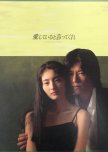
First let me start off by saying Etsushi Toyokawa as the handsome, deaf-mute artist Sakaki Kohji will stir your heart. A wonderfully emotive actor, I just love performers who can express a million feelings with only their eyes and this guy totally nails it. It’s not possible to look at him and not be moved. I thought the female lead went a little overboard with all the ‘aegyo’, but thankfully she toned it down a bit toward the second act. Once things took a more dramatic turn in the latter part of the drama I could see that she had some good acting chops, but unfortunately the material she had to work with was a disservice to her character. Supporting cast were like pestilence, especially Shiori and Ken, but in some scenarios Hikaru too. I was too annoyed by them to care about how they deliver. I just wanted them to go away.
Acting aside, this love story just completely captures you away. I enjoyed watching the unique challenges the male lead's deafness introduced to his life and relationships. The Japanese, as per usual, are masters in depicting regular everyday life in all its sweet mundanity. No flash of wealth, no chauffeur driven chæbols. Just an ordinary slice of life about two young people trying to figure stuff out.
Kohji and Hiroko’s chemistry is apparent from the start. They steam up the screen with every glance, every touch, every intimate embrace; and there's just something wistful & nostalgic about the exchange of love letters written by your lover's hand. I enjoyed the music - repetitive though it was, but certainly fitting and beautifully sung.
For a while there I couldn’t believe I was watching a Japanese drama, because for sure the Japanese just don’t do romance this good, do they? And an older one at that. When I found out the same writer who wrote Orange Days wrote Aishiteiru that pretty much explained it. The sweet sentimentalism, the pure headiness of falling in love, the slow build up of passion, it’s all there. Though this time around it’s the guy who has the disability, their love evokes those same warm, wonderful feelings Orange Days did. I was on cloud nine.
Sadly by ep 9 this setup starts to unravel. It’s not possible for Asians to give us a simple love story without all the nonsensical drama … can they? One hopes, but the sick feeling that blossoms in the pit of your stomach tells you something’s up, and sure enough the usual tiresome drama cliches start to rear their ugly heads. By ep 10 an otherwise well developed script takes a most illogical and drastic turn. Things go from bad to WTF in a minute, and by the final episode the show is irrevocably ruined. I was stunned.
It made it really difficult for me to decide on a rating because the first 8 eps and the last 4 eps, esp the final 3, felt like 2 entirely different dramas. And to add insult to injury the terribly ambiguous, unsatisfying ending left me feeling let down and bitter. Mostly, I felt really bad for Kohji. The guy got a raw deal. I wanted something better for him. He didn’t deserve all that crap. If I were to rate this drama based on the first 8 episodes it easily nets a 10. Not because it’s a masterpiece of any kind, but because the emotions resonate so well & so deeply. In the end my 9 rating here is also a reflection of this fact. Eps 9 - 12 get a 1 because ‘pathetic’ is truly an appropriate label for ensuing events that were totally unnecessary and foolish.
So here’s what I recommend, chingus. Go ahead and watch this show in its entirety at your own risk. But if you need to have or prefer to have a happy or relatively satisfying conclusion to a drama you’re about to invest 12 hrs of your life in, stop after the 8th episode. Arassoyo? Save yourself the grief and just create your own ending. I sure wish I had. Trust me, you’ll thank me later.
Was this review helpful to you?
"Don't judge the book by its cover"
First let me start this review with a mini rantThe only concern I see people having with this drama is that they said it normalize pedophilia. My defense on that matter is you would only consider a person a pedophile if he/she is occasionally attracted to children which in this case she's not because she was not attracted to him because he's a child. I know most will not agree with that argument but let's say you are correct and she's a pedophile. Does this drama normalize that psychiatric disorder? BIG NO. She's attracted to him but didn't take advantage in fact she was despised the whole time, the school, students and the society. The drama won't make you feel they are romanticizing that idea. As for the matter that it might affect the thinking of underage viewers. Do those kids have parents to guide them? Then what about stories like Robin Hood, mistress protagonist, serial killer etc. are those stories being normalize just because they were made? If you are inclined to call it a trash just by reading the synopsis then I am sorry but with that kind of logic I just couldn't help but think you are DUMB.
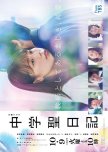
Chugakusei Nikki portrays the forbidden love between Hijiri, a middle school teacher and Akira, one of her students. The drama follows their story for the course of several years. There will be time skip in the middle of the drama, 3 years to be exact, when Akira is 18 years of age. The characters are well written, Hijiri was portrayed really well as an inexperienced teacher, adult yet not matured, and also Akira as rebellious and confused teenager. Side characters are interesting too especially Haraguchi and Shotaro, it's also interesting to see their love story develops. Their love is somewhat similar yet different. The plot is sensitive but the drama handled it tastefully, it is nowhere near as creepy as you might think. This show is also grounded to reality in that every emotion these characters portray is very relatable. What I also like is the pacing it's very balanced which makes every episode engaging. The drama also knows how to play with our emotions. The director is just so good on how to build tension and also how to end every episode. Expect roller coaster of emotions, it's highs is wonderfully high and it's lows is absolutely devastating, there's even couple of scenes where I was on the edge of my seat and to think this drama is not a thriller.
~ A good rain chooses the right time to fall and so it falls ~
~ When it comes to spring, the rain is certainly falling ~
~ It follows the wind and secretly enters the night ~
~ While the wind is blowing, the rain continues to fall until night ~
~ And moistens everything softly, without any sound ~
~ Silently, almost making no sounds at all, it makes everything wet ~
This poem in episode 1 summarizes the whole drama. It is a metaphor to the kind of love between Hijiri and Akira, a pure love similar to dramas such as Sekachu, Endless love series, Koizora, Be with you, Heavenly Forest etc. Pure love genre if you would know is what popularizes Asian drama. It basically portrays a couple that faced many obstacles. Pure love in sense that even after so many years they still long for each other. We haven't seen this genre for quite some time and I already see upcoming dramas with similar genre. This drama will trigger another pure love era.
Cinematography is just captivating. I love how they capture the green landscape on camera, the shot during sunset, falling rain drops, fireworks and that weird fish eye effect they always use. Those are not just gorgeous shots but also serve as a symbol to what these characters feel. That's beauty about Japanese drama, it is full of symbolism and just like what I always said, great cinematography is similar to great painting, it is not just beautiful but also captivates you, will make you move closer and examine the painting and not just say "oh this painting is beautiful". Music in this drama is just perfect, it underlines the mood and helps showing the emotions of each characters. It is a really great piece of background music. With great drama comes great ending song and "Prologue" by Uru is just like that. It's not just a great melody because if you read the lyrics it will make sense why they choose it as the ending song.
The acting is just brilliant but other than the acting, the casting needs more praise. They just casted right people for the roles, Arimura Kasumi for example, she has this cute, inexperienced image and if you watch the drama having that image made her portrayal of hijiri so effective. They also cast a rookie for the role of Akira, it a nice decision by them as it requires a certain rawness to the character. It doesn't mean Okada Kenshi is not a great actor though. He is indeed fantastic as he provides the intensity and angst to the role. They won't call him a super rookie is he is not. The side characters are also well casted, if you follow Japanese drama long enough you would be familiar with Yoshida you and Natsukawa Yui, they were both underrated actresses. Their characters played an important role to the story and they played them really well. Aside from Akira, it's the portrayal of those characters made this drama so much better.
Final episode will be tomorrow but I decided to make this review because what ever happen this drama will go down as one of the best Japanese drama I've ever seen and definitely my best Japanese drama this year. End game won't decide the rating this drama should get in my opinion because just like they said the journey is more important the than destination. More than just a drama but also an experience.
Edit
I've just watched the last episode and I don't want to spoil anything but it is indeed one of the best Jdrama ever!!!
Best Student-Teacher Romance Drama List
https://thatjapanesedramaguy.blogspot.com/2019/10/best-student-teacher-romance-japanese.html?m=1
Check my Blog for other reviews & other JDramas stuffs. (。◕‿‿◕。)
https://thatjapanesedramaguy.blogspot.com/
Was this review helpful to you?
This review may contain spoilers
Sweet, Cheesy, and Totally Hilarious!
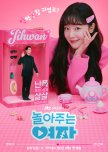
Rom-coms have always been my guilty pleasures—something I just cannot help but indulge in, like sneaking a spoonful of Nutella straight from the jar. The drama can be full of the usual tropes, and I’m typically fine with that because I like them. Such is the case with *My Sweet Mobster*. Some will say it is predictable and cheesy, and they would be right, but the show did the cheesiness and comedy so well that it won me over. I found most episodes enjoyable and funny. Additionally, the show had a compelling premise: the ML was an ex-mobster leading a group of ex-convicts and trying to stay on the straight path.The biggest draw for me was Uhm Tae Goo as Seo Ji Hwan, the ML. He completely surprised me. I had only seen him in *Save Me 2*, and I did not expect him to be so versatile in this drama. I was impressed by how he was able to transition from being scarily intimidating to being goofily love-struck. Uhm Tae Goo showed that he can do comedy, so I hope he will continue to explore that. Seo Ji Hwan was easy to root for. He was principled, led by example, and was admired by his men. I especially loved his interactions with his group of sidekicks who live with him. That dynamic seriously elevated the show for me, and in fact, I would say that was the best part of the drama.
As for the romance, the chemistry between the lead couple was not as great as I would have liked. Han Sun Hwa was fine as Go Eun Ha, the FL, but I was not won over by her character. Go Eun Ha was a content creator for children, and Han Sun Hwa fit the role—cute, bubbly, and pretty. However, there was something missing between the couple that did not make my heart flutter during the romantic scenes. There was no feeling of giddiness or warmth watching the FL's reactions, but it was incredibly funny watching Seo Ji Hwan swooning (in some cases, quite literally!), as he had never experienced love before. His antics, accompanied by the humorous reactions of his sidekicks, kept me laughing a lot.
Kwon Yul, playing Jang Hyeon U, the SML, was another surprise for me since I have seen the actor play more menacing villains in other shows. In this show, Jang Hyeon U was not as annoying as the stereotypical SML. He was persistent when appropriate but remained a gentleman when rejected, and his protectiveness made sense given the ML's background. Best of all, he underwent some character development, becoming a good friend to the couple, supporting them, and truly caring for their happiness. I appreciate that the show did not pair him with someone else just for the sake of it, although there was some implication of a potential romance for him.
The development of the second couple, Ju Il Yeong and Kim Mi Ho, was okay to watch, but Mi Ho's parents and, again, the sidekicks were the ones adding the most flavor to the good scenes. Honestly, the supporting characters deserved much kudos for making this drama a lot more enjoyable.
Recently, there seems to be a general struggle to get the pacing of dramas right, and *My Sweet Mobster* suffered from this as well. Some episodes started to feel like filler. It was as though the show could not bear to leave out all the comedy gold, so they squeezed it all in, even though the scenes did not move the story along. As much as I laughed, I also found certain parts rather draggy. Another downside was the main villain—I could not take him seriously. Even if this was supposed to be comedic, there was something off about him.
The wrap-up was nicely done. The resolution for the ML and his mobster ties left a good feeling, and the way the show ended, featuring the main group, was satisfying.
In terms of the soundtrack, it was good—mostly romantic tracks fitting for the more emotional scenes. The opening credit song was lively and reflected the positive and happy tone throughout the show, but my favorite was "Beautiful Woman" by Yu Jeongseok. It was just so funky and unexpected, but totally appropriate when played. For posterity, I included the links to the playlist.
https://open.spotify.com/playlist/6QLkDGAblKUfnW7tB6ywqX?si=d688c0d23fc2451a
https://www.youtube.com/watch?v=W-8m3l2VVxQ
Overall, I would recommend this show. For a rom-com, it was different, straying a little from the stereotypical rich chaebol heir falling in love with a lovely girl of a common background. The comedy was well done, and if you can deal with the cringey moments that are in almost all Korean rom-coms, then you may enjoy it as much as I did.
Was this review helpful to you?
This review may contain spoilers
No Need to be Hypnotized, This Drama is Simply Enchanting
This drama captivated me from beginning till the end. Everything I wanted to see in a romantic comedy is here, and then some! This review is strictly for the drama, not to compare/contrast with the manhwa "Prince, Don't Do This!" (王爷不要啊) written by Dong Man Tang, in which it was loosely adapted from. I am rewriting the synopsis below for clarification without spoiling the plot.STORY
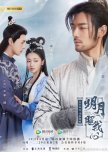
Princess Aimala (new country name is Ming Yue) from the southern country Xi Yue is forced to marry to Prince Zi (common name is Li Qian), the 9th prince of the northern country Bei Xuan. Both parties disagree but it is for the political alliance. Li Qian already has a marriage arrangement with his childhood friend Lady Qiao (Hui Xin), and Ming Yue has a lover General Yun Ci. Both dislike each other since the beginning they met. Ming Yue who is skilled in horse riding, shooting, and hunting is not a typical feminine lady according to her new country's custom, neither she is beautiful. Even the Emperor (Li Qian's dad) despises her. Li Qian is cold and reserved, and has no clue on women and how to please them. Ming Yue is his first love. Even then he is still unsure if his feeling towards Ming Yue is genuine or fabricated, because his wife has another unique skill: she can hypnotize him and she does it, a lot! The couple needs TONS of guidance on love and sex (yes that's right!) from their friends: the wise Kong Zhen, the playboy Jin Yu, the mischievous Kang Le, and the straightforward Tan Li. The story is not all rosy though, we also get to see inside power struggles and outside rebellions, tragic past unfolds, hatreds and betrayals, revenges and sacrifices, broken hearts and even deaths.
WHAT I LIKE ABOUT THIS DRAMA:
(+) It is a well-done medium or big budget show.
(+) No need character or story guidance or anything like that you usually need it for watching Chinese history/palace dramas.
(+) The story has a lot of features for everyone's liking: action-packed, mysterious background, steamy romance, hysterical comedy. It's not boring, it's fast or evenly spaced. I do not skip scenes or conversations though I do a lot with Chinese dramas.
(+) The story is not straight-line, has a lot of facts from the past, dreams, plot twist and surprises.
(+) Satisfactory ending
(+) Good looking cast from the main to the supporting ones (gosh even the musician Lan is stunning and the Empress is elegant)
(+) Adorable acting of Ling Mei-Shi as Ming Yue. Although there are more beautiful Chinese actresses, but the choice to cast this cute young actress as the outspoken, mischievous, and smart foreign royal princess is just right, either in funny, romantic, or sad scenes.
(+) Charming acting of Allen Fang as Lin Qiao. From cold and serious, to confused and suspicious, to romantic and playful, his facial expressions are just right. Also the fighting/martial arts acting. He is also a member of Chinese pop boy band M4M. He sang some songs in this drama (see OST comment below). And he looks better in historical drama than in modern day drama (his other drama is Childhood Sweethearts Pianist but he looks bland there)
(+) Stunning acting of Ni Han Jin as Yun Ci. Though lots of comments do not like him, I feel bad for the Yun Ci role. Though he is abrasive and aggressive but his broken heart and pain look real as a man whose lover is snatched away behind him. He is not only handsome, but has a great body, too! And FYI I do not have Second Lead Syndrome.
(+) Exceptional acting of Zhou Zi Xin as Hui Xin. I saw her in Put Your Head in My Shoulder drama as supporting role who also likes the male lead, but Hui Xin's love here for the prince is dangerous and devastating. The actress is capable to go thru yandere transformation from a gentle, submissive, elegant lady to a conniving, hateful, and dejected villain.
(+) Other supporting actors and actresses are just right playing their respective roles.
(+) Great cinematography. Camera shots and angles were just right.
(+) Breath-taking sceneries. Lots of falling flowers and snow rains. They could be real snowing scenes too because the drama was filmed during the winter months of January to March 2019. The filming location is at Hengdian World Studios, the largest film studio in China or even the world (http://www.hengdianworld.com/en/default.html)
(+) Beautiful OST from the drama opening and in special scenes. The opening song is "Magnificence" by singer Jian Hong Yi (who is also handsome). The main leads Allen Fang and Ling Mei Shi sang "The First Seen Snow". Allen Fang also sang "Wind, Flower, Snow, and Moon". A song specifically dedicated to the love of Yun Ci and Ming Yue is "Departure" by Jin Runji with mystical Middle-eastern tone.
(+) Elegant royal costumes, especially for the Princess and Princess. I love especially their outdoor gears and the Turkish/Middle Eastern robes Ming Yue and Yun Ci wear (in the manhwa Aimala is from Uyghur, the ancient Turkey area in Asia)
Was this review helpful to you?
Trigger Warning to those from abusive relationships. Not a fluffy romance.
I think the plot itself was good. The actors did fine.I was expecting a contract/forced marriage to gradually become a fluffy romance. Not what I got.
The ML actor was good looking but the character was a major turn off. That character has some serious mental issues. He was obsessive and abusive to the FL. The scattering of sweet moments did not make up for this. The dichotomy of those moments made it all the most disturbing. This might have been compounded by binge watching it in one sitting.
Was this review helpful to you?
‘She Shen Qu Yi’
‘She shen qu yi’ (舍身取义) literally means sacrificing oneself for justice. This drama is about this ideology. Everything the main characters do is based on this belief. The current political turmoil in the real world makes this drama especially comforting, giving hope that there are still many of these ‘xia yi’ people out there fighting for justice and sacrificing themselves. It's this ideology that brings tears to viewers' eyes and to love the characters.This drama has an amazing storyline with great wuxia. It starts with a nail-biting scene, and continues to be nerve-rackingly intense almost throughout. The intensity is so great that it’s hard to watch without a drama partner. Viewers are therefore advised to find a viewing buddy before beginning this drama. Having said that, viewers may also kick off the partner half way through as the drama slows down and the plot becomes less intense.
Zuo Qingci (Zhang Yao) is a sickly but brilliant doctor who wanders the earth, saving those who can’t afford a doctor. He also has a different identity and is the mastermind to save the Emperor and the kingdom from fallen into the devil’s hand. In his quest, he finds his long lost love, a girl who has given him meaning to live at the time when he loses all hopes. Together, they meet challenges testing their love and trust for each other, and in the end they’re rewarded.
The side couples’ stories are equally enthralling. To my content, the characters are well developed and their stories are well told, and even bring tears to my eyes. Other supporting characters are pretty well developed too and they really engage the viewers’ sympathy.
All the female characters are strong, determined, dignified and brilliant (there are no love sick silly girls who go all out to get the love from their men). Even with a physically sickly female character as in Xie Jiang Er (Xu Meng Yuan), she is sensible, strong and wise. Her words are comfort to all those around her. For many of the scenes, Su Yun Luo (Zhang Ya Qin) is disguised as a boy, Fei Kou Er. Her make-up is probably one of the best disguises I’ve ever seen in a Chinese drama with dark rough skin and tattered clothing, and no boobs. Zuo Qingci’s make-up reminds me of Mei Changsu (Nirvana in Fire) – white robe with fur. Probably such style gives the viewers a sense of simplicity and frailness.
I’m really impressed by the acting, in particular by Shi Yun Peng who portrays Zhu Yan, and Deng Yu Li who plays Shen Man Qing. They have totally convinced me and captured my heart.
The only qualms I have are perhaps how they've talked about and built up of certain mysterious 'da xia' (heroic) characters, and as soon as these characters appear on screen, they're being killed off without much effort. It's really bewildering because heroes are not supposed to die easily like ants. The overall suspense building up to the climax is ruined basically by the climax itself as it doesn't match up to the built-up -- it (the climax) is not exactly unexpected and spectacular; the climax is the anti-climax. After the climax, it leaves the viewers asking the question: "What is the point of all these?" A lot of the actions and decisions by the characters, seemingly futile, can only be explained by the "she shen qu yi" belief. Again, like many Chinese dramas, the ending is weak and feels 'forced' without much effort being put into it. The main characters become pedestrians, losing all their heroic appeals.
Despite all these flaws and plot holes, I've enjoyed this drama. It is through and through a wuxia story with all the wuxia elements and virtues – brotherhood, sacrifice, devotion, endurance. At the same time, it is interjected with romances to slow down the pace for the viewers to take a breather. The story is intriguing, the fighting scenes are beautiful and convincing.
If you're a wuxia fan, you'd love this drama. If you're a romance buff, you'd equally love this drama. Amazing story, amazing acting, amazing music, amazing cinematography. It’s a must-watch and deserves a rare 10/10.
Two thumbs up!
Was this review helpful to you?
 1
1An intriguing drama that captivates from start to finish!
I chanced upon “The Glory” (雁回时) airing in WeTV when I came home from a trip more than a week ago. The summaries I’ve read intrigued me, so I started it and I was hooked! I was binge-watching episodes during my free time such that I quickly caught up to the latest happenings.The story is about Zhuang Han Yan, who was sent away as a baby due to some supposedly prophetic words from a Taoist master, saying that she is the barefoot ghost (赤脚鬼) and her birth caused her grandfather’s death. She was raised by his father’s friend and his wife in Danzhou, both of whom mistreated her. Due to some turn of events, she was able to break free from them and come back to the capital, falling unconscious at the gates of the Zhuang residence in the cold winter. Her sudden return threw the entire family into an uproar, and she also caught the attention of Fu Yun Xi, the Vice Minister of the Court of Judicial Review, with whom she has a marriage agreement that was decided by their parents. These led to a series of events that unfolded one after the other, with secrets being exposed and the truths eventually coming to light.
STORY / PLOT 📚:
“The Glory” is a drama that encompasses many themes. It is a story about one woman’s quest for a family that had been denied from her when she was born. It’s about her quest for justice/revenge and her goal to break free from the “barefoot ghost” reputation that had followed her from birth. It focuses on the mother-daughter relationship, friendship, the sometimes complex family dynamics, and even romance, albeit the romance is slow-burn and somewhat subdued (more on that later). Then there are the political and investigative aspects in the case of the fallen Pei Da Fu, the powerful eunuch who, during his lifetime, had amassed a fortune and had many cronies in court, the most prominent of whom is the so-called adopted son.
As I watch each episode, I can feel the excitement and anticipation since there is no boring moment. It’s like when one episode ends, I’m drawn to continue, and before I realized it, I’ve been watching for hours and I’m way past my bedtime. Indeed, the twists and turns kept me on the edge of my seat. There are also a myriad of other emotions and reactions such as happiness, surprise, tenderness, sadness, intrigue, anger, and indignation. There are some emotional and touching scenes where I cried a bucket, e.g., between Zhuang Han Yan and her mother Ruan Xi Wen, between Zhuang Han Yan and Ah Zhi. Other relationships also tugged at the heartstrings such as Zhuang Han Yan and Chai Jing’s friendship, the push and pull between Zhuang Han Yan and Fu Yun Xi, the father and daughter dynamics of Fu Yun Xi and Ah Zhi, among others.
As I mentioned above, the romance between Zhuang Han Yan and Fu Yun Xi is slow-burn. There are definitely sweet moments and affectionate gestures between them. Some are subtle/indirect, such as longing glances and lending support behind the scenes, while others are more obvious, such as holding hands, intercepting marriage proposals, jumping in to save her from a raging horse, the hugs and the few sweet kisses, etc. More explicit displays of their affection is very much welcome, but I'm still happy with how the drama portrayed their relationship's progress. They started out with distrust and suspicion as they schemed and pushed their own agenda, developed respect and admiration for each other, vacillated between doubt and trust, and finally learned to trust and love each other.
As for the ending, I'm satisfied with how they executed it. Everything tied up nicely, and even if there is a question or two, they’re minor and does not affect my enjoyment of the drama. What Zhuang Han Yan said towards the end is a fitting wrap-up for this series: “Any place full of love can be my home.” (有情之地, 处处皆可为家) ❤️🏠
ACTING / CAST 🎭:
Chen Du Ling’s star shines very brightly here. She gave an outstanding performance as Zhuang Han Yan 👏. She conveyed different kinds of emotions through her facial expressions, eyes, mannerisms, and tone of voice (kudos to the voice actor too). Zhuang Han Yan is an emotionally scarred woman who has experienced a lot of pain and trauma during her young life. All these molded her into the kind of woman she is – smart, savvy, independent, strong but with a soft spot, kind and compassionate but not a doormat, and does not easily trust others.
Xin Yun Lai was able to portray the serious, stoic and somewhat mysterious Fu Yun Xi quite convincingly, though I would prefer more facial expressions in some instances. But one could argue that his character is supposed to be that way. I like how he poured his heart out when he confessed his emotions and love to Zhuang Han Yan in one of the latter episodes.
As for the couple’s chemistry, it’s palpable and they truly make a good pair. I can feel the tension from their first meeting. There is this push and pull in their relationship especially when they were getting to know each other, which adds to the tension (see above on their relationship’s growth). They are well matched, both in looks, wits and temperament.
Wen Zheng Rong is a seasoned actress who has appeared in many dramas. She gave an excellent performance as Ruan Xi Wen, Zhuang Han Yan’s long-suffering mother. She showed those raw and pent-up emotions brilliantly. At first, I was mad at her, and then I came to sympathize with her as I learned of what she went through all those years.
Yu En Tai nailed his role as the manipulative, self-serving and duplicitous Zhuang Shi Yang. Some think his acting is exaggerated and overly dramatic, such that it’s distracting and annoying. But I think that’s what makes his portrayal so effective. By the last few episodes, I was strongly rooting for justice to be served.
Jinna Fu was able to capture the essence of Chai Jing. She is Zhuang Han Yan's loyal and trusted friend, her support during her difficult days in Danzhou and even when she arrived at the capital. She is skilled in martial arts and protects her whenever she can. Their friendship is precious.
I couldn’t write this review without giving kudos to the talented and adorable Huang Bo Si, who played Fu Ling Zhi / Ah Zhi, Fu Yun Xi’s daughter with his first wife. Ah Zhi is such a sweet and loving child. She is so innocent, smart, and yet also mature for her age. She never fails to touch me with her favorite line, “When we miss our mothers, I can hug you, and you can also hug me” (我们想母亲的时候,我可以抱一抱你,你也可以抱一抱我.) 🥰. This kid has potential, and I look forward to seeing her in other dramas.
The other supporting cast gave great performances as well, such as: Wang Yan as the 2nd wife Zhou Ru Yin, He Hong Shan as the competitive Zhuang Yu Shan, Li Sheng as Noble Consort Miao, and Song Pei Ze and Chen Kang as Fu Yun Xi’s reliable right-hand men Mu Feng and Mu Yan, respectively. They add depth, excitement and some humor to the drama.
OTHER THOUGHTS 🔮:
I’m satisfied with the overall production and costume design. The costumes look good, and the color combinations are nice.
The soundtrack is excellent and fits the drama so well. Hats off to the team who chose the songs 👒! The ending theme song, “Blade” (刃), is Zhuang Han Yan’s anthem. The song is written for her! It sums up her journey fittingly. “Flame” (焰) is Zhuang Han Yan and Fu Yun Xi’s theme song, while “Cut” (剪) is a tribute to Zhuang Han Yan and Ruan Xi Wen’s relationship.
FINAL VERDICT ⭐️: “The Glory” is one of those dramas that left a lasting impression on me. It’s worth my time and attention, and I highly recommend it!
Was this review helpful to you?


