This review may contain spoilers
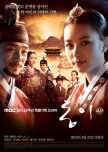
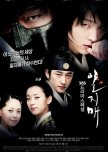
'Iljimae' has left me sitting in a puddle of my own (hypothetical) tears. Although the first 6 episodes are a bit slow, the story soon picks up with a quick-fire, rapid pace that will leave your heart feeling as if it had been pulled out and stamped upon. It was truly a beautiful drama.The story is similar to Robin Hood, but it's more sophisticated, powerful, moving and gritty than the traditional English folk tale. It is, without giving anything way, a revenge story. However, unlike most revenge stories, it has a heart. Our hero isn't some morally conflicted guy who can't tell right from wrong - in fact, the drama does well by clearly defining the hero's morals and making sure that he never strays too far away from them. It is beautiful to watch the story unfold and see our hero grow.
The father/son relationship was also incredibly moving. You can tell that Seo Dol has this completely unconditional love for Yong (despite him not being his biological son), and their relationship is so special and beautiful. I haven't seen a father/son relationship, like that, in K-Drama - ever. The impact Seo Dol and Yong have on each other just pulls on my heartstrings, and I am usually a person who remains highly unmoved by fiction.
I also have a lot of admiration for Yong's adoptive mother Dan-ee. She appears to be cold and indifferent towards both Seo Dol and Yong (and even her own biological son, Ja Dol/Shi Hoo), but that's just way of trying to protect herself if anything bad happened to either of them. You can tell that she truly loves them.
Overall, the story was very good; however, the romantic aspect of the plot really did weigh it down. I saw no true purpose, asides from being a romantic tool, for Eun Chae; yes, she was caring, kind and seemingly selfless (well, at least that is what she liked to think) but her character lacked development, depth and heart. Every time she would pop up on screen, the story would end up slowing down. She was an unnecessary character, in my opinion, and her romance with Iljimae was highly unconvincing. The second main girl - who actually had a more significant impact, and had a purpose in the story - had much more convincing chemistry with Yong and I would have preferred her to be his primary love interest. She was a brilliant 3-dimensional character - like Yoong - and she had true depth.
I didn't have a problem with Ja Do/Shi Hoo, though. I thought it was kind of weird how he loved Eun Chae (not a spoiler, this is pretty much obvious from the outset of the drama) because he believed her to be his sister, although she wasn't (again, not a spoiler), so that incest-but-not-incest thing kind of grossed me off him for a while. However, his moral conflicts and his struggles with his identity were quite touching, and although he didn't have the same impact as Yoong, I did sympathise with him a lot.
The drama does not suffer from bad acting at all. The cast fully suited their roles, and although Lee Jun-ki is partial to some overacting, it wasn't anything that detracted away from the drama. The actor who played Seo Dol was amazing - that guy put me through emotional highs and lows, and he had amazing chemistry with Lee Jun-ki. I actually felt like I was watching a father/son team whenever those two were on screen with each other.
The best performances, in my opinion, came from Lee Moon Shik, Lee Yong Ah, Lee Jun Ki and Kim Sung Ryung, Lee Won Jong (who was perfect as the delightfully self-serving and wicked, Byun Shik) and Park Shi Hoo. There wasn't really anything that I could call a 'bad performance' in the drama, and though I didn't like Eun Chae, Han Hyo Joo did what she could with such a bland character.
The only reason why this drama doesn't get a perfect 10 from me is because I felt that the romance did actually weigh things down quite a bit and whilst the ending was good, the slight openness of it did irk me off because I prefer more defined endings. (Especially after watching a drama for 20 hours!) However, it was a beautiful story with beautiful characters (and great action scenes) and I recommend it to all. It has heart, humour and depth and it has really perked an interest in the saeguk genre, for me.
Was this review helpful to you?
Fake it till you make it.
Regeneration is an excellent short suspense thriller. The narrative opens with a reporter He Shan witnessing the kidnapping of her contact Fei Ke. In classic Christie style, five strangers including He Shan are summoned to an island mansion for the reading of Fei Ke's will. They are each asked to share their memories of Fei Ke before the will is read. As implied by the homonym of his name, Fei Ke was not who he appeared to be; he showed a different self to each of them. As they piece together their memories, a complex, disturbing and moving picture of Fei Ke emerges.Jing Boran delivers a compelling portrayal of Fei Ke as a charismatic, amoral "fake it till you make it" kind of character. I don't think any other actor could have evoked such complex and contradictory reactions. At many points in the narrative when I wanted to absolutely despise his Fei Ke, I found myself searching for excuses for him. Yet when I could have and should have empathized with him, I found myself judging him. All of the characters have many layers that peel off like an onion. Like Fei Ke, they all have at least one moment of hesitation before they almost willfully make a fatal, life changing decision that takes them down the path of no return. By the end of this web of lies, the only story that moved me was that of the two lovers star crossed who ended up as collateral damage. Everyone else reaped what they sowed; even Fei Ke who believed his own lies to the point he deceived himself more than anyone else.
The plot pulled me in from the start and kept me wanting more with each reveal. However, at the point of reversal, changes were deliberately made to the original novel plot, likely to avoid book spoilers. I think this was big mistake. As a result, plot holes emerged and the final three episodes did not come together as well as they could have. In the novel, the group gathered because the main antagonist wished to make amends. That is simple, straightforward and easy to understand. In the drama, they gather as a result of a convoluted and rather far fetched revenge plot. Some of the character designs and motives were changed in to make this work. Some of it just didn't make sense as those parties could have achieved their objectives in more direct and effective ways. This is made worse by the melodramatic storm at the end where everyone does silly things for some cheap thrills.
Even though the ending was overly dramatic and could have been more tightly written it was dark and consequential. All things considered, this is a suspenseful and thought provoking watch with many unexpected twists and reversals. And If you need a shallow reason to watch it, Jing Boran looks yummy in every scene. My rating 8.0/10.0.
Was this review helpful to you?
An incredibly intense espionage thriller
Before getting into the review, here is some historical background for the film:The film is set during the Second Sino-Japanese War and WWII. There are several powers in play at this time: the Chinese Communist Party, the Chinese Nationalist Party or Kuomintang, and Imperial Japan. Imperial Japan invaded Manchuria (located in northeastern China) in the early 1930s and established the puppet state of Manchukuo. It was here where they hoped to establish a base from where they would continue their expansion into Asia.
In 1937, after many years of conflict, Japan occupied Shanghai, Nanjing, and Beijing. The Nanjing Massacre occurred at this time. After the fall of Nanjing, which had been the capital of the Republic of China at that time, the Kuomintang moved the capital west to Chongqing, under Jiang Jieshi's leadership. During this time, the Chinese Communist Party and the Kuomintang formed a temporary alliance, suspending the years of civil conflict between them, although their vie for power continued.
In 1940, Wang Jingwei, who was once a member of the Kuomintang but had always been in opposition against Jiang Jieshi, collaborated with Japan to establish the Wang Jingwei regime. They claimed to be the leadership of the Republic of China, when in fact they were a puppet government of Japan, overseeing the Japanese-occupied territory in eastern China, under Japan's control. They established their capital in Nanjing and used the Kuomintang flag. The Axis powers recognized the Wang Jingwei regime, while the Allied powers still recognized Jiang Jieshi as the leader of the Republic of China.
From 1937-1941, Japan had left a few neighbourhoods in Shanghai unoccupied, because that was where the American-British joint settlement and French Concession were located. Many people fled to this area to live at that time. After Pearl Harbor in 1941, the entirety of Shanghai became occupied by Japan. Many cities were bombed during these years, including Guangzhou, which experienced bombings for 14 months in 1937-1938.
During this era of war, which is also called the War of Resistance in China, espionage networks were established to try to undermine the enemy. Hidden Blade tells a story about these individuals.
---
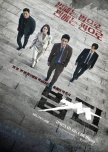
Even without knowing the historical context, Hidden Blade presents a visual feast of vivid characters and imagery. Cheng Er uses a non-linear narrative approach to reveal the stories of these characters. The main characters, Mr. He (Tony Leung) and Mr. Ye (Wang Yibo), are both enigmatic and morally ambiguous. We meet Mr. He, the charming man who hides intimidation behind a pleasant smile, and Mr. Ye, a rootless man who does not shy away from violence. Tony Leung does not disappoint as the veteran actor that he is, as the man who can tell stories with just his eyes or a slight smile, and he delivers a charismatic performance that reaffirms why he is such a revered actor. Wang Yibo delivers a phenomenal performance to match. Mr. Ye is a compelling character who is mesmerizing, perplexing, suave, and incredibly human at the same time. Wang Yibo does a fantastic job of portraying this complex character with mysterious motives, who seems to hide much more than he lets on behind his cool and composed appearance. He excels at playing a character whose inner turmoil is silently repressed.
The cast of side characters are also worth mentioning, with memorable performances from all of the actors. I take half a star off only because I feel that the female character stories could have been explored further. Zhou Xun makes a special appearance as Ms. Chen, and although her part is brief, she captivates the audience from the moment she walks onto the scene with her package of pastries and she leaves an emotional impact on the audience even in the short time that she has on screen. Jiang Shuying (Ms. Jiang) and Zhang Jingyi (Ms. Fang) are both charming as well, however their opportunity to showcase their strengths is quite limited.
The cinematography is well-executed and the attention to detail is remarkable. In one interview, Cheng Er reveals that even the ties that are worn by the characters are all actual ties from that era that have been collected. The music also compliments the scenes beautifully, adding further to the tension which Cheng Er builds so skillfully throughout the film. The choreography of the fight scenes is also top-tier and will not disappoint.
As a movie depicting times of war, there are several scenes that are difficult to watch and Cheng Er does not shy away from showing the cruelty of what people may have experienced. General content warnings without spoilers include torture, suffocation, death of an animal, implied rape (not depicted), as well as genre-typical violence that one may expect from an espionage war thriller.
Overall, the cast and crew have created a incredibly intense thriller that will keep you on the edge of your seat and leave you thinking about many scenes even after finishing the film. There are many parallels drawn throughout the film and it is a film that only gets better with rewatching as one lets the details marinate. At the end you're left with a lingering admiration for the individuals who struggled to free themselves from the oppression that they lived under. In doing so, they have sacrificed their own lives, their relationships, and even their own values in their effort to forge a path forward, towards a future where the nameless ones might once again stand in the sunlight.
Was this review helpful to you?
So why'd I rate it highly? Well, because the drama was brilliantly executed.
Story: The plot was unique unlike most dramas that tend to be a total cliche plus the story really had a deep meaning about revenge, hatred, redemption, love, and faith. But since this is a remake of a korean drama, the credit for the story should probably be given to the korean writer. :)
Acting/Cast: I think all of the actors did a really great job at portraying their characters and making the audience understand and sympathize with the characters' struggles especially Ohno Satoshi. Although some say that he was a little stiff, I think how he portrayed Naruse was the best direction for the character because with just his facial expressions, you can understand and feel what Naruse is going through emotionally. His best actor award for this drama was truly deserved by him.
Music: Jdramas usually have only one or two songs for the soundtrack but here, they had a variety of music that went with every scene smoothly adding tension to the drama.
Rewatch value: I only gave it a 6 because it's not something I'd want to watch over and over again. As I've said, it is a sad drama. It would probably take a month or two before I'd want to watch it all over again.
All in all, this drama, in my opinion, was one of the best that I've seen. Watch it so you can see! :)
Was this review helpful to you?
This review may contain spoilers
A coming of age & slice-of-life masterpiece that I will never forget
My review will contain spoilers, but I'll warn before spoiling, so you can read the safe parts before watching the show! Also, be ready, this is going to be long, but this drama is so excellent that it's hard to stop myself lolIf you look into my profile, you will know how many korean and chinese dramas I have watched. I rarely write reviews, but I feel like I need to write one for Northward (and also I've been obsessed with this drama since day 1 so I hope writing it all out will help me think of something else lmao).
If you're hesitating to watch this drama : go ahead and try it. This is a masterpiece. But you need to know two things before going : first, this drama was made to be realistic, no character is perfect ; second, while watching, you must analyze the characters yourself through their dialogues and actions and not let characters tell you how A or B is (even when they're talking about themselves). If you're confused about my second advice, here is what I can tell you : in life, you don't necessarily understand your decisions or other people's decisions. You can misinterpret other people, and misinterpret yourself, especially when you're young. So if a character tells you he did this for Y reason, or he thinks X, that doesn't mean it's true. You need to look at what they do and what they say when confronted to the situation to actually know how they feel about something. So, while watching this show, you musn't take everything at face value, you have to analyze their actions and dialogues to actually know the truth If you don't, you're likely to misunderstand them.
This is actually the reason why I loved this drama so much, and why I say it's a masterpiece. Weirdly, my favorite scenes are almost only scenes where characters fight or confront each other, because that's the moments when you actually understand the characters motivations and sufferings. Otherwise, they don't talk about it, just like we don't spend our time talking about what we feel or why motivate us to do X ou Y. We only talk about it in specific contexts.
I know a lot of people hated on Wanghe sometimes, and I get it, but he's definitely my favorite character here. He is so complex and realistic and a mess (just like 4D people are). He was a delight to analyze. I've been supporting him since the beggining and seeing his growth was such a pleasure.
Every character is interesting, very well written and complex, even the less important ones. I admire the screenwriters for how they managed to create such deep and realistic characters.
The cinematography is exceptional ; I was already a big fan of Yao Xiao Feng after seeing Tender Light, and his work here is just as wonderful. I am very peaky regarding the cinematography of the shows that I watch, so when I compliment it, it means it really is great.
I wrote an analysis of the first 28 episodes a few days ago ; you can find it here : https://mydramalist.com/740015-bei-shang#comment-21293186 .
--- SPOILERS AHEAD ---
I am SO glad it wasn't a sad ending. I was scared they would end it with Fenghua dying because she deserved so much better, and I felt like Wanghe had gone through enough deads. First Siyi's grandma, then Siyi's little brother, then his employee. And he blames himself for each of them. I can't imagine how much he would have blame himself if Fenghua died. He would've thought he should've made a move on her sooner to enjoy her presence more.
But thanks god : it did not happen. Everyone got the happy ending they deserved.
I am glad the drama didn't push the Siyi/Wanghe agenda too much. As I said in my previous analysis, for me, Wanghe never truly loved Siyi (as a woman). And I don't think Siyi feelings for Wanghe were very deep either. They probably were more linked to her fear of being abandoned, and she may have felt like Wanghe was "abandoning her" everytime she saw him with Fenghua (which made sense, because Wanghe never planned his future with Siyi, outside of his promises to "take care of her", that were, to me, the proof he had a savior syndrome with her). At the end, when they're all watching footages of the younger them and we see Wanghe and Fenghua's interactions, it's so obvious that Wanghe already had romantic feelings for her (even the friends make fun of them and say they're "having a date on the balcony").
I loved LOVED every Wanghe/Xingchi confrontation. As an anti-capitalist myself, I saw my own ideals in Xingchi's, and yet I sided with Wanghe, especially in the fight episode 31. To me, Xingchi thought too high of himself. He thought only his values were important, and that his employees were stupid to put their lives on the line just to get money. It was easy for him to dismiss Wanghe and them by saying they're "evil capitalist". But, in my opinion, it only sounded like a selfish character who imposed his values on other people. I would even say... he sounded like a priviliged character. Just like Wanghe said, it's easy to say money isn't important when you're not hungry ; but when you need money to survive and support your family, money IS (sadly) important. Aknowledging that doesn't make Wanghe the evil capitalist everyone thought he was (including Fenghua). On the opposite, he understood better than anyone that the true problem was political. People shouldn't have to put their life on the line to survive, but the truth is, they sometimes have to, and he could only make sure they would get correctly paid for it. What Xingchi did was foolish and selfish, and not truly for his employee's wellbeing, but he was too immature to understand it. If he wanted to fight for what was right, he either had to climb in a waaay higher position, or make an union with his employees and protest against the politics, or make his own business with his own rules (like Fenghua). Instead of thinking he knew better his employee's needs than themselves, he should have asked himself why they were ready to put their life in danger just for money. And he should have understood their distress, instead of dismissing it and stopping them from making the money the needed. To me, that fight showed that, despite Xingchi's sad background, he was still a boy who knew he had parents and friends who were ready to provide for him if needed. Not even once did he try to understand why people were desperate for money.
Wanghe, on the other side, definitely made mistakes, but he was trying to actually change things in a way higher scale than Xingchi. The scene where Xingchi sees his ex employees eat outside and screams about how unfair it is that the cafetaria got shut down, meanwhile Wanghe actually takes action with his boss to provide correct meals to the employees, shows exactly that - Xingchi was all talk, Wanghe tried to take actions. He's definitely the most misundertsood character in this show : he was not cold-blooded, he just believed he could actually change things from the inside, even if it meant making sacrifices by doing things that did not align with his values and tiring himself out.
One of my favorite scene of the show is when the company refuses to pay compensations for He's death. The way his heart hurts, and he loses balances, and he feels sick, how he throws up in the toilets and curls himself up, all of that filmed as if it was a horror movie : to me, that's when Wanghe realized how much his efforts were in vain, and how evil the world was. He was in so much pain it literally made him sick, but no one knows about that. He doesn't talk about it. And he will forever be seen as the "shark that thrives in Beijing" (to quote Xingchi's lines to describe him).
Wanghe was never thriving in Beijing. He had failures after failures, and a huge pressure on his shoulders. Remember how he was told by his father, as a child, to succeed in life to make him proud? How many promises he made to everyone, that he would succeed and be there for them? And how he thought he needed to be rich to deserve Fenghua? He was not thriving, he was dying inside trying to succeed. In a dialogue with Fenghua, he says himself he can never show his vulnerable side (which shows that he is already suffering) ; later, he says to Haikuo how tired he is in Beijing (and yet he chooses to stay there for the funerals). In Beijing, the easy-going and (apparently) confident Wanghe was so stressed out he had stomach issues (they're mentionned in the beginning of the adult era, as something recurrent for him). But no one aknowledges that because Wanghe just never complains.
Another of my favorite scenes (I think it's my top 1) is the fight between Fenghua and Wanghe in episode 24. That's when Wanghe needed a wake-up call, because he was making ruthless decisions. Xingchi and Haikuo both tried to confront him about it and both only managed to make him angry. The only character who knows how to handle Wanghe is Fenghua : he goes to her already pissed off about his fight with his friends, persuaded he's in the right. Fenghua knows it's useless to scream or attack him. She begins by complimenting him, making him dream of the future he so desperately wants (him being successful). When he takes the bait, and starts seeing himself in this success and tells her he will make her as famous as him, she slaps him with the hard truth : "that day will never come, because I need to stay away from a company who doesn't treat well their employees". BAM. And then she calls him cold-bloooded. DOUBLE BAM. I loooved this scene so much because you can see just how hurt he is. He didn't question himself before that, and if that worked, it's not only because it's Fenghua (of all people) who tells him that, but also because she handled him just right. She's such a smart girl, and the only one who actually gets him and knows how to get to him.
To conclude this (way too long) review, I need to talk about Chen Rui and Haikuo. I loved, loved Haikuo. He was a sensitive lost boy and a certified lover boy. He took so much after his father, and I mean it in the best way, because Yan Lin was the best father of the show (imo). Chen Rui was my second favorite character after Wang He (Fenghua is not in this ranking because she's so much better than the other characters). His crave for his mother's akwnoledgment was so touching. I just love his confrontation with his mother in episode 27 ("the boy who is worthless in the eyes of the world will be recognized by his family. all he needs is just a little trust.").
So, this review is way too long, but hopefully there are people as obsessed by Northward as me who are willing to read all of this. The fact that I have to make myself stop here because I could talk about the details of this drama for hours just shows how good this show is!
Was this review helpful to you?
A Decent Sitcom
I have seen the other comments and reviews and I get why people are not that impressed. Yes, it has some outdated jokes but it also has some really hilarious scenes. The story is overall fun and anyone can see that some of the sub plots were not tied up indicating a possible s2.Also, coming to the acting part, Except for Park Se Wan I havent seen any of them in a major role. Plus as I am a kpop fan, I really enjoyed Minnie and Youngjae acting. Even the rest of the cast delivered what they were expected to.
Not to mention there were so many cameos!! If you watch korean variety shows, u will absolutely like the cameos and some references too.
To conclude, It is a really good sitcom.. It is best to binge or to watch ep by ep when u feeling down and need something to lift your mood. I sincerely hope there will be a s2 to this!!
Was this review helpful to you?
This review may contain spoilers
In Defense of Together With Me
Normally, I don't like to write reviews until I've completed whatever I'm reviewing, but I feel like all of the negativity being thrown towards TWM: The Next Chapter is incredibly frustrating, unfair, and undeserved. I'm so sad to see it get such a low rating because it pursues a story line we don't typically see in BL dramas, and people apparently can't handle that. No, it isn't lighthearted and easygoing like other series out there; but it's raw and authentic and definitely deserves a higher score than what it's been given on here. I feel like the low score is because people went into this expecting one thing but got something different, and their disappointment has resulted in them closing their minds to what we're given. So now because of that this series is rated lower than dramas with worse script writing, worse acting, and worse production. The actors here are fantastic as always, and the writing is not terrible like some are making it out to be; clearly something's working because it's doing what a good story is supposed to do: it's making people react, it's evoking emotions.So, the primary reason why people are canceling this show is because of the so-called abudance of cheating. Without getting too bogged down, I'll just say that I respectfully disagree with these assessments. People are acting like this season contains nothing but an endless stream of people having affairs, living hedonistic lifestyles with no regrets. But, except for Farm and Bright's story (which is essentially Farm giving Bright a taste of his own medicine), this isn't true. Both Yihwa and Korn (the two "cheaters") are placed in situations that test their feelings and relationships. Korn's is induced by mounting pressure from his conservative, overbearing father to denounce his homosexuality and the strain this puts on his relationship with Knock (which causes them to fight about other little things as well), while Yihwa finds herself being seduced by her senior and boss. They're conflicted and act out of moments of weakness. Korn has ONE sexual encounter with his boss during a night of drinking and commiserating. Yihwa, beginning to feel conflicted and confused about her feelings towards Cho in light of the flirtatious attention from her boss, decides to take a break from both and figure herself out. And that's it! Afterwards, both are torn and devastated and yes, they do suffer tremendously for their conflicted feelings and mistaken actions. Forgiveness from their partners is far from automatic, and it is not coming easily.
Individuals in Yihwa's and Korn's position are not automatically bad people because of what they did or how they feel. Nor do their actions/feelings mean that they don't love their partner. Yes, it's unpleasant watching couples we love go through such hardships, but as a viewer and fan of the show, I have to believe that this will only make them stronger in the end.
That aside, I'm loving Farm and Bright's story so far, but I do wish that their story got a bit more attention, as they are my favorite couple in this universe. I found it odd that Farm's character did a complete 180 in terms of appearance and personality (it's like he was fused with Phu) but I warmed up to it really quickly. And I like that although he has Bright wrapped around his little fingers, he still shows a softer, affectionate side towards the doctor as well. Feelings are still there, and despite what Bright did to Farm in TWM, I'm rooting really hard for them to end up together. Rit, Farm's little boy toy that he's using to make Bright jealous, is cute, but he's rather dull and boring. Not a lot going on. Farm has much better chemistry with Bright, which just radiates off the screen.
Bottom line: People aren't black and white. They are complex, driven by a range of passions and emotions. You can't fit them neatly into precise little boxes. Life isn't always rainbows and sunshine, and the events that happen in this season happen in real life. Of course they don't happen in *every* relationship, but they do happen. The writers chose to explore these themes in this season, and all of the actors are doing an amazing job portraying their roles. Please don't let all of the negative comments, complaining, and undeserved low rating discourage you from watching this season. Go in with an open mind and understanding that humans are complex, especially when it comes to feelings of love and attraction, and this series explores that beautifully.
Was this review helpful to you?
Checkmate, I Win
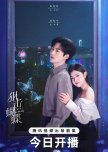
Stand By Me began airing exactly 12 months after Love and Redemption was released last year, much to the happiness and joy of Cheng Yi fans all around the world (myself included). L&R was the drama that propelled him to stardom, and this production reaffirmed his status as one of the most anticipated drama actors in the C-historical genre. Starring numerous colleagues from his agency, H&R Century Pictures, we get a L&R reunion of sorts. This includes his “sister-in-law” Zhang Yu Xi who plays his significant other this time around.Production details that may interest you
Originally titled Dream Awakening Chang’an, the title was changed to Stand by Me along with the setting of the story as a result of the censorship requirements imposed by China’s NRTA. Initially planned as a romanticised retelling of the Tang Dynasty Emperor Li Yan aka Wuzong’s reign, the script was changed to a fictional tale of an alternate version of Tang, the Xing Dynasty’s Emperor Qi Yan. That said, the historical account of actual happenings and real life figures such as the Grand Eunuch Qiu Shiliang and Sweet Dew or Morning Dew (Ganlu) incident in the 9th century remain present in the story. The social as well as court conventions are very much Tang in appearance, most obviously the attire being worn by the various characters.
Stand by Me is both a TV drama and a web series, being simultaneously released on Hunan Satellite TV’s Golden Eagle Private Theatre and Mango TV. Filmed entirely at Hengdian, the drama is directed by Liu Guo Nan who helmed the Glory of Tang anthology, and assisted by Zhao Li Jun, who helmed Deep Lurk, another Cheng Yi drama slated for release some time later. The award-winning Shao Chang Yong serves as art director, which adds a touch of class and credibility to the production design.
The screenplay is written by Shi Si Que (十四阙), who is the current editor-in-chief of China’s Dongxi Animation Club. He has written numerous novels and short stories, while this drama represents his first foray into screenwriting.
The Production Values
The overall quality of the production is reasonably high, as can be seen from the art direction and set designs. For the most part, the technical execution is decent in terms of the direction and cinematography. During the first few episodes, there are a few noticeable editing and dubbing issues which I attribute to the change in settings from Tang to Xing Dynasty. The subtitles are generally correct but for those who understand Mandarin, the name “Great Tang” is mentioned in lieu of Great Xing on a few occasions. The buildup of the backstory in the first episode does feel somewhat rushed with the frenetic scene transitions but things begin to settle down not long afterwards.
The action sequences, particularly the synchronised swordplay formations and sword fights in general appear to be reasonably well choreographed. I like that there is no excessive use of fast cuts, slow-motion and close-ups, which makes the flow of the action less contrived. The villainous character of Qiu Shiliang employing the use of the traditional Taoist “horse-tail whisk” (拂尘), typically used in Wudang martial arts, adds a nice touch to the depiction.
The Narrative
Stand By Me is adapted from the novel Sword Weapon (Jian Qi Hang 剑器行) by the writer Feihua (飞花), a talented novelist who had won the Top Ten Novel Award of the Second Online Literature Competition in 1999.
The drama follows the journey of two sisters, descendants of a noble family that have fallen from grace as a result of political machinations and treachery. Due to the tragic events that followed, both sisters went their separate ways only to reunite at the very place that caused the downfall of their family - the royal palace. At either end of the continuing political tug-of-war is the noble Emperor and the wily chief eunuch who seeks to undermine the authority of the throne. Amidst this tumultuous backdrop, somehow the sisters end up on opposing sides in this court intrigue.
Palace politics with all its clever schemes and nefarious plots are heavily featured, in addition to themes of romance and love, as well as betrayal and revenge. This is one of the most riveting, thrilling, and suspenseful palace dramas of the year. Unpredictable twists and turns, shocking revelations, and countless exchanges between “multiple sides” merge beautifully into an exciting historical extravaganza. The storytelling is fast paced and action-packed, involving various perspectives and hidden agendas by multiple POV characters. The momentum never lets up and is sustained until the very end. All of this culminates in a profound conclusion that promises to leave a lasting impression on viewers.
It’s worth mentioning that there is more than a subtle hint of Chinese Chess (Xiangqi 象棋) being referenced throughout. Usually Go (Weiqi 围棋) is showcased in historicals as the boardgame of choice for aristocrats but it’s a nice change to see another ancient game being featured. Aside from the Purple Robed Bureau (subtitled as Violet Bureau), a fictional organisation that bears close relation to Xiangqi is the Chess of Generals Bureau, whose members represent the chess pieces such as Left and Right Advisors, Chariots, Ministers and the Chess Overseer. Fascinating stuff indeed.
The Cast Performance
Cheng Yi headlines this drama by portraying the role of Emperor Qi Yan. There isn’t much left to be said about this magnificent actor who brings his A-game every time he puts on a show for us viewers. As in L&R and also The Promise of Chang’an, it’s hard to see other actors surpassing Cheng Yi’s supreme mastery of poignant and emotional scenes of great torment and suffering, including his now trademark “poetically beautiful blood-spitting” moments. Truly the best of the best. In Stand by Me, Cheng Yi provides us with further glimpses of his versatility and range with a vastly different and never-seen-before side to his very multifaceted portrayal - the cold, ruthless and sensual Emperor. Seeing is believing and I truly do believe there is much more to this man than meets the eye that, hopefully, will be showcased in his future projects.
Zhang Yu Xi, who had previously played Chu Ling Long in L&R, appears as the female lead and primary love interest this time, Cheng Ruo Yu. A promising actress who possesses much depth in her moving portrayal of emotional pain and suffering. As it was in L&R when her character had suffered PTSD, the conviction of her expressions certainly reflects her growing maturity in tackling complex characterizations, which is the case in this drama. She manages to infuse her character here with a fusion of kindness and righteousness that are borne of purity, as well as a developing sense of awareness and pragmatism. These are qualities that reflect the tremendous growth her character experiences through the course of the story.
Deserving of equal billing as part of the three leads, the ever charming and elegant Xuan Lu graces this drama with her appearance as one of the estranged sisters. She had previously caught the eye with her memorable depiction of the delicate and kind Jiang Yan Li in The Untamed. This time, she brings an air of sophistication to the cool and calculated character that is perpetually shrouded in mystery, Qiu Yan Zhi. I honestly feel that there are moments where she manages to steal the limelight from Cheng Yi and Zhang Yu Xi, for she has such a presence that lights up the screen whenever she appears.
Notable mentions for other major characters go to Han Dong who plays Prince Guang, and He Cheng Ming as the chief eunuch Qiu Shiliang. Han Dong is an exceptional actor who has appeared in many historicals so there are no surprises to the dimensions he imbues the characters he portrays. His nuanced microexpressions are always expertly delivered and a joy to behold. He Cheng Ming, who previously played Si Feng’s father and Master of Li Ze Palace in L&R, is another experienced hand with a wide repertoire of works in many varied roles. This time around, he is perhaps more subdued and less OTT, but still retains that aura of an expert performer who immerses into the character with such consummate ease. In short, he always looks like he’s having fun and he carries the role with glee. I have to admit, the mannerisms in his depiction remind me at times of Sun Wukong the Monkey King.
Among the familiar faces in supporting roles, look out for Xi Xue (Under the Power, Lin Ling), who has a significant arc as Cheng Xi, Yang Xi Zi (L&R, Xiao Yin Hua) as Princess Misha, He Zhong Hua (L&R, Xuan Ji’s father) as Li Deyun, Li Jun Yi (L&R, Zhong Min Yan) as Yan Xiu, Ethan Yao (L&R, Ting Nu) as Han Yue, Fu Fang Jun (L&R, Wu Zhi Qi) as Han Ding, and of course, the unforgettable Bai Shu (L&R, Tengshe) as Prince An.
The Music
No C-historical would be complete without epic songs from the likes of Zhou Shen and Liu Yuning. Cheng Yi also contributes to the soundtrack with his beautiful rendition of Shou Shou, which is my favourite track of this drama. Along with the BGM, there are a total of 7 tracks:
Yu Yan Shuo 鱼雁说 by Audio Monster/Silver Lin (音频怪物 / 银临)
Chang'an 长安 by Liu Yuning 刘宇宁
In Through Dream若梦 by Zhou Shen 周深
Small Dust 小尘 by Shuang Sheng 双生
High Above in the Sky 当空 by Nana 许艺娜
Shou Shou 相守 by Cheng Yi 成毅
Worrying about the Sky 杞人忧天 by Allen Su Xing 苏醒
Overall
Stand by Me is a drama I had been anticipating from Cheng Yi since last year, and I’m pleased to say I haven’t been disappointed with the plot and overall technical execution of the production as well as the performance of the cast. It is not flawless by any means but I appreciate the nature of the storytelling that eventually culminates in a rather conceptual ending, which somehow seems to be the standard for C-historicals these days. In any case, the entertainment value is high and I have thoroughly enjoyed the intrigue as well as unexpected plot points throughout the 49 episodes of its run.
Was this review helpful to you?
This review may contain spoilers
I, like most people, began watching because of the high ratings (9.1 atm) and the intriguing synopsis. MC in a comic book trying to fight against her fate? Sign me up! The first few episodes did pretty well in setting up the story and world-building. You have Dan Oh who is headstrong and determined to change her fight as a sick girl who has a crush on Baek Kyung, Baek Kyung who treats Dan Oh like trash, Haru who tries to help Dan Oh change her fate, Joo Da who is your typical helpless female lead in the comic, Nam Joo who is your typical rich male lead in the comic, and Do Hwa who is your typical sweet second-male lead. However, towards the middle of the story, Dan Oh's goal switches and she turns into the cliche girl whose life now centers around romance and being with Haru. Scenes become repetitive as characters lose their memories, scenes successfully manage to be changed only with slight tweaks, and Dan Oh continuously suffers from her sickness without being able to do anything about it. You're up to the last four episodes and you're thinking, what's progressed between Dan Oh and achieving her sickness goal? NOTHING! The only progress there has been in Dan Oh's life is in the romance department between her and Haru. And of course, the last four episodes rush everything and almost nothing is explained or satisfyingly resolved in the end. Who is the writer? Why do shadows exist in the first place? Why don't the characters just get skipped to the next important scene automatically? How do the changed scenes affect the writer's planning in real life? What's the point of this whole drama if the characters will face the same problem in the other works the author writes? What happens to the characters after a story is completed? Why does Haru sleep in school? Is he homeless? Where's his parents? Why don't we know anything about him after 30 episodes other than that he likes Dan Oh? Dan Oh's best friend is Ju Da's bully, yet why does Dan Oh never do anything about it?Pros:
- Unique concept (even though a lot of potential is wasted)
- Charming and complex characters (especially Do Hwa and shadow Ju Da)
- Superb acting despite messy storyline (major props to Baek Kyung's actor)
- Great character developments (Baek Kyung)
- Mix of historical drama background
Cons:
- Turns into your typical romance story with a high school girl infatuated with a guy and prioritizing him over her own life
- Undeveloped characters (looking at you, Haru)
- Sends bad messages (romance vs. life, no free will, can't change your fate, bullying)
- TONS of plotholes
- Not a lot of questions answered
- Repetitive scenes
- Terrible and rushed ending
All in all, if you're looking for a romance drama with a bit of a "forbidden love" twist and angst in it, this is for you. Just don't look too deep into the whole character-being-unable-to-change-her-fate concept. If you're planning on watching it because the synopsis sounds interesting, brace yourself for the disappointment. The rushed ending leaving millions of questions unanswered will crush you.
Was this review helpful to you?
Sweetness with genuine feelings.
Saying it was adorable would be understatement. It’s a perfect BL for everyone who is tired of overdramatized plotlines, stiff chemistry, bad acting and problematic leads. Our Dating Sim is the purest form of romantic comedy put in a refreshing frame of a dating game.One of the strongest good points about this show was the well paced and smart storytelling. Just enough opening ambiguity about the main leads relationship in the past and the present was enough to set up a solid opening stage for the rest of this story to unfold. And from that point, it was a full fluff fest with just a tiny bit of angst so we don’t get diabetes. The angst you can enjoy, because you know it's just a tiny momentary feeling that will end well.
I am pretty sure we all fell in love with Gi Tae. It’s amazing to see a character who is confident, but not overbearing. He truly radiates positive energy and presents a perfect level of playful teasing.
Honestly speaking, while I enjoyed Lee Wan’s character, I found it hard to describe him. A little bit passive, truly hardworking with spontaneous outburst of courage with flight reaction that follows. Compared to Gi Tae, who was more stationary in terms of development, Lee Wan presents a subtle journey to self-discovery and bravery to stick with the things he find important, instead of running away from them.
Lee Seung Gyu and Lee Jong Hyuk had an amazing and natural chemistry that put a smile on my face during every episode. Acting wise, they both delivered believable performances. While many people praised Lee Seung Gyu (for solid reasons, I rewatched quite a few scenes simply because I enjoyed his performance so much), I also want to compliment Lee Jong Hyuk for his take on Lee Wan’s character, especially with scenes presenting concern, worry or confusion.
For such a short drama, the production value was perfect. I loved the dating game framing and the game stages scenes at the end of each episode presenting additional small doses of sweetness between the main characters.
Overall, while it feels like 8.5 for me, my brain actually wants to give it 9. Often such simple and short stories feel empty, dull, cringe, but Our Dating Sim could not be described by any of these adjectives. While it might be a classic story with well known tropes, the execution makes it an entertaining watch that many will enjoy.
Was this review helpful to you?
On aliens and alienation
I am sorry about the punny title but it was either this or "Out of this world" and I feel like this one causes less physical pain.A lot can be said about Glitch but conventional sure isn’t the word that comes to mind. Watching this drama as soon as it came out while following the reactions online has been a wild ride indeed. This isn’t supposed to be about other people’s opinions, this is my review, my thoughts, but I was perplexed by how badly this K-drama bombed. Reading the initial impressions, it sometimes felt, like I was watching a different show entirely. Upon further consideration I am adding a very mild spoiler warning to my review here, I won't go into any detail about how this story progresses, but will talk about a few elements of this show that were not mentioned in the synopsis or tags. So here you go: VERY MILD SPOILERS AHEAD!
I think the one thing the majority of watchers can at least somewhat agree is on, is that the performances are the aspect where Glitch shines the most, though this was to be expected considering the stellar cast this show provides. Our two lead actresses are of course especially to be praised here. Their dynamic and chemistry might be what this drama thrives on and Nana and Jeon Yeo-been add charm and believability to their roles. But even less prominent roles, like Boras squad of conspiracy theorists or overwhelmed policeman Kim Byung-jo, had their moments. Even Hong Ji-hyo’s abducted boyfriend who had little to no presence, felt like a somewhat fleshed-out character all thanks to his actor’s performance.
But my personal favorite aspect of this drama might be Glitch’s distinctive look and style. It’s quite challenging to present yourself as a sleek-looking drama, while also featuring a ginormous blue alien in your first episode. I will not be too soft here, when it came to extraterrestrial beings, the CGI left something to be desired, but the drama was kind enough to not rely on their presence all too often. When we’re not subjected to computer-generated monstrosities, Glitch remains a surprisingly artistic show, especially at the times where it does get more experimental. Lighting and colors played one of the biggest parts here, switching between soft warm tones when we’re shown flashbacks of Bora’s and Jihyo’s past and the cold blue-and-green tones we’re used to from our sci-fi-flicks. I especially have to commend the usage of green-tinted lighting, whenever a situation was supposed to be uncomfortable or unnatural, it really generated the feeling the script needed. But shot composition, cut, and camera also stood out here. The hand-held camera shined in fast-paced action scenes and in general Glitch very rarely felt or looked static. If there is one thing I have to critique when it comes to the overall look and feel of this show it’s the (rare) moments of slow-motion that always felt entirely out of place to me and like a misguided attempt to stretch shots that might have been too short. But this might just be my personal preference.
This might be where agreements about Glitch end. The plot and script are where opinions tend to differ drastically.
Pacing is something this drama has been harshly critiqued for. While it is true, that Glitch’s start felt somewhat slow, it does pick up speed after four episodes. But I would actually go so far as claim that the show‘s arguably monotone beginning was needed, to create the atmosphere the drama relied on. That’s because we follow the story through Ji-hyo whose life also feels like it has come to halt. At thirty she works a monotone job she doesn’t seem to care about, still lives with her parents, and isn’t willing to take the next step in her long-term relationship. All she’s trying to be is normal, boring even, while she desperately attempts to ignore all the things that make her different, attempts to even ignore the side of her that wants to be different. Things accelerate drastically for her after she reconnects with Bora, so it’s natural that the same goes for the overall essence of the show. This might not be everyone’s cup of tea and it does take some commitment to give the show a chance and see where the plot takes you, but personally, I enjoyed that Glitch took its time.
That the viewer experiences this story through Ji-hyo’s eyes also means that we’re bound to be confused as the plot escalates. Glitch keeps its audience on its toes and toys with plausible deniability. What is hallucination, what are aliens, what is the cult? The viewer doesn't know anything more than the protagonist does. We feel lost because Ji-hyo does too.
This does not excuse the few plotholes Glitch sadly contains. I fully understand frustrations with the ending, a few too many knots were left untied for my taste. So I am not arguing that the plot’s structure is flawless, God no, but I do feel like the pacing of this show isn’t nearly as off as many claim. Some stories just take time and I’d rather be along for the ride than for a script to feel rushed.
“But this isn’t what I signed up for! I wanted sci-fi and aliens! This is too weird!”
Not trying to come across as condescending or pretentious but I am once again begging people to read between the lines when they consume media. Glitch isn’t the conventional alien tale it seems to be at first glance because it isn’t trying to be. And it also doesn’t have to be that in order to be good. Because what is hidden under layers of UFOs and religious symbolism is the story of Ji-hyo’s emancipation. It is a tale of a young woman trying to escape the norm and her passive role in society. It’s about feeling like you literally don’t belong on this planet, like you yourself might be alien because you do not fit the mold people are trying to force you in. And it’s about the role that religion plays especially for people that feel alienated, a tale that showcases how simple it is to persuade them to believe once you have earned their trust. How you can influence individuals to believe in a religion based on self-interest, force them to see UFOs, and make them question everything they thought they knew.
I thoroughly enjoyed this show, it’s rare to come across stories that are entirely female-centric without even the hint of romance (unless you count our two female leads who honestly had enough chemistry to go steady). I got a lot of joy from the portrayal of female friendship. Bora and Ji-hyo’s dynamic worked excellent. But I also just genuinely had fun with this plot and was fully invested in it. Yes it was strange, that’s what made it good. I can certainly say that this wasn’t anything I had seen before.
I shouldn't care what others think but I really really wish people would give Glitch a fair chance. “Too weird” should not be a valid critique, especially when a story is obviously more interested in being interpreted than literal. It’s frustrating because Asian cinema already very often relies on the suspension of our disbelief. How out there or downright Ludacris a plotline is, doesn’t seem to be relevant in romance dramas but as soon as a story requires some form of critical thinking, people shut the door on it. Others obviously are allowed to take away from this show whatever they want, I am not trying to imply that everyone who rated this low is a simpleton who just didn’t get it but I do think that there is a lot more to this story than what meets the eye. I am not trying to argue that Glitch was anything close to perfection, just a lot better than people gave it credit for.
Was this review helpful to you?
This review may contain spoilers
Sizzling Chemistry, Great Comedy---Acting & Plot Sold Separately.
For the first time ever, I'm giving a high score to a show where there was virtually no acting nor real plot. Starting with the pros as usual.Pros: The absolutely sizzling chemistry between the leads for starters. From the the day they meet which is episode one, even if they don't like each other in the slightest, they're drawn to each other. Doesn't hurt that ML does come off as a cross between Elvis and Christian Grey (he cooks, cleans, can speak the language of cacti, can both play and teach golf, is a motorcycle rider/racer, knows various computer programs, is a magician, a gamer, can livestream, sings and plays the piano, plays chess, as well as can fly a helicopter and land in any emergency). The comedy is awesome; it makes you laugh hysterically sometimes at the ridiculous situations both leads find themselves in or put themselves in. The ML started as a bit of a selfish character, in reality he had a great heart all around and was very likable. The FL though stubborn and had nothing in her life save for work, was a sweet and caring woman. ML does chase FL first and that's where the primary comedy comes from, though there's a lot of it before he comes to that realization.
All of the secondary characters and couples have their own stories and they all come in when needed and resolved accordingly. I'm very glad that ML's best friend didn't just disappear because he was in a coma the entire series as often seen with useless characters. He was given etches of improvements and then him being shown awake at a very important time in the series. The OSTs were very on point and appropriate where they were added. Very glad the singular antagonist was dealt with accordingly and that it didn't drag on for eternity considering this was a series with only 24 episodes.
Cons: No plot; this show hinged on the lives of office workers and a romance between a younger man and older woman. There was also a love triangle or quad happening. The acting was subpar at best. ML is an idol with very little acting experience; if he wants to continue in the industry, I hope he gets himself an acting coach and learns how to show emotions not just say the lines. The stone-faced look didn't help the softer scenes or anywhere really; even the two times he really cried just didn't hit the mark, like he was trying too hard. Also not sure what was going on with the fashion on this show; the ML in particular had some avant-garde Project Runway thing going on that more often than not, didn't make any sense for neither him nor his character. Also way too much product placement; KellyOne water was literally everywhere.
LYR or cling wrap chick as I called her had to be the worst thing in this entire series. Though she did slightly evolve towards the end; I still do not understand this need to stick these whiny, annoying, stalkerish second or third female leads into these series, modern or otherwise. Even if she's supposed to be 23, she legit acts like she's a pre-teen. Once she finally got it through her head that GJX was not interested (and it took a few times), she proceeded to latch onto another man like gorilla glue also following him overseas. It's mind boggling that these kinds of characters are used over and over again. Real women do not act like that! There was a necessity to ffw her a few times.
Would I recommend it? I was looking for a rom-com where it was easy on the brain and you could just enjoy. This fit the bill to a T. So if that's what you're looking for as well, this is your show! Grab some popcorn, get ready to laugh a lot, and enjoy the cuter then hell moments especially starting with episode 17. ;)
Was this review helpful to you?
The Quintessential Japanese Drama of 2019
First, I want to let you know that in Japanese Drama, THEMES is always more significant than the plot. It's doesn't matter who Nagi would end up with or how the drama would end. What important is how the show will convey its message. This drama is not your typical two-boys-one-girl type of story or other overrated romance crap. You could choose your ship if that entertains you, but just to let you know, this drama was not meant to make your heart flutter, it was meant to speak to your soul.This drama is about the so-called "Hard Reset", not the one you do with your phone but the one you apply with your own life. The important decision you do to make a significant change and start anew. Completely changing your environment is essential, which is what the main protagonist did in this drama, a long vacation. It made her discover more about herself and broaden her perspective of the world, or to make it more precise; it made her have her dream.
Another theme is reading the atmosphere/mood or reading between the lines and I'm sure most of us are familiar with that feeling. When you enter a room full of strangers, most people will remain silent for a while. Judge people's faces, their expressions, their manner of talking etc. "reading the atmosphere" is everywhere, from school, workplace, family and even your relationship. Whether consciously or unconsciously, people do this all the time, this ability is ingrained firmly into us as a species. We as human, always look for a place we can call our own, and we need strong social bonds for that. We always try to "fit in" or wear all the right mask whenever it feels right.
"Stop Trying to Fit In, Aim to Belong Instead"
This drama will teach you fitting in will never get you home because fitting in is trying to adapt to a world that is not your own. Just like Nagi, you have to have your dream and not just live for other people. You have to forget the cool people; you have to find your people. Nagi found these people who help her reboot her life, the film buff grandma, scammer turned best friend Sakamoto, The most level headed mother and daughter (total opposite of Nagi and her mom), the bar owner mama and the most insensitive playboy neighbour. These characters don't only serve up as an exposition for the main character, but their story also conveys the theme of this drama, and the writer did a brilliant job on weaving them in a beautiful pattern.
The Pacing, Setting and Music add so much to the slice of life feels of this drama. Nagi's long vacation is a very well-paced drama; no time is wasted but doesn't felt rushed as well. It is entertaining enough to keep you engaged as you watch it. It also has mundane elements that if you notice would give a smile to your face like shirts worn by Nagi, it seems trivial, but those are valuable shirts you would find in thrift stores. Little details like this make me appreciate the drama more. The location would look very familiar to you after you watched the drama like it seems you also live there along with the characters. The cinematography is terrific in showing the green landscape, clear blue sky and by capturing the calmness and serenity of the laidback way of living. The OST is chill and relax, which complements the slice of life nature of this plot, but it can also get emotional when requires. I also never get tired of hearing the theme song "Reboot" sung by Miwa. It captured the whole theme of this drama.
The acting is ten out of ten, Haru Kuroki never disappoints. She is one of the best actresses in Japan right now and is indeed a national treasure in dramaland. Nagi's portrayal of inner growth is well portrayed, you might get pissed by her actions and decisions, but you always find yourself rooting for her. Haru Kuroki is very skilled as an actress, but it's her sincerity that makes Nagi such a lovable character. The title, Nagi's Long Vacation suggest this is only about Nagi, but this drama can easily be about Shinji as well, the only difference is Nagi only suppress her feelings where Shinji also hurts people around him. Shinji is a character you will despise at the beginning, but you would understand a bit about the character in the end. The writers gave him one of the best character development I've seen in recent years, and the way Takahashi Issei handled it is brilliant, probably his best performance ever. The way he controlled his emotions is masterful like at one moment his character angered you then you will laugh at his comic relief antics then you will feel him as he cries like a baby, what a man child lol.
Nagi's Long Vacation is the quintessential Japanese drama. They are the best when it comes to thought-provoking slice of life genre. You may find the characters caricatures until they slap you with realization quotes that will speak to you on a personal level.
Check my Blog for other reviews & other JDramas stuffs. (。◕‿‿◕。)
https://thatjapanesedramaguy.blogspot.com/
Was this review helpful to you?
1
1
1