

Phapo, the owner of a logging camp and an impressive white mustache, returns from Bangkok with his new and very young wife Yupadee. Phapo's nephew Sangmong and Yupadee are attracted instantly to each other, and after a time, they begin a torrid affair, swearing they will love each other in all eternity. The affair is, of course, not a secret for long...
This is the third film I watched that was made by Pattana Pestonji after the 1954 "Santi-Vina" (where he was the cinematographer) and the 1957 film "Country Hotel" (where he was also the director). For "Forever You" (1955) he was the producer and the cinematographer, and the director is Khru Marut, who also directed "Santi-Vina".
If I understood the information I could find correctly, this film is also filmed on 35mm film, which means it didn't have to be dubbed later.
In style, this film is closer to Santi-Vina than to Country Hotel, with beautiful landscape shots and scenes that depict Thai culture and life of that time, although not as extensive (maybe because it was made for the domestic, not international, audience). Actually, this was what made me keep watching through the first hour -- because the story itself was fairly predictable.
Or so I thought.
Because when Phapo finds out about the affair, he does not react the way we (and Sangmong) expect him to. And this is where I was finally captured -- During the last half-hour I shouted at the screen, I cried, I sighed ... I cursed at Phapo, at Sangmong, and was moved by the secretary's (Thip's) kindness. The last minutes have two or three more surprises, and when the film ended, I was very happy to have watched it.
When I get to a point where my Thai is good enough (if that ever happens), I will definitely seek out the novel, because I want to know more about some characters' motivations -- I guess that due to time constrictions, the film script cut out much of the interactions between Sangmong and the logging camp workers and between Yupadee and the mistresses. We do get a few glimpses about this, and from that we can guess what workers, servants and mistresses think about the couple (and their affair), but I think knowing more about this would have made the reactions of the other characters, especially how they acted in the ending minutes, and the subsequent decision Phapo makes.
Because to be honest, I'm not sure I understand why he did what he did in these very last minutes.
Overall, the story is very much a child of its time -- Phapo as the autocratic, benevolent-until-he-is-not authority figure who resides over the workers, the servants and his harem of mistresses is likely an archetype and will be recognized by much of the contemporary audience as such, while I, from my Western 21st century perspective, almost automatically see him as someone with a questionable character.
I am convinced that his reaction to the affair when he found out about it was well within his own framwork of morality. What I am unsure of is what exactly the ending means within the framework of mid-20th century Thai society and Buddhist teachings.
So, like with most older non-European stories, since we are far removed from the time and place of origin, as a casual viewer I (and viewers like me) will have to be careful with any reading of morality or intended messages.
Nevertheless, from my modern and Western perspective, I would like to see a retelling from Yupadee's point of view. In this film, she starts flirting openly, even aggressively, with Sangmong from the very first day -- making it seem that she's more or less cavalier about her marriage, maybe even seemingly giving here the blame for the affair. I don't think it's intended, as the dialogues make it obvious that both are drawn to each other equally, but I wonder how contemporary audiences viewed her.
It's obvious that the original author and the film crew are all men, and think of the story from the male point of view of the mid-20th century. But when Yupadee talks about freedom near the end, and when I look at the decision she makes in the end, there is much complexity in her character already; in my view, she could very well be THE central character of the story -- she has much agency aready: She is the one who pursues Sangmong, and she is the one who makes an important decision in the end. I wonder why she married Phapo though -- what kind of life did she come from? What went on in her head when she decided to take the risk to have an affair? What did she hope for from Sangmong in the beginning, what in the end?
The film merely shows us a flirty, lustful woman who knows what she wants but we don't know WHY.
However, I don't blame the film for what it is. It's a child of its time, made by men, it has a limited run time, so allowances must be made. And as I said before, it did make me feel with the characters: Sangmong was a sympathetic naive young man, Yupadee was a young woman who tried to somehow find freedom, Thip was torn between sympathy and duty, even Phapo whose actions gave the tragedy even more poignancy was (for a time) thoroughly likeable.
Was it good?
Considering the time and place of origin, it was.
Did I like it?
Surprisingly, I liked it more than I thought, and I am happy I got the chance to watch it.
Would I recommend it?
To anyone who wants to watch more of Pestonji's work and to anyone who is interested in Thai cinematic history.
Was this review helpful to you?
This review may contain spoilers
Quiet love is the most romantic
I just watched 18×2: Beyond Youthful Days, and I genuinely don’t know what to do with the feelings it left behind.It wasn’t the kind of movie that broke my heart all at once. It left a quiet ache instead—a strange emptiness that lingered long after the credits, as if something had been taken from me even though the story was never mine to begin with.
Ami and Jimmy felt painfully real. Not because their love was dramatic, but because it lived in all the little things: the hand-holding, the waiting, the small acts of care, the way they simply showed up for each other. Nothing felt exaggerated. Their relationship felt like the kind of connection that could exist quietly in someone’s life and, years later, still remain impossible to forget.
And then it ends the way it does.
I keep thinking about how they never confessed to each other. Somehow, that makes it hurt more. Because perhaps they didn’t need to. The love was already there—in the things they did, the memories they left behind, and in the ways they changed each other without ever fully realising it.
Maybe that’s what the film is really about. Not grand romance or perfect endings, but the strange, beautiful impermanence of love. Some people enter our lives for only a season, yet somehow leave fingerprints on the person we become.
Still, knowing that doesn’t make the ending any easier.
A part of me keeps wishing they had been given more time.
More ordinary days.
More hand-holding.
More chances to say what they never said.
Mostly, I just wish they had gotten the happy ending they deserved.
Was this review helpful to you?

Lines Crossed
Vanishing Point is one of those movies where the less you try to untangle everything immediately, the more enjoyable it becomes. The story revolves around a series of bizarre cases that take place within an apartment building, involving four main threads: a family who has lost their son, a woman who is assaulted, a man struggling with a gambling addiction, and a mysterious family whose presence gradually becomes more significant. The interesting part is how these cases are connected, because the connections are anything but straightforward.The movie jumps between different timelines, showing events before, during, and after each case without following a neat chronological order. If you try to arrange everything in your head as you watch, it can get rather confusing, especially because some information is deliberately withheld until much later. I found it easier to stop treating the timeline like a puzzle that needed to be solved immediately and instead look at the bigger picture. Once I did that, the storytelling became much easier to follow.
This is very much a plot-driven movie. It is more interested in the cases, the investigations, and the eventual revelation of what really happened than in deeply developing its characters. The narrative essentially goes, this happened, here is what led to it, this is where the investigation takes us, and this is what actually happened. At first, the movie gives us a fairly obvious picture. There are suspects, clues, and circumstances that seem to point toward a simple explanation. It almost feels too easy. Then, little by little, more clues appear, other suspects enter the picture, and the initial assumption starts to crumble.
That gradual peeling back of the truth is probably the strongest part of the movie. Vanishing Point knows how to keep you wondering whether the person you are watching is actually guilty or simply being framed by the way the story presents them. Both the directing and acting help with this. Certain characters are made to feel suspicious through their expressions, behavior, or the way the camera observes them, even when they turn out not to be the person responsible. It is a simple trick, but an effective one.
The downside is that while the cases themselves are explained well enough, the people involved sometimes feel like pieces on a chessboard. By the end, the motives behind their actions become clear, but the emotional foundation underneath those motives can feel rather shallow. I understood why they did what they did, but I did not always feel that I understood them as people.
Yan Wu is probably the character who left me the most conflicted. Given that he was willing to sacrifice his wife and son because of his gambling addiction, I naturally saw him as a selfish person. That made his eventual decision rather surprising because, to me, it felt somewhat out of character. At the same time, I think there is an interesting moral dilemma buried inside him. He still seems capable of distinguishing right from wrong. What has already happened, he accepts and keeps inside. What has not happened yet, he seems more reluctant to cross. But when enough pressure is applied, he eventually takes action.
It made me wonder how far Yan Wu could actually be pushed. Perhaps he has not completely lost his moral compass yet. Perhaps he is simply standing very close to the edge, telling himself that he will not cross it. Push him a little further, though, and I am not entirely convinced he would be able to stop himself. There is something unsettling about a person who still knows where the line is but keeps walking toward it.
The acting itself is decent. Nothing particularly groundbreaking, but nothing that took me out of the movie either. The performances do what they need to do, especially when it comes to maintaining suspense. Some characters are suspicious because of the performances, while others become suspicious because of how the script places them within the story. The movie is quite good at making you look at someone and think, "Okay, something is definitely wrong with this person."
Visually, Vanishing Point is fairly ordinary. There is nothing particularly striking about the cinematography, but there is also nothing that feels poorly done. Where the visuals work better is in creating atmosphere. The darker lighting, nighttime settings, shadows, and occasional jumpscares all contribute to this growing sense that something bad is about to happen.
And as someone who is very much a scaredy cat, unfortunately, it worked on me. There were moments when I had to lower the volume and squint at the screen because I was genuinely expecting something creepy to appear. The movie does not rely entirely on showing brutality either. It is quite selective about what it puts directly in front of the camera and what it leaves to implication.
The contrast can be quite effective. Violence toward an old man is shown more explicitly, and I found myself genuinely shocked, particularly because of the relationship between the characters involved. Violence toward a child is handled more indirectly through camera angles and framing, although the aftermath is still shown. Violence toward a woman, meanwhile, relies more heavily on shadows, lurking figures, and the feeling that someone is watching. Different methods, same purpose: making you uncomfortable.
The ending was unpredictable, although it did not exactly surprise me. Toward the final stretch, the clues began pointing toward a particular blueprint, and I found myself wondering how the movie would eventually use it. There was still curiosity about how everything would unfold, but I already had a general idea of what the revelation would revolve around.
When the truth finally comes out, the pieces do fit together. The events are tied together, the motives become understandable, and the cases receive their answers. Yet I was still left with a few questions. What will happen to the young girl? How did the mother undergo such a drastic personality change? What exactly drove one character to help another? Was there really something to gain from it, beyond perhaps the euphoria of madness? And just how far had that madness actually gone?
Perhaps that is one of the more interesting ideas the movie leaves behind. People can have dark thoughts. That alone does not necessarily make someone a monster. The real difference is whether they act on those thoughts. There is a thin line between thinking about doing something terrible and actually deciding to do it, and Vanishing Point spends much of its runtime watching people stand dangerously close to that line.
Ultimately, this is a movie built around suspense and the revelation of what happened and who was responsible. There is not a great deal of background information or character development, which sometimes makes the story feel emotionally distant and a little shallow. But the mystery does a good job of covering those weaknesses. I was more interested in finding out what happened than I was bothered by the lack of depth.
Vanishing Point is definitely not a masterpiece, but I had a good time with it. Think of it less as a character study and more as a mystery box that keeps opening another compartment just when you think you have figured it out. The storytelling can be obnoxiously complicated at times, but if you stop trying to put every event in chronological order and simply let the story unfold, it becomes a fairly easy and suspenseful mystery watch.
Was this review helpful to you?
 1
1Things that go boom in the night...and the day
If you watched Hard Boiled and thought, “Hmmmm...there weren’t enough bullets and bodies,” Heroes Shed No Tears might be the film you are looking for. One of, if not John Woo’s first action film, he pulled out all the stops for this mercenaries attempting to get a drug lord safely from the Laos/Vietnamese border across hostile territory to the government of Thailand to claim their rewards.Chan Chung leads a squad of Chinese mercenaries. Their mission is to capture the drug lord, General Samton, and take him to Thailand. Chan is promised an American green card. His co-harts are in it largely for the money. Capturing the general proves to be easy. The journey not so much, as it turns deadly fast as Chan’s family has to be rescued, the General’s men are on their trail, and along the way he manages to infuriate and wound a Vietnamese Colonel who vows to hunt him down with his men.
From beginning to end, Woo found an excuse to blow things up. In one fight I thought to myself the only thing missing was a flame thrower. Voila! A dude with a flame thrower showed up! The combatants’ shooting style appeared to be pray and spray as no real aiming took place. Fortunately for them, the stunt men were quite adept at flying and falling. People were shot, stabbed, set on fire, impaled, blown up, tortured, and then shot again. There were numerous creative ambush scenes. The final battle between Chan and the Colonel was brutally realistic, even when it included flaming poles.
Eddy Ko did a solid job as the squad leader and father of an annoying if not resourceful child. Lam Ching Ying (Mr. Vampire!) was the merciless Colonel tailing Chan Chung. How he lost his eye was actually the most interesting effect in the film. Chin Yuet Sang’s Chin was given way too much time for his “comedic” antics.
Aside from the sketchy details of where they were at any given time, there was a glaring issue with the intrepid band of soldiers. The colonel hired local tribesmen at the point of a gun to track Chan Chung’s group. Why this was necessary was beyond me. Chan’s group was hardly stealthy. Most of the time they were on main roads and well used paths. They were loud, slow, took time to gamble with the locals, and strip bodies of anything valuable. They acted like no one was after them regardless of evidence to the contrary. Aside from the boy who was always yelling for his father, they’d also picked up an annoying French woman. Coupled with the problematic Chin, the Triangle of Irritation was a bit much. Chan Chung also had powerful plot armor and healing abilities, he went from being mostly dead to back in action without missing a beat. Ridiculous 80’s action tropes were strong in this story.
If you are a John Woo completionist, you cannot miss this film where he began to hone his bloody resume. Or if you just enjoy watching things blow up and relentless carnage, this might be one to try. If none of that draws you in, probably best to skip.
14 September 2026
Trigger Warnings: Nudity. Sexual situations. Sexual assaults. Multiple impalements. Dismemberment. Eye torture. Snake. Smoking of drugs.
Multinational note: The cast included actors from Hong Kong, Thailand, France, and South Korea. The movie was filmed in Thailand.
Release day note: The film was completed in 1984 and released in SK that year. Wider release was held until after Woo's A Better Tomorrow (1986)
Was this review helpful to you?
1408 on a reservoir
the best way to describe this movie is that they took 1408 movie skeleton and gave a different flesh to it, so it moves the same way to the end, not a bad watch though cuz it doesnt take time to establish and jumps into the story very quickly, popcorn flick, doesnt have a lot of lore to it, very quick watch, so its up to your mood, i usually like movies with rich lore like The 8th Night which had enough lore to fill a tv series, i picked this one cuz i wasnt in a mood to think.Was this review helpful to you?
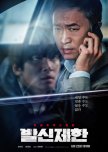
One Car, One Bomb, Zero Peace
Okay, so what’s this movie even about?There’s this guy who gets his kids into the car one morning to drive them to school, and then—out of nowhere—he gets a phone call.
“Hi. I’ve planted a bomb in your car. I want money.”
That entire setup happens within the first 7 minutes of the movie. And the next hour and a half? Basically just this dad trying to get the money and save himself and his kids.
That’s it?
Yep. That’s literally it. :))
That’s how ridiculously simple the premise is. :))
But here’s what I found really funny: I downloaded this movie years ago without knowing anything about it. Then, about three weeks ago, I was like, “Fine, I might as well watch it so I can finally delete it.”
Seven minutes in, the phone rings and I go:
“WAIT. WAIT!! I KNOW THAT VOICE! That voice sounds SO familiar! No way… is it who I think it is? Hold on, let them show his face so I can make sure…”
As if they were actually going to show him. :))
I basically spent an entire hour waiting to see the bomber’s face, and eventually my suspicion was confirmed.
THE BOMBER WAS MY FAVORITE ACTOR, JI CHANG-WOOK.
Okay, the movie starts off pretty normally, but it picks up VERY quickly. The tension keeps building, the stakes keep getting higher, and before you know it, you’re fully invested.
Also, pretty much the entire movie takes place inside the car, so don’t expect any fancy locations or anything. The car is basically the whole set. :))
Character development?
Eh… not bad. But honestly, what else are we expecting from a 90-minute action movie?
Acting?
EXCELLENT.
Damn, Ji Chang-wook is SO GOOD at what he does. This man acts with his whole soul. When he’s happy, you can see it in his eyes. When he’s upset, you can see that too. He doesn’t even need to say much—his eyes are doing half the work.
The dad was great too! I was genuinely happy with both of their performances.
Music?
Good.
Direction?
Excellent.
Suspense and adrenaline?
THROUGH THE ROOF.
Your adrenaline is gonna be hitting the ceiling. You literally won’t be able to take your eyes off the screen until the very last second.
Final thoughts:
Hard Hit delivers a solid 90 minutes of pure stress, tension, and adrenaline. I’d give it around 7/10, and I’d definitely recommend it if you’re looking for something exciting to watch.
It’s a great one-time watch.
But would I watch it again?
Hell no. :))
Was this review helpful to you?
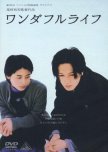
What is your most precious memory?
Koreeda Hirokazu asked what comes After Life in a film set in a halfway house for the dearly departed. He tackled meaning and memory in this slow paced almost documentary style film.A small crew of after-life counselors greet the new arrivals to a drab, spare facility on Mondays. Everyone regardless of what they did or didn’t do on Earth make their way here. This week they have 22 people who have passed and must accomplish a task by Wednesday before they can move on. The task appears to be simple yet trips up several people. What is your most joyous or meaningful memory? They can only take a single recollection with them and will forget all the rest. A businessman felt like everything was humdrum about his existence and can’t remember an extraordinary event. A twenty-one-year-old refuses to choose based on principle calling into question the celestial system. Once memories are chosen, they are reenacted so that the person can travel to the next level.
As a fan of Defending Your Life I was curious about Koreeda’s take on the subject. I honestly needed either a better translation or better understanding of his afterlife philosophy. In a couple of scenes, the new arrivals were told the beloved memory was what they would live over and over. A Groundhog Day eternity of one occurrence on repeat sounded like Hell to me. Earlier in the film it was said that the chosen moment’s feeling would be what the person would experience for eternity. I might have been on the list of those unable to choose, that’s a heck of a commitment to a lone feeling/event.
There were times the film dipped into “inside baseball” territory as the sets were built and filmed for the characters’ revelatory choices. It felt like a low rent afterlife as most of the action took place in a rundown school with peeling paint and fuses that blew when too many people used their hairdryers at once. The sets built were rudimentary, bordering on high school play level. Why not just use the video tapes from the people’s lives that were available?
Memories and how we choose to remember them shape us into who we are and how we interact with others. Setting aside my concerns, I did like how Koreeda challenged not only the characters but also the audience to comb their memory banks for the most cherished event in their lives. Memories fade, morph, and expand as we live. During the process of searching for that crucial occasion, the film bids us to make meaningful memories while we can. Often it was not the grand things that held precious sway in a person’s life, but the small things that provided the most meaning. A mother’s caress, an autumn day on a bench connecting with someone else, even discovering their life was someone else’s treasured remembrance. Like most people, the characters led mundane lives of earning a living and taking care of the day-to-day details that can fill the hours of the days that turn into years. What can we do to find moments and people to cherish, something worth carrying forward? If you enjoy slow, thoughtful, reflective films, this is one to try.
13 September 2026
Casting note: Currently Iseya Yusuke is listed as a main, he is only in a few short, but pivotal scenes.
I was thrilled to see Kagawa Kyoko in the VHS memories!
Was this review helpful to you?
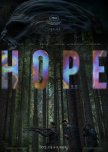
I will admit, though, the negative critiques aren't completely without merit. As someone who always pays close attention to plot execution, I have to say the pacing in the first act is a massive struggle. It takes forever to actually get to the point, and the beginning is just incredibly bloated and drawn out. With a runtime stretching over two and a half hours, I literally had enough time to get up, go to the bathroom, and grab a drink refill without feeling like I was missing anything crucial because the buildup was just so agonizingly slow!
But once the narrative finally finds its footing? Wow. It turns into such a genuinely refreshing and rewarding cinematic experience. I am honestly just so thrilled that I got to see two different Korean movies in theaters this month, and both of them completely delivered!
Was this review helpful to you?
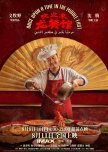
Nobody Wins a War
An excellent anti-war film, in the way that perhaps only people who weren't directly involved in it could have made it. And you can see this even through the journey of our two main characters, Xu Fu, a Chinese chef hired to work at a Chinese restaurant in Iraq in 2002, and Ma JunSheng, another Chinese man who was already working there as a sort of manager and also serves as their Arabic and English translator.The film can basically be divided into:
Running the restaurant before and during the war, the American invasion and destruction and its aftermath, and eventually becoming prisoners, first of the Americans and later of Iraqi insurgents.
Without falling into the black-and-white approach of Hollywood war movies, the film shows the invasion for what it was, basically a brutal conquest, without the usual bullshit of excessive sympathy for soldiers who are in another country to kill, as they themselves put it and have continued to justify to this day: they're all "terrorists." And we follow people who aren't, while seeing through the events and their dynamics how people are pushed into becoming labeled that way, even though the label itself can change depending on the interests of whoever is applying it. For the people being invaded, the terrorists would be the others.
At the same time, the film doesn't romanticize the resistance either. It shows all the brutality and the way innocent people and victims, children and adults alike, are exploited as cannon fodder, ready to be indoctrinated and follow orders from above against the people who killed their entire families.
And it's incredible how, starting with a chef working in a conflict zone, the film opens up such a wide range of ideas and perspectives about the wars we've followed through the news and seen portrayed in so many films about traumatized soldiers, that tired, cheesy and barely convincing cliché when you understand what these productions are actually trying to accomplish. Here, there's a rare level of finesse and delicacy in the way all of this is handled, making the whole experience hit much harder than you'd expect from its premise.
Watch it however you can, because this absolutely has everything that makes a great film worth watching.
Was this review helpful to you?
.
It's a movie about two completely different mutants who collided with each other. On the one hand, there is a mutant in the form of a fish man. On the other hand, there is a mutant who looks like an ordinary person. And it was ordinary people who turned out to be scarier. Society.The title fully describes the ending. He decided to become a fish - not because he came to it himself. People and society pushed him to this. He wouldn't be able to be a man in the world with such a rotten society and people. He became a fish to find peace and tranquility.
The movie is not about a mutation. It's about how society jointly invents the fate of a person - uses it, throws it away, drives it into the water. And the worst thing here is not a monster with gills, but those who look at it and think they are normal.
Was this review helpful to you?

friendships are so important
I love how realistic their lives are. Their friendship is something I adore and it makes me appreciate the friends I have currently too. The actors did incredible and I absolutely adored how it showed the messy side of their lives. Love is hard and they both worked through it. It's pulling me back to how love will find you even when it seems like it fails you. <3Was this review helpful to you?
This review may contain spoilers
touching movie
a movie that made me feel touched. it's a simple movie, but it moved my heart. the movie's topic makes me extra emo. i remember when i found it tough to watch "Spare Me Your Mercy" but ended up watching it and giving it a 10.this movie reminds you to go home and hug your mom, keep your relationship good, and take care of your family.
and the food would make you feel hungry, it looks delicious
the ending might have been a bit unrealistic but i like miracles, and i do like hopeful endings so i don't find myself bothered by it.
and there is the ending of the movie song, i need to find the lyrics but id say it made me cry without knowing the lyrics
Was this review helpful to you?
you cannot convince me to watch this movie again without crying my eyes out.
This movie genuinely is like a truck slamming into my heart. I cried so much it hurt. The way the characters look into each others and a whole convo is said is everything to me. I love how it addresses how bad bullying really is. The FL's acting is phenomenal and I felt her suffering. I know bullying is still as bad as every, but making the world better is what we should all do. <3Was this review helpful to you?
This review may contain spoilers
Interesting movie not the typical alien invasion. The first half of the movie was great but disjointed from the second half b/c there are 2 plots going on which do not mesh well b/c there is really no explanation for the humans as to anything going on. One might have more sympathy with the "visitors" than the humans on some level.Excellent cast and Hwang Jung Min as the Chief of police was absolutely fantastic and hilarious. There are some genuinely very funny moment in this movie including a long drawn out story about pooping. One of the characters death is unnecessary but hilarious.
What the director does really well is tension building. There's an amazing scene with the "monster" inside this store and the Chief and another character have there faces against the window and you don't see the monster you just see shadows of something you know is there and then WHAM!!!! OMG it was a simply great scene.
What is not great is the CGI; just terrible and the ending was.......maybe there's a plan for a sequel!
9/12/26
Was this review helpful to you?

Literally just gay porn with a confusing story
There’s likely a deep meaning behind the story, but it’s so badly portrayed that I’m confused how I sat through this entire episode. I can’t even believe main character jsut assumes ML is a doppelgänger when it’s so clear that he is the same person that he slept with before. I mean it makes sense as to why he would think so in a way, he got bored of the dude before, why come again? Also super obvious main character is using photography as an excuse to initiate sex with others; crazy cheater btwWas this review helpful to you?


