

This review may contain spoilers
Why Is Nobody Talking About This Gem?
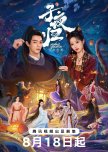
Moonlit Reunion actually surprised me in the best way possible. This is a top notch production with stunning acting.The Premise
The strory is set in a supernatural version of Chang'an, where the fragile balance between humans and the hidden underworld of demons is constantly under threat.
Our main female lead, Wu Zhen, is a free-spirited noblewoman — sister of the Empress, publicly known for her unruly and eccentric behavior — who secretly holds a grand power inherited from a previous Cat Lord. She is as the half-human, half-demon guardian of the Demon Underworld. Mei Zhuyu is a calm, upright young man who has just arrived to Chang'an as an official for the Bureau of Mystic Investigations, but is secretly an elite Celestial Master prodigy and skilled demon slayer investigating a tragic fire from eighteen years ago that killed his parents.
The fact that the two main leads are already natural enemies tells you a lot about how much of an emotional fallout we will have in the future. Star-crossed doesn't even begin to cover it.
Now I genuinely have no idea why no one really talks about this show, because the premise is really great. And my first impression is that this is one of the best fantasy C-dramas I've seen this year — and I need people to stop sleeping on it.
Production That Actually Ate
First and foremost, the CGI work in this drama is elite. This is probably the best I've seen from any C-drama released in the past couple of years — it's absolutely nuanced, feels natural, and half the time I genuinely could not tell what was a real set and what was digitally constructed. The Demon Underworld looks incredible and never once feels fake. There are only a couple of slightly uneven moments toward the end where the background gives itself away, but for the vast majority of the show, the visual work is seamless. The cinematography is top-notch — every important scene is beautifully executed, the lighting is stunning, and it all adds to the ambience in a way that makes you want to screenshot every other frame.
I have way too many favorite scenes from this drama starting from Mei Zhuyu’s jump in episode 10 where he saves Wu Zhen and so on and so forth.
The music is also phenomenal. It makes a massive difference in building on top of the visuals for maximum emotional impact — both the original soundtracks and the background score elevate every scene they touch. And the cast? Fantastic. I know most of these actors can totally deliver. The acting is great, including the child actors, and everything happening on screen feels absolutely believable.
That's how you do a proper fantasy drama. Take notes.
The Script Is Smarter Than You Think
The biggest reason I loved this drama is because the writing is genuinely intelligent. Now — the first few episodes are admittedly a little slow as we meet all the important characters and players who will be with us for the majority of the drama. For some people, it might even feel boring because there's a lot of talking and walking and chatting with seemingly nothing high-stakes happening. But trust me, take note of everything because those are all important scenes.
And just stick with it.
It's paced this way for a reason. The script doesn't do that annoying thing where it drops a random character in the middle of the show for five episodes just to kill them off as a plot device. It also doesn't introduce crucial characters halfway through when you've already settled into the existing cast. Everything is set up intentionally from the start, the pacing picks up little by little, and every emotional scene builds on what came before. It all culminates in a final twist that I absolutely did not see coming — and it lands because the groundwork was already there.
The Plot — Familiar Tropes Done Right
The plot is a combination of familiar, beloved tropes that somehow work beautifully here because of how they're woven into the story. The biggest one is the hidden identity for both leads. Wu Zhen is the Cat Lord of the Demon Underworld. Mei Zhuyu is a Celestial Master and demon hunter. They are naturally star-crossed lovers who have no idea about each other's true identities as they start falling for each other.
I know — this is not a new concept. It's an overused plot device. But it absolutely works in Moonlit Reunion because the writers know how to utilize it effectively. They don't let either character find out about the other’s identity too early. These two actually go through hurdles together, fall for each other, and enter a marriage without knowing who the other one truly is, and that's what keeps you watching — because the longer they're together, the deeper they fall, and the worse you know the fallout will be. When the reveal finally happens, it hits hard. All the emotional groundwork the drama has been laying pays off completely. It's a high-stakes romance that makes sense, and the payoff is chef's kiss.
The Romance — Slowburning in the Best Way
The romance is established right away, but it does take time to build. You might get frustrated watching Mei Zhuyu constantly shut down Wu Zhen's advances — but do not stop watching. First, he does it for a valid reason. And I like that writers didn’t rush his character into falling for her and just forgetting everything that he is right away.
It takes them about twenty episodes to get together, but getting there is genuinely addicting. The writers let them help each other through different situations, building trust and connection organically. And when they finally acknowledge their feelings? It's hot. Very hot. We get several really good kissing scenes, and despite a lukewarm beginning that might make you worry about lack of skinship, the chemistry is absolutely chemistrying when it matters. I think we already know that both Xu Kai and Tian Xiwei and very good at romantic roles and building that on screen connection. I know these days everyone is crazy over her role in Pursuit of Jade and her chemistry with ZLH, but she is equally amazing in Moonlit Reunion paired with Xu Kai. Also, the last drama I saw him was in 2021 when Ancient Love Poetry came out. It was much younger there so in Moonlit Reunion his look is a little bit more mature and sharper and I quite enjoyed it. He acting was super good and very subtle.
I’m sure you’ll want to know if there is a separation. Yes there is, but it’s written in a way where it all makes sense and it doesn’t last long and you absolutely do not get mad at them being separated because they have other more important things to worry and they don’t actually spend a lot of time apart if any.
Overall, this slow burn earns its payoff — no notes.
Supporting Characters That Actually Serve a Purpose
This is one of the very few dramas where I did not skip a single scene. Every supporting character is written into the drama evenly, utilized at full potential when necessary, and given a meaningful backstory that serves the overall plot. No filler characters. No wasted screen time.
Mei Si initially seems like he's just there for comic relief, but his romance with Liu Taizhen had me completely hooked. You think you know where it's going, and then there's a twist toward the end that adds real depth to both characters. In hindsight, I should have seen it coming — I was already asking myself the question if she was born a demon — but when it's finally explained, it recontextualizes everything. Their ending gives them a fresh start by shedding their old skin, so to speak, and it's genuinely satisfying. Even though writers do not show it to us on screen, we know what will happen.
I also absolutely adored Mei Si's friendship with Xuan Hui. I was gutted by how Xuan Hui died, but it made sense narratively and probably gave him the closure of finally doing something worthwhile with his existence.
There's another hint of romance between Hu Zhu and Shuang Jiang, though the writers leave it open-ended — more like they've become friends with the potential for something more. It ties into the overall theme of the drama — that there can be good demons and evil humans — and watching these two characters grow to like and accept each other is genuinely meaningful. This is the best way to utilize show don’t tell technique.
Wu Zi Shu added an extra layer of complexity to the storyline. He actually had me trying to figure out whether he'd end up being the big villain does, everything was pointing at that, but I really didn't expect him to make the choice he did — and it was completely consistent with his character.
The addition of the Changxi Palace brothers also truly beefed up the plot. Loved them all.
Overall, every character in this show acts exactly how they should according to their established personality. Nobody acts out of character for the sake of drama or plot convenience, and I think that consistency is one of the biggest reasons this show worked so well for me.
Final Thoughts
Moonlit Reunion is not a typical wuxia or xianxia — it doesn't come with all the flare and bells and whistles of a high fantasy drama. It’s a different kind a fantasy drama; presented in a way than most fantasy C-dramas don’t use, and I think that's exactly why I didn’t wanted to end. The pacing is solid, the writing is sharp, the post-production team did a stellar job, and the cast delivers.
If you enjoy Chinese fantasy, this show will surprise you. I'd recommend going in the way I did — without expectations based on what you've seen before from a costume C-drama. While this drama utilizes plenty of common plot devices, it uses them in a way where they don't feel tired but actually serve to move the plot forward. Some scenes are absolutely stunningly done.
Just watch it. Give it a few episodes to settle in before you judge it. You might enjoy it way more than you think — and honestly, this show deserves so much more attention than it's getting. The girlies need to know.
Don’t forget to watch the bonus scene after the final credits roll up. You’re welcome.
Was this review helpful to you?
"I look forward to teaching you a lesson"
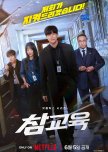
Teach You a Lesson took on the South Korean school universe leveling criticism on both sides of the podium and both sides of the front door. When it came to incompetent and/or corrupt teachers, ineffectual and/or harmful laws, bullies-both child and parental---Na Hwa Jin and his team were primed to slap people awake or into shape.Education Minister Choi Gang Seok, former special forces officer Na Hwa Jin, Na’s former subordinate Im Han Rim, and IT specialist Bong Geun Dae comprise the Educational Rights Protection Bureau team. The ERPB has immunity and special privileges when it comes to teaching students, teachers, school admin, and parents a lesson. The team hopes to decrease student and teacher suicides…and murders. They seek to make bullies understand how it feels to be bullied, show them the consequences of their actions and hold them accountable. Na takes a very hands-on approach with physical bullies. The team also deals with those bullied by social media, false police reports, or corrupt teachers gaming the system to line their wallets. Na and his crew use their special skill sets to bring justice for the innocent and punishment to the guilty, always with the desire to help the students and teachers do their best.
The drama sought to highlight a separate danger to students, teachers, and the school system in each episode. I quite liked the episodic quality as it kept certain stories from dragging on too long. In the first two episodes Na used restrained physical force which was a bit jarring, but I’m sure also cathartic for the students around the world who have been brutally bullied with no recourse. The cure might not have been realistic, but the disease unfortunately was and is. I also didn’t mind that the bad guys were often easily vanquished. Opposition to the bureau was shown but Minister Choi always kept his cool and refused to back down from protecting the innocent.
Due to the varied nature of the stories, different episodes will appeal more to different people. There were darker episodes where the bullies drove students to suicide. One episode left me laughing to the point of tears as the tables were turned on an adult bully. The drama was never subtle in their accusations as there wasn’t time to delicately beat around the bush. It also didn’t pretend that what the team did in the schools would resolve all the problems. Physical and emotional violence are complex social issues that require complex solutions. The weak job market and crushing pressure to be accepted into a good university put the students and parents through an emotional wringer for years. Even when laws had been enacted to protect students, both student and adult bullies used them as weapons against the innocent or to escape punishment. Students, teachers, admin, parents, and politicians were told they would have to be responsible for taking the next steps to improving the learning and life experience for all involved.
There were only a few things that truly bothered me. The age discrepancies while obvious are just a part of the genre going back to Grease or Steve Buscemi going undercover in 30 Rock, “How do you do, fellow kids?” Im was brought on to meet crazy with crazy but her screaming caused my eardrums to bleed. The total immunity clause was truly problematic for a country that not that long ago dealt with secret police who tortured and disappeared dissident students all in the name of national security. The immunity issue could very quickly lead down a disastrous path and was a huge red flag for me. And the story regarding the murdered teacher ended up making her look unbearably naïve at best and idiotic at worst. Her actions could have been interpreted as stalking or sexual harassment. When she was presented with evidence of a crime, she didn’t report it and confronted the person in an isolated area. Instead of the angelic representation, she looked like a walking, talking billboard for how to not handle the situation.
While Teach You a Lesson sought to highlight very serious problems in the school system it was also laugh out loud funny on numerous occasions. Most people know someone who was mercilessly bullied and the justice meted out was cathartic to see bullies finally get their due. The fight scenes were well choreographed and Kim Mu Yeol was believable as the Man in Black with the send the perp flying slap. Much like Taxi Driver or Leverage, TYaL was wish fulfillment, that a team could come in and easily right wrongs, stand up against the wealthy and powerful, and bring peace to students who had enough stress studying as it was. Maybe not a role model, but an entertaining drama with a world where the shameless were held accountable for their actions.
14 June 2026
Trigger warnings: Suicide and attempted suicide. Drug usage. Gambling. There was also a bone crunching fight scene with non-students.
Was this review helpful to you?
This review may contain spoilers
Ummm... what age was her brain at?
No. No. And no. Who has a mature adult relationship with someone who has the mind of a child? I dont care who you are. It's a form of pedophilia. I feel as if the other two lives were just the writers trying to make up for that mistake or maybe I'm still stuck on that point.The two leads acted very well and had great chemistry. I believe they had another period drama together this year.
Was this review helpful to you?
pure queer cinema!!
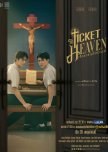
this series deserves so much recognition for everything from the story telling to the acting itself!!the dialogue is so meticulous, the small details in the background & the religious symbolism in every scene is impeccable and the pure, innocent love story of these two gentle souls is BEYOND memorable.
it's just so cinematic and incredibly well executed, everyone that was involved should be very proud of themselves and I hope they get all of the awards they deserve for such an incredible story!! 💖
Was this review helpful to you?
This review may contain spoilers
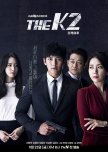
The K2: A Story About Love, Power, and the Terrifying Cost of Loneliness
At first glance, *The K2* appears to be an action thriller filled with political conspiracies, bodyguards, assassinations, and corruption. Yet beneath its action-heavy exterior lies something far more compelling: a character study of wounded people desperately searching for love, belonging, and security in a world where power has become a substitute for intimacy.This is particularly evident in Choi Yoo-jin, who remains one of the most fascinating and psychologically complex female characters in K-drama history.
Many viewers approach Yoo-jin as the series' villain. However, reducing her to a simple antagonist misses the tragedy at the heart of her character. Yoo-jin is not driven primarily by greed or ambition. She is driven by abandonment, humiliation, and an overwhelming need to be loved.
Her obsession with power is not born from confidence, but from vulnerability. Having learned that love can be taken away and trust can be weaponized, she builds walls around herself in the form of political influence, wealth, and control. She attempts to create a world where she can never again be powerless.
Yet despite everything she possesses, Yoo-jin remains emotionally starving.
The cruel irony of her character is that she constantly seeks love through methods that make genuine love impossible.
Her relationship with Jang Se-jun lies at the center of this tragedy.
What makes their marriage so compelling is that it exists in a space between genuine affection and mutual destruction. For all the manipulation, betrayals, and political games, Yoo-jin never truly stops loving him. Beneath her ambition lies a woman who desperately wants her husband to choose her —not because he needs her power, but because he genuinely loves her.
Se-jun, meanwhile, is far more complex than the selfish politician he initially appears to be. He is weak where Yoo-jin is strong, emotional where she is calculating, and often trapped between guilt, resentment, and dependency. Their relationship becomes a vicious cycle: the more Yoo-jin attempts to secure his love through control, the more he pulls away; the more he pulls away, the more desperately she clings to control.
In many ways, they spend years hurting each other while remaining unable to let each other go.
This emotional void becomes even more apparent in Yoo-Jin's relationship with Kim Je-ha, the K2 himself.
What makes their dynamic so compelling is that Yoo-jin is perhaps the only person in the story who truly recognizes Je-ha's strength while simultaneously longing for his affection. Unlike her husband, Je-ha cannot be bought, manipulated, or intimidated into loving her. He remains frustratingly independent.
And that is precisely why she becomes drawn to him.
For someone accustomed to controlling every aspect of her environment, Je-ha represents something she cannot command: genuine human connection.
Many viewers interpret Yoo-jin's feelings toward Je-ha as romantic obsession. While there are certainly romantic undertones, the relationship feels more tragic than romantic. What Yoo-jin desires is not merely Je-ha himself. She desires what he represents: loyalty freely given rather than extracted through power.
The series cleverly reinforces these themes through its recurring references to *Snow White*.
Anna, isolated and hidden away for much of her life, naturally embodies the role of Snow White. Yet *The K2* complicates the traditional fairy tale by blurring the lines between heroes and villains.
Yoo-jin is cast in the role of the Evil Queen, but unlike the fairy tale version, she is not motivated by vanity. She is motivated by pain.
The Snow White symbolism transforms the series into a modern psychological fairy tale. Instead of asking who is good and who is evil, it asks what happens when wounded people respond differently to suffering.
Anna retreats into innocence and vulnerability.
Yoo-jin responds by building armor.
Je-ha exists somewhere in between, carrying his own trauma while refusing to surrender his humanity.
What ultimately elevates *The K2* above many action dramas is its understanding that power and love are fundamentally different forces. Power can force obedience. It can inspire fear. It can secure loyalty.
But it cannot create love.
Ironically, the finale offers the clearest expression of this idea.
For much of the series, Yoo-jin spends her life trying to earn Se-jun's love through strength, sacrifice, and control. Yet it is only at the very end, when everything is collapsing around them, that the truth finally emerges. Se-jun chooses to remain with her and faces death at her side. Whether motivated by love, guilt, redemption, or some combination of all three, his final decision reveals that their bond was never as empty as either of them believed.
It is a bittersweet conclusion. They are unable to save their marriage, their ambitions, or themselves. Yet in their final moments, they achieve something they had been seeking for years: honesty.
In the end, *The K2* succeeds not because of its fight scenes or conspiracies, but because it presents one of television's most heartbreaking truths:
Sometimes the people who seem strongest are simply the people who have become experts at hiding how desperately they need to be loved.
And perhaps that is why Choi Yoo-jin remains the show's most unforgettable character. She is not merely a villain, nor simply a victim. She is a woman who spent her entire life trying to earn love through power, only to discover that love cannot be conquered, negotiated, or controlled.
It can only be given freely.
Was this review helpful to you?
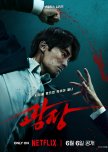
WARNING - it is EXTREMELY GORY.
But if you don't like gore; then don't watch...?This is really tailored towards hard action, raw, and gory/bloody scenes.
I personally am NOT a fan of it but man it was extremely well directed and intense!!
It still really had me on the edge of my seat the whole time and honestly so crazy twists that I was not expecting...
Honestly, storyline was really intriguing and totally understood the main lead.
Really won't get that deep into the lore; but if you like action, revenge - then this is totally for you.
I won't say I loved the ending but I definitely didn't hate it either.
Overall, I enjoyed it despite the crazy amount of fighting; would recommend to those who genuinely enjoy action packed watches; NOT for the faint hearted, deep storyline seeking people, just skip!
Was this review helpful to you?

This review may contain spoilers
Found Something Inaccurate
In episode 2 when Wine falls while bowling but gets a strike, she should not have gotten any points because she stepped over the black line. Also the entire scene is not how bowling works. It should be five people on each team, not a whole team free-for-all. I found good use out of the bowling unit in my high school PE class, but I never expected it to help with a Thai GL series. Otherwise the show is great. It makes me want a work girlfriend, even though it can’t happen in the meantime since I will likely soon be a babysitter.Was this review helpful to you?
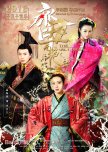
Absurd Royal Comedy That Starts Strong and Falls Flat
I have such mixed feelings about this one. It started off stylistically offbeat, with absurd content and raw execution—but somehow, it worked. It was enough to keep me watching, sometimes laughing wryly, even as I wondered how I was still watching it at all.The dynamic between the king and queen—between the queen and everyone—was genuinely funny. The ongoing punchline was that she was “ugly,” and the antics that followed were silly but still amusing in their own ridiculous way. However, around the halfway mark, the focus shifted. What began as intriguingly obscure became repetitive and slow. I grew to expect the same rhythm between conflict and resolution—and that’s where the drama lost me. That said, the ending was interesting. The final scene sets up a transition into Season 2, which has already been released.
Was this review helpful to you?
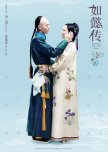
A Haunting Portrait of Life in the Imperial Harem
While there are multiple interpretations of Hongli and his harem, this one is presented from the perspective of Ulanara Ruyi and it is one of my top-shelf favorites. Although it spans 87 episodes, the storyline makes every moment worthwhile The narrative is intelligent, the plots are well-developed, and they seamlessly overlap and transition to keep you engaged.From start to finish, you’re fully immersed—both through the depth of the content and the emotional connection to the characters, making you an interactive viewer. It’s easy to become invested and deeply affected by the narrative, which unfolds through the lives and deaths of each consort and concubine, spanning several generations of children, love, hatred, rivalry, deception, hardship, and disappointment.
I highly recommend this, even for those who may not typically enjoy palace dramas. The storytelling is dynamic and dramatic, appealing to viewers drawn to narratives about women who longed for better futures yet were forced to live under rigid societal constraints—sometimes sacrificing their integrity and the lives they might have had, had they not been bound by familial duty or imperial law.
Was this review helpful to you?
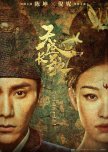
A Palace Intrigue Drama I Absolutely Loved
I absolutely loved this drama. It has a stellar cast, and the narrative is a nice blend of palace intrigue and conspiracies, twists and mysteries, and comedy and affection. I could watch this again. Some people had issues with the ending. So I suggest reading the novel or the novel's ending. If you enjoyed Nirvana in Fire, Ruyi's Royal Love in the Palace, or Royal Nirvana, you may enjoy this.Was this review helpful to you?
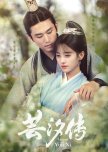
Blending Fantasy and Political Mystery: A Strong Zhang Zhehan and Ju Jingyi Collaboration
If you enjoy Ju Jingyi and Zhang Zhehan collaborations—or simply miss seeing Zhang Zhehan onscreen—you may enjoy this. It is my favorite Zhang Zhehan film.The story blends palace intrigue, hidden identities, and fantasy elements centered around specialized knowledge and power. As the narrative unfolds, secrets from the past are gradually revealed, adding layers to the conflicts between characters and factions. The dynamics between the leads and supporting characters are a highlight, with shifting alliances and contrasting personalities that keep the story engaging. The political tensions and underlying conspiracies also add depth to the overall plot. However, the ending may feel a bit ambiguous for some viewers, though the original novel provides additional clarity.
Was this review helpful to you?

Seo Mi Rae faces this question when she agrees to test out a virtual reality dating app where she meets a series of charming characters designed to be ideal boyfriends.
As a busy working woman who’s given up on dating, at first she’s half-skeptical, half-intrigued, but soon she finds herself sucked into the immersive experience.
She indulges in every classic romance genre setup — being wined and dined by a wealthy suitor, falling for the campus heartthrob, reconnecting with a crush after years apart, and more.
The cameos for the virtual boyfriends are brilliant (particularly from a scene-stealing Seo Kang Joon). And that’s the problem — the fantasy date scenarios are more fun and more frequent than Mi Rae’s interactions with her real-life love interest, and their dynamic doesn’t shift from a workplace rivalry to something more until late in the series.
It kind of undermines the moral of the story: that real-life connections are always more meaningful than imaginary ones, no matter how realistic. And that’s not the only problem with the script; it leaves little time for any connection or chemistry to develop between the leads, and Mi Rae’s emotional immaturity sometimes makes it difficult to connect with her and her choices as the main character.
Still, this drama is a lot of fun, a quick watch at only 10 episodes, and a perfect choice for something light and fluffy between more serious fare.
Was this review helpful to you?
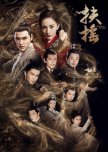
Strong Leads with Mixed Narrative Execution. Enjoyable, Despite Its Flaws.
I was immediately drawn in by the first episode. It’s action-packed with a compelling storyline, and Ethan Juan’s performance as the crown prince brings plenty of charm and humor. I couldn’t stop watching. The subplots in the first half worked well, adding twists and depth to the story. Even though I found Yang Mi’s performance somewhat subdued, it complemented Ethan Juan’s energy in a way that made their dynamic surprisingly engaging.However, around episodes 29 to 33, the pacing started to suffer. The story lost focus, with scenes that felt repetitive or disconnected—especially the recurring conflicts. While there were still compelling subplots, the second half would have benefited from tighter editing to maintain narrative momentum. The ending, unfortunately, felt rushed and uneven. And although the drama is based on a well-regarded novel, the adaptation seemed to pull from the source material without fully developing or explaining key elements, which led to a confusing and disjointed conclusion on screen.
That said, I really did enjoy Legend of Fu Yao—with some caveats.
Was this review helpful to you?
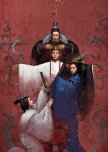
A Full-Scale Political and Emotional Epic
I really enjoyed this drama. It is a well-cast and well-executed production, from the main plot to the subplots, and from major to minor characters—each showing psychological depth and layered dynamics with character growth and intention. It has everything Chinese dramas used to offer before they became overly swanky and glitzy with an idol-driven focus. There’s a well-balanced blend of themes, from romance to politics, drama to history. This is a true epic journey of self-discovery, responsibility, and love; of blurred lines between enemies and friends; of political intrigue and backlash; and of a war-torn mind and kingdom during a turbulent era, where leaders struggle between old ambitions and change—between establishing peace and unity or preserving family heritage and power, all while discovering what truly matters in life. The only drawback is its length—54 episodes—which can be demanding and makes it a real commitment. Still, it’s one I’m glad I made, even if it took me quite a while to finish.Was this review helpful to you?
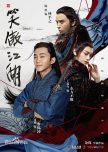
A Wuxia Drama Carried by Its Martial Arts World
I really enjoyed this watch, but it does come with its faults.At the beginning, I struggled with the writing, as some of the conflict felt repetitive and overly reliant on misunderstandings and convenient tension between characters. The pacing also felt uneven at times, and certain action sequences felt more frequent than purposeful, which made the early story harder for me to fully connect with.
Despite that, I stayed with it because I liked the characters and the overall foundation of the story. As it progressed, the narrative gradually found its footing and became more engaging and layered. The tone shifted in a way that made the second half significantly more compelling for me, with stronger emotional payoff, better pacing, and more satisfying developments.
Although I initially started watching for Ding Yuxi’s role, I ended up appreciating the broader cast just as much. The ensemble carries the story well, and several characters stood out to me for their presence and development. In particular, the main leads and supporting characters each brought something meaningful to the overall experience.
Overall, I’m glad I stuck with it, as the latter half made the journey worthwhile.
Was this review helpful to you?


