

Was this review helpful to you?
It's way too theatrical.
I had pretty high expectations for this drama, mainly because of the cast, the director, and especially the concept. The idea of the (ERPB), protecting the right to education, and tackling school bullying is something I’m really interested in, so I was genuinely curious to see how this organization would be used in the story.In the end, even though it’s overall decent and the variety of cases is interesting, I still came away a bit disappointed. I felt like the writing was way too simplistic, and I kept having the impression that the drama was missing the opportunity to explore something much deeper and more nuanced. Some cases work better than others, but overall I was expecting something a lot more ambitious.
That being said, I really liked the case in episode 5. It’s probably one of the strongest episodes so far. It deals in a pretty realistic way with academic burnout and the pressure/excesses of parents who completely cross the line in the name of their child’s success. I found it especially impactful because it felt grounded, and I could genuinely feel the stress and suffocation experienced by the teacher. That’s really when the show works best when it focuses on everyday, realistic issues instead of overly dramatized situations.
On the other hand, I kept feeling like the narrative often assumes the student is guilty right from the start of each investigation, while the teachers are framed as innocent victims. The story almost always sides with the teachers, even though abuse of power can exist on that side as well. That’s actually why I appreciated episode 4, where that nuance is finally acknowledged (otherwise I honestly would’ve dropped the show).
Another issue for me is how theatrical the portrayal of students and the school environment is. I was also a bit confused by the sets and especially how the classrooms are depicted.
I get that there are rebellious or disrespectful students in real life, but the drama takes it to an almost unbelievable level. The “gang” group in uniforms acting aggressively, touching teachers, yelling at them, and basically running the classroom feels way over the top. Sure, a few disruptive students? That’s realistic. But an entire class behaving like that? That’s really hard to buy into.
More broadly, the way some students talk to adults feels extremely caricatured. We’re supposed to believe that high schoolers would speak like that to literally any authority figure, including military personnel or intimidating adults? They really need to tone down the “delinquent gang” vibe. At several points, it felt more like a parody of troubled teens than actual students.
I know it’s adapted from a webtoon, but an adaptation still needs some grounding in reality. When you exaggerate behaviour too much just to create conflict, it ends up making certain scenes feel artificial and less impactful.
The dialogue also doesn’t really work for me at times. We’re often given these so-called “truth bombs” on screen, but they don’t actually feel that deep or impactful they’re just stated outright rather than properly developed. It ends up feeling a bit hollow, like the show is trying to sound profound without really earning it either emotionally or through the storytelling.
And even the teachers’ reactions sometimes feel unrealistic. In some situations, they could simply suspend the class, involve the administration, or push for proper disciplinary action. I don’t really understand why they just keep enduring such extreme behaviour without more realistic measures being taken. It often feels like the writing forces situations into something almost grotesque just to serve its own narrative, rather than portraying the school environment in a believable way.
Finally, another thing that bothered me is how every case resolution feels a bit like a “fairy tale world.” Everything always ends with police arrests, plus a press conference every single time, which quickly becomes repetitive and a bit over the top.
If you’re looking for something more grounded in reality and deep, I’d honestly recommend Juvenile Justice.
Was this review helpful to you?
adorable woojoo
the kid was adorable and cute he acted really amazing he was the reason i started and finished watching the drama and the only reason if im going to rewatch it again after years there was no need for two ML Actors i liked both of the but woojoo's uncle was enough and the FL actress oh my god she did not act good at all i think the kid was better in acting than her she was confused and making everyone confuse tooo she was really bad at acting i dont think i will watch any of her dramas the story could be way better it made me a bit disappointing but i liked the ML actors they were handsome and good with acting alsoWas this review helpful to you?
Was this review helpful to you?
This review may contain spoilers
Hmmmm. Kind of expecting a lot.
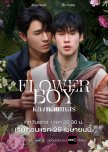
Flower Boy has a very interesting premise. A fantasy series centered around a person's scent being literally out of this world? That's unique. And honestly, them naming Pearl's character "Scent", that was cute.That said, I can't shake the feeling that this project was rushed. Since Love in the Moonlight was such a success, I assume they wanted to ride that hype. Unfortunately, because of that, I couldn't stop comparing the two. LITM set the bar high and became one of my favorite series, so I kept asking myself: what happened here?
The story already had a solid foundation. They even cast a great actor for Obey. He could have delivered an iconic sassy, toxic ex-type character, but instead they made him sassy yet surprisingly kind. Not that it's bad, but it felt like they didn't fully utilize his potential. There were also quite a few plot holes throughout the series.
Even the climax didn't excite me. I can't exactly pinpoint whether it's the script, pacing, or execution, but the buildup of the romance felt lacking. Because of that, the angst didn't hit me as hard as it should have.
And the ads... please. The product placements were so obvious and distracting that they kept pulling me out of the story.
As for the ending, it didn't really make sense to me. It's not even an open ending. It's just confusing. Maybe there's an explanation I'm missing, but it left me with more questions than emotions.
Sorry if this review sounds harsh. I don't mean to be a b*tch about it. I'm just genuinely disappointed because I can see the potential this series had.
In the end, the thing that truly saved the show for me was PearlPeak's chemistry. They worked with what they were given, and you can tell both actors are incredibly promising. I really hope they get another series together someday because they deserve a project that lets them fully shine.
Was this review helpful to you?
A magnificent Republican war drama depicting the resilience of ordinary people
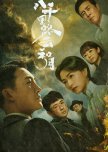
Echoes of a Thousand Moons is a Republican-era war drama set between 1937 and 1944, during the Resistance War against the Japanese Invasion. Far from a generic production, this is a drama full of personality that depicts the war from the perspective of ordinary citizens; there are no big generals or remarkable lone heroes, just soldiers and civilians who convey the resilience of the people during that period.Although the story of its characters is fictional, the background is historically accurate, and the attention to period details is outstanding for the most part. This amazingly paced drama is grounded and realistic while also artistic, with a poetic flavour that talks directly to the viewer´s heart. A very cinematic and textured experience directed by Zhang Yong Xin, enhanced by a poignant soundtrack and fantastic performances led by Wang Yang, Wan Qian, Huang CheChen, Yu Hewei, Bi Yan Jun and Cao Lei.
The English name holds up quite well against the original Chinese title "Ba Qian Li Lu Yun He Yue" (八千里路云和月), which can be translated as "Eight thousand miles of road, clouds and moon". This is taken directly from one famous poem of the Southern Song Dynasty, written by the general and national hero Yue Fei: "The River All Red" (满江红), which expresses ardent patriotism and the desire to reclaim lost territory. So, just from the start, the drama establishes a tone of sacrifice, long journey, and unwavering loyalty.
The story revolves around the growth arcs of a righteous KMT Brigade Commander fallen from grace (Zhang Yunkui), his family - formed by his scholar father (Zhang Qi Xian) and well‑educated, generous wife (Ding Yu Jiao) -, and a simple, uneducated cook (Meng Wanfu) that happened to cross paths with them. Along their journey, they encounter many other characters from different backgrounds and personalities, whether in the countryside or the big cities, a fact that allows the director to show all the different and complex realities of war, but mostly the painful and relentless power that historical events have on individuals' lives, dreams and desires.
The storytelling is organized into four arcs, with two main storylines: one on the battlefront which follows the main events of the war, and one focused on the lives of ordinary citizens, mainly set in Shanghai. This structure affects the screen presence of the characters throughout the whole drama, so if you're thinking of watching it because of a particular actor, be aware: you might be disappointed.
The first arc spans from the Battle of Shanghai to the fall of Nanjing, led mainly by Zhang Yunkui and Meng Wanfu. It is one of the most powerful sets of ten episodes I've seen so far – it holds the record of making me tear up in almost all of them, yet it is so poignant that I rewatch several. The battle scenes – with no gore - are stunningly composed and capture the essence of those devastating events that are kept in historical pictures, including a nod to the real-life missionary nuns who protected refugees during the massacre in that city.
From now on, although some characters might get on your nerves – especially in the following arc -, you won´t have such emotionally demanding storytelling in a row except for specific and short parts. But don´t get me wrong, it still isn´t for the faint of heart, yet its excellent pace and the humour and warm moments in between help balance things out.
The second arc is focused mainly on Ding Yujiao (the wife) and her newborn son, Meng Wanfu (the cook) and Zhang Qi Xian (the general´s scholar father) and their life as refugees on the Shanghai French Concession. After doing some research on this, I was in awe of how well the whole situation was portrayed. Meanwhile, the battlefront storyline has less time on screen but if you don´t know about this war, it will help you follow the events as it´s structured around the key battles of the war. Again, you´ll find quite faithful portraits of historical war records regarding the soldiers.
Another highlight of the drama is its portrayal of the Sichuan Army, which first appears near the end of the opening arc and remains present until the conclusion. What makes this depiction particularly compelling is that it reflects a fascinating historical reality that many viewers outside China may not be familiar with.
Before the war, the Sichuan Army was considered the absolute bottom of China's military forces, famously known as the "Two Guns Army" because they often carried a rifle in one hand and an opium pipe in the other - a habit from years of internal warlord conflicts-, or the "Straw Sandal Army" because their equipment was shockingly poor. They had virtually no artillery, armor, or air support and their food supplies were so bad they often survived on sweet potatoes and wild herbs.
Despite their terrible state, the Sichuan Army's courage on the battlefield completely rewrote their legacy. The scale of the sacrifice is staggering: of the approximately 3.5 million soldiers left Sichuan to fight the Japanese, over 640,000 were killed, wounded, or missing in action. 20% of all Chinese casualties, the highest of any province.
As the refugee storyline settles in, the third arc broadens the canvas, balancing Shanghai's political intrigue with the evolving battlefront – roughly 60% to 40%. On one side, the Shanghai storyline starts to focus on the increasing political complexity between the Japanese, Chiang Kai‑shek's government, the collaborationist government of Wang Jingwei, and the Communist Party, and the pressure suffered by Chinese businessmen to help the Japanese.
This is the arc ruled by Tian Jiatai, a romantic and idealistic businessman inspired by a mix of Saint‑Exupéry – the writer - and Don Quixote – the character. What I love about it is the explicit presence of the former novel in this part of the series, adding another poetic and touching universal reference to a fight against what seems impossible and pointless.
This political complexity paves the way for the final arc, with stronger focus on guerrilla warfare in the south and the convergence of the two storylines. When all of them collide again, it is devastatingly sad, evocative and complex. The tension building to the climax and the resolution return the power and emotional weight of the first arc, including another significant battle: Cheqiao. The ending is indeed satisfying, and just as the characters who reach that point are not the same as when the war started, neither are we as viewers.
All in all, this is a magnificent drama about the cruelty of war – and this particular war – on ordinary people, but mostly about their resilience, their love for their culture and for their land.
Was this review helpful to you?
The Perfect First CDrama
My family and I take turns choosing what to watch next. This was my choice and I'm so glad it was the first cdrama they watched with me. All of us were glued to the screen, giggling and kicking our feet. We cried with the characters and loved every second of this. I'm sure this is being added to the rewatch rotation.The story was phenomenal, the acting was superb, and I got to open up a new world for my family. I've watched cdramas on my own for a while now, but this showed them a whole new genre.
Also - my crush on Victor Ma is not going anywhere anytime soon, lol.
Was this review helpful to you?
Demons and Fairies: Beautiful Execution with Some Narrative Gap
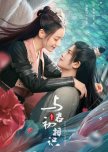
I really enjoyed this when I watched it during its original release—so much so that I even went on to read the novel afterward. Overall, the storyline was captivating, with well-crafted conflicts and strong narrative progression. The execution and world-building were equally impressive, and the supporting cast kept me fully engaged through their performances and character dynamics.This drama also features some of the most memorable and emotionally intense scenes I’ve seen, largely due to the strength of the supporting performances. Several characters are portrayed with a level of depth and emotional weight that makes their arcs especially impactful, and they’ve stayed with me long after finishing the drama. I don’t think they receive enough recognition for how layered and compelling their portrayals are.
This was also the drama that made Cristy Guo stand out for me. Her performance was incredibly convincing and added a strong emotional dimension to the story, further elevating the overall viewing experience.
Was this review helpful to you?
A Female-Driven Twist on the Tang Dynasty Mystery Formula
I loved this drama — it’s a real gem with a compelling detective narrative. It reminds me of Strange Tales of Tang Dynasty, but with a more prominent and intelligent female lead. Like in Miss Truth, she plays a key role in leading investigations and solving cases. The story is structured around four distinct cases, each solved collaboratively by a team of well-developed characters: the crown prince, Li Xinghe; Chu Qi, an investigator from the Court of Judicial Review; and Zhang Xiaomeng, a skilled coroner. Each character brings their unique expertise to the table, making the mystery-solving all the more engaging.Case 1. Posthumous Marriage.
Case 2. Serial Killer.
Case 3. Envoy Murder.
Case 4. Fox Spirit Murder.
Was this review helpful to you?
A Visually Breathtaking Costume Fantasy
A few films have really set the standard for me when it comes to Chinese costume dramas, and this is one of them. It checks all the boxes for what I personally enjoy in the genre:✅ Strong fantasy elements
✅ Dark, atmospheric aesthetic
✅ Morally complex characters
✅ Xianxia-inspired worldbuilding
✅ Strong adaptation source material
✅ Beautiful cinematography
This is a visually stunning adaptation of a Jiu Lu Fei Xiang novel, presented in a way that also works well as its own standalone interpretation. The storytelling is emotionally engaging, with romance that feels natural rather than overdone. The pacing is tight, with no unnecessary subplots or prolonged misunderstandings, and lighter comedic moments help balance the more serious tones.
The cast is well-selected, with strong performances from both leads and supporting actors that bring depth and energy to the story. Overall, it’s a highly polished fantasy production that I would recommend to anyone who enjoys xianxia or atmospheric costume dramas.
Was this review helpful to you?
A Character-Driven Political Drama Worth Completing
The storyline is intriguing, and I found myself genuinely invested in the politics and character dynamics. However, without watching both seasons, the story feels incomplete.That said, the comedic interactions between characters are enjoyable, and I liked all of the roles—though some stood out more than others. My biggest critique lies in Part 1, where a few character arcs felt rushed while others dragged. Still, I enjoyed the first part, adored the second, and ended up loving the series as a whole.
What I appreciated most is the psychological depth given to each character. We see lost and forced love, humiliation, regret, and abandonment shaping their lives. These emotional layers influence their decisions, affect their children, and echo into future choices. The actors did a wonderful job bringing all of this to the screen.
Was this review helpful to you?
Turn off your head and enjoy the ride
Look, logistically speaking, this show isn't the best. Important events never get mentioned again (the husband, the crime, the sa, etc) and the story relies very heavily on crazy coincidences, especially with the lead couple somehow meeting each other by accident every other day😂 Despite that, it's a very nice watch. The pacing is good. There's drama to entertain you but it never hurts you, meaning it never crosses the line to actual angst. The characters are enjoyable, they are also all flawed which makes them seem more real. As others mentionned, the time skip was a weird decision but it lasts for five minutes so not that big of a deal. The romance at the end with the lead couple was a bit disappointing which is my only negative. Even after officially being together, they still act like shy teenagers throughout their whole relationship. Which maybe could pass if it was their first ever relationship, but they're 30 years old grown people, one of them being divorced. It's just not realistic and makes it a bit weird.Was this review helpful to you?
Yu Xuanchen and Wang Xingwei Shine in Historical Comedy
I really enjoyed this and would recommend it. It is absolutely hilarious and engaging, one of Yu Xuanchen and Wang Xingwei's best comedic performances in my opinion. Some segments felt a bit dragged out (once relationships were established between the leads), but it didn't detract from the overall drama and could work better for people who enjoy romance or romantic tropes. Though they aren't unique and are predictable, I enjoyed the character and plot development, wanting to watch the entire drama for its light but fun storyline. It's a solid comedy that left an excellent impression on me.Was this review helpful to you?
A Morally Complex Fantasy War Story. Not Perfect, but Still Entertaining.
I’m unsure how to review this because I don’t think the drama will appeal to everyone, yet I personally really enjoyed it. It’s not a top-shelf favorite for me, but it’s still a worthwhile watch, and I don’t regret seeing it.Pros
. Beautiful cinematography, from costumes to fight choreography to overall world-building and settings
. An engaging narrative that stays focused, with subplots that are well integrated rather than distracting
. Side stories that feel meaningful in their own right and sometimes even steal the spotlight
. A morally nuanced world where different sides feel understandable rather than purely “good vs evil”
. A continuation of the broader Novoland universe
. Subtle romance and fantasy elements that don’t overpower the main story
Cons
. Some action and plot developments feel underexplored, which can make certain moments feel flat
. Occasional inconsistencies in character behavior and tone without clear development
. Some supporting characters feel underdeveloped, leaving gaps in the overall narrative
. Certain relationships lack sufficient growth, which can make interactions feel a bit static
. Dialogue can feel stiff or unnatural at times
Overall, while it has clear flaws, I still found it engaging and enjoyable enough to recommend for viewers who like this type of fantasy political world-building with a more restrained romantic focus.
Was this review helpful to you?
A Court Drama Full of Mysteries and Twists
I enjoyed this, though I have to admit I forgot I was watching it when it first came out. The pace is fast, and the drama is easy to finish within a day. The premise is engaging, but some subplots contain plot holes, and certain story developments didn't work particularly well for me.If you're comfortable with melodramatic revenge-driven stories, this drama blends palace intrigue, hidden agendas, shifting identities, and long-buried secrets. The narrative follows a woman whose life becomes intertwined with powerful figures from the royal court as she becomes caught up in a series of mysteries connected to the past. Along the way, the drama explores themes of loyalty, vengeance, power, and obsession while gradually uncovering the truths behind several interconnected events.
While I had some issues with the execution, I found the story entertaining enough to keep watching, especially given its brisk pacing and short runtime.
Was this review helpful to you?


