

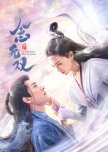
Black-and-white morality
First, let me say that I really loved this series. For example, I couldn’t resist all the delightful touches that made Goddess Wu Shuang so mesmerizing: her whips, her mechanical bird, her little purse that would hold an elephant–well, let’s just say, a lot of stuff. I also loved the often hilarious minor characters, such as Zeng Qi, the Tower boat maid who exuded goodness and crossed her eyes when she went over to the dark side, and Qian Lin, the reformed War Demon whose acrobatic fight moves were astonishing. I could name ten or twelve other characters whose stories enriched this drama. I loved the idea of the Tower boat soaring through the skies, the fierce drought dragon, and the toddler who could eat nothing but gold.In other words, the series is not lacking in imaginative plot twists or details.
The male lead,Yuanzhong, starts out as a grim, grouchy misanthrope with a shriveled soul. Somehow the actor made this unpleasant character likable–partly, I think, by making him honest and real.
As for the OST, even though this series is 36 episodes long, the music was mostly haunting and beautiful--although to be fair, at times, a bit shrill.
Like many lengthy Chinese series, this one isn’t perfect. It drags now and then. The ending isn’t as clean as it could be (Whatever happened to Zeng Qi? We never find out.)
My main problem with this drama is that it embraces a strict morality of good versus evil–sometimes in the most puerile way. When one of the main characters turns “bad” we know because he’s now dressed in black and has an evil, maniacal laugh. The domain of the gods is depicted in white and soft pastels. Characters seldom engage in reflection or analysis, Punishment (or sometimes torture) is automatically dished out for misbehavior.
Still–I highly recommend this poignant, entertaining (and underrated) series.
Was this review helpful to you?
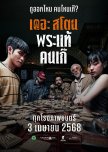
эмэгтэй
There is only one main woman, and with negative personality. Not surprise for Thai mainstream stuff. I expect some good stuff like Thai series with BL and GL theme in Chinese streaming service. Some scene is clean, but I still see a lot of dirty places, I have never seen when I was in Thailand. I do not understand why they like to show dirty places in their own country, while foreigners who live in Thailand do not experience those dirty places.Was this review helpful to you?

Perfect on Paper
From a dude's perspective. This drama whoof... goodness.I'm not writing this review for anyone to read. I'm writing this as a memorial to myself as to why I started this drama, knowing it was a miss from the start, with an understanding from the rest of the reviews. I still spent 16 long hours and finished it.
As a dude, it's not my place to sit here and provide introspective and wordy paragraphs, wasted enough while watching this piece, which I cannot get back.
After a night of thinking about it here are my thoughts.
Acting:
The FL, honestly, it's my first time watching any of her work. She checked her drama history; she's a veteran but not my cup of tea. Her voice is annoying, and she's too childish. like really over the top. Too much smiling, and when she's not smiling, she's crying. You can sense she's probably a real female doggy in real life, and that's ok; she's short. Most short ladies are spicy. Would I give her another chance in another drama? Sure, I get it; this is a rom-com, so maybe this was called for in the script.
The ML was quite good. He can switch his aloofness on and off at times, and you can see it. Tall dude! like wow. I know he cannot help it; it's the genes. Lots of eye candy for the ladies.
Script:
Love the time travel trope; nonlinear storytelling is always fun. On paper this should have been a hit. breaking down the parts where she goes back and the mechanism on how she does it. The rules she can not directly break, but the FL seems to bend...ok, I get it; on paper it sounds great. But in practice 16 episodes is the problem, too long. Should have been 12. A normal person would have gone mad after 2 or 3 times, depression at least. NOPE, not this FL leading the story. Just smiling and doing what the script requires.
Overall:
I could not stand the height difference between these two. Chemistry between them was great for the 1st half; after a while, you can sense they wanted this drama to end as much as I did. Believe that's where their true professionalism kicked in. Kissing scenes in the beginning vs the end were quite different. I like the screenwriter for this drama and enjoyed other works, but this was too long for the team, and I'm sure they know it too.
Was this review helpful to you?

1 of the 4 is good.
I was in Thailand for a big while, and I think this country is cleaner and nicer than what I saw in this show. I do not understand Thai people who tried to make Thailand look bad. I do not understand why many Thai people had problem with Apple old advertising, while many Thai directors and producers did worse things.1st ep: Setting is cool, but the plot is not enjoyable.
2nd ep: Wes Anderson's cinematography style. It's not interesting to imitate others. + same old male gaze, but try to add feminist message.
3rd ep: Best ep of this show.
4th ep: Very dirty scene. Many people, now, are anti-vaccination. It's not cool to write the plot this way.
You know what? If Thai producers and directors make something nice and clean and positive, like, Thai stuff in Chinese streaming service, all people from neighbor countries would love it a lot. All Malaysia, Indonesia, Filipino, and Myanmar would love it.
Was this review helpful to you?
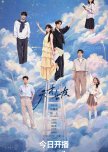
Idk why this feels so off for me, sorry
Story wise, its interesting. The premise, setting, and plot is good enough to be the reasons u keep watching. Even i start to like the side characters, such as her brother, shen fuxuan, tang tingting, and duan qiyan. But honestly when it comes to the main leads, i feel emotionally disconnect, it just numb, dull, and bland. imho, the chemistry is off. Sorry i couldn't force myself to finish this, so yeah i dropped it despite everything. I really love the actors (hu yi tian and tian xiwei) especially xiwei. I had my high hopes after watch her previous projects and had faith that this could be good too. but still, after i struggle to finish the first 9 eps, the chemistry is still nowhere to found. Lastly, i feel tian xiwei heavily carried this drama.... idk but i feel the writing for ml character is too stiff or less expressive, so i unconsciously make 2x speed or skip skip while the main lead interacts, that's a crime... i prefer to watch the dynamic between Lin Zhixia and her brother or with anyone except the male lead😭😭Was this review helpful to you?

So worthy to watch
The first eposide was so good i keep rewatching again and again iam addicted deanmoth chemistry on another level.dean is so good he is playful but you love him i loved how moth keeps refusing left and right but he dean succeeded to make him notice him i think cuz dean respected moth boundaries and ask him before he do anything ….williamest success again to give us wonderful series..Saturday booked for you maniac……iam so excited to know how deanmoth gonna fall for each other..Was this review helpful to you?
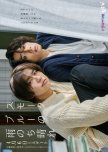
Life in Smokey Blue — A Mature BL Without the Emotional Maturity
I should probably have been the ideal audience for "Life in Smokey Blue". I have been watching Japanese BL for decades, going back to the period when movies were essentially the main option before television BL became what it is today. I also particularly enjoy stories about adults who have already lived enough to carry regrets into a relationship. And Takeda Kouhei is certainly my type: handsome, mature and actually close to my own age. So two men approaching forty, former workplace rivals who slept together once eight years ago and unexpectedly reconnect when both of their lives have changed should have been exactly the kind of BL I love. Unfortunately, something fundamental was missing for me: I never really felt that these two men were in love. That distinction is important because "Life in Smokey Blue" contains all the physical evidence usually used to sell romance. They kiss. They touch. They have sex. They spend increasing amounts of time together and gradually become part of each other's everyday lives. But skinship does not automatically create chemistry, just as a sex scene does not automatically create intimacy. I need to feel attraction before the characters touch, tension when they are trying not to touch, or some emotional change after they finally do. Here, most of those moments remained strangely flat for me. This is particularly surprising because nobody involved can easily be blamed for inexperience. Takeda Kouhei has been acting for years and has already shown how effective he can be in BL through "Old Fashion Cupcake". Shibuya Kento also has a long acting career. Director Takahashi Natsuki worked on "Jack o' Frost" and "When It Rains, It Pours", while she co-wrote "My Personal Weatherman", three BLs where I could absolutely feel complicated attraction between the characters. "Life in Smokey Blue" was also co-directed by Nakada Ere and written by Hiraki Mari and Aoki Erika. This is not a production made by people discovering romance for the first time. In fact, reading Takahashi's own comments helped me understand the result better. She was already a fan of Hamada Kamome's manga and specifically loved how gently it approaches people's lives without forcing itself too deeply into them. She also described the drama as showing different ways to live without reducing everything to simple questions such as whether two people are officially together. I can respect that intention. I simply don't think restraint and emotional distance have to become the same thing.But a quiet romance still needs a pulse. That was where the silences became a problem for me. Japanese drama can use silence beautifully. A pause can reveal embarrassment, attraction, anger or something a character cannot say aloud. But silence only becomes meaningful when the audience understands what exists underneath it. Too often here, I felt I was simply watching people stop talking. Instead of increasing tension, the pauses sometimes made scenes awkward and emotionally empty. The same problem affected many of the potentially strongest storylines. Kuji left a successful pharmaceutical career partly to care for his sick father and eventually built another career as a medical translator. His brother, meanwhile, lives abroad and later returns as the family prepares for the house to pass into his family's future, eventually with the old house being demolished. That situation contains enormous possibilities: resentment, guilt, the unfair distribution of family responsibilities, the question of who sacrificed years of his life and who ultimately benefits from that sacrifice. Yet the drama mostly turns it into a quiet discussion about the brothers having mutual complexes about each other. I understand that this is deliberate. I just wanted more.
There is a difference between manufacturing melodrama and allowing an existing conflict to have consequences. Kuji gave up part of his career to care for their father. The brother who was elsewhere will effectively inherit the future of that family space. Even if Kuji genuinely does not want a dramatic fight, there should be complicated emotions surrounding that. Instead of opening that wound, the drama gently touches it and moves away. The same applies to sexuality and family. These are two gay men approaching forty, which should already make this more interesting than another school BL where coming out means telling a best friend that you like the boy sitting beside you. At this age, sexuality is connected to decades of family history: what you have told your parents, what you have hidden, what assumptions relatives have made about marriage, and which parts of your life you have learned to keep separate. The story raises some of those questions but rarely develops them into the kind of family confrontation or evolution I expected.
Even Sakutaro's psychological collapse feels strangely light. The official premise describes a former elite salesman who watched his performance decline while people around him married, transferred and moved forward with their lives, until he finally reached his mental and physical limits and suddenly quit. That is extremely relatable material for someone approaching forty. Feeling that everyone else has somehow progressed while your own life has stalled can destroy confidence. Yet this potentially difficult subject becomes another element the series introduces, observes and then quietly allows to drift past. The death of Tajimi frustrated me for similar reasons. He collapses and dies, leaving Sakutaro grieving while life around him continues. I understand what the drama is trying to say: death does not always produce a spectacular cinematic transformation. Sometimes someone disappears and everyone still has to wake up, work, eat and continue the next day. There are viewers who found that understatement extremely moving, and I can understand why. For me, however, it crossed from understatement into underdevelopment.
Death does not have to create screaming, breakdowns and hospital corridors to change a person. It can change tiny things: how someone talks about the future, whether he suddenly becomes afraid of losing another person, whether he calls his mother more often, whether he finally says something he had been postponing. Tajimi's death could have changed how Sakutaro understood his own relationship with Kuji. Instead, what should have been a life-changing reminder of how suddenly somebody can disappear often feels like another philosophical note added to a series already full of them. That difference became particularly obvious to me after watching "A Winter Sun Wakes the Wind in Spring Hills' Dream". That Chinese BL also dealt with adult love, family expectations, death, grief, closeted relationships and the difficulty of building a life while other people interfere with it. But those themes actually transformed the characters and their relationship. Here, many equally interesting ideas remain atmosphere rather than drama.
I don't therefore think Japanese BL as a whole is somehow incapable of evolving. That would make no sense when "My Personal Weatherman", "Jack o' Frost", "When It Rains, It Pours" and many other Japanese productions have already shown me exactly the opposite. What disappointed me is that "Life in Smokey Blue" sometimes feels conservative beside what BL from several countries is now willing to do with adult characters. Quiet storytelling can be sophisticated, but quiet should not become an excuse to avoid emotional confrontation. The visual language contributed to that feeling. So much of the relationship happens inside houses, rooms and enclosed spaces that I eventually started finding the drama claustrophobic. At the beginning this makes perfect sense. These men have lived privately, their relationship is uncertain, and Kuji's house becomes a protected environment where they can slowly reconnect. But I expected the visual world to expand as they did. Imagine how effective that could have been. As their lives opened, the camera could gradually have followed them outside more often. Private rooms could have given way to streets, parks, travel, family gatherings or simply ordinary public spaces where being together carries a different meaning. The physical expansion of their world could have mirrored the emotional expansion of their relationship. Instead, the brief moments outside rarely felt important enough to create that progression. There is an irony here because Takahashi explained that she deliberately used extremely close, restricted framing for the sex scenes because she did not want the audience observing the characters objectively from outside. She wanted us inside their private relationship. I like that idea very much. But across the entire series, I sometimes felt the opposite effect: instead of bringing me emotionally closer, all that enclosure made me increasingly aware that I was watching two people contained inside a carefully constructed little world.
And then there was Yamamoto Ryuto. He plays Sakutaro's teenage nephew Tamaki, and somehow the youngest character repeatedly became the person who woke the drama up for me. He is cute, certainly, but that isn't really why he stood out. His presence changes the rhythm of scenes. He brings curiosity, energy and a more immediate emotional reaction to everything around him. When he enters one of those very restrained domestic scenes, suddenly I pay more attention. That is quite an achievement for a supporting actor surrounded by performers with significantly more experience. He never needs to aggressively steal a scene; he simply makes the scene feel more alive. I genuinely hope someone eventually gives Yamamoto Ryuto a substantial BL lead because I would like to see what he can do when he is responsible for carrying the relationship rather than briefly disturbing the calm of someone else's.
What makes this review difficult is that I completely understand why other people loved "Life in Smokey Blue". It currently has many positive viewer reactions, and some people specifically praise exactly what didn't work for me: the ordinary domesticity, the slow rhythm, the feeling that these men are simply learning to exist beside someone else instead of experiencing a grand romance. The original manga is also highly successful, with hundreds of thousands of copies in circulation, so clearly this approach connects strongly with an audience. And chemistry is subjective. Someone else may look at Takeda Kouhei and Shibuya Kento sitting silently together and see two men so comfortable that words are no longer necessary. I looked at the same scene and frequently wondered where the desire had gone. Neither response is objectively wrong. But after watching BL for roughly thirty years, including a very long history with Japanese BL itself, I know the difference between a slow romance that makes me ache for two characters to move one centimetre closer and a slow romance where I simply notice that they have not moved for a while. For me, "Life in Smokey Blue" was the latter.
Final Thought
The frustrating part is that I don't think "Life in Smokey Blue" is a bad story at all. Two gay men approaching forty reconnecting eight years after a one-night stand is actually a fantastic starting point. They are no longer young enough to pretend that love exists separately from careers, aging parents, money, family responsibilities, grief and the uncomfortable realization that there may be fewer chances ahead than there were behind them. That could have produced one of the strongest adult BLs of the year. The actors were capable. The directors were capable. The writers were capable. The source material was popular. There were kisses, sex, family problems, burnout, death, career changes and two men slowly constructing a shared life. Yet somehow I finished it feeling remarkably little about the central romance. Perhaps that is exactly the kind of gentle, almost anti-dramatic experience Takahashi wanted to create. Her own explanation suggests that it was. But intention does not automatically determine how a work affects every viewer. I can recognise the sophistication of an artistic choice and still think the finished result became too emotionally restrained for me. Silence can be incredibly romantic. So can ordinary domestic life. Two men do not need dramatic declarations, jealousy and constant sex to convince me that they love one another. But they do need to make me feel something in the space where all those things are absent. "Life in Smokey Blue" rarely did.
So while I know many viewers consider this a beautiful mature BL, I can only judge it against what I have watched before, including decades of Japanese BL itself. And compared with the best examples of what this genre can do with silence, grief, family and adult desire, I found this mediocre at best. I wish I hadn't, because Takeda Kouhei deserved a romance that made me feel as much as I enjoyed looking at him.
Was this review helpful to you?

This review may contain spoilers
A little-known series that’s unfairly underrated
First of all, the acting is excellent—with the exception of the female lead, Jung Ji So. For his part, Lee Jun Young (Jun) displays a wide range of feelings and emotions, shifting between the brooding heartthrob, the workaholic, and the sentimental teenager. On the comedy front, the two Shax juniors, Park Yu Ri and Jong Ho, make an irresistible duo: “Is this a math problem?” “We found A.” “Enough with A and B—talk about C and D.”... I really laughed every time they appeared. One of the secondary couples is likable—almost more believable than the main couple (Jung Ji So really isn’t up to the task)—and La Ri Ma’s character really grabs your attention. As a bonus, there are a few well-executed musical numbers, notably the retro and disco songs in episode 10 and Shax’s performances.To this we can add the consistency of the performances, which is certainly due to the fact that most of the actors are “idols” themselves—sometimes from the same group—and that they’re acting out situations they’ve experienced or observed. For while the plot could certainly fit on a subway ticket, that’s because the real focus is on the behind-the-scenes world of K-Pop and its agencies. Some critics have lamented the show’s lukewarm approach, but TV series can’t say everything without risking cutting off the branch they’re sitting on : it’s the agencies that provide the necessary and ever-renewing supply of idols to attract a larger audience. However, it’s hinted at well enough for viewers to figure out the rest. Episodes 1 and 2 set the stage, but afterward, subtle details drive the point home :
- trainees being sold from one agency to another,
- filthy apartments (“rats and cockroaches”),
- dangerous dieting practices (“lose 2 kg in 2 hours”),
- pressure to engage in prostitution (“attend a dinner party”),
- the group’s omnipresence and the lack of privacy (the “dorms”),
- persistent debt,
- grueling rehearsal sessions,
and on top of that, for those who have “made it”:
- mindless reality TV shows (“Alone in the Wild”) and other promotional gimmicks,
- intrusive sasaengs (obsessive fans),
- exploitative 6- or 7-year contracts,
etc.
Fortunately, there are also positive aspects, such as being able to make your own choices once you’ve achieved success (La Ri Ma), and the warm camaraderie and mutual support within the group (Shax, Sparkling, Tea Party).
So, despite the flaws, I’m giving it a 10 simply because these characters are moving and will stay with me for a long time.
Was this review helpful to you?

This review may contain spoilers
Colorful spin-off
I loved it — the couple, particularly Ong Seong Wu (I love his jackets!), and just about everything else. The scenes in Mongolia, the secretive and wealthy environment (along with the Penthouse-like OSTs), the way it plays with capitalism, the female empowerment through the mother, the grandma (who both had their own backstories), and Nam Soon herself, the great comedy, like the lazy brother (he was so funny and reminded me of the sloth in Zootopia), and the way it makes fun of misogyny.This drama feels much closer to a superhero comic than a typical K-drama like Strong Girl Bong Soon. It wasn't trying to simply repeat Bong Soon; it took the concept somewhere else.
There were so many little moments I loved, like Nam Soon looking at Hee Sik dancing from afar thanks to her super vision (iconic scene), or the rain falling above him with the rainbow, and when he disguised himself as a woman. Nam Soon keeping a picture of Eun Woo in her journal in Mongolia and saying she wants to date a good-hearted Korean guy, and then fate happening in such a fun way, was great too.
I also liked the open-minded take on old couples, contemporary issues, vulnerable people, family relationships (some more complicated than others), adoptive parents and finding your biological family again, teamwork, and all the side characters: the homeless couple (which had a fate of irony), Mr. Bread and his OST, the semi-villain Hwa Ja who impersonated the real daughter, detective Yeong Tak.
I liked how it was a big fight revolving around drugs and the Russian mafia, while Nam Soon had even bigger superpowers, as well as the "link" they had within their family. The production quality was high, the ending was great (a satisfying conclusion and then a surprise), and Season 2 might even come out according to news.
I didn't think it was poorly written, and there wasn't too much content either. It was all tied together, and there were 16 episodes of about an hour each, which is more than enough.
People hated it because "the villain was hot" (no, his backstory does not allow him to cause mass murder, using people's vulnerabilities, threatening Nam Soon and her biological family to death, and killing someone for self-satisfaction 🙄). I'll never forgive them for insulting the leads, saying the male lead is ugly and hating on them, even the whole cast. Some even said, "Who cares about an old couple? I skip their scenes, only watching for the villain" — which is exactly the kind of superficiality the drama was calling out.
While the villain was good and a fitting casting choice, it's absolutely untrue that he carried the drama. Everyone did. It's an ensemble cast, unlike the prequel.
I've also seen people say, "There are too many characters/storylines, so we can't get attached to them except for the villain." Si Oh barely had any screen time in the first episodes and not that much afterwards either as there were many characters, clear evidence they weren't paying attention. Even the music and acting would be rated a 1 by some because "everything was annoying and cringe except Ryu Si Oh."
About the music: it had K-pop songs because that was exactly what the drama needed.
Comparing it to the prequel :
The prequel focused more on the rom-com/CEO romance. Hee Sik and Nam Soon had great chemistry too; it was just different. There was the typical love triangle, a popular male lead who acted all cutesy, and a more conventional K-drama structure.
And while the girl was childlike there too, people complain about Nam Soon even though you actually see how she grew up and understand her personality. Then they complain about Hee Sik because he's "boring" ???
The romance here was more mature, if anything. I loved his acting throughout the drama. He always improves, and I think he showed his range especially well here. I was glad he got a role in a big drama like this. It was popular in Korea too — JTBC is a paid channel, and it got high ratings.
One last thing: the romance isn't bad simply because Hee Sik got attached to her quickly. He was just a kind-hearted policeman, and I loved how they got entangled. Their relationship was so cute, especially how she found her dream thanks to him.
Strong Girl Nam Soon doesn't need to be Strong Girl Bong Soon again to be good. They have different strengths, and I actually enjoyed seeing how the spin-off expanded the concept into something bigger.
My favorite contrast between the two stories is their protagonists' internal struggles and family relationships. Bong Soon struggles to accept her strength and feels that her mother values her mainly because of it, while also believing her mother loves her brother more. Nam Soon, on the other hand, is openly proud of her strength and is immediately loved and welcomed by her family after being missing for so long — instead, her brother is the one who feels left out. He became a victim of the drug, but he was saved. (Meanwhile, Hee Sik lost his brother in the past, then his team mate due to the drug and almost Nam Soon.)
Their romantic journeys reflect these differences too: Min Hyuk loves Bong Soon wholeheartedly for who she truly is, while Hee Sik similarly cares about Nam Soon beyond her physical strength. However, unlike Bong Soon, Nam Soon doesn't need that reassurance. I also like how this contrasts with Si Oh, who seems fascinated by her strength and sees her as almost fearless or invincible, while Hee Sik recognizes that she can still be vulnerable and hurt.
Also, while Bong Soon chooses the CEO over the cop, the opposite happens here.
By the way, you can watch it without having seen the prequel, although Bong Soon and Min Hyuk do have a cameo, and Nam Soon is Bong Soon's distant cousin.
P.S. There was a Parasite and Nevertheless reference too, which was awesome.
On edit: Two things I've learned: there is a spin-off manhwa, Strong Girl Geum Ju (about Nam Soon's mother), and the drama actually surpassed Strong Girl Bong Soon in the TV ratings. Imagine calling it a flop when it was thriving on Netflix and on TV.
Was this review helpful to you?

2016 peak drama
This drama is iconic for a reason. It's not just a love story, it's pure magic.
Cheon Song-yi is one of the most unique and unforgettable female leads ever. She's loud, spoiled, brutally honest, and so funny - but also so lonely and vulnerable. Her character representation is just so good. You can't hate her even when she's being extra.
And Do Min-joon? He was literally born for this role. So handsome, so cold, so perfect for an alien who has lived for 400 years. The way he tries so hard not to fall for her but fails miserably is everything.
Their chemistry is insane. The comedy when she shamelessly chases him is hilarious, but the emotional scenes will make you cry.
And I have to talk about the second female lead - Yoo Se-mi. She is so beautiful, I've seen her in tons of dramas as a side character, but here she is the best second lead. You feel for her.
The plot twist, the thriller track, the OST, the fashion - everything about this drama has a different vibe. It's funny, heartbreaking, and fantastical at the same time.
An all-time classic. If you haven't watched it, you have to.
Was this review helpful to you?
This review may contain spoilers
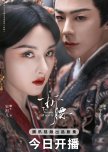
First ever C Drama
This was was my first ever C- Drama which got me hooked to C-Dramas. The ML and FL are great together and have good chemistry. The second leads were just OK and personally found the cousin sister irritating.Music was excellent and introduced me to Liu Yu Ning as not only an actor but also a great singer.
Rewatched it several times and it was well done overall.
Story was solid as was production value.
Was this review helpful to you?
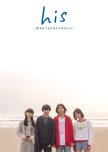
His: I Didn't Think I Would Fall in Love
0 people found this review helpful
A nice and very realistic series.
This short series was sweet. It's a very realistic story about how life is when you fall in love with the same gender.The production wasn't the best, a lot of scenes were badly filmed. You see a lot of half heads in frame.
The visuals weren't great, but gave it a realistic feel, so that was good. The music was ok.
The actors did a good job. I didn't really feel chemistry, but the longing was very clear.
I recommend watching this series.
Was this review helpful to you?

not so good
This was literally my first K-drama ever. I watched it on TV when I knew nothing about K-dramas, so compared to our regular soap operas it felt SO different. That's why I liked it so much back then.
But after re-watching it now, I started to hate the female lead tbh. I don't think she's a good actress, like her expressions are the same in every show she does. She is really beautiful though, can't deny that.
The first half is actually really good - funny, cute, fresh concept. But the last few episodes are so boring, you will definitely get annoyed. It gets stretched for no reason.
And yeah it's an old drama so some scenes are just cringy and hard to ignore.
Still, the concept was something different at that time - a guy allergic to humans falling for a girl pretending to be a robot - so it was good for a one-time watch. I have a soft spot for it because it was my first, but I wouldn't re-watch it again.
Was this review helpful to you?

no chemistry
Second Couple Carried The Show For Me*No chemistry between the main leads for me. I just saw edits of their confession scene and started watching this. Except for those scenes, there is nothing special in this drama.
They fall in love too fast, so there was no proper build-up and I couldn't feel the chemistry. The female lead is so annoying to watch at times, yes. She keeps saying one thing and doing another, which gets frustrating.
But the second couple totally saved the show. Seo Dae-young and Yoon Myeong-joo - she is so cute to watch. No annoying attitude, calm, mature, and she knows how to handle the situation and stand up for her love. Their love story is actually more painful and cute to watch than the main one.
Their bromance between Yoo Si-jin and Seo Dae-young is good, their loyalty and friendship is nice to see, but the overall story is not so much interesting beyond that.
For me it's not a very interesting or recommending show. The cinematography, OST, and action scenes are great, and Song Joong-ki is charming, but I watched it only for the edits and stayed for the second couple.
Was this review helpful to you?

Slow Burn Slice of Life
It took me eight years to give this drama a try. I was living in Korea when it aired and the hype was so high that I couldn't bring myself to join the masses. As the years went by I heard mostly negative reviews from my foreign friends and only my Korean friends seemed to like the drama. I pretty much knew the plot and never felt the need to watch it due to the mixed reactions from everyone. The only reason I finally watched it is because I've been on a Jung HaeIn phase somewhat against my will - and no one will dispute this is the drama that launched him into leading man roles.To begin, I should say that anyone who is not Korean or doesn't know/hasn't experienced Korean culture will be frustrated with the majority of the drama. It is not a typical Kdrama rom com or soap opera. The styling, characterization, and pacing are quite unique even by Korean standards (which probably explains why it was such a hit here in its home country). A lot of the drama focuses on the family dynamics and social standings that many Koreans still have but that many other cultures find difficult to empathize with or understand.
I would not recommend this as a drama to binge. It seemed better to me in 1 - 2 episode increments - exactly as if it were airing. The episodes felt more like watching the daily lives of the characters than an actual drama. It was romantic - yes. It was also boring at times, exciting at others, frustrating, funny, and sad.
The good things:
The characters felt like real people. They weren't perfect, they had ups and downs, they had feelings that were mostly relatable. The acting was on point - everyone was locked into their role. I personally liked the scenes that lasted longer than most dramas, letting the actors really commit to their character and making the situations seem even more real.
The romance/chemistry was present. Almost no critics of the drama actually had issues with the leads chemistry - they were a very cute and watchable couple.
The story was good - so many reviews hated on the plot, but to me it felt like a real family, workplace, and home. As someone who lives in Korea, I could relate to so many little moments.
The bad things:
The music was too distracting. It got slightly better in the later episodes, but using the same songs so many times made them lose whatever effect they might have had.
The slow motion was overused as well. Montages seem to be this director's thing, but I wasn't captivated by all the dramatic scenes showing the characters having fun or not having fun in a time lapse. Perhaps this is partly due to the fact that most of the slow motion scenes were set to the overused music.
The final few episodes. Without major spoilers, some of the choices made by the main characters didn't exactly match up with how they were portrayed from the start. It felt a bit as though the writer had a pre determined plot to follow and had to quickly figure out how to make it happen in 2 episodes.
In conclusion, not everyone will enjoy this drama. If you want to give it a try, I will say that a certain understanding and/or appreciation of Kculture (especially family/Confucianism) will allow you to view more objectively. If you like men who fall first and are soft little puppies for their women you will like the main lead. If you like episodes that feel like watching someone's daily life, you will enjoy the story. If you don't like those things, you will probably feel frustrated by this drama.
I'm glad I watched it - probably won't watch it again, but it's definitely on my 'worth it' list.
Was this review helpful to you?


