

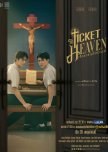
SUCH A BLESSING
As a religious person who is also part of the LGBTQ+ community, this drama touched me more deeply than I can put into words. I honestly don't think words are enough to explain how much it moved me or how much it changed the way I see love.I think the plot is incredibly well written. At first, I was afraid that religion would take up too much space, but in the end, it allowed the drama to ask much deeper questions.
This BL doesn't only explore the moral conflict between the heart and reason (or, in this case, faith). It also shows the guilt of loving someone, the fear of disappointing God, the self-hatred that comes from not being able to accept yourself, and even the rejection of God that grows inside a heart already afraid of itself. These are questions that many of us may ask ourselves one day, and this drama gives something that is so precious : HOPE.
It reminds us that love is not incompatible with faith. That God will always have a place for those who sincerely seek Him. And that message is just so powerful. Honestly, I'm tearing up just writing these words.
On top of that, the chemistry between the two main characters gave me butterflies so many times. Watching them slowly fall in love was absolutely beautiful. The way they looked at each other, the way their breathing changed when they got close, the quiet tension between them, and even the dialogues... every emotion felt so real. Even the soundtrack pulled me in, and some of the lyrics were enough to make me cry.
Episode 2 touched me the most. I think it was beautifully directed. The way it portrayed overwhelming desire mixed with the shame of loving someone was heartbreaking and incredibly honest.
I honestly can't do anything but recommend this drama over and over again to anyone who feels lost between their faith and their identity. It reminds us that we are not alone, and that we don't have to give up a part of ourselves for God to still live in our hearts.
Cet avis était-il utile?
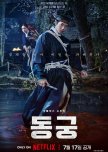
A Ghost Story About the Living
In my opinion, The East Palace succeeds not because it reinvents the historical fantasy genre, but because it combines several familiar elements- palace intrigue, ghost lore, horror, and tragedy- into an unusually atmospheric package. The series follows Gu-Cheon, a ghost-slayer, and Saeng-gang, a court lady who can communicate with spirits, as they investigate supernatural events connected to the Crown Prince's East Palace.The show's greatest strength is its mood. Unlike many fantasy sageuks that eventually become political dramas with supernatural decorations, The East Palace keeps the supernatural element at the center of the story. The palace feels haunted in a genuine sense, not merely by ghosts, but by the sins, secrets, and unresolved guilt of the royal family. The combination of dark Joseon-era settings, spectral imagery, and folklore-inspired mythology creates a distinct identity. I have seen several reviews noting that the mystery and horror atmosphere remained engaging throughout the series, and this is very true. The spirit realm and the constant sense of unseen danger give the drama a tone that feels closer to gothic horror than a traditional palace romance. I caught myself thinking, does this drama really need romance; I mean, it doesn't kill the mood, so to speak, but I think it would have done perfectly okay without it.
I must say, Nam Joo-hyuk had the difficult task of carrying a character who could easily have become a generic fantasy hero. Instead, Gu-Cheon works because he's reluctant, flawed, and often feels outmatched by forces larger than himself. His performance isn't necessarily his most emotionally devastating role, but it is one of his most controlled. He sells the weariness of a man constantly moving between the worlds of the living and the dead. His action scenes and supernatural confrontations also have enough physicality to make the fantasy elements believable. He was good, and even quite brilliant in some scenes. I commend him.
Nam Joo-hyuk was good, but Roh Yoon-Seo was a wow for me; she often stole the climactic scenes. This is to say that if Gu-Cheon was the engine of the plot, Saeng-gang was the heart of the story. The writers could have written her as a passive gifted character who exists to support the hero. Instead, they gave us Saeng-gang with the ability to hear and communicate with spirits, which gave her a unique emotional connection to the suffering surrounding the palace. Many of the drama's strongest moments come through her reactions rather than the larger action sequences. She grounds the supernatural story in human pain, grief, and empathy. For me, she's ultimately the most memorable character in the series.
The palace politics were better than expected. This was one of the pleasant surprises: the political intrigue doesn't overwhelm the horror story. The palace conspiracies matter because they are directly connected to the curse and hauntings. Instead of feeling like two separate dramas stitched together, the political and supernatural threads reinforce each other. I liked the subtle message the drama tries to send: ghosts are often manifestations of human corruption. The true horror isn't the spirits themselves; it's the people who created the conditions for those spirits to exist.
Where The East Palace falls short, or maybe I should say its biggest weakness, is that the plot occasionally becomes too complicated for its own good. I think the writers sometimes confuse complexity with depth. There are moments when the mythology expands faster than the emotional stakes, and a few reveals did not land as powerfully as was intended because I found myself too busy trying to keep track of the mechanics. The show is also less original than it appears at first glance. The haunted-palace mystery, cursed bloodline, spirit realm, and hidden royal secrets are all familiar genre elements. What elevates the series is execution rather than innovation.
I will own up to this and say it outright: it might not be fair, but truth be told, when I first saw the trailer for The East Palace, the drama Kingdom came to mind, and it is one of my favorites, if not the favorite zombie K-drama, if not all-time zombie drama in any language to date; I could not help but compare it. Kingdom feels tighter, more ambitious, and more politically sophisticated. Its social commentary and relentless pacing make it one of the strongest Korean genre dramas ever produced. Yes, The East Palace is smaller in scope and more character-focused. It aims for atmosphere, folklore, and emotional mystery rather than large-scale political catastrophe. So, while I don't think it reaches Kingdom's level, I also don't think it was trying to do that. But I couldn’t help but compare them.
Without getting heavily into spoilers, the ending resolves the central conflict while leaving enough space for future stories. So, I wouldn't be surprised if there were a second season if it hasn't been announced already. Personally, I'd be interested in a second season if it continues developing the mythology and the relationship between the leads rather than simply introducing another palace curse. The foundation is there; the question is whether there's enough narrative fuel left for another meaningful story.
I write all of this to say even though The East Palace isn't the next Kingdom, it is one of the more memorable fantasy-horror sageuks in recent years. Its haunting atmosphere, strong lead performances, and emotionally resonant supernatural mystery make it easy to recommend. I think the best part is that I came away thinking that Roh Yoon-Seo may have ended up being the show's biggest revelation. I liked it, a lot!
Cet avis était-il utile?
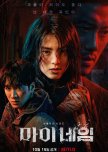
Incrivelmente perfeito
demorei muito tempo pra assistir esse por birra, e praticamente é um dos melhores da Han Sohee! história super interessante, personagens bem feitos e uma trilha sonora maravilhosa! amo muito doramas de vingança e esse é BOM de DMS!! Jiwoo foi uma pessoa que sofreu muito, muito antes de seu pai morrer e a gente vê a vingança nos olhos dela desde sempre! nunca vi uma personagem tão perfeita como ela, e os outros personagens super bons e os vilões sempre entregavam o que prometiam, ÓDIO!! as osts são perfeitas, e bem, quem canta as osts virou um dos meus favs cantores de osts 🤭 amei tudo nesse dorama, 9.0!!Cet avis était-il utile?
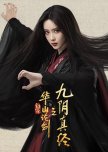
Jin Yong Wuxia Universe: Jiu Yang Zhen Jing
1 personnes ont trouvé cette critique utile
Though short, still managed to engage me!!
I started watching this due to the chemistry between He Yu and Meng Ziyi, in Blossoms of power, which I am currently watching.Though I didnt watch the previous prequels or the dramas related to this story, but still it managed me to engage me to the end.
The drama, though only 8 episodes, showed the childhoid tragedy of Mei Ruohua, her quest of revenge, the mistakes she made and the price she paid.
The plot had a very steady pace, the action scenes were good, and all the actors were perfect for their roles.
Zhou Yiwei was excellent in his performance
He Yu and Meng Ziyi were also very good.
Overall a good watch!! 👍
Cet avis était-il utile?
Key to the Phoenix Heart
3 personnes ont trouvé cette critique utile
Cette critique peut contenir des spoilers
Un drama ingiustamente mutilato
Non posso non dare a questo drama un 8.5 pieno, perché mi ha letteralmente tenuta incollata allo schermo dall'inizio alla fine. Era da tempo che non provavo quell'ansia bellissima di aspettare con i minuti contati l'uscita degli episodi ogni giorno: mi ha fatto piangere, ridere, arrabbiare e battere il cuore. Quando una storia riesce a trasmetterti emozioni così forti, premiarla è il minimo!I due protagonisti, Xiao Wuyi e Xie Jiayu, sono stati semplicemente straordinari. Vanno fatti grandissimi elogi a Hou Minghao e Ai Mi: nonostante tutti i paletti e le pesanti limitazioni imposte dal montaggio, le loro interpretazioni sono state così intense, mature e profonde da rendere vivi, veri e tangibili sia i loro personaggi che il loro amore. Hanno fatto un lavoro magnifico d'intesa, sguardi e presenza scenica.
Una menzione d'onore sproporzionata va alla dinamica all'interno della residenza! All'inizio Xie Jiayu entra in casa convinta di dover convivere con le altre consorti di Xiao Wuyi, ma non appena scopre che Yu Ruisheng e He Yuanji sono in realtà solo "finte mogli", la rivalità lascia il posto a una complicità pazzesca. Insieme alla protagonista hanno formato un trio semplicemente perfetto: veder nascere e crescere quell'inaspettata e genuina sorellanza tra loro tre è stato uno degli elementi più freschi, divertenti e strepitosi di tutta la serie! I cattivi poi erano strutturati benissimo, credibili e con un peso reale nella storia.
Le uniche note stonate sul cast le metto su Li Mao e sua sorella Li Lejun. Lui l'ho trovato decisamente troppo bipolare nel suo percorso, mentre la sorella pecca di una stupidità e di un'ingenuità che ho faticato a sopportare. È vero che verso la fine si sacrifica, ma per quanto mi riguarda il suo crimine resta troppo grande per avere redenzione: ha ucciso la madre della protagonista, Li Fuhua, e una cosa del genere non la cancelli con un gesto estremo all'ultimo minuto per far pietà allo spettatore.
E poi, ragazzi... le scene di battaglia! Tutte perfette, nessuna esclusa. Hou Minghao in questi ruoli marziali e potenti è una garanzia assoluta, ha una presenza scenica pazzesca e lo scontro finale contro il Re dell'Aquila è stato puro cinema!
L'unica vera amarezza—e qui lo dico con un po' di dente avvelenato—sono i tagli. È un peccato mortale vedere come un lavoro con una scrittura così solida, articolata e complessa sia stato mutilato per colpa delle solite polemiche sterili della vigilia e della paura della piattaforma. Far passare una storia del genere da 40 a 28 episodi è stato un mezzo massacro immeritato. Sono convintissima che, con i suoi episodi naturali e il respiro che si meritava, Key to the Phoenix Heart avrebbe potuto essere tranquillamente il drama dell'anno o quantomeno giocarsela ad armi pari con un colosso come Pursuit of Jade.
Resta comunque una perla che mi ha fatto vivere settimane intense. Promosso a pieni voti!
Cet avis était-il utile?
Cette critique peut contenir des spoilers
Beautiful, Healing Love
Though it’s only 6 episodes, the impact it had on me was tremendous and profoundly healing. This series showed the painfully lonely life of Kouki, which is very relatable. One doesn’t have to be a drug dealer to know that loneliness, because what is shown is not circumstantial; it is existential and innate to the human existence. When the angel started to heal him from the inside out, and Kouki started to feel alive and happy for the first time, and could feel a sense of giving and receiving in a loving way, it was as if his soul was being healed of his own past. I really liked how they handled the angel’s departure- not some long dragged out sentimental process- in fact, there is nothing sentimental about this series at all. The love shown here is not sentimental- it is holy and spiritual. It felt “real” in the sense that this could be the way it really happens, and one is not sure if it was all imagination. But even if it was, the healing of the loneliness and misery was real, and the love that blossomed inside was real- more real than the crude, harsh world around him. When Kouki cried towards the end, I cried along with him. It was a very powerful scene. And to see his once cluttered apartment being emptied out for the first time in the series, was a kind of self emptying process.I didn’t quite understand the final scene though.. I guess it’s open ended and will have to read around to find out what it means…
Cet avis était-il utile?
Drop In. Keep Up. Figure It Out.
Unfold doesn't hold your hand. There's no careful exposition, no gentle introduction to the world or its characters , you're simply dropped in and expected to watch.The series seems to be doing this deliberately, positioning the audience as observers rather than participants. We see, but we aren't guided. Personally, I don't mind that at all. I'd rather piece things together myself than have everything spelled out for me.
The story itself is dark and genuinely compelling: a death-scene cleanup worker, a mysterious death, organ trafficking rings, hidden identities. It has the bones of a proper crime thriller and, at times, almost feels like the Chinese counterpart to The Prosecutor's Proposal. Not because the stories are the same, but because they scratch a similar itch: crime, conspiracies, morally grey characters, and relationships developing quietly alongside the investigation.
What makes it stand out most, though, is its dual-couple dynamic. The two pairings work as near-perfect counterweights to each other. One built around grief and quiet hurt/comfort, the other around an openly toxic relationship that never really asks for your approval.
The secondary couple fascinated me for exactly that reason. Their relationship is deeply unhealthy: absolute loyalty bordering on self-destruction, punishments accepted without resistance, power constantly shifting between devotion and control. Yet the series never feels compelled to justify or soften that dynamic. It simply lets them exist as they are. They aren't presented as a fantasy to aspire to, nor does the story search for convenient excuses. Their dynamic simply exists, and whether you find it compelling or disturbing is left entirely up to you.
My one genuine complaint has nothing to do with the writing: the runtime management is baffling. A twenty-minute episode with a two-minute intro and seven minutes of ending credits means you're getting roughly eleven minutes of actual content. I have genuinely never seen ending credits that long on any series. Ever.
But if you can make peace with that, Unfold is quietly one of the more interesting crime BLs I've watched recently.
Cet avis était-il utile?
Le Garçon du dernier rang
1 personnes ont trouvé cette critique utile
Obra incrível
Sendo honesto, esta é uma das melhores séries/doramas do ano até agora. A trama te prende do início ao fim em uma baita história de investigação e suspense, surpreendendo a cada episódio e deixando uma enorme vontade de descobrir a verdade no final da série. Há algumas revelações no último episódio que exigem uma certa suspensão da descrença, porém, ao meu ver, isso não atrapalha a experiência, pois a série constrói uma história envolvente do início ao fim, cheia de plot twists muito bons e muito bem trabalhados dentro da narrativa.Durante a história, acompanhamos a jornada de um professor universitário que, basicamente, vive uma vida infeliz por escolhas próprias. Ele possui um ego tão grande que é incapaz de enxergar o que estava acontecendo bem à sua frente, tratando todos ao seu redor com um ar de superioridade, sendo que ele mesmo se sente um fracasso. Assim, cria histórias para se prender ao que lhe é conveniente, usando essas narrativas como um meio de escapar de sua realidade infeliz.
Do início ao fim, pelo menos para mim, senti um enorme ódio do protagonista, que trata a esposa como se ela não fosse nada e nunca reconhece seus próprios erros. A história criada em torno de seu aluno serve como uma válvula de escape para a inveja e a obsessão do professor, que, por não ter seguido o caminho que desejava durante a juventude ou por não ter conquistado aquilo que tanto queria, prefere se tornar obcecado pela vida de alguém que, ao contrário dele, conquistou tudo o que ele almejava.
Em vez de reconhecer seus fracassos e seguir em frente, o professor alimenta um ódio doentio e ressentimentos que, no final, acabam sendo a grande ruína de alguém que nunca conseguiu superar o passado e permaneceu preso a ideias e sonhos que, infelizmente, nunca se concretizaram.
O personagem do aluno, para mim, representa tudo aquilo que o professor queria ter sido, mas infelizmente não conseguiu. De certa forma, ele funciona como um espelho que remete ao passado do professor, que, desde o início, nunca se importa verdadeiramente com o aluno, mas apenas com aquilo que ele pode lhe oferecer. O professor projeta constantemente seus desejos e frustrações sobre o aluno, até que, mais adiante na história, uma verdadeira bomba explode e uma reviravolta chocante acontece.
A grande ironia, para mim, é que o professor acredita estar descobrindo a verdade sobre Lee Kang, quando, na realidade, está revelando muito mais sobre si mesmo. As histórias que ele constrói dizem tanto sobre suas obsessões quanto sobre o aluno. No fim das contas, a investigação nunca foi apenas sobre Lee Kang, mas sobre a incapacidade do próprio professor de aceitar seus fracassos, reconhecer seus erros e abandonar a fantasia que criou para fugir da realidade.
E, para finalizar, acredito que a esposa exerce um papel fundamental na trama. Em minha opinião, ela representa a realidade na vida do professor. Ela simboliza a vida comum, a voz da razão e as consequências concretas de suas escolhas, mostrando que sua fixação afeta o casamento, o trabalho e a própria saúde mental. Ela representa a ideia de que existe uma vida fora das narrativas que ele cria, porém o professor prefere a ficção à realidade.
Vale ressaltar que, durante a história, na visão do professor, a vida dele é "sem graça", enquanto a da esposa parece perfeita. No entanto, ela demonstra justamente o contrário. A personagem mostra que o problema não está na falta de acontecimentos extraordinários, mas na incapacidade dele de valorizar aquilo que já possui. Em vez de aceitar uma vida imperfeita, o professor passa a perseguir uma narrativa grandiosa, e essa busca o leva a tomar decisões cada vez mais questionáveis. No fim, fica claro que a verdadeira tragédia nunca foi a vida que ele levava, mas a incapacidade de enxergar valor nela.
Cet avis était-il utile?
He visto 3 veces la serie
Lo he visto tres veces.La 2ª parte es más floja. Los dos actores principales lo hacen todo muy creíble. ...........................................................................................................................................................................................................................................................................................................................................................................................................
Cet avis était-il utile?
Cette critique peut contenir des spoilers
Potential is there
Unfold has a really interesting premise with a lot of potential. The way it was executed, though... that's another question. I don't know if the budget was the issue, but something just didn't fully come together.At first, I honestly had no idea what was going on. So I'm not going to blame the series entirely. Maybe I'm just too dumb to understand it. Hahaha.
One thing I have to mention is the runtime. The whole episode is only around 20 minutes, but about 2 minutes are spent on the opening and another 5 minutes on the ending credits. HAHAHA.
That said, I still think the series has a lot of potential if they execute it the right way. The ending even says "To Be Continued," so I have no idea if they're actually planning a Season 2.
But yes, I need a Season 2. I need answers.
Cet avis était-il utile?
visual masterpiece with a weak plot
watched this drama on the second day after release and wanted to share my aftertaste and impressions.what impressed me the most was the visuals: incredible shots, costumes, locations and cgi. i haven’t seen this level of graphics in any korean drama yet. i was literally in awe with every frame, pure aesthetic pleasure. the soundtrack perfectly complements the atmosphere and makes the drama more rhythmic and stylish.
palace intrigue is pretty standard, like in regular historical dramas. i think this concept could’ve used more originality.
for the main roles i would’ve chosen different actors, especially the male lead. i didn’t feel any charisma or special spark from them, unlike the main antagonist kwak dong yeon, who sadly had much less screen time. as a result, i didn’t feel that chemistry everyone’s screaming about. we weren’t really shown the development of their relationship, so for me they’re just soulmates ready to die for each other. though i found it pretty illogical how in the final episodes the fl gave the ml sleeping pills and went alone to the other side (such a cliche, and they clearly couldn’t do without it…).
the plot felt messy and sometimes dragged, it lacked deeper development, so in my head it’s just separate chaotic fragments.
but despite these flaws, i still rate it highly. the watch was light and pleasant, and for korean fantasy-horror dramas this is a noticeable step forward.
Cet avis était-il utile?
? Love for You – Heartfelt, Beautiful, and Completely Captivating! ?
Love for You draws you in with its gentle storytelling and emotional sincerity from the very beginning. It has a soft, comforting vibe that makes you feel instantly connected to the characters and their journey 💞. The drama balances warmth, romance, and quiet intensity in a way that feels both refreshing and deeply touching..Song Wei Long delivers a charming, heartfelt performance that makes his character impossible not to love 😍. Meanwhile, Zhang Jing Yi shines with her natural elegance and emotional nuance — she brings so much grace and strength to the story 🌸. Together, they create a romance that feels tender, genuine, and deeply moving.
The storytelling is smooth and engaging, with moments that make you smile, tear up, and root for the characters with all your heart ❤️. The cinematography is gorgeous, the OST is dreamy 🎶, and the pacing keeps you hooked without ever feeling rushed.
Overall, the drama felt is a warm, comforting drama that celebrates love, growth, and connection. It’s the kind of show that stays with you long after the final episode ✨💫
Cet avis était-il utile?
Key to the Phoenix Heart
5 personnes ont trouvé cette critique utile
⭐️ Age Gap Drama Done Right, Fantasy Done Beautifully ✨?
Key to the Phoenix Heart completely swept me away! 💫 This drama is a beautiful blend of fantasy, emotion, and character growth, wrapped in stunning visuals and heartfelt storytelling. The chemistry between the leads is absolutely magnetic — gentle, natural, and full of quiet intensity. ❤️🔥The cast truly brought this story to life, especially Hou Ming Hao (ML) and Ai Mi (FL) — both delivered standout performances that elevated every scene. Hou Ming Hao carried the emotional weight of the story with such depth and quiet charisma, making his character feel grounded, sincere, and impossible not to root for. And Ai Mi absolutely shined in this drama; to me, this was her breakout moment. She was expressive, captivating, and magnetic from start to finish. Every scene she touched felt richer because of her presence 🌟💖
One thing I really appreciated was how the age‑gap romance was handled. Instead of leaning on clichés, the show treated their relationship with maturity, respect, and emotional depth. It felt authentic, tender, and genuinely meaningful. 🌸💛
Overall, Key to the Phoenix Heart is a drama that shines with warmth, magic, and beautifully crafted relationships. Highly recommended for anyone who loves fantasy, romance, and stories that stay with you long after the final episode. 🌟💖
Cet avis était-il utile?
Miseinen: Mijukuna Oretachi wa Bukiyo ni Shinkochu
0 personnes ont trouvé cette critique utile
最高でした
今まで観てきたBL作品の中で間違いなくトップ5に入る作品です。主人公たちの成長がちゃんと描かれていて、その過程での選択にもすごく感動しました。色々なつらいことがあったけれど、最後には二人だけの幸せを見つけることができて本当によかっただと思います。Cet avis était-il utile?
Key to the Phoenix Heart
16 personnes ont trouvé cette critique utile
The Most Dangerous Man at Court Was the One Who Never Wanted the Throne
For a drama titled Sparrow Bone (雀骨), there were an alarming number of people determined to break their own backs carrying the realm.Some inherited power. Some inherited disgrace. Others inherited grudges so old that nobody seemed entirely certain who had started them anymore. Xiao Wuyi inherited all three and somehow remained the least interested person in becoming emperor.
That contradiction sits at the heart of a drama where almost everyone is burdened by an inheritance, but very few get to decide what to do with it.
On the surface, this is a compact costume romance about a politically inconvenient general and a clever young woman in a contractual marriage. Underneath, it explores inherited violence, institutional power, and the difference between being capable of ruling and wanting to rule.
It packs an ambitious amount into twenty-eight episodes: concealed identities, military reform, court factions, old family crimes, mechanical inventions, succession disputes, and approximately one new political agenda every time somebody enters a room.
That ambition has its trade-offs. The pacing can be dizzying. Some supporting characters make important decisions before those moments have enough room to settle, and a few developments are explained when I would rather have watched them unfold. Another two or three episodes might have helped certain relationships and political turns breathe.
But rushed storytelling is not the same as incoherent storytelling.
Most revelations belong to the same narrative structure. Earlier choices return, alliances have identifiable motives, and the central figures rarely feel rewritten simply to serve the next twist.
Considering the sheer number of twists involved, that feels less like faint praise and more like a minor administrative miracle.
Thankfully, the politics remain politics instead of becoming decorative obstacles delaying the romance. The conflict between entrenched families and those excluded from power, the question of who may serve the state, and attempts to reform institutions all affect the characters personally. Love, loyalty, ambition, and public duty continually complicate one another.
The bond between Xiao Wuyi and Xie Jiayu grows out of that world rather than interrupting it. In a court where nearly every relationship is transactional, trust becomes the rarest form of political currency. They begin as reluctant partners cautiously assessing one another after a politically arranged marriage and gradually become the one person each can trust when almost everyone else is negotiating, concealing something, or preparing an assassination.
I normally advocate for kissing wherever dramatically appropriate. Somehow this drama convinced me to file an exception.
Apparently, hands may still be held without a camera orbiting the couple for four minutes. Good directors did not die out after all.
The drama understands that intimacy can exist long before physical consummation.
Aimi makes Jiayu easy to root for. She is intelligent and capable without being written as infallible, and her mechanical knowledge remains part of her identity rather than disappearing whenever the male lead enters the scene. The script never asks her to become less herself in order to make him look more impressive. She remains compassionate without becoming passive and determined without sacrificing her warmth.
Hou Minghao gives his strongest performance to date. Xiao Wuyi could easily have become another cold, vaguely dangerous nobleman whose personality consists mainly of excellent posture. Instead, Hou Minghao gives him exhaustion, suppressed anger, tenderness, and a kind of watchful restraint. Much of the character exists in the pause before he speaks.
The supporting cast is generally strong, although not every character receives equal depth. Li Mao should have been one of the drama's most compelling characters, yet I never felt the writing, or Riley Wang's performance, fully connected his emotional shifts. Too often, the story seemed to arrive at his next emotional state before it had fully earned it, making him feel less layered than inconsistent.
The drama also uses a few conveniences I could have done without. The amnesia section adds less than it interrupts, certain deaths arrive with suspicious narrative efficiency, and some emotional consequences pass more quickly than the events themselves deserve.
Still, the story never lost me.
Victory here is not simply defeating the villain or placing the correct man on the throne. It is refusing to reproduce the choices that created the conflict in the first place. Some characters inherit old conflicts and choose to perpetuate them. Others try to break the cycle instead. Xiao Wuyi's final triumph is not that he proves himself worthy of power, but that he remains capable of imagining a life beyond it.
The person who rules is not necessarily the one who wins.
Perhaps that is the drama's sharpest idea.
Key to the Phoenix Heart is not as airtight as its most enthusiastic admirers claim, nor nearly as illogical as its harshest reviews suggest. It is fast, occasionally overstuffed, and uneven around the edges. It is also sincere, confidently directed, emotionally persuasive, and more interested in choices and consequences than many dramas in the same genre.
For twenty-eight episodes, it gave me political intrigue that respected its own politics, a romance built on earned trust, women with ambitions unrelated to defeating one another, and a hero whose greatest victory was knowing when to walk away from power.
I will take it.
Cet avis était-il utile?


