

This review may contain spoilers
The Quiet Anatomy of Moral Decay
Set in 1609 during the Wanli era of the Ming Dynasty, Ripe Town begins with a string of gruesome murders that seem to have nothing in common except for one chilling detail. Every victim is staged in an eerie tableau, each crime scene marked by the different cryptic messages. Determined to uncover the truth, young Bailiff Qu San Geng joins forces with his friends, only to find themselves peeling back layers of deception, buried secrets, and a cold case that refused to stay dead. As the investigation spirals deeper, the mystery becomes less of a whodunit and more of a descent into the ghosts of the past, where every answer comes at a price."To Confucius, it's just so hard to be a decent man."
That line perfectly captures what Ripe Town is really about. At its heart, this is a story about moral decay, justice, and the exhausting struggle of navigating the space between right and wrong. The murder of Captain Leng Wu Ji, Qu San Geng's mentor, immediately makes the investigation personal. The first episode deserves praise for how naturally it flows from tragedy to grief, then to investigation, before ending on an intriguing revelation that immediately hooked me.
San Geng leads the investigation, but interestingly, he is never written as the kind of protagonist who dominates every scene. Instead, he serves as the embodiment of growth. As a young bailiff, he wants to uphold justice with clean hands, believing the world should be divided into black and white. Through frequent flashbacks with Captain Leng, however, the story slowly dismantles that idealism. Captain Leng teaches him that reality is rarely so simple. Sometimes justice requires imperfect methods, and sometimes you only have the wrong tools to reach the right outcome. One of my favorite lines in the drama comes from Captain Leng:
"Conscience is such a thing. If you want to sell it, it won't sell for much. But if you want to keep it, then it's expensive."
It is such a beautiful paradox. Integrity itself has little market value, yet preserving it often demands tremendous sacrifice. Throughout those flashbacks, we watch San Geng admire his mentor's teachings while still desperately trying to preserve his own ideals. It is only after Captain Leng dies and that protective figure disappears that San Geng truly begins to understand what those lessons meant. Bai Yu Fan portrays this evolution convincingly. He honestly reminds me of a chick that has just hatched, slowly discovering that the world is far harsher than it first appeared. His performance is not flashy, but it feels sincere, and that sincerity makes San Geng's growth believable.
After Captain Leng's death, another fascinating character joins the investigation, Judge Song Chen. If Captain Leng teaches San Geng how the world works, Song Chen reminds him what justice should strive to be. Song Chen is perhaps the purest soul in this morally grey world, which is ironic considering he himself is a victim of one of its greatest injustices.
Once a brilliant prodigy with limitless potential, Song Chen became entangled in an Imperial Examination fraud case born from political factionalism. Wrongfully imprisoned, tortured, stripped of his ability to paint after losing fingers on his dominant hand, and left with a crippled leg, he emerges from prison carrying wounds that never truly heal. His closest friend dies because of the same injustice, leaving him burdened with both grief and survivor's guilt. Even after his innocence is restored, nothing meaningful can be returned to him. His scars have already become permanent.
Despite all of this, Song Chen continues pursuing justice with remarkable conviction. Ironically, his own methods are not without cruelty. As a judge, he becomes known for extracting the teeth of criminals during interrogation. It is an uncomfortable contradiction that fits the drama perfectly. Justice itself is not always gentle. Ning Li delivers one of the finest performances in the series. Every expression carries years of accumulated resentment, grief, regret, and quiet fury. Even with relatively limited emphasis and focus on his character, Song Chen left an enormous emotional impact on me. I sympathized with him, cried for him, and admired how steadfast he remained despite everything life had taken from him.
As the investigation progresses, the story begins dedicating entire episodes to events from twenty years earlier, allowing the audience to witness both the present investigation and the origins of the tragedy side by side. Eventually, those flashbacks center on Lu Zhi, who became, without question, the most fascinating character in the drama for me.
Lu Zhi feels less like a villain and more like the product of his upbringing and consequence of adults who failed him. At first, he appears gentle, almost forgettable, like the type of character destined to become another victim. But little by little, something unsettling begins surfacing beneath that kindness. It becomes impossible to tell whether he genuinely wants to become a better person or whether goodness itself has simply become another mask for survival.
The most chilling moment comes when he explains why he chooses to hurt good people. Good people are less likely to retaliate. It presents one of the drama's most disturbing moral paradoxes. Do you target evil people and invite violent revenge, or prey upon kind people because their kindness makes them vulnerable? Virtue, ironically, becomes its own weakness.
Yet the drama never allows Lu Zhi to become a one dimensional monster. His cruelty exists alongside fear, hesitation, and genuine inner conflict. There are moments where he quietly wonders why doing good feels so difficult while evil comes so naturally. Even after everything he does, I still find myself asking whether he was truly good or bad. Looking only at the outcome makes the answer seem obvious. Looking deeper makes it surprisingly difficult. His fear whenever he is cornered reminds us that beneath all the darkness still exists a frightened human being trying to survive.
Yu Yao's performance deserves a standing ovation. Every tiny shift in expression feels deliberate. Every glance, every hesitation, every restrained emotion adds another layer to Lu Zhi's character. His elegant manner of speaking and composed posture create a striking contrast with the chaos inside his mind. Combined with Wang Zheng's direction and exceptional character writing, Lu Zhi becomes one of the most memorable characters I have encountered in recent years. Exploring morality, desire, fear, ideals, and conscience through a single character is no easy task, yet Ripe Town does it with remarkable precision.
Despite its slow pacing, the story never feels dull. Every scene contributes to the larger mystery, making it easy to become absorbed in the investigation. The clues are carefully planted, rewarding viewers who pay attention to small details. It genuinely feels as though you're investigating alongside San Geng and his companions. There is even a subtle layer of dark humor woven naturally into the dialogue, preventing the atmosphere from becoming overwhelmingly bleak.
The visual presentation surprised me just as much as the writing. Director Wang Zheng reportedly drew inspiration from Wu Guanzhong's Jiangnan paintings, and that influence is visible throughout the drama. The compositions emphasize layers, depth, and spatial balance, transforming nearly every frame into something resembling an ink painting. Doors, windows, curtains, screens, and veils are used to create visual penetration, allowing interior and exterior spaces to flow seamlessly into one another. Instead of relying on grand spectacle, the drama embraces stillness. Long, quiet streets stretch across the screen while conspiracies quietly bloom beneath the surface. It is a perfect example of a Latin phrase, which means “the art of concealing art.” The directing appears effortless precisely because every artistic choice is so carefully considered.
The sound design deserves equal praise. Rather than constantly filling scenes with music, Ripe Town uses its original soundtrack sparingly, reserving it primarily for the opening and ending themes. Yet those tracks linger long after each episode ends. During most scenes, subtle sound effects take center stage, quietly reinforcing the tension and atmosphere without drawing attention to themselves. The restraint makes every emotional moment feel even more effective.
The finale delivers one revelation after another with remarkable composure. It never resorts to sensational twists simply for shock value. Instead, every revelation feels earned, and the ending remains grounded in the reality the drama has carefully established from the very beginning. Each major character receives meaningful growth. San Geng becomes more flexible in his methods while continuing to pursue justice. Song Chen's conclusion also feels unexpectedly merciful, offering him perhaps the only path that could finally free him from the resentment he had carried for years. Fittingly, he remains a judge until the very end, both in title and in spirit.
Ripe Town earns its title in more ways than one. Beneath its peaceful streets lies a town that has ripened not into prosperity, but into something rotten. Old grievances have fermented into vengeance, justice has become tangled with compromise, and morality has quietly spoiled with time.
This is a drama I thoroughly enjoyed for its tightly constructed mystery, atmospheric suspense, morally complex characters, breathtaking visuals, restrained sound design, and thoughtful exploration of justice and human nature. It does not simply ask who the murderer is. It asks what kind of world creates murderers in the first place. Long after the mystery was solved, it was the characters and their impossible moral dilemmas that continued haunting my thoughts. Ripe Town has easily become one of the finest Chinese mystery dramas I have watched, and one of the strongest entries in the genre as a whole.
Was this review helpful to you?
a surprising office rom-com that won me over
The first episode was pretty boring—I almost dropped it right there. But luckily, I stuck with it, and it got much better. I ended up really enjoying this drama.It's nothing groundbreaking, but it's perfect if you want something light and relaxing to unwind with. I was genuinely hooked. The story follows Joo In-ah (Shin Hye-sun), the head of the audit department at Haemu Group, and Noh Ki-jun (Gong Myung), a star auditor who gets demoted to handling workplace misconduct. I loved their enemies-to-lovers journey and how their team dynamics played out.
The acting is really good, and Shin Hye-sun is amazing as always. That said, I don't think Kim Jae-wook's character suited him—I just didn't like his role.
Overall, it's a nice and easy watch that will keep you entertained. Nothing more, nothing less.
Was this review helpful to you?
It is clear that the husband and wife should talk.
A Bonafide Killer is a stylish drama with lots of beat music and soft melodies. Great OST.We get to explore the lives of the husband who is an Investigative Reporter and his housewife. The housewife is just going back to work after a three year lay-off, used to take care of her very young child, an adorable cutie. The husband, tries to hide the nature of “his job” as an Investigative Reporter, thinking that it might worry his “delicate” wife. He feels that she could not handle his job excitement level. Slowly but surely, the drama reveals to the audience the true nature of the job his wife has. And you get the sense that the husband is over worrying about the surprise level that his wife can handle.
Cautionary Note: A Bona Fide Killer is about a sharpshooter/Sniper, an accurate one.
Side Bar: I used to work with a person who was a skilled marksman. He had the ability to accurately hit a target 1,500 meters away (about 1.6 miles). Okay! If there were 100 people in front of you and let them walk by, you would never ever pick him as the marksman. No, he was not ex-Military. This story for A Bona Fide Killer is very believable.
Cast: Actress Kong Hyo Jin, Actor Actor, Jung Jun Won, and Actor Lee Sang Yi
Was this review helpful to you?
ကြောက်စရာရုပ်ရှင်
Good casting! GWG really looks like a vampire even without makeup. Interesting opening scene and first ep. I continued watching this until the final ep. It gave me chills for a while, because I like horror movies. Although this is not horror at all,it's closer to horror than all dramas I watched during the time.Was this review helpful to you?

မကြိုက်ဘူး
Again with Mary Sue trope and powerful female character as the major villain. The Mary Sue is surrounded by many male character. She is important. She is saved, helped, and loved by many male characters. On the other hand, the female character with enthusiasm and motivation (positive value for women in real world) is the villain. I do not understand why the media do not like powerful women. I wish to see more women in China controlling the business and being important politicians. China needs female role models in media.Was this review helpful to you?
Violence against women?
The story/plot is heavily about violence against woman, by the male protagonist. Good-looking and point-of-view characters could influence on the audiences most. I consider that this drama is very dangerous. It makes people view that violence against women is acceptable. The perpetrator is the male protagonist, and there is NO REAL punishment for the character.I think it would not be problematic if the perpetrator is the villain character.
OR another solution is that the male protagonist must REALLY pay for what he had done.
Was this review helpful to you?
This review may contain spoilers
A Beautiful World I Couldn't Enter
It’s a pity that I couldn’t watch The East of Palace until the end. I pushed myself to keep watching until the middle of episode 6 because of its beautiful, dark cinematography and the positive comments I had heard about it.I also found it interesting that the spirits were haunting the palace because of resentments from the past, which made me reflect that the real ghosts that haunt us in life are the feelings of guilt, anger, and bitterness we carry inside.
Despite that, I couldn’t immerse myself in the fantasy, perhaps because of my limited knowledge of the elements of shamanism or because the narrative doesn’t provide enough context to help viewers understand them. I wasn’t attached to the characters either. I don’t think they were developed enough for me to form an emotional connection with them. But, of course, this is just my perspective, and you may disagree with me.
I have to point out that Ggeomeoksali is adorable despite being an energy-sucking spirit, and it’s a pity I didn’t get to see more of it on screen.
Even though it wasn't my cup of tea, I can understand why so many viewers enjoyed it. Unfortunately, it just wasn't the right drama for me. Perhaps I simply wasn't in the right mood for this kind of story.
Was this review helpful to you?
This review may contain spoilers
My Liberation Notes: Had high potential but failed to deliver
I enjoyed the first half of this series very much, but the second half was below par. I liked the three siblings characters, but it was obvious that both Yeom Mi-jeong and Mr. Goo were depressed, and I did not enjoy the story line of his alcoholism which made the show depressing at times. None of the three romances turned out well for the three siblings in my opinion. The dialogue was good, but the plot was very disappointing. I did not like the last episode at all, and I felt sorry for the three siblings who struggled so much from the beginning to the end of this series. I rate it a 6.Was this review helpful to you?
Provides some great social commentary
I really enjoyed this drama. The chemistry between the leads was very believable and the romantic thread was well paced. Perhaps it is a cultural thing but I wasn't thrilled with the seemingly standard trope they followed of allowing parental filial-piety to interfere with their lives for unreasonable reasons – especially considering their supposed ages and history but it did set up for an excellent ending scene for the pair.The story provides a great commentary on the fickleness/evil of social media comments – especially the blatant hypocrisy by the commenters who actually did bully someone that was merely alleged to have bullied an employee.
I do wish they'd done a little more on the romances for the other sisters (perhaps dropping the rather weak love triangle trope of the main romance thread). Both of those story-lines were interesting in their own right and I would have really liked to see them fleshed out. That is one criticism I have for many Kdramas, they seem to require having a secondary (and sometimes tertiary) romance thread that they then do little with.
Although I dislike the love triangle trope, I really did like the conversations between the two suitors and especially Yong Pil's attitude – ...'don't feel bad, you cannot control your feelings...' and to give his competition the advice to confess his feelings. Actual love for another means wanting what is best for them even if that means they chose someone else. The main thing I hate about the LT trope is it usually involves jealousy and this drama did not stoop to that.
Finally, the little girl actress (Kim Do Eun) was adorable.
Was this review helpful to you?
This review may contain spoilers
Can someone explain the hate?
From the very first episodes, I found myself completely invested in the story. The plot moves at a steady pace, revealing just enough information to keep the suspense alive without becoming unnecessarily complicated. There are plenty of twists, shifting alliances, and emotional confrontations, but what kept me watching wasn't simply the revenge itself. It was watching how far the protagonist was willing to go in order to achieve it.We're so used to female leads who always make the morally correct decision, even when they're supposed to be seeking revenge. Here, that's simply not the case.
Ren Susu / Fang Mulan is intelligent, manipulative, determined, and, above all, deeply flawed and I absolutely loved that. There were many moments where I completely disagreed with her choices, yet I never wanted the drama to change her. he's someone you're meant to question, sometimes even criticize. Her obsession often takes precedence over the people who genuinely care about her, and the drama never pretends otherwise.
The best example of this is her relationship with Murong Qing Yi.
I honestly lost count of how many times I wanted to reach through the screen and tell her to stop hurting him.
Poor Murong Qing Yi spends so much of the drama paying the price for decisions that aren't even his own. Again and again, he becomes collateral damage in a revenge that was never his to fight. He remains loyal, patient, and willing to stand beside her even when she gives him every reason to walk away. While I understand why she keeps making those decisions—because revenge has completely consumed her—there were several moments where the pain she inflicted on him felt almost unnecessary. It wasn't the kind of suffering that naturally came from the circumstances; it was suffering created by her inability to trust, to let go, or simply to be honest.
And yet... that's also what made their relationship so compelling.
Visually, the drama is a bit of a mixed bag.
There are scenes that look absolutely stunning, with beautiful costumes, strong cinematography, and emotional framing that elevates key moments. Then, out of nowhere, the CGI reminds you that the budget clearly had its limits. Some effects look surprisingly rough and occasionally pull you out of otherwise powerful scenes.
One thing I know I'll probably be in the minority about is the opening sequence.
I actually preferred the original AI-generated opening. I know it sparked a lot of criticism when the drama aired, but personally, I thought it fit the atmosphere much better than the replacement version. More importantly, it didn't spoil the story. The new opening uses actual scenes from later episodes, and I've never been a fan of openings that reveal moments I'm supposed to discover naturally while watching. I much preferred the original version because it created intrigue without giving anything away.
Overall, Overdo was a very enjoyable surprise. A gripping revenge plot, engaging twists, emotionally layered relationships, and, most importantly, a female lead who isn't afraid to be selfish, stubborn, and morally questionable made this a refreshing watch from beginning to end.
Was this review helpful to you?
Absolute masterpiece!
Reading the other peoples comments made me think we watched different show or what??🤔I've watched 190 BLs and I think I can call myself expert😅
Japanese, Chinese, Korean, Philippines, Vietnamese and Heated rivalry as the only non asian BL in my list,tho the bottom was half Japanese,but anyway back to the point - Payback is rating 11 in my ranking 🤌🏻💋
Toptap and Minlee chemistry is palpable,their visuals are insane 🥵🫦Their acting is phenomenal!!!👏🏻👏🏻👏🏻
The quality of the show is on a different level,the show itself had everything - sad moments,ugly moments,fun moments, happy moments,sexy moments (that epic NC scene is gonna remain in the history of BLs as one of the best,imo)For the ppl that said the show doesn't have a plot,are you sure?
The love story wasn't cringe,it was a battle which top to be on top 🙈😂,I'm kidding,the real battle with guilt,desires, revenge and love that needs no words...
Strongly suggest to watch it!
Was this review helpful to you?
This review may contain spoilers
What Happens When You Stop Being a Bystander in Your Own Life
I finally finished Our Youth.I actually put this series on hold for quite a while. There were too many new shows, too little time, and from the beginning I had the feeling that this wasn't a series I could casually watch in the background. It asks you to be present.
And I'm glad I eventually came back to it.
Our Youth belongs to the same category of BLs as Let Free the Curse of Taekwondo for me: quiet, heavy, emotional, almost poetic. Watching it sometimes feels less like following a television series and more like reading a novel — something you have to sit with rather than simply consume.
I'm not usually a huge fan of high school dramas. Maybe because my own school days are far enough behind me that I mostly remember them with a mixture of amusement and relief. But I understand the appeal. There is something inherently nostalgic about watching stories set in that particular period of life — that strange space where you're old enough to have very real feelings, but still young enough to have very little control over the world you're living in.
Our Youth uses that coming-of-age framework for something much heavier than first love and queer awakening.
It's about childhood abuse. Neglect. Isolation. And the ways children learn to survive when the adults around them fail them.
On the surface, Jin Minase and Haruki Hirukawa couldn't seem more different.
Jin is the perfect student: disciplined, intelligent, obedient, careful. Haruki is the delinquent everyone has already decided is trouble — skipping school, smoking, getting into fights, constantly covered in bruises.
But the longer you watch them, the more you realise that these two boys aren't actually coming from completely different worlds.
They're both lonely.
They're both being shaped by adults who aren't really seeing them.
They're both learning how to make themselves smaller in order to survive.
Haruki's situation is obviously the more brutal one. His father beats him, and the school keeps failing to see what is happening directly in front of them. The bruises. His behaviour. His absences. The alcohol. The fact that this kid is visibly struggling and everyone has already found an easier explanation for it: he's a delinquent.
And that broke my heart.
Because Haruki isn't simply a rebellious teenager who doesn't care about anything. He's a child who has learned that asking for help doesn't work.
And perhaps the most devastating thing Our Youth does is make Jin witness it.
Jin has this very clear worldview: there are perpetrators, victims and bystanders. Three separate categories. Three separate seas that aren't supposed to mix.
And when he sees Haruki's father beating him, Jin chooses to remain a bystander.
That decision matters.
Because Jin isn't cruel. He isn't indifferent. He simply doesn't know how to cross the line between observing someone's suffering and actually becoming involved in it.
Haruki, meanwhile, has almost the opposite problem. He has learned to expect nothing from people, while simultaneously desperately wanting someone to stay.
And then there is Jin.
The irony is that Jin is also being hurt. Just in a much quieter way.
His mother is physically absent but constantly present through her expectations. His father is there in name more than anything else. Jin is praised for being disciplined, successful and well-behaved, but very little of that seems to come from genuine freedom. He has learned to be exactly what everyone expects him to be.
Haruki initially sees Jin as something almost unattainable — an anomaly, someone who belongs to a completely different world. Something he shouldn't be allowed to have.
And yet he keeps coming back.
Again and again.
Until eventually going back to Jin isn't an option anymore, because Haruki has to break the cycle he's been trapped in.
That's what I found so moving about their relationship. Neither of them really saves the other. They simply become the first person who sees the other clearly enough to make change possible.
There is something wonderfully restrained about the way their relationship develops. The show doesn't need to constantly tell us how important they are to each other. It lets little things carry the weight: sharing food, watching films, remembering details, the way they look at each other, the way physical affection gradually becomes something neither of them has to be afraid of.
And then the series grows up with them.
The time jump is bittersweet because they're both better off — but neither of them has simply escaped the consequences of what happened when they were teenagers.
Haruki has found a future for himself. Jin has changed too, although in ways that aren't entirely healthy. Their relationship has survived.
But being together privately is not the same thing as being able to exist openly.
And that's where the final episode got me.
They're sitting around a table with friends they've known since school. Friends who are getting married. Friends who have grown up within the kind of heterosexual life trajectory that everyone simply assumes is normal.
And only a few hours earlier, Jin and Haruki were in bed together.
"Today we'll tell them."
Then Haruki says that he had a crush on Jin back in high school.
And suddenly the silence is deafening.
The faces around the table.
That split second of confusion.
The desperate hope that this must be a joke.
And then:
"Of course it's just a joke."
That moment hurt me more than I expected it to.
Because Jin's nightmare isn't really about his friends rejecting Haruki. It's about the sudden realisation that even the people closest to him don't necessarily know who he is.
So where exactly is he allowed to be himself?
If he can't even tell the people who have known him for years that he loves another man, what does it actually mean to have a life that is his own?
For a series that spends so much time talking about perpetrators, victims and bystanders, I think that's ultimately what Our Youth is interested in.
What happens when you stop being a bystander in your own life?
Haruki has to learn that surviving isn't the same as living.
Jin has to learn that being good, obedient and invisible isn't the same as being happy.
And somewhere between those two things, they find each other.
Our Youth is not a particularly loud series. It doesn't need to be.
It is melancholic and sometimes painfully quiet, but there is so much feeling underneath that quietness. It's a story about two boys who initially seem to come from completely different worlds, only to discover that their loneliness speaks the same language.
And perhaps that's what stayed with me most.
They don't meet because one of them needs to be saved.
They meet because, for once, someone looks across the water and realises:
"Your sea and my sea might not be so different after all."
Was this review helpful to you?
A Winter Sun Wakes the Wind in Spring Hills' Dream
0 people found this review helpful
Why you should watch this series
started this series because a friend recommended it to me as "the top is always pampering and bottom" " it's a very cute series" i just finished a lot of toxic bl at that time. So i was like "yeah why don't I try a cute bl for a change" mind you it took me so long to watch it cos i felt the name was so long i probably wouldn't enjoy the series.I will like to say that was a lie, i love it so much that i can't stand not seeing something about it for a day, i have probably made more that 100 edit by now. That's how much I'm into it.
One day someone commented on my post saying " this other couple "the actors " character are not needed" . That's also a lie, cis every couple as their own unique story to tell. We see the series tell a story about
1. Homophobia parents
2. Toxic fandom
3. Entertainment industry
4.controling parent
5. Toxic relationship
6. Depression
7. Wildlife
8. Beautiful Nature
9. Chinese Culture
10. What healthy relationship looks like,and so on.
So it's okay if the series isn't your cup of tea,that wouldn't change the fact that this series is a masterpiece.
Sidenote. I feel like so time we aren't getting the depth of the conversation cos it's more of parables and you have to be into it and understand Chinese very well to actually enjoy
Some certain words used in the series. Love you Zelia Wang.
Was this review helpful to you?
Extremely bad?
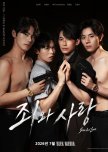
Low quality,no plot,poor dialogue,the most fake kissing in the history of BLs and acting on a school drama club level if not kindergarten level😅🤣Do not waste your time!
One actor was kinda hot tho🙈
I guess I had free time to watch it till the end 😄
Korea can do better,like Thundercloud rainstorm 🤌🏻
Was this review helpful to you?

This review may contain spoilers
A Refreshing Take on Dating Shows: Comforting, Real, and Unforgettable
I started My Sibling's Romance and I just finished it!I watched the first two episodes and immediately fell in love with it. It has such a warm, comfortable, and cozy vibe; because all the participants are there with their sibling, it genuinely feels like family. Everyone seems so interesting and funny. It took me a solid week to finish it since the episodes are over two hours long, but I enjoyed it from start to finish without skipping anything or watching at 2x speed.
The concept is highly original: a dating show where you are under the watchful eye of your own sibling while having to pretend you are strangers! I absolutely loved it! Even the first episode, which focused solely on the first-day introductions, was incredibly comforting thanks to that cozy, familiar atmosphere. It was touching to see how the sibling connections were kept secret at first, leaving everyone guessing who belonged to whom. As viewers, we weren't kept in suspense for too long, as their identities were revealed at the end of the first episode through a series of deeply moving childhood and teenage photos and videos. I also loved the career introductions done via photo albums and letters written by each participant's sibling.
When it comes to the cast, the best part of dating shows is that you grow attached to real people, each with their own unique facets. In my opinion, most of the participants showed incredible sensitivity, making it impossible for me to rank them! I will say that towards the final episodes, Yong-woo started wavering, making his feelings quite ambiguous. The same goes for Jae-hyung, who suddenly wanted to "get to know new people." But that’s fair and completely understandable!
In the beginning, during the first few episodes, Jeong-sub and Se-seung felt like a sure thing, but going ahead with the episodes they had some fights and misunderstandings, so much so that I actually thought they wouldn't end up together in the final choice. It surprised me, but that's how it went. However, I felt their foundation wasn't very stable, and as I read online, they broke up shortly after the show ended. It makes sense; it takes time to truly know someone, and if things don't click, they don't click. Still, let's not forget how they made our hearts flutter!
On the other hand, I had much higher expectations for Yoon-ha and Yoon-jae. According to what I read online, they had even gotten engaged ! They stayed in a relationship for over a year but eventually broke up due to "reality obstacles" regarding major life decisions (like wedding planning) and a lack of quality time spent together as a normal couple before taking such a big step. Despite their efforts to make it work and their deep affection for each other, they realized it was healthier to part ways, taking different paths to focus on their respective careers and personal growth while continuing to support one another.
Ultimately, what I loved most wasn't the breakups themselves, but the fact that the entire cast remained on excellent terms. As shown in the final minutes of the last episode, they still meet up and hang out as great friends!
Lastly, one of my absolute favorite moments was the sibling choreography contest. They were incredible! My favorites were Jeong-sub and Yoon Ha performing Nagging by IU and Lim Seul-ong, but honestly, everyone was phenomenal!
Was this review helpful to you?


