

 1
1Most natural and genuine romance with diabetes chemistry.
“They give me butterflies just by them being in the same airspace.” - meWu Lei & Zhao Jinmai, my all-time favorite couple from now on. I absolutely adore the organic evolution of their relationship, from the initial awkward, blind-date-like tension to becoming utterly smitten with one another. It’s rare to maintain such palpable chemistry throughout the entire series, especially considering that they got together relatively early on. Most shows struggle to keep the romantic tension once the couple has formed, but this series deftly keeps the spark alive in every interaction. What’s even better is that their connection feels incredibly natural and genuine, with unbeatable on-screen chemistry that is both sizzling and enthralling, a testament to their exceptional acting prowess and talent. I'm particularly fond of their meticulous attention to detail, evident in the subtle nuances of facial expressions and deliberate gestures executed by the characters. I can genuinely sense the level of hard work and dedication they pour into their acting behind the scenes, as they excellently presented the delicate interplay of ambiguity and tension inherent in the process of falling in love, and how their interactions still shine after coming together.
Quoting roughly from Wu Lei’s acting teacher, Teacher Cui, on them: “Wu Lei is a very serious person. Every time he takes on a role, he always fully immerses himself in the life of that character in advance. Every frown, every smile, every movement is executed with professionalism and in deep immersion of that character. No wonder so many people like him, because the quality he brings to his performances is exceptional. The manner in which they both handle intricacies and communicate when they're together makes their couple pairing very good.”
Lovely, therapeutic, mesmerizing, heartwarming, soothing, wholesome, tender, and comforting.
An absolute treat that cures depression, yet causes diabetes.
I found the casting to be perfect. Alongside the Lin Yiyang-Yin Guo (Yi-Guo) couple, I thoroughly enjoyed the supporting characters like Wu Wei & lil bro Meng Xiaotian. Their presence injected a playful energy into the story, often through subtle teasing or reactions to the leads, while consistently remaining strongly supportive of them. The bromance and rivalry were superb too—the trio Lin Yiyang, Jiang Yang & Meng Xiaodong all harbored mutual respect and admiration for one another, adding to the wholesome feel of the show. Furthermore, all of them played the role of wingmen well, putting in a decent amount of good words for Lin Yiyang along the way. So how can one not like the cast? Heck, even Yin Guo’s friends are good wingwomen.
I also loved the scenic filming locations that contribute to the gorgeous & cozy vibe of the show—filmed in Finland, France, and China; 3 countries & 11 cities. The BGM adeptly complemented the mood of the show, seamlessly blending with the atmosphere and drawing me in, with the OSTs being catchily good as well.
Some people don’t understand that the plot IS the interactions and the growing relationship/romance. The reason some perceive it as dull, draggy, or devoid of any plot is simply because they don't vibe with the chemistry between the couple as much. And for a series that heavily depends on the dynamics of the couple, this can make-or-break the show for you, so just give few eps a try and feel the chemistry urself to see if you’ll like it or not. And if you are skipping/ff-ing their scenes it’s totally pointless/invalid.
Just know that I love the tension and the tender relationship between the two throughout its entire run.
As someone who enjoys playing 8-ball/9-ball pool & snooker, I appreciate the cast’s efforts to learn the sport from scratch, training hard for a few months, immaculately capturing the aura of a professional player and successfully showcasing some impressive plays.
——————————————————————————
Here’s a brief overview of the gameplay for those who have never played before (feel free to skip):
In snooker, players must pot a red ball (1 pt) first before they can attempt to pot a colored ball, which carries varying point values (yellow-2, green-3, brown-4, blue-5, pink-6, black-7 pts).
This alternation between potting reds and colored balls (red, colored, red, colored) continues until all the red balls are cleared from the table, after which players must pot the colored balls in sequence from yellow to black. To maximize their points, players need to strategically position the cue ball (white ball), ideally near the black ball (which yields the most points), after potting a red. They must also position for the next red ball after potting the black. The colored balls are spotted—placed back onto its designated spot once they’re potted, as long as there are still red balls on the table.
Players will also need to deal with being "snookered," where their opponent skillfully blocks the path to the required ball, typically as fewer red balls remain on the table. Failing to hit the required ball results in a foul, with the opponent gaining a minimum of 4 pts (misses all the balls, or hits any colored ball lower than 5 pts). Contacting let’s say a blue ball when you are supposed to hit a red ball will be a foul that gives the opponent the blue-ball points (5 pts), while illegally contacting pink or black ball will give the opponent 6 or 7 pts respectively. The one with the most points at the end of the game wins, obviously, with the maximum break score of 147 attainable (potting red and only black in alternation) which is insanely challenging even for professional players.
For 9-ball pool, it’s simpler, players just have to pot the balls numbered 1 through 9 in sequential order, starting from the lowest numbered ball. The player who pots the 9-ball (yellow stripe ball) at any point wins the game (so a legal shot—hitting a required lowest numbered ball first, but successfully potting the 9-ball in the process results in an instant win). In the show, you will also see the players determining the order of play or break through “lagging”. This involves each player simultaneously hitting their assigned ball from the head string (horizontal line running across the table) towards the opposite cushion of the table, aiming to return the ball closer to the head cushion (the cushion nearest to where they initially hit the ball) than the opponent. The player whose ball stops closest to the head cushion wins the lag and earns the right to break the rack of balls to start the game.
Breaking first is usually more advantageous since the likelihood of pocketing any balls at the break is quite high. This is even more so for skilled players as they have an even higher chance of performing a run-out or clearance, where they pot all the remaining balls on the table in a single turn, thereby winning the game.
Most people (myself included), at least for recreational/non-competitive players, find snooker to be a much more challenging game than pool. This is primarily due to its larger table size, tighter pockets, and smaller balls, making potting more difficult as there is less margin for error, demanding more precise shot-making. Moreover, snooker’s greater number of balls and its scoring system, which includes more extensive rules and fouls, further adds to its complexity (possibly more strategic depth), and a game of snooker is typically longer than a game of 9-ball pool so it can be more mentally taxing as well.
That said, both snooker and pool demands precise ball control (power, spin, accuracy) for positioning and strategic thinking, since players cannot simply pot whichever ball they want and must always plan for the next or several shots ahead.
——————————————————————————
I’m now a huge fan of both Wu Lei and Zhao Jinmai. Their chemistry is electrifying and off-the-charts. If they don’t win the best couple award, I’ll riot, because I don’t know who else could.
Please, for the sake of humanity, give them a few more dramas as lovers, because their chemistry is too good to be wasted on just one project.
I’ll miss this show greatly.
And yes, their chemistry outweighs any negatives for me.
10/10.
Weibo Content (BTS, Interviews, etc):
https://docs.google.com/document/d/1-tVcTH8XLtaimpDae1dtmGkXAfbvTcLCERXHEwrl61Y/edit?usp=sharing
Episodes: 30
Runtime: 23 Hours
Please refer to my review’s comments section for further details and discussions regarding some of the criticism or complaints towards the show.
Was this review helpful to you?
Story: Prepare for an emotional ride. From the first episode, I just can't let go. A real makjang drama at its finest, it made me shed tears by episode 3. The story will tell you about a guy with painful past, lost family, with nowhere to run, with absolutely nothing at his hand strives to find himself, his dreams and his newly-found family through the world of baking. The childhood part for me was greatly done, it's the family history that made me invest deep emotions; for the 2nd half of the drama were flashbacks has to be made, sad emotions run down and I cried. I lost count how many times I cried in this drama. Most of the lines coming from the teacher were really inspiring and will let you ponder about life in actuality.
The romance is unconventional. It's not I-know-already-who-end-up-who typical love story. It all ends up to a matter of choices. I did like the ending, it's open yet satisfying and will leave you a resting feeling.
Cast/ Acting: The child actors were definitely amazing in conveying heavy-toned drama in the first episodes. Yoon Shi Yoon maintained the well built TakGu character. He was very convincing and his expressions will make you understand what hardships he's going through that seeing them makes it painful. When he cried, I can't help but cry too. Shin Yu Kyung's character is complex and yes, she's also believable. I initially watched this because of Joo Won and I can say, he's also very good in here, the shifting from bad to good was portrayed well, I also did cry for him at the end. The two main antagonists were not a letdown, it seemed nothing can stop them in doing what they want at all cost until the very end.
Music: It simply matches the scenes it has to give enhancements of, and it has a lively yet inspiring feeling as well.
Rewatch Value: It's a heavy drama for me so I will find it hard to rewatch it for sure.
Overall: A great inspiring drama that will max-out your emotions( it is for me anyway) but in a good way! It will make you sad yet satisfied, this is one of those dramas that is hard to forget. :)
Was this review helpful to you?
Story - Overall, it was pretty interesting. There were things that kept you wanting to know what happened even though the romance element was predictable at times. It wasn't draggy at all and that was a great thing for this drama. The pace wasn't too slow but not too fast either. Most of the twists in the drama were also well done, the fantasy was what wasn't predictable at all, I didn't see those twists coming. There were definitely some parts that felt out of place in the drama, like the beginning of the last episode was a little too surprising for me... can't spoil it though. ;D
Acting/Cast - When I first started this drama, I wasn't expecting much out of Lee Hong Ki. I thought it was odd he was playing a 29 year old man when he looked so young that I couldn't believe he was even 24! But I'm glad to say, it played out pretty well. A haircut and a change of makeup can do wonders to enhance your age! His acting was impressive and it exceeded my expectations by far. Yang Jin Sung was great too, before this drama, I had never heard of her before. I was surprised that this was her first leading role. The difference in personality was so clearly shown with Yi Kyung and Doo Rim. Not once (except maybe the ending) did I confuse them even though they were being played by the same actress. Lee Hong Ki and her had tons of chemistry, they did good kiss scenes LOL. Everyone else played their role well as well, I didn't see any flaws in the acting. (:
Characters - Kang Ju, who seemed cold and rude in the beginning naturally became softer and more understandable. I loved Doo Rim so much at first, I adore strong female leads. I like how at first she disliked Kang Ju but naturally began understanding him and liking him rather than clinging onto him annoyingly from the start without considering how he treated her. Doo Rim remained true to her character until she fell head over heels for Kang Ju... honestly, this is like the one of the things I really disliked about this drama and it bothered me a lot. Like, all of a sudden she was crazy about him and wanted to be with him for the rest of her life. The development felt unnatural to me. How the relationship started wasn't that realistic but after a while you forget about it and just enjoy the cute moments. After she admitted to her feelings, her tough character didn't show as much as the previous episodes which kind of disappointed me. At first I really hated how horrible the antagonists were. The very people she trusted were lying and deceiving her for their own gain and she was completely oblivious to it all. When she finally did find out, she hardly even cared. It was a good thing that the antagonists end up becoming better people and admitting their wrongs. Another thing that bothered me was Yi Hyun. It's weird how he falls for Doo Rim, who looks exactly like his half sister, Yi Kyung. I don't remember this ever being explained though... Roo Mi, who was initially the usual evil second lead actress, became so much better naturally. It wasn't at the very end where they go on about how they reflected on their actions but it was pretty early in the drama when she changed for the better. My favorite characters were the ghost and Doo Rim's grandmother. The ghost was a important part of the story and added mystery to the drama. I loved Doo Rim's grandmother because she was so adorable and so funny xD
Music - I loved the music in this drama. I never got tired of it and there was a nice variety. Lee Hong Ki has a really nice voice, I really liked the OST he sang for the drama ~
While there were some flaws in this drama, I liked it overall. I'm glad they didn't try to extend the drama because the fact that it's not draggy is really enjoyable. There are so many cute moments that will make you laugh too. A good length for this drama and if you want to watch it, I'd definitely recommend it.
Was this review helpful to you?
This review may contain spoilers
All aboard the angst train. This is going to be a bumpy ride!
This show started light-heartedly. A bit of awkward meet-cute sets up the love line between our OTP. I have to give credit to the FL for her portrayal of a 16 year old even though she is 30 in RL. In fact, most of her roles tends to be in that late teens to early 20's range.While the romance is a slow burn, it is engaging and quite cute. It did turn dark when the FL "accidentally" poisoned the ML. He fell into a coma for a long time and when he woke up, he has the mind of a child. That is a shock for all concerned because he was an intellectual giant before the accident.
This brought about the second phase of their relationship. In his dim-witted state, he latched onto the FL like a chick onto a mother hen, In turn, she dedicated all her efforts to cure him and be with him. Around this time, the show really went to the dark side. The melodrama dial is turned up to the MAX when the FL's whole family was killed. It is excessive, but not 100% shocking when you consider the historical setting. It was designed to hit us with the feels, and it works.
I'm shipping the OTP at this point because they both suffered so much and yet they are trying their best to be happy in their little world. However, the show starts making questionable decisions from this point onwards. They piled on the angst and dragged out the ML’s plot. While his childlike innocence was a novelty at first. It went on largely unchanged for 1/3 of the entire run. What was cute earlier is now wearing.
If that is not enough, the moment the ML recovers his memory and mental capacities, he plays the noble idiot card. As expected, the OTP suffered even more. I still don't quite understand his logic. At first, he thought she has feelings for her senior. However, after she clarified the misunderstanding and declares her undying love for him, he continues with the charade even though he is in pain and pining for her. The brakes are off the angst train by now.
There are a number of opportunities to reunite the leads. The show could have profited from their love and longing. Hit an emotional high and gift us some much-needed fan service. Alas, it was not to be. I'm not going to spoil the last few eps, but let's just say the writer doubled down and went all-in on their sufferings.
Before we all reach for the Suicide Help Line, the writer parachute in a happy ending but it was literally in the dying seconds of the show. There is no preamble nor extra fan service. The scene is so contrived, I'm speechless. I can only imagine the writer being told by the upper echelon to cough up a happy ending or else. In hindsight, maybe it'd have been better if the writer decide to die on that hill and insists on delivering a torture porn unto the bitter end. I don’t know whether to laugh or cry.
Acting wise, the cast did ok. The FL was in her element. The ML is handsome and not too wooden. I like his earlier portrayal of the man-child. However, the same-y role becomes boring to watch eventually. The ensemble cast is standard issue for a costume drama of this ilk.
I was ok with the angst . . up to a point. It is that type of show after all. However, the last few episodes really throw everything at the OTP including a weaponized kitchen sink. We have all manners of weird plot twists inserted solely to pull the leads apart even though they more than earned their rights to be together. That was too much for me. I am posting a lower score as a warning to others. Peace out.
Was this review helpful to you?
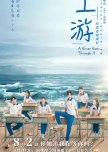
Exceeds Expectations.
Generally, if there is one genre that has been reused too many times to the point that nobody really watches them anymore, Youth dramas take one of the top spots. A River Runs Through It is no different. Dealing with the regular issues of teenagers growing up and their relationship with their parents, it can be compared to the vibes of Lovely Us and Reply 1988 during its initial episodes and proceeds to follow an almost slice of life like plot with the daily on going life of the characters at college and their relationship with their friends and 'person of interest'.(It's also very loosely based on a novel "Yan Lei De Shang You" (眼泪的上游) by Ming Qian Yu Hou (明前雨后) which is literally translated to 'Upstream of Tears.' It dealt with the ignorance of youth and had a realistic portrayal of the 'One that Got Away', if you are curious.)
***THE WARM FUZZIES:
☆ Set during the late 90s and early 2000s, what makes ARRTI stand out from regular youth dramas is the absolutely vibrant portrayal of the various characters, the real nostalgic vibe that it brought along, and the absolutely relatable incidents and events that anyone can relate to. There's always a constant feeling of warmth throughout our journey with characters
☆ Right from the first episode, we come across Xia Xiao Ju, a timid but hardworking girl, who accidentally has an unceremonious first meeting with the naughty Lu Shi Yi. We meet their neighbour Cheng Lang, a compassionate and sincere boy, the fluffy Bao Xiang Xiang and the empathetic Qiu Le Tao. The journey with the five characters from high school to gaokao and their moments of happiness and sadness were deeply touching. Characters, even with less screen time, managed to flesh themselves out as realistic ones, breathing life into the drama. We fall for them, laugh and feel their sorrow with them. One of the most memorable scenes I would pick during their highschool days is the one where the gang chases after the departing train. What I initially thought to be a funny moment was painful. And I related a lot to the 'bidding farewell' scenes. For a coming of age drama, this is one of the best I've seen.
☆ None of the characters were cookie cutters. Everyone were multi dimensional with their own strengths and weakness. Cheng Lang, the studious sweet boy, does have his own share of naughty stuff with Lu Shiyi. Shiyi often plays around, but proves to be one of the best friends that one could wish to have. It was absolutely funny watching this drama on Youtube and each new episode had people saying how much Shiyi was starting to grow on them. Bao Bao comes off as lazy and funny, but is more understanding and his own share of difficulities to face. Tao Tao might be confused, but has more grit and resolve in her. Xiaoju is shaky when it comes to her own internal struggles, but recognizes her faults and attempts to correct them. The variety of characters, each with their own uniqueness and the brilliant portrayal by the actors was one of it's highlights. In terms of acting alone, this drama deserves a better rating than many of the hyped up ones.
☆ I was particularly impressed by Jiang Zhuo Jun's Qiu Letao. I'd found her role in Just an Encore almost forgettable, but from here, I could tell that she deserves characters with more depth and intensity. It was also a treat to see Wang Rui Chang as Lu Shi Yi. The last few episodes were some of the best moments of his and showcased his talent. Hu Yi Xuan never disappoints and this was no exception. Chen Bo Hao was another surprise - his character never annoyed me, even though he was set up as a someone who was supposed to rival Lu Shiyi. In fact, now that I think about it, none of the characters were annoying.
☆ The strong friendships are really well depicted with a hint of realism to it, emanating a lambent ambience that is bouyed by compelling performance by the cast. I couldn't find a single scene where I felt that anyone was trying too hard to make it seem natural. Nothing was forced. It was really heartwarming and relatable. Particularly the original gang: Xia Xiaoju, Cheng Lang, Lu Shiyi, Tao Tao and Bao Bao. Then later, at college, the bromance between Shiyi, Huang Jun and Cheng Lang. Not to mention Xiaoju and her roommates, including Tao Tao. The comedy element was never lost until some of the final few episodes.
Shiyi and Xiaoju's friendship is perhaps the highlight and backbone of the story. Their support, banter and care for each other was what kept us waiting for new episodes each day. In a way, we see them realize where their hearts lie and it was heart warming to watch. (Also a bit frustrating.)
Lu Shiyi just raised the bar up when it comes to best friend standards. Although annoying at times, he is often ruthless with his words and desperately attempts to help his friends when they are at their worst, may it be Cheng Lang or Xiaoju. His character was a standout for me among many leads I've seen - he is usually the kind of guy who is set up as a second lead whereas Cheng Lang would be the leading man. But, all the five of them (six including Huang Jun) had distinct personalities and worries that made each of them interesting in their own right. Their journey along the bumpy road of life was 100% worth my time.
☆ Another aspect that I love about this drama are the parental relationships. I'm sorry to say that I was at the opposite end of the Xiaoju - Mother arc, but some of the way that Xiaoju reacted reminded me exactly of my sister. Her conversations with her father were beautifully portrayed. I also found Cheng Lang's relationship with his mother really touching. Shi Yi's banter and arguments with his parents were absolutely funny. The parents' continued to make their appearance even towards the very end, which was something I've not seen much in many Chinese youth dramas and found it relatable and realistic.
Those moments with the family never failed to make me emotional and kudos to everyone involved.
☆ In terms of relationships, I personally feel that ARRTI covered some of them in a rather realistic/bittersweet manner that was much closer to reality. The last half of the drama particularly has a lot of focus on relationships, but never seemed too mushy and romance focussed. I never disliked any couple or ship, however boring they might be.
☆ The soundtrack was perfect; not flashy or over the top, but nostalgia inducing and warm. I was unable to understand a single word, but nevertheless, they made me feel the exact emotions that I was supposed to be feeling. My favourite ones:
▪Still Singing (依然歌唱) by Liu Xin (刘心).
▪Between the Lines That Year (那年的字里行间) by Guo Jing/Claire Kuo (郭靜).
The ending theme 'Dear Journey' (亲爱的远行) by Cao Xuan Bin (曹轩宾) was pleasant to listen to. I particularly liked the instrumental renditions of various songs. None felt out of place and complimented the scenes perfectly.
The BGM only added to the effects of ARRTI. Some of them were really memorable:
1. A flock of birds flying away.
2. A top toppling. (I read a YT comment pointing it out to be a tennis ball.)
3. A goat braying.
4. A chicken and duck crowing and quacking.
5. A train wooshing.
6. A cat meowing and dog barking - particularly when there was some humorous conversation between Tao Tao and Xiaoju.
***THE COLD PRICKLIES: [Mild spoilers.]
---- Xiao Ju's one-sided crush on Cheng Lang dragged waay too long, about 25+ episodes. It should've wrapped up right around EP24 or 25 so that the story could focus on Xiao Ju's growth and relationship with her family, but it didn't and so much time was unnecessarily wasted on the arc. On the positive side, none of the side characters were affected by this, so there was smooth development from their side. (Plus, I was unable to connect to her character as I had never experienced this. It looked like she was imagining a lot of stuff.)
---- As a result of the above point, the final few episodes are the weakest, particularly from EP32. They were a total rush as expected from a show destined to squeeze everything into 36 episodes. Not to mention, the warm quality and realistic character growth got totally thrown in the bin to give way for a really cliché and uninspired script that could be a part of any drama. We already have an excess of such Youth dramas with the same tropes, so it was extremely disappointing to see such a promising show take the exact same route. I, for one, was dissatisfied by the way everything got wrapped up with a bow as it almost seemed more like fanservice than actual content.
---What makes this more obvious is how closely the writers stuck to the novel upto episode 34. Possibly the most fatal flaw they had made. Had they wanted to give a more fulfilling and realistic end, they should've steered clear off the book's influence. Slow burn romance needs a lot of depth and time to construct; Xiao Ju and Shi Yi's friendship was more memorable than the push and pull crap that kept happening past EP30, completely failing to bring justice to their "romance". It just wasn't a convincing slowburn with only five episodes to stuff everything in. The last two episodes, albeit being beautiful, is plain mediocre; it was clearly a deus ex machina. It was forced and banal, completely forgetting it's realistic slice-of-life storyline in favour of a flamboyant end to satisfy viewers.
---- The character Xiaoju, never really got a chance to face the repercussions of her actions and her realization and growth were stuffed behind several dream sequences or time skips that was unfavourable for her.
Out of all the characters, she had the potential to have a really well portrayed storyline, but I failed to see any significant change in the way she was written. At some points after EP31, I could feel the inconsistency in her behaviour, which might be the result of trying to serve justice to her character, who in the book was a rather depressing one. Some of her actions suddenly seemed indecisive and stupid, often slow with her responses, thanks to the awful pacing and a timeskip that crowded the plotline of several characters together. I couldn't sympathize with her actions as somehow I glimpsed the shadow of the novel's end. It's such a shame when she could've been right up there with characters like Duk Soon and Chengzi, yet the drama failed to live upto it's potential. Time was what she needed, but it wasn't done convincingly. It's also understandable as the original novel wasn't as fleshed out as the live action. I could feel that the writers kept the book in mind and it somehow got unintentionally hinted for a minority of viewers, including myself.
--- There were more scenes of the leads getting support from their friends that I really liked, but when it came to themselves, the communication about their troubles and fears regarding their relationship was almost zero. Shiyi got no better than her - there are still questions and misunderstanding remaining from his side. It didn't help that we see his character's efforts for the first 30 episodes, but get little to no actual response from Xiaoju during the final episodes, where multiple character arcs come to a close, and the story took a very generic turn that was a stark contrast to its original tone. Which is a shame since more than half of the drama was spent on strengthening their relationship, but hits a rocky road after a time skip. It felt off and did both Shiyi and Xiaoju a disservice. Had the scriptwriters chosen a more slow and convincing progress, it would have been much better.
---- The timeskips worked excellently for the evolution of supporting characters. But, the slice-of-life like balance got lost during the last bit. The main leads disappeared offscreen in what seemed like an attempt to give other characters a proper closure. It didn't help that unnecessary misunderstandings were stuffed at the very end, sucking away the uniqueness of the drama. Also, a few scenes that could provide some credibility and continuity to the story were completely cut off, or clipped and locked behind a paywall. Which just might be one of the worst decisions I've ever seen a streaming platform make - many of us waited for crumbs and finding out that minor scenes that could develop the plot got cut off was iffy.
But, I enjoyed the story of each of the original gang members, hence my rating.
***FROM THE BANK OF THE RIVER:
Overall, the cast and crew attempted their best to bring the story to life.
Personally, the drama portrayed the bitterness of youth and the dilemma one faces during those times excellently.
My rating is an 8, minus the enjoyment factor, for which I'd gladly give this one a 9, even if the last few episodes were unnecessary for the leads. The characters and execution made this watching experience a really memorable one. But, for a drama that could've followed it's slice-of-life plot, it fell far off the mark and now I only can lament about its wasted potential.
In a way, I can understand why the Chinese Title of the drama is Shang You/Upstream.
Going upstream is never easy. There is the gravity constantly pulling you down and the river itself that stops your smooth passage. Time and river have two things in common: they pass by and if we are lucky, we find what we want at the right time or realize what we missed out on too late. But, in the end, they are all bittersweet and nostalgic memories that we will forever cherish. And if that was what " A River Flows Through It" wanted to pass on to us audience, they did it really well.
Do I think it's perfect? No way. Did it make me mad at times? Yes, definitely.
But the fact that it riles up such intense emotions within the viewers itself is a win for ARRTI.
And I do not plan to erase this small, flawed story of two lovable idiots and their friends anytime soon.
Was this review helpful to you?
Dude...
How is an 18-minute short supposed to excuse the emotional abuse and Lhong paying a man to rape Tar? And here Lhong used to be my favorite character alongside Techno lmao, nah the man needs therapy...I just... I don't see how this is supposed to excuse anything. Sure we got context, but that context doesn't really amount to much. Him being ignored by family and friends doesn't mean he gets to go around breaking people up just because he wants Tharn so badly. And yeah Tar isn't my favorite character but... you tried to sell him... to a man who attempted to rape him...
Dude.
Was this review helpful to you?
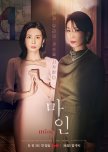
Within a male dominated spectacularly exclusive golden Jaebeol-Cage women stand up for their rights
The (fictional) Hyowon Group's extended family is among the richest one percent in the country. This clan is analyzed in detail with their personal stories and their dynamics among themselves. It quickly becomes clear that despite all the wealth, nobody is happy here. They are prisoners in a golden cage of their own greed. The peacock cage in the park of the estate is a beautiful allegory for this.If they were just satisfied with what is, they might be better off. But it always has to be more. "Mine... Mine... I want it... I want more... I don't want to give it away..." Communication is replaced by competition, love and comfort by money and luxury. The price has to be payed by suffering souls. Having lost their grounding in trust, sympathy and kindness, they somehow blindly fight for a substitute. "Mine" thus illustrates their sandbox games including mud fight. Maybe with designer sand - the architecture and furnishings are spectacularly exclusive down to the last detail. You don't have to like that, but it is supposed to impress - and it does.
Still, mud is just mud... And it is disgusting to deal with.
The Jaebeol orbit traditionally is a man´s world. In this respect the KDrama "Mine" choses a unique and inspiring approach: Here concentrated, intelligent and courageous women's power is fighting for liberation from the golden cage. This is possible in South Korea in 2021. Also that one of the female protagonists is in love with a woman. Can women set themselves free from male dominated power structures and constraints? There are some truly beautiful, touching, powerful moments of sisterhood and women's power. Sometimes offensive, sometimes subtle.
If you like, "Mine" is also a contemporary social criticism, quietly hidden behind the curtain of an exclusive and alien world of feudal arrogance. The orbit of the Jaebeol may be far far away from the rest of the world, but with all the interpersonal and inner-psychic dynamics (actually quite ordinary and human) that are in focus here, it comes very close to the themes of 'normal' (South Korean) society - with its social constraints, its strict hierarchical structures and their prejudices that put chains on people of almost every social class. The audience is thus free to choose who from the Hyowon clan household they want to identify with. And whether they want to dare to break free, too, and take a different path (together with one or the other protagonist).
--------------------- SIDE NOTE: --- Jaebeol and their different topics among second and third generation heirs ---
The rise of the founding Jaebeol, like the growth of their companies, was shaped by strong patriarchal hands. Hardworking hands, too. However, this first generation patriarchs are slowly dying out... this being accompanied by creeping processes of change. The founding fathers knew where they came from. Plus, from the very first hour, they had long-standing, loyal relationships with their assistants, secretaries, drivers, foremen that had grown over time (even if they were characterized by dependency)... and over time they have built up a systematic network that takes care of their interests wherever they wish.
Their offspring however is already born "with the golden spoon in their mouth", spoiled by wealth and far away from the ordinary people who work for them and their living environment. These Jaebeol are increasingly preoccupied with their ego, family dynamics, scandals and inheritance disputes. They lack ´brothers in arms´, who shed their blood, sweat and tears - thus they lack someone they can trust. The principle of bribery may still work, yet the reins are now in several, increasingly fractious hands. By now many Jaebeol-Clans have already begun to dismantle their power structures by themselves. And if not, their past machinations are increasingly catching up.
"Mine" documents quite vividly how the Jaebeol families dismantle themselves... how the heirs identify with their (still young!) identity as Jaebeol as if they were feudal old noble blue blood... They haven't really had to prove themselves yet and by their arrogance are already failing in the second and third generation. Additionally, the youngest generation increasingly is no longer interested in the corporate empire, let alone their management...
In this respect "Mine" also represents a new variety of topics within the Jaebeol-Genre in KDramas for the 2020s. ´Competition´, ´cabal´ and ´revenge´ as leading subjects have already been processed back and forth since the early hour of KDrama. ´Justice´ was an increasing topic during the last decade. ´Breaking free´ as a Jaebeol-topic however so far is rather new and rare, yet it might increase in the future...
-------------------------------------------
Was this review helpful to you?
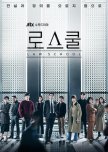
THE BEST LEGAL COURTROOM DRAMA EVER!
Are you a fan of the American legal thriller TV series HOW TO GET AWAY WITH MURDER? Then, LAW SCHOOL is definitely for you. Not a remake, but the premise of the drama and the primary set-up is inspired by the said English series.Law School had been one of the most anticipated drama of the year 2021, that too a rare legal courtroom thriller drama. And everyone can see how it has paid off to everyone's expectations. Kim Myung Min, Kim Bum and Ryu Hye Young are indeed the reason all of us were damn sure about the quality drama it'll be. What a powerful cast to begin with!
The very first scene of the very first episode of this drama; that one single scene where the writer and the director decided to show the faces of the cast for every major character and proved what the class and standard of their drama will be. That was so lovely of a scene to witness and made me feel woah. The production actually succeeded in dragging us into the drama.
Law School has a straicase plot development which means, it's neither steady storyline or a combination of connecting plots; rather a series of related events where everything is revealed in a step by step manner leading to the main climax in the end. I loved the way every character in it catched up to a new event that they were completely unaware of, resonated it on the individual level utilizing law that they study, gave it a trail for good and finally let it go.
Law School has the typical urban thriller editing but they keep the intense mood up all the time by running the screenplay at the apt speed, hence making it interesting and not boring.
To be honest, the first 2 episodes felt a bit dull and confusing. They keep going forward and backward in time, multiple times which didn't allow me to catch up to what exactly was happening. But it caught momentum from the 3rd episode and got better since then. And from the 6th episode, it actually became very interesting and I enjoyed watching.
Character development is a thing that's been shown for only limited characters among a huge number of cast but that's fruitful given how they changed from facile and one dimensional beings to stronger individuals with the drama's progression. Notably, the screentime distribution is even for all the characters, the lead trio being the ones to get slightly more duration; one of the handful dramas where both male and female characters are equally emphasised and well balanced. A major credit to the writer for that.
Kim Myung Min being the arrogant and most lawful man (in the entire world), might make your blood boil to the point that you might wanna smash him down but before you realize, he shall capture your heart with his badguy charisma (I've actually fallen for him :P). DO NOT expect to see much romance between Kim Bum and Hye Young because the drama ain't about that though Kim Bum sometimes love to flirt with Hye Young as he kind of admires her a lot. On the other side, Hye Young who is unaware of her fluttering heart for Kim Bum, is always annoyed by Kim Bum and herself is so annoying, haha. Her character development is notable for she grows to being a righteous law person from a girl, not good at studies.
Let's talk about the legal aspects. I have always felt that not many people watch pure legal dramas unless it has a major part of romance and melodrama but if we are talking about a courtroom drama or movie, it has to be like Law School. Some people might wanna give up because they keep blabbering about the criminal codes, constitutional laws, articles and sections at a rate that you have to pause many times to understand and channelise the things but trust me, that's what happenes in a real courtroom. They have included and discussed a lot of clauses but they also made sure to make us understand them with examples and elaborations even during the trials. They've also wisely introduced the shortcomings in the existing law & order, thus implying a need of change in them. This work is hence highly commendable.
It's done pretty well even if you judge it as a thriller. They kept increasing our urge & curiosity to know who the actual culprit is. Unlike many thrillers, you might hesitate to predict and make theories about this drama because everything is simultaneous and transparent and which is why I thought the revelation of the culprit will come as a huge shock, but not gonna lie, it was disappointing. It turned out to be an already very bad guy so I wasn't like woah. But I doesn't matter because it's primarily a courtroom drama and evem after the revelation, it didn't become boring or anything rather more cases were added on the same episide as compensation which never felt like getting dragged at all.
The background sound editing and screenplay is nice. The direction is amazing as well that kept people going, especially for viewers like me who are into binging. But I think this drama is a huge disadvantage for those who watch ongoing. It's not frustrating as there's nothing to predict or think about and honestly you won't have to wait for a week eagerly to watch the next episode.
Law School is indeed one of the best thrillers of 2021 and overally among all the thrillers too and let me call it the BEST LEGAL COURTROOM KDRAMA EVER PRODUCED.
P. S. I sometimes got the DEAD POETS SOCIETY vibes because of the way Prof. Yang gathered his students and they even had a hideout in the copy room. HAHAHA
Was this review helpful to you?
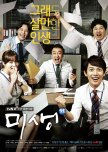
It isn't necessary for me to name all of the actors, because it is already done. Just know that they all were excellent. I felt connected to each of them in different ways.
The music is appropriate.
It is rewatchable, but I probably won't.
This drama isn't for every one. I can see why some people would get bored with it. However, I highly recommend it.
Was this review helpful to you?
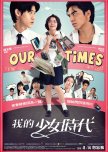
I watched it because I was curious when all my friends were talking about how good it was.
It's a really cute rom-com movie. I find myself fan-girling over the Male MC whenever he smirks.
Lots of laughs throughout but there were really sad moments near the end of the movie. It's a fun watch!
I'd recommend this to everyone. xD
Story - A few clichés here and there, but overall it was good. It was a typical plot of how they wanted to break the relationship of their crush by working together.
Character development was well done and I liked how they slowly naturally became friends.
Acting - There was no awkward acting. I thought their heartbroken expressions was well executed.
Poor Vivian Sung had to fall multiple times in the movie since her character was a clumsy one, but all the falls was very natural I believe.
Music - Suitable inserts for scenes and the theme song by Hebe Tian is just awesome!
I'm definitely watching this again!
Was this review helpful to you?
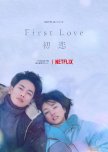
It's hell on Earth to keep driving, knowing it's really just a wrong turn.
^Summary of Harumichi's life so far, JK.STORY - 9 ⭐️
This drama has artfully weaved some historical events (including this COVID pandemic era), cultural references, even social and political issues within this story. About the love story, I wouldn't say that it is something new; there are some cliches; but what I like most are the scenes that made me curious and then find more about it scenes later. Every character was well written, making them real people and have their own depth. I am not sure very sold with the 'love story' between Tsuzuru and Uta but maybe I'm just invested with the main couple's story.
Although presented as a love story in the trailers, it also showed youth's goals and dreams and how some get to fulfill it, some not making it or just taking detours. Some scenes can get preachy about it but over-all, the story's execution is actually good.
ACTING/CAST - 10 ⭐️
There's no denying that the main couple are veteran actors. Don't want to spoil anything but there's this scene that really made me tear up. The young actors did well too and their chemistry suits the theme of first love. Despite not looking like alike, (at least we get the moles right) I can definitely see the young characters maturing into the adult counterparts. Even the supporting characters too had delivered a good performance.
MUSIC - 10 ⭐️
Aside from Utada Hikaru's songs, I find Tsuzuru's music and the drama's sound design and transition faultless. I am no sound or music aficionado but as I watch this with my headphones, I find everything seamless and cinematic. There were a couple of mellow English songs too and it fit well in the atmosphere of the whole drama.
REWATCH VALUE - 8.5 ⭐️
I am not someone who rewatches dramas but the cinematography and the cast's performance alone could easily make me watch it again if I have the time.
OVERALL - 9⭐️
Was this review helpful to you?
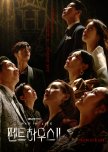
Two Is Better Than One
I'll be honest; I always get nervous with dramas that have multiple seasons. One of the reasons I ditched Western dramas was due to the multiple seasons that always made the overall show draggy and boring after a certain amount of seasons. Despite me being obsessed with Penthouse, I was still nervous for season 2 because of the slight chance it might come off as "unnecessary." Let me say that is nowhere near the case. I have loved many sequels more than the original, and Penthouse is one of them. Is it because it was half the length of season 1 or because we dived right into chaos? I might never know for sure, but I can tell you what I loved about this second season.Story:
Everything that has happened throughout the episodes has led to some fantastic plot, and I enjoyed every moment of it. I won't spoil anything just in case, but all the twists and turns were done fantastically, and I don't think I could have imagined something different, which has usually been the case with other dramas I have watched. One thing I love is how unpredictable the plot has become. You think one thing is set in stone but then it's revealed you were the main act in a circus show, and what you thought wasn't at all what was written in stone.
Characters:
For my season one review, I mentioned how each character, good or bad, was portrayed excellently and written extremely well. The same can be said with season two. One of the things I liked about season one was how, for multiple characters, they were written so you can choose whether to dislike or like them, and that continues in season two. Of course, characters still made my blood boil, as well as the fact I shed tears throughout these fantastic episodes because of them, but I love feeling those emotions with characters. Some characters took me by surprise, good or bad. I found myself at one point hating on a character I thought I liked and liking a character I thought I hated. This season also strengthens my belief that no other actors could portray these incredible characters, or at least I cannot imagine another actor as any character.
Others:
Despite the few OST's we got, all of them were fantastic, especially Repeatedly and The Morass. I wish the season was longer, but I'm glad it at least got extended by 1 episode. It was also great that one of the best episodes, episode 12, happened to air on my birthday, so it was a fantastic birthday gift if I shall say.
Final Thoughts:
Since this is season two, those who watch it or are planning to watch it have watched season one. That being said, I'm already used to the hectic drama that comes with it, so if that's the same for you, then the drama that comes from this season won't be a surprise to you. Although I would say season one technically seems more hectic and "insane," mainly due to having more episodes," season two doesn't shy away from the hectic plot at all.
I cannot wait for season three and how hectic and great it will be. The only thing I'm sad about is one episode a week, which feels like pure torture. But overall, this season is fantastic, and if you watched and liked season one, you should most definitely watch season two.
Was this review helpful to you?
It is hard to pick only one thing that I like about this. I liked almost everything.
If you enjoy a good amount of romance and comedy, adding to it time travel, a "dont you dare mess with me" female lead, a hot/sweet male lead plus beautiful scenarios and clothes; then there is a high chance you will like this. There is also fantasy, specially in the second half.
I kept checking everyday for new episodes. Usually I dont start a drama till it finishes airing, but I did the "mistake" of watching the first episode and then couldn’t help but watch the new episodes as soon as they came out.
Although I liked it, I felt the ending was a little rushed and the fantasy part made me cringe a little since I am not a big fan of the genre.
For me it’s a 9/10. The only other drama that I gave such a high rating was Empress Ki.
I will definitely rewatch this. Actually I watched some of the episodes 2 times already since I watched first alone and then with my sister.
Was this review helpful to you?
This review may contain spoilers
So so good
I know I’m in the minority here but my god I loved every second of this drama . I loved Kim Seon-Ho in this drama as much as everyone else, but in my heart Dal-Mi was always going to end up with Do-San as she showed absolutely no interest in Ji-Pyeong from the beginning. I wish Ji-Pyeong had more closure and didn’t have to work with them for the rest of his life but in my mind he’s found a nice partner and living a great life while also staying close to halmeoni. All in all, I loved this drama and will definitely be rewatching <3Was this review helpful to you?

Should You Become An “ Anti-Fan” Of This Drama?
Have you ever watched a drama which starts off with cataclysmic screenwriting and then surprisingly grows on you in the second-half ? Well, most watchers can probably agree that this ideology epitomises ‘So, I Married An Anti-Fan’ with its surprising turn from certain cliches to an endearing relationship between our leads.However those expecting ‘So I Married An Anti-Fan’ to be a “masterpiece” should probably be told outright that this drama isn’t without its flaws either.
Taking nearly three years to air ( after finishing production in 2018) and sparking an eruption of mixed criticism by viewers afterwards , “ So, I Married An Anti-Fan” is a drama which has greatly divided the audience demographic . Some viewers take the stance that it is " too reminiscent of the tacky 2000s abusive relationships" and " poorly-written", whilst others on this platform defend this as " sweet" and a " comfort drama". However, this raises the bigger question for those wanting to watch the show for the first time; is it actually worth watching?
Well, there are some undeniable strengths which may have an alluring charm for certain watchers. The main cast (consisting of Choi Soo Young, Choi Tae Joon, Hwang Chan Sung and Han Ji An) were an absolute delight, the plot was " romantic and fluffy with a twist of melodrama", and it was straightforward enough to follow ( in an " unplug your brain" sort of way ). Refreshingly, the second-half took a slightly more serious stance to our main leads’ relationship by delving into the main leads’ interactions, whilst also addressing more profound insights into the idol industry’s sociocultural issues in South-Korea. However, this is also where we must address the opposite side of the coin; the problems.
One of the biggest dilemmas of ‘ So, I Married An Anti-Fan’ came through character development. Let’s start off this example with our female lead Lee Geun Young. Geun Young was a female lead who you desperately tried to like as a viewer as Choi Soo Young is a good actress. Undeniably as a character, she isn’t "naive" or the " sweet girl next door" and will happily stand her ground at times when the male lead kicks off. However, ultimately this is where our biggest problem occurs with Geun Young; she exists( for a major proportion of the series) as a component of an enforced pairing for the “ sake of plot” .
There is nothing wrong per say with a female lead being in a relationship in a drama. ( In fact it can allow god-tier character development . ) However whilst we did get to see Geun Young come round to accepting her feelings in the second-half, this first part felt more like a carte blanche for Geun Young’s character development by screenwriters Kim Eun Jung and Nam Ji Yeon in order to forcefully pair-off Geun Young with our male lead Hoo Joon. Consequently Geun Young was rarely given time to understand exactly why she was attracted to the " jerk who ruined her life" ( the motiveless goal aside from her obsessive desire to " ruin his life"). Sadly further interactions with her mother and friends provided little insight into her actual personality (beside the romantic pairing).
Then there’s the male lead Hoo Joon. Similar to Soo Young, Tae Joon is a dynamic actor and there were certainly intriguing issues tackled with his character; a popular star who is getting fed up of being used by his company and his tiresome lifestyle. However typical of cliches, he was often glorified by his role throughout the drama as the " stoic, jerk male lead” ; getting away with assault, bribery and blackmail (including towards the female lead). The show attempted to play an uno reverse card by introducing the " tragic backstory" which may evidently cause mixed-feelings for viewers.
Of course the issue of our main leads also remains a source of mixed-criticism for the drama. On one side, there is the undeniable problem that the male lead Hoo Joon constantly found ways to emotionally gaslight the female lead ; grabbing Geun Young’s wrist , then giving her the cold shoulder over the most trivial of matters and refusing at times to hear her side of the story (or just talk to her like a decent human being). However, there is an alternate stance that ‘ So I Married An Anti-Fan’ isn’t supposed to be perfect. It’s a romantic-comedy which attempts to reflect the real-life reality that actual relationships are messy and problematic. The focalised writing decision to focus more on our main leads’ relationship in the second-half did seem to prove that this was the intention of the drama.
Although this review would not be complete without talking about one of the biggest elephants in the room; our supporting characters JJ ( Hwang Chan Sung) and Oh In Hyung ( Han Ji An)’s overly problematic relationship.
Hwang Chan Sung is a really good actor, however, you could imagine if there was an “ Encyclopaedia Of The Most Obsessive Second Male Leads Of All Time”, his character JJ would have been on the first page. It was evident that the drama desperately tried for us (as viewers) to root for JJ as the “ pining lover”. However , this appeared difficult when his behaviour reflected an otherwise dysfunctional and oppressive figure in In Hyung’s life by rifling around In Hyung’s room ( without her permission), screaming at her manager down the phone in public ( and thus purposefully embarrassing In Hyung in front of people) and then even attempting to manipulate Geun Young ( without considering In Hyung or Geun Young’s feelings) early on in the series in order to get back at Hoo Joon.
Yet whilst it would be easy to pin all the blame on JJ, Oh In Hyung had her own fair share of problems also . Similar to her costars Han Ji An is a good actress. In terms of her character In Hyung, the drama works incredibly hard to make us feel pity for her being a a victim of the malicious industry of idols and JJ’s obsessive infatuations. ( For the most part as viewers we certainly do.) However as we delve more into the show ( without spoilers), it soon becomes apparent that In Hyung is manipulated by the screenwriting into becoming a tiresome plot mechanism in order to trigger catalytic events in the later storyline.
Oh boy, then there’s the additional problem of the producers. Admittedly they do not have such a prominent role in the second-half, however, most viewers will probably agree that they were incredibly irksome characters. Yes they were supposed to add a touch of comedy during more angst-ridden moments of the show, however, secretly filming the leads without their permission, screaming at the camera crew, forcing, guilt-tripping and then humiliating Geun Young on multiple occasions just grew fairly irksome for viewers .
Nevertheless the ending was a left on a sweet note for viewers. Although admittedly there could have been some plot points wrapped up, it was entertaining to have some closure with our finale.
So, is“ So I Married An Anti-Fan" actually worth watching? Whilst the show has a fairly good cast and is easygoing for viewers looking for an escape from darker romance storylines, this depends entirely on personal taste. For fans of "cutesy" romance with a " slice of 2000s K-drama relationship abuse angst" or just looking for a show to unplug your brain with,then this drama is right up your street. However, drama watchers looking for a more profound storyline then look elsewhere as " So, I Married An Anti-Fan" isn’t it.
Was this review helpful to you?


