


This review may contain spoilers
strong start, rushed end...
As typical of a JBL we get an interesting premise, we get an serene atmosphere and quite a slow pacing. I just feel the end is rushed, another episode should have extended the end which was overly fast and breaks with the overall pace of the show. Especially they introduced the "Konno goes abroad" thing which is not in the original manga and which did not make much sense especially when they were limited on episodes anyways. To introduce drama is not always a good choice, this series could have done without it.The cinematography was top notch, the actors did a good job, except with kissing. What's the point of close ups "kissing" when the lips are only touching for a "endless" time. Besides that, I have nothing to complain about. So overall a good BL which started much stronger (the first two episodes were just perfect) and gave us a weaker ending. The series is extremly short, only about 24 minutes per episode (except the finale which is about 30 minutes), so you can easily binge-watch this and have a better flow and not a week long suspense.
Was this review helpful to you?
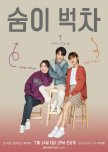
Not just a Girls love story.
There are shows which need tons of episodes to tell a story and then there are shows which need only minutes. This one falls in the latter category.There are LGBTQ shows mostly BLs where we have guys falling for eachother more precisely being 'gay for you' with rainbows in the background, sun and stars shining bright, shippers in the show barfing confetti and darn near entire world (barring the proverbial evil 'female gender' being villanious) playing cheerleaders.
Then there are shows where everything is dark, gloomy, depressing, hopeless and yes .. just bury your gays coz that's how it rolls.
In between the two extremes there is this lovely little masterpiece which tells a sweet story without erasing the sadness and hopeless that the community faces. Yet gives out one of the most powerful emotion of the human world.
Hope!
Yes.. life sucks but here is hoping to a happy life.
And the most poignant message that we need to tattoo in our lives.. Yeah maybe world will not accept me... But I am going to accept myself. I choose to be Me.
The story is too short but i thought that is the whole charm of it. The actresses are lovely to look at. And did a great job in bringing the characters alive. Especially Min Seo. She expresses so much with just her face that dialogues become redundant. The pain seeps through the smiles. Tremendous acting.
The chemistry is adorable.
And the skinship.. toecurling.
Story.. Melts you heart, then breaks it and then makes it whole again and let it soar.
Special mention to the friend. She is one wonderful character.
This is not just a girls love story. This is a story of choosing to be who you are and choosing to be with the one who will let you be. That is.. a human who should live and love the way others do. Freely!
Was this review helpful to you?

This review may contain spoilers
I ran into this drama by accident, and I'm glad I did.The Last Scandal is a sweet twist on the Cinderella story, that never came across as super corny. It's a familiar story of a struggling, stubborn, female lead, and a spoiled, rich, male lead, but with mature actors. Choi Jin Shil and Jung Joon Ho had such amazing chemistry, and I loved watching their relationship develop. There were so many cute, rewatchable, moments between the two of them, and times when Jung Joon Ho literally made me lol. There were also quite a few moments where I broke into tears. Aside from the main theme of reconnecting with a first love, theres also a great theme around what makes a family. This drama really has a good balance beween light, fun moments, and emotional, touching moments.
The entire cast is great, including the 2 younger actors. Jung Woong was particularly good, playing such a reserved character, but I think he had some of the most touching moments in the drama. In contrast, Kim Byung Se had some of the weakest moments in the drama. I think he played his part well, but his character's actions sometimes seemed too unbelievable to me. Byun Jung Soo was good, and was cast so perfectly that her character's secret is almost instantly given away. Jung Joon Ho is really fun to watch, and his struggle between his persona and his true identity seemed really genuine. I really can't think of any weak cast members.
The true star of this drama, Choi Jin Shil, was so impressive. I am relatively new to dramas, so I had no idea who she was, or what happened to her, when I started watching Last Scandal. I loved rooting for her character's happy ending, and It was about halfway through I learned about her tragic story. It was hard to watch without keeping that in mind, but her performance was so good that I could keep rooting for Sunny. I will definitely check out some of her other dramas.
There's a reason why Cinderella stories are to popular, and this drama is a perfect example of why that is. The mature Cinderella (or 'Joomarella') story is enough to make me watch this drama again. This drama also has a good ending, that gives each character the closure they deserve, and I don't consider it a spoiler to say that those looking for a fairytale ending won't be disappointed. I definitely recommend this one.
Was this review helpful to you?
This review may contain spoilers
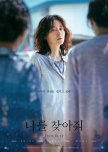
Re. missing children: highly topical, soundly researched, superbly directed and masterfully acted
"Bring Me Home" is a KMovie full of raw reality and emotional impact that disturbingly brings you closer to present day human abyss.Perhaps it would be appropriate to describe this KMovie as a fine study in the nexus between humanity and inhumanity, with the scales being tipped by human compassion. Life becomes barren, cruel, brutal and hopeless when this compassion no longer finds a place among people. But it makes a difference whether a soul has already left the human body and only a cold shell remains, which already lacks any human compassion. Or whether a soul is deeply injured and has only withdrawn far from a dazed body, but at the decisive moment, when human compassion seizes this body and reaches the soul, unexpected energies are mobilized and thus in a kind of holy anger fighting their way out of the pull of gloomy abysses. ...It is compassion that makes a difference in human dignity.
In any case, it is appropriate to describe this KMovie as a highly topical, soundly researched, superbly directed and masterfully acted study about the subject of missing children, or child abduction and child abuse in South Korea.
Howsoever I describe it, the bottom line is the same: "Bring me Back" is a thriller about (in)human abysses. The KMovie unfolds its haunting power through an almost brutal, unimpressed realism, holding up a merciless mirror to a society that seems indifferent to the disappearance of children. "Bring me Back" is a family drama. But it is also rigorous social criticism that explains the particular drama of one (of an alarmingly large number) of South Korean families as a disturbing general social disaster.
Yoo Jae-myung surpasses himself here as dishonest, repellent policeman without shame or sense of duty. Also fantastic: Lee Young-ae. She has already proven herself as an avenging angel in the KMovie "Sympathy for Lady Vengeance". At that time it was about vigilantism as a concept based on principle and planned for a long time. Here it's more of a reflex in the heat of the moment.
Heavy. Gloomy. Still recommendable.
P.S.
Actually, in 2020 (the movie is from 2019) there was a nationwide campaign in South Korea. At that time, 661 children had been missing for more than a year, 638 of them for more than five years. So that they are not forgotten, their faces have now been printed on a wide parcel tape, which is used by the South Korean Post and larger shipping services and can also be used privately. The faces were digitally edited and adjusted to look as they could possibly look today. The central information about their case was also printed on it. (However, I do not know whether this has contributed to the clarification of individual cases yet.)
---------------------------------- SIDE NOTE: --- Missing children in South Korea ---
Human trafficking is not a specifically South Korean issue. However, the continent of Asia is the undisputed leader with 7 countries among the 11 countries with the most victims worldwide. One might not expect South Korea to be at the forefront, but human trafficking is an alarmingly profitable business here, and the trend is expanding - regardless of whether it involves women and children who are exported or imported from abroad, or as Transit country for human traffickers from China or Russia. This is largely beneath the public radar. Public officials are often involved or bribed. In addition, most of the victims here are under the age of 16. This means that they are initially treated 'only' as runaways - this was the case in 80 percent of the solved cases. Thus, the police and authorities are not primarily in charge, but the parents. If the children are among the remaining 20 percent - the kidnapped or abandoned - then unfortunately they are unlucky that they are not searched for with the necessary vigor. At the same time, these minors are among the weakest and most defenseless members of society. They have neither voice, nor life experience, nor strength to really oppose the perpetrators. This makes them easy prey for a lucrative business.
In South Korea, over 99 percent of missing children are found within the first two days. That sounds like a lot. However, for the 1 percent of families who do not find their child during this time span, a nightmare begins that has already driven many parents to even commit suicide. It has been proven that the pain, the struggle with guilt and hope, does not stop in the years and decades that follow.
A figure from 2016: of around 38,000 missing persons reports, half were minors who turned up again within the famous 48 hours. 285 of these missing persons cases could not be cleared up. Among long-term missing minors (according to a 2014 case study), 65 percent were later found dead, and 46 percent of resolved child kidnapping cases revealed they were victims of physical sexual violence.
The statute of limitations marks another problem. As a result, parents often devote their lives to searching on their own, far beyond their means, since no one else will. They however can´t help but keep searching and hoping. They are more likely to lose their job, their social life, their health, or their own life. A 2006 study found that 40 percent of parents who missed their child for years or decades lost their job and spent an average total of around $500,000 in the search. (By now, that sum is likely to be a lot higher.) This includes the money that had to be paid to the number of false informants, or the travel expenses to travel to a potential location where a tip sent the parents. More than once, someone played a prank. Such cases are well documented. But there are also (fortunately) case histories of donors and supporters.
In South Korea, the legal activities relating to missing minors have been tightened again and again in recent years. But the results are still not what one might wish for. A government study from 2021 identifies acute further needs in all areas: from prevention to investigation and prosecution to officials training. Between 2015 and 2020, South Korean women and children were trafficked in increasing numbers. There are always accomplices among public officials, in particular the cooperation between human traffickers and police officers is criticized, which robs the victims of any last hope of help. By the way, in this context, fishing industry on the coasts is also expressly mentioned as a crime scene. Numerous cases of human trafficking and exploitation of workers whose working and living conditions are sometimes disastrous are documented.
------------------------------------------------------------------------------------------
Was this review helpful to you?

The important think to know is that this is not a movie for everyone. It is slow paced, especially in the first half and I would definitely call the film raw. For me what Koreeda wanted to achieve was to tackle very important social issues, that foreigners and especially Japanese tend to hide in a corner knowing that they exist and at the same time smiling like nothing is wrong.
The acting was fantastic and if someone forced me to see the movie without knowing anything about it, I would probably say that it was a Koreeda film, not his best -from the ones I have watched- but certainly a good one.
This kind of movies are so realistic and at the same time unbelievable. Knowing that this kind of things are an issue not only in Japan, but I would dare say everywhere is heart-wrenching.
All in all this is not a movie someone should watch to just pass their time. The film needs your attention and your understanding.
Was this review helpful to you?
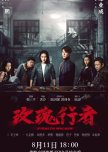
A great undercover police drama that plunges us into a dark and dangerous universe.
This drama is different from most regular dramas. It takes place in a different region than popular dramas and plunges us into the world of drugs and crime.Story:
The story is pretty well written and the action and event sequences are thrilling. Sometimes an explanatory scene is missing for certain things but it remains a detail. The plot, the course of events, everything is well balanced.
The first two episodes, which serve as an introduction, would have deserved more clarity (apparently several scenes from the beginning of the drama have been cut) but remain correct in their introduction of the characters and the universe of the story.
The story really starts at the end of Episode 2 and from there it's a roller coaster ride. We live, like the heroine, the immersion in a sad, hard, cruel and dangerous world.
Characters:
The FL who, at first may seem like a hothead, will quickly find her way into our hearts with her ability to blend in with the surroundings, her resourcefulness and her badass attitude. She is different from the usual FLs. She knows how to fight, knows how to use her mind, has a lot of nerve. She also has a lot of empathy, strength of mind, and can be cute and innocent in certain situations.
ML meanwhile is more mysterious. It is difficult to truly understand who he is since most of his thoughts are not accessible to us at first. However, we are captivated by his charisma, the sensitive heart we feel under the mask he has created and, at the same time, just like the FL, we fear him and his intentions.
It's a drama that wants to portray life undercover and what it means to investigate. Therefore, the focus is on the FL. We also follow her whole team. It is the story of these police officers, of their courage, of their difficulty in arresting criminals that is told.
The bad guys are also important because the FL works with them and you have to feel all the danger that it represents to work in this environment.
The drama achieves the feat of humanizing the people living in this environment. There are the rotten ones, of course. We often have little empathy for them. But there are also those whom poverty and lack of perspective has thrown into this world. I applaud the writers for portraying human misery and the fact that we have to destroy drug trafficking for these people too, so that they have a chance.
Recommendation:
I highly recommend this drama to those who like action, police, crime and mafia stories. This drama is definitely worth it. If you like to try another kind of drama, go watch it! Its unique proposition in dramaland, its focus on a badass and resourceful FL and its subject made it a drama to be seen.
On the other hand, not everyone will appreciate this story given the subject and the way it is treated so don't waste your time if you don't like police drama or crime drama.
OST:
The OST is really good. It is not use at each episode like in most dramas but sublimates the scenes in which the songs are used. I have had chills and tears more than once thanks to the OST.
Conclusion:
It's one of the best dramas I've seen. From start to finish, I was glued to my screen. The story is interesting and the characters are well written and endearing. There is everything: action, investigation, romance, social painting.
What I liked the most:
- A strong and resourceful heroine who improves over time.
- A charismatic and enigmatic male character.
- An intense immersion in the world of crime.
What I liked the least:
- A lack of clarity during the introduction of the main characters.
- The dubbing of the voices, due to censorship and a rewriting of certain dialogues, is sometimes not perfectly synchronized in the beginning.
- Some somewhat confusing editing choices.
Was this review helpful to you?

Some think the female lead Sumaru is a bit over the top and thus annoying. I think she’s funny and just real. It’s her innocence and naivety. She’s refreshing if you’re a bit reserved or surrounded by people who are too self-conscious or scared to show tneir real selves. She loves and she wasn’t afraid to show it. Wouldn’t it be good to be like her, without fear and reservation. But alas, most of us are jaded and scared due to our life experiences. She meets things and situations head on, even if she knew it might hurt her. Yes, she’s a bit all over the place, but that’s what made her funny and endearing. She’s just what Mr Hirotmitsu/sensei ( the male lead) needed.
Sensei is a mathematician. He loves Math. Math is rigid, structured, consistent, driven by logic. Some find it difficult, boring or mundane. Yet Math brings order to chaos. And here is how the Sumaru and Mr. Hiromitsu compliment each other.
She brought unpredictability into his structured world and made him laugh. Her honesty and courage inspired him to face the things he was running from. And for all her naivety, she was mature enough to encourage him to face his fears and go back to France to finish his studies.
Whilst he taught her to focus on things she wants to do. When she thought she has no chance to gain his love, she still didn’t give up. She did cry a bit. He taught her the realities of adulthood. That we may not always get what we want no matter how much effort we put into it. And that if we love someone, we shouldn’t be selfish. That we should let the other one grow and not be held back by our love.
I probably made it sound like it’s a deep movie with profound or life-changing lessons. No, it’s not. It was meant to entertain.
I felt the last part was a bit lacking, not because there was no proper kiss. I wasn’t expecting one anyway. I like this taboo student-teacher genre but I still think it wasn’t right for him to kiss a previous student in the school.
I gave it 9, because it made me giggle and laugh, a lot. And I liked the heroine. She’s fresh, funny and brave. Her and sensei gave me the warm fuzzy feelings. Definitely will watch it again.
Was this review helpful to you?

This review may contain spoilers
Us walking along in those indifferent (?) shoes of Han Gong-ju is the great power of this KMovie
Among independent South Korean film productions, “Han Gong-ju” is considered one of the most successful to date. In fact, the number of viewers exploded within the first week - through word of mouth alone. In addition to this vote with feet, there were consistently positive (national and international) film reviews and awards."Han Gong-ju" offers relentlessly haunting independent KMovie quality, frugal, not easy to digest, yet calmly, subtly and sensitively told, too. Behind the seemingly indifferent attitude of the protagonist, highly concentrated emotional force blazes subliminally, which is released less in the protagonist herself than within the audience. By the way, the story is based on a true story. (More background below - but that's quite a spoiler... so if you want to watch the film, you might want to read it afterwards!)
The KMovie tells the story of the fictional Hang Gong-ju in a rather reserved manner. We initially follow the girl without knowing what it is about or what she actually has experienced. Over time we learn to understand, or better: vaguely guess what she was and is going through. Over 112 minutes we see and experience the world vaguely through her eyes. This is a great power of this KMovie. The girl´s everyday world is fundamentally threatening, unwelcoming and cold, almost merciless. Han Gong-ju herself is tough and clear, demure and mostly indifferent. (Hang Gong-ju may by now have learned to face her world with indifference, but we as audience? We may feel differently here and there…) Nevertheless, she also has learned to create islands in her life that offer at least some minimalist beauty, joy and perspective.
What happened and is happening to Hang-Gong-ju admits of no excuse. But unfortunately it happens everywhere. Not just in South Korea. Unfortunately, again and again, more and more often. *
The role of adults is also inexcusable. It is we so-called 'adults' who lay, or should lay, the foundation for a sense of justice in the upbringing of our children. However, in this story (and its true background) it failed spectacularly. On several fronts. The results can be considered rather grim.
As solid and reliable role models that 'we' adults are/should be: how do we actually relate to right and wrong? Parents who would rather protect their beloved children from the consequence of their (any) actions, than confront them with it – yes, that's understandable. But will the 'children' learn from their mistakes in the future (without any true feeling of guilt about having done something wrong)? So that they might not replay their misbehaviour in the future? Rather not. However, if everyone prefers to proclaim an exception rule for themselves (and their loved ones), that cannot work out well. So it always ends in fighting and stabbing... by any means.
The irony: For cinema and television this is actually quite wonderful, because thus there are always new, stirring stories to tell. In the case of "Han Gong-ju", fortunately the entertainment gain does not come from dramatically exaggerated voyeurism, but rather from the fact that we walk a part of the truly sobering track in those indifferent (?) shoes of Han Gong-ju. By doing so, clues putting the (difficult to digest) puzzle together accumulate...
Lee Su-jin's KMovie is consistently serious, unpretentious and at the same time convincingly authentic in the presentation of the protagonist. Chun Woo-hee in her difficult role as Han Gong-ju is also outstanding and masterly in this context!
-------------------------------------------------- -------------------------------------
SIDE NOTE: --- Events at Miryang Middle School in 2004 ---
Over a period of just under a year, at least 44 (but possibly more than 120) high school students repeatedly raped three 13 to 17 year old girls and filmed them in order to blackmail the victims. The gang rapes obviously happened as a purely entertaining pastime for the boys.
The first 14-year-old victim was blackmailed with the film recording to bring her younger sister and her older cousin to the subsequent 'meetings', who then also became victims of renewed gang rape. In addition, the victims were forced to pay so that the footage would not be published. There may have been even more victims.
As unforgivable as these actions are, dealing with them was even more unforgivable. After the girls' aunt reported the case, of 44 clearly identified repeat offenders, only three were initially actually arrested. Due to massive public pressure, 9 more were taken into custody and a further 29 were officially arrested but not taken into custody.
There were no serious consequences for the perpetrators. On the contrary, the victims became victims again! On the one hand, they suffered psychological damage during the interrogation due to insensitive, confrontational confrontations and verbally abusive male officers (even though the victims had expressly asked for female officers). On the other hand, parents tried to force the actual role of perpetrator on the victims due to provocative behavior.
Finally, the defenders pointed out that some of the boys are already about to enlist in respectable universities and would soon contribute to the shining future of the city. In general, the parents of the perpetrators managed to build up pressure in various directions and also helped with money to box their boys out of the annoying situation. Among the victims' parents, on the other hand, one father unforgivably exploited his daughter's predicament for his own benefit. Ultimately, only 5 boys were tried in juvenile court. Without serious consequences. They are now probably fathers themselves and are firmly established in their careers.
In the meantime, this and that may have changed legally (and also when it comes to investigating), in South Korea and Germany and in other countries, too. But still, in current cases of juvenile sexual offenses, to date a strong tendency among parents here and there is increasing to wanting to box out their loved ones by all means possible, regardless of the losses. Far too rarely is attention paid to reflecting to their sons (and/or daughters) when they in fact tremendously misbehaved, that, yes, they are still loved and ok, BUT THEIR ACTING IS NOT OK at all. As a matter of course they will have to face the consequences – as serious misconduct that the social community we live in does not tolerate.
… However, our problem is: 'we' obviously DO tolerate it... Over and over again.
Sadly, in this respect, the KMovie “Han Gong-ju” is as topical as it was in 2013.
Was this review helpful to you?

I watched it when it was ongoing so that made me realize that I was eagerly waiting for another episode every week. I really love the chemistry of lead actors to the point that I really want them in another drama. That would be treat to watch. The surprising elements were supporting cast that stole the show especially Court Lady Choi whenever she was there in the screen that made me chuckle. And definitely, the OST were quite different from other Korean dramas.
Overall it is a must watch drama at least once and further, it makes us crave more
Was this review helpful to you?

There were a lot of clever, artsy, indy details built into this movie that I got a real kick out of:
1) They played up the fact that this is a movie with a movie in a very obvious and clever way.
2) So Ji Sub's name is Kang Pae (gangster) and Kang Ji Hwan's name is Su Ta (star).
3) The scripts for the "movie" in the shooting scenes were the actual script for the movie.
4) And the ending...
I loved the intensity of both Ji Sub and Ji Hwan, their acting and characters. I loved that Ji Sub always wore black and Ji Hwan wore white. I loved the spoiled angry child in Su Ta and the way he got in over his head so deeply. Kang Ji Hwan always impresses me..Always.
I loved So Ji Sub's anger...his pure rage. His character's desperation and desperate grab for something more in his life, something he wanted, to make a change. The frustration of his inability to understand what to do with it once he'd grabbed on. And how his past, his personality and his lot in life were like a greased palm that made it impossible for him to keep hold. And then the terrible acceptance...He doesn't have to say much. That is the beauty of his acting. (sorry fangirl)
Watch it for the punch...beginning, middle and end.
Was this review helpful to you?

Pure, Crazy Fun
Despite how some of the stills look, this is 100% a comedy from start to end & it’s a good one! I had no idea what to expect going in - all I knew was that the premise was beyond dumb and I had a sudden need to watch something crazy.Well this show is dumb! And it’s definitely crazy! But in the best way!
Knowing how bizarre the premise of a self-aware handsome zombie is, the drama doesn’t once take itself seriously and delivers comedy gold from the ridiculous situations the leads find themselves in: including the slapstick, the little skits they have and the wacky side characters.
Most important, like any good comedy it has heart. You’ll find yourself caring a lot about these characters, our zombie main lead and his tenacious & clever partner especially (hello awesome female character!) and when the time comes for serious moments, the drama delivers - best of all it doesn’t stay serious for too long & quickly returns to being lighthearted which is why I’m here!
The second main villain of the show is literally the worst actor I have ever had the misfortune to witness - how did this man get a role it’s not like he has an idol career to boost him - but aside from that (and plot threads which I wish were better tightened up or character beats more developed) this is basically a fun time to be had. Genuine laugh out loud moments scattered throughout. What more could you ask from a comedy!
Was this review helpful to you?

After some consideration, I finally decided to watch this drama. I was quite happy when they said a drama would be made. I'm a huge fan of the webtoon and this is one of the hardest reviews I've ever done. God, I don't even know where to start. Haha~
STORY~
Even though I knew what would happen in the drama before I watched it, I still wanted to see how things would turn out. Now I understood what some of you guys meant when you thought about whether you had want to continue or not. The drama started out strong but it watered down somehow towards the end. I was not surprised by how it ended. I thought it would bother me, but it didn't. The most interesting thing–to me about this drama, is not the plot or the the romance between the character, but the characters themselves and I think that overrided the story of the entire drama.. well, that how I saw it.
ACTING~
This drama is relatable to some people IRL, myself included seeing that I'm a college student. You're surrounded by a bunch of people you don't know and you don't know whom you can trust and you don't know who will betray your trust. It was like that with the characters, but it was on a whole other level–psychologically. I can't say I hate the drama, because I do like it and I was captured by how they characters were portrayed (even though the vibe is different in the webtoon). Each of them had flaws. They're not perfect and it's what makes them human. The acting was amazing. I've never seen Kim Go Eun before and my first impression of her is spectacular. I love the way she portrayed Seol. Very down to earth but also not perfect with flaws of her own.
The most interesting characters to me were Jung and Seol, mostly Jung and it's not because they were the main characters. Park Hae Jin played his role as Jung really well. I wonder if it was difficult for him to play a role so complex. I think he did good. How Jung responds to his surroundings is quite intriguing. He's very deceptive and calculating, yet I can't seem to blame his actions or think of him as weird. Things he experienced as a child led him to have no empathy. He's also observant and manipulative of others and even though he knew what people's real intentions were when they approached him, he just went with it and used it to his advantage. He was taught to control his anger and hold it in. That can take a toll on one especially as a child. I think being around In Ha (played by Lee Sung Kyung–she was amazing, btw) and In Ho made things worse. He came to trust In Ho but his trust was broken and that made him snap. I can't really blame In Ho still, cos it's who In Ho and his personality is quite rough around the edges which leads him to say things sometimes that might offend others and he could care less. Same could be said about In Ha. All the little things from their past left them with many scars. To be honest, I think Seol is a perfect match for Jung and it's not because I think they're cute as a couple but I think it's Seol who pulls him back when he's standing on the edge and reminds him that if he wants to, he can be different and kind. And he can be. Just look at the way he smiles/laughs when he's around Seol... when he hugs her, when he holds her hands, when she gave him presents–whenever they're together. He seems more sweet and child-like. He even voiced his dislikes and got angry. It's as if as a child he couldn't experience certain things and when he's with Seol, his childish side comes out and it's cute AF! I think Seol and Jung are alike in some aspects and that's one of the reasons why somehow they're drawn to each other. Whenever Jung moves, so does she.
I do loved me some Bora x Eun Taek! (played by Min Ji and Joo Hyuk) OMG! They were cute too.
All the actors did extremely well.
MUSIC~
I liked the OST. Very mellow and soothing to listen to. Some of the songs were just perfect for some of the scenes. ^^
OVERALL~
Overall, it wasn't that bad but this drama is definitely not for everyone. Still, I enjoyed the ride and I'd watch it again but disregard the ending. Lol~ I feel like because the webtoon is still ongoing, they felt like they couldn't exactly end the drama a certain way, so they left it sort of 'realistically' open, but I would have loved to seen something with the main characters. I dunno. This drama feels very rare to me and I wish it ended some other way. I guess it all depends on the person who watches it. You may or may not like it. ~
Was this review helpful to you?

This drama is the BEST drama i have ever seen, and I'm seriously not exaggerating, the plot, the music and the cast...every thing was just perfect!the first episodes may not be the best thing i have ever seen, i really wanted to drop it but because my friend who recommended this drama to me kept nagging on me...i did, and now i know that i shouldn't judge dramas from the first episodes.
In many dramas wither its comedy, drama, thriller or any other Genres
u can know the plot of the story without watching u can know what is going to happen next, because simply it wasn't hard to figure out the next move, but i really couldn't read any thing in this one! i don't know if it was because i was really into the drama or because i was just stupid :)
anyway i really recommend this drama for all the revenge lovers! u will totally enjoy it! have fun!!!!! :)
Was this review helpful to you?
This review may contain spoilers
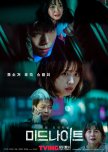
The idea it's great, as well the atmosphere. The acting was also amazing. However there's so many little stupid mistakes.1. Like when she was screaming to call him (to save the other girl), how did no one heard her? There were so many houses near by.
2. The last fight in the alley, how did no one saw it?? There were so many noise and so many people!!!
3. The police officer didn't deserve that happy ending, sorry, I get it that you are worried about your sister, but you didn't need him to find her, the deaf girl knew where she was, you could just search that area, since this is all in one night, the killer couldn't move. (and it was also inhuman). Also why didn't he ask for backup?
4. The mother could have done better in the police station, like push the suitcase to make noise and show the tools (but well she was too shocked to do something, what is understandable) , but how tf there's no cameras there?? And the police just saw a fight and let everyone go home??? bruh
5. And yeah lets let two people (covered in blood) running by the road.
But I'm not going to say, that I hated it. I love this fast thrillers movies. So I enjoy it for it.
Was this review helpful to you?

Exceptional queer movie with realistic approach
Hi, I am late to the party, but I should write a review, because this is one of the exceptionell queer movies of 2024.If you do expect a BL you will be disappointed, it's a queer movie and the romance of a BL is not the focus of this movie.
It's a story of gay man who struggles with the society he lives in and a girl who also had go through some hardships. They both meet at university and the grow closer together, overcome hardships together and accept each other for what they are. Both discover who they are and what they want.
Cinematography, direction, acting are also exceptionell.
This is one of the best queer movies ever made which does not focus on the gay aspect per se. It's part of the story but the main part is the development of a deep friendship between a gay man and a straight woman. Regardless if you are straight, bi, gay or inbetween or nothing of that, regardless which gender identity you have, it's a powerful story and a wonderful movie and you should watch it!
Was this review helpful to you?


