


SeaKeen y el resto del elenco
¡Amé el storytelling! La química de SeaKeen jamás decepciona porque es increíble, pero no solo ellos, ¡todo el elenco estuvo maravilloso! 💙 La historia mantiene la esencia del libro y se nota muchísimo todo el cariño, dedicación y esfuerzo que pusieron en cada detalle. Cada personaje se siente especial y la adaptación logra transmitir las emociones de la historia. ¡Por favor, necesitamos más historias así, con tanto corazón, calidad y amor! 💙😭✨ ¡Estoy deseando ver más! P'Champ y Staff gracias¿Te ha parecido útil esta reseña?

Only character that hit was Gangster Head
I went into the drama because I am a fan of Jung Hae In's acting but this one.... it didn't hit. Maybe its the script, maybe its the FL's overacting that's super distracting, either way I was tempted to drop it.The only scene that hit was ep 12 (started end of ep 11)
Heo Sung Tae (Gangster Head)'s acting was really good. The piano score sounded so beautiful.
The whole drama was kind of a bust for me but that one scene made me glad I watched it through.
¿Te ha parecido útil esta reseña?

Jia Ru Gao Men De Nan Ren
A 4 usuarios les ha parecido útil esta reseña
This review may contain spoilers
L’amara visione di un adattamento BL non riuscito
Non mi aspettavo un capolavoro o qualcosa di particolarmente valido, bensì una semplice ma piacevole storia d’intrattenimento, anche senza troppe pretese. E invece – purtroppo - anche queste aspettative minime sono state disattese. La serie, tratta dall’omonimo romanzo BL di Che Ye Liu Xiang che – preciso – non ho letto ma del quale ho avuto rimandi positivi, si rivela un adattamento estremamente banale e deludente. Un melodramma “tutto fumo e niente arrosto”, privo di qualsivoglia spessore e personaggi assolutamente insopportabili.TRAMA - Lu Xiao Fan è un ragazzo di campagna bistrattato dalla propria famiglia che, per denaro, arriva a combinargli un matrimonio riparatore con la figlia – incinta di un altro - di una famiglia aristocratica. Umiliato anche nella nuova dimora, trova un’ancora di salvezza nell’ambiguo cognato, Bei Lu Qing. Tra i due inizia una complessa relazione segreta che, tra dinamiche famigliari e investimenti economici porterà i due a fare una serie di scelte determinanti per il loro futuro.
Un drama che doveva – in teoria – contemplare lotte di classe, realismo sociale, un amore travagliato, ma che nei fatti è un susseguirsi di scene di un romanticismo banale tipico di una trama superficiale e molto spesso anche illogica. Tutto sembra concentrarsi a enfatizzare la relazione proibita tra lui e il cognato, utilizzandola come esca per tenere lo spettatore attaccato all’amo.
INIZIO SPOILER!!!
Il finale è perfettamente in linea con la mediocrità del lavoro: si ritrovano dopo anni, un approccio intimidatorio fatto “per scherzo” (ma che senso ha?!?!), Xiao Fan che mormora il suo “Ge” mentre rispolvera tutto il vittimismo che – in teoria – doveva essere andato perduto con l’evoluzione - quale? – del personaggio, e Lu Qing che sistema tutto esordendo con un ridicolo “sposiamoci”. Tempo richiesto: una manciata esigua di minuti. La chicca extra agghiacciante è la scena finale del loro matrimonio, vestiti in modo ridicolo (vogliamo parlare del fiocchettone di Lu Qing?) durante quella che sembra a tutti gli effetti una cerimonia religiosa (tanto per fare della Spagna un posto fantastico e immaginario).
FINE SPOILER!!!
PERSONAGGI - Per descriverli in una sola parola: disastrosi.
Xiao Fan è tra le figure più insopportabili che abbia mai visto. Ho cercato di inquadrarlo più volte, di capirlo, di apprezzarlo, ma non c’è stato proprio verso. Inizialmente sembra un ragazzo debole e succube, poi si mostra timido e timoroso, poi ancora impacciato e a disagio - anche semplicemente nello scoprire come funziona una doccia – quindi remissivo e con un’autostima sotto la suola delle scarpe. Dopo i primi tempi con la famiglia Bei sono arrivata a ipotizzare che fosse solo un’anima semplice, non nel senso di semplicità dell’ambiente in cui era cresciuto ma proprio in termini di mancanza di strumenti: un protagonista con un QI borderline sarebbe stata una scelta più unica che rara, ma paradossalmente avrei apprezzato. E invece tra studi di recupero e pianificazioni segrete di investimenti economici, dimostra di avere neuroni belli svegli, demolendo così l’ennesima supposizione. Tolte un paio di azioni decise che prende nella parte finale, cos’altro rimane a descriverlo? Un fastidioso “Ge” (utilizzato per un fratello maggiore o in generale un maschio più grande) pronunciato di continuo con voce tremante dal primo all’ultimo episodio compreso e perennemente avvolto da un manto di vittimismo – in certi momenti quasi compiaciuto – che impedisce allo spettatore di empatizzare anche solo un minimo col personaggio.
A Bei Lu Qing non è toccata una caratterizzazione migliore: freddo e manipolatorio, eccessivamente ermetico anche quando ciò non ha senso, soprattutto se consapevole del carattere insicuro di Xiao Fan (leggasi creare mille fraintendimenti, tra i quali il passeggiare col proprio ex davanti a Xiao Fan). Sono tutte scene fine a sé stesse, per colpire in quell’istante, ma completamente vuote e poco credibili.
Manca inoltre la chimica tra i due personaggi, le interazioni per nulla naturale, sembrano sempre forzate o artefatte, anche nei rari momenti in cui Xiao Fan non fa l’ombra tremolante e Lu Qing l’automa robotico, vale a dire brevi siparietti che si svolgono solitamente nei pressi dei fornelli dove la massima sintonia è ribadire che il cipollotto non piace e fare attenzione al filo di sedano che resta incastrato tra i denti.
Rispetto ai personaggi secondari, non ci sono tante parole da spendere: tutti eccessivi nella loro caratterizzazione, così esasperati da risultare per nulla credibili. Al contrario, rendono molti passaggi davvero finti.
IN CONCLUSIONE – Sono arrivata alla fine – seguendo per oltre un mese la cadenza dei due brevi episodi settimanali – solo ed esclusivamente per inerzia. Un drama che inizia male, procede male, finisce male. Su questo è stato coerente. Nessun potenziale (se non forse il romanzo dal quale è tratto) è andato sprecato. Nessuna caduta sul più bello, nessuna scelta sbagliata a rovinare qualcosa di fatto bene fino a quel momento. Visti i primi due episodi, si capisce il tenore dell’opera: quello è e quello rimane sino alla fine. Credo possano riuscire ad apprezzarla – in qualche modo - solo gli sfegatati del genere. Personalmente ritengo esistano delle BL ben fatte e altre invece da dimenticare: questa l’ho vissuta come una totale e costante perdita di tempo, quindi non posso che sconsigliarne la visione.
¿Te ha parecido útil esta reseña?

Amazing actors ? Poor edit
First: I absolutely adore Tutor and Yim and I think they are more talented than some of the more famous actors, though I'd never name names because that's cruel. This would have had a higher rating for me if it wasn't for the very awkward, bad cuts from obvious censoring. I would have loved it as a wholesome slice of life romance and I'd have loved it as a super spicy romance but it ended up being neither, just some strange spot between. The director it had and the fact it's freaking TutorYim who create some of the hottest nc scenes in all of BL means it was probably very hot and steamy and then got ripped apart in editing to make it suitable for a lower age rating and that kinda destroyed it. It was constant build ups and the delicious tension we're used to seeing from TutorYim but then awkward cut straight into the next scene as if you accidentally skipped it which made it anticlimactic over and over again. Again, its a slice of life and would have worked great as a wholesome, family friendly romance if thats what they'd wanted and id have loved that or it could have been a super spicy passionate romance setting our screens on fire and id have loved that. However, it seems like they filmed the latter and then tried to squeeze it into the former harder than the step sisters tried to squeeze into cinderellas glass slipper.¿Te ha parecido útil esta reseña?

En Medio de Una Tormenta de Nieve de Amor
A 0 usuarios les ha parecido útil esta reseña
A healing romance teaming with symbolism
If you like a good slice of life drama with well fleshed out characters that have a purpose, tons of character growth, and is very healing, then you’ll love this drama. Every action has depth and underlying meaning and symbolism. It’s full of heartwarming friendships, fierce loyalty, strong family bonds, and teamwork. If you’re looking for an action packed adventure drama or a silly romcom, then this is not the drama for you. But if you like healing dramas that warm your heart and have depth, then you’re in for a treat.The male lead:
He’s a very honest straightforward guy that knows what he wants and goes for it. And he wants the female lead the moment he meets her. I love a man that takes the initiative like he does. He’s very understanding with her too. She’s pretty shy and inexperienced with men so he takes things very slowly with her. His biggest problem is that he’s lost and doesn’t know where he wants to go in life. He even buys a necklace with a compass pendant that has no pointer on it because it symbolizes how he feels. But the female lead is exactly what he needs and helps him to find direction in his life. So he had a pointer added to the compass that correlated to her name. There’s lots of symbolic gestures with deeper underlying meaning like this sprinkled throughout this drama which makes it so interesting and meaningful.
The female lead:
She’s a shy, sweet and kind girl from a good family. Shes also very smart, confident and knows exactly where she’s going in life. Her strength and confidence inspires the male lead to let go of his past and pursue his dreams. She’s a strong female lead and a badass billiards player that even defeats a cocky guy that needed to be put in his place. I love her sassiness when she’s provoked.
The storyline:
This is a story of overcoming the past, letting go of your pride, and pursuing your dreams with everything you’ve got. There’s not tons of action scenes or lots of comedy in this drama. But there are a lot of great characters that you’ll come to love, with interesting stories to tell. There’s a lot of happiness, some sadness, some thoughtful moments and lots of redemption. Overall I really like the storyline, it has a lot of depth if you’re really paying attention.
The romance:
The romance takes off pretty quickly. They get together early on but take it very slow. So you get to see the main leads together throughout the whole drama. It’s very romantic with lots of hugs, kissing, cuddling, hand holding, etc. I really enjoyed getting to see them together so much, it’s a rarity for that to happen in an Asian drama. But it’s done right because you see them gradually fall in love over time.
The acting:
I have to give high marks to the acting. The male lead is so thoughtful and the way he tilts his head in contemplation all of the time felt so genuine. The female lead was such a refreshing breath of fresh air too. And their kissing scenes were absolutely perfect, I have zero complaints there. The whole cast were amazing actors, I loved every single one of them.
Final thoughts:
The male lead says he’s like the guy in the movie “The Truman Show” where his world is fake and everyone knows it but him. Then a girl appears and tells him the truth. He says “I’ve been creating a false world for myself for over a decade. It looked nice but it’s not what I wanted. Then you appeared in my life and brought me back into the real world. You gave me the courage to go back into reality. Thank you. You’ve given me so much.” It’s words like these and scenes like this that make the drama so good. It has depth, symbolism, character growth, and so much more. I highly recommend it. And did I mention that it revolves around professional billiards tournaments? I loved the originality of the profession they pursued. It’s definitely not your average office romance in some boring office building. But that’s what makes it so good.
¿Te ha parecido útil esta reseña?

This review may contain spoilers
Good but could have been better
Hierarchy now I don't know why so many people have rated this so low. Is it extraordinary? No, I don’t think so. Is it terrible? No, I don’t think so either. I think this drama was good, could have been better, and I think you really need to watch this to give a verdict.In terms of storyline, it’s not new. A rich school, scholarship poor kids being bullied and the whole school being controlled by rich families and with controversies and all, it's such a repeated topic. However, I would say aesthetically I really liked this. The classes felt more luxurious and much more high-end compared to some other schools, and it really shows the difference between the elite and normal students from the color of the ties to the special classes.
The buildings gave me major Harry Potter vibes and a bit of a hotel feel. It looked like a prestigious school no normal person could go into. So the idea of the elite was well presented.
Spoilers***
In terms of the characters, Jae Yi and Ri An are actually nice, and they have heart-breaking stories. You can see their love is very strong. Hera and Woo Jin are also complicated kids, but the four together are not terrible; they are not directly doing things, but they are involved as bystanders or solicitors.
Character of Ri An I did like the actor and his acting. I think he was good, and he was consistent throughout, and I enjoyed what he did.
As Jae Yi, well, I recently saw this actress in Our Universe, and honestly, I rated her acting 0/10 in that drama, so when she first appeared on the screen, I was worried. But I must say she did unexpectedly really good playing the part of a cold, emotionless character, and even the emotional parts or scenes with Ri An were sweet and lovely, so I feel puzzled by her work in other dramas. Maybe this cold, emotionless action might be her thing.
Now for the actress who played Hera, I really enjoyed her. I think she will make a great villain in future dramas, and I think she brought a lot of interest and spice to the story.
Kang Ha, I like his acting and all, but he did feel confusing. He went there to take revenge on his brother, but then he was hesitant because of Jae Yi, and I felt like there was no tension between them and it was mostly him. It felt like his character lacked a bit of consistency from the beginning to the end.
The main character who was behind the anonymous messages, his character was puzzling. We didn’t get any backstory: why he started, what was the reason, and what they showed was not strong enough, and also his tie to Kang Ha’s brother felt weak. I felt like his character did not get enough backstory although he was the mastermind behind it all and felt like it was thrown there and lacked really a lot of backstory.
Overall, I feel like most parts of the story were cut, like scenes were missing, and left to the imagination, and it’s really annoying, especially when they cut off important scenes. This is why I do not like Netflix-backed K-dramas; they really ruin it. An episode is 1 hour 17 minutes long, but 25 minutes is about the credits.
Overall, I would say the drama is good, but it has a good setting and interesting characters. All the elements are present, but the storytelling lacked a lot, and there were inconsistencies. I don’t know if they actually filmed scenes and cut them to adapt for Netflix style, but I really felt like a lot was missing in between, which made the overall experience lacking.
It's good, but there are things that could have made this into a 10. There are interesting elements, and the feeling of the rich elite was nicely done but lacked cohesion and connection between scenes. A lot of characters were left, like what happened to Jae Yi’s brother? Did Kang Ha graduate as the top student? What would happen between Woo Jin and Hera? Will Ri An and Jae Yi meet? What happened to the students once the hearing happened? Did they get punished?
I enjoyed this, but it lacked a lot, but it’s not as terrible as many say. I would definitely rate this a - 8 for sure.
¿Te ha parecido útil esta reseña?
Jia Ru Gao Men De Nan Ren
A 4 usuarios les ha parecido útil esta reseña
Bittersweet Love — China Has Better Danmei Than This
Sometimes I genuinely don't understand the choices being made with Chinese BL adaptations. China has produced some of the most imaginative BL novels I have ever read. Case File Compendium combines romance with psychological obsession, medical mystery and science-fiction elements, while Guardian builds its relationship around supernatural investigations, gods, ghosts and an entire mythology. These are stories where the romance exists inside something much larger than simply watching two attractive men fall in love. And then we get Bittersweet Love. Once again, a poor young man is brought into an influential family, treated as inferior because of his background and expected to endure humiliation until one of the rich men eventually becomes emotionally attached to him. I have watched versions of this story in Chinese heterosexual dramas for years. Seeing essentially the same structure transferred into BL does not suddenly make it feel new.To be fair, Bittersweet Love is not pretending to have invented this story in 2026. It adapts Cheye Liuxiang's older danmei novel The Man Who Married into a Wealthy Family, which is explicitly set in 1990s China. Lu Xiaofan is a poor rural school dropout who enters the powerful Bei family through a sham marriage to their daughter and gradually becomes emotionally entangled with her brother, Bei Luqing. The original novel was already built around class, humiliation, family obligation and the enormous social distance between these two men. So perhaps my frustration is really with the decision to adapt this particular kind of danmei now. Chinese BL is finally finding new ways to reach international audiences, and Bai Xiao Studio is developing an entire slate of danmei adaptations specifically for overseas distribution. Bittersweet Love is one of the studio's first major releases, with other adaptations already announced behind it. When you have such an enormous library of Chinese BL literature available, beginning with another rich-family melodrama feels strangely conservative. I can understand the practical reason. This is an inference rather than something the studio has stated, but a family melodrama set mostly in homes, offices and social spaces is considerably easier to produce than something on the scale of Guardian or Case File Compendium. Supernatural worlds, investigations, action, elaborate sets and science-fiction concepts require much more money and production experience. A class-difference romance is a much safer first project.
Safe does not automatically mean interesting. My biggest difficulty was Lu Xiaofan himself. While watching the drama, I kept asking why an adult man who has already spent his childhood being treated badly would continue accepting humiliation so quietly. My instinct is almost the opposite: when people have spent years being pushed around, eventually they learn to defend themselves, become angry or start pushing back. I found myself thinking that no man would remain this submissive for so long, and frankly that even many women placed in his situation would eventually rebel. Psychology made me reconsider that slightly. There is no universal reaction to childhood mistreatment. Some people become confrontational, but others learn that resistance only creates more punishment. Repeated experiences of having little control can contribute to helplessness, avoidance and difficulty asserting oneself later. Family environments also influence how assertive young adults become and how they handle relationships. Trauma therefore does not necessarily create someone who fights back; sometimes it creates someone exceptionally skilled at surviving by becoming small. And strangely enough, that is much clearer in the novel. Cheye Liuxiang describes Xiaofan almost like a weed that survives wherever there is a tiny crack available. He continuously changes his expectations according to whatever position other people permit him to occupy. Even early in the novel, his family openly treats his educated older brother as more valuable, and Xiaofan has already internalised the idea that sacrificing himself for that brother is reasonable. He lowers his head not because he possesses no personality, but because he has been taught where he believes his place is. That distinction matters enormously.
A novel can keep us inside someone's thoughts. We understand humiliation because we hear the calculations behind it. We understand why Xiaofan says nothing because we know what he thinks he will lose by speaking. Passivity can therefore become characterisation. Television cannot simply remove that internal voice and expect the same behaviour to communicate itself. In the drama, Xiaofan too often just looks weak. Instead of thinking, "He has learned that accommodation is how he survives," I found myself thinking, "Why are you letting these people do this to you again?" Those are completely different reactions. If the adaptation wanted to retain such an unusually submissive protagonist, it needed to make his psychology visible through stronger dialogue, private moments, anger he suppresses, or small decisions showing that remaining quiet is itself a choice. Without that, the character begins to feel less like a complicated product of his environment and more like another BL protagonist designed to suffer until a powerful man decides he is worth protecting. That is particularly disappointing because the original Xiaofan is not actually completely powerless. The novel's description emphasises his adaptability, and older readers have specifically commented on the pleasure of watching someone initially perceived as weak eventually demonstrate considerably more awareness than people assume. The screen version preserves much of the suffering but, for me, loses some of the intelligence behind it.
Bei Luqing creates another familiar problem. He is handsome, educated, wealthy and socially untouchable, exactly the kind of emotionally restrained upper-class character Chinese romance has produced countless times. His attraction to Xiaofan is supposed to become interesting precisely because Xiaofan represents everything his social environment teaches him to look down upon. Yet even that dynamic feels oddly familiar now. Rich, cold man slowly discovers feelings for poor, warm, socially inferior person. Class difference. Family disapproval. Sacrifice. Misunderstanding. Separation. Reunion. Changing the poorer character from a woman to a man does not automatically make the structure innovative. That is why I kept thinking about Chinese danmei itself while watching. The literary genre has already moved far beyond this. Chinese authors have written political thrillers, historical epics, supernatural mysteries, science fiction, crime stories, psychological horror and some extraordinarily complicated morally grey romances. The international success of books such as Guardian and Case File Compendium demonstrates exactly how broad danmei can be.
So why does live-action BL so often retreat toward familiar melodrama? Part of the answer is probably economics. Another part is risk. Complex danmei requires complex production, and Chinese BL projects aimed overseas are still developing a sustainable model. Bai Xiao Studio currently has an ambitious list of adaptations in development, but Bittersweet Love does not yet give us a production catalogue large enough to judge whether the company can successfully handle something much more demanding. I could not find a substantial previous completed BL catalogue from the studio that would allow me to compare its writing, directing or production quality across several works. That makes this feel almost like a test case. Unfortunately, it is not a test case that makes me particularly excited about the future. The series itself looks competent enough, and Guan Yue and Yan Ruihao have moments where the relationship becomes genuinely touching. But competence is not what frustrates me. It is the lack of ambition. The material repeatedly circles the same humiliation, class inequality and emotional dependence rather than making those themes feel new.
Even the 1990s setting should have created something much more complicated. Being gay in that environment is not simply another obstacle equivalent to having disapproving parents. The social and legal reality surrounding two Chinese men openly forming a life together would have been enormous. Same-sex marriage is not legally recognised in mainland China even today; Chinese government guidance still defines legal marriage as between a man and a woman. That makes the ending especially strange. If their "marriage" is intended as a symbolic private commitment, I can accept it as romantic fantasy. People do not need state permission to promise themselves to one another. But if the drama expects the audience to read it as anything resembling an ordinary recognised marriage in 1990s mainland China, it becomes historically impossible. Interestingly, even the original novel eventually reduces the resolution to something close to a romantic declaration rather than pretending Chinese law suddenly changed. One older description of the ending has Bei Luqing finally finding Xiaofan after two years and simply telling him they should marry. It works as emotional language: "I choose you permanently." It does not need to mean that the government issued them a marriage certificate. The drama could have used that contradiction beautifully. Imagine ending with two men deciding that they consider themselves married even though their country does not. That would immediately say something about love, society and the limits of official recognition. Instead, when the surrounding story has already simplified so much of their emotional development, the marriage risks feeling like another convenient happy-ending image.
Final Thought
I started Bittersweet Love wondering why Xiaofan was written as such an unrealistically weak man. After looking more closely at the novel and the psychology behind his behaviour, I no longer think "unrealistic" is quite the right criticism. Someone raised to believe that his needs matter less than everyone else's can absolutely become an adult who survives through appeasement rather than confrontation. A person can spend years adapting instead of rebelling. The original novel seems to understand this much better than the television adaptation because we are allowed to see the thought process behind Xiaofan's submission. The drama gives us the behaviour without enough of the psychology. And that is ultimately my problem with Bittersweet Love. It takes ideas that could be psychologically and socially fascinating—poverty, class shame, childhood neglect, family obligation, homosexuality in 1990s China and loving someone from a world that considers you inferior—and turns them into another familiar rich-family romance. I don't dislike this kind of story because it is Chinese, or because it is melodramatic. I am frustrated because I know what Chinese BL literature is capable of.
I've read Guardian. I've read Case File Compendium. I know how strange, intelligent, dark and ambitious danmei can become. So when Chinese BL finally has another opportunity to exist openly on screen for an international audience, I want more than another poor boy entering a rich household and waiting for someone powerful to decide that he deserves love. The literature has already shown us how much further they can go.
¿Te ha parecido útil esta reseña?

I enjoyed it
This was cute! Not perfect, but easy enough to follow. I don’t need to opine on how I feel could have been better because it had flaws that if I was to nit pick, it would seem then to say I didn’t enjoy it. However, it has a clear enough point that it keeps you interested. Female lead is a tough cookie who loved fiercely, and likewise held her grudges til the end. Deservedly, awful parent and step-sibling. Main guy is adorable. Glad he didn’t insist on being a jerk with his revenge. Short lived which is what I like. The transition from school age to adulthood was smooth and I really liked it. Very nice to the eyes. Beautiful love story to the end. This is one of the good ones if you want a nice romance.¿Te ha parecido útil esta reseña?

This review may contain spoilers
Some will feel this some won't
This movie is yet another reason why I adore Hirokazu Koreeda’s work. He showcases excellence in Japanese cinematography. The story follows two brothers who are separated as their parents navigate their own struggles, trying to find a way to live together again as a happy family. It’s both sad and fascinating how the children observe so much around them; despite their youth, they learn valuable lessons.The brothers long to be together and restore their family, but they also come to understand that their parents are happier apart. Ryu wishes for his father's music career to flourish, believing it will bring happiness, while Koichi prioritizes the broader world over savig his family . The film effectively illustrates how children comprehend far more than adults often realize, they are keen observers and, ultimately, the ones who endure the most pain in such situations.
¿Te ha parecido útil esta reseña?

This review may contain spoilers
Beautifully Executed
I’m currently reading a book called Out of the Dark by Sharon Sala, which tells the story of a girl who has a traumatic experience with pedos, then I remembered this drama I watched years ago. I was fond of this drama’s cinematography and acting. They’re actually good, except they’re telling a story of a 30+ year old woman who prefers this 15 year old boy. Just thinking about it makes me sick. And that’s not all. She’s not just a pedo, but a cheater too!The actual problem from the very first was that she’s not really good at putting her feelings into words, directly to her boyfriend, leading her into an inner breakdown. Because what? Because she’s afraid that she’s going to lose the normal thing people always tend to do. The normal happy life, marriage, having kids, that kind of settlement. Not to mention her bf’s attitude.
So now she found a sweet attractive guy. The problem is that he’s just 15! Oh, he’s a minor. We know that boys and girls had that stage where they romanticized about older people, usually towards celebrities, right? At least mostly. But this woman didn’t see that. Then come to that scene where their favorite director was having an issue about pedophilia. The boy basically asked “What’s wrong with loving the person you love? Age is not a problem…blah blah” Then it totally gagged me when she just brushed it off. How come an adult can’t explain that it IS a sin and really immoral thing to do? She can't say “Because you guys are not quite developed yet.” Why?? 😭
Welp, her curly ex bf answered it when he offered her marriage. He literally said that she’s doing what she’s doing because it’s fun. She can’t deny that she’s basically having pleasure dating a boy. I conclude that she’s just a straight plain PEDOPHILE and a groomer! It infuriates me.
I take this drama as not something that romanticizes pedophilia, but rather a drama that tells us a story of a socially, morally, mentally, and ethically exhausted full-grown woman and her normally immature minor boy. Thanks to the creators tho. Yeah, it’s beautifully executed, enough to remember and make me feel sick.
¿Te ha parecido útil esta reseña?

Zantiis Miss You — A Travel Advertisement Disguised as a BL
There is nothing wrong with a BL being used to advertise a destination. Asia has been doing this for years, and BL is particularly effective at it because viewers become attached not only to the characters but also to the places where they fall in love. Research has even found that watching Thai BL can influence international viewers’ desire to travel to Thailand. I Told Sunset About You is probably one of the best examples of how well this can work: the story made Phuket part of its identity, and its success was later credited with bringing fans to locations around Phuket Old Town and Promthep Cape. The difference is that it was still a drama first and a beautiful advertisement for Thailand second. Zantiis Miss You reverses that balance. The real star of this series is Zantiis Ndol Villas. The resort is not simply a filming location; it gives the drama its name, becomes the property Sila secretly visits, and provides almost everything the series wants us to admire: the wooden buildings, stream, greenery, food, peaceful atmosphere and surrounding Muak Lek landscape. Contemporary on-air information even identified the hotel as funding the production. Whether we call it a travel BL, branded drama or an extended commercial with a romance attached, the purpose is difficult to miss. Again, I have absolutely no problem with that. If someone wants to make me spend eight episodes thinking, “That hotel looks beautiful, maybe I should stay there one day,” it can work. Product placement pays for countless BLs already. At least here the product is prettier than another bottle of collagen being held directly toward the camera. But you still need to give me a drama.Sila is an exhausted executive suffering from burnout and insomnia who hides his identity and visits his own resort as “Kin.” A booking problem places him with Tonnam, the friendly receptionist, and the peaceful environment and new relationship slowly begin to heal him. It is the rich, emotionally closed man meeting the warm ordinary person who teaches him how to live again, combined with forced cohabitation and a secret identity. None of this is new, but familiar stories can still be wonderful when characters make them their own. Unfortunately, Zantiis Miss You never develops enough personality to do that. The story feels unfinished because almost everything exists in its simplest possible form. A problem appears, a conversation happens, attraction develops, and the series moves on. There is very little emotional build-up between those steps. With only eight short episodes, most around ten minutes, the entire finished drama is barely longer than a movie. Yet even within that limited time, too much attention is spent displaying the environment rather than building the people living inside it.
That is where the travel-advertisement structure starts hurting the romance. A healing BL should make the viewer understand why this particular person becomes the place where another person can finally rest. Sila sleeping better beside Tonnam is a lovely idea. But an idea is not an emotion. We need conversations, uncomfortable silences, little discoveries about one another and moments where being together changes how they behave when they are apart. Instead, the relationship often feels like another activity included in the resort package. The second couple suffers even more because there simply is not enough material around them. Guide Piyawat and Nut Traipat are not complete newcomers who have never stood in front of a camera. Guide previously appeared in Secret Ghost, while Nut already had Our Days and Twins. Team Tatchanon also appeared in Twins, and Ryuki Napat had already worked in The Masked Hearts. There is therefore enough previous experience among these four actors that I cannot simply blame everything on an inexperienced cast. The acting is still weak in places, but actors need material and direction. When the dialogue gives them little subtext, scenes are extremely short and relationships jump between emotional points without enough transition, even competent performers can start looking unnatural. Chemistry becomes especially difficult because chemistry is not simply two attractive men standing close together. The audience has to understand why they want to be close. What surprised me most after checking the production was the director. X Nuttapong Mongkolsawas is certainly not someone learning how to direct BL. His résumé includes Theory of Love, Vice Versa, Cherry Magic Thailand and, very recently, Me and Thee. He has already demonstrated that he knows how to direct romance, comedy and actors with very different levels of experience.
That makes Zantiis Miss You more disappointing rather than less. I cannot know how much creative freedom he had on a small branded production, and it would be unfair to pretend that directing eight tiny sponsored episodes has the same resources or objectives as directing a major GMMTV series. But the finished result feels strangely mechanical for someone with his experience. It gives the impression that the production's first obligation was to photograph the location attractively and that the characters were fitted into whatever time remained. LoveMedia Thailand is also not completely new to BL. The company produced Twins in 2023 and currently has Swing Kick in its pipeline. Twins itself received a mixed reception: it sits at 6.8/10 on IMDb from just over 200 ratings, while viewer discussions repeatedly praised the actors but complained about slow pacing, plot holes and a rushed ending. Others genuinely enjoyed it and considered it underrated, so the evidence is mixed rather than universally negative. Still, storytelling and pacing were already the areas attracting criticism. Unfortunately, those are exactly the weaknesses I see again here. The landscapes are beautiful. The resort looks peaceful. The actors are attractive. The whole production successfully makes Thailand look like somewhere I would happily disappear for a few days. But I finished the series knowing considerably more about where I might like to sleep on holiday than why these characters fell in love.
Final Thought
A travel BL does not have to hide the fact that it is advertising something. Sell me the hotel. Show me the waterfall. Give me beautiful aerial shots, breakfast by the stream and enough scenery to make me open Google Maps before the episode finishes. I genuinely enjoy discovering places through dramas. Just give me a reason to care about the people standing in front of those landscapes too. That is what Zantiis Miss You never managed for me. Its romance is bland, its characters remain underdeveloped and the acting frequently feels weaker than the actors' previous work because there is so little for them to build upon. The premise feels like something that could have been created during a short marketing meeting: exhausted rich owner secretly visits beautiful resort, meets adorable employee, heals and falls in love. Done.
There was a perfectly acceptable BL hidden inside that idea. Burnout could have provided emotional depth, the secret identity could have created genuine conflict, class differences could have complicated the romance, and the resort could have become a meaningful symbol of the quieter life Sila actually wanted. Instead, most of those possibilities remain suggestions rather than developed stories. That is why calling it simply “bad” does not really explain my disappointment. It accomplished its advertising function rather well. I remember the villas, the scenery and the atmosphere. I just wish I remembered the love story with the same clarity.
¿Te ha parecido útil esta reseña?
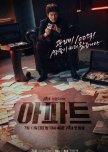
El Complejo de Apartamentos
A 0 usuarios les ha parecido útil esta reseña
This review may contain spoilers
The idea seemed pretty interesting from the start: two bad guys competing over something and in the end someone "accidentally" became the good guy. The issue is also very realistic: apartment resident's maintenance funds corruption, hiding their scheme behind everyone's fear of the apartment price dropping (revealing a corruption could lead to a bad image of the apartment). The way how they embezzled it, the cartel they built, all seems too real. A lot of people even complained about this show because it seems their schemes got revealed. Comedy part added more flavour into this show.Ji Sung as the main character, the "big-hearted" ex-mafia Park Hae Kang, did a great job here. But I think the supporting ensemble casts were the one who bring the soul into this show. Park Byung Eun played the two-faced villain, Lee Chung Won, impressively. Moon So Ri brought so much main character spirit into a supporting character of the annoying Jang Suk Jin out of nowhere. Kim Won Hae landed another "impactful" supporting character after Undercover Miss Hong and he never fails. Most of the comedy came from his moment.
Unfortunately, those strong characters took toll a lot on Ha Yoon Kyung. For a female lead, Kang Ha Ri wasn't very impactful. I feel like her screentime was just about the same with Suk Jin or Gyeong Nam. This limited Yoon Kyung's freedom and chance to show what she gets. I wondered why nobody ever noticed the disappearance of President Seo and his family. Nobody even tried to look for him, even when they were normally nosy about everything else. The three building representative who were close with President Seo seemed confusing. They once said they should side with the one who has the upper hand, but they kept switching sides without any valid reason. They casually sided with both Hae Kang (during the reveal of the 17.8B box) and Chung Won (during Taegang apology) sides.
It's still a good watch. The idea of the story was excellent, even though the execution was just decent. Worth a one-time watch.
¿Te ha parecido útil esta reseña?

This review may contain spoilers
Probably one of the best special episodes I've watching
I like how even if this is season 2. The special episode was kinda linked to north cz everyone there are north's friends🤭🤭 and served us a bit more JoNorth after a long time. The time skip showing that even after they went different ways they still stay friends and all the semes trying to ahem ahem🤭🤭 it was soo damn funny. The dynamic between the princess gang..ngl i cried when they cried. Overall I've been fed¿Te ha parecido útil esta reseña?

This review may contain spoilers
Incredulous!
Six episodes in and Incredulity is what has been keeping me going. I imagine it will soon wear off any time now. I am definitely not making it to ep 61. The acting is nice and all, visuals are okay, characters are diverse and enjoyable (the FL's paternal aunty being my fave), but it is the story that's giving me a hard time.Between FL and ML's 20th breakup in three episodes (over the same unchanging issues no less) and their audacity to rebel and live together but apparently not to run off and get married, I am not sure which one rises my ire more. A relationship for 10 years? I am curious what has been holding that together. Surely not this dynamic we have been introduced to since episode 1 where the ML professes love for the FL but has no problem looking at and contacting other girls?
How do you also explain, that the ML and FL's families live in the same neighborhood and know of each other but somehow the FL's sister is now married to the ex-husband of the ML's sister and both families are oblivious to this fact in the drama.
More importantly, other drama's depict no shortage of part-time jobs but the ML and FL are "studying" all day instead? Almost 30 years both of them, not incapacitated in any way and they won't find a steady stream of temp jobs to support themselves now that they have a baby on the way?
I know Telenovelas hold the trophy for the most incredulous happenings in dramas but this drama, from what I've seen so far is seriously vying for a spot. My amazement at every new episode is what's kept me this far.
¿Te ha parecido útil esta reseña?

A waste of time
Why was this made? We didn't need it. Did anyone want it? This was such a nothing show that it may as well not have existed.There was zero plot, & all the drama came down to jealousy and the most nonsensical breakup I've ever seen. The script was also mostly teasing, flirting, or arguing with little in between, which almost made me drop the show. Honestly, I'm still not sure why I finished it.
The acting wasn't the worst, but it definitely wasn't the best either. It felt constricted, and maybe that was because of the script? There isn't much you can do when the script is mostly you making doe eyes at a boy & bragging about said boy. Them speed-running the relationship also didn't do the actors any favors since they didn't have time or wiggle room in the script to actually build up the character past 'love-sick' or build chemistry.
Also, why did every online conversation between Fuse and Ana have to be public? Are DM's not a thing on whatever platform they are using?
The OST reminded me of retro video games that repeat the same beat the whole time you play and will slowly drive you crazy if you don't learn to tune it out. It was horrible, loud, & distracting.
Vee & Mark are mentioned WAY too much. I get they are the most popular couple, but bringing them up at least once an episode won't save the dumpster fire that is this show.
I hate giving it 1.5 stars because I've definitely watched worse shows & rated them higher than this, but in those shows there was at least 1 thing, no matter how small, that I liked; whether it be an actor, a scene, a plot point, OST, a cuddle, etc., there's something. Here, there was nothing. It really was just a show, one of many, sadly, that lacked any substance.
¿Te ha parecido útil esta reseña?


