


Overrated
I love WilliamEst, but this drama is so overrated. There are so many fake 10/10 reviews from what looks like the same person creating multiple accounts.An 8.7 rating after only two episodes with such a weak plot is crazy to me. I love the pairing, but the story just isn’t delivering so far.
Was this review helpful to you?
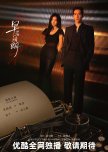
Bold, Intimate and Visually Stunning
So good. Strong acting, bold storytelling, amazing chemistry, phenomenal music and absolutely beautiful cinematography. The Early Spring caught my attention from the beginning and somehow kept getting better.The acting is one of its biggest strengths. The chemistry between the leads feels intense and incredibly natural, and so much is communicated without words but through looks, pauses, body language and the smallest changes in expression.
Visually, this drama is stunning. The cinematography, framing, colors and symbolism are beautiful, but they aren't there just to make everything look pretty. The visual details actually tell part of the story. Even the silences have meaning.
I also loved how bold and mature the drama was willing to be. The intimacy was handled beautifully, not only the physical scenes, but the closeness, hesitation, tension and little gestures between the characters.
And the OST is phenomenal. The music isn't simply in the background, it becomes part of the storytelling. Sometimes it feels like the music is saying everything the characters can't put into words.
The characters themselves are far from perfect. They make mistakes, frustrate you and give you plenty to argue about. There was so much discussion about red flags and green flags while this was airing, but after finishing it, I think those labels are simply too easy. These are complicated, flawed people, and that's exactly what made them interesting to me.
Was everything perfect? No. But The Early Spring made me feel, think, argue, rewatch scenes and notice tiny details I would normally miss.
Bold, intimate, beautifully acted and visually stunning. This one is going to stay with me for a long time
Was this review helpful to you?

This review may contain spoilers
Bl or bromance??
My most awaited DewTee series! I honestly don't care if this is just "bromance" as long as they are in the same series as the main leads. LOL.The story is actually good. I'm just not sure if this is something new story-wise, but for me, it's something I encountered for the first time. A police officer teams up with a manga artist to hunt down a mysterious killer who references the manga in the way he kills his victims. The issue they tackled is also quite controversial, and yes, it really makes you question how we define justice when the justice system in this world is, well... crap.
The chemistry between the two mains is really there, and I think we all know they definitely pass the BL vibe and not just the bromance vibe. LOL. Supporting actors like Off, Singha, Neo, and the others also did a great job. I honestly didn't see any cringe moments throughout the series.
As for the plot twist, it was VERY predictable who the mastermind was. Honestly, it was so obvious that I started giving it the benefit of the doubt and thought, "Maybe it's actually not them." So when they revealed that my obvious prediction was indeed the plot twist, I was kinda like... meh. 😂
Still, it's an interesting series and definitely not a waste of time. I enjoyed watching it, especially the dynamic between the two leads.
And shoutout to those stray cats who look healthier than my cat. HAHAHAHAHA. Sorry. 😭😂
Was this review helpful to you?
Mr.Kill — A Friendship That Killed, but a Story That Didn’t
Mr.Kill had almost everything required to become one of the strongest Thai thrillers of the year. A famous manga artist discovers that murders are reproducing scenes from his work, a police inspector has to determine whether the artist is connected to the crimes, and both men gradually realise that the investigation reaches into their own pasts. Add Dew Jirawat, Tee Teeradech and Off Jumpol to that premise and the potential becomes enormous. I enjoyed watching it, sometimes enormously, but by the end I was left with a strange contradiction: the friendship at the centre of the series felt completely alive while the murder mystery surrounding it rarely did.The first thing worth knowing is that Mr.Kill is not a BL. It circulated heavily inside BL spaces, Dew and Tee were promoted together, and the closeness of their characters naturally encouraged speculation before and during the broadcast, so I understand why many BL viewers arrived expecting something more. But Kaye and Phat are friends. There is no hidden romance suddenly waiting in the finale, and personally I am completely fine with that. I actually prefer a drama allowing two men to develop an extraordinarily close relationship without deciding that emotional intimacy must inevitably become romantic. Male friendship deserves stories too, and forcing Kaye and Phat across that line simply because viewers enjoy Dew and Tee together would have weakened what makes their relationship special. What bothered me was not that Mr.Kill refused to become a BL. It was that after removing romance from the equation, the thriller needed to become strong enough to carry everything else. A murder mystery should make me suspicious, uncertain and constantly aware that something I believe might be wrong. It should give me several possible explanations and then make each one credible enough that I hesitate before committing to an answer. Mr.Kill gave me an excellent premise for exactly that kind of story, yet I felt surprisingly little suspense because the person I suspected almost immediately remained the person I suspected until the end.
The moment Than appeared, I looked at Off Jumpol and thought: there is my problem. Off is a very good actor, and darker characters suit him remarkably well because he can make friendliness feel slightly wrong without immediately turning into a theatrical villain. But that also means the screenplay had to work much harder to convince me that Than might not be involved. A recognisable actor appearing in a concentrated suspect pool already attracts attention; if the writing then gives him enough unusual behaviour to reinforce that attention without constructing equally persuasive alternatives, suspicion quickly becomes certainty. The final revelation therefore did not feel like the moment when separate pieces suddenly formed a new picture. It felt more like the drama finally confirming the picture I had been looking at for most of the series. That would not necessarily destroy a thriller if the real suspense came from somewhere else. Knowing who committed a crime can still be fascinating when we do not understand why, how, who else is involved or whether the protagonists will uncover the truth in time. Mr.Kill had all those possibilities because the murders copied Kaye's underground manga, immediately raising interesting questions about authorship and responsibility. Was someone inspired by his work? Did the drawings contain memories he did not fully understand? Was somebody close enough to know unpublished material? Was Kaye consciously hiding something, or had he unknowingly transformed a traumatic experience into fiction? Those possibilities could have made the manga itself feel dangerous. Instead, the story progressively narrowed when I wanted it to become more unstable.
Kaye was the greatest missed opportunity. Dew Jirawat has exactly the acting ability required to make a character simultaneously vulnerable and frightening. There are moments in Mr.Kill when Kaye's expressions change, when the mirror imagery hints at another side of him, or when his relationship with violent imagery makes you briefly wonder whether the harmless man Phat is protecting is really the entire person. Those moments interested me far more than simply discovering another clue. I wanted the drama to make me seriously afraid of him. Not by lazily giving him a mental illness and equating psychological disturbance with murder, but by making him morally unreliable. Let him lie convincingly. Let Phat discover something he cannot explain. Let his anger become disturbing. Let the audience spend an episode wondering whether the person we like might actually have done something terrible. That uncertainty would also have made the friendship much stronger. Phat is a police officer investigating murders modelled after Kaye's work. Trust should therefore be dangerous. If he begins caring about Kaye, the drama has an excellent ethical conflict: does affection make him less objective, or does understanding Kaye allow him to see evidence everyone else is misreading? Instead, Kaye becomes emotionally safe too quickly. Phat may question situations, but I rarely felt that the relationship itself was genuinely at risk because he believed Kaye could be guilty. The series wanted us to enjoy Dew and Tee together, and I think it became too protective of that enjoyment.
That is where the fan-service atmosphere started interfering with the genre for me. Dew and Tee are extremely enjoyable together, and their real-life friendship gives them an ease that cannot easily be manufactured. They know how the other reacts, how long to leave a pause and how to make ordinary exchanges feel natural. Watching them work together genuinely looks like two people enjoying the experience, and that pleasure transfers to the viewer. The problem is that a thriller should sometimes be willing to destroy that comfort. I wanted an episode where I stopped enjoying their friendship because Phat had discovered something horrifying. I wanted Kaye to frighten him. I wanted Phat's investigation to feel like a betrayal. Then, if trust survived, it would carry considerably more weight. Dew is easily one of the main reasons I stayed invested. I already admired his acting, but Mr.Kill confirmed what makes him unusual for me: I rarely feel that I am watching him perform. There is very little visible preparation before an emotion appears. His face can change almost imperceptibly, and he allows reactions to arrive as though Kaye is thinking rather than an actor waiting for the correct moment in a scene. This kind of natural performance is particularly valuable in a mystery because a tiny hesitation can become suspicious without needing exaggerated music or dialogue announcing that something is wrong. Unfortunately, the screenplay rarely exploited that ability as aggressively as it could have. Dew was capable of making me doubt Kaye far more than the story allowed him to. Tee Teeradech deserves just as much attention. It would have been very easy for him to disappear beside Dew, especially with Phat being the comparatively controlled character, but he never does. His calmness gives the relationship balance. Dew can make Kaye unpredictable and emotionally restless while Tee gives Phat the steadiness of somebody whose profession requires him to observe before reacting. More importantly, Tee listens on screen. That sounds simple, but many inexperienced actors spend another person's dialogue preparing their own expression. Tee often looks as though Phat is genuinely processing what Kaye has just said, and that is one reason their conversations feel so comfortable. Together, they prove something I hope GMMTV understands: they do not need to be lovers to justify being paired in another drama. Chinese television has long demonstrated how compelling recurring male partnerships can become through friendship, investigation, brotherhood or professional rivalry. Dew and Tee could do the same. Their connection is strong enough without romance, and preserving that friendship gives them access to stories where making them another fixed BL couple might actually become limiting. I would happily watch them as detectives, brothers, enemies, soldiers or two men trapped in another mystery. What matters is giving them material worthy of what they can do together.
That is also why I am harder on Mr.Kill than I might otherwise have been. The performances are not the problem. The visual production is not the problem either. The manga imagery gives the drama a recognisable identity, the crime scenes have atmosphere, and the series generally looks polished. Even the concept of an artist confronting violence apparently generated by his own imagination is strong enough to support something much darker. What failed for me was the dramatic construction. The screenplay rarely made me change my mind, and a mystery where the audience never needs to reconsider what it believes has surrendered one of its greatest pleasures. The secondary characters could have helped create that uncertainty, but their trajectories were often equally easy to anticipate. When somebody began moving toward a darker decision, I usually understood where it was going. When family connections became important, they confirmed rather than transformed the story. Even developments involving Phat's sister felt more inevitable than shocking. None of those ideas were necessarily bad; they were simply presented too cleanly. A good thriller needs noise around the truth. Characters should have secrets unrelated to the murders, witnesses should lie for reasons we misunderstand, apparently suspicious behaviour should occasionally be innocent, and someone trustworthy should give us a genuine reason to reconsider them. Otherwise solving the mystery becomes less like assembling a puzzle and more like waiting for the characters to reach the answer already visible to the audience.
I also think the story confused smoothness with control. Mr.Kill moves very easily. There are few truly disastrous scenes, the acting remains strong, the friendship is pleasant, and every episode carries us comfortably toward the next. But a murder thriller should not always be comfortable. Sometimes the plot needs to become ugly, confusing and emotionally dangerous before resolving itself. By making Kaye and Phat such an appealing duo and preserving that appeal for most of the series, the production created something very watchable but less unsettling than its own premise deserved.
Off Jumpol nevertheless makes Than work as well as the writing allows. He has enough control to avoid reducing the character to obvious evil, and when the darker parts surface they fit him naturally. If anything, his performance reinforced my frustration because I could imagine a version of the same story where Than was used as deliberate misdirection. Make him suspicious enough that experienced viewers immediately accuse him, then give us evidence strong enough to feel foolish for doing so. Make Kaye increasingly disturbing at exactly the moment Than appears more innocent. Let Phat choose the wrong person because he trusts the man beside him. Then reveal what was happening. The same cast could have produced a considerably more dangerous mystery without changing the central premise. What ultimately saved Mr.Kill for me was therefore exactly what its title cannot describe: friendship. Kaye and Phat become the reason to continue even when the investigation stops surprising me. Dew and Tee have the kind of natural screen relationship directors usually spend an entire series trying to manufacture, and the fact that it remains friendship makes it more interesting rather than less. There is affection without the obligation to transform it into desire, loyalty without a kiss waiting as a reward, and intimacy without pretending that two men cannot be emotionally important to one another unless they eventually sleep together.
But friendship should have been the emotional centre of a great thriller, not the substitute for one. Once viewers discovered there would be no BL romance, plenty of us kept watching anyway because Dew and Tee were enough. That should be reassuring for GMMTV. Actors with genuine screen presence do not need a manufactured possibility of romance to keep an audience. Trust them, trust the viewers, and then commit completely to whatever genre you have chosen.
Final Thought
Mr.Kill frustrates me because I can see the excellent series it almost became. Dew Jirawat is outstanding, Tee Teeradech proves that he can stand beside him without being overshadowed, Off Jumpol makes a naturally effective antagonist, and the manga-copycat murder premise should have given all three actors something considerably darker to play. The friendship between Kaye and Phat works so well that I would gladly watch Dew and Tee together again without ever asking for romance.
What I needed was a story brave enough to threaten that friendship.
Make me believe Kaye could be dangerous. Make Phat wonder whether his affection has compromised his judgment. Give Than enough ambiguity that recognising the actor does not effectively solve the mystery. Let the sister surprise me. Allow somebody apparently innocent to behave badly for reasons unrelated to murder. Give the audience several convincing truths before revealing which one was real. A thriller should make suspicion uncomfortable because anyone we care about might disappoint us. Instead, the drama used only a fraction of what its actors could have delivered. Their chemistry remained effortless while the mystery became increasingly predictable, and by the finale I was watching primarily because I liked being around Kaye and Phat rather than because I desperately needed to know who had done it.
That is why the title of this review feels appropriate to me. The friendship killed. Dew and Tee made it alive, natural and memorable without needing to turn it into BL. The story didn't.
Was this review helpful to you?
Nice but got a bit rushed at the end
The drama was fine the direction was good and teasing enough you hold on to it the actors were kind of a fit for role but not for the script as some times pacing feels optimal where as at some times it feels like a bit rushed i could be because the drama has been cut down to 24 ep from 30 in the initial phase and the last four episodes does completely ruin the pacing and character build ups as the first two episode builds the main characters to the max and the last two destroyed it completelyWas this review helpful to you?

This review may contain spoilers
Promising, but I’m still waiting to see where it goes.
My thoughts on Extraordinary You up until episode 11:I’m so happy I watched Alchemy of Souls before this, I would have had a hard time buying Lee Jae Wook as a good guy otherwise. He is so disturbingly perfect in his rage as Baek Kyung! I actually feel frightened whenever he throws tantrums and starts to hit and break things, his eyes full of anger… he truly is an amazing actor.
Rowoon’s character on the other hand has been a complete nothing burger so far. He lacks depth and development and his only personality is liking Dan Oh. For a show that began so strong in deconstructing clichéd relationship tropes (Dan Oh always observing how childish and uncreative Ju Da and Nam Ju’s plot on “the stage” is) I would have thought they would spend more time creating an actual interesting ML. I don’t blame this on Rowoon though, I’ve seen his other dramas, he is a good actor.
For the rest, I hope we get to see more of “Dried Squid Fairy” in the next episodes, his character is promising.
Was this review helpful to you?

This review may contain spoilers
What happens when they talk too much...
I tried my best to find the sweetness between the couple. I couldn't. Twelve episodes of too much talking. Apparently, they didn’t know how to create a series that let events speak and the audience gets involved with the emotions. They talked everything to death. The side characters talked too much also.Heavy dialogue is only fun when it moves the plot along and is whitty. This felt like 12 lectures. Even the nc felt like an assignment. The morning after was the most amount of warmth between them and it was nice to see. Also, Wataru's unexpected tears. It doesn't help that both their personalities are basically the same.
I kept thinking of Sunspot everytime they were together and the difference.
They weren't bad but they didn't capture my interest beyond why they got together in the first place. Their love for movies. It's a quiet introspective series that doesn't do anything different than any other generic series.
Was this review helpful to you?
This review may contain spoilers
The Luke Show
If you’re wondering what this show is about, the answer is simple: Luke. Everything revolves around Luke. Every event, every conversation, and every emotion somehow comes back to him. I honestly can’t remember the last time I watched a drama where the male lead was put on such a ridiculous pedestal.K-dramas love their cold, handsome, powerful CEOs, but usually we eventually get to see their flaws, awkward moments, or funny sides, which makes them more likable. Here, though, we’re constantly being told how amazing this guy is, without actually being given a reason to believe it. He isn’t even particularly impressive compared to your average K-drama CEO.
And then we have the female lead. She’s supposedly ambitious and hardworking, but most of the time she just comes across as painfully naive and clueless. Being innocent is not a problem. The problem is that she seems terrified of everything, constantly doubts herself, and needs validation for every little thing. She even writes down every compliment she receives. Meanwhile, she’s doing unpaid overtime without even realizing she should be getting paid for it. Honestly, she’s basically the dream employee for corporate exploitation lol.
I’m only on episode 10, but there are already some technical problems too. I’m watching the original-language version with subtitles, yet the voice and lip syncing are terrible. The dialogue often doesn’t match the actors’ mouths at all. Like… it’s 2026. How is this still happening?
The biggest problem, though, is that I still don’t understand what kind of drama this is trying to be. Is it a workplace drama with some romance on the side, or a romance that happens to take place in a workplace? If it’s the first one, fine. But if romance is supposed to be the main point, the leads barely spend any time together, and there is absolutely no chemistry between them so far.
I’m going to finish it, but judging by the first 10 episodes, I have a feeling this is only going downhill from here.
Was this review helpful to you?

Peak of Industrial Espionage
A botched operation 3 years prior came with a new lead of the escaped wanted criminal Micheal, forcing the Korean National Intelligence Services to bring up the legendary spy Baek Chanmi back into the spotlight. She lost an agent that she cared very dearly in that botched operation and carried huge grudge against Michael, that the top echelon is counting for her to go all out for this mission. Going undercover at Il Kyung Technology with 2 other teammates, Baek found herself in a pickle as the secretary position she interviewed for is of a CEO who turned out to the student she tutored 15years ago, Yoon, who had a crush on her. Forced to avoid recognition by Yoon and the targets they are after, Baek and her team discovered that the mission they are on might have already been compromised by an insider, a traitor in the NIS that keeps the villains one step ahead of them every single time.I totally love the Industrial Security Team 3 lineup despite their ridiculus misadventures. Out of the team of 5, only 1 is a competent spy, the most crazily unhinged of all NIS, Baek Chanmi. The other 4 are either semi or total doofus - The middle-aged ahjumma negotiator/interrogator Hwang Misung, the supposedly tech whiz but totally clumsy-never-been-in-the-field Im Yeeun, the wimpy backup tech Bae Mohyuk and last but not least, the team leader constantly being intimidated by Baek Chanmi who happened to be the girlfriend he dumped years ago, Dong Gwansoo. I really liked how they manage fit in the clumsiness and comedy without trying too hard or looking slapstick or downgrading the kickass FL character.
I am totally for older actresses in the main leads, and Baek Chanmi’s character is an absolute badass that doesnt give other people chances to do her dirty. She stands up for herself, and others, and she doesnt care of the consequences so long as her objectives are achieved. Basically a total contrast of Im Yeeun’s character.
The scene where Baek took a shot at the villain’s car tyre while propping on one knee on a sliding motorcycle much like the superhero pose was so damn james bondy-mission impossible-like and she looked really good doing it. Her action sequences are all on point and doesnt look awkward or rehearsed at all. Although, this show still suffer from the usual action trope of having a professional spy/assassin/mercenary almost always turn their backs on the enemy without a confirmed kill/subdue, which becomes the opportunity for the other party to gain an upper hand. The moment the good guy turn their backs on the fallen villain, i absolutely know the villain is going to get up and either kill or severely injure the good guy which will eventually become the emotional burden for the mainlead. 🙄 yep happens here too.
The most irritating characters had to go to Im Yeeun the clumsy tech whiz and her supposedly paired character the celebrity Kang Wowon. The former being a total clutzy pushover while the latter a total bully with an ugly attitude who spares neither respect nor consideration for other people around him. Their side couple story took up so much of screentime that it made me cringe whenever they come on. This show doesnt need a romance side story, and by making the supporting characters as the focal romance just disrupts the plot’s pacing. And as a tech whiz spy, i am disappointed that this character gets flustered so easily at being targetted, either by the villain or even the snobbishly narcisstic Kang Wowon. Like, how can an NIS agent be this gullible and wimpy to be easily gaslighted and threatened with legal action for executing a sanctioned intelligence operation that eventually led to her being ordered around by a civilian? I was like, really? Reaaaalllly? 😒 just to slip in a love story, the screenwriter would butcher this character so badly. I just cant stand both of them I keep pressing the FF button until the next scene comes on.
As for Kang Wowon, my god i can’t stand this crybaby spoiled manchild. He screams and yells all the time, gets frustrated easily and is constantly mean towards everyone around him, including the one he supposedly fall for. This show could really do wothout this character, he’s a total plot hijacker that gets on people’s nerves so constantly. I can’t understand why they had to create such an ugly character to pair up with the gentle Im. He’s the kind of guy that would gaslight people when things doesnt go his way, absolute narcisstic that would ruin a woman’s life should something happen to the relationship. Especially one who doesnt fight back like Im. I just hate this character so much he totally doesnt deserve a good love story. This character actually fits to be ML’s ex wife’s partner instead. Both are narcs, the only kind of partner that they should have.
And despite being action-comedy, each character has their chance at displaying different kinds of intense emotion and they did them all really well. i love it how these characters could display contrasting reactions in different situations. Like the no nonsense ahjumma Hwang Misoon, she is generally very loud and outspoken while packkng good punches, but when faced with her daughter’s school bullying problem, she turned timid and lost all that confidence she usually displays as an agent, all because of guilt and fear for her daughter’s safety at school. The expressions are genuinely conveyed and convincing.
Fortunately, this show is also one of those rare korean productions that does a spectacular job at using other languages other than the native tongue in their dialogue. There is no incomprehensible english, in fact other than English, the characters speak fluently in russian, japanese, chinese and other language that i dont remember FL used to pass her interview when she was going undercover. And the japanese that Im Yeeun and Hwang Misun spoke sound so authentic as if they had ripped it off right from anime.
I enjoyed this show very much, it’s a shame that they didnt do a sequel. 🙁
Was this review helpful to you?
Exciting
This drama was very interesting. While watching it, I felt like I was putting together a puzzle—and the final picture that emerged was... quite interesting and exciting. The actors were incredible and so well-prepared. The plot is intriguing and enigmatic, full of twists and plenty of mystery. Personally, I really liked it.Was this review helpful to you?

This review may contain spoilers
Those boys stole my whole heart
At its core, this is a workplace drama. Except they've traded the office for the field, and the gossipy coworkers for the sweetest group of boys you can imagine.It's not an understatement to say that the heart of this drama is really with the football team. Someone said we're watching the future generation of leading men, and I have to agree. They made me laugh and cry (and I never cry!) and root for them all the way through. Yu Shuxin and Chen Jiangke set the tone as the drama's leaders, but the youngsters bring the story to life and kept me sat for 32 episodes.
Personally, I felt that the romance was a bit shoehorned. If the true story was the team, then we really didn't need the teachers to fall in love. I understand it was meant to be a healing drama where two traumatized people tend to each other's wounds, but the problem is that their trauma was the least interesting part of the story. Pulling out the 'psychopath' trope for both of their issues felt like really bad writing. It's such a lazy method of creating conflict, especially in 2026. The story would have been better if both leads' trauma backstories were eliminated, and the focus just remained on coaching a losing team to victory.
Was this review helpful to you?
A series that tells the story of a woman’s emancipation more than a love story
First, I want to make it clear that I don’t want to compare the series with the novel. Even though I have read the second part, the series has become a work of its own for me. They changed certain elements, especially by significantly softening Luke, while Flora remains more or less the same. So I prefer to judge what I was actually given to watch rather than look at the novel to understand what the series was supposed to be.And this is precisely where, for me, one of the main problems lies: the series raises much more interesting issues than it actually dares to develop.
To me, this is above all the story of a young woman moving from young adulthood into genuine adulthood. Flora enters a highly hierarchical and coded professional world, where social background, education, experience and connections strongly determine one’s opportunities. On top of that come family pressure, social expectations, the search for a stable job and the material difficulties faced by many young adults.
Flora is still young and lacks confidence in herself, but she has an extremely strong ambition: to succeed, become financially independent and find her place in the middle class. She learns from everything around her, observes, absorbs knowledge and takes every opportunity, without ever losing sight of her goal. Even when she receives help, she wants to feel that she has built her success herself. This is quite an interesting way of portraying female emancipation.
And paradoxically, it is the romance that sometimes undermines this message.
Flora rejects certain material and social codes, such as obvious signs of wealth, yet her aspirations remain deeply connected to individual success and social mobility. Her relationship also gives her considerable intellectual support. Luke gradually becomes almost a kind of mentor who helps her evolve. But above all, their relationship transforms Flora: she becomes more confident, more assertive and more independent in her choices. She finishes this journey knowing better who she is, what she wants and how she wants to obtain it.
We can then imagine that once her financial independence and social status become more aligned with Luke’s, she faces a real question: "can she choose the man she loves without having to sacrifice what she has become?"
And this is where the series could have been much more interesting.
Because loving someone does not necessarily mean giving up your career, your comfort, your friends or your social life. But a relationship also involves compromises, sacrifices and the ability to give. Love cannot be built entirely around the “I”. Here, Flora is portrayed as a victim in a one-sided way. And I don’t see any emotional redemption or transformation in her at all.
This is precisely why, for me, the romantic storyline partly fails: I do not feel enough reciprocity.
What I also find interesting in the comments surrounding the series is seeing how much people’s expectations of relationships have evolved. Viewers seem much more aware of their boundaries, of what they are willing to accept or not, and of what they believe they deserve. That is, in itself, quite healthy. But it also reflects an era in which the “self” occupies a central place.
Romantic series, especially those aimed at a female audience, ultimately reflect — and sometimes reinforce — this evolution. Yet there is no universal rule that allows us to determine what is healthy or toxic in a relationship. What is a red flag for one person may be insignificant to another. Perhaps true maturity lies more in knowing our own boundaries and understanding which ones can be discussed, moved or never crossed.
----- Luke: a transformation that is difficult to believe, but interesting to observe
Luke is particularly interesting. At the beginning, he is arrogant, narcissistic, lacking in empathy and rather controlling. Then he almost completely changes through his relationship with Flora and, above all, for her.
I have to admit that I have always had difficulty with this type of romantic arc. In real life, I am rather skeptical about the idea that someone who is deeply narcissistic or lacking in empathy can suddenly transform through love. Likewise, certain jealous behaviours do not simply disappear because the story moves forward: when they become genuinely problematic, their consequences do not disappear so easily.
So I don’t really believe in the fairy tale being offered here.
But the series at least has the merit of "showing us this transformation concretely. Luke genuinely becomes someone different. And if we accept this narrative logic, Flora ultimately succeeded in giving the man she loved a kind of “emotional education.”
Which leaves an interesting question: which man did she actually love at the beginning? The man he was, or the man he could become?
---- Underdeveloped supporting characters
I also found the secondary world far too pleasant and polished. Everyone ultimately seems quite kind, which reduces the conflicts and therefore the depth of certain issues.
I was particularly unconvinced by the SML’s storyline. It moves too quickly and, in my opinion, without any real narrative impact, other than shocking the audience. **Raising such a profound issue only to treat it so superficially does not seem very meaningful to me.**
For me, this is one of the major weaknesses of the storytelling: the series sometimes overlooks small details that may seem insignificant, but which would actually allow us to understand the characters’ motivations, contradictions and evolution much better.
--- A series carried by its main duo
On the other hand, both lead actors deserve praise. They both demonstrate a real ability to transform and a great command of their characters.
Special mention to the actor playing Luke: he manages to bring a great deal of nuance to a complex, charismatic and sometimes difficult-to-read character, while maintaining a certain consistency throughout his evolution.
The actress also deserves recognition. Here, she shows a completely different side from her previous roles, something much more sensual and mature. It is quite surprising, and precisely for that reason, very interesting.
I actually think the main strength of the series lies in this duo and in their chemistry, which works particularly well because it feels more mature and less adolescent than in many romances of the same genre.
Visually, the series is also very successful: the aesthetics, cinematography, staging and direction contribute greatly to its atmosphere.
However, the narrative choices remain, for me, its main weakness. The series sometimes overlooks small details that may seem banal, but which would have allowed us to understand the characters’ motivations, contradictions and development much better.
And despite everything, it remains captivating — mainly because of Flora, Luke and the very particular chemistry between the two actors. And for the performances
Was this review helpful to you?

Such a fun ride!!!
I really didn't expect anything big from this show, but that's okay because it never promised that. Everyone involved in making this wanted you to have a good time ... and I really, really did. It was so much fun.The comedy ranges from goofy to witty. There's a comedy scene in the later episodes that involves seamlessly tying together multiple plot lines, and it's executed so brilliantly that I never saw it coming. The show may be silly, but the writing is quite clever. And the acting delivers, especially from Ao Ruipeng and Aimi.
Unfortunately, the comedy disappears rather suddenly to make way for the 'true' storyline. At this point, a big part of your enjoyment depends on how invested you've become in the characters. Lots of people who dropped this show say they got bored from episode 20 onwards, which totally makes sense because the tone shifts suddenly and a new storyline emerges. Before you know it, you find yourself in yet another generic xianxia. And the last few episodes pull yet another sudden tonal shift, becoming a mind-bending story that breaks time and space. At this point I personally was checked out and gave up on trying to make sense of the plot, so I have no idea if the show's internal logic even holds up to scrutiny.
Suffice it to say that if it had started with the same storyline that it ended with, I would not have kept going. But the first two-thirds are so much freaking fun. This one is going on the rewatch list for sure.
Oh, and it ends with an ensemble musical number. Just fun all around!!
Was this review helpful to you?
This review may contain spoilers
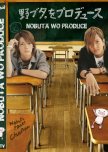
Everything is good except the story... which is so bad !
I have read many reviews telling "this is a great story about friendship and growing up" but I strongly disagree!For Western viewers, this drama can be frustrating. It heavily follows the Japanese school of cinema dramatic concept of "gaman" which means, suffering in silence, abandoning one's love for the sake of friendship and for the group's harmony and peace. Just that this concept is applied in such an exaggerated way, broken on multiple occasions, especially in the end.
All characters forfeit their love stories for he sake of a great, great "friendship triangle".
The main problem is that this is utterly destroyed in the last episode when Suuji decides to leave. This makes no sense. It is clearly shown that his father allows him to remain behind in a boarding house. However, Shuuji comes with a very, very weak excuse "I need to be near my brother to make sure he gets dinner when Father comes home late". For this, he ABANDONS his fantastically close friends Akira and Nobuta, his love and everything he worked for. Who could believe this?
Then comes Akira's decision. He is in love with Nobuta, Suuji has just left, he has his chance with Nobuta. What does he do? He Abandons Nobuta, going after Suuji (in a Helicopter no less!). No wonder many viewers have written alternate endings in which Suuji and Akira are in fact a gay couple. This would make much more sense than the official ending.
All love stories in the movie are inconsistent. In the beginning Shuuji tells Nobuta "Mariko is not my girlfriend" signaling he may date Nobuta in the future. Next, there is an important moment when Nobuta is about to confess her love in public, and it is revealed Shuuji intends to answer positively by dumping flowers on her head. So all the premises are there. But they choose to completely forsake their feelings for the sake of Akira's friendship who "happens", later in the show, to realize he is also in love with Nobuta. Even if it happens later. Even if, in the first episodes, Akira and Shuuji do not seem really such good friends.
Also, Shuuji and Mariko. The way he dumps her is at least dubious. Because in the last episode, when they have a final date, he admits he likes her. It doesn't make much sense except for the made-up reason hat he HAD TO pretend to date her in order to be "popular". This sound 100% cinema and 0% reality.
The girl who is a sworn enemy of Nobuta (I forgo her name) is also unbelievable. She apparently has unlimited power, like a Ninja, to observe and affect everything Nobuta does, being completely invisible. Yet the reasons for hating Nobuta so much are just not there. It is another substory not well written.
All in all, I enjoy Japanese movies and how they feel so unreal, partly because of how they look and talk and behave, and partly because of these unbelievable stories, and I didn't hate this movie. But I don't agree that his is a film about "growing up". Nobuta does grow up and she is definitely a better person in he end. But the 2 boys Akira and Shuuji... no way ! And I cannot stand by so many inconsistencies and so many writer's decisions which are the opposite of what should really happen.
Was this review helpful to you?

superb plot
The drama had me hooked on from the first episode. One of the dramas in which the plot is well paced, and interesting. I didn't for one episode think that it was redundant and filler episode.The ending was also satisfying, although a bit rushed, they could have used 2 episodes to show what they did in the last episode.
The only complain I have about this drama is that they under-utilised the character of Fu Yixiao. In the first episode, we start the drama by her entry and I was hooked on. I thought that I am going to get a very strong character of the Red Clad General. But after a few episodes, her character had reduced to someone who was only Feng Suige's love interest.
I would have loved if they showed more development about her past and future, but in the middle episodes we hardly see her character, and whenever we see her, its in the sidelines.
Apart from that the drama was good. A lot of characters were introduced, and most of them play a crucial role for the plot.
Was this review helpful to you?


