

I don't get the hype
First of all, the rating is too high for this drama. It's literally just the plot of likeEVERY trashy short drama where the female lead falls in love with an arrogant C.E.O and has a toxic relationship that basically goes nowhere. I swear they break up every 2 episodes with little character growth and it's really repetitive and tiring to watch. They make up every time and say that it won't happen again, but it still does? Whoever is saying this is realistic and explores more depth in characters needs to rewatch it. Yes, people are imperfect, but it was a situationship that went nowhere. Every time the female lead got her heart broken, she would have some self-reflection, realize he is SUPER toxic and not compatible, and still go back to him because he apologized once. Also this kind of stereotypical man is actually super cringe and uncomfortable to watch especially because they are portraying him as the dominant in the relationship. I think the drama's target demographic is women (I'm not saying men can't watch it), and yet they still make his character act like the women is beneath him. It's like only he can make mistakes. The guy expects attention but doesn't give any, he's never satisfied, and only treats her well if she is submissive or obedient. It feels as if he doesn't even bother to care about anyone who fails to grab his attention. He's very self-centered, and goes through minimal character development. It's like he doesn't have communication in his dictionary.
I've seen multiple short dramas with the same old stories and sure, I sometimes enjoy them because guilty pleasure right? You know how there are some really bad dramas out there but you love watching them because you just do? But they usually average around 7-7.5 and its crazy that The Early Spring got a higher rating than some actually good and well thought out dramas. I'm mad that this is the one that got so much attention because it is very average and also normalizes toxicity in relationships. Some viewers might relate or connect to this, but I think the drama almost romanticizes it. Also tell me why the length of time they're broken up depends on the mood of the male lead. It's actually funny because I was counting how many times they broke up and got back together and I'm so sure that within the span of like three episodes, they had broken up and gotten back together TWICE. (When I say broke up, I don't mean they said it out loud, but the cold shoulder during a situationship kinda implies that, you know what I mean?)
Maybe its because this drama has Jing boran as the lead and Liu yuning singing for the opening credits. The only thing I enjoyed was the relationship between the female lead and her friends. I was more interested in the Sun yuanzhu plot than the actual romance. Also did the story ever elaborate on Lumi's romance? I swear they were hinting at a relationship between her and her boss Will, but it was like they ran out of screentime or forgot so it was left unexplored. Also I feel like the newer cdrama watchers haven't experienced the older dramas because those are legendary and GOATED. I swear the dramas have fallen off recently. I think I only enjoyed one drama that came out this year.
Was this review helpful to you?

Was this review helpful to you?
Pretty good drama! / Assez bon drame!
English:Overall, I think this was a pretty good drama. At first I thought the main actors weren't exactly "hot", but I soon warmed up to them (especially Tuo). The main reason why I completed the show was because of the cliffhangers at the end. I was constantly thinking, "What's going to happen next?" and that's exactly what this show needed. I think the concept of the show was alright, nothing too special, but still good. I liked the girl in the 'trio'. She was super cute, and she knew not to get in the way when Tuo and Jinxi were having their moments. I think the show was sweet. I don't think I'd come back to rewatch the show, but it was still good for a one-time watch. Not bad!
Français:
Dans l'ensemble, je pense que c'était un drame plutôt sympa. Au début, je pensais que les acteurs principaux n'étaient pas exactement « sexy », mais je m'y suis vite habitué (surtout Tuo). La principale raison pour laquelle j'ai terminé la série, c'était à cause des cliffhangers à la fin. Je ne faisais que me demander : « Qu'est-ce qui va se passer ensuite ? » et c'est exactement ce qu'il fallait à cette série. Je pense que le concept de la série était correct, rien de très spécial, mais quand même bien. J'ai bien aimé la fille dans le « trio », elle était super mignonne et elle savait ne pas se mettre en travers quand Tuo et Jinxi avaient leurs moments. Je pense que la série était douce. Je ne pense pas que je la reverrai, mais elle reste sympa pour un visionnage unique. Pas mal!
Was this review helpful to you?
In the meantime, you can watch the drama on YouTube under the caption: " After breakup, when we met again, there was a little boy by her side–it turned out to be his child!" (https://www.youtube.com/watch?v=A-Cwtyn3Vak)
Was this review helpful to you?
This review may contain spoilers
meh
this was cutie; BIGGG hagi fan (feeling comfortable around someone is important!!) he loveeed her for her, i feel like chan just loved her cuz she loved him (not for who she acc was). this was lowk kinda boring but very cutesy vibes; wish the love line was more developed lowk not liking these office romancesWas this review helpful to you?
Sibling Love Story
Episode 3: He’s really hot though.Episode 6: Okay, this is getting weird.
Episode 9: WHY IS SHE WEARING TODDLER BARRETTES NOW?
Episode 12: Sir, even your face cannot save us. 💀
The fact that I kept waiting for some backstory reveal that would make the relationship less sibling-like, only for the backstory to make it MORE SIBLING-LIKE, is what really got me. 😂
30 year old playing an 18? year old who acts like an 8 year old with toddler barettes. I don’t know a single 18 year old who would willing wear those barettes.
I really like the ML actor. He is a good actor. But the premise is hard to get past. It introduces the main characters as siblings. At first you think that when they get to the back story it will be something like they met at age 12 or so and he moved away soon after for them to reunite so that there is distance betweeen them being actually siblings. But that is not the case here. While they are bot blood siblings they absolutely grew up as actual brother and sister. The fl wasn’t even born when the older brother was adopted!!! This is gross and even so I told myself they are actors so they aren’t actually related. But then for twisted and sick reasons, let’s be real here, they have the woman act like a little girl. She is wearing barrettes a toddler would wear in her hair as a grown adult. Don’t kid yourself this is done on purpose. Look at the world we live in. So were supposed to be like ya this is so romantic. 🤮That’s not romantic. That is incest and grooming directors.
Some ppl will say that is how the actress talks but I have seen plenty of other stuff with her in it. Some she talks normal and in some she does this weird baby talk voice crap that I personally do not like. I think it’s weird and gross. I don’t find it attractive at all.
Also her character was written so badly. She has to be fed and taken care of like she isn’t a grown woman. She only when to Thailand because she wanted to be with her brother. She has barely any interest in her own actual father. She also has no interest in her blood related little sister. She basically is written to ignore them and chase after her older brother. Why does she have no interest in her sister? That’s not normal. I have step and half siblings and would have made an effort to get to know my half sister like a real fully fledged out person. It’s clear from the start she was in love with her brother and as soon as she got the chance she hunted him down and inserted herself into his world.
I also don’t get how she seems to come from money but then he pays for everything for her from the start when he is doing dangerous things for money and reasons not yet revealed in Episode 11/12. Why can’t she pay for herself? She is helpless. Can’t cook, can’t hardly eat cus she is “picky” She does learn to drive so we will give her that. But it seems it’s just to help her pursue her brother.
We will eventually find out why the dad became a drunk and why he left school before the entrance exams if you can get past this point. When we hear the divorce story, it’s obvious that the fight wasn’t about a pair of plant pots being broken, but about what she said to her son About being a good man and not being a coward. But the Takeaway that they gave this character, girl was that it was about plants.
I turned this on because the cover and the ML as I think he is a good actor and he is hot. But I couldn’t tell it was Esther from the cover cus she ain’t that hot. Or I would have lowered my expectations more so than I already did since it was about racing, which is not an interest of mine. I think the only thing I liked her in was the one where she enters the video game/novel in Love Game In Eastern Fantasy. Because she didn’t do the baby voice. The first time I saw her was in the Love Between a Fairy the Devil which at the time I thought the baby voice was because she was playing a naive fairy character. Some ppl like the baby thing and that is your choice, but I don’t like it. It’s weird to me to see a fully capable adult male attracted to a fully incapable intentionally child styled girl.
Was this review helpful to you?
This review may contain spoilers
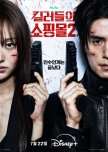
This drama started with a BANG and ended with a BANG. 😂💥 And honestly, what a ride.I really enjoyed Season 2. It had everything I loved about the first season like the action, the crazy survival situations, the morally questionable characters, and of course, people getting themselves into situations where I’m just sitting there yelling at the screen. 😂
That being said… 8 episodes and I STILL felt like it dragged for about 2 episodes. 😭 There were moments where I felt like the story was moving a little too slowly considering how short the season was. I kept thinking, we only have 8 episodes, why are we taking our sweet time?! 😂 Thankfully, once things started moving again, they REALLY moved.
And the cast? Chef’s kiss. Lee Dong Wook absolutely outdid himself as Jung Jin Man. I swear, I love seeing this man in action roles. He just has the face for it. 😂 Give him a gun, put him in a dark room, have him stare at someone like he’s about to ruin their entire bloodline, and I’m sold. He makes these roles look so natural. Jin Man continues to be such an interesting character because there’s always this question of what he knows, what he’s planning, and just how far ahead of everyone else he actually is. Hye Jun was also fantastic as Jung Jian. I really enjoyed watching Jian grow this season. She had to become so much more capable and confident, and you could really feel the difference between the Jian we met before and the Jian we got this time around. She’s been thrown into this absolutely insane world, and instead of just surviving, she’s slowly learning how to play the game. I loved that for her.
And can we PLEASE talk about the supporting cast?! Brother and So Min Hye were two of my favorites. They brought so much personality to the story, and I genuinely loved whenever they were on screen. They’re the kind of supporting characters that make the world feel bigger because you actually care about what happens to them. Which, unfortunately, also means this season had me suffering. 😭
And then Okada Masaki just casually graced my screen?! HELLO?! 😂 As J, he was cruelly handsome. Like, unnecessarily handsome. And then they killed him off way too early! 😭😭 I know, I know, it was for the plot and his death had a purpose, but I still wanted MORE. I barely had time to enjoy looking at him before the show was like, okay, bye! 😂
And Hyunri as Q? CHEF'S KISS. 👏 Q was such a good character. I loved how intelligent, composed, and dangerous she was. She had this presence where you knew she was not someone to mess with, and yet she was also so fascinating to watch. The fact that she was coming after Jin Man and Jian's blood made her a legitimate threat, but I couldn't even completely hate her because she was just THAT good. 😂
Honestly, some of these supporting characters were more interesting to me than the actual villain. Because Kusanagi Jin… girl. 😭 This is probably my biggest criticism of the season. I really wanted to love her as the big villain, but she fell flat for me. I felt like the character was trying a little too hard to be dramatic, and Jung Yun Ha's performance came across as overly dramatic at times. There were moments where I could see what they were going for with the character, but instead of feeling intimidating, it sometimes felt like she was performing villainy. And that's a shame because the story gave her so much potential. With everything surrounding Jin Man and Jian, I wanted a villain who could really match them—not just someone who was obviously evil, but someone who could make me think, Oh… they're actually in trouble. Still, despite that, I had such a good time watching this season.
But damn… this season took PEOPLE from us. 😭💔 We lost some really good characters, and every time I started getting attached to someone, I was reminded that this is A Shop for Killers and nobody is safe. Sigh.
Lee Dong Wook with a gun will apparently continue to have me seated every single time. 😂
Now… Season 3, please. I need to know what happens next.
Was this review helpful to you?
Beautiful Until it Became Clunky
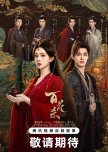
A body switch gave a woman the opportunity for power and revenge for her parents' deaths. She teamed up with the poisoned prince to wreak her havoc.The Good:
• The actors, sets, and costumes were beautiful.
• I enjoyed the poison plot twist, even though I had picked out the villain in advance. Once again, poor communication is a killer!
• The scene with Gu Zingshu presenting the amulet to Shen Xi He was satisfying.
The Bad:
• The FL is a Mary Sue with thick plot armor. Any other woman in her position would have been eliminated a million times over.
• The twist with the second Crown Prince was ridiculous.
• The FL's coldness to the ML became tiresome. It went on far too long.
• The ending was anticlimactic—a forced happy ending—and raised too many questions. Why had the doctor aged so rapidly? Why hadn't there been communication over the years? Why the heck did the writers make these choices?
• Just a small whine, but Gao Wei Guang needed more screen time.
I would have given a higher rating if the last episodes hadn't been farfetched and bathetic. It should have rated another half star, but it didn't stick the landing.
Was this review helpful to you?
great chemistry but it fell off the cliff
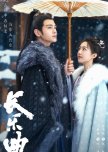
Melody of Golden Age started as the kind of costume drama I enjoy…murder, mystery, palace intrigue and a marriage born out of circumstance, with two strong personalities slowly learning to trust each other. Shen Du and Yan Xing had enough chemistry and push-and-pull tension to keep me invested, and Ding Yuxi could say more with a stare than some actors can with an entire page of dialogue.But 40 episodes is 40 episodes…and boy, did I feel it. By the second half I was fast-forwarding through several episodes because the story became redundant, with scenes that either dragged or simply stopped making sense.
The plan Shen Du and the Queen devised to expose the culprit was one of my biggest frustrations. So many people were tortured and killed as part of this elaborate scheme when I kept thinking…why not simply arrest him? Sometimes writers become so determined to create a clever twist that they forget the audience is sitting there asking the most obvious question.
Then came the palace finale…a fiasco. After investing so many hours in the mystery, I expected something tighter, smarter and more satisfying. And the divorce…was that really necessary? It felt less like something these characters needed and more like another obstacle the writers needed to fill the remaining road.
In fact, I would have preferred a completely different ending. Let Shen Du finally restore his family name and reclaim his glory…but at a price. Let him lose the woman he loves. And let Yan Xing choose Pan Zi and the life of adventure they once imagined…two people riding away together to see the world.
Now THAT would have been an ending.
Shen Du gets everything he fought for except the one thing he ultimately wanted most, while Yan Xing chooses freedom and a new horizon. Two victories…and one beautiful tragedy. Sometimes love doesn’t have to win for the story to have a satisfying ending.
There was a very good drama buried inside Melody of Golden Age…unfortunately, it was buried somewhere inside 40 episodes.
I enjoyed the journey…but I would have packed considerably lighter.
Was this review helpful to you?
A story about love and healing <3
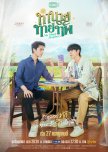
It's gooey cute and honestly? I LOVE IT!!! There's a bunch of series that GMMTV has that are more lighthearted and soft and most of them are a bunch of nothing.The difference here is the insane chemistry and how fun their "frenemy" phase is. It's very lighthearted and such an easy watch. The killer plot is very very very obvious, you know from the start. This is not exactly the highlight here.
The highlight is how much Thap and In bring happiness to each other, how much they love each other. How Thap helps In heal, takes care of him. Treated all his wounds… perks of dating a doctor. It's just sooo delicate… and it's so adorable :( The amount of love that they have for each other…
It's really sooo adorable for real. Easy and soothing to the heart. It's the type of thing to watch when you're tired or needing something softer.
JimmySea are GREAT actors so that’s not a surprise for me! Great acting, as always!
My complaint though, bcs I am a little bit of a jerk: The secondary couple feels so unnecessary. There's no chemistry and the police officer is SO bad at acting oh my god…
Was this review helpful to you?
BEAUTIFUL LOVE STORY
YOU DON’T HAVE TO BE PERFECT TO BE WORTHY OF LOVEI thoroughly enjoyed this story.Chemistry was on another level just out of this world even they didn’t have to be overly physical for you to see it it was just there.I really love when a drama is like that it just shows how perfect the casting is just effortless synergy with each other truly remarkable
Luan Nian was not an easy/perfect person to love he was blunt and cutting with his words but his actions were contradictory to his words.He was a caring and soft person with a hard exterior lol.He realised his own shortcomings and changed for the better for the one he loved
Flora was young,a bit naive,strong and just so full of love..she gave their relationship multiple chances even though deep down she knew he was flawed in the way he handled relationships she grew in Beijing,met friends that she cherished made memories and found love.
Was this review helpful to you?
I was on my phone.
I watched this with my mother…She is the type of person who doesn't like things to be too complicated… so that should tell you most of what you need to know.
This show is for babies… and that's okay.
It's definitely too long and (more than) a little unethical.
Since it's too long it wastes a lot of your time on skip fodder… the twists are predictable and the stakes are always flipping and flopping.
It was funnier but the lack of ethics was always buzzing in the back of my mind.
This isn't as egregious Destined with You, nor is it worse than Jung Hae In's last drama Love Next Door.
It okay for filling some time, but definitely skippable as hell.
Was this review helpful to you?
Yes.... watch it.... BUT.
I'm so conflicted.I totally understand the hype. This show is really good, it's definitely a step above other fantasy costume dramas. I literally can not remember the last time a fantasy drama I watched was mostly competent AND enjoyable.
It's got EVERYTHING.
It looks good (wasn't the biggest fan of the costumes? Not sure what setting they were trying to invoke?) and sounds great.
The acting is crazy good.
The story is coherent, surprising and heartbreaking at times.
The leads are incredibly compelling and fun to watch due to their amazing chemistry.
The main trio of characters have such well written parallels with each other, and can truly be thought provoking. You always understand why and how everyone does what they choose to do.
Hou MingHao is now a cemented favorite of mine. Between Glory and this drama I really came to admire how expressive he is. He has some real talent.
Lu YuXiao was also great in this, I definitely think that her character here is a better fit for her than in My Journey to You.
I ADORED the romance, that is the true treasure of this drama.
Despite how much fun I had while watching this drama, I can't completely ignore the negatives.
The pacing is off here.
It moves at the speed of light at the start and barely gives us any worldbuilding, they talk about “six realms” but you don't even learn the names of the other four until 20% through the show. Nor am I even sure what exactly the “blessed rain” does or why it's so important to people. God's are mentioned but never appear. Cultivation is prized but EVERYONE is already immortal?
Our first main villain takes wayyy too long to resolve, I STILL don't fully understand why he went through with the actions that he did…. Aside for basic greed? the other reason seems to be wanton stupidity.
They casually drop early on that women with spiritual power are forced to have them sealed because some looming Eve archetype almost destroyed the world 100 years ago…. but we don't hear the whole story about that until the FINAL episodes.
I was constantly feeling that I should purposefully stop thinking about anything too hard, or else things would stop being fun.
And when I feel that way…. it's not really possible for me give it an 8+. It's sooo good, but that makes it's flaws all the more apparent.
In my heart I want to give this a 7.8… But 7.5 will have to do.
Was this review helpful to you?
Ep 2 or the start of realizing DeanMoth
At ep 2, I start realizing moth behavior and dean life more and more why they act like this. But the whole ep is showing not just a date, it shows their personality, their life and their mindset about life and it is so interesting to watch. The characters start shaking their feeling for each other and it makes me to watch what will happen after they know their true purpose of this fake dating and all matters. hope to see what will they do at the next ep and how kind of person they become after they fall in love each others.Was this review helpful to you?
Romance in Sensible Shoes
Shin Hae Sun elevates any drama she's in, even a drama about office politics. She was powerful, intelligent, and unstoppable. Often women are dressed in high heels to make them seem taller and more formidable. Shin Hae Sun as Jun In A made her opponents quake while wearing flats.The Good:
• I love good character development, and this saw both leads grow. The FL learned to soften and trust; the ML changed his focus from self-promotion to cooperation with others.
• The romance felt real. It was mature and nurturing. And no silly breakup!
• Noble idiocy was done the right way—without the idiocy! Jun In A showed that sacrifice could be done without hurting the other party. I was ready to groan and watch another idiotic take on sacrifice for the partner's good, but I nearly cheered when she told the ML he shouldn't worry no matter what she did or said, because she loved him.
• Lovely OST. Beautiful song "Home" by Alexander Stewart: https://www.youtube.com/watch?v=p6IYYoOMs9w (Lucid Dream and The Moments Live On were good, too.)
The Bad:
• Kim Jae Uck was terribly underutilized. None of his considerable charm was evident as he played the unfavored son with a life filled with soul-crushing obligations. And had an unfaithful wife to boot. He was the melancholy part of ML and FL's love triangle. I wish he'd been developed more and given a better ending. The behind the scenes at the end of the drama showed more of his personality and charisma in a few seconds than all his time in the drama. Perhaps this shouldn't be in the bad category, as Kim Jae Uck played the part beautifully, probably too well, as I ached for his character and wanted him to be happy. Just not with Jun In A.
Was this review helpful to you?


