

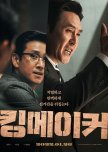
Political thriller, eloquently dealing with SK´s struggle for true democracy. Inspired. Profound.
Election campaign is a fight. But what rules should be applied? Do you inevitably have to hand in your ideals and ethics at the entrance as price for political success?Critical processing of South Korea's recent past - the democracy movement - is still in its infancy, because the dictatorship just finished a few decades ago and its proven structures within conservative circles are still resonating today. Increasingly, however, this topic is also taking up its media space. The political thriller "Kingmaker" sets a bold milestone by taking on a dazzling, comparatively upright, almost exemplary political personality, who for a long time seemed to have no chance in his sincere, ambitious fight for real democracy: Kim Dae-jung. He was the first opposition candidate to be elected President of the Republic. He is also the only South Korean to ever receive a Nobel Prize for his work on democracy and human rights. Some call him the Nelson Mandela of Asia...
In particular "Kingmaker" tells (in the plot prepared with some poetic freedom) about the early years of his political struggle and the arduous path that ultimately led him to the Blue House. The focus is less on his biography and more on what he still stands for in the eyes of most South Koreans today: real democracy. Or rather, against what he wanted to compete: the conservative, elitist, political cronies who stand in the way of progress and justice, if it is not in their own interest.
In the service of the electoral success, Kim (like so many politicians on this planet) was probably tried more than once to sanctify the 'good' purpose in the sights of many a morally questionable means. This difficult balancing act between an upright political attitude and one's own venality in a pact with a promising "devil" is illuminated and processed here in an impressive way. The temptation of a promising shortcut to success usually comes with a price that has to be paid sooner or later. (The internal struggle of 'for' versus 'against' shapes the decision-makers in South Korea with their well-established, conservative, shadowy networks to this day. This is actually writing daily history. And the TV and movie productions are full of it, too.)
The status quo - submission to the apparently influential 'more powerful' - is contrasted with a historically real personality. In order to convey the emotional dilemma in a dramaturgically clear way, Kim's campaign strategist of the first hours, Eom Chang-rok, was stylized as the main character and staged fictionally. In fact, little is known about him other than that he is said to have been brilliant and downright genius.
The story is about Eom Chang-rok's intelligent crisis interventions, solution approaches and election campaign strategies, some of which are in stark contrast to Kim's idealistic democratic values, that are always geared towards serving the people. The audience is confronted more than once with the question of whether the end might justify the means. Isn't the power of the people just a well-meant illusion after all? Wouldn't it be more efficient for the state leadership if a few (more or less) smart people decided for the many others in a short decision-making process? "Kingmaker" touches the foundations of political morality and ideology.
However, the KMovie also touches on very human weaknesses: the need for approval and the temptation to be seduced. These weaknesses are truly human and have to be dealt with by everybody - somehow, someday.
"Kingmaker" is a moving political thriller set in recent South Korean contemporary history about the stumbling blocks and challenges of true democracy. A democracy, that requires responsible, mature and accountable citizens. A democracy, that will always be challenged by the forces and networks operating in the shadows, whose goal is to incapacitate the citizens and instead rule for their own personal benefits.
An unpleasant subject, indeed. Yet the KMovie is eloquently dealing with this crucial issue for any democratic society.
A brilliant approach to this topic as well as to a younger chapter of South Korea´s history.
Inspired storytelling.
A profound production.
Esta resenha foi útil para você?
Esta resenha pode conter spoilers
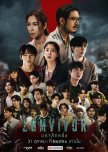
All Of Us Are Not So Dead
That one girl with the alarm ringtone, girl meet me outside...I ain't finna jump ya! Also Pao, brother why? And let's be honest, most of the characters on this show were very annoying and had me wishing they'd hurry up and get bitten, but when all was said and done, I actually enjoyed myself. Let me explain.Listen, this genre is not for me, so I wasn't gonna watch it. But then I opened Netflix and it was there, and I was like, hey, I know these cast, finally something available in my country, so why not? And frankly, I am not sorry. Yes, I closed my eyes at scenes when creepy music starts playing, was yelling at characters who got under my skin, and was sad in other scenes, but overall, a nice watch for Halloween.
Okay, let me get this straight. So this old guy they called Patron, doesn't wanna be immortal but don't want his corpse to rot? And that's the legacy he wanna leave behind, that he dies but his body lives on? Why not go for the immortal thing? Also did the whole thing feel like some family issue and the whole population was just collateral damage? That mother made her family problem everyone else's, and that old guy.. Really, Bob? That's the legacy you want to leave behind? What the hell is the point of your corpse if you are still dead??? Make it make sense, Sharon!
THINGS I LIKED
- PHU: So like we were all rooting for Phu, right? Dude needs to survive, otherwise what's the point?
- Did anyone else clapped a bit when Korn, Gus, Earth and Aek showed up in that rainy scene all zombie hunter like? Same.
- When Aek saved them from Pao... cuz boy was on my last nerve. I got him, understood his reason and was with him, but damn dude, if you wanna die go die alone, don't be making all that noise. In fairness, he did wanna go alone the first time, but those humans held him back.
- Characters having backstories, and not just surface 2d stuff. It made me care for most of them.
- I like whatever it's happening to Lily, though not gonna lie, I was waiting that whole time for her to eat Win, cuz dude why is you sitting so close to her? And was Night's whole solution to get zombies high and hope they are buzzed enough for them to ran away? Hahaha lmao.
- That one annoying girl who is just there to cause drama and be in everyone's business... girl why? but also thanks for the drama. Girl just won't shut up, so every time she came on screen, I was ready for her to stir things up XD.
- That we all thought San and Non were cheating. LMAO, the delulu was strong in this one. Plus the sister was making googgly eyes at Jean so I was... very sure they were cheaters ^^shame on us.
- That random cheerleading routine. I was confused but also laughing cuz, okay stupid children, why don't you be super loud with cheers when you should be shouting the eff up cuz, you know, zombies are literally outside!!!
- That ending had me so emotional, my poor, brave Non. Season two, please.
THINGS I DIDN'T LIKE
- What part of... 'when bitten, they get infected and become zombies' did most of these people not get? Like, they'd all scream and try to go to their infected friends. Dude, your friend is trying to eat you, why you wanna run to them?
- Stupid characters getting ones I like killed. I was all in for Aek and then it was ruined cuz poor Pao decided to be a dumbarse, No, but how many people did he get killed all cuz he couldn't carry a girl and ran at the same time? Wasting his life and causing his brother more trauma in the process, for shame.
- I will not get into the whole San, Ning and Jean thing, cuz let's be real, all three hit a nerve one point or another. Though they did have their moments.
- Earth leaving everyone to die cuz he's hurting and doesn't care and hate everyone, only to go confront his zombie friend and then start fighting and screaming when the zombie tried to eat him. Like dude dafug you thought was gonna happen? A luncheon? smh.
- That one girl with the alarm clock. And the fact she didn't just hurl her phone away and let it keep ringing and ringing. Ahhhhh.
Anywho, overall, a decent watch. Plotwise, interesting origin story, haven't watched a lot of zombie movies, so this one felt very zombie and good to me. The cast ensemble blended well together, and did their best, some very well. I liked most of the characters and disliked some as well, but it all added to my enjoyment of the series. I don't like horror but I still enjoyed this, so, I'll recommend it to anyone who like any of the cast, or just looking for a decent zombie show to watch .
Happy Halloween
Esta resenha foi útil para você?
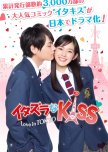
For series made out of mangas, I think japanese versions are better.
Not because korean or taiwanese versions are not good, but because there are some things just japanese culture can express when it comes to manga/dorama adaptations.
I never read the manga but I know the mangaka's style; I can say I liked this very much but there are also things I'd like to point out.
I made some considerations thinking also of the korean version.
The plot; The plot is nice and the things that happen not so unreal. It is a cute and sometimes moving story about love and about growing up.
Even though some episodes are boring, it is not difficult to watch since you fell for the characters.
The characters and the casting;
Naoki was good; good looking and well played by Furukawa Yuki. I liked him better than the korean one, because I felt like he was more professional and more like the real Naoki. I mean, you have the feeling the actor is doing a great job because you can feel the cold-and-warm-at-the-same-time heart of Naoki.
The only thing that I have to point out is that at the end his character changes too fast, and it seems a little weird. I think it is something that is in the manga too, but well, he is just perfect this way.
Kotoko is a character I love and hate at the same time. I love her because she never gives up, but I hate her because she is a little bit too much in stalkering Naoki. Anyway, it is a good and fresh character that makes you smile.
Despite of what everybody says, I liked Miki Honoka. She's 16, ok, but she is good to be a 16 yo girl! Her exaggerated expressions were part of the script, in almost every comedy japanese doramas there are this kind of expressions. Most of all, I could really feel the change between the firstepisodesKotoko and the lastepisodesKotoko. Everything was good.
Speaking of the age incompatibility between Honoka and Yuki, Yuki said himself he thinks Honoka is very mature to be 16, he didn't feel the age differences at all, and I think so.
I liked the other characters too, both families, and the friends.
Kinchan was portraied better than the korean version: funny, immature but also mature when it comes to be like that.
Music: I liked the op, it was just perfect for this drama, very japanese style.
Also the other songs of the ost are good and suitable for the drama.
In the end, I liked it very much. I recommend this to everyone who wants romance, and also who wants to see something about school, friendship and growing up.
A very good drama!
Esta resenha foi útil para você?
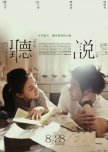
The best thing about the movie is, that its not over dramatic, or too sad, depressing and so. The story is actually very simple, cute and optimistic - just a little untraditional love story about two young people who just met each other :)
There is not much speaking in the movie, they mostly use the sign language. Thats why someone could say that it will be boring, but thats absolutely not true. The way they use sign language is so interesting, that it catches your eyes and make it more interesting.
If you are looking for a movie, that is positive, nice and optimistic, this is for you. It a good way to spend your time whenever you are depressed :)
(sorry for my english)
Esta resenha foi útil para você?
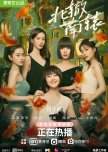
Growing Up is Hard, But Companion Makes it Easier
Crossroad Bistro (北辙南辕) narrates the story of five women who opened a restaurant together. With each other companions, they found friendship, love, and learn how to grow up in life. In terms of the production, technical execution, performances, and music, this drama is perfect!!The script of this drama is so well written, you can see just how much the writing team put so much effort and attention into the characters. Every single character in it is written realistically, they are well-dimensioned. The characters are written so well to the point that you can relate to their action, and you unconsciously built a connection to them. I love how the writers make the characters develop and grow. I loved every single character and their personal journey arc.
The delivery of the amazing script is accompanied by stunning cinematography which makes this drama arguably one of the best adult dramas. Crossroad Bistro is directed by Feng Xiaogang, it is his drama comeback after more than a decade of not directing a drama. You can already see in the first episode how spectacular and stunning the cinematography is. Through the cinematography, you can see how high-quality production this drama is. Each shot uses soft filters and a warm and cold colour palette are used accordingly, which gives the audience a pleasant viewing experience. The angles of the scenes are also beautifully taken, each and every shot in the drama are exquisitely taken, it is a feast for the eyes!! Other than the amazing cinematography, this drama also has really beautiful authentic sets. Overall, all the shots really evoke and gives off Beijing ambience.
This drama has a simmering pace, not too slow yet not too fast. It has eventful moments but also slow moments. This drama does not have draggy problems too, the problems encountered are realistic, and the problem solving is done in a timely manner too (they do not drag it). And I also love how the drama does not specifically focus on one or two women in the middle of the drama, they still made the five women the main focus of the drama. All five women in the drama have equal screen time and their own developed storyline.
The casts of Crossroad Bistro are also well-chosen. Each actor and actresses fit in their role so perfectly, as if the characters are written for them. All of the casts' acting is a joy to watch. Even though the five girls are not 24/7 together in the drama, they still showcased really powerful chemistry between them. Everyone in this drama has great chemistry with other casts, not only with their love interest. Moving on, the music of this drama is also beautiful, the music encapsulated the essence of the story - the essence of growing up, love and friendship.
I definitely recommend this one to those who are looking for an adult drama to watch!! If you loved Dear Missy, My Best Friend Story, you will definitely love this too!!
Esta resenha foi útil para você?
Esta resenha foi útil para você?
Esta resenha pode conter spoilers
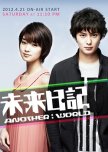
Let me start off by saying that Mirai Nikki has more than one amazing concept. In fact, it seemed to be a combination of a few of my favorite movies, but I won't tell you which ones because that would be a major spoiler. Anyways, Mirai Nikki is a great show. The concepts alone make sure of that. Unfortunately it's not a masterpiece, which really sucks because it definitely had the potential to be. The story is awesome, however the show itself lacks a certain flow. I'm not sure if this is due to the cinematography, the directing, or the production, but something just felt a little cheap about it. There has been a few other Japanese suspense shows that I've watched that have this same problem. It's a lack of professionalism, or perhaps movie magic that makes you feel like the fantasy movie world is real. It feels like I'm listening to someone trying to play a beautiful song but they're just not hitting all the right keys at all the right times.
That aside, 65% of the way through, the show changed course in a way that made me put most of my criticism on the back burner, and from then on the overall story continued to boost my approval of the show.
The acting wasn't bad, but it could have been better. Gouriki Ayame was so freaking cute as Yuno though. She definitely stole my heart. But I do feel like the acting would have appeared better if the show would have been produced better.
Overall I would say that Mirai Nikki is worth watching, but you're going to have to be a little forgiving while watching it. Maybe in the future I'll watch the anime, or perhaps one day they'll make a remake that will enhance the show and make it the masterpiece that it certainly could be.
Esta resenha foi útil para você?
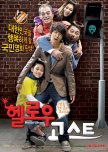
We always thought that we are alone...But we aren't alone. There is always someone, somewhere that love us. That guide us. That give us strength and comfort.
This movie make me laughed. Make me cry. But above all, make me think of that hugs I didn't give...Those "I'm sorry" I didn't say...Those "I Love You" I hush...
I totally love this movie, and I recommend that you prepare some tissues... Because you will need them!!!
Esta resenha foi útil para você?
A Fuga dos Sete: Ressurreição
37 pessoas acharam esta resenha útil
 1
1Esta resenha pode conter spoilers
Where it is particularly dark, even a tiny little bit of light appears immensely bright...
I ended my review about the first seasons with the conclusion: "I only recommend "The Escape of the Seven" if the mood is right - one that demands unfathomable beastliness down to the blood. If we get involved in this KDrama, then we will uncompromisingly be catapulted into a world in which a search for the good guys could very well be in vain..."And obviously, things can always get even worse. At the same time, a wink of a conscience is actually making itself known here and there… very quietly, though. Regret and shame become concepts that are though stumbling trying to make themselves be heard. It's evidently not that easy, but maybe, who knows, it might not be impossible…
Still, the Seven can't easily get out of their skin. It´s way too serious what they had done and must be held accountable for. Even if they all go through their own processes and would perhaps like to choose a new path in some way (fortunately, people have the potential for healing and transformation), they can neither run away nor undo what has happened. In addition, they have made a pact with the devil... No matter which devil you get involved with, it rarely goes well...
The second season cleverly manages to build on the first one with fresh dynamics, while still giving the emotional rollercoaster ride a new direction. Sophisticated dramaturgical twists included. It's amazing to notice ourselves suddenly sympathizing with one or the other of the loathsome Seven...
In addition, the KDrama is vividly displaying the frighteningly diabolical (not too distant) future scenarios of our increasingly digitally depending information society, that in the worst case scenario, could become completely helpless in its interconnectedness...
Overall, I think “Escape of the Seven” is even winning with its second season. It offers a special KDrama experience that has it all - for all those who don't shy away from the abysm of the human species. And as is well known, where it is particularly dark, even a tiny little bit of light appears immensely bright...
Esta resenha foi útil para você?
 2
2 1
1Esta resenha pode conter spoilers
Giant is an epic about the life&love of 3 siblings during highspeed urban development of Gangam
"Giant" offers a dramatically stirring ride through 4 decades of recent South Korean history - 60 episodes tell a touching, upsetting, emotionally stirring and complex story set in the context of a turbo-fast urban development process in Seoul, south of the Han River: Gangnam.In passing, those episodes tell the story when Seoul and its people had to deal with a phenomenal population explosion: in 1953, 1 million people lived in Seoul. In 1960 it was 2.45 million and in 1970 it was already 6 million. Visions and plans were in demand, as were quick practical solutions and investments. Real estate speculation created a veritable gold rush atmosphere. "Giant" is about these 'gold diggers' in particular. (...and this hype about real estate speculation in Gangnam hasn't stopped until today...)
"Giant" is an epic. It is a monument and a memorial to the efforts and sacrifices of many people. The autocratic (and also often corrupt methods) of urban development become comprehensible if one considers them against the background of their time: the military dictatorship, which was inevitably characterized by the powerful influence of persons with military background in political and social decision-making processes (if you like see side note below). Instead of technical arguments and detailed examination, influence, money, bribery and position often had the say at the crucial interfaces.
If you pay a little more attention to the seemingly irrelevant details, "Giant" provides a crash course in recent South Korean history. (If you don't know or care about it, some things might be rather arbitrary or interchangeable.) In any case, the series has reached the South Koreans. In the course of its success, a further 10 episodes were added to the originally planned 50 episodes. For 40 percent of the viewers, "Giant" ranked first at the end of the 60th episode in 2010.
Ok, admittedly, there are 60 episodes. But when the time is right, you can confidently get involved. "Giant" is worth seeing. The story is told in a colorful way and played fantastically. It is emotionally gripping, touching, exciting. We accompany the protagonists over almost half a century: from their childhood in the 1970s to the year 2010. This means that actors can also show what they are made off by playing the protagonists as young. (Today they are stars of the 2020s: Yeo Jing-goo and Kim Soo-hyun). All in all, without exception, everyone delivered a strong performance. Last but not least, villain number 1, Jeong Bo-seok as Jo Pil-yeon, who holds his role brilliantly from the first to the last episode, is vividly remembered with his ice-cold laugh, which never got stuck in his throat - even in the most adverse headwinds.
The KDrama takes a sophisticated approach in telling the historical events and dynamic processes of the time through the eyes and hearts of three siblings. So, we tightly follow these stirring personal processes on the one hand, and several dubious machinations of the (fictitious) masterminds (who are quite close to the real events - see below) on the other. Against the historical background of those decades, in spectacular loopings the dramatically revolving wheel of fortune is allowed to turn to the fullest again and again, emotionally throwing the audience wildly around. KDrama shows it all.
"Giant" offers numerous stirring twists and upsetting turns in matters of love and rivalry, guilt and atonement, revenge and forgiveness. It won't be boring. All this surrounded by an indeed spectacular Gangnam urban development dynamic - at a dizzying high speed from no man's land to the hip trend district - which was not least favored by the autocratic control.
-------------------- SIDE NOTE: --- Gangnam highspeed development thanks to autocratic urban development during military dictatorship ----
There are details of everyday life during the PARK DICTATORSHIP: the influence of the military in all sorts of social issues, the secret service KCIA, which interfered unrestrainedly in domestic political issues and investigations and even used torture to interrogate people. Positions of power, like mayors, being appointed according to their military background and the level of their allegiances with Park. The backroom networks where the places, where the real decisions were made.
There are details of the subsequent DICTATORSHIP under CHUN DO-HWAN: the curfew during the state of emergency under martial law, for example. The brutally crushed democratic aspirations. The establishment of educational concentrations camps - "Giant" refers to the Samchung Camp in Yeoncheon, Gyeonggi, which was set up under the guise of fighting the threat posed by North Korean Communism. In this peculiar concentration camp, at least 60,000, probably even up to 100,000 innocent South Korean citizens were held captive in the former military prison under the most brutal conditions without an arrest warrant. There was talk of 'cleansing'. In fact, it was pure arbitrariness, verging on sadism.
And finally there is TRUE DEMOCRATIZATION of the system after the first free election for a long time - however, sadly, being faced with the same personnel (in autocratic tradition) in decisive ranks.
It has been proven that the military past in many political leadership positions during the Park dictatorship was not accidental but intentional. Among other things, of 6 Seoul mayors of that time (these were appointed, not elected), 3 had a military background. The other three were known for their expressed loyalty to the Park regime. Such people of Park's trust got the chance and used their past, their networks and opportunities as a robust standing, from where they set visionary course for the future of the capital with all means. Otherwise, rarely had the urbanization of Gangnam been as rapid as during those decades.
Gangnam beauty industry, the relevant corporate headquarters of the KPop industry, the suites and penthouses of the richest of the rich in the most exclusive apartment blocks of the country, temples of consumption of numerous luxury brands, hotspots for leisure and culture as well as some of the most prestigious schools contribute to Gangnam's dazzling image today. Gangnam with a population of over 1/2 Million recently is one of the economically most important urban districts of Seoul, in whose towers, which rise ever higher into the city sky, the very large companies of the country have their headquarters. A central transport hub has emerged and even the Ministry of Trade, Industry and Energy has taken political presence here.
It's hard to believe that 60 years ago this district south of the Han River (강 - Gang = river and 남 - Nam = south) stood for flood plains and agriculture - especially cabbage fields and plantations with the Korean Nashi pear. It was an unattractive no man's land, considering you want urban city life.
This had changed in the 1970s after Seoul faced a massive population explosion, the consequences of which the city could not cope with under the given circumstances. Previously, the city's political, economic and cultural heart had been on the north bank of the Han River in Gangbuk - in fact, since the dawn of the Joseon Dynasty. But between 1953 and 1960, in just 7 years, the population had more than doubled, practically 'overnight', from 1 million to 2.45 million. In 1970 it had already reached around 6 million! Nobody had been prepared for this. Chaos was the result. Infrastructure collapsed, slums literally sprouted out of the ground.
That's when the vision of a whole new district south of the river was born. In 1966 it was announced for the first time that the population should be redistributed in the future: 40 percent of the population should live in the northern area, 60 percent in new and densely built Gangnam. A dream in distant clouds, that's how it seemed back then, because there was nothing there at that time.
In the 1970s, the planning took on more concrete forms. Gangnam has been defined as one of Seoul's 3 central urban cores alongside the historical old town and the political center of Yeouido. In order for this to happen, construction of today's Hannam Bridge had already begun in 1966. In 1969 this important connection was completed and the first milestone was reached. Also, the Gyeongbu Expressway was opened in 1970. However, to speed up the development, Gangbuk was deliberately disadvantaged and Gangnam was privileged, for example with tax breaks. An express bus terminal was built, elite schools were relocated and comfortable new apartments were advertised. Stylish urbanity was marketed on one plot, yet rural wasteland was right next to it. The contrasts were enormous.
Yet, residential buildings started to grow at breakneck speed and people began to move to the new southern neighborhoods.
Strictly speaking, Gangnam and the education of an elite school district also marks the beginning of the now enormously profitable private education market and some social excesses, which to this day provide the KDrama market with plenty of material for the most bizarre stories. In addition, speculation in real estate became fashionable and became a new hobby for (more or less) rich wives. Eventually, Gangnam also earned its reputation as an entertainment district, with clubs staying open all night.
The story of Gangnam reads dazzling and spectacular. But the city itself initially had no money for all the investments that were necessary to develop the land. It relied on income from sale of the land set out for recompense from the land readjustment programs. All started slowly, because interested buyers withdrew, disappointed since there was hardly anything really urban in Gangnam in the early 1970s. In order to speed up the processes, a law was passed in 1972 that deliberately relaxed the existing tax regulations relating to property regulations. From then on, profits from real estate speculation were practically tax-free. Trade tax, property tax, etc. were also waived for the next 6 years. This temporary incentive for investors proved extremely successful, but also problematic. This brought speculators onto the scene, who didn't care at all about professional urban development as such.
Thus, remarkable performance comes with sad collateral damage. The catastrophes associated with sloppiness in construction and human fault in the wake of corruption pave the decades just as much as the milestones of urban development. The biggest accidents in this context were, for example, the collapse of the Wawoo residential complex and the Seongsu Bridge. (Others followed at regular intervals. Every decade has its own list...)
Autocratic regulations, the need for speed and the money involved also encouraged flourishing and unchecked corruption regarding insider trading with real estate speculation, building tenders and bidding. Bribery shaped the entire business world. This also promoted a climate in which - if someone was convicted of his illegal activities - he (usually a 'he') was easily released soon later on.
While the giants were able to pocket their gigantic profits without restraint, the population of Gangnam suffered (and still suffers) from housing costs that exceed every measure.
Finally, within this whole developmental process, the lending business has been a crucial and lucrative business since the very beginning until up to date, even if customers and their needs may have changed in the meantime...
Esta resenha foi útil para você?
This drama is one of those that captured me from the start. I've got to tell you that the 1st episode is a masterpiece; it was well done in many ways, i believe it was one of the greatest 1st episodes that I've ever seen and the reason that made me proceed with the rest of the drama.
The story was cool, somehow unique containing a good cast and great supporting roles.
There were many changes in the drama's storyline which made it more interesting.
Fated to love you is one of those dramas that you have to like from the 1st episode or simply drop it because events are so attached.
Just watch the 1st episode and see with yourself.
Esta resenha foi útil para você?
Esta resenha pode conter spoilers
"Lord, please don't let sorrow overwhelm the lives of those that left behind."
Youth of May depicts the Gwangju Uprising in 1980 through multiple perspectives. From lovers, friends, families, parents, and children to politicians, activists, polices, businessmen, healthcare workers, even people who just wanted to escape and save themselves, and ordinary lives who knew nothing but got killed.Also soldiers, one that usually hasn’t been really looked into. Here, it's shown how miserable they actually feel, some were unknowingly deployed to their hometown, suddenly being forced to shoot even their friends. While others may have moved on albeitly, for soldiers, based on real reports too, they really had it harder than anyone else, experienced trauma, guilt and stayed in the same dark place throughout the years. People often forget they're victims as well.
"The worse pain in life, the life of those who were left behind."
Heetae's character indeed represents the survivors, those who are still searching, grieving for their lost loved ones, which some haven't been found even til now. I love how it emphasizes this. The survivors didn't 'survive' even though they live. Their souls had died during the uprising.
Youth of May really retells the history beautifully. "This wasn't only his story. This was history."
And last, the prayer in the ending narration is really its main message.
"Don't let the sorrow overwhelm the lives of those that left behind."
Youth of May is more than just a drama. It is a prayer.
Esta resenha foi útil para você?
The Quintessential Japanese Drama of 2018
What makes Japanese drama different from its neighbors is how diverse its genre. From mystery thrillers, romance live actions, tearjerkers, weird WTF comedy to Job oriented ones. But my favorite is without a doubt the thought provoking genre. This genre is their forte in my opinion, those meaningful dialogues is always fascinating and this drama not an exemption, it has many dialogues that will make you think and it will teach you different philosophy in life.Japan is the land of symbols, if you've been watching anime for a long time you probably see this already, they are so good using symbolism as part of the narrative, to me it not just makes the show looks good but it elevates the story. Their method of using symbolism is more prevalent in Jdramas and Japanese Movies, that's why I always tell my anime friends if you want to learn more about Japanese culture don't watch anime but watch Japanese Movies instead.
Aesop's tortoise and hare is one of those fables that are known around the world. In the story the tortoise keeps going on no matter what happen, it teaches us hard work, perseverance and going the extra mile, the hare on other hand has this cocky attitude believing he will win against the tortoise even he sleeps during the race, but his carelessness made him lose in the end. Bokura wa Kiseki de Dekite Iru gives this fable different yet very fascinating interpretation. According to the drama the tortoise doesn't work hard and it doesn't even care about winning or losing, he just enjoys whatever in front of him. The way the tortoise see the world is very different from the hare, the hare doesn't even exist in his perspective. Meanwhile the hare always check on the tortoise and he always looks down on him, the tortoise is huge part of his world. This philosophy of "Not Caring What Others Think" is basically the central theme of this story, which is also very much applicable in today's world of social media where everyone always cares what other people will think and everyone always look at other people's life and compare it to them. BE A TORTOISE AND STOP BEING A HARE.
This is such a cozy and laidback drama, I would compare it to Wood Job, Little Forrest and Bread and The Soup and Cat Weather, as for anime I would say Yuru camp and Aria are good comparisons. The story is also very well written, the touching moments and funny moments are very balanced. Pacing is also nice until the last two episodes where the plot seems all over the place, but it's ok as long as the message is there I wouldn't mind. This drama is very Ikigai. The message is given in a very subtle way and I like how the scenes are not over dramatic. The way they connect the behavior in animal kingdom to philosophy in life is brilliant. This drama also has a set of interesting characters that plays a very good role in the story, not a single one of them is useless. The acting by Takahashi Issei is no joke. I bet only few actors can play the character he portrays. It's the type of acting where an actor carries the whole show. It is perhaps the most eccentric character I've encountered in Japanese drama, the development of his character is also one of the most interesting ever.
Lastly if you are looking for romance you would be disappointed but it's really obvious what he feels for her during the end. I am happy that they didn't force it as it is not what this drama is about.
Check my Blog for other reviews & other JDramas stuffs. (。◕‿‿◕。)
https://thatjapanesedramaguy.blogspot.com/
Esta resenha foi útil para você?
Esta resenha pode conter spoilers
I think I'm probably in the minority for liking this: But, I basically reviewed this as I watched the episodes, so come read my journey if you would like to see what went through my mind as I watched this while waiting for episodes to air, and translate.Currently watching this because I love the two actors, just currently waiting to see how the story goes! It is interesting though, how they both are slowly overcoming mentally together, I would love to see what else there is!
From Ep20 Update: I've seen many bad reviews! But in hindsight, I actually enjoy it! Since it's a lot about mental health, and just seeing how they both are helping each other bit by bit. It does seem slow the process, but sure nothing is a quick process when its relationships and also dealing with mental issues, so I am enjoying it even if the reviews say it's bad.
Update! Ep30.. - I am probably one of many who are in the minority of enjoying this drama, I think what I like is, how when dealing with their mental issues, they always each go to someone who they trust to talk about things. Whether it's the guidance counsellor, or one of the friends! And how the four main leads, help each other out.
How mental issues, take time and you need patience, and sometimes like Tang Xin how she wants to really help Shen Qingyuan to recover, yet also being afraid if he remembers things could become worse.
I think another reason, why I am enjoying this drama is because there isn't any like misunderstandings, like many dramas, where there's like a side girl making everything worse or making up situations, and everyone's crying ..etc! and even if I see many reviews and comments saying the story is slow and how both the Male & Female Leads are annoying.. I somewhat still enjoy the drama myself! -
Ep34 - O.M.D ... What a roller coaster! This is the real drama now.. - still processing what happened! But, I do feel like what I got out of this is the jealousy from the men in these eps: People are crazy to go to lengths in messing with someone's mentality just for their own fame, money etc. Shen Qingyuan: literally became a changed person, over broken memories, and the words of someone who just wanted to win a game! What's also scary is that this actually does happen in reality too - jealousy, people being mean with their words..
Ep38: - It was a interesting few eps, I do feel it was a little rushed around what's happening! And everything kind of ended really quickly.. And meeting the parents was soo quick as well, and we never got to see Shen Qingyuan's parents either which is why I felt everything was a little rushed. Or they could have gone through therapy together a lot more and slowly in that sense gotten better and closer!
Final: It was a cute ending, I'd have to say! I just enjoyed both the actors. I do feel like the story could have been recollected a little better. Since the start, they focused a lot more on Tang Xin's mental health, and the rushed the rest of the story. But I enjoyed how they were always supporting each other and believing in each other till the end!
Although a few things, I would have loved to see the wedding, and would have been more a surprise if Xiao CiCi, got into the Olympics cause she was pretty much just as good! Also, do wish, Xiao CiCi had more double dates in the story, I think she was such a pretty character in the show, but always hate the same outfits on. Definitely would love to see her in another show as the main character, with loads of really pretty clothes!
- But I enjoyed this! Kinda sad that it's over! I'm glad I finished this.. It was like a nice light-hearted drama, and even though the story was a little quick near the end! I still nonetheless enjoyed it. It also gave such a eye-opening for mental health, and seeing therapists, and also how demanding sports can be with jealousy and many other things.
Esta resenha foi útil para você?
Esta resenha pode conter spoilers
I admit that the first major half of the series I was actually invested, and I wanted to continue, but there were so many little things that kept bugging me. I'm listing them as follows:1) The Characters and the Insufficient Backstory: I couldn't sympathize with most of the characters because there was just not enough depth in flashbacks to make me feel for them. For example the relationship between Seo Hui and Sang Hun seemed really empty to me, considering he had spent so much time abroad, and when he returned he didn't live with her. He kept some heavy, HEAVY secrets from her and she was basically clueless about everything. If their relationship was that bad, I can't see why she was so desperate to find him, especially if she even suspected that he was cheating on her. It just didn't add up. The relationship between Sang Hun and his step-father wasn't really explored in depth either. I don't know what made Sang Hun think that his stepdad would care much if he got kidnapped or mutilated. I mean the old man basically stopped caring after the eye was discovered at the news agency, and he was ready to shut down the investigation for the son. The relationship of Yeong Min and Seo Hyun (the reporter) was so out of the blue, unnecessary and superficial that I didn't know what to think. The relationship between Yeong Min and Sang Hun wasn't satisfactorily pursued either, since Yeong Min's feelings were actually very complex but not explored at all.
2) The Disbelief in the Storyline: I'm sorry but I just can't imagine that any human being, any sane person, even a dying man would willingly suggest that his limbs be cut off, and that other 'sane' human beings, especially a brother-like relation would agree to do it. I can't believe Sang Hun would do it thinking it would help stop his stepdad who clearly stopped caring at one point. I also can't believe he would make his own wife undergo this torture, keeping her in the dark about all of this, knowing how she would feel upon discovery of his severed foot, hand, eye and then the heart. That last organ was a bit too much. What friend/brother can take out his brother's heart? without the proper tools or the know-how? I mean, is it that easy to extract a human heart that any lay person can do it without going stark raving mad? I can't forgive that Sang Hun made Seo Hui undergo all of this just so that the bill would be stopped and there was no guarantee that it would be stopped. And that last minute 'oh Sang Hun is dying anyway so it's all good' was very offensive I mean it was just meant to make it all convenient.
3) The Cliche: Corrupt old men covering up their corruption, cruelties, and greed while using henchmen who would go to any length to serve them is getting really old. Also the corrupt insiders in the police, the erased CCTV footages, the insufficient evidence to convict the obvious killer. Please stop it.
Little things kept bothering me, like the fact that I just couldn't get how Seo Hui could be such a dumb clueless person, who never tried to investigate just what it was that was bothering Sang Hun, why he didn't want to work in the company, what he did in his secret time away from her, and what was on his mind. You're his wife! How can you be so disinterested? She did good acting, but the character wasn't very likeable. I mean, girl, your laptop got hacked once, why are you using it again to check out a secret USB which you know will have top-secret content?
It was an overall meh drama. Lee Min Ki is amazing in his acting though.
Esta resenha foi útil para você?


