


This review may contain spoilers
A Cute Drama That Can Easily Be Missed From The First Several Episodes
Let me start off by saying that this is not one of those dramas that will lure you in with the beginning episodes. Other than being funny for a lot of the beginning episodes, it can be pretty confusing as well, as you don't really have a sense of where this drama is going until you reached a certain episode.That being said, let me state a couple of things and you can decide if you want to watch it.
* If you mostly just care about the romance and the other stuff doesn't matter for you, then I think this drama could be for you.
* This is a FANTASY drama. So, throw out all of the comparison relating to real life.
* Plot mostly revolves around the novel world so nothing will make sense.
* If you can make it to Episode 8, that's when the drama gets really good and where you'll start to understand what's going on. I think the reason for the low rating is some viewers dropped this drama somewhere within the first 7 episodes.
* Most importantly, it's a happy ending
Story: While there is an overall goal for our lead characters, because it focuses mostly on the plot of the novel world, it can be pretty random. There's really no set direction when it comes to the novel world's plot so that's why for story it only gets 3 stars from me.
The cast: The characters of the main leads were good enough for me, however it felt more like the FL's character is not so smart while the ML's character is the brains in all of this. He always seems to be one step ahead. Great second leads as they are not annoying and have their own love interest with each other and good side character friendships and assistants.
Not much music here other than the ending credit ost being played a lot but I do like that song though. A potential rewatch for me but probably starting it from Episode 8 instead of the beginning.
Overall, another good drama to watch to pass time. Not too short or long episode length wise. It may not be an amazing or standout drama, but I still liked it. Ending was great and nothing felt rushed. I'm satisfied with this drama.
Was this review helpful to you?

Memoirs of May
Here are few reasons why you need to check out this drama:✨It featured one of South Korea's dark history.
This drama showed a glimpse of what happened during those years when Martial Law was implemented in SoKor. You will learn about SoKor's history during 1980s through this drama.If you are up for a background about what happened during the timeline of this drama, you might want to search: Gwangju Uprising.
✨Cinematography. Story. Acting.
I'm not really into Film Making but definitely this is one of those Kdramas with amazing Cinematography. The composition of the scenes, the color grading, the lighting. It was very pleasing. Story wise. Awesome. Back to reason number 1. I really love how they feature their History through this drama. Acting of the casts was also superb.
✨Chemistry between the two main leads.
Lee Do Hyun is definitely making a mark in the Kdrama world. I can't think of another actor that would best fit the role of Hee Tae. Go Min Si was also able to portray the role of Myeong Hee very well. I was hesitant if she could perform the role of a woman in a province during 1980s since I've only watch her in Sweet Home and Love Alarm, where she has a very strong personality. But, she was really able to pull it off. Their chemistry was overflowing. It was "kilig" watching their love story. They will also definitely make you cry.
✨Lessons about family and love.
This drama shares lessons about family and love. Circumstances revolving our family can really affect our choices in life but in the end, we still have the right to decide for ourselves. Loving someone can also be difficult and it could forever change our lives but if the other person is worth the risk, then do it.
Overall, this 12 Episode drama is worth my time. A must watch. Highly recommended. ❤️ If you haven't watched this yet, check it out. 🙂
Was this review helpful to you?

Just some spicy Deng Kai wearing an extremely skimpy plot.
Hay there, sexy.I know what you're thinking. You're thinking "Damn I can't believe Deng Kai hasn't been cast yet as an ML in a major production, he's so stupid-hot and so charismatic, I feel like an addict, ever since POJ happened I just can't get enough of him."
Well as far as somebody with some SENSE picking him up to lead an A-list show, I can't help you with that. We are fresh out of A-List productions because Arthur Chen ate them all.
But as for the part about not being able to get enough of him.... that I can help you with. Some tiny-ass production team off in the corner of c-dramaland said "50 bazillion people are screaming for Deng Kai right now and yknow what. We hear you. Now, we're too broke to give you the A-list gold you're after. But in the meantime... how about just watching him make out a lot?"
And we like "YASS that will do for now."
Producer says "Well we aint got much. We got some CEO clothes, a decent stylist, and a couplea leather couches. We can maybe scrape enough cash together to rent a boat for a few scenes, idk."
And we like "Green light this bad boy."
And producer is like (scratches head) "Uhhhh.... well we're kind of short on script."
We say, "Don't worry about it, just write whatever you can muster up."
So they gave us this. The story is... I kind of want to say 'inventive'? But I also kind of want to say 'bad'. It's inventive and bad. But it does give us what we crave... Deng Kai in a hot situation looking hot and makin out and stuff. It's not as spicy as I like em. But honestly, the production and script are so SO cheap, that if it were any spicier it'd come off as just way way too gratuitous. It's "satisfying". We are watching Deng Kai learning to perfect the art of onscreen kissing. Someday he'll be in something TRULY hot, like SOKP or WDBTD, and all that kissing practice will pay off. He does honestly keep getting better and better.
As far as the acting.... I'm sorry but it's just asking way too much for actors to return master performances on sets like these with scripts like these. Deng Kai is doing sort of a "you get what you pay for" performance, i'd give it a B grade. Zhang Chu Han the FL expertly matches his tone, and this is actually the very first time I've LIKED her in something. She appears to have dropped the baby-girl act as she matures as an actress, and she's so much better off for it. Now she reminds me of Valerie Bertinelli, and it's cute and she's much easier to watch.
All in all, I would not really recc this to anyone except Deng Kai fans, and I would DEF recc this to them. I enjoyed it despite the jankety script, but would I rewatch it? No.
Actual drama = 5
Deng Kai makin out a bunch = 10
Averaged score = 7.5
Was this review helpful to you?

The focus on the absolutist self-image of the Jaeboel changes towards their very human weaknesses
"The Taste of Money" from 2012 bombards the audience with aestheticized images, a strangely bizarre stirring mixture of cynical decadence, insatiable greed and human weaknesses that even the richest of the rich don't stop at. Let's start with the moral of the story: money doesn't buy happiness. On the contrary. The more there is, the unhappier their owners get. They may be wealthy bank-wise, but humanly they are bankrupt. Maybe they can buy anything, but in fact they are (and remain) alone. Their relationships tend to be abusive, mostly cold, and rather an empty, highly polished shell.The KMovie focuses on a Jaebeol clan with a CEO, his wife, daughter and son, as well as the CEO's assistant and a filipino housekeeper.
----------- SIDE NOTE: --- Jaebeol, the secretive modern royalty of South Korea ---
The rich and powerful of South Korea emerged as a distinct variety in the post-war years. As a motor of progress and prosperity, they still influence social life as a matter of course - hidden, unofficially, from the background. In their hands gigantic possessions are concentrated. These are consistently maintained within the founding families. The Jaebeol clans were created as part of the autocratic governance of the early decades of the Republic and were further strengthened during the military dictatorship. The founders set the course for the economic upswing. In the meantime however they behave like the country's new nobility. They shamelessly and ruthlessly buy and bribe people at will. The remaining 99 percent of society are practically 'learned helpless' at their mercy. You have nothing to oppose to this power, which simply interferes with the legislature, judiciary and executive if necessary.
---------------------------------------------------------------------------------------------------
The protagonist's family is one of the first percent of the social class, which behaves as a matter of course as royal families. Here pomp, decadence, coolness, distance, and even obscenity dominate. The highly polished, stylized aesthetic stands in deliberate contrast to a rather gloomy lighting mood. The opulent wealth almost builds an aesthetic wall that cannot be penetrated. The family members are trapped inside. Nothing can or event likes to really approach that, let alone penetrate it. It is (and remains) a strangely strange world.
The idiosyncratic cinematic narrative style contributes to this. It doesn't even try to collect all the threads at the end and close them neatly. It's as if the camera jumped in on the family story at one random point and got off at another. At the beginning, the focus is on the corrupt machinations and the almost absolutist self-image, but that changes on the track after the very human weaknesses of the individual clan members open up. Although they pretend to be untouchable, they are still vulnerable and actually want to be touched. From there it becomes a more or less satisfactory settlement with their own heart balance. 'Love' is a concept in this world that doesn't really want to fit in.
One of the key scenes: Youn Yuh-jung is shown a 64-year-old woman in an unusual candid sex scene. A disturbing effect is deliberately wanted. In a way, this encounter between young and old, between boss and employee, points out the dilemma of the story, so to speak. In this short, impressive scene, the venal world of dependencies and emotional states is turned upside down. The rich have everything and yet they don't - there is something they don't have: the feeling of being wanted, desired or even loved for their own sake.
"The Taste of Money" is a somber social study about the 1 percent that sits at the top of South Korea's social pyramid. Once again. There is an astonishing number of such startling studies in the world of film and series. But it seems even more astonishing to me that there are obviously still far from enough of them. Because nonetheless, this 1 percent still sits dazzlingly on its throne and it is still considered highly desirable within South Korean society to get as far up the pyramid as possible...
Was this review helpful to you?

I think a lot of people can relate to the characters in one way or the other. They are just a normal group of young adults figuring out their lives. They grow through the course of the series, each in their own way. The characters are well developed & the acting is top notch. There's no antagonist & no drama(which I like).
Personally my favourite character is Daisuke. You can't help but be drawn to him.
I will definitely rewatch this again.
Was this review helpful to you?

Okay, I've read the manga—and I loved it. That probably explains why I wanted to love the film too. But don't get me wrong. There are things that I loved about the film too. Yes, the actors. No doubt. I am in love with both Nana Komatsu and Masaki Suda and to me, they are the perfect Natsume and Kou. It seems like, in an hyperbolic way, that Komatsu was born to be Natsume, you know.
The cinematography is just stunning and breathtaking. And the OST. Oh god, the sounds. The sounds are of absolute brilliance. There was a scene where Suda is doing the fire ritual and I felt like the cinema was going to collapse because of the raging and roaring of the fire. The cuts are done in many angles, some in slow-motion to be more melodramatic and sentimental. Which would be fine if not for the major problem.
But get this. The film really really failed in establishing one very important thing from the beginning: Natsume and Kou's relationship.
I've read the manga so the narrative itself is pretty clear to me but honestly, if I were someone who didn't read the manga, I doubt I'd understand. Or worst, I doubt I'd believe the authenticity of their relationship.
The manga establishes their strong bond, their strong connection and their strong (almost drowning ironically) feelings for each other. But the film...okay, I get that there is so much manga material to cover in 111 minutes running time and it did feel draggy towards the end—but it wouldn't have felt that way nor would it raise eyebrows if their relationship was properly established.
What I see when I watch are just two 15-year-olds who are trying too hard to cling to each other without any strong feelings—it seem like something de factor being the both good-looking, mysterious and popular. And I felt that was wrong. Very wrong.
That is why ultimately, this love story is doomed from the start. What salvaged it is Komatsu and Suda's chemistry. Or even Komatsu and Daiki Shigeoka's chemistry. And the amazing cinematography and roaring OST. I felt like there was so much more to these characters, to Natsume, to Kou, to Otomo, to Kana—and it felt like they were just discarded.
Even Kou and Otomo's friendship just got ignored and it's such a pity because the friendship plays a major part in how the love triangle shapes itself. Kana plays a bigger role later in the manga and the film just makes her like a stock character. Otomo gets discarded after his use. And the ending is very open-ended (which I would probably not mind if they fixed the crucial element of their relationship).
I feel like roles like this fit Komatsu well. But it's truly the first role where she's done the most drama. I love her (very much) and I have a bias but I will also be honest and say that she still lots to improve because Suda overpowers her. It's not BAD deadeyefish acting, it just needs to feel...stronger, more foreful. This me saying because she has worked with a lot of Japan's top actors (like Yamaken, Kamiki, Takeru Satoh; heck she even act alongside Andrew Garfield).
Though I guess, her timid, almost suppressed acting here works well for her character because her character has to be beautiful and calm and poised even while crying...it's not heavy drama but similar to what I said to Hirose Suzu before, just because you can cry doesn't mean you need to forget how your eyes show the emotion. And Suda's eyes remind me of my chameleon actors Shota Sometani and Fumi Nikaido—they act, they speak.
But I don't know why Suda looks so malnourished here. Honestly. There are times when it's so uncomfortable to watch him because I'm so afraid he'll break because you can literally see how skinny he is (yes Kou is in the book) but it looks unpleasing. I see a lot of potential in Daiki Shigeoka and the up-and-coming Mone Kamishiraishi.
Ultimately, Drowning Love (a title that actually holds a lot of significance which the film KIND OF touched on but not properly though the original Japanese title is Oboreru Knife which translates to "Drowning Knife") does try to remain a faithful adaptation but it really fails in establishing the leads' connection and relationship. It started off right away, very direct (though the dialogue is very poetic and that didn't work well because it felt like youngsters sprouting wishy-washy words) without much context or at least shape it properly later—which they didn't. It felt like a film with no goal which as romance wouldn't be a problem if you're telling a narrative though here, it felt...directionless with no clear intention. But still, I'll tell you that you will still feel some *feels* because the sounds and visuals would keep you there.
Was this review helpful to you?

This review may contain spoilers
A Romantic Story with Couple Goals!!
If you're looking for a series that has lots of romance with less dramatic moments, this is the series for you.It's really a feel good drama that leaves you feeling all warm and fuzzy inside after finishing the series.
I think we all need a lover like Khabkluen or Daonuea after watching this series.
•❅✧❅✦ Story •❅✧❅✦
Daonuea has been crushing on Khabkluen since freshman year in highschool. However, it's a one-sided love on his end as Khabkluen has a girlfriend he is very committed to. After leaving to study abroad for his senior year of highscool, he returns to Thailand to start college. On the first day of the Star and Moon Competition Practice, Doanuea is reunited with Khabkluen. Daonuea hasn't really gotten over his crush, but has to room with Khabkluen during the duration of the competition. As they room together, Daonuea and Khabkluen start to getting closer together. Khabkluen is and has always been the epitome of kindness, that Daonuea can't stop his feelings even though he knows Khabkluen has a girlfriend... Or does he?
One of the best things about this series is the "Will they? Won't they?" tug of war that Daonuea and Khabkluen have throughout the series. It's not so dramatic and unrealistic that sometimes you end up shouting "Just kiss already!" at the screen. It's a light-hearted and romantic series, so there isn't any frustration while watching. Just pure romance.
•❅✧❅✦ Characters •❅✧❅✦
Daonuea x Khabkluen
Daonuea is you typical normal guy. He's adorable and funny. There isn't anything really special about him aside from his undying loyalty to Khabkluen, so there isn't much to comment on him aside from gushing over his cuteness.
However, Khabkluen, on the otherhand, is a little more stereotypical with the hot and kind popular kid troupe going for him. He also falls into the anti-social, can't really saying my feelings well, troupe that the male leads tend to have. However, something that makes Khabkluen different from the others is his his undying loyalty to Daonuea before and after their love confession. Also, his personality isn't as masculine as you would expect those types of leads to be. You can really see Khabkluen's real self after he starts dating Daonuea and I love the 180 shift in how he acts around Daonuea and other people.
On a side note, the actors who protray Daonuea and Khabkluen have so much chemistry. If someone told me they were a real couple, I wouldn't be surprised. Nothing looked fake or awkward. These two need to have more acting work, be it together or separate, because they are really great actors. I honestly would like to see them do something more dramatic just because I really think they are amazing and really need the opportunity to prove themselves as great actors.
•❅✧❅✦ Overall •❅✧❅✦
The series was amazing. I feel in love with Daonuea and Khabkluen from episode one and I never got bored as the series progressed. If you are looking for a drama-filled series, this probably isn't for you. But if you are looking for a feel-good romantic series then this is a must watch!
Was this review helpful to you?

This review may contain spoilers
Deserves the praises it's getting
When I first read about the story, I wasn't expecting this series to be amazing though I thought it could at least be decent. It remains that the story isn't exactly the sort that blows one's mind with twists or unexpected plotlines, but this turns out to be a good thing. It is a relatively simple story that is turned into a series that is made very well in practically every way.In the story, Tian, who suffers from a heart disease, gets a heart transplant. He finds out that the donor is a volunteer teacher in a remote village, and he decides to volunteer for the same job. But this is BL, so you can obviously expect a romance here. At first, I was wondering if Tian would just fall in love with his donor's boyfriend and turn into some kind of replacement for her. But this is certainly not the case. The heart donor is in love with Tian's love interest when she's still alive, but her feelings are actually not reciprocated.
The story doesn't go out of its way to pander to BL fans. Again, this can be a good thing. The other characters are given a chance to be portrayed with nuance, which makes the story of the main characters better. Whether it is the villain who has an understatedly menacing aura or the kindly village chief who is surprisingly wise, the characterization enhances the story. I haven't read the original novel, but I dare say this is a wonderful adaptation because it is so easy to spoil things even with a solid original story that is followed faithfully.
Mix, who plays Tian, has a rather challenging role. Apart from the complicated emotions the character undergoes, Mix has to portray the change in Tian after his heart transplant. But it's not a 180-degree change (and there are subtle developments after the heart transplant too), so it's harder than playing two different characters. Mix manages to play Tian before and after the transplant impressively well. It's not often that we have a new actor who manages to portray the character's emotions without any lines, as Mix does in the last episode when he looks around the hut wistfully and starts tearing up.
Earth plays Phupha, Tian's love interest well enough too, though I'm not sure if I entirely understand the character. Phupha's liking for Tian is quite obvious and he even progresses to blatant flirting with Tian. Yet, it is later revealed that he knows Tian's identity (Tian's father is an influential man) from the start, and he later behaves as though Tian should leave the village and forget about him because Tian has a better life to lead. (Oh, then what's up with all the flirting in the first place?) But perhaps this is love--maybe when he falls more deeply in love with Tian, he wants the best for Tian, even if it means he has to lose Tian?
Perhaps one weakness of 1000 Stars is that it's so good that it belongs to a class of its own and loses some of the trademark fluff of the BL genre. There is, for instance, side BL couple at all. And while most BL focus on the BL romance at the expense of everything else in the story, 1000 Stars doesn't sacrifice the other elements of the story. (An example is when Tian is about the leave the village in the last episode. We can see that he is genuinely emotional about leaving the village and the children he has taught, and it's not just about Phupha's absence or his yet-to-be-fulfilled romance. ) One other series that I think is like that is Until We Meet Again, but it seems that praise for 1000 Stars approaches unanimity more closely.
Ultimately, 1000 Stars is a BL series that BL fans can appreciate for its strengths, but it is also a really good series to watch even if you aren't into BL (well, as long as you have nothing against male-male romance).
Was this review helpful to you?
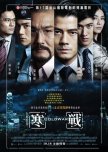
Hong Kong has been producing some cool action thrillers these years. Although most of them have been trying to unsuccessfully outclass Infernal Affairs but they merit great encouragement. Cold War is one of those films.
The directors Leung and Luk didn’t waste much time in building the thrills, ever since the first minute we get a badass explosion then the five cops were kidnapped triggering the beginning of the war. What I highly appreciated about Cold War is showing the ugly relationship between the higher-ups, some real life situations such as the greed for power and the corrupted systems. Rescuing the five officials became a war to both vice commissioners and those surrounding them. But then, a sneaky conspiracy comes to light making you suspect every single character that appears on screen.
However, that doesn’t deny the weaknesses contained in this film. Unfortunately, the film became quite heavy at the middle; pacing problems made some obvious flaws to ignore. It’s mainly related to the suspense part, it didn’t make the film dull but it’s bound to make the viewer impatient to what’s going to happen next. It was a somewhat long phase to ignore it. Moreover, the ending could have been better than that. The way they ended things implies a sequel that may never come. It would’ve been smarter if they cut things cleanly.
The acting department was downright penetrating. The versatile Leung Tony Ka Fai rocked so badly as M.B. Waise Lee, nothing less from such a high-profile Hong Kong actor. On the other hand, Aaron Kwok, who matured so well in recent years, did a marvelous performance as Sean Lau. The bickering scene between Lee and Lau at the first half is an absolute memorable piece. Charlie Yeung, Rahman Lee and the cameo of Andy Lau made this film such a good ground, acting wise.
Considering the fact that this is an action thriller, the action scenes weren’t always that well-made. But the shooting scene at the highway definitely got me; it was probably the best action sequence in the whole film. The cinematography was good enough. However, you have to keep in mind that this was Leung Lok Man and Luk Kim Ching’s debut film as directors and screenwriters. We all know how hard it is to write and direct an action thriller so both of them deserve all the encouragement.
Watch if:
-You’re in the mood for a watchable action-thriller.
-You like politics and higher-ups bickering inside crime thrillers.
-You want to see great performances by Leung Tony Ka Fai and Aaron Kwok.
Do not watch if:
-You’re expecting a great masterpiece.
-You want a flawless action thriller.
Despite its flaws, Cold War is a brave piece of work that’s bound to make you interested. It’s one of those films which make you feel that Hong Kong’s crime thriller genre is still vividly alive.
Was this review helpful to you?

This review may contain spoilers
Too light for a dramaland in general and but Jdrama fan. Please check this one out!
What should I say first?- Story is as thin as a recycled paper but somehow enjoyable to me. ML is really REALLY HOT (not talking about his wooden acting). I like Mook Worranit but she's so stiff on this show. What happened to your wonderful acting skill girl?
- The most interesting character who went from a villain to a cool, low-key comedic character is Mark. He's more well-rounded than FL and ML combined together with his little screen time. Kudos to Foei Patara. Excited to see him playing bisexual character in his next drama.
- I like the song especially when Mook(FL) sings it herself.
- Not bad but not so good, It's in the middle to me. If you enjoy doramas like Coffee And Vanilla or Love Phantom. Give this one a try!
Was this review helpful to you?
Love Destined By Fate
This might be a long-ish review, so bare with me :) for I have a lot to say about this amazing drama. While the leads are well-known and have gained popularity over time, this drama to me still feels underrated in the long term.Story:
The story progressed well in terms of introducing all the characters within the show in the beginning and seeing each of theirs unfold towards the end and how they contributed to the overall story. I really enjoyed the relationship between Myung-hee and Hee-tae and how two were each other's 'love at first sight.' The lessons learned throughout this show is another reason as to why the story is well written and how beautiful this drama is. Myung-hee's persistence and compassionate attitude into helping others really shows how strong of an individual she is. She saw the importance in her family, but the cry for help for others and decided to help those who couldn't help themselves during a time of despair which is why I really loved Myung-hee. Hee-tae risked his life for the one he loved and showed how far love can someone to, his bright personality and strong will is a reason why he deserves 'best boy' <3.
Acting/Cast:
I am so glad they casted Lee Do-hyun and Go Min-si as the leads because of their great acting, you can really see the chemistry between the two and how well it was portrayed in the show. With the other leading and supporting roles such as Lee Sang-yi and Geum Sae-rok, their amazing acting really shines in the roles and we hope to see them star in other dramas. We can't forget about the iconic Kim Won-hae (Kim Hyun-cheol) for taking a role in this drama.
Music:
The OST for this drama was really nice, for a lot of the songs were just vocals and instrumentals.
Overall:
This is amazing melodrama hopefully continues to reserve the hype it deserves. From the beautiful cinematography to the outstanding chemistry between the leads, this drama will leave you with a bunch of emotion; for it definitely did for me. From gushing over the cute romance between the two, to crying over the tragic scenes that left me heartbroken, this drama really left an impact on me. I would highly recommend this drama to someone who's beginning to watch K-dramas, for the length of the drama is perfect and has a well written story overall. This would definitely hit home if you enjoy melodramas. Lastly, I would like to acknowledge the event that took place during this time. I know many friends and family lost loved ones and suffered during this time, with many victims still going missing till this day. Sending all the love towards these families that suffered the most from this event, for you will never be forgotten.
Was this review helpful to you?
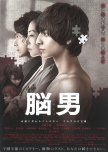
Centered on the battle of each of the characters’ “Sense of Justice”, the film created a very disturbing aura from which people without very strong stance on “what is right or wrong?” might be drawn to the one of the characters’ beliefs. That is how this film had been so persuasively good in delivering the intent of the story.
The story has a lot of potential to become a series since there are a lot of rooms to be explored. However, that doesn't mean that the movie was incomplete. The film per se successfully established the roots of each of the characters stance. Why and how they become like that. The storyline had been well sequenced including how each twist had been placed and the timing of unraveling the mysteries.
Superb acting from the cast can be expected. The feeling of anger, hate, disgust and pity can be thrown to the characters due to the actors’ outstanding convincing performance in delivering consistently the roles they are portraying.
In the end, the movie will leave you the questions “Who is right or wrong?” OR “What is right or wrong?” – questions that will only be answered depending on your personal “Sense of Justice”.
Was this review helpful to you?
This review may contain spoilers
A good coming-of-age reality dating show.
at first i was hesitant to start a dating show but after watching all the episodes I've definitely changed my mind. All the people very super great (except some drama here and there 👀) and talked about their feelings as they ended their teenage years and entered a new beginning. There were definitely many heart fluttering moments which felt like a drama but they were also very natural. i really hope the couples that formed here would have a lasting relationship :)( SPOILER : i NEED heeji and pyeong seok to marry ASAP)
Was this review helpful to you?

ACTING/CAST: They are very handsome guys and they act well.
MUSIC: Didn't pay attention.
REWATCH VALUE: Only if there was more than just a bromance.
OVERALL: If you are looking for a genuine BL story, look elsewhere.
Was this review helpful to you?
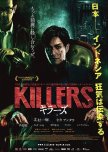
There are no twists to follow in here, the film kept a steady pattern as it unravelled the complicated human emotions between two killers and their surroundings. While it’s not so common for Indonesia and Japan to co-produce a film, I must say that it turned out quite well. The Mo Brothers previously caught my attention through another gory film. I love directors who go through all the trouble of inserting a deep meaningful plot into their gory productions. Although that may affect the brutality of the picture but it’s still way better than a gore for the sake of gore pictures.
Just like it was co-produced by the two countries, Killers’ plotline was divided between Indonesia and Japan. The film took its time to become interesting, it tried to start with a blow but it was unbearably slow until it finally picked interest. Generally speaking, the film has its own pacing problems that are hard to ignore. However, it still succeeded at conveying a meaningful message. The psychological take on serial killers had a deep effect in the main characters’ development. At some point, you would understand the directors’ aim of bringing those conflicts into an open showdown.
The narrative pattern was inserted with short sequences of dark humour that brought me to laughs. I always thought that black comedy was one of the better elements of gore productions. Talking about violence, the amount of bloody killings wasn’t exactly that high and the methods weren’t extremely brutal. I know that most people find this type of gore sick, disturbing and over the top but it’s definitely not, and I am speaking from the point of view of a splatter gore fan. This wasn’t hard-core enough but it was acceptable and enjoyable.
The acting was spot on. Kitamura Kazuki was extremely good as a professional serial killer; his aura and unique vibe made him portray the character in a perfect manner. The Indonesian male lead was also convincing but Kitamura owned the show for me. The characterization was quite deep, it was clear that the screenwriting worked its way to build a controversial relationship between two different types of killers. Their dialogue was one of the most entertaining phases throughout the whole picture.
The cinematography and directing were fine. Nonetheless, I found trouble to cope with the camera-work in the Indonesian part of the story; some shaky camera and close-ups didn’t come out right. Other than that, the whole atmosphere was rather catching.
Watch if:
-You like films about psycho killers.
-You like gory pictures with meaningful plots. Be warned however, this is not hard-core enough.
Do not watch if:
-You dislike gory productions or you can’t handle them.
“Killers” is a deep take about the surreal psychological side of serial killers. It has its own weak points but it was successful at depicting a stylish type of gore in a brutal gripping manner.
Was this review helpful to you?


