

This review may contain spoilers
over-rated drama
Just finished all 40 episodes of this drama and must say that I am surprised to see all of the 10/10 and 9/10 ratings it has received.The drama started off strongly, I really liked the first 15-20 episodes or so. The plot moved along well with a great story line, liked the actors, also some good comedic scenes helped make the first 1/2 of this drama a decent watch.
Then somewhere around episode 25 this drama goes off the rails and just gets worse and worse until the awful ending. The last 15 episodes or so were terrible. Every episode seemed to have a 4-5 minute scene with the male/female leads being all lovey-dovey, sweet-talking each other with the obligatory love song playing in the back-ground. This got tiresome and repetitive. Every character seemed to experience a near death scene and then the other characters help them miraculously pull through. This got tiresome and repetitive. Each episode seemed to have 3 or 4 song interludes, starting to think the producers were either getting royalties or really trying to push the soundtrack. This got tiresome and repetitive. Each time a character died, there would be 7-8 minute montage of flashback scenes with that character, of course, with some song playing in the background. This got repetitive and tiresome as well. In addition, the drama had the worst ending of any C-drama that I have personally watched. It was like the script writers gave up and just wrote some nonsense to get this drama over with.
Gave this drama an overall rating of 2.0 solely based on the 1/2 half of the drama. Re-watch value should be 0 but apparently 1.0 is the minimum value I can assign. It was painful watching this drama once, can't imagine that anyone would go back and re-watch this a second time. This drama won't be showing up on any top 10 best drama lists, but wouldn't be surprised at all to see this drama on a number of top 10 worst drama lists though. Starting to think that the producers must have paid an army of people to give glowing reviews.
Was this review helpful to you?

When Passion meets Peace filled with warmth
Imagine spilling an ice cream we just bought. How heart breaking would it be? And what if a person who put her everthing into her career for years, made sacrifices and finally made it big but due to some unfortunate incident lost everything ? How will that person cope up? will she be able to get back on her feet?The first two episodes were mostly character introductions and their backstories. The sisters trio would be interesting to watch as each one of them have their own story and reputation in their village. YongPil's, though skilled in his profession why does'nt he want to leave his village ? This would be interesting to watch. The next two episodes showes us more of the leads bonding in the past and that they had a misunderstandinf whatever it was, lookinf forward to it
This is a rom-com. Yes, it indeed is!! the first four episode made me laugh my heart out. looking forward to the romance part.
The actors definitely wont let us down. Almost all the cast members are known faces in the industry .JCW and SHS combination is fresh and interesting. I havent seen such loud and choatic leads like them before. I am so glad to watch JCW in a light heart romcom again. Loved the OST- Short hair by our DK- His voice is so sweet and refreshing, perfectly fits the Jeju vibe.
Was this review helpful to you?
This review may contain spoilers
An edgy black comedy that ended up with pink frills
The initial setup of this show is hardly original. Nasty, cold hearted boss making all his employees’ life miserable. His worst victim is his parade of secretaries whom never lasted more than 3 months before they are driven to despair. That is until the FL arrived at the scene and managed to stick it out for 1 whole year. In that sense, it was almost like a Shakespearean play of revenge where a conga line of people all wanted to harm the ML either for real or at least play out some fantasy to get redress for past wrongs.What happened next is dark, zany and over the top, but it worked because it was done with a lot of manic energy and running at break-neck speed. You just don’t have time to ask questions. It was a wild ride to say the least. However, that ride did not last. Around the halfway mark, the pacing and tone of the show began to shift. It coasted for a bit as it shifts gear and recalibrates. By the end of the show, it is a completely different beast. This may be a good thing for some viewers, but it can be problematic as well. If you start watching this show because of the leads, then there is no issue at all. They have great chemistry plus a nice amount of passionate skinship. However, if you stumbled onto this show and was hooked by the crazy, fast paced story then how it morphed into a fluffy romance might leave you scratching your head. On the other hand, if you were put off by the dark whimsical plot and dropped the show then you would have missed the swoon worthy love line that blossomed later on. It is a weird juxtaposition of genres but you have to give the writer-nim credit for trying something different.
Now, back to the main revenge theme that is the backbone of this show. It is ever present and drove a lot of the plots forward. However, it is a double-edged sword. It worked in the subplots and there were many of them. From silly voodoo doll action to inflicting serious bodily harm, just about anything goes. Nevertheless, I thought the overarching central plot is weak and out of proportion when the full reveal happened towards the end of the show. The Show would have us believe that the main antagonist was a mastermind that plotted his revenge for years and has many resources at his disposal that he can manipulate public opinion and pay for others to do his dirty deeds. Yet he blames the ML for ruining his life?! In all honesty, I don’t buy that. The antagonist is living well, and he certainly doesn't seemed to be hung up about his reputation so why play such a long game and devote so much energy to it. It is not as if it is a family feud or the cliche “you killed my father!” storyline. It did make the grand reveal somewhat lame. The ML certainly didn't understand the motivation and neither did I.
Acting is great from the leads. They demonstrated a wide range of skills especially the ML, he raced through several different personalities during the show so kudos to him. The FL was also very good and she is tough but deep down is a sweet and caring soul. The support casts were solid but the writer-nim gave them exaggerated roles so overacting is the norm. They all earned their keeps. SFL was no wall flower even though she is beautiful and I confess to having a bit of second lead syndrome.
To complete the transformation of the show, the final episode is total fan service. It was the most leisurely strode down Closure Lane I have seen for a long time. The writer-nim lovingly closed all the threads and ticked them off her list. Not that I'm complaining because it was so nice and sweet. She paid attention to minor subplots that would have been forgotten by most shows. It was sugar overload but if you ship the OTP then it would just be the icing on the cake. Speaking of OTP, the 2OTP is cute and sweet too and provided some early distraction from the endless revenge action.
To be honest, if it started as a rom-com with just the boss/secretary plot, it probably would have faded badly because the love line is fairly standard. It is the crazy momentum of the first half that carried it over the line.
OST is nice and easy on the ears. Rewatch is there depending on whether you like sugar or spice. ;)
Was this review helpful to you?
This review may contain spoilers
This drama is just a masterpiece. I am not the kind of person that watches this kind of dramas, but I also think that if they're well done they are masterpiece.
14 days was that kind of drama that it is just not your cup of tea but you see it because it is just addictive.
Also, see it while airing had its contro (since there are a LOT of things that happen, sometimes I couldn't remember things that happened last week) and also its pro (I am able to say it was worth watching, I had all the time to find my opinion about it).
Let's go in points.
1) Story
The plot is just perfect. Not that perfect wich means "happiness" but that perfect that makes you watch the drama.
Every character is different, everyone (from Saetbyul to the policeman) has his own way to think and act.
The team up between Dong Chan and Soo Hyun makes you see how they are able to work togheter.
14 days is FULL of plot twists, it is not predictable at all, at the end of every episode you make considerations, but in the next the situation is completely different and new.
I loved how they were able to make me think a lot about the mistery and the reason of what was happening, and then they bring up something out of nowhere but not unrealistic. Everything was believable.
The episodes go on in a rush, but not a bad rush, it is only that characters don't lose time while searching to find the truth.
Really, the story never gets you annoyed. It never makes you want to turn off the tv.
2) Actors/ Acting
I have to say I used to like Lee Bo Young when she made IHYV. I thought she was a good actress.
Maybe because I only saw her in IHYV and Becoming a Milionaire I saw her like a just 'normal' actress. But I was wrong.
She is a VERY GOOD actress. When you see her in this drama, you know she can do every personality. She was able to bring me to tears with her acting.
The pain that you can see in her eyes when her character is facing the lost of her child seems so real.
Cho Seung Woo made a perfect job too. His personality was very clear, you were able to trust in him unlike other characters.
The kid was good. Maybe sometimes a little bit to 'un'clever, but well, she's just 9 yo.
Everyone acted well, I have nothing to complain.
Well, I have to say even Baro move me to tears. His character was so pitiful.
3)Music
The music suits perfectly the drama. There were few songs and a lot of instrumentals.
Since you're listening the dialogues and watching the scenes you don't listen to the music, but it leaves something anyway.
4)The ending.
I am not making spoilers but I am only saying if I liked it or not.
I'm am doing this only because there are people that watch dramas only if the ending is in a certain way :)
So, if you don't want to know ANYTHING about the end (I am just saying how it seemed to me), DON'T read.
The ending was something 'shocking' for a LOT of people.
Was BAD for a lot of people. Was GOOD for others
It is a kind of end that makes you understand something and makes you wonder a lot.
It isn't nor good nor bad.
I liked it. It was in the drama style.
Some people might say they rushed everything: NO, the didn't. It was only the way EVERY episode went from the first minute in the first ep.
Every episode is the same, speaking of rushing times.
Someone might say it is a bad ending only because they wanted to see some characters again. But that characters weren't able to do anything for the kid and DC's brother anymore.
In this drama, when someone leaves the scenes is because his part is over.
Some people might be sure that something bad happened.
I don't think something bad happened, otherwise they would make us see the thing happening.
The ending is a little bit misterious, the last lines are the key for understanding the end.
There's something missing, but they WANTED to insert that words. They WANTED something to be missing.
It's not that they didn't have time, or they were in a rush or anything.
That end is good if you pay attention.
5) Overall: A masterpiece.
Was this review helpful to you?

a travel ad with very explicit scenes (watch suggestions)
Overall: this had very slow pacing and then some of the most explicit NSFW scenes that I have ever seen from Thailand. Note that this has nothing to do with the Taiwanese BL Kiseki Dear To Me and Love in Shimane aired in 2025. Aired on Viu (need to VPN to Thailand) and GagaOOLala. Later re-aired on 9NAA's YouTube channel (cut free to watch, uncut for channel members). The production company 9NAA also made: Venus In The Sky, Check Out, Skinship and I Am Your King.Watch Suggestions (unless you like a lot of eating, drinking, taking pictures and singing/guitar playing)
- read the synopsis
- skip episode 1
- episode 2 watch 8-12, 16-24, 28-31 and 33:30 to the end
- episode 3 watch 19-25, 40:25-45:40, 50 minutes to the end
- skip episode 4 (unless you want to learn about Japanese bathhouses which is in the 2nd half)
- episode 5 watch 22-24:30 (very NSFW) and 27:50-31 (very NSFW)
- episode 6 watch 22-24 and 27-30:30, could also watch the last few minutes
What I Liked
- centered on 4 characters with an easy to understand premise
- twins as lead characters
- the scene where a character splashed water on his face and pretended to be happy/smile
- the actors did a good job with their explicit scenes, they used some tongue which was realistic
Room For Improvement
- slow pacing, a lot of time spent hugging trees, singing, drinking, eating and taking pictures
- an actor said that they were totally naked in their NSFW scenes which made me worry about how comfortable they were (and apparently the director said he'd go naked to make them comfortable but that sounded more like a threat than being helpful), however, we saw a cord around 1 actor's waist, I'd rather they let the actors wear underwear and use creative angles/shots because the viewer's imagination could fill in the rest; update, the cord might be something religious (let me know if anyone knows more about this)
- wanted them to move from the stairs to a bedroom and I wanted to know what the character was going to say
- toilet humor/scenes
- in episode 3 I wish they hadn't shown a character as extremely drunk before what happened
- they didn't take out the chapter 2 from the title when chapter 1 might never air or if it does it would air after chapter 2
Was this review helpful to you?

This review may contain spoilers
Tedious
After not enjoying SITR (unlike everyone else in the world, apparently), I should have known better than to waste my time on this drama, considering it's the same writer, director, and main actor.I'll start with the good - there was nothing wrong with the acting, everyone played their part well, I enjoyed the interactions between the sisters, but I think that's as far as I can take the compliments.
STORY: Oh my gosh, there were so many unlikable characters! The ex-boyfriend, both sets of parents and yes, the female lead. Female lead - I think she was supposed to be this outspoken woman, but apparently that only came out with the male lead. With him she was bossy, demanding, cranky and immature ("It must be nice to be able to eat, you must not be bothered by this at all.") She spent almost EVERY episode meeting up with the nightmare of an ex-boyfriend. She was a weakling where he was concerned, even though she knew she didn't love him. Was she trying to be nice? I couldn't quite get it. The ex-boyfriend trying to get her to marry him went on until the next to the last episode. He was just creepy. Give it a rest! Seriously, she should have gotten a restraining order or something. And then there were the parents - I know that it's important to respect your elders, but when your elders don't have any respect for you and won't listen when you say you don't want to marry someone, there's something wrong. Each episode seemed to be just a rehash of the previous one. Should she pursue this new relationship? Should she give the ex another try? The male lead was smitten with the female lead because she came in for hangover medicine? Why these two liked each other was never made clear. Almost all of the conversations revolved around how they were going to manage, because everyone was against them. I realize that Korean mores are different than American, but they made the male lead out to be a terrible person because he had a son. Then when the female lead APOLOGIZED to her mother because she was involved with a man with a child, that really irritated me.
CHEMISTRY: Kisses. I didn't feel chemistry between the leads at all. There were a couple of technically good kisses, but again, I didn't sense chemistry.
COSTUMES: She was a librarian. Was it absolutely necessary to make her dress in such a dowdy way? The clothes and shoes she wore made her look so much older than she was.
OST: Three-four songs on repeat throughout the whole drama. The songs were in English for no discernible reason and they were very distracting.
REWATCH VALUE: Not on a dare!
Was this review helpful to you?

3 Epic Stories in 1!
Review Part 1 out of 3 = Beside the SkyFinally, after waiting 16 long months for Season 2, Fourever You Part 1/3 shattered me in the best way possible. This first story didn’t just meet expectations, it blew straight past them.
I already loved Bever as Tonfah and Tonliew as Typhoon from Season 1, even with their limited screen time. Season 2 finally gives them the space they deserve, and the emotional payoff is devastating. Every scene hits harder because we can now fully feel the depth of their pain, history, and connection.
What I thought would be a soft, cute story quickly turns into something deeply heartbreaking. Typhoon’s trauma is painful to watch. His fear of the dark, the loss of his sister when he was already an adult, and the cruelty of a family that blames him instead of comforting him is hard to witness. Being forced to grieve alone leaves scars that never fade, and the series does not sugarcoat that. Typhoon’s loneliness feels absolutely suffocating.
Years later, his reunion with Tonfah, the neighbor who once protected him, feels like a fragile lifeline. Tonfah is clearly the light Typhoon desperately needs. Someone who can sit with his pain, understand it, and slowly help him breathe again. Their bond feels raw, tender, and earned, never rushed or forced.
And can we talk about how they are one of the most green flag couples I’ve seen in BL? Their relationship is so cute, natural, and genuinely sweet. Every glance and every quiet moment between them carries warmth and meaning.
I also loved Typhoon’s group of friends. They are genuinely supportive, warm, and protective in a way that makes his world feel a little less lonely. I also really appreciate how seamlessly this season blends with Season 1. Seeing familiar faces like Johan and North and Hill and Earth again felt like a gift and honestly made me so happy. It reminded me why I fell in love with this universe in the first place.
The acting across the board is outstanding, filled with quiet anguish and unspoken emotion. The music amplifies every heartbreak, and the chemistry makes every touch and every look feel loaded with meaning. This series doesn’t just tell a story, it makes you feel it.
Emotionally devastating and beautifully told, Fourever You Season 2 Part 1/3 earns a powerful 10 out of 10 from me. 💔✨
Review Part 2 out of 3 = The Sun from Another Star
After watching Hill and Ter, Johan and North from season 1, and recently Tonfah and Phoon from season 2, the second couple of season 2, Arthit and Dao, already feel very different from the others.
Arthit is hot, chaotic, and has such a funny personality. He always feels like the highlight of the group and brings a lot of energy to every scene. On the other hand, Dao is quiet and gentle, but he has the unusual ability to see and speak with spirits. This immediately makes their story stand out because after more than 24 episodes in this universe, this is the first time we get a supernatural element with ghosts and spirits.
Their dynamic already feels interesting because they are such opposites. Arthit is loud, bold, and playful, while Dao is calm and mysterious. Opposites really do attract here, and I am very curious to see how Dao slowly starts to fall for Arthit.
The story still keeps the familiar university setting that fans love, but the supernatural twist makes it feel fresh and different. After just two episodes, this couple already feels fun and unique.
For me it is easily a 9.5 out of 10 so far and I am excited to see where their story goes next.
Review Part 3 out of 3 = Lately, Its Winter Season
The final part of Fourever did not disappoint. Across almost 40 episodes over both seasons, the story wrapped up in such a cute and satisfying way. Set in a high school setting with a friends to lovers storyline, the series balances light romance, family drama, and emotional moments really well. Pie as Tiger and Golf as Nao are adorable together, and their chemistry had me hooked from the very beginning.
Tiger, the lonely youngest son of a powerful and wealthy family, first meets Nao during football tryouts. While Tiger grows up surrounded by arguments and pressure, Nao comes from a poor but loving family that always feels warm and welcoming. I really liked how the drama showed that money cannot buy happiness. Tiger would rather spend his time relaxing with Nao on a small couch than stay alone in his giant mansion, and those moments made their relationship feel genuine and comforting.
How ironic that in one family, the older brother is completely oblivious, while in the other, the younger brother is the one who cannot see what is right in front of him.
Singha has had Ben by his side for years. A loyal bodyguard, a constant shadow, a man who has quietly loved him for more than a decade. Yet Singha remains utterly clueless, never realizing that Ben's devotion runs far deeper than duty.
Then there is Tiger, who has spent more than six years loving Nao. And somehow, Nao is just as hopelessly unaware. The funny part is that everyone else can see it. North, clumsy as he is, took one look across a soccer field and immediately understood Tiger's feelings. Nao's own twin brother knows. Practically the entire world seems to know except Nao himself.
So we end up with this amusing parallel: in the mafia family, the older brother is the oblivious one, while in the other family, the younger brother is equally blind to the truth. Two different stories reflecting each other in the most chaotic way.
The only part that feels a little hard to believe is how quickly someone who has always considered himself straight suddenly starts trying to navigate feelings for his best friend after a confession. For years, girls were the ones he noticed, the ones he thought were cute. Then his best friend confesses, and now he is genuinely considering dating him. It is a dramatic shift, though feelings and self-discovery can sometimes be far more complicated than people expect.
Still, that is part of what makes the story entertaining. Between Singha being oblivious to Ben's decade-long love and Nao somehow missing six years of Tiger's devotion, this felt like a double episode built entirely on beautiful, ridiculous cluelessness.
The slow burn romance was done so well, making every small interaction between them feel meaningful. Along with the school setting, athlete male lead storyline, flashbacks to the past, and touches of mafia family drama, the series still keeps a fun and soft atmosphere without becoming too heavy.
Overall, this is a cute and entertaining BL that is easy to watch and enjoy. The romance feels natural, the emotional moments hit well, and Tiger and Nao completely carried the series for me. Definitely one of the more enjoyable light BLs
Was this review helpful to you?

Here are the reasons:
1. Story- the storyline here is superb. I think they really put an effort into making it. I feel that there is no filler here(maybe a little bit of flashback here and there). The story doesn't just make one character shine but all of them.. Every episodes are amazing. So if you think of skipping some episodes please don't you will regret it..
2. Acting cast- The actors here portray their role very well. Even the side characters, supporting characters, antagonist up to the main cast. One of the reason i watch it is because of the handsome actors and pretty actresses. Also, love the couples here.. not just for the main couple but also the supporting couples..
3. music- i feel that they only use 1 music here(the opening song) through the whole 46 episodes. even in scenes for action and sad scenes.. but i don't know why the opening song still fits on the scene.. maybe because i am just hook into watching it hehehe..
4.The Ending- i think most people will see it as a happy ending.. But some will see it as a sad ending if you are into romance because the male lead doesn't end up with anyone here.. You know the typical chinese drama.. If you are not into death don't watch it because this drama has a lot of it. I am not a fan of death too but i think those deaths are required to make it more exciting..
Overall... it is a must see drama that worth spending your time in the 46 episodes.
Was this review helpful to you?

This review may contain spoilers
Healthy relationship, pure bliss, no hair pulling drama of the year.
Road Home is a second chance at love drama, it is mainly felt with intense chemistry between the two leads, There isn't much action initially, but it does get intense later on.Personally, this drama was exciting to watch, however, there are moments where the scriptwriting felt off. It would seem like there should be more to say but it was just an awkward silence. However, give it a chance because Lu Chen played by Jing Boran is a man of very few words.
As aforementioned, Lu Chen is your typical cool, handsome, popular, man of few words character. Like legitimate few words where Gui Xiao (Seven Tan) said he should speak more. LOL I guess you can say he's more reserved than outgoing. However, he's very emotional towards Gui Xiao and cherishes her even though they had broken up before the series began. His family background is not the best, as his mother divorced his abusive, alcoholic father once before. LC works as a police officer who is constantly away on missions, hence this has tarnished his relationship with Gui Xiao. As the drama begins, they begin to build their relationship with a more mature mindset. Acting-wise, this is my first drama of Jing Bo Ran, and I have heard of him a couple of times - I think he acts pretty okay. Comparing his real personality to the character, I think he did pretty well in portraying a reserved but strong commanding officer. Did I mention how hot he is? LOL
Gui Xiao played by Seven Tan, is a very strong, independent woman. She is no damsel in distress as she has said once before that she can live her life without Lu Chen. However, she will fight for her love no matter how difficult their situation is. Lu Chen is constantly on missions, so their relationship is somewhat like a long-distance type, he does come home though and it gets very cute. I think what makes their relationship so special compared to other dramas is how healthy it is. It teaches us that communication is very important in a relationship and understanding, and being mindful keeps the relationship going. Her family background is somewhat unfortunate as well because her parents divorced (not officially until the series began.)
Seven Tan is one of my favorite actresses, I will be honest this drama did not showcase her full capabilities - it seems a little off at times due to the script. Her acting will always be impeccable, however, I wish the script was a bit more smooth I suppose. It's a little inexplicable.
I feel like this drama would deter others because it doesn't have much "drama" or excitement like your typical Asian drama does. It feels more like a slice-of-life genre, focused on rebuilding a relationship and a proper family. However, I would suggest giving it a try. It depicts healthy relationships, and confidence and I think it's what people need if they don't know what a healthy relationship is supposed to be like.
Is there a third wheel? There was one who tried but to no avail. haha
The side characters were wonderful, GX and LC have amazing friends, basically like sisters and brothers, who support their relationship all the way. Giving wonderful advice when they need it.
I had watched a drama similar to this where the kid is extremely annoying, and the male lead became very difficult to watch so I had to drop it. Whereas in Road Home, the kid is tolerable and the male lead respects the female's boundaries.
The ending was satisfying as they finally held a wedding, and the final episode is just flashbacks.
The cinematography, and scenery of this drama were very beautiful, it makes me want to travel to the location someday.
I would recommend this drama if you just want to chill, not pull your hair out and enjoy a cute, slice-of-life, fluffy, romantic drama. Also if you don't mind a reserved, quiet male lead then definitely give it a go. It has several flashbacks to their high school days as well, and it is fun to see how it all began. The final episode shows us how they started to have feelings for one another, of course, they did explain what their past relationship was like throughout the drama, not just at the end.
Was this review helpful to you?
This review may contain spoilers
Blueming Rebooted
Interoception is the sensory system that helps us assess internal feelings. And increasingly, it's being recognized as the 8th sense along with sight, sound, smell, taste, touch, balance and movement in space (vestibular sense) and body position and sensations in the muscles and joints (proprioceptive sense) .Word to the wise: do not watch the super hyped show just after they'd finished airing! All those rave reviews will have you expect an extraordinary watch and you risk to be disappointed because while looking for the brilliance, all you'll notice will be the flaws!
And this drama has a loadfull of flaws. Unfortunately!
I started watching it yesterday but before that, I checked the reviews without reading them : I only looked at the rates and it was scary! Out of 71 reviews that had been published until yesterday, only two had rates below 9.5 (8 & 8.5 to be exact!). So of course I expected to have my mind blown away. Well did but not the way I expected !
The plot is standard trope filled university bl romance: two guys meet, click, get together, split up because of a misunderstanding, there is the obligatory mean ex, suffer for an episode then get together and we have an episode full of fluff! THE END I have to give it to them though, they went a bit deeper with mental health issues and the consequences thereof but still...
While I was watching the first few episodes, there was a nagging feeling in the back of my head of déjà vu but I only realized why towards the ending: everything about the aesthetics here screams of Bleuming: same dulled colours (everything is in shades of blue and grey), silhouettes, shadows and a lot of night shots! The only colour you see is in the opening credits which I found rather original (though again, the first design image which is supposed to be a wave looks more like a snake!EDIT It is actually a sign for infinity...). Coupled with some iffy editing, and I had to check if I was not watching the wrong drama! It was pretty but depressing....
The music did not help the mood: it was totally discordant (wrong notes played apparently) and uncomfortable. They were probably going for such impression on viewers so that was a success. The music got better and smoother as the drama progresses, ending the episode 9 with a great song by Conan Grey "The Story". The ending of that episode was perfect so imagine my surprise and confusion when I discovered there was another episode, which turned to be completely useless and totally unrealistic fluff! They pulled the same stunt in Bed Friend ruining a perfectly good angst filled story.
Another thing that was wrong with this drama is that it reminded of of a lot of korean webcomics. I do not think it was based on one though, but all the characters come straight out of a shounen ai manhwa! Starting with the main couple (both actors are excellent) but their pairing and chemistry did not convince me: one is rich manly "top" and the other one is poor slightly build "bottom" eventually putting his head on the other one's shoulder and practically purring and all I could see are so many comics with such a scene. I actually did not like them dumbing down Ji Hyun after they finally started dating but, on the other hand, doesn't that usually happens to FL as soon as they fall in love they become incompetent to string two words together? Both actors were relatively at ease with each other but they sorely lacked chemistry. There were some interesting dreamy sequences of the main couple just walking side by side....Beautiful! The whole escapade to the seaside, playing in the sea was breathtaking as well. On the other hand both characters were good guy to a fault, never a wrong or mean word to anyone: always kind and polite. At one point Jae Won's "best friend" eaten by jealousy and envy, does everything in his power to ruin his life over a stupid incident! Guess what: he is forgiven, no hard feelings! Those two are just too good to be true! I guess I am just an incurable cynic, I do not believe in the fundamental goodness in everyone! I know I am not so...
What puts this BL a cut above the other korean ones, is the natural skinship between the leads. Just like in Blueming! But very seldom seen in KBLs...
The one serious issue they tried depicting are the long term effects of PTSD Jae Won suffers from. It was interesting to see his sessions with his psychiatrist, though the first time we see her in ep1: I found her rather weird. But then, a few episodes later she was talking about not knowing whether to go to her suicidal patients funerals or not. That's when my alarm bells rang! Is that really important? How about asking yourself why you did not manage to stop your patients from committing suicide? The general advice is: if you are feeling down(sad, depressed, suicidal!), talk to a professional. And I know even a professional cannot save everyone, it is sad but true. But shouldn't that incite them to question their methods and try to learn from that case in order to know better the next time they come upon a similar case? The way Jae Won deals with his feeling and his trauma is THE eighth sense!
The cast of secondary characters were a mixed lot, mostly awful people starting with the two MC's best friends who have no filter or boundaries and NEVER accept no for an answer. And of course there was the usual bitchy and mean ex who, of course again, tried her damnedest to ruin her ex's new relationship. Fortunately, Ji Hyun would not take any of her nonsense seriously which is never the case in dramas so it was refreshing to see it here! These three useless and awful characters got too much screen time (well they needed to fill up 10x40min episodes!!!). The whole drama and this group of students looked very much as if it came out of one of Playlist Global's web drama: the acting was on the same unconvincing level!
And of course the ending is pure cringeworthy fluff where everyone is forgiven and they all ride into the sunset and live happily ever after! Bah hambug!😉 written by Mr Scrooge
Was this review helpful to you?

At times, the storyline was solid to fair, but eventually, the story got caught up in its own premise (conquering 10 women) that it left very little room for any personal growth on the part of its female lead and severely understated the role of the other lead male. In fact, the story focused much more on the growth of one of the supporting roles than any emotional investment in other characters.
Furthermore, the story focused so much on the typical birth secret tropes that it lost a lot of its early humor. The story was at its best when Bo Tong and David did funny things, not when 95% of the episode dealt with the MG Group's machinations.
That being said, I feel the story limited its actors in a way. As this was Jang Geun Suk's comeback role, the character of Dokgo Ma Te seemed awfully similar to his previous roles, in particular that of Hwang Tae Kyung. This drama did nothing with JGS' acting that I hadn't already seen from him. IU, on the other hand, had a very vivacious character early on, but the story kept her rather one-note toward the end. The only decent performance was Lee Jang Woo's David Choi, which at least had me feeling for him and who was as beautiful inside as he was outside.
The only song from the drama which I remember off-hand was David's song. The rest of the OST didn't really resonate with me and seemed much more like surface music rather than fused with the storyline.
I will rewatch this only for David; really, I'm not even sure if I can rewatch it. In that regard, Bel Ami was just a surface drama; it's not memorable or great. It's really just botong.
Was this review helpful to you?

The story seemed fresh in spite of the cliche noona romance plot. Its characters are funny, full of life and likable. The main reason to enjoy this drama is the character of Joo Wan played by Sung Joon. He literally stole the spotlight from every single person in this drama. The cute, adorable love-stricken dongsaeng role suited him well. It came off as a surprise to me because Sung Joon is one of those actors who appear to be 'tough guys' judging by his physique and looks. After watching this drama, I am sure every one would want a Joo Wan in their lives.
Apart from that, I liked the fact that the main female Joo Yeon was an insensitive person instead of the usual weak female. There were times it feel like she was so selfish that it made her seem cruel. Although it became hard and tiring to watch later on due to the character's repetitiveness, she somehow redeemed herself in the end.
The main love story is strong enough to hold you on till the end. Had it been resolved earlier, I would have lost interest. The beginning and the ending episodes were better than the middle. The middle was just a bore and difficult to get through. There were times when I wanted Wan to stop pining after the girl and move on and yet I couldn't help but root for him and Joo Yeon. I almost wanted them to be together as badly as him. :)
The two side stories and also cute and romantic. Lee Min Jung and her neighbour's affair was hilarious. They were a good comic relief when the main story got boring. I liked the role Yoon Seung Ah played in this drama. Her story with the guy (who reminded me of Kdrama second leads) was nice. It had its boring moments too but overall with the other two romances, the whole plot was kept together nicely.
This drama has to be one of the very few among romcoms which has a nice and fulfilling ending. Maybe it could have been better too, but it was pretty much okay for me. It wrapped up everything and there was nothing messy at the end of it all.
I would definitely recommend this drama to those who are looking for something cute and different to watch.
Was this review helpful to you?

A Rare Gem of 2021. Highly recommended!!
I watched this drama without having high hopes and much expectations because I wasn't familiar with the casts. When I watched the trailer, it was something unique and ML is blind and so handsome. So, I decided to check it out. Trust me, it doesn't disappoint me at all. Since Ep 1, I was completely hooked into this drama and super active in the comment section of MDL.This drama really got me.
THE STORY: It was so simple, but attractive romance. Since it has only 24 eps, it was perfect for binge watch. The story does not drag or rush in every way. It was absolutely fascinating and beautiful. I was not bored even one second while watching this drama.
THE CAST/ACTING:
All the casts did very well. Kudos to Our Male Lead, Lin Yanjun. He was the one who carried the whole drama with his incredible acting skills. You won't believe this drama is actually his first acting debut work. He can really act. Lin Yanjun rocks as Su Nian Qin so perfectly. His gestures and movements are all perfect and convincing as a blind person.
Wan Peng also did well as Sang Wu Yan.
Their acting seems really natural, nothing was out of place and I could feel the emotions they tried to show with their acting.
CHARACTERS:
Su Nian Qin - He is a visually impaired person. He is not completely blind. He can see blurred things within 3 feet. He works as a song-writer with the name "Yi Jin". He actually comes from a rich family. He is unpredictable, lonely and sensitive person. He has insecurities and hurts.I love him so much.
Sang Wu Yan - She is bright, friendly and curious person which dreams of becoming a radio host. She studied psychology at the University.
THE CHEMISTRY:
Lin Yanjun and Wan Peng.. their chemistry is off the charts. I'm amazed by their genuine and excellent acting and chemistry.
MUSIC:
The first thing that I felt in love with was the music. I am not a person who is much interested about a OST but I seriously loved all the songs. It was amazing! My favorite OST is Yuan Lai Wo Hen Ai Ni (I love you very much) by Lin Yanjun.
REWATCH VALUE :
I am sure I will re-watch it many times. I could see myself rewatching at least 2 times a year from now on.
OVERALL :
In conclusion, this drama is everything I need in a modern romance drama. It was fun, interesting, enjoyable with a few cliched moments. I truly invested in it emotionally.
So you can say that this drama is definitely worth a watch! Highly recommended!
Was this review helpful to you?
This review may contain spoilers
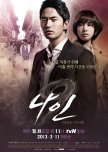
During the holiday weekend, I finally threw off my initial apprehensions and sat down with this drama. If I'm honest I expected to drop it after a few episodes. Despite the countless positive comments about Nine, I'm a long-term science fiction fan who has developed an unhappy wariness of the time travel plot device. How many times has it been used, especially in the west? And then even the best examples have glaring mistakes, including plot holes, missed details, bad science or ignored in-universe rules, etc. So imagine my elation when Nine skyrocketed beyond expectations and glued me to my seat for a two-night marathon.What makes Nine special is that it is careful with detail while maintaining a thrilling and unpredictable atmosphere. Apart from two instances, the first easily forgotten and the second clearly meant to be ambiguous, the drama unravels its mysteries with beautiful pace. With so much to explain, I almost expected loose ends; but every time I found myself questioning, I got a satisfying answer soon after. It's hard to go into much detail for fear of spoilers, but overall the writing is refreshingly strong and the usual mistakes of the genre are not present here. My only real issue in this department is that the first few episodes are somewhat slow to hook, despite being filmed in beautiful locations in Nepal and being integral to plot set up.
The best performance in Nine is hands down lead Lee Jin Wook. Without his natural charisma, Sun Woo might have collapsed into the arena of the two-dimensional. His performance hits every note and reaches ranges that include the sympathetic to the strong and sexy. He had me believing--which is everything you could want from an actor. I also spent a great deal of time marveling at how well everyone was cast in general though, especially when characters from the present started appearing in the sequences of the past. They'll have you swearing the casting department had a time machine of their own and just used younger versions of the leads!
Unfortunately, the weakest part of this drama is most definitely the music. Sometimes it's completely melodramatic and might remind older viewers of something straight out of the Twilight Zone. Most of the time, especially with the case of the insert vocal tracks, the songs are just not memorable. It's a shame, but I think with so much good going on elsewhere the OST can be forgiven.
Nine comes highly recommended, especially if you're looking for time travel done right. This is a drama which has a fast pace and mature, dark tone...so it's also perfect as high class palate cleanser after a long romantic comedy stint.
Was this review helpful to you?
Story:
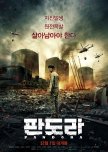
As I've already have mentioned it probably won't be new to some of you as similar themes have been done before maybe not a Korean movie but it's still not “brand new”. However the way it was delivered, the emotional journey you go through while watching it makes it one of the most quality story lines for such types of movies I've seen thus far. I did not expect to get all emotional while watching this, I can assure of that, but things just don't always turn out they way you expect them to do.
Pandora story is told in a way that would get you attached to the characters very fast!! This is just beyond wonderful because normally it takes a whole drama with 16 ep+ for me to get attached to the characters (that is if I get attached at all). Somehow in Pandora, you can relate to the characters and feel them, which is what makes it a very emotional ride without being a tearjerker or tire you down with emotional scenes on purpose. In fact, this is what I loved about the plot, it not trying to be over the top or play the emotion game. The writer has managed to keep things in tact without draining you with all the tragic events. Pandora story pretty much mastered the love, friendship, loyalty, sacrifice, neighbors, heroic acts, dirty politicians... all in one plot which is over 2 hours without tiring me.
Acting:
Kim Nam Gil: He is the main reason why I decided to go all the way to the cinema in the cold harsh winter and watch this movie, which didn't appeal to me at first. If you are reading this review and have never seen anything for this man I earnestly ask you to pls hunt his profile down and WATCH HIM! Simply because there are no words that could be said, enough to compliment this amazing actor. He has yet again embraced me with his impressive beyond words performance but this time with a Jeolla Satturi accent! This is my first time watching him preform this accent and he's one of the best K-actors who perfectly mastered it to the point that I had to remind myself that it is truly KNG! His performance didn't just move me, it moved the whole audience in the theater, and the whole hall was crying in tears and crying in heart. Amazing heartfelt sincerity that broke my heart into pieces.
Jeong Jin Yeong: This man owned the first half of the movie! I've had the pleasure of seeing this actor before but I was even more delighted to see him here because what he showed me here is on a whole different level. He is my favorite character from start to end, loved Pyeong Seob with all my heart! Such a courageous, righteous, wonderful character played by this wonderful mister.
Han Joo Hyun: What a wonderful surprise! I've seen this girl twice but never like in Pandora. This movie has to be her breakthrough! When I was watching her I couldn't resist falling for her, her character is my 2nd favorite but how Joo Hyun played it is just too precious. The whole time I was so impressed I couldn't avoid my girl-crush. She stood her ground as a new talent among these giant actors! Bravo!
As for the rest of the cast I honestly loved them all, Kim Myung Min, Lee Kyeong Yeong, Kim Young-Ae what a stellar cast!
Re-watch
I don't really re-watch things (except for few exceptions), and in my opinion even for those who do re-watch I don't think it's the type of movie that you'd want re-watch.
Overall
**Although I would love to say this is a movie for everyone, but it would be wiser to say that it's a movie for those who don't mind bloody scenes. The story isn't aggressive but "nuclear power plant" is involved so scenes of injuries are bound to happen, just a warning ahead for those who hate the sight of blood.
Compelling emotional story, high quality direction and production, and finally stellar cast. I’d love to state all the points I loved about it but I tried not to give anything away so I will conclude my review in one sentence, “try not to miss Panodra” :)
Was this review helpful to you?


