

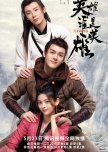
Beware: Sexual Assaults Uncut
Yes, this drama consists of some sexual assault scenes of one of the main characters, and viewers be warned to decide if you want to pursue this story or not. It's very rare to have a Chinese costume drama that has the women being violated. Nonetheless, aside from those rather upsetting scenes, the overall drama is consistent with how wuxia dramas generally play out: adventure packed, revenge, pride, justice, brotherhood, friendship, self-sacrifice etc.Wang Xiaoshi (Zeng Shun Xi aka Joseph Zeng) leaves the mountains where he lives, and begins his journey of exploring the world. He meets Wen Rou (Yang Chaoyue) and Bai Choufei (Liu Yuning) and they become best friends and travel together. Wang Xiaoshi is upstanding, easy going, truthful, kind, positive and always sees the best in another person, whereas Bai Choufei is ambitious, ambiguous, cruel and has a shade of darkness around him. As Wang Xiaoshi just wants to see the world, Bai Choufei wants to make a name for himself. Just as they are going from places to places, they unwittingly embroil in the politics of “jiangfu” and meet Su Mengzhen (Chen Chuhe aka Baron Chen) who is the leader of the House of Sunset Drizzle, a powerful upstanding organization helping jiangfu by bringing justice to the poor and weak. Su Mengzhen is sickly and he needs talents to help him. The three men become sworn brothers and vow to stand by each other. However, as the story unfolds, Bai Choufei becomes dissatisfied to come under Su Mengzhen and he strays; he wants to be the number one.
I really like Joseph Zeng. He has an irresistible charisma that attracts viewers. As Wang Xiaoshi, he has really brought alive the character as a positive and unsuspecting personality, and later becomes mature and solemn. His transformation is great and Joseph Zeng has successfully executed the role convincingly. He is a wonderful actor.
Liu Yuning’s acting is equally amazing, from a cold, rather selfish character, to a half crazy, power-crazed lunatic, Liu Yuning has had a great performance. Every snicker he makes sends chills down my spine, that’s how good he is.
Chen Chuhe’s Su Mengzhen is painful to watch. Every time he coughs, my heart goes out to him. Despite being sickly all the time, his character is strong and amazing to watch when he fights. The acting is simply authentic and convincing.
Though she doesn’t, every time when Wen Rou is around, I dread she messes up other people’s plans. Yang Chaoyue’s acting here is a lot better than she was in Dance of the Phoenix and I hope she continues improving her acting skills.
My Verdict
This is a through and through wuxia drama. However, the screen writing is less than desirable with rather childish logic at times, multiple plot holes and tons of inconsistencies. This is supposed to be a story about brotherhood, that's why Wang Xiaoshi is guarding so protectively over their relationship, and that's why he's so devastated when he loses his brothers. The script writing has not really brought out the brotherhood essence strong enough but just bypassing it. What an opportunity lost. The story can get very slow as the love triangle develops, and the replacement of the “lou zhu” at the end feels very random. As in most Chinese costume dramas, almost all the characters that appear at the beginning of the story perish by the end. Having said that, the wirefu acting, martial art sword fighting are all very well executed and convincing.
All these shortcomings become trivial as we dwell deeper into the message of the story: it questions the purpose of life, the difference between living and surviving; it advocates for freedom of ideologies, and denounces authoritarianism; it is very political. The story seems parallel to today’s world in politics: power blinds as in Bai Choufei; government corruptions hurting its own people as in Prime Minister Cai (Lo Ka Leung). And we need heroes like Wang Xiaoshi and Su Mengzhen to clean up the rot, one by one.
This is a great drama for wuxia fans. Great watch!
Was this review helpful to you?
This review may contain spoilers
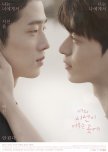
A Beautiful Story.. Loved it
OMG, when I heard the there was going to be a Korean BL, I was a little skeptical because as we all know Korea is known for its hot and thriving BL industry ??? (sarcasm in case anyone doesn't get it).But seriously, I was really shocked at the quality of it all, it was really awesome and really great and I loved every second of it.
Before we kick off, I would like to highlight If you are someone looking for like just skinship, then I don't think this is the series for you, if you want story, great acting, production etc, then this is for you.
Also please try to watch the series on Rakuten Viki to try and ramp up its popularity and make the show have good ratings.
Before I go into the review proper, I like to highlight (again) to anyone reading that it is the tiny moments in this show that makes it gold. Like the fact they sleep on the same bed, Koreans have bedding for the floor, so we kind of know they choose to sleep on the same bed. Another is the fact Gang Gook hated Tae Joo touching anybody else's ears (the weak spot attack❤️❤️). All those tiny moments really make the show kind of great because it's like builds up the chemistry between them but also the tension.
Now to the main review. This show was a simple 100 out of 10 for me, from the first episode, I loved the interactions, Gook always being there to protect Tae Joo.
We start off with the bullies chasing Tae and we start to see the type of relationship they have, they have grown up together and are kind of extensions of each other. Now the first place where I get to understand the depth of the relationship is where Tae's father slaps Gook, as a punishment to Tae, this kind of shows to me that his dad understands that Tae has deep feelings and care towards Gook because you wouldn't necessarily care about your bodyguards (Gu Jun Pyo ?, Boys over flowers says hi). So from that, I start to get their relationship.
The intimate scenes between them and I don't mean intimate in that way are so awesome, because there is an extra added level of unsaid words but they just both kind of know that they are there and the gay panic particularly on Gook's side was funny. Tae I feel wanted Gook to start dating because he felt it might take care of his feelings for Gook but as we see, that kind of backfired as Tae because it brought out his jealous side more. The girl I get is meant to make them realize how they felt about each but I wouldn't lie, I hated seeing her on my screen.
Then finally when they started to collide at mid-episode 4 and eventually, Tae told Gook to walk at the ending of episode 4, coupled with the Light Soundtrack playing in the background, I had a meltdown, cause I was thinking this is those type of shows that everything would not be resolved till the last episode but I was very happy that beginning episode 5, Tae went back for him, meaning he could not bear leaving Gook out in the cold like that. From there the relationship progressively got better and by ending episode 5, we had our almost kiss/kiss scene in episode 6???. The ending though kind of broke me, from Gook's gay panic to that ending of episode 6.
I don't like the Kim Pilhyeon, I mean they asked you to keep an eye on them, how does that lead to you having to report that you saw them kissing, like the chairman (Tae's dad) would never known if not for your big mouth, but I mean we should have all known that Tae would go to England from episode 1. I definitely was not a fan of his dad????
By the way, I was so confused by the ending of episode 7, like why was he working at the restaurant? But I like that they cleared that up, that it was kind of in the future
Episode 8 was so and so for me, I liked the way the fight was stationed, it wasn't like unrealistic that he beat like 10 guards at once but one or two at a time, made it more dramatic and real for me, with the music, it was cinematic.
But I mean I kind of liked the fact, that they still kept the reaction that a lot of South Koreans would have to having an LGBT kid. They didn't create this magical world where everyone (especially the parents) are all so accepting and always knew the kid was gay or something. I mean, it hurt us a bit but it was real.
Plus the fact when they finally got home, that Tae was asking why didn't Gook just accept his feelings earlier, "they didn't even get to do that" according to Tae, I felt is the most on brand thing with teenagers right now.
Can we appreciate the fact that they didn't spend a lot of the storyline with the girl intervening, they actually kept it BL. Like they didn't pull one over on us in the last few seconds. I mean it was also cool that they made Kim and Hyemi end up together, kind off made sense.
Overall, I really wished this had longer episodes and more episodes, there could be so much they could have explored with the high level of story telling and acting they had but this is still just perfect. Having a 2nd season wouldn't hurt but I doubt they would because it kind of had a good ending
I loved the extra layer of side comedy, He Mi's mother was the funniest because she was all of us, shipping Tae and Gook. Hyemi mother was everything, from shipping TaeGook to always shading Hyemi❤️❤️❤️ and even shading Pilhyeon that Gook was more handsome and mature. Then her crying made me laugh like a maniac
For the acting, OMG, the acting was soooooooooooo good, I loved the acting from the entire cast, it made it all so much more believable.
Finally the music ???... They have my heart in terms of soundtrack ❤️❤️❤️❤️. I absolutely loved the music in this, I mean the OST had like 4 songs (Light, See U, Looking at you and You) but I felt they used it so well, that it really brought out the moments more and made it all that more powerful
I really hope that WYEL is what kicks off Korean BL because no offense to other countries (Thailand ???) but the Koreans have shown they are simply better are making dramas than them, with creative stories, great production, and high quality, amazing acting and cinematography meant for gods. Imagine 20 episodes of Korean BL with 40 minutes running time.
Was this review helpful to you?
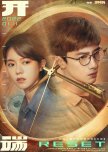
An intense binge worthy drama!
I am so in love with this drama. I saw everyone praising it so I casually started it out of curiosity. I was just thinking about giving it a try for the hype. But now I am actually joining the crowd. I feel like praising everything about this drama.
Reset is an intense story that revolves around a few characters binded by a time loop. What I am happy about is that despite it being a time loop drama where certain things will keep on repeating it was executed in such a nice way that I couldn't even think of skipping anything. No matter how many times they repeat it, a right balance of new things came out that was interesting.
So the story starts with a university student named Li Shiqing (Zhao Jin Mai). She was on a bus and on her way to somewhere when the bus gets into an accident and she dies. But she wakes up the next second and just considers it as a bad dream but woah! this is the best part. Things seem to get repeated and she seems to die because of the same accident again and again. Once she realizes about this horrible time loop, her first instinct is to escape, she uses a boy sitting beside her who is Xiao Heyun (Bai Jing Ting), a game developer to get out of the bus but unexpectedly he enters into the same time loop with her. Oh my god! Just the first episode and I was hooked up. I couldn't wait to see how they would continue this story.
Afterwards there are just crazy things happening. They both try struggling in all ways possible to change this destinied accident. Not even a single second is irrelevant or like filler in the drama. Everything is there for a reason. Even the expressions of each actor and how should they react in a particular scene is so perfect.
Their bond. Like two people who are in a mess of time, fighting together and just like two teammates going through life and death together. You can observe how slowly and reasonably their bond develops. Romance is not the visible center of the drama but it's just present through those little moments between them. You can see the care in their eyes and just the will to accompany her/him in the trouble till the end.
I love how almost every character has their own story and stuff. It's short like 15 episodes of 45 minutes each but they do justice to every character present.
Favorite line — "Human is iron and rice is steel. You can only save the world when you are full"
So, in the end, I recommend this to everyone. To even those viewers who are like me and who hesitate to watch time loops… this was a great watch. A well organized plot, high quality production with actors who know their characters well. It's amazingly set with an interesting story which kept me on the edge of my seat and I was like always looking forward to watch more and more. Meanwhile I will be off to dig up some good behind the scenes videos to enjoy more of this :D
Was this review helpful to you?
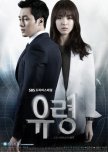
Acting/Cast - Before this even came out, I was already waiting in anticipation because I absolutely love So Ji Sub and Lee Yeon Hee. I was definitely not disappointed. Those two, as well as the rest of the cast, did an amazing job in their roles. The good guy roles, as well as the bad guy roles, were very believable.
Music - This was probably one of my favorite parts. The first half of the drama or so, you hear 'The Phantom of the Opera' a lot, and that song is incredible. Then there was the instrumental 'GHOST' that played a lot that I thought was fantastic. The rest of the songs + instrumentals played throughout were amazing as well.
Rewatch Value - I don't really like to rewatch dramas often, but I could definitely imagine myself watching this one again at some point in the future.
Overall - Overall, this whole drama, I think, is perfect. Like most dramas, it had its ups and downs, but I feel like the pros far outweighed the cons. There are two factors that really set this drama apart from other dramas for me.
1) The main focus of this drama wasn't a love story. In other dramas, that's almost always either a main story, or it becomes on 1/4 of the way through.
2) It didn't spend the whole time dragging on with one storyline. There were a few smaller ones tossed in that kept it interesting without taking away from the drama as a whole.
Was this review helpful to you?
Second Wind
A refreshingly cool wind that blew a young, heart-fluttering love my way.This far exceeded my expectations. I expected mediocre and was greeted with the memorable innocence of a first love, sincerity in words, actions, and music, conflicts that hit and weren't dragged out, and a beautiful dream small enough to carry in your pocket yet expansive enough as to fly out into the world.
This felt like a secret so gorgeous I wanted to keep it to myself. But I believe it deserves to be seen by many.
Side Note: Don't worry, the chemistry is there and romantic moments aren't brushed aside. This couple shines wonderfully and makes you root for them all along the way.
Was this review helpful to you?
The rom-com is not the point of this drama
The main theme of this drama is not the love story between the main leads, which is why you won't get to see that many heart fluttering moments.I was pretty bored for the 2 first episodes, I wasn't sure where the drama was going, there was no character development.
If you're looking for a good romcom drama, I found this blend on the romance and comedy aspects, and I felt like the romcom was almost a cover-up for the important part.
In my opinion, the interesting aspect is the second plot hidden behind the mainstream romance.
It's about the impact of new technologies and personal data collection from a woman's point of view and how sexism and girl-shaming can be spread though those technologies even though they're supposed to embody progress within our society. And more generally how new technology can impact negatively our daily life.
The ML is the "good guy" because he's out of this overly connected world, which allows him to question things from an outside point of view.
It also depicts all the subtle injustices women can face in daily-life, like not being recognized properly for their work etc...
And above all, this is a BRILLIANT representation of how some people are not inherently bad people with bad intentions but are still unable to see how scary and invasive their actions are in a relationship, and when confronted with it, they throw back the emotional burden on the other and victimize themselves instead (daily gaslightning at its finest).
It's a form of emotional abuse but a very faint one and above all, a socially accepted one, which leaves victims often unheard.
This drama does an amazing job at depicting how gut-wrenching it can feel and how wrong it actually is. The real victim ends up feeling guilt and shame.
Because the seriousness of this show is at first hidden behind a pretty common kdrama storyline, i would not recommand it to people who just want to enjoy a fun drama since the romcom part is actually almost boring.
However, its a very subtle and well-made story if you digg a little deeper.
Was this review helpful to you?
A Masterpiece. Allen and Bai Lu rocks!!!
When I saw the cast announcement of Bai Lu and Allen Ren together, I was so interested to watch it. I'm a fan of both actors. It's so unique and amazing that we got to see both of them in both historical drama and modern drama. This historical drama is melodrama with touching love story. I even read the novel so I could get better understanding in stories and characters. Trust me, this didn't disappoint me at all. This is a masterpiece in every aspects.THE STORY: It was a balance between political and romance aspects. The leads had Master-Student relationship with each other. The plot is so original and unique. It was so excellent and well-executed. I feel so much emotion in every episode. Only 24 episodes, it's worth the time.
THE CAST/ACTING:
Both Allen and Bai Lu are very talented actors. They've even made better together.
Their acting seems really natural, nothing was out of place and I could feel the emotions they tried to show with their acting. The casting team choose all the actors with outstanding acting abilities. Everyone in this drama performed so well in their roles. There is no acting hole at all.
CHARACTERS:
Zhou Sheng Chen - He is the war general who owns Western Palace with high status and respect. He is the younger brother of the former Emperor, the uncle of the current Emperor. He is loyal, strong, determined and caring. He's always kept his emotions and personal feelings inside and his country matters more than his life. He makes every decision with no regrets.
Cui Shi Yi - She is the only daughter of the most prestigious family Cui, she has been engaged to be a crown princess since young. Because of her father's passing, made her mentally affected and she was mute since then. She has been sent to be Zhou Sheng Chen's student. She can talk again because of his caring and warmth.
THE CHEMISTRY:
Bai Lu is the chemistry Queen. I know she could look good with every co-stars. With Allen, their chemistry is crazy good. Their eyes talk to each other. I'm amazed by their genuine and excellent acting and chemistry.
MUSIC:
The soundtrack was enjoyable and emotional throughout the drama. It works so well with the story. My favorite OST are "As Usual" by Zhang Bichen and "Unworried" by Jing Long and Mimi Lee. My heart is so touching every time that songs feature. Allen's OST was very good too.
REWATCH VALUE :
It think I will rewatch it again after the modern sequel "forever and ever" finish airing.
OVERALL
In conclusion, this drama is a beautiful tragic romance. Please watch it if you survived and enjoyed dramas like Good-bye my princess, The King's Woman and Moon lovers.
So I can say that this drama is definitely a masterpiece. If you like this kind of genre, it is a must-watch. Can't wait for "forever and ever".
Was this review helpful to you?
I'm around 30, and this drama is exactly on point. It really is about millennials, our hardships and the best time of our lives.
I'm so glad I've decided to watch it.
I think it is a masterpiece.
It's not for everyone although - some people will think it's too boring or maybe won't get some storylines.
But if you're 30-ish, you MUST WATCH it.
Thank you so much for your work!
And please! I'd love to see season 2 :)
Was this review helpful to you?
This review may contain spoilers
Why Are U Gay? Who Says I'm Gay?... You Are Gay.
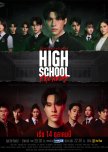
BOOOOOOOOOOOOOOOooo. Dafug you mean this isn't a BL? All that tension is wasted on a bromance? Look, being friends is nice, best-friends? even nicer, but these two talks/look at each other like they tryna book a honeymoon suite. Respectfully, I think they should kiss each others faces and get marry... cuz aint no way that tension/chemistry/dialogue is of the friendship/bromance nature! Also, half of this cast should have died halfway through episode 1, in a coma or hospitalised from all that beatings and fighting.What's more surprising about this show isn't that it's tag 'bromance' but screams bl. No, it's how we had 16 episodes, and no one died from all that violence. And who even showed this children how to fight and start gangs? Whenever there's a fight scene, I'm always like, 'Ooooh, is you dead?' only for them to show up the next day at school like 'who, me? nah, I should be dead but like...it's Tuesday, we have Thai language classes so...' People, how did these children survive for this long?? Especially when none of them knew how to call the damn police?
Anyway, Listen, I think the word 'Friend' should be permanently ban from Saint and Shin's dictionary, cuz these two would do/say the most questionable, inlove-ness-ness thing ever then go:
Shin: I would have forgiven you for every bad thing you ever did, if you'd have stayed. You left me behind.
Saint: I'm sorry, I thought leaving was the best thing for you. The best way for you to live your dreams and be happy.
Shin: Without you in my life, I won't be happy. Apart from soccer, you are the only thing I care about.
Saint: You are the only person I care about too. Let's take a couple picture.
Shin: Waking up to see your face is what I've wanted my whole life. I don't like you, I love you.
Saint: I love you too, Shin.
Me: awwwwwwwww *heart doing jumping jacks*
Shin: You are my friend.
Saint: You are my friend.
Me: Dishonour. Dishonour on you, dishonour on your cow, dishonour on your ancestors goat!
I can't do this anymore. And no, it's not that I want every thing to be a BL, but like the writers and director are purposely trying to drive me insane with how they are executing this friendship. Legit, every episode I'm just waiting for one of them to confess, or just lean in a little bit and kiss, so I can go... 'I KNEW IT!' cuz, friends don't look at each other's lips like that. I was legit going 'kiss, kiss, kiss' in episode 12, instead of going 'how dafug is yous still alive right now Saint, you should be in a morgue.' And when they hugged, I cheered and cried a bit. Imma need GMMTV to cast these two in a BL so my soul can rest, cuz I aint finna chill with his whole bromance thing.
GMMTV were messing with us throughout this show. In the finale, with all the longing looks, playful touches and promises of staying together forever, and the 'I love yous' in the rain with faces so close, I was screaming, yaay, finally, only for them to go 'bish you thought'. Why are they playing us like that? Never before had a bromance tug hurt so much. Well, there's The Untamed, but we don't talk about that. Cuz really, is the bromance in the room with us? Huh, you call that bromance?
Not gonna lie though, I do love their friendship. To have someone who is there for you and cares for you it’s beautiful. I love seeing them goof already and tease each other of having 'feelings' and 'blushing'. Their roughhousing is all I'm living for at this point. Seeing how close they were in the past made me sad they had a fallen out. And with the little sister, they seem like a family. Still, I won’t say no to friends to lovers XD
This show is a BL, disguised as a bad bromance, cuz we can all see the BL in neon colours. Literally every episode Saint's like 'I want you back, I love you, please be with me forever' then Shin will look at him with those longing eyes and they'd stare real hard into each other's eyes. Why is this a bromance? In what world is all that tension bromance? Nothing about Saint and Shin screams bromance. Those two are in love. Literally these was them, word for word:
Saint: The most important thing that I'm giving up is not school, it's you, Shin. I'm giving up on the chance to be with you.
Me: OMG, this a BL.
Director: No, it's a bromance.
Shin: You say, you're giving up what's important, and that means you're giving up on me. But you know what? You gave up on me a long time ago. Three years ago when you broke my leg. So, you don't get to leave me behind again.
Me: *in tears* Seeee, it talks like a bl, acts like a bl, it's a bl. They are in love.
Director: No, it's a bromance.
Me: No one asked you, Sharon. Damn!
First off, for half of the series I kept asking myself, 'are those teachers at that school even qualified to take care of the children?' It seems like no one knows what they were doing. The students just walked all over them, disrespecting them, hitting them, straight up treating them like trash. Literally, why were these children still in school? In the real world they'd have long been suspended, right? But, in the last half, the teachers pulled through. I did like how they were there for the children, and did their best for them. With how horrible those children were, they could have given up, but they didn't, and fought for them, which is all a good teacher can do.
Anyway, I enjoyed this show, a lot. The whole mystery regarding what Saint did to Shin to make him hate him so much, kept my interest. But oh boy, I was ready to pull my hair, because 6 episodes in and Shin is still going on and on, and on about how dirty Saint did him. 'You ruined my life. I will never forgive you. I will beat you up'. And I'm like sure, he's the scum of the earth, now tell me what he DID. Damn! Boy was so vague about what happened it got annoying. Cuz, my arse is nosy and I wanted to know what he did so I could judge and hate him too, but they kept dragging it. Literally, that plot device was like that one friend who always have sh!t to share but never does like:
That One Friend: You won't believe what happened to me today. I'm telling you, when the Pope finally left, the police had to fly the rest of us home on a helicopter. In the end, the president and his details had to sleepover at my house.
ME: OMG??? What the hell happened??
That One Friend: It's nothing really. I don't wanna talk about it.
ME: *Inwardly* I am stabbing you in my head.
No, but, I am so glad they finally told us what he did. And when I heard how Saint ruined Shin's dream by beaten him the hell up, broken his leg and ruining his soccer dreams, then disappearing on him after, I was like... Never forgive him. As a matter of fact, beat him some more, cuz... what?? And knowing Saint did that because he probably didn't want his 'friend' to leave him is even worse! Nah, but Saint did Shin sooo bad. Learning that and seeing how Shin still didn't seem to truly hate him made me feel even more bad for him. Yes, Saint deserved all the hate he got got from Shin. Hell, he deserved more than that, but I was so happy when he finally earned his forgiveness and they became 'friends' again, or whatever the hell they are with those longing looks.
I was all giggles in episode 11, that roof top and bike scene was everything. I won't even mention the jump on your chest hug, the lip stares or nothing. Cuz apparently those are things friends do and say, so imma shut up, and consider for the millionth time if I should open ao3 and write my own damn fanfic about these two characters with tags #notabromance #nobromancehere #saintandshinnotfriendsbutboyfriends
Anyway, my main issue with this drama is the violence. Like, what school would allow all that to happen and not expel those students? They are so violent and mean, then, they return to school the next day like nothing happened. Some of these people should be in a coma, have major injury or like dead dead. Literally, after all the beaten Shin got, he showed up to school like it was nothing. That boy should have been in a coma or in an obituary page.
PLOT: the story is interesting, though there's so many gang stuff and nonsense fighting violence going on it drags. The bad guys are so generic it hurts. Ken and the twins were so bleh and uninteresting in the beginning, but glad they got a redemption arc, an emotional one at that. That being said, it took be a while to notice they were twins and not the same person doing both part. My bad.
CHARACTERS: My fav was Chatjen, Mark really outdid himself in this role. I knew Mark was a good actor since Last Twilight, even when Boston was wrecking his heart, I loved him. And here I just loved how well he played his character. The leads, Saint and Shin are a close second, cuz I like the tension between them, the push and pull and how each makes me understand the characters they are playing. They were perfect for the role, and they managed to make it a very enjoyable show.
Secondary characters: I'd thought the supporting cast were gonna be background noise, but most of them had depth. Cable, Peeta, Chatjen. Everyone seems to have their own problems, even Ken and his friends. I can't believe this show managed to make me emotional about Ken. This character was unlikable for like 12 episodes, then bam emotions. I legit don't know if I should respect the redemption/depth arc or boo at it for being so damn emotional. The twins really pulled through for their friend, I thought they were just gonna be airheads.
Also who the heck was cutting onions during that classroom scene in episode 15?? When they all decided to be friends and sharing food... awwwwww like, I was going through it. Love how they came together in the finale as well to help Ken. See how beautiful friendship can be instead of them fighting all the time. And don't even get me started on Saint and Shin confronting the mother that they were friends and the little sister coming to hold their hands and calling Saint brother. My tears were everywhere. I aint saying it looked like one of those forbidden love story scenes, but it did. I really do love how they are ride or die for their friendship.
That shady teacher, being a bully was a surprise to no one, and that one female teacher is trying, but the poor woman is just sad. Her hitting her self had me going 'what even are we doing here?' I understand her wanting to quit, but damn woman, give yourself a break, nobody is perfect. And was I the only one who went 'My sister, enough already, just go back to teaching like we all know you will.' when they kept baby-ing her? Yes, I understood her, but it was getting to a point when I was over that whole arc. And also who the heck was her father? In the finale, she kept doing 'dad I did it, I'm a good teacher, bla bla voice over' and i'm just sitting there like, whomst?
I also like how the Eve and Airy developed from being enemies to friends. I'm satisfied with the finale we got. Was so emotional when Chatjen left. Poor dude was so happy with his friends. I'm glad the students came around, and Class 2 became friends. Loved how closer Shin and Saint seemed in the end, and how the mother had accepted Saint into the family. It seems their future is gonna be tangled together forever, cuz Saint's whole purpose in life right now is... 'Shin. I'll follow Shin everywhere. If it's not Shin related I aint want it.'
All in all, I went into this show thinking it was a bl, and was surprised when it wasn't, but the story and characters kept me watching. Plot-wise, the story has been done before. The violence was very savage and I didn't buy it that it didn't have more dire outcomes. The teachers and violence part got a bit boring, but all of them adds together, and we got a beautiful story of friendship, redemption and forgiveness, which was told with a good cast and team. I enjoyed coming back to it every week, so I'll recommend this to all drama lovers, trust me, it's as bl as it gets, so don't let the bromance tag keep you away. Trust me. This is going on my list of fav dramas this year.
ALSO. We are getting WU with Sky and Nani as leads next year!! Ahhhhhhh. I'm hearing it's another bromance. At first I was like. 'No, curses!' but knowing the chemistry of these two, that show is gonna be more intense and gayer than any bl next year. So, GMMTV, go ahead keep playing with us, make them 'friends' again, I don't care, as far as these two are in the same series together, we've won. Damn, it's gonna be a long arse wait for WU.
Aanyway, imina SkyNani.
Was this review helpful to you?
 1
1 2
2 1
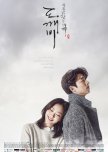
1This is the first time I've watched any of the main actors except Yoo In Na. I have now officially developed a Gong Yoo crush and understand why drama fans are enamored of him. Gong Yoo as Kim Shin/ Goblin was mesmerizing. I could listen to his voice for days. Every scene he was in was a treat. Every emotion that his character had was palpable, and his smiles could light up the sky.
And Kim Go Eun as Ji Eun Tak was super cute. She had a lot of detractors and the writer got a lot of flak for making her so young. But the character and her age were perfect for this story and how it unfolded.
Lee Dong Wook as the Grim Reaper had the perfect deadpan (heh) delivery. And he may be the best male "crier" I've seen yet.
The story will make you laugh and make you cry. Not only is the love story epic, but so is the bromance between Goblin and Reaper. I've found that I'm quite fond of this fantasy genre and this has been done so well. I have hardly any criticisms of this show at all because even the flaws faded into nothing noticeable for me. It's sweet, funny, romantic, sad, tragic, beautiful...
The music was perfect and perfectly lovely. I don't always pay much attention to the music, but this show utilized it so well and chose the perfect songs. So many people loved even the intro song that they made a special recording of it to make it a full length song (Round and Round, but may also be found under Never Far Away). Beautiful by Crush was the best song in my opinion, and I believe that it was the theme song for our main couple. And Stay With Me by Chanyeol and Punch was another favorite.
Rewatch value is high - if not everything, then there are many, many favorite scenes that I'll go back to and relive the feels. :)
Was this review helpful to you?
DRAMA OF THE YEAR 2021? YESSS!
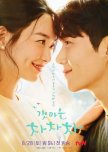
Life is not all about pain and regrets, but about the experiences and learnings. The best thing about life is that it keeps moving forward. No matter what happens in our lives at one point, it keeps going on while letting us learn from it. This is my interpretation about the entire drama.갯마을 차차차, literally, "Seashore Village Cha-Cha-Cha, truly is a story living upto it's title, giving justice to its essence while capturing millions of hearts worldwide. It is a combination of coming of age chapters and healthy, warm as well as healing RomCom, accompanied with numerous life lessons, portrayed in the form of various relationships that also throws light upon uncountable shades of life, love and living. So what does it become? A PERFECT SLICE-OF-LIFE KOREAN DRAMA.
Plot is simple as you know. Oh Hye Jin, a capable and righteous dentists resigns from work and unable to find another clinic decides to open her own in the seashore village of Gongjin, which she had gone to visit on her mother's birthday. There she meets Hong Du Shik, an talented yet unemployed man who willfully does all kinds of odd jobs to help out the villagers and wish to continue his simple life. As they encounter each other multiple times and find each other's presence during respective critical times, the bond between them grows closer making them fall in love. All these happens in the premise where lives of the villagers go on parallely, accompanying continuous build-up, growth, healing giving away love & care, as a community which is more like an extended or chosen second family.
This shit is indeed hell of refreshing because of the scenario the drama has choosen as it's set, i. e. the fictional city of "Gongjin" which in real is the seaside village near Daegu-Gyeongbuk of Pohang, a South Korean city located in North Gyeongsang Province. The seaside milieu, the village settings, the city architecture and the awfully ecstatic frame of nature are the elements that undeniably attracted a lot of people to it. And what made it even more eye-catching is the cinematography skills of the production; brownie points please.
What also makes this drama stand out is the method of execution and the very natural way of diegesis (plot narrative). Relationships, regardless of it's type, are unquestionably complicated but life becomes a lil easier when we put efforts make it simple, this also is an underlying message of this drama. It's so natural that i felt I have been there with those people. Obviously, melo is an important element of any show of any genre, which is here too, but events should be as simple as a glass of water that makes it realistic in order to be appealing and relatable to the audience. I feel the drama successfully achieved that outcome.
Another thing that made me go awe was the fashion sense of the characters, please give the stylists bonus, okay? T T. Not just the young and adult characters, the kids and the oldies wore beautiful clothes of different kinds all the times, no matter how simple or flashy they were. I loved the florals that Hongbajang wore and sometimes the loose fit shirts. Hye Jin's one piece long skirts made her look so beautiful. The 3 old women in their usual outfits looked cute. Village chief Young Guk's simple yet loose fit big shirts and pants oof. Hwa Jung and Nam Sook's country-side dotted tops and pants looked nice. Chun Jae ahjussi and his half pant outfit plus scarf, my goodness. Geum Chul's entite country bumpkin style outfit and hairstyle. Bora's peach creamy hair and I Jun's decent clothes toooo. Eun Chul in both police uniform and civil clothes (soooo hot) and Mi Seon in her different kinda outfits. Sorry for the terms Idk bcs of my lack of fashion sense TT.
One of the most notable things about the drama should be all the female characters who made us see various sides of life and learn from it. Potential & stupendous female characters is nothing new for Kdrama industry but this drama should stand out in this regard for perfectly creating and nourishing such beautiful-hearted women. Different women trying their best for people around them and struggling for them isn't something new but these women, from young to the old, understood it better, I felt. Extra points for that for sure.
Since it's a slice of life story where day-to-day happenings are portrayed, drawing a definite plot development in overall is difficult. So, what we can witness are 2 kinds of developments. First the relationship between the leads along with others and secondly the individual character development. Let's talk about that...
Relationship Development of Lead Couple:--
Well, healing romance troupe has become a common factor nowadays but this surely is unique and let me explain how. Not bragging or saying I predicted it but I sure had assumed the way the chemistry between Hong Du Shik & Oh Hye Jin will develop, which happened for real making me so happy. Both of them obviously cared for each other and had liking as persons despite all the bitter encounters but until the point they fell for each in their conscious, the romance was very subtle. It was like they grew onto each other unknowingly and that feelings were piling up bit by bit over time. One day the the sac of love got so heavier, it burst open into an love relationship bonding, that was meant to last for eternity. They were definitely opening up to each other lil by lil and healing the other's pain gradually in the process but in their subconscious, it was love that was blooming up inside their hearts which one day led to prosperity and nostalgic emotions of happiness.
What made me happy how they proposed to each other at the perfect point of the story and even after officially getting into a relationship, the story showed us the following development. This was a gesture that, our lives and stories don't come to an end when we become each other's life because we have a long way to travel together, parallelly healing each other while helping both individual and coupled growth. Tbh, I was worried their relationship will turn typical following the proposal but guess what? They made me and in fact all of us, learn an important lesson of life, i. e. continuity. Obviously, there were many fluff moment's but the way of executing everything through the storytelling method abd screenplay techniques made it maintain own's naturality.
We're at a point where we have run out of new ides about events and stuffs to showcase in a relationship but what matters is how they're showed to us, how natural & relatable they feel and how realistic the outcome becomes. I am cent percent sure, this drama gave off that vibes.
NOTE: HONG DU SHIK & OH HYE JIN, uri ShikHye or dimple couple are one of the best Kdrama couples with one of the best chemistry development and a healing romance.
CHARACTER DEVELOPMENT :--
This is probably the best thing about the drama. Not just the individual development, the buildup plus nourishment of different kinda relationships were also well drawn. The character arcs of different roles came out so well, making us relate and learnt. Let's talk about them now...
# Hong Du Shik (Kim Seon Ho) aka uri Hong-bajang, the definition of "Jack of all trades, master o̶f̶ ̶n̶o̶n̶e̶ at
all". Talented yet no proper job carrying numerous small job certificates can help fix any kind of situations of the villagers. Loved by all yet orpahned and loner with thanatophobia (fear of losing someone close), he doesn't let anyone into his heart easily. Cares a great deal about the villagers tho.
# Oh Hye Jin (Shin Min Ah), the perfectionist dentist and very righteous at workplace who is also very calculative about her life. A dating rookie and doesn't want to be easygoing abd never gives in to people easily. A definite development as she changes into a warm women who admired everyone and got love in return. Very sensitive to her life decisions and helps Hong bajang in the end in healing his heart.
# Ji Sung Hyun (Lee Sang Yi), a variety show PD and Hye Jin's university senior who comes to Gongjin to shoot his show. He really went from romancing with Da Shik (Da Hee) in Once again (2020) to bromancing with Du Shik in this drama, haha. I can't say he's a potential 2nd ML affecting the lead couple's storyline but ge surely helped them in his subconscious. Very simple and decent character he had.
# Kim Gam Ri (Kim Young Ok) halmeoni, village supervisor and Du Shik's closest who have fed and cared for him since a young age. Very stubborn because of old age. Doesn't like spending money but fond of trying different dishes. Loves Du Shik the most and liked spending time with him.
# Lee Ma Ji (Lee Yong Yi) and Park Sook Ja (Shin Shin Ae) ..wish these halmione-deul had some more story for themselves but they were basically used as sidekick of Ga Rim-ssi. Regardless, very cheerful and cute. Their annoying and active faces plus the halmeoni trio made me cry outta happiness even when they were just fighting, that was so cute uwu.
# Yeo Hwa Jung (Rang Bo Ryun), the zone chief, restaurant owner and owner to both the places used by Hye Jin. Divorced for reasons known only to her and a single mother. Very sane, humble and understanding person she was though a lil insecure about his ex-husband and has hidden stories to tell. Loved the way she walked in here hahaha.
# Jang Young Guk (In Gyo Jin), village chief and Hwa Jung's ex husband, a lone man living alone and a loving father to his son. Irresponsible and indecisive at times. Not knowing the actual reason of divorce he deviates from his path for a while but eventually finds himself back in the same spot.
# Oh Chun Bae (Jo Han Chul), a failed singer, coffee shop owner, a widower and single loving father to his daughter. Still brags about his past achievement and wants recognition tho still a tender-hearted person who cares for his daughter to a great deal and misses his wife.
# Cho Nam Suk (Cha Chung Hwa), Chinese restaurant owner, loner who misses her deceased daughter. She loves to gossip and is the most definitite source of all the rumours that revolves around in the village. Very lively and cheerful as person. Loved her nasal accent and acting.
# Choi Geum Chul (Yoon Suk Hyun), Du Shik's only friend and hardware store owner. Married with a girl child and another to come. Somewhat naive and stupid but loves his family so much.
# Ham Yun Kyung (Kim Joo Yun), Geum Chul's wife and Bora supermarket owner. Very cheerful and mature for her age. Loves and cares for her family a lot and continuously nags her husband to do better job.
# Pyo Mi Sun (Gong Min Jung), Hye Jin's BeFe and the dentist nurse. Very clever and straightforward yet falls for guys instantly. Her chemistry development with constable Eun Chul was surely a sweet thing to watch.
# Choi Eun Chul (Kang Hyung Suk), Police substation constable and Geum Chul's younger brother who's very determined at job but stupid when comes to dating. Mi Sun helps her learn about relationship and they form the cutest couple of the show.
# Oh Ju Ri (Kim Min Seo), Chun Bae's daughter, a high-schooler and diehard fan of the boy group DOS (fandom Hacker). Misses her mother whom she lost right after birth. Can be stubborn and annoying at times still loves her father. A wannabe stylist.
# Choi Bo Ra (Go Do Yun), Yun Kyung & Geum Chul's daughter who's good at studies but have hidden talents. Loves Taekwondo and a lil aggressive. Adored by the villagers.
# Jang Yi Jun (Yi Eun Yoo), Hwa Jung & Young Guk's son who's the definition of genius. Too humble, polite and rationale for his age haha. BeFe with Bora and is always with her. As thoughtful as Hwa Jung.
Other than these major characters are some other actors who justified their decent roles and are indeed notable; Yu Cho Hui (Oh Ji Hee), Ban Young Hoon (Kim Sung Bum), Kang Do Ha (Lee Suk Hyung), Wang Ji Won (Park Ye Young), JUN (Byun Sang Tae), Yoon Tae Hwa (Seo Sang Won), Lee Myung Shin (Woo Mi Hwa), etc.
OSTS:
"Romantic Sunday" by "Car, the Garden" is undoubtedly the best OST of this drama which is the remake of a 2007 hit by "JISLAND". I love all the other OSTs so muxh as well. The lyrics are all so beautiful and were relatable as well suitable for various moods of the drama. "One Sunny Day" by Kassy, "My Romance" by Cheeze, "Wish" by Choi Yu Ree, "Be the Light" by Kim Jae Hwan,
"The Image of You" by Sandeul, "Here Always" by Skz Seungmin are all good. Some of them are romantic and others are soft soulful ones.
Both the writer and director have done a very good job, individually and as partners. It didn't feel like the writer doesn't have enough experience. I mean the number of work she's done is less but who'd say so after watching this drama? The PDnim obviously have enough experience, in fact one of the best drama PDs in Korea and that shows. Cinematography, sound production, screenplay editing are also very well done. Kudos to the entire crew for this amazing outcome. Thank you so much.
Technically, I love the various colour palettes used to showcase the beauty and aesthetics. The subtle presentation of props to connect and relay the storylines are quite alluring. Story progression is smooth and relaxing with multiple peaks as perfect points. Not a single thing felt exaggerated or boring. No twisted and complicated factor except for Hongbajang's mystery; very simple. The 1st ep is basically the introduction so stick to it in case you think it's not good. The childhood and teenage encounter and destined-to-be-together trope might have become a cliché but it's fine as long as the present story is well painted and HomeCha successfully built-up a unique love story.
Let me also add important things included in the drama: mental health issues, loneliness, lgbt+ inclusion & acceptance, gender & clasa equality, dreams and determination to fulfill it, negligence to old parents as well as kids, ways of parenting & parental love, a kid's expectation from parents as well their hidden feelings, mutual understanding, overcoming past trauma, essence of aging and importance of old age, meaning of death, the art of healing other's pain, the difficulties of pregnancy, the urge of marriage, the hopes from your partner, community life & it's importance, self-love and it's vitality, process of opening up to your closest ones, learning to seek help from others, acknowledging the help and care you receive, understanding the gestures, facing life problems & tackling them, essence of independence, appreciating life, respecting other's efforts and their urge to do well, holding on to life, bringing out the best of you..... And many more that will cost me a notebook to mention.
NOTE: The last 3 episodes are the peaks of the episode where you might have to cry continuously, so make sure to take care of yourself if you're highly sensitive and very overwhelming to cry over small things.
Hometown Cha Cha Cha is definitely very realistic, refreshing and relatable with all the elements of a perfect slice of life Kdrama. I repeat, this is the best Kdrama year for 2021. Not only the healing romance of the lead couples, other side storylines that ran parallelly left us with lessons that we seek in our everyday life. Setting the rewatch value at 10/10 bcs this is something that can be easily watched as many as times you wish, even for random watch. PLEASE GO AHEAD WITH IT IF YOU HAVE BEEN WAITING FOR. THIS IS DEFINITELY WORTH ALL YOUR TIME AND INVESTED ENERGY PLUS EMOTIONS. *cries under blanket*. In fact been crying throughout while writing this review.
Was this review helpful to you?

This review may contain spoilers
After a while of not being hooked into any drama, this drama series was a refresher for me. It continuously made me more excited for the upcoming Fridays and Saturdays as these were the days when new episodes premiered. I just finished the series this morning, and here are my thoughts about this drama:Story/plot: -9- The storyline had many cute moments between the characters, and there was not really any huge climax or conflict that lasted for several episodes. This plot was, more or less, very bubbly and cutesy with many squealing moments; it felt as if the main characters were living in their honeymoon phase the entire time due to the amount of innocence they had. Unlike with other Chinese dramas, I did not feel like the middle was intensely dragged out and was instead filled with more sweet and funny moments. Now, for the ending. Yes, the ending was a good ending, so that was a plus; however, I did not feel like it was a satisfying one. I felt the last few large events, starting with Si Tu Mo visiting Gu Wei Yi in Germany, were too rushed and had holes in between. The last scene with their kid though... glad they had a kid, but the kid seemed like he was 5 years old meaning the viewers just lost 5 years right there! It is understandable why they can't fit everything in 24 episodes, but compared to the rest of the drama, I felt the ending could have used more attention when it was made/directed. The hidden egg scenes at the very end of most of the episodes were cute considering the viewers were able to see some scenes from Gu Wei Yi's point-of-view.
Acting/cast: -9- The height difference between Gu Wei Yi (played by Lin Yi) and Si Tu Mo (played by Fair Xing) is absolutely adorable; it reminds me, and probably many others who watched, so much of A Love So Beautiful with Jiang Chen (Hu Yi Tian) and Xiao Xi (Shen Yue). Gu Wei Yi is a physics genius/nerd who sincerely cares for Si Tu Mo, both before and especially after they started dating. There were many times when he was clueless about how to please her or what to do in a relationship, so he had to search them on the internet which was cute and funny to watch. Lin Yi's acting could use some work, but for being the very first drama he acted in, his acting definitely has potential. He is also very attractive, in my opinion! Throughout the series, I had some frustrations and was annoyed with the character of Si Tu Mo, particularly the beginning and towards the end, because of her unwillingness to understand certain situations from Gu Wei Yi's perspective, but overall, her character was still independent and strong. The side characters were ok; they didn't play too much of a role in the drama except for Fu Pei (Xiao Tian Tang) and Wang Shan (Zheng Ying Chen). I enjoyed the character development of Fu Pei after he met Wang Shan, but their last proposal scene felt out of placed and rushed, as well.
Music: -8.5- The music matched the cuteness and bubbly-ness of the drama, so I had no complaints. Although none of the music stood out to me, they fit the flow of the drama. The dog and cat noises throughout the drama were really cute though.
Rewatch value: -8- Honestly, I don't think I can rewatch the entire series from beginning to end, but I might re-watch some cute scenes (there was a lot of those in this drama).
Overall: -9- This drama was definitely a refresher for me in the abundance of dramas, that I can't seem to find interest so much, premiering nowadays. The series kept me on the edge of my seat as I had to patiently wait for the new episodes every Friday and Saturday. The storyline was not extreme and was one that guided the audience through the life of the main character's love story. I honestly didn't have any problems with the storyline until the end, and even then, I am not mad at it.
I recommend this series to those who are looking for a drama with a cheerful and lovey-dovey storyline to wind down, maybe for those who just finished watching a frustrating drama. Sorry this review was a tad more lengthy than I intended, but I wanted to share my thoughts. Hope you enjoyed, and thank you for reading!
Chào for Now!
Lily L.
Was this review helpful to you?
This review may contain spoilers
Every Cloud Has a Silver Lining
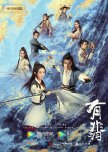
The Legend of Fei is an intriguing drama.This is a show that has been highly anticipated since early 2020, and for good reasons too. It is headlined by two of the biggest stars in the Chinese entertainment industry today, Zhao Li Ying and Wang Yi Bo. This is also ZLY’s comeback project since her leave of absence due to her maternity. The drama is an adaptation of the novel Bandits by renowned and award winning fiction novelist, Priest who will be having several more of her novels adapted to dramas in the coming year.
In addition to that, the involvement of a highly experienced production team led by director Ng Gam Yuen who had previously directed Princess Agents (also with ZLY) and, somewhat surprisingly although not uncommon, a team of nine screenwriters were engaged to write the screenplay based on the critically acclaimed source material which had won the Network Literature Biennial Award in 2017. All of this points to a potentially successful blockbuster drama in the making, right? Apparently, as it turns out, not many would agree.
Within the first few weeks of airing, this drama ended up becoming extremely maligned and divided opinions of viewers not only in China but also among international audience, so much so that even on the drama’s MDL page, debates and differing opinions were intensely magnified in the comments board. Personally, I feel that although the drama certainly is imperfect, there are redeeming aspects that warrant folks to cut it some slack and maybe shower some love instead.
In a nutshell, this is a wuxia drama that tells the story of Zhou Fei (ZLY), who hails from a renowned family of pugilists and the 3rd-generation heir of the Snow-Breaking Blade technique created by her grandfather, as she leaves her home in the mountains known as Fortress of the 48 to explore the Jianghu world. She meets Xie Yun (WYB) who joins her on her adventures as they encounter colourful characters, both good and evil and from various sects and affiliations.
This is essentially a coming of age tale typical of the wuxia genre where Zhou Fei, as the FL, meets many martial arts masters who help improve her skills to become stronger and finally battle the villains. Along the way, she finds love but also experiences the tragedy of losing loved ones. Themes of chivalry, heroism, brotherhood and loyalty are interwoven with the underlying romance, overarching mystery and, of course, the climax of the story - the epic final showdown. I’m not an avid reader of the recent wuxia novels but I notice the trend of late where the ML of the genre appears to be physically weaker and less of a fighter compared to the FL, as is the case in this show and another similar one, The Moon Brightens for You. But, I’m not complaining and I think female empowerment is a positive trend for a change.
Production
The production values displayed somehow does not seem to reflect the rumoured big budget of the show, with certain set designs that appeared inferior in quality and even obviously fake. For instance the settings of the forest where majority of the action takes place, the setting of the Spinning Wire Formation of the Ximo River (specifically the “rock boulders” which do not seem all that “solid”), and various other scenes, where the lack of authenticity is visibly apparent.
Probably the biggest gripe of all is on the direction, screenplay and editing for this drama. Contrary to most criticisms that are directed at the acting especially of the leads, I think the directing of the interactions between the characters as well as the pacing of the storytelling should take the most blame. Actors can only work with what they are given and how they are directed to act their scenes. Furthermore, how it is that so much fillers and dragging out of the plot were shoehorned into the story seems rather surprising considering the quality of the production crew. Additionally, the transitions between scenes and framing of certain sequences did come across as somewhat disjointed, which is attributed to the editing department. A mitigating factor was mentioned where principal filming had to be halted midway through due to the outbreak of the pandemic in early 2020. However, this is where the final editing and post production process should come in to make the necessary adjustments.
Choreography
The martial arts choreography is not the finest of the genre, it has to be said. A number of the action sequences do not flow smoothly in terms of the swordsmanship, acrobatics, and overall movements. When it works, it can be spellbinding but when it doesn’t, it becomes painfully obvious to see. Granted, there were reports referencing ZLY’s lack of fitness while performing her own stunts and other physical exertions, having just recovered following her maternity confinement. Perhaps, this being the first time a blade/ sabre (dao) is wielded by ZLY’s character instead of the usual sword (jian) resulted in the execution of a different and more challenging fighting technique, the Snow-Breaking Blade.
The same observation applies to all other cast members involved where at times the fighting appeared contrived rather than naturally free-flowing. The awkwardness is exemplified in other techniques such as the Taoist Tao Teh Ching Mayfly formation, Guanxi Yellow and Green Palm, Floating Palm, and Water-Cutting technique. On the other hand, the Lotus Palm, Cloud Impelling Palm and Mountain Sword technique do at least appear more believable and convincing.
Characters
The action stunts aside, I have no complaints with either ZLY or WYB as far as their acting is concerned, and both characters I thought were well written. The issues as I mentioned earlier relate more to the direction rather than the cast themselves. The quality of ZLY’s acting and character portrayals are never in question while WYB possesses much potential to soar even higher through his upcoming projects. I like FLs that are written to be consistently strong not just in terms of physical strength and martial arts prowess but also in mental resilience and fortitude in the face of adversity and tragedy. Zhou Fei is a character that I enjoy watching and she does not succumb to the usual tropes of losing her sense and sensibility or transforming into a damsel in distress that needs rescuing. Likewise the character of Xie Yun as the happy-go-lucky charming and supportive sidekick who hides a traumatic past behind the facade.
There were grievances regarding the perceived poor dubbing particularly that of ZLY and I have to agree. The voice is provided by Liu Rui whose previous works focused mainly on modern dramas like Flash Girl/ Our Shining Days, which sadly lacked the authority and depth needed to elevate the character of Zhou Fei to more imposing levels. WYB’s voice dubbing is provided by Hu Liangwei, whose works include Heaven Official’s Blessing donghua, which is marginally better and probably matches the playful tone of the character Xie Yun.
Regarding the chemistry between the two leads, so many viewers complained about 2 things - that they are incompatible due to the 10-year age gap (ZLY is 33 while WYB is 23) and hence lacks the natural chemistry, and that the FL looked so much older than the actual age of her character who is supposedly a 16-year old teenager. Personally for me, there is no such thing as age gaps when it comes to romance, and therefore I’ll take this as a variation of noona romance which works fine for me. 10 years isn’t a lot even if the female is older and from what I can see, particularly towards the tail-end of the show, the chemistry is apparent to be seen and throughout the entire story progression, the development of their relationship has been slow burn but no less resolute.
As for the second argument, I have to agree somewhat. No matter how much make up applied or soft filters used, it is what it is and there is no escaping that. But look, this is not something that is shockingly unexpected or unprecedented. Tang Yan (37) played a teenage Xiao Yan Yan in Legend of Xiao Chuo, Zhang Lu Yi (40) depicted a 13 year old boy in Qin Dynasty Epic, Tang Wei (38) acted the role of a teenage Sun Ruo Wei in Ming Dynasty, Tan Song Yun (30) played a teenage Li Jian Man in Go Ahead, while Zhang Zi Yi (41) is currently portraying a teenage Wang Xuan in the airing Rebel Princess. For me, good acting with seasoned actors should be the benchmark and that is acceptable to me.
The supporting cast of Zhang Hui Wen, Chen Ruo Xuan, Zhou Jie Qiong, and Zhang Xin Yu gives a decent account of their respective portrayals of Zhou Fei and Xie Yun’s band of friends. In particular, the character development of Wu Chu Chu and her romance with Li Sheng is quite remarkably depicted. Li Yan, however, represented everything I dislike about the annoying females in historicals but fortunately her role isn’t significant. She and the character Yang Jin are truly made for each other, as part of the 3 romantic couples in the show.
It has to be said that a number of villains do not appear all that imposing and intimidating. I’m fine with the colour coordinated costumes and scary masks used to distinguish the bad guys but the respective leaders of the evil clans are simply not all that villainous, in form or substance. Case in point, the Demon Manor’s section chiefs comprising Blessed Dog, Giant Leopard, and Sparrow. The Four Guardians of the Mountain’s Dragon and Tortoise masters are more hilarious and comical than menacing. On the other hand, I do appreciate the Timber Wolf Shen Tian Shu as the leader of the Demons, played by Geng Le who does possess the gravitas for this role. Guo Xin’s Mu Xiao Qiao, the Phoenix master, is one of my favourite (semi)villains in the show and brilliantly gives off Dong Fang Bu Bai vibes. Other villains such as the Snow Wolf and the evil Eunuch are very interesting characters but unfortunately only had limited screen time.
As far as good guys go, I actually enjoyed watching Che Xiao’s compelling portrayal of Li Jin Rong, Zhou Fei’s mother, as a strong woman and competent leader of the Fortress of 48. Dong Xuan’s Duan Jiu Niang is a very likeable character and I suspect she had as much fun playing the slightly deranged role as viewers did watching her albeit for a short portion of the show. Hu Bing, who usually plays the villain, delivers a very charismatic depiction of the legendary grandfather, Li Zheng. I’m a big fan of Zong Feng Yan, who plays Zhou Fei’s father Zhou Yi Tang. This seasoned veteran never disappoints and he seems to excel particularly in historical dramas.
Music
The OSTs for this drama is probably the only aspect done to perfection. Each track seamlessly captures the essence of the story and the scenes throughout. The opening theme truly sets the tone of the show while WYB’s rendition (with accompaniment by the Dizi, which brought memories of The Untamed…) evokes feelings of a dreamy ethereal romance.
1. 《逐浪 Chasing the waves》by 尚雯婕 Shang Wenjie (Opening theme)
2. 《无华 Unadorned》by 张靓颖 & 刘宇宁 Jane Zhang & Liu Yuning (Ending theme)
3. 《熹微 Weak rays of sunlight》by 王一博 Wang Yibo
4. 《如翡 Like Fei》by 王晰 & 赖美云 Wang Xi & Lai Meiyun
5. 《结 Knot》by 胡夏 Hu Xia
6. 《红尘莫欺我年少 Don't deceive me when I was young》by 希林娜依 高 Curly Gao
7. 《采莲曲 Picking Lotus song》by 陈珏 Chen Jue
Overall
Despite the numerous drawbacks, The Legend of Fei does manage to get certain aspects done well enough that even things out and, in my humble opinion, ultimately redeems the entire production. How the drama starts off may leave much to be desired but the improvement towards the second half and the strong finish at the end, with the HEA ending where all that’s well ends well, gave me the satisfaction of completing this drama. It wasn’t always smooth sailing, but I did enjoy myself by looking past the flaws only to discover a rainbow after the rain.
Was this review helpful to you?
This review may contain spoilers
Entertaining & Good Chemistry Ongoing Review (Happy Ending Answer)
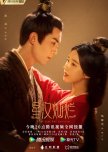
SLOW START:I am amazed that the drama follows the book's slow pace in the first 4 episodes. I was expecting less development of the CSS's family. The first 20+chapters of the book are boring so I thought they would just sum it up quickly, but they did drag it out a bit in slow motion. This will discourage some people who are used to quick-paced dramas. If you don't like wordplay or family (in this case females) bickering, then the first episodes will be painfully slow. However, the drama doesn't need to be abandoned because the later episodes will be better after the "main" characters come out. That being said, I have a feeling that the drama will be developed in a similar way.
It's a slow beginning, but they did try to make it entertaining. I think it's worth giving it a chance to develop the narrative (which although slow, is well-acted and filmed). The cinematography looks amazing so far.
If needed, you can skip the first 4 episodes: they are about a girl who was left behind as a baby because her family had to go to war. She was abused by her aunt and grandma. The story begins as her family returns home to find her grown up without education and fine manners.
The ML LBY came out in the first episode. He "met" CSS's hand. And the face-to-face meeting doesn't happen until episode 6.
PLOT EXPECTATION:
What this story is not about: politics & war (there is some, but it is about 1/4 of the story ... the other 3/4 is about women's and family drama). So it's always good to keep your expectation consistent with the perspective that this novel is about a girl, who is the main character; she has 3 suitors; her character matures as she makes her choices.
For those who expect a quick meeting of the main leads and a fast-paced romance, this isn't the drama. They don't "meet" right away. It's going to take time for her to like him. If you have seen The Story of Minglan, it's the similar vibe in terms of family drama. The focus will move from CSS's family drama to another family drama (the emperor's).
ACTING:
So far I really like the acting and funny moments (including the wordplay). It's a different type of drama. It feels like an artistic rendition rather than the typical C-dramas. If you like ZLS, this is a drama in which she shines because she can act in different stages of growth. LW's acting is not shabby either.
As you watch the drama, look out for the details in the words between the characters. The beauty of this novel/drama lies in the details and words and the interaction between people.
CHEMISTRY:
All the MLs have chemistry with ZLS. The looks (eyes) between them and her show how much they like her.
ENDING:
Happy Ending in the Novel. They didn't get married only talked about it in the epilogue. No actual ceremony. Let's hope the drama will script it in.
EPISODE REVIEW:
ep1:
The old lady who came to fetch CSS said, "If your parents love you, why did they leave you?" - This is the same question that CSS must have asked many times: it makes her feel unloved and orphaned.
When LBY heard the uncle say that CSS was without parents all her life, he must have already felt connected with her through their shared background: both grew up without parents.
ep 1-4
Not as good as could have been because of the excessive bickering. It sets up the storyline. Can skip over the high-pitched overdramatized bickering if you don't enjoy it.
Just finished ep6:
Amazing! They changed the novel. I love the change! It's more exciting/entertaining and makes more sense that she met all 3 on the same night! She still hasn't seen his face clearly, but he saw hers.
7-8
Episodes 7-8 didn't disappoint. Again, the script deviated from the novel, but it's all positive. VERY entertaining. I thought the cinematography and storyline had a Disneyesque quality: the filming of LBY with the black cape (a repetition from previous scenes) from low to the high angle from the back makes him look like a Disney character: intimidating, intriguing, and foreshadowing. The real voice of FL added to the fun and childish scenes. I feel she made it very believable and entertaining to watch.
TBH, I enjoy watching this drama more than reading the book. Although I laughed sometimes while reading, the drama brought out more of the comic element by providing not just the regular rom-com but also sophisticated irony, contrast, etc ... The director gave it a vibe of Disney's Cinderella and "Sense and Sensibility".
EPS 15-6
Again, I am impressed with the screen adaptation and the director of this drama.
An excellent screen adaptation of the novel to include more interactions among the male leads. I love that they are more central to the story and being shown at the same time so the audience can see how they treat her and how she reacts to their perspectives.
Jane Austen's vibe is obvious and consistent as the actors curtsy to each other and politely nod their heads. The director is able to get the actors to perform their roles perfectly. It's funny but not to the point of being ridiculous. The humor has a tasteful vibe. When the grandma's dramatic role is not being overplayed as in eps 1-4, she also has the vibe of JA's old dames.
I also love that ZLS can bring out the little girl vibe. Although she is young (but not that young), she brought out the innocence of a 14-year-old at times and makes you feel like yeh, I could believe in her silliness, idealism, and audacity. I think her real voice and acting make the role so believable even though she doesn't look 14 years old.
17-18
If I were reading Episodes 17-18, I would be fast-forwarding them to the next best parts. It's so painfully slow to wait for next week's episodes! I guess the story is not moving fast enough because it's still evolving around similar plot lines and conflicts: engagement, family fighting, LBY's unrequited love, CSS still needs to fight for herself without getting new skills.
It's like a video game level: she's not getting any extra skills or new conflicts to move on to the next level.
However, it's fun to see the dynamics of different families.
In these episodes, we can see that she's going to have a tough battle against the Lou family. Everyone can see it except CSS. Why? In her insecurity (worrying about not being able to find a suitable husband - Lou is the only one who asked her to be his wife), CSS thinks this is as good as it's going to get for her. She's a young teen. She's full of insecurities due to abandonment and lack of love. She doesn't know what love is. She is only concerned about having independence through being married to an easy-to-manipulate husband who will support her projects. But she doesn't realize that behind the husband is actually a formidable family.
These episodes are fun to watch to see the dynamics of Chinese families. The princes showed up in episode 18 in which you can see the contrast between the crown prince and the 3rd prince. It's foreshadowing who will rule at the end.
The next episodes will be more fun when she becomes engaged to LBY. It's a new plot line involving a new mentor (empress) and a matchmaker (emperor). It will be less frustrating to watch because CSS is getting new skills and love from her mentor. She has a stronger fiancé who supports her.
19-20
Breaking up is hard to do so CSS refuses to accept the verdict that she has to give her fiance, Yao, to the He daughter. Yao and CSS promised to stand against the world. Here we see that Yao actually has a backbone. His relationship with CSS has matured him and inspired a devotion that stands against the bullying of his family. It's a foreshadowing of a decent man and friend that he will become at the end of the story.
In this episode, we see that the relationship between mother and daughter is progressing ... also more disclosures about LBY's past.
One thing I noticed about this director is his use of repetition to emphasize the point: My favorite part about these 2 episodes is the last scene: LBY said, "No need to fear. I am here!" This is a repetition of what he said when he rescued her before. It just emphasizes his devotion to her.
21-22
Finally, the plot moves on! I felt too much time was spent on the first engagement. I would like to see more time spent on CSS and LBY's story. At least now, we are heading in the right direction!
She breaks her engagement with Yao. From here on, LBY will become the main man in her life. This marks the beginning of her exposure to life in the palace.
She overheard a conversation about overthrowing the crown prince. LBY saves her and starts to become involved in her life.
Overall, the plot is moving on. I wish they would not drag on with the grandma's scenes. At this point, I tend to get impatient and fast forward her scenes.
The emperor, on the other hand, is a lot more humorous. His involvement in LBY's love life is hilarious... the scene was fun to read too.
23-24
The script modified the story but it sounds reasonable. Here is where the LBY asks the Emperor to represent his parents and ask for CCS's hand in marriage. She took a chance and said yes. Why? She was touched by his sincere declaration that she is a special lady who is fit to be his wife. No other will do.
25-26
Excellent job in both scripting and directing. Really loved these two episodes, especially the humorous ending of 26! This was not in the book but the script again exceeded my expectation. I loved the way the director showed humor, not just through words but also through the filming angles and the closeup of movements!
In episode 25, CSS had to deal with the gossip and LBY helped her to silence the vicious girls. She realized then that she is solely dependent on him to give her power. And by relying on him, she loses her independence.
27
The hilarious episode shows LBY taking over Cheng's family in a military style.
28
Love doesn't conquer all ... Adjustments and compromises are required. I find this scenario to be very realistic. Romantic love is balanced with conflicts and character development. I like how smoothly the script transition the story to the Palace.
Was this review helpful to you?
This review may contain spoilers
Probably best historical drama in 2022
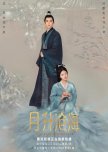
After enjoying Who Rules The World ( first / only Cdrama to enter Netflix Top 100), I searched similar costume dramas with the same leads, and this is how I stumbled upon Love Like The Galaxy.I believe from all I've seen, this is the best wuxia of 2022 - in a galaxy of dramas, this one shines the brightest !
Story - epic, based on the novel Splendid Stars
Cinematography - spectacular, and note that some of the images you will think are CGI are actually real ! For instance, the fire at the Lantern festival - they built the restaurant frame and burned it..
Director Fei's attention ti details of the era, from costume, to different hair style girls/ ladies, up to the small pieces placed on the floor to hold the mats - it's amazing !
Casting - perfect ! I can not say there is any actor evrn lowest support role, that does not fit the character described in the novel.
OST matching the atmosphere of the drama, has just been released on youtubd fir your listening pleasure..add ti it the flute songs played by the FL.
Acting - best performance award goes to Wu Lei and Zhao Lusi, who succeeded in portraying very complex characters. From microexressions to grand fighting scenes, from stunts performed by themselves to riding horses, they did it without fail - and they are in their early 20's !
Their characters are totally original for Cdrama - both are " damaged" from tgeir childhood and had to rely on themselves, ehich made them smart, cunning, secretive, untrustfull and revengefull. Kindness from others is always viewed with suspicion in the beginning, but their heart is in the right place, discerning right from wrong, irrespective of being family or strangers, they don't condone injustice and betrayal from anyone.
In the midst of rebellion, war, palace fights, family disasters, these two learn to trust and love each oth - their romance is slow burn, but it sets the screen on fire !
The side characters are well developed, bringing both comic relief ( in good taste) like her village grandmother and his sidekicks, tragedy and even misstreatement from her mother ( tough love?!), the array of emotions in each episode range from tears to angst, hate, frustration, pity, laugh until you tear again.
Rewatching value - 10 ! I already rewatched the first season, even changed the setting fir lower speed, because are so many magic moments I might miss while reading the subtitles.
Was this review helpful to you?


